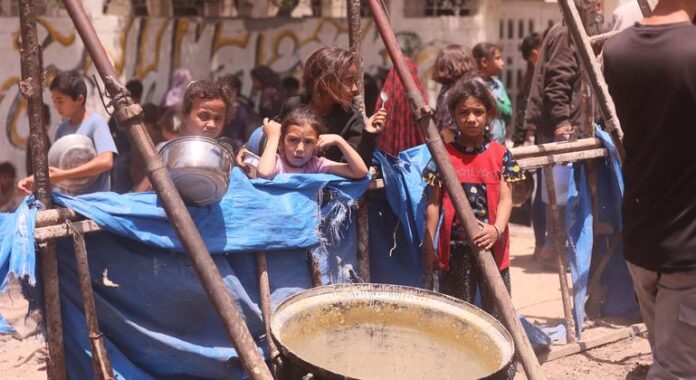
Georgia: Joint statement on recent developments in Georgia Source link
Smurf your voice: Global Campaign expresses that everyone to speak for a better future
Launched in June, the eight-week digital campaign is based on the lasting popularity of beloved smurfs to encourage young people-as well as their parents and caregivers-to raise their voices about problems that matter to them.
THE initiative is part of the UN Accelerate effort for the Sustainable development objectives (ODD) and aims to empower individuals, in particular children, to express themselves and to act in their communities.
Voice for change
With Rihanna, Hannah Waddingham, Billie Lourd and Amy Sedaris – who express various characters in a future film of Smurfs – the campaign Includes ads for dynamic public services (PSA) and colorful social media cards.
“” Smurfs know the importance of speaking and speaking because everyone, each child, has the right to be heard“Said Hannah Waddingham, who expresses Jezebeth in the film.
“” The power of change creation is already in you. You just have to act“Added Billie Lourd (concern for concern).
Amy Sedaris (Jaunty) simply summed it up: “It’s easy if you follow the Smurf plan. Small actions can add up to make a big difference.“”
The videos, produced in several formats, directed viewers to a dedicated ” Speak with the Smurfs»Section on the Actnow platform, which offers tools and resources adapted to children.
Smurfing
To make things wrong – the campaign invites everyone to “fail their voice” and help make a better future fail, one action at a time. Whether you are five or fifty-five years old, there is always a way to change your positive change.
In Smurf-Speak, “Smurf” can mean almost anything-name, verb or adjective-but the message here is clear: Smurf your voice, fails your rights, fails the future.
UnicefThe involvement is centered on the guarantee that the message reaches children around the world – and that they are equipped to participate significantly in decisions affecting their lives.
Global deployment
The campaign is promoted on the platforms of Paramount Global-notably CBS, MTV, Nickelodeon, Bet, Comedy Central, Streaming Services like Paramount + and Pluto TV, and the free network net 10 in Australia.
The contents on the theme of the Smurf will also enlighten Times Square in New York and will appear on markets through Europe, Latin America and Asia.
The content is available in more than a dozen languages, including Arabic, French, Spanish, Hindi, Kiswahili and Japanese, to ensure wide accessibility.
About Smurfs
Introduced for the first time in 1958, the Smurfs are small blue fictitious characters known for their teamwork, their mischief and their unique way of speaking.
Children’s generations (like this author and her little ones) followed their adventures, and their continuous attraction has made them ideal messengers for values such as cooperation, kindness and now global citizenship.
By bringing together a new generation to speak – or fail – the campaign hopes to inspire a significant and lasting change for children (and adults) everywhere.
Originally published at Almouwatin.com
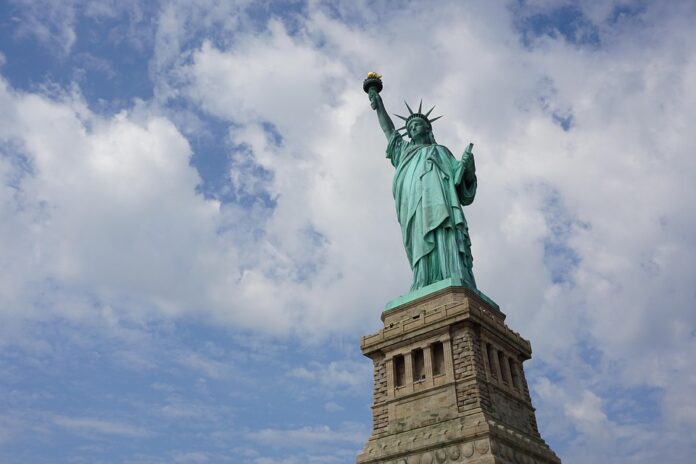
No fuel, no help, no escape: United Nations agencies warn against the imminent collapse in Gaza
“” The fuel is the backbone of survival in Gaza »» says the declaration. “Without fuel, these lifelines will disappear for 2.1 million people.”
UN humanitarian workers stressed that fuel feeds everything, hospitals and water systems with bakeries and ambulances.
Without regular supply, ” Maternity, neonatal and intensive care units fail, and ambulances can no longer move. The fuel shortage, she said, left the population of Gaza-already faced with severe food insecurity and the constant threat of violence-on the verge of disaster.
They warned that “without adequate fuel, UN agencies responding to this crisis will probably be forced to stop their operations entirely”, which means “no health services, no clean water and no capacity to provide help”.
Inadequate fuel injection
The agencies noted that for the first time in 130 days, a small amount of fuel had been allowed to enter Gaza this week. Although welcome, the amount – only 75,000 liters over two days – is far from sufficient to meet the daily needs of the population and vital civil aid operations.
Speaking at the UN headquarters in New York on Friday evening, UN spokesperson Stéphane Dujarric described the global situation as “disastrous and aggravated day by day”.
“” Each day constantly provides more preventable deaths -Children dying of pain, and hungry people fired on a net of aid that is authorized, “he said.
Mortal
Mr. Dujarric also expressed a profound concern about the continuation of Israeli restrictions on access to aid. “Yesterday, our teams could provide hospitals with part of the fuel that came – but only in the south. It is because Israeli authorities have denied our attempt to do fuel to the north“He said.” Such denials are fatal. »»
He added that the fuel shortage also affects water treatment, ambulances and waste management. “” All these services may collapse“He said.
Out of 15 humanitarian missions which required coordination with the Israeli authorities on Thursday, only six were completely facilitated. Five were refused squarely, while four were facing obstacles that have delayed or prevented delivery.
A mission, to save injured people trapped under rubble in Gaza City, was only approved two days after the initial request – too late to save lives. “” As the mission was finally authorized yesterday, no one was found alive“Said Dujarric.
In addition to this, essential items such as tents and shelter materials are prevented from entering Gaza for more than four months, leaving thousands of people exposed to the elements.
Call closed
Humanitarian workers are also in danger. “Five strikes landed just a few hundred meters from the place where humanitarian workers operated this week, including UN staff,” said Dujarric. No injury was reported, but several Red Crescent workers were slaughtered while trying to help an injured colleague.
The United Nations agencies call for immediate and coherent delivery of large -scale fuel and full and safe access to all parties of Gaza. “The urgency of this moment cannot be overestimated,” they said. “” Without fuel, Gaza faces a complete collapse of humanitarian efforts. “”
Originally published at Almouwatin.com
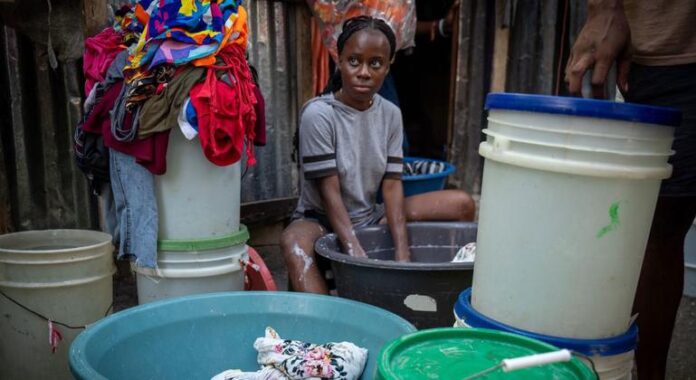
Lifesaver: The study shows that vaccine campaigns have reduced deaths by almost 60%
THE studyDirected by Gavi, The Vaccine Alliance, in collaboration with Australia Burnet Institute, and published In the global health of the British medical newspaper doing authority (BMJ), analyzed 210 epidemics in 49 low -income countries over a period of 23 years.
He found that the rapid deployment of vaccines during cholera epidemics, EbolaDotebacle, meningitis and yellow fever resulted in an estimated reduction in diseases and deaths of almost 60% on average.
For diseases like yellow fever and ebola, the impact was even more dramatic: the deaths of yellow fever dropped by 99%, while the deaths of Ebola dropped by 76%.
The results highlight not only the effectiveness of emergency vaccination, but also the essential role of preparation and speed in response to emerging threats.
“For the first time, we are able to in -depth quantify the advantages, in human and economic terms, to deploy vaccines against epidemics of some of the deadliest infectious diseases,” said Sania Nishtar, CEO of Gavi.
“” This study clearly demonstrates the power of vaccines as a profitable counter-measurement of the increasing risk that the world is confronted from epidemics.“”
GAVI: a rescue partnership
Gavi, the vaccine alliance, is a Single global partnership This helps to vaccinate almost half of the world in the world against deadly and debilitating diseases.
He gather Development of governments of countries and donors, the World Health Organization (WHO), UN children’s funds (Unicef), the World Bank, the Bill & Melinda Gates Foundation and other key partners to extend access to vaccination.
GAVI also maintains global vaccine stocks for major diseases, managed in coordination with WHO, UNICEF, Médecins Sans Frontières (MSF) and the International Federation of Red Cross and Red Crescent Societies (IFRC).
Working in partnership with GAVI, governments and health authorities, United Nations agencies support vaccination campaigns in some of the most remote regions of writing. In the photo here, a child receives a vaccine in the Solomon Islands in the Pacific.
Quantification of lives and costs saved
In addition to reducing deaths and years of life adjusted in terms of adjusted people, emergency vaccination during the 210 epidemics studied generated nearly $ 32 billion in economic advantages – from avoiding premature deaths and years of life lost to invalidity.
The study authors claim that this figure is probably a conservative estimate, because it does not include the wider social and macroeconomic impacts of major epidemics.
For example, the Ebola 2014 Ebola epidemic in West Africa, which occurred before an approved vaccine was available, cost the region about $ 53 billion. On the other hand, subsequent epidemics responded to emergency vaccines saw the reduced deaths of three quarters and the regional distribution threat has lowered.
Results by illness
Disease gains by illness
The study provides a deterioration in the effectiveness of vaccines by the disease.
MeaslesOne of the best known infectious viruses has seen the cases drop by 59% and deaths of 52% thanks to the response campaigns to epidemics.
Yellow fever I saw the biggest gains, emergency vaccination almost eliminating death – a 99%drop.
Cholera And meningitiswhich often strikes communities with limited access and infrastructure in terms of health, has experienced more modest but always significant reductions in cases and deaths.
Vaccinations have helped to reduce the cases and deaths of cholera respectively by 28% and 36%, through 40 cholera epidemics between 2011 and 2023. For meningitis, cases and deaths dropped by 27% and 28% respectively, over 10 years.
Vaccines, COVID-19 and future threats
THE Corona Virus“> The cocovio-19 pandemic was a brutal reminder of the value of the vaccines, which saved around 20 million lives worldwide during the first year of deployment alone,, according to The Lancet Medical Journal respected and influential.
However, the pandemic also disrupted routine immunization, leading to a dangerous decline in disease coverage rates such as measles and polio. The GAVI study underlines that emergency vaccination must be associated with solid routine vaccination systems to prevent future epidemics.
In the future, GAVI 2026-2030’s strategy includes expansion of stocks, accelerating access to vaccines for diseases such as MPOX and hepatitis E, and support preventive campaigns in high-risk regions.
Originally published at Almouwatin.com
World Horse Day: honor the oldest and most faithful companion in humanity
UN News visited the farm to mark the first World Horse Dayestablished this year by the United Nations General Assembly. By creating the day, the Member States have sent a clear message: animals deserve to be treated with care and respect.
A faithful companion
Former battlefields with modern therapeutic programs, horses have been on the side of humanity for millennia – but in the world of high technology today, few remember this heritage.
“The horses did not just help us to survive,” explains Marisa Striano. “They built America with us. They plowed the earth, they transported people. ”
Many cultures worship horses not only for their strength, but for their spiritual presence. In Mongolia – the country which introduced the resolution of World Horse Day – horses are sacred, at the heart of national identity. Children there often learn to ride before they can walk and folk songs celebrate the loyalty and nobility of animals.
Fading
Once the main mode of transport of humanity, the horses have been largely replaced by machines. Today, they are mainly in sport, tourism, therapy and entertainment. But this change does not mean that they have lost their place in human life. “Horses have not lost their value – we have just stopped seeing it,” explains Roano.
Located on the northern scenario of Long Island New York, Spirit’s promise provides a healing sanctuary for animals and humans.
A second chance
Sick, aging or retired horses are often shipped to slaughterhouses in Canada or Mexico.
“Imagine working for 15 years, giving everything, then being thrown just because you have aged,” explains Striano. “These are the horses we take. We give them more time. A second chance. »»
The farm houses 19 horses rescued, including retired police horses, old reproductive stallions and even old Amish work horses – each with its own story.
“One of them is Gus – he is 107 years old in the human years,” explains Striano. “He was a therapy horse, but in the end, he started throwing children. Now he is retired and in love with his blind companion, Ramona. They are inseparable. It is the soul of the horse. »»
Emotional congruence
Horses are not only aid – they are deeply emotional, intuitive and highly social beings. With a vision nearly 360 degrees and an increased sensitivity to their environment, horses are naturally listening to emotional states, explains Striano. This makes it ideal partners in therapeutic contexts.
Spirit’s promising farm is led by a very united team of women.
At the promise of Spirit, horses work with disabled children, survivors of mistreatment and older adults with dementia. A horse can calm an anxious teenager or bring joy to someone who thought they had forgotten how to feel it.
They are often called “emotional mirrors”: horses instantly take up the true inner state of a person-even if the person is not aware of it.
“Horses are 100% emotion. They don’t lie, and they can’t bear others, ”explains Ms. Striano. “If you say that you are well but inside, you will collapse, they will feel it – and will move you away. But if you are honest – even if you are sad or angry – they will stay with you. »»
This sensitivity makes it remarkable companions for those who experience sorrow, dependence or trauma. A moment stands out alive for her.
A young man came to the farm at the start of his recovery from drug addiction. Dressed in a hooded sweatshirt with pulled sleeves, he seemed constantly on guard. At the time, the farm had a horse called Heartbreaker. Although she has passed since then, Striano remembers what happened then with AWE.
“She approached him and simply accepted him,” said Ms. Roano. “She looked at him as,” I see you are broken. I am too. But this is not the end. You can always love. »»
The two entered the paddock together. Heartbreaker is lying on the ground, and the man was sitting next to her, placing his face on his body. For half an hour, they were sitting there in silence.
“It was a complete peace,” recalls Ms. Striano. “Confidence without words. Presence without conditions. ” Then the young man’s mother approached. Heartbreaker, who had been calm and sweet, suddenly agitated – sniffing, throwing his head, trying to free himself.
“She acted as if she wanted to protect him from her mother,” she said. “I rushed to direct sorrow. And the young man turned to me and whispered ”, she hides behind her religion, but she did not forgive me. She will never say it – but the horse has seen it. »»
For Ms. Striano, it confirmed something that she saw again and again: horses do not respond to appearances, only the truth. “They don’t see the mask. They see the soul. And it is their power. They see us for whom we are really – and always choose to be with us. ”
Between care and exploitation
The debates around the exploitation of horses are underway: carriage horses at the race industries and industries, where is the border between tradition and cruelty?
Located on the northern scenario of Long Island New York, Spirit’s promise provides a healing sanctuary for animals and humans.
“I hate the race,” said Ms. Striano. “Maybe it had a goal once. Now it’s just a matter of money. Horses are pumped with drugs, locked up, used. Then shot down. »»
At the same time, she recognizes that ethical questions are not always clear. “I do not believe to sacrifice one soul for another,” she said when they asked her questions about horses pulling cars for Central Park tourists in New York. “These horses nourish whole families. We have to find a balance. But we must never forget: horses are not tools. They are living beings. “
To forgive and love again
For Ms. Striano and the horses she takes care of, the farm is a place where confidence between species is rebuilt. She considers her work as a privilege – a daily chance to be with creatures who know how to forgive and love again, no matter what they have experienced.
“When I enter the paddock and they come to me – I thank them. Every time, ”she says. “Because a horse is pure. They are not with you because you broke them – they are with you because they have chosen to be. And that means everything. »»
A day to say “thank you”
According to the United Nations Food and Agriculture Organization (Fao), there are about 60.8 million horses worldwide. The United States has 2.41 million horses and ponies in 63,000 farms, while the European Union is home to around 7 million horses and 800,000 jobs in equestrian farming, sport and tourism. In Mongolia, there are 3.4 million horses – almost one for each person.
Beyond sport and industry, horses, donkeys and mules are vital for rural life. According to research from the World Animal Health and FAO Organization, 112 million work equines support the means of subsistence of some 600 million people in low and intermediate income countries, helping to transport water, food and much more.
On July 11, the first world horse day, the UN invited the world to say “thank you” to the faithful companion of humanity – for their work, their confidence and their patience. To stay by our side – and help us heal. “A horse is a gift,” explains Ms. Striano. “And we don’t have the right to lose it.”
Originally published at Almouwatin.com
Desperate Afghan refugees return to an unfamiliar home
The agency is calling for calm and cooperation to provide a dignified path forward for millions of displaced Afghans.
More than 1.6 million Afghans have returned from both neighbouring countries in 2024 alone, according to UNHCR – a figure that has already surpassed earlier forecasts for the entire year.
‘From Afghanistan – not of Afghanistan’
The scale and speed of these returns are placing enormous pressure on border provinces ill-equipped to absorb them, exacerbating poverty, insecurity and humanitarian need in a country still reeling from economic collapse and widespread human rights abuses.
Complicating the situation further is the fact that many returnees – especially women and children – are coming back to a country they barely know.
“They are from Afghanistan [but] not of Afghanistan – often born abroad with better education and different cultural norms. Their outlook is different from and often at odds with present day Afghanistan,” says Arafat Jamal, UNHCR Representative in the country.
Women and girls in particular face a jarring shift: from relative autonomy in host countries to a context where their rights are severely restricted by edicts from Taliban authorities.
Women’s rights in Afghanistan continue to face severe setbacks, with restrictions deepening across education, employment and public life
Disorientated and disorganised
He reported conditions that he had seen for himself recently in Islam Qala, a key border crossing with Iran.
Daily arrivals have surged to around 50,000 people, many of them disoriented and exhausted after arduous journeys. UN officials described scenes of desperation at reception centres.
“Many of these returnees have been abruptly uprooted and have undergone arduous, exhausting and degrading journeys – they arrive tired, disoriented, brutalised and often in despair, and they sprawl throughout a crowded centre in often 40°C (104°F) heat,” Mr. Jamal said.
While some returns are voluntary, he added that many are occurring under duress or without proper protections in place. Those returning include both officially registered refugees and people in “refugee-like” situations who may face serious risks upon arrival.
Funding crisis
The UN and humanitarian partners have mounted a broad-based response along the borders, providing food, water, health services, protection and onward transportation.
However, funding shortfalls are critically hampering operations. UNHCR’s response is just 28 per cent funded as of July, forcing aid agencies to ration supplies and make painful choices.
“We are living on borrowed funds,” Mr. Jamal said. “Daily, we are asking ourselves – should we give one blanket instead of four? One meal instead of three? These are heartbreaking, soul-destroying decisions.”
The situation is equally dire for other agencies: the wider, UN-led 2025 Humanitarian Needs and Response Plan for Afghanistan – which seeks $2.4 billion to assist nearly 17 million people across the country – is only 22 per cent funded.
Poverty and drought
Recent UN assessments have also warned of deteriorating conditions and deepening poverty within Afghanistan.
The UN Food and Agriculture Organization (FAO) issued alerts over worsening drought across much of the country, while the UN Development Programme (UNDP) reports that 70 per cent of Afghans already live at subsistence levels, as the collapse of public services and ongoing rights violations leaves millions in despair.
As returnees cross the border, often without notice or resources, local populations are being stretched to the limit.
Mr. Jamal noted that this “precarity layered upon poverty” risks fuelling frustration, competition over limited resources and new forms of social tension.
“Afghanistan may be welcoming, but it is wholly unprepared to receive this volume of returnees,” he said. “The communities who are taking people in are doing so with great generosity, but they are themselves in crisis.”
Global attention
The growing emergency comes just days after the UN General Assembly overwhelmingly adopted a resolution expressing “deep concern” over deteriorating conditions facing Afghans.
The resolution, passed with 116 votes in favour and only two against, urged the Taliban to reverse repressive policies and called for renewed international cooperation to support Afghan civilians.
The resolution highlighted the need for “coherent approaches” that bridge humanitarian, development and political efforts. It also called on donor countries to maintain or increase support.
EUAM Iraq: new head of mission appointed
The Council today appointed Ralf Schröder as new head of mission for the European Union Advisory Mission in Iraq (EUAM Iraq). Source link
International Criminal Court: War crimes, systematic sexual violence ongoing in Darfur
Deputy Prosecutor Nazhat Shameem Khan told ambassadors in the UN Security Council that the ICC has “reasonable grounds to believe” that both war crimes and crimes against humanity are being committed in region, where a deepening conflict between the Sudanese Armed Forces and the Rapid Support Forces (RSF) has plunged the region into a humanitarian disaster.
Among the most disturbing patterns, she said, is the targeted use of sexual violence, including rape, abduction, and gender-based assaults – a campaign often directed at women and girls from specific ethnic communities.
‘An inescapable pattern’
“There is an inescapable pattern of offending, targeting gender and ethnicity through rape and sexual violence,” Ms. Khan said, stressing that such crimes must be translated into evidence for the Court and the world to hear.
She detailed ongoing efforts by the ICC’s Darfur Unified Team to document the atrocities, including through repeated field missions to refugee camps in Chad, the collection of over 7,000 items of evidence and enhanced cooperation with civil society and victims’ groups.
Ms. Khan also emphasized a renewed focus on gender crimes, supported by the Court’s dedicated gender unit, and called on all partners to work more closely to “ensure there is no gap in our efforts to hold perpetrators accountable.”
Deteriorating humanitarian crisis
Meanwhile, the humanitarian situation worsens.
According to the UN Office for the Coordination of Humanitarian Affairs (OCHA), aid convoys are being targeted, hospitals bombed, and food and water deliberately withheld.
In early June, five humanitarians were killed in an ambush in North Darfur, while airstrikes in West Kordofan killed over 40 civilians, including patients and healthcare staff.
Active shelling
In El Fasher, the capital of North Darfur, active shelling and armed encirclement by RSF forces have effectively cut off civilians from lifesaving assistance. Reports of extortion and diversion of aid in surrounding areas have further compounded the crisis.
The outbreak of cholera is spreading across conflict zones, with Darfur now experiencing cross-border transmission into Chad and South Sudan.
Health officials warn that the ongoing rainy season could worsen the epidemic by contaminating already-scarce water sources.
Committed to justice
Alongside humanitarian challenges, the ICC also faces formidable obstacles.
Deputy Prosector Khan noted a series of challenges, including obstruction and hostility towards investigators on the ground, critical underfunding, limited cooperation from some States, and difficulties surrounding the arrest and transfer of individuals under ICC warrants.
However, despite the challenges, she affirmed the ICC’s commitment to justice.
She pointed to the pending verdict in the trial of Ali Muhammad Ali Abd-Al-Rahman, also known as Ali Kushayb, as a milestone for accountability – and a warning to perpetrators who still believe themselves beyond the reach of international law.
“They should understand: we are working intensively to ensure that this trial is only the first of many,” she said.