Monday, April 27, 2026
Home Blog Page 363

The consequences of tripoli clashes put the fragile stability of Libya to the test

0

Almost 15 years after the fall of Gaddafi, Libya remains divided between the recognized international government of national unity in Tripoli and the rival government of national stability in Benghazi.

Although a truce was reached on May 14, the start of fighting last month in the capital “temporarily disrupted the United Nations development and humanitarian operations,” said the top sent Hanna Tetteh.

Fragile truce

May 18, with the support of the United Nations support mission in Libya (Little vintage), the presidential council created a truce committee.

Composed of key safety players, the organization has been mandated to monitor the ceasefire, facilitate the permanent end of the fighting and ensure the protection of civilians.

While Unsmil strives to facilitate tensions and prevent other clashes, the presidential council has also set up a temporary security and military arrangement committee, responsible for maintaining peace and reorganizing the security forces in the capital.

“” The truce, however, remains fragile and the unpredictable overall security situation“Said Ms. Tetteh.

Serious serious violations

The armed clashes that broke out in May led to death and civil injuries, as well as damage to critical civil infrastructure, stressing the gaps in the state security forces by adhering to international humanitarian law and human rights, she continued.

Ms. Tetteh expressed her alarm in the face of massive pits found in Abu Slim, citing emerging evidence of serious human rights violations – including extrajudicial murders, torture and applied disappearances – allegedly by state security forces.

“The presence of charred remains, organizations not identified in Morgues and an unofficial detention site suspected at the Abu Salim Zoo underlines the scale and severity of these abuses“She said.

Change request

“” Many Libyans are deeply disappointed with the prolonged transition period And have lost confidence in current institutions and leadership, “said Tetteh.

As civilians are increasingly doubting the will of the current management to put national interests above their their own, there is a high demand for political processes which allows the participation of the public, allows elections and offers a democratic government with a clear mandate for a real change.

Unsmil intends to present a timepiece linked to time and politically pragmatic – in order to reach the end of the transition process – at the time of her next briefing, Tetteh told ambassadors.

“” I urge all the parts to engage in good faith and to be ready to forge a consensus on this roadmap“She said.

Originally published at Almouwatin.com

World News in Brief: Türk speaks on sexual violence, Brazil floods up to date, nicaragues of human rights violations

0

“We do not meet the minimum requirements to prevent women from being reduced to silence and to support their participation and their leadership in … the construction of peace”, Mr. Türk said.

25 years ago, the UN Security advice adopted a resolution which confirmed the vital role that women play in the prevention and resolution of conflicts and stressed the importance of putting an end to impunity for sexual violence in and around conflicts.

Since then, other resolutions have strengthened these principles and the United Nations agencies and their partners have worked to implement them. Although these works have led to trials that have held responsible authors, gender -based violence is becoming more and less widespread.

Justice is not the norm

Mr. Türk’s office has documented thousands of horrible cases in the Democratic Republic of Congo,, Israel and the occupied Palestinian territory,, Haiti,, Sudan,, Ukraine and many other conflicts zones.

“Fighters are encouraged or responsible for victimizing women, often as a deliberate weapon of war – to terrorize communities and force them to flee; And to silence the voices of women who denounce war and seek to strengthen peace, “he said.

The financing and aid reductions also hamper the efforts of humanitarian workers and human rights agencies, hampering the provision of essential medical and psychosocial support for women and girls affected.

Mr. Türk noted that not to provide these essential services has long -term impacts on survivors and “leaves young girls and single women, pariah and traumatized”.

Brazil floods shifting the communities two years in a row

The United Nations Migration Organization (Iom) raised the alarm Tuesday on the heavy rains beating the southern state of Brazil of the Rio Grande Do Sul.

Since mid-June, more than 5,000 people have been moved, four have died, one person remains missing and 132 municipalities have reported damage.

This last disaster occurs only a year after record floods have forced many home communities, some now moved for the second time.

IOM response

The presence and partnerships of the IOM in the region were widened and reinforced during the 2024 crisis, allowing a rapid response in 2025.

This year, the organization focuses on supporting recovery efforts by providing technical expertise and helping the authorities to assess the needs and the development of long -term solutions.

The objective is to ensure that the aid reaches the most in need and that the systems are in place to help communities to rebuild themselves safely and permanently.

While being determined to support the inhabitants of the Rio Grande Do Sul, the IOM called for critical support: “As extreme weather events become more frequent and more intense, humanitarian action must go hand in hand with investments in preparation and resilience,” said Paolo Caputo, head of the IOM mission in Brazil.

The Nicaraguan dissident killed in Costa Rica is part of a model, say the experts

THE Group of human rights experts in NicaraguaIndependent experts appointed by the UN Human Rights CouncilOn Tuesday condemned the murder of exile Nicaraguan Roberto Samcam, saying that reports indicate that crime can be part of a wider diagram to silence dissidents abroad.

Mr. Samcam was killed in Costa Rica on June 19 by someone who landed a delivery man who pulled him five times before fleeing.

The victim was a retirement of the army who, in 2018, publicly denounced the current Nicaraguan government led by President Daniel Ortega and his wife Rosario Murillo.

“We condemn the murder of Roberto Samcam in the strongest terms, and we welcome the rapid action of Costa Rica, in whom we have confidence, will denounce the motivations behind this terrible act and do his family justice,” said Jan-Michael Simon, president of the group.

A dissident sinenting model

Since 2018, when the security forces in Nicaragua have violently eliminated anti -government demonstrations, independent experts have documented numerous violations and alleged abuse of human rights.

More recently, in February, the United Nations group published a report warning that the repressive actions of the Nicaraguan State have extended beyond their territorial borders, affecting dissidents-real or perceived-living abroad.

“Nowhere in the world seems to be sure for the Nicaraguens opposed to the government of Daniel Ortega and Rosario Murillo,” said expert Reed Broady.

Experts noted that there is information to indicate that there could be links with the murder of another Nicaraguan Rodolfo Rojas Cordero dissident in 2022 in Honduras and the twice murder of Jaoa Maldonado in 2021 and 2024.

“States must be responsible for having committed transbrication of human rights,” said Simon.

Independent rights experts are not UN staff, receive no salary for their work and independent of any government or organization.

Originally published at Almouwatin.com
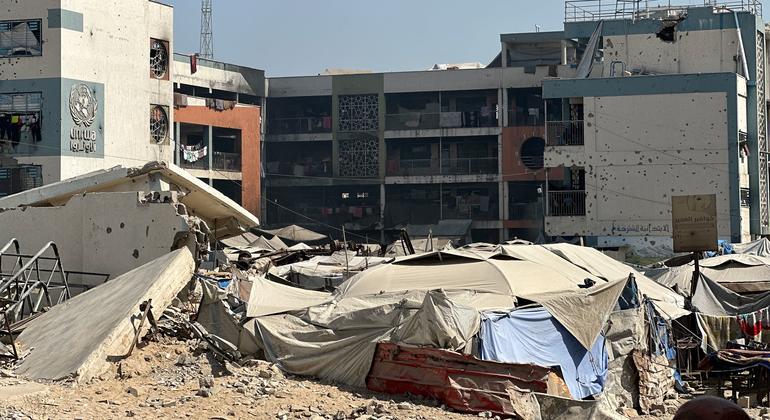
Live Security Council: The Head of Political Affairs is an Iran-Israeli cease-fire as an “important achievement”

0

The Security Council turns out to be on the future of the Complete Complete Action Plan set up in 2015 to prevent Iran from arming its ambitious nuclear program, which has been in effective limbo since the American withdrawal in 2018 and the rejection by the parties of the agreement by Iran. The UN Political Affairs Head, Rosemary, Dicarlo, described the ceasefire of American negotiation overnight between Israel and Iran as a “significant success” and “an opportunity to avoid a catastrophic escalation and to reach a peaceful resolution of the nuclear problem of Iran”. Follow our coverage section of live cover meetings below and UN applications can follow here.

Source link

Originally published at Almouwatin.com
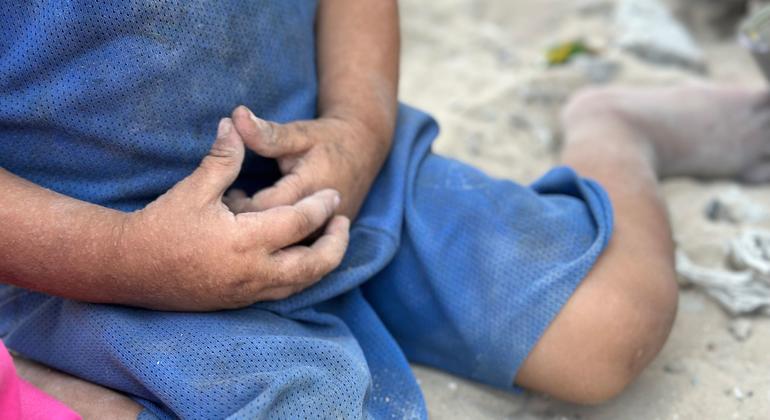
Gas security of supply: Council and Parliament strike a deal to ensure enough reserves at affordable prices

0
Gas security of supply: Council and Parliament strike a deal to ensure enough reserves at affordable prices

Council and Parliament strike provisional deal on amending the gas storage regulation.

Source link

Guterres urges Iran and Israel to ‘fully respect’ ceasefire

0
Guterres urges Iran and Israel to ‘fully respect’ ceasefire

Before both sides had confirmed that a ceasefire was in place early Tuesday both sides exchanged fire, with Tehran residents saying they had experienced a heavy barrage of attacks.

Before leaving Washington for a NATO summit in Europe, President Trump expressed his frustration at the breaches of the fragile ceasefire agreement, urging Iran and Israel to observe the truce.

In a social media post, UN chief António Guterres urged both countries to fully respect the ceasefire.

“The fighting must stop. The people of the two countries have already suffered too much,” he said, adding it was his “sincere hope” that the ceasefire can extend to other parts of the region.

It is my sincere hope that this ceasefire can be replicated in the other conflicts in the region.

IAEA chief stresses need for strong new nuclear deal

Earlier, the head of the UN-backed nuclear watchdog urged Tehran to consider “resuming cooperation” with the international community to quell any lingering hostility around its nuclear programme.“Resuming cooperation with [the International Atomic Energy Agency (IAEA)] is key to a successful agreement,” said Director General Rafael Grossi.

In a short online post on X, Mr. Grossi added that he had offered to meet Iranian Foreign Minister Abbas Araghchi on working together, “stressing this step can lead to a diplomatic solution to the long-standing controversy” over Iran’s nuclear programme.

Tehran prison concern

Meanwhile, the UN human rights office, OHCHR, insisted that a notorious Tehran prison known for holding dissidents should not be a target, a day after a reported Israeli strike on the complex.

OHCHR spokesperson Thameen Al-Kheetan told media in Geneva that Evin prison is not a military objective, according to the laws of war.

“Targeting it constitutes a grave breach of international humanitarian law”, he said.

OHCHR does not have specific details about what the alleged attack, Mr. Al- Kheetan said, but there have reportedly been fires inside the prison and a number of injuries.

Casualty count

An updated casualty count from the Iranian authorities on Tuesday indicated that 610 people have been killed including 49 women and 13 children since 13 June. That number includes two pregnant women and one infant along with 4,746 injured, including 185 women and 65 minors.

Seven hospitals, four health units and six emergency bases and nine ambulances have been damaged, the Iranian health authorities said.

Some 28 Israeli citizens have reportedly been killed by Iranian missile strikes to date.

Civilians must be protected

Political prisoners including journalists are held at Evin prison, but whether they are detained “arbitrarily” or in connection with “crimes they’ve actually committed”, the inmates must be protected, Mr Al-Kheetan insisted.

According to media reports on Tuesday, Iran said that it transferred all the inmates out of the prison after it was hit by an Israeli strike, moving them to other prisons around the capital in order to repair damage.

A fragile ceasefire proposed by the United States seemed to take hold briefly on Tuesday morning, before reports of further Iranian missile strikes on Israel, disputed by Tehran.

The conflict began with Israeli air attacks on 13 June and escalated over the weekend with US forces striking Iranian nuclear facilities. Hundreds of civilians have reportedly been killed in the Israeli airstrikes, while Iran’s retaliatory strikes killed close to 30 people in Israel.

Asked about signs of a crackdown on dissent by the Iranian authorities in the context of the Israeli and US military campaign against the country, the OHCHR spokesperson stressed that it was “difficult to verify information” coming from Iran, given the lack of access.

He confirmed seeing reports about Iranians being “arrested for cyber activities and publishing content related to the Israeli attacks on Iran, according to NGOs”.

Mr. Al-Kheetan also spoke of reports that nine men have been executed in Iran since Israel attacked the country on 13 June.

He called on the Iranian authorities to “completely respect the rights to freedom of expression and information, at all times”, insisting that journalists “must be able to do their work without any obstacles”.

Iranian citizens reportedly arrested and accused of espionage or collaboration with Israel “must have their full rights in terms of legal procedures and a fair trial”, he said.

“If these arrests are arbitrary, those persons must be freed immediately and unconditionally,” he concluded.

Human Rights Council concerns

On Monday, independent human rights experts reiterated their concerns about Iran’s “use of broadly defined national security offences, some of which are punishable by death”, in the context of recent reported executions on espionage charges.

Last week, the UN deputy human rights chief, Nada Al-Nashif, told the Human Rights Council that at least 975 people were executed in Iran last year – the highest number of reported executions since 2015.

She also briefed the Council on the use of torture in Iranian prisons and the ongoing targeting of minorities, journalists and human rights defenders.

Source link

Reinstallation has changed its life. Now she fights for others to have the same luck

0

Currently, she is a lawyer for refugees and human rights qualified in New Zealand-but Tuesday, she remembered 14 years, aged 14 and described the heartbreaking limbo that followed.

Invisible and alone

“I grew up invisible to the world,” she said. “Without rights, opportunities or security.”

All this changed in 2018, when her family was offered in New Zealand-a decision which, according to her, made her dignity, hope and a future.

Today, it pleads for others as a law professional and helps to shape the global resettlement policy as an advisor to the central group on resettlement and the complementary routes (CRCP) which is supported by the UN refugee agency, Hcr.

Ms. Changezi’s powerful testimony set the tone at the exit of the agency Projected global resettlement needs 2026 report.

Syrians in motion

The UNHCR estimates that 2.5 million refugees will require resettlement next year, a drop compared to the 2.9 million estimated for 2025.

Although this marks a change – mainly due to modified conditions in Syria which allow voluntary yields – the figure remains historically high.

The biggest groups in need include Afghans, Syrians, Sudanese South, Sudanese, Rohingyas and Congolese refugees. The main asylum countries such as Iran, Türkiye, Pakistan, Ethiopia and Uganda continue to accommodate large refugee populations, many people facing urgent needs that reinstallation can meet.

“” Reinstallation offers not only protection, but also a way to dignity and inclusion“Said the HCR spokesman Shabia Mantoo.” It is a demonstration of significant international solidarity, “she added.

Disturbing

However, HCR’s message was also a problem. The resettlement quotas for 2025 should fall to their lowest level in two decades – below even the disturbances observed during the COVID 19 pandemic. This decline threatens to cancel progress and places vulnerable refugees to more.

In this context, Ms. Changezi’s story has become more than a personal account – it was a rallying call. “Reinstallation is more than a humanitarian act,” she told journalists. “It’s a Strategic investment in our common future. “”

Contributing to host companies

Ms. Changezi stressed that refugees are not defined by their vulnerability. Around the world, reinstalled refugees reconstruct communities, launch companies and strengthen social and economic systems in their new houses. “” We offer solutions. We conduct innovation“, She insisted.

The UNHCR urges states not only to maintain their existing resettlement programs, but to extend them – quickly and ambitious. It also calls for more flexible and reactive systems that can meet the needs of refugees in different regions and contexts.

Despite the challenges, more than 116,000 refugees were resettled through programs supported by UNHCR last year.

The international objective for 2026 is to reinstall 120,000 people – an objective that the HCH is said to be at hand if states act decisively.

Ms. Changezi closed her remarks with a reminder that the resettlement promise is not abstract. “Multiply my story through millions,” she said. “The long -term impact is extraordinary – not only for refugees, but for the companies that embrace them.”

Originally published at Almouwatin.com

“ Always in shock ”: Myanmar earthquakes aggravate the humanitarian crisis in the fractured country

0

The earthquake of March 28 measuring 7.7 on the Richter scale, struck the central regions with a deadly forceKilling some 3,800 people and injuring more than 5,000, according to UN estimates.

The disaster has devastated the infrastructure and houses of Mandalay, Sagaing and Magway, moving tens of thousands of others in a country already struggling with more than 3.2 million people displaced internally (PDI) since the military coup of 2021.

“” Communities are still in shock from earthquakes – the strongest in the country has known in a century,“Said Jorge Moreira da Silva, executive director of United Nations Office for Project Services (UNOPS), addressing journalists from the United Nations headquarters in New York by video of Beijing after a three -day visit to Myanmar.

“” The devastation caused by earthquakes has aggravated the existing challenges of the conflict, displacement and serious humanitarian needs.“”

Need exceeding resources

UNOPS, which maintains the largest United Nations presence in Myanmar with nearly 500 employees, mobilized $ 25 million in the weeks following the disaster and reached half a million people with rescue support.

“My colleagues worked quickly with partners to deliver emergency shelters, clean water and deploy infrastructure specialists for quick assessments,” Da Silva said.

However, he warned that much greater international support is necessary to meet the extent of needs.

The World Bank estimates the total damages at almost $ 11 billion, the complete reconstruction should cost two to three times more. Over 2.5 million tonnes of debris must also be authorized to allow recovery.

Mr. Da Silva stressed that reconstruction must be centered on people, inclusive and linked to peacebuilding efforts.

“We echo the calls of the whole UN for an end of violence”, he said. “” Recovery and reconstruction should support the trip from Myanmar to peace and reconciliation. Civilians must be a priority.“”

Women and girls face disproportionate risks

Humanitarian repercussions have struck women and girls particularly hard – many of whom were one of people killed or injured – and are now facing increasing risk of protection.

According to the United Nations Reproductive Health Agency, Unfpamore than 4.6 million women of reproductive age – including More than 220,000 currently pregnant – are at increased risks.

Damage to health establishments, aggravated by the floods and insecurity of the monsoon, disrupted access to emergency obstetric care and menstrual hygiene. Gender -based violence increases sharply in overcrowded and poorly enlightened shelters.

The Executive Director of UNOPS, Jorge Moreira Da Silva, meets a woman and her newborn in a health clinic.

Pressure health system

THE Risk of water diseases Like cholera and vector diseases such as dengue and malaria also increase.

According to the World Health Organization (WHO) while No major outbreaks had been reported on May 31, cases of acute aqueous diarrhea and skin infections turn.

The monsoon rains have aggravated the conditions in temporary shelters, where overcrowding and poor sanitation raise serious health problems. Mental health remains fragile, 67% of respondents in a recent survey reporting emotional distress linked to the earthquake and the current conflict.

WHO and its partners have delivered more than 300,000 doses of vaccines-including tetanus and rage-but access remains limited and underfunced health services.

Prolonged crisis

More than 3.25 million people stay inappropriate In Myanmar since the military coup in February 2021, with at least 176,000 others looking for refuge in neighboring countries, according to the refugee, the agency, Hcr.

This excludes hundreds of thousands of Rohingyas refugees from previous waves of violence.

Myanmar also remains One of the deadliest countries in the world for land mines and the explosive remains of war.

In the first nine months of 2024 only, 889 victims were reported – Reasons Fear that the toll could exceed the record of 1,052 deaths and injuries documented in 2023.

Originally published at Almouwatin.com

Power to the people; Community development financing in Somalia

0

At the heart of the state of Galmudug, in Somalia, the dream of two young women, Iftin and Aminaa, to go to university in Abudwaq was responsible for challenges.

Frequent power cuts and a long dark and perhaps dangerous road between the campus and the city have made almost impossible for them and other girls to provide evening lessons.

Determined to find a solution, they approached the international organization for migration (Iom)) Co -financing system (CFS), which provides funding corresponding to the projects led by the community and which is designed to allow local communities of Somalia to take charge of their development and recovery.

© Iom / Spotlight Communications

Solar panels provide constant power at the University of Abudwaq, Galmadug.

Rallying 19 Other students, Iftin and Aminaa submitted a simple but transformative proposal… .. Crowdfund for solar lampposts and a solar energy system for the school.

In July 2022, the girls collected $ 10,000. The IOM has equaled this amount and added $ 50,000 more.

The result was a well -lit and secure road in the city of Abudwaq at the university and a fully functional solar energy system.

The system now feeds 24 hours a day with clean energy.

The impact did not stop there.

Later, the community decided to connect a nearby drilling to the system, offering clean and free water to all the communities of Abudwaq and nearby pastors, which now bring their cattle to drink and graze near the water source.

Animals water drilling powered by solar energy.

“Abudwaq was not one of our original target locations,” said Mohamed Mohamud Hussein, an IOM officer working on community planning. “But we considered the proposal because it was well thought out, transformational for the community and aligned with the mandate and the priorities of the CFS concerning property and sustainability.”

The determination of Iftin and Aminaa has given the example to other communities across Somalia.

Community power

Pilot by IOM In 2021, the CFS has become one of the most innovative recovery tools in Somalia. He puts power in the hands of local communities.

At the end of 2024, 42 projects had been completed, reaching more than 580,000 people in 22 districts in the center of Somalia.

Nine others are in progress. Nearly 1,600 members of the community and members of the diaspora contributed, raising more than $ 500,000, which corresponds to $ 2.3 million.

Even in fragile contexts, collective action makes a difference. In Farjano, a regulation for internal displaced persons in the state of Galmudug, the construction of a new primary school has more than providing classrooms. He restored hope.

A new primary school has been built in Farjano funded by the IOM co -financing system.

“For the very first time, all my children could go to school – and it was free,” said Shamso, mother of three.

In Mataban, a newly constructed stage of young people favored unity and a sense of shared identity. The groups that had previously avoided began to spend time together. “The stadium gathered us in a way that we have never imagined,” said Mustaf, a Mataban resident. “It is not only for sport – this is where our community feels united.”

By obliging communities to identify their needs and collect initial funds, the CFS adopts an approach from top to bottom towards development.

It guarantees that projects are not only focused on the community, but also have more chances of long -term success and impact

The fourth international conference on development financing (FFD4) which begins in Seville, Spain, June 30, aims to reform funding at all levels, and will undoubtedly examine local solutions and community -oriented initiatives that have proven itself in Somalia.

Originally published at Almouwatin.com

Gaza: Over 400 Palestinians killed around private aid hubs, UN rights office says

0
Gaza: Over 400 Palestinians killed around private aid hubs, UN rights office says

The alert comes nearly a month since the Israeli and US-backed Gaza Humanitarian Foundation (GHF) started operating on 27 May in select hubs, bypassing the UN and other established NGOs.

Its food distribution points have been associated frequently with confusion and shooting as desperate and hungry Gazans rush to fetch supplies, said UN human rights office spokesperson Thameen Al-Keetan.

“Israel’s militarized humanitarian assistance mechanism is in contradiction with international standards on aid distribution,” he insisted. “The weaponization of food for civilians, in addition to restricting or preventing their access to life-sustaining services, constitutes a war crime and, under certain circumstances, may constitute elements of other crimes under international law.”

In its latest update on the emergency, the UN aid coordination office, OCHA, reported that “scores of people of all ages are being killed and injured every day” in the shattered enclave.

“Humanitarian operations of sufficient scale are not facilitated, leaving unaddressed the critical needs of those who have so far survived,” it said.

Shelled or shot 

In Geneva, meanwhile, OHCHR’s Mr. Al-Keetan explained that private aid hub victims were either “shelled or shot” by the Israel Defense Forces. They have endangered civilians and contributed to the “catastrophic humanitarian situation in Gaza”, he maintained.

At least 93 people have also been reportedly killed by the Israeli army while attempting to approach the few remaining aid convoys of the UN and other aid partners still operating in Gaza.

In a previous alert, the UN human rights office has condemned the possible summary execution of Palestinian staff associated with the Gaza Humanitarian Foundation by armed men allegedly affiliated with Hamas.

“These killings must end immediately, and those responsible held to account,” the UN office said in a statement.

Most vulnerable miss out

The OHCHR spokesperson noted that women and children, along with older people and those with disabilities continue to face “multiple challenges” accessing food in Gaza today.

Looting of aid convoys is now commonplace in Gaza after more than 20 months of daily Israeli bombardment as a result of a near-total blockade on humanitarian supplies including food, fuel and medicine.

The result is that Gaza’s most vulnerable individuals are unable to access any of this diverted aid, the UN human rights office told UN News.

To date, at least 3,000 Palestinians have been injured in incidents associated with the non-UN aid hubs and looting.

“Desperate, hungry people in Gaza continue to face the inhumane choice of either starving to death or risk being killed while trying to get food,” the UN human rights office explained.

Ongoing aid obstacles

Although the UN and other aid providers still function in Gaza, they are reliant on the Israeli authorities to facilitate their missions. On Saturday and Sunday, only eight out of 16 requests for humanitarian operations were approved, aid teams reported.

“Half of [the missions] were denied outright, hindering the tracking of water and fuel, the provision of nutrition services and the retrieval of the bodies,” said Alessandra Vellucci, Director of the Information Service at UN Geneva.

Her comments followed a warning from the UN’s top aid official in Gaza on Sunday who described dire scenes and “carnage”.

“It is weaponized hunger. It is forced displacement. It’s a death sentence for people just trying to survive. All combined, it appears to be the erasure of Palestinian life from Gaza,” said OCHA’s Head of Office in the Occupied Palestinian Territory, Jonathan Whittall.

Telecommunications have now been restored across Gaza after damaged fibre cables were repaired at the weekend.

“For the first time in days, humanitarian teams have had more than 24 hours of relatively stable connectivity – something that is essential to coordinate emergency relief and save lives,” OCHA said in Monday evening’s update.

But without urgent fuel deliveries, telecommunications “will go down again very soon”, the UN aid wing warned.

Fuel crisis

“Fuel is also needed to keep emergency rooms running, power ambulances, and operate water desalination and pumping stations,” it explained.

“Right now, teams on the ground are rationing what little fuel remains and working to retrieve stocks stored inside Gaza, in areas that are hard to reach.”

Access to Nasser Medical Complex is also limited because there is not enough fuel for transportation “and health workers and patients fear for their safety”, OCHA continued.

“Last week, in Khan Younis, in-patient admissions at field hospitals increased threefold, largely due to access challenges at Nasser, which also saw an influx of trauma patients and has been overwhelmed since.”

Most of Gaza remains under displacement orders issued by the Israeli military, including another one on Monday for two neighbourhoods in Khan Younis city, reportedly following Palestinian rocket fire from these areas.

“These neighbourhoods were already subject to earlier displacement orders and include two hospitals – Al Amal and Nasser,” OCHA said. “While Israeli authorities have clarified that the hospitals are not required to evacuate, OCHA says the designation is nonetheless hindering access to those critical facilities for both patients and medical staff.”

Source link

Gaza: Over 400 Palestinians killed around private aid hubs, UN rights office says

0
Gaza: Over 400 Palestinians killed around private aid hubs, UN rights office says

The alert comes nearly a month since the Israeli and US-backed Gaza Humanitarian Foundation (GHF) started operating on 27 May in select hubs, bypassing the UN and other established NGOs.

Its food distribution points have been associated frequently with confusion and shooting as desperate and hungry Gazans rush to fetch supplies, said UN human rights office spokesperson Thameen Al-Keetan.

“Israel’s militarized humanitarian assistance mechanism is in contradiction with international standards on aid distribution,” he insisted. “The weaponization of food for civilians, in addition to restricting or preventing their access to life-sustaining services, constitutes a war crime and, under certain circumstances, may constitute elements of other crimes under international law.”

In its latest update on the emergency, the UN aid coordination office, OCHA, reported that “scores of people of all ages are being killed and injured every day” in the shattered enclave.

“Humanitarian operations of sufficient scale are not facilitated, leaving unaddressed the critical needs of those who have so far survived,” it said.

Shelled or shot 

In Geneva, meanwhile, OHCHR’s Mr. Al-Keetan explained that private aid hub victims were either “shelled or shot” by the Israel Defense Forces. They have endangered civilians and contributed to the “catastrophic humanitarian situation in Gaza”, he maintained.

At least 93 people have also been reportedly killed by the Israeli army while attempting to approach the few remaining aid convoys of the UN and other aid partners still operating in Gaza.

In a previous alert, the UN human rights office has condemned the possible summary execution of Palestinian staff associated with the Gaza Humanitarian Foundation by armed men allegedly affiliated with Hamas.

“These killings must end immediately, and those responsible held to account,” the UN office said in a statement.

Most vulnerable miss out

The OHCHR spokesperson noted that women and children, along with older people and those with disabilities continue to face “multiple challenges” accessing food in Gaza today.

Looting of aid convoys is now commonplace in Gaza after more than 20 months of daily Israeli bombardment as a result of a near-total blockade on humanitarian supplies including food, fuel and medicine.

The result is that Gaza’s most vulnerable individuals are unable to access any of this diverted aid, the UN human rights office told UN News.

To date, at least 3,000 Palestinians have been injured in incidents associated with the non-UN aid hubs and looting.

“Desperate, hungry people in Gaza continue to face the inhumane choice of either starving to death or risk being killed while trying to get food,” the UN human rights office explained.

Ongoing aid obstacles

Although the UN and other aid providers still function in Gaza, they are reliant on the Israeli authorities to facilitate their missions. On Saturday and Sunday, only eight out of 16 requests for humanitarian operations were approved, aid teams reported.

“Half of [the missions] were denied outright, hindering the tracking of water and fuel, the provision of nutrition services and the retrieval of the bodies,” said Alessandra Vellucci, Director of the Information Service at UN Geneva.

Her comments followed a warning from the UN’s top aid official in Gaza on Sunday who described dire scenes and “carnage”.

“It is weaponized hunger. It is forced displacement. It’s a death sentence for people just trying to survive. All combined, it appears to be the erasure of Palestinian life from Gaza,” said OCHA’s Head of Office in the Occupied Palestinian Territory, Jonathan Whittall.

Telecommunications have now been restored across Gaza after damaged fibre cables were repaired at the weekend.

“For the first time in days, humanitarian teams have had more than 24 hours of relatively stable connectivity – something that is essential to coordinate emergency relief and save lives,” OCHA said in Monday evening’s update.

But without urgent fuel deliveries, telecommunications “will go down again very soon”, the UN aid wing warned.

Fuel crisis

“Fuel is also needed to keep emergency rooms running, power ambulances, and operate water desalination and pumping stations,” it explained.

“Right now, teams on the ground are rationing what little fuel remains and working to retrieve stocks stored inside Gaza, in areas that are hard to reach.”

Access to Nasser Medical Complex is also limited because there is not enough fuel for transportation “and health workers and patients fear for their safety”, OCHA continued.

“Last week, in Khan Younis, in-patient admissions at field hospitals increased threefold, largely due to access challenges at Nasser, which also saw an influx of trauma patients and has been overwhelmed since.”

Most of Gaza remains under displacement orders issued by the Israeli military, including another one on Monday for two neighbourhoods in Khan Younis city, reportedly following Palestinian rocket fire from these areas.

“These neighbourhoods were already subject to earlier displacement orders and include two hospitals – Al Amal and Nasser,” OCHA said. “While Israeli authorities have clarified that the hospitals are not required to evacuate, OCHA says the designation is nonetheless hindering access to those critical facilities for both patients and medical staff.”

Source link