Sunday, September 27, 2026
Home Blog Page 379

“ There is no military solution ” to end the conflicts of Israel-Palestine, the Security Council hears, while famine tracks the Gaza Strip

0
“ There is no military solution ” to end the conflicts of Israel-Palestine, the Security Council hears, while famine tracks the Gaza Strip

Two senior UN officials warned that the green light from the Israeli cabinet this week for a new offensive aimed at obtaining total military control of Gaza City – which is home to around a million Palestinians – would only risk “another horrible chapter” of travel, death and destruction.

Miroslav Jenča, deputy secretary general for Europe, Central Asia and the Americas, told ambassadors that the plan proposed by Israeli Prime Minister Benjamin Netanyahu to “defeat Hamas” and the creation of an alternative civil administration which is neither Hamas nor the Palestinian authority, risky ” yet another dangerous escalation“It would destabilize the whole region.

However, according to the Israeli media, the senior political affairs has continued, the Israeli plan provides for the movement of all civilians from Gaza City by October 7, affecting some 800,000 people – many previously displaced.

The reports indicate that the forces would then surround the city for three months. This would then be followed by an additional two months to take control of the central Gaza camps and eliminate the entire area of the Palestinian armed groups.

Calamitic plan

“” If these plans are implemented, they will probably trigger another calamity in Gaza, reverberating in the region and causing a forced displacement, murders and destruction more -aggravating the unbearable suffering of the population, “said Jenča, calling for a complete, immediate and permanent ceasefire, the unconditional and immediate release of all hostages and respect for international humanitarian law by Israel.

He said there was no military solution to put an end to the conflict adding that the planning of the Gaza future “while we are approaching the urgency of field developments today” is critical.

Jenča called to establish political and security frameworks to mitigate the humanitarian crisis, while starting the reinforcement and reconstruction efforts which respond to the legitimate concerns of the Israelis and the Palestinians – in accordance with the realization of a two -state solution.

United Palestine

“In a critical way, these executives must facilitate a legitimate Palestinian government which can bring together Gaza and the West Bank, including East Jerusalem, politically, economically and administrative. »»

In addition, it must be made up of united leadership representing all of Palestine. He called the Palestinian authority to “Advance your declared objective to hold elections To this end.

‘It’s famine’: Rajasingham

Ramesh Rajashingham, responsible for humanitarian affairs, told ambassadors that hunger deaths already increased, before any new mass travel policy for Gaza City.

“Whatever the lines of life, collapse under the weight of supported hostilities, forced displacement and insufficient levels of vital aid.”

He said local authorities documenting the death of 98 children of acute serious malnutrition – 37 since July 1 – ” It is no longer a imminent Hunger crisis – it’s famine. “”

The head of the Humanitarian Affairs Coordination Office (Ochha) in Geneva, said that he was extremely concerned about “prolonged conflict and another human toll which should take place following the government’s decision to extend military operations to Gaza”.

“It marks a serious escalation in a conflict that has already inflicted unimaginable suffering.”

“Grim Jalon”

“A dark milestone has also been crossed in the humanitarian community,” he said, noting that more than 500 humanitarian workers have been killed in Gaza since hostilities have intensified, including at least 167 women. The smear campaigns against help operations continue tirelessly. “” As World Humanitarian Day approaches, we must insist on the protection of all“, He added.

States-all those who have an influence-must look in our bruised collective conscience and invoke the courage to do what is necessary to put an end to this inhuman and this pain, he said.

Civilians must be protected and hostages must be unconditionally released. The Palestinians arbitrarily detained must be released. Israel must accept and facilitate humanitarian aid operations, both in and inside the Gaza Strip, to reach the population in need.

THE International Court of Justice‘s (Icj)) Provisional measures in the case of the application of the Gaza Convention in Gaza remain in place, added the senior OCHA, including the demand that Israel has immediate and effective measures to allow the provision of necessary basic services and humanitarian aid.

Originally published at Almouwatin.com

From crisis to culture: farmers in Haiti build the resilience of a seed at a time

0
From crisis to culture: farmers in Haiti build the resilience of a seed at a time

Instead of having seeds that grow reliably, farmers face prizes that can only increase 40 or 50% of the time. This decreases not only their yield and their profit, but also decreases their ability to maintain their livelihoods.

The organization of food and agriculture (Fao) Works with the Ministry of Agriculture in Haiti to change this by locating the seed economy and the training of members of the banks of organized seeds called the artisanal seed production groups (GPA).

“We realized that most of the seeds were of dubious quality, that is to say that they were not adapted to certain climatic conditions … and as long as they are not well suited and are not of good quality, we will have a low production,” said a news, Pierrefrantz, a former farmer and one of the project leaders of FAO seed banks.

A Haiti / Daniel Dickinson

Haiti seed banks work to provide farmers with high quality seeds.

There are now more than 200 GPAs located in all Haiti, which cultivate high quality seeds to distribute to other farmers in order to increase farmers’ yields and reduce dependence on foreign seeds and food imports.

Especially today, these groups play an important role with more than half of the country faced with emergency food insecurity and with agricultural production threatened by armed violence due to the increase in the activity of gangs.

“GPA, providing quality seeds, contributes to improving agricultural productivity and food security in communities,” said Jacques.

A start in the middle of the disaster

About two thirds of the population of Haiti is based on agriculture for their livelihoods, most of them are small farmers. However, due to recent globalization forces, these farmers only produce 40% of Haiti’s food, creating an untenable food situation through which Haiti has become dependent on exports.

In recent decades, various FAO programs in Haiti have worked to support the production of seeds as an approach to reduce trade deficit. The GPAS program in particular was revitalized in 2010 following the catastrophic earthquake 7.0 which devastated Haiti and its agricultural sector.

FAO strives to distribute high quality seeds in Haiti to stabilize the production of crops.

During this humanitarian crisis and while helping to provide emergency assistance, FAO has exceeded the immediacy of the crisis and began to consider what it would mean to rebuild the agricultural sector.

“Immediately, we must have humanitarian aid resources dedicated to resilience activities. You must prepare yourself later from the start, ”said Pierre Vauthier, representative of FAO in Haiti.

In 2010, this meant recognized that seed systems in Haiti were insufficient, many farmers dependent on external sources and low -quality permeate varieties on the formal and informal market.

From emergency to resilience

This is where the GPAs arrived, giving them first generation of high generation (basic seeds) with which their businesses relaunch. The groups were also trained in best practices of culture, harvesting and financial management.

Although this training is based on scientific research and technological advances, it also aims to deploy local knowledge of ecosystems.

In this vein, in the end, it is the GPAS farmers who choose the varieties of seeds they want to cultivate, with a lot of choice of local species which are already well suited to the environment and already part of the local agricultural traditions.

“Farmers and residents are experiencing their environment, all the peculiarities. They know the type of soil, the type of climate. And this knowledge is transmitted from generation to generation, ”said Jacques.

Climatic shocks tormented the agricultural sector of Haiti.

In addition, FAO strives to provide seed banks with silos and other tools for appropriate storage. This is particularly important during climatic shocks, allowing farmers to better protect actions despite extreme weather events.

“We can consider seeds as an adaptation tool that allows farmers to continue to cultivate crops even during extreme conditions,” said Jacques.

In the end, a program like GPAS is at the heart of what FAO does, said Mr. Vauthier – Yes, FAO facilitates humanitarian assistance, but their true expertise lies in what comes after, in the creation of autonomous communities.

“Resilience can make communities of dignity. This may make your brain think in a very different way, not as assisted but as someone who takes control of his own life, “said Vauthier.

A seed count

Haiti faces an prolonged crisis – 1.3 million displaced people, nearly six million in the face of emergency food insecurity, imminent climatic shocks for which the country is poorly prepared and armed violence that brutalized communities.

In this context, it may be hard to believe that a seed count. But for the FAO, the change must sometimes be small, to be locally durable before being exported to the whole country. These changes may not be revolutionary, said Vauthier, but they work and they do.

The seed banks are almost the same, according to Mr. Jacques.

“What is happening is that farmers depend less on other human beings. They are able to produce their own seeds … They will help strengthen autonomy and food security, “he said.

Originally published at Almouwatin.com

RIS Education Open Call 2026

0

This call aims at funding projects that can support the overall RIS strategy and aims, offer high-quality education, reach a large audience and market, and gain recognition efficiently with a lasting effect. 

The EIT Urban Mobility RIS Education objectives are focused on capacity building in innovation and entrepreneurship and urban mobility. These objectives are reflected in the activity types proposed in this call. The activities responding to these objectives should aim to improve transferrable skills that will lead to further innovation and entrepreneurship in urban mobility in RIS countries. 

There are five general topics (RISE 1-5) that can be addressed by the proposals:

  • RISE 1: Capacity-building (e.g. train the trainer, trainings aimed at improving innovation and entrepreneurial skills with a focus on urban mobility, programmes aimed at defining challenges, facilitating mutual learning, co-creating solutions)
  • RISE 2: Education and training activities with a focus on innovation and entrepreneurship as well as urban mobility with a potential to reach a large audience and market, and gain recognition efficiently with a lasting impact
  • RISE 3: Organisation of summer and winter schools for bachelor students in domain of area of innovation and entrepreneurship.
  • RISE4: Scaling-up of local existing activities to reach wider audience and wider impact.
  • RISE5: Network building with educational players

EIT funding allocation

The total indicative EIT funding allocated to this call for 2026 is approximately up to €1 250 000.

Projects under RISE1, RISE2 and RISE4 categories will be awarded a maximum of €150 000 EIT funding per project per year, whilst the maximum EIT funding under RISE3 will be €85,000 per project per year. For RISE5, the budget will be €20 000 – 50 000.

Who can apply?

EIT Urban Mobility creates ecosystems. KICs are anchored in regional and local communities via their co-location centres (known as Innovation Hubs within EIT Urban Mobility). EIT Urban Mobility constitutes the mechanism to link the knowledge triangle components of education, research and businesses across Europe and into the wider world.

At EIT Urban Mobility, we integrate these knowledge triangle components and have expanded them by adding another group: cities. Accordingly, EIT Urban Mobility currently brings together around 450 partners from 42 countries and four sectors: academia, research, industry and cities.

This Call for proposals is open to all types of legal entities established in European Union (EU) member states and/or in third countries associated with Horizon Europe. These legal entities may be universities, research organisations, small and medium-sized enterprises (SMEs), start-ups or cities, among others, and may or may not be EIT Urban Mobility partners at the time of the proposal submission. Former EIT Urban Mobility RIS Hubs and entities from Outermost Regions are encouraged to apply to this Call by submitting proposals aligned with their preferred activity types. The applicants should have the expertise and previous experience in developing and implementing capacity building projects in urban mobility and/or innovation and entrepreneurship. 

This Call is open to both multi-participant and mono-participant proposals from one or more RIS countries. In the case of multi-participant proposals, proposals must, as a minimum requirement, be composed of at least two independent legal entities[2] from at least one RIS country. In case of mono-beneficiary proposals, the applicant must be from a RIS country.

In the case of multi-participant proposals that involve entities from one country only and mono-participant proposals, the consortia shall explain how they are going to achieve the pan-European dimension in their projects. At the same time, the applying consortia are invited to integrate the knowledge triangle in their activities and should explain how cities, academia and industry partners are involved in the project design, development and implementation.

Info Webinar

EIT Urban Mobility will host an online information session on 9 July 2025 12.00 – 13.30 CEST. To register for the webinar, please visit this website.

Apply Here

Source link

Live Security Council: The ambassadors meet in emergency session, in the middle of the famine in the Gaza Strip

0
Live Security Council: The ambassadors meet in emergency session, in the middle of the famine in the Gaza Strip

THE United Nations Security Council meets in New York following the Israeli firm’s decision to extend its military operation again within the Gaza Strip and take total control of the Gaza City Population Center. The UN chief António Guterres described it as a “dangerous escalation” for the two million civilians trapped in the enclave as well as the remaining Israeli hostages still captive. Follow our Meetings coverage The live report of the crisis meeting section and users of the UN information application can follow here.

Originally published at Almouwatin.com

Quantum precision reached in modeling molten salt behavior

0


Scientists have developed a new machine learning approach that accurately predicted critical and difficult-to-compute properties of molten salts,

Source link

Joint Statement on Gaza by Foreign Ministers and the EU High Representative

0
Joint Statement on Gaza by Foreign Ministers and the EU High Representative

Joint Statement on Gaza by Foreign Ministers and the EU High Representative

Source link

Sudan: You can run – but we will find you, militias warn terrified civilians

0
Sudan: You can run – but we will find you, militias warn terrified civilians

“People told me multiple times that when they were fleeing from Zamzam [displacement camp], armed people would threaten them while they were in flight, saying sure, ‘Flee, go to that place, run here, run there, we will follow you, we will find you’,” said Jocelyn Elizabeth Knight, a Protection Officer for the UN refugee agency, UNHCR.

Briefing journalists in Geneva, Ms. Knight described speaking to one traumatized child at a UNHCR shelter, whose experience mirrors that of countless other youngsters across the nation.

“A tiny boy told me, ‘You know, during the day things are okay here, but I’m afraid to go to sleep at night in case the place where we’re living is attacked again’.”

UNHCR’s Jocelyn Knight speaks with UN News on the situation on the ground.

Forced into squalor

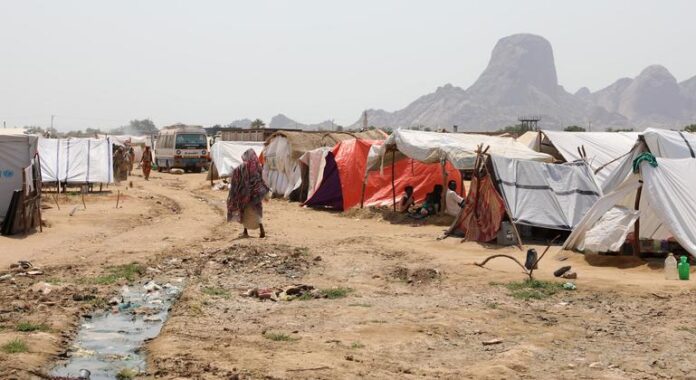
In Darfur in western Sudan, many people uprooted by violence gather in disused public buildings with few essentials to water and sanitation.  

Meanwhile, new displacement and attacks on civilians continue within Darfur and neighbouring Kordofan region, UNHCR warned, in communities “that are already devastated and have been subjected to unspeakable atrocities”.

The ongoing fighting has also severely constrained humanitarian access and disrupted aid delivery for over two years. With seasonal rains underway, many roads will be impassable for months, further complicating the delivery of aid, the UN agency noted.  

The persistent insecurity has also impeded farming, deepening deprivation in areas at risk of famine or already experiencing famine-like conditions.

Latest UNHCR data indicates that more than 873,000 Sudanese refugees have fled Darfur and crossed into Chad, which now hosts the largest number of registered Sudanese refugees since the start of the conflict. One in three people in eastern Chad is now a refugee.

Deadly disease

In addition to heavy fighting between the Sudanese Armed Forces (SAF) and their former allies-turned opponents – the Rapid Support Forces (RSF) paramilitaries – that began in April 2023, civilians now face a fast-spreading and deadly cholera outbreak.

“Cholera has swept across Sudan with all the states reporting outbreaks,” said Dr. Ilham Nour, Senior Emergency Officer with the UN World Health Organization (WHO).

She noted that since last July, nearly 100,000 cases have been reported.

Lives on the line

The highly contagious disease spreads rapidly in unsanitary conditions. As of early August, 264 cases and 12 deaths have been identified at Dougui refugee settlement in eastern Chad hosting Sudanese arrivals from Darfur.

Surrounding villages have also reported suspected cases, while others have emerged in Treguine settlement, one of many UNHCR camps in eastern Chad that host Sudanese refugees.

Help to contain the disease is urgent, insisted UNHCR’s Dossou Patrice Ahouansou, Principal Situation Coordinator for Eastern Chad.

“We still have more than 230,000 refugees at the border in very difficult situation,” he said. “Without urgent action including enhancing access to medical treatment, to clean water, to sanitation, to hygiene and most important, relocation from the border, many more lives are on the line.”

As part of the response and to prevent new cases, the UN agency has suspended the relocation of refugees from border points.

UNHCR is seeking $130 million in flexible funding to provide life-saving aid to an estimated 800,000 people in Darfur. In addition, the UN agency will respond to the cholera outbreak and relocate 239,000 Sudanese refugees from the Chad-Sudan border.

Unexploded weapons alert

Meanwhile, the UN Mine Action Service (UNMAS) confirmed fears that unexploded ordnance from ongoing battles are killing and maiming non-combatants who are unaware of the extent of the danger.

“The sad reality of this ongoing conflict is it is not happening in rural areas, it’s mainly happening in urban areas, in the areas which are highly populated,” said Mohammad Sediq Rashid, Chief of UNMAS Sudan.

Last week, six minefields were confirmed in Khartoum and three of them contained anti-personnel landmines – the first time this has been reported – he told journalists in Geneva.

“Contamination is on the roads, in homes, in schools and airstrips, medical facilities, humanitarian bases,” the UNMAS official continued.

“This is a population [that] is largely unaware of the dangers that are waiting for them…this problem is only growing every day.”

© UNOCHA/ Samreen Abuidris

OCHA’s Director of Operations and Advocacy, Edem Wosornu, visits a cholera treatment centre in Umdurman, Khartoum, Sudan.

Spotlight on Sudan

In a briefing from Port Sudan for New York-based correspondents on Friday, Edem Wosornu, OCHA’s advocacy director, called for the international community to continue putting the spotlight on the war-ravaged nation, both from a funding and advocacy perspective.

Ms. Wosornu had just returned from Khartoum, where she said the destruction was absolutely devastating.

“It was a decimated city – Khartoum which was once buzzing with life [was] almost a ghost town… I have never seen anything like this before in my almost quarter-of-a-century service to the United Nations.”

Pocket change plea

With the humanitarian plan for Sudan only 23 per cent funded, Ms. Wosornu noted that OCHA is not asking for a lot – only 55 cents per person per day.

“Where we have access, we are able to assist. Where we have safety and security assurances, we are able to assist. Where we have enough supplies and funding, we are able to assist,” she said.

The only real solution to the world’s worst humanitarian crisis is lasting peace, according to Ms. Wosornu. Therefore, OCHA and other partners continue to negotiate with the Rapid Support Forces in addition to the internationally recognized Sudanese military Government.

“We need this [humanitarian] pause desperately…The people are asking for an end to the war that has killed, maimed and led to significant destruction of life and livelihood.”

Source link

EIT Launches New Hub to Boost the Innovation Ecosystem in Portugal

0

The European Institute of Innovation and Technology (EIT) has launched its newest joint hub in Portugal. 

By connecting regional actors, innovators, and partners to Europe’s largest innovation ecosystem, the new EIT Community Hub will strengthen cooperation among leading business, education and research organisations, and serve as a one-stop shop for local talent and entrepreneurs. The event featured former European Commission President José Manuel Durão Barroso, who spoke during the opening session. 

The EIT Community continues to support innovation in Portugal by opening its first Community Hub in the country. The aim of the hub is to strengthen cooperation among leading business, education and research organisations while increasing the region’s competitiveness and contributing to sustainable economic growth. The new hub is part of the EIT Regional Innovation Scheme programme designed to tackle Europe’s innovation divide.

The new hub was officially launched today at the Unicorn Factory Lisboa during Unicorn Week 2025. Unicorn Week Lisboa 2025 is a week-long celebration of innovation, entrepreneurship, and technology, bringing together startups, investors, and industry leaders at the heart of Lisbon’s thriving tech ecosystem. The hub opening featured former European Commission President José Manuel Durão Barroso,  newly-appointed EIT Governing Board member Marcella Panucci and António Grilo, President of the National Innovation Agency. Alexande Poço, Member of the Portuguese Parliament and Gil Azevedo, Executive Director of Unicorn Factory Lisbon, who delivered the closing remarks.

Through this Hub, Portuguese innovators will have direct access to EIT education and entrepreneurship programmes, mentoring, funding, market access and Europe-wide networks and partnerships

Marcella Panucci, EIT Governing Board Member

Our mission is to make innovation more accessible and collaborative. With this hub, we want to connect Portuguese talent, startups, and organisations with the right tools and partners to turn ideas into impactful solutions – locally and across Europe

Carolina Sampaio Dinis, EIT Community Officer for Portugal

The newly opened hub in Portugal will represent all the EIT’s Knowledge and Innovation Communities and focus on attracting and engaging an increasing number of local participants in EIT Community activities. It will provide innovators with a centralised source of information on different services and opportunities provided by the EIT Community in Portugal, all EU Member States and all Horizon Europe associated countries. Additionally, it will spearhead the engagement with local authorities, including providing policy support and expertise as required.  

Since 2021, the EIT Community in Portugal has supported 407 startups, attracted over €30.76 million in investment, launched 55 innovations on the market, and engaged 29,463 participants in education programmes. A total of €13.3 million has been committed in EIT grants to Portuguese entities for the period 2023–2025, including €3.1 million specifically for Portuguese SMEs. 

The launch is part of a major network to provide the EIT Community with a strengthened on-the-ground presence across Central, Eastern and Southern Europe. Similar hubs are being established in over 20 countries across Europe. 

Source link

EIT Launches New Hub to Boost the Innovation Ecosystem in Portugal

0
EIT Launches New Hub to Boost the Innovation Ecosystem in Portugal

The European Institute of Innovation and Technology (EIT) has launched its newest joint hub in Portugal.  By connecting regional actors, innovators, and partners to Europe’s largest innovation ecosystem, the new EIT Community Hub will strengthen cooperation among leading business, education and research organisations, and serve as a one-stop shop for local talent and entrepreneurs. The […]

Source link

New AI model could revolutionize U.S manufacturing

0


Artificial intelligence has transformed fields like medicine and finance, but it hasn’t gained much traction in manufacturing. Factories

Source link