
Syria: Statement by the Spokesman on the ceasefire agreement
World News in Brief: Violence in Haiti, rising insecurity in DR Congo, expert panel on nuclear war
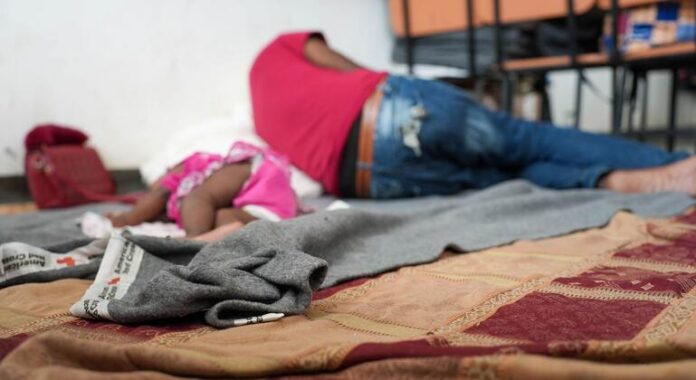
Displaced Haitians are dispersed among the 250 active displacement sites across the country, most of which are informal. Just over a fifth of these sites are managed by humanitarian organizations, meaning that many are living in precarious conditions.
In June alone, more than 200 alerts were reported across displacement sites, over 80 per cent of which were related to essential needs such as lack of water, food, shelter or healthcare.
OCHA noted that nearly 1.3 million people are now internally displaced in Haiti, the highest number ever recorded in the country due to violence.
Constrained UN response
The UN and partners have supported more than 113,000 displaced Haitians this year, providing essential services such as water, shelter, sanitation and healthcare.
The humanitarian response is severely constrained by limited funding and persistent insecurity, hampering humanitarian access to the most affected areas and delaying the delivery of aid.
Despite the challenges, the agency continues to work closely with Haitian authorities and humanitarian partners to coordinate relief efforts and mobilise additional resources to support displaced communities.
DR Congo: Ongoing violence in the east drives displacement, impedes aid delivery
Ongoing violence in North and South Kivu provinces in the eastern Democratic Republic of the Congo (DRC) continues to claim the lives of civilians and to trigger new displacement.
In North Kivu, UN partners on the ground in Rutshuru and Lubero territories reported that fighting between M23 and other armed groups was ongoing until Tuesday, resulting in eight civilian deaths and 42,500 displaced people as of earlier this week.
Since early July, heavy clashes between M23 and other armed groups in South Kivu have also persisted, as local partners said the fighting has displaced at least 37,000 people from their homes.
Aid access restrictions
The surge in violence is making it harder for humanitarians to deliver assistance to vulnerable communities.
While partners and teams on the ground are doing their best to maintain services for those affected, access restrictions and severe funding shortages pose significant obstacles.
A humanitarian convoy coordinated by OCHA along the road between the provincial capital Bukavu and the city of Uvira, primarily planned for this Friday, has been postponed due to a lack of security guarantees on that route.
Many UN partners on the ground are forced to scale back their operations, disrupting essential services for those in need.
OCHA called on the international community to take urgent action to address these severe funding gaps and avert a humanitarian tragedy.
New panel to examine the effects of a nuclear war
The UN Secretary-General has appointed an independent scientific panel of 21 experts to examine the physical and societal consequences of a nuclear war on a local, regional and planetary scale in the days, weeks and decades following such an event.
The creation of the panel, mandated by a General Assembly resolution, comes at a time when nuclear guardrails are being eroded and “the risk of nuclear war is higher than at any point since the depths of the Cold War,” UN deputy spokesperson Farhan Haq said on Friday during the daily media briefing from Headquarters in New York.
The panelists will seek input from a wide range of stakeholders – including international and regional organizations, the International Committee of the Red Cross (ICRC), civil society and affected communities.
Members will hold their first meeting in September and will submit a final report to the General Assembly in 2027.
Humanitarian workers report more deaths, trips and despair in Gaza
“Each day brings more preventable deaths, movements and despair”, the agency said in a humanitarian update.
Friday, the Israeli authorities made another travel order, this time for parts of North Gaza.
Ochha said he continued to receive deeply disturbing relationships of children’s children and adults admitted to hospitals with insufficient resources available to treat them.
The fuel crisis is deepened
The energy crisis in Gaza is also deepened, despite the resumption of limited fuel imports such as the quantities that enter – although essential for continuity – “remain at levels lower than we were previously able to extract from the decrease in internal reserves, which have now been fully exhausted”.
The situation has forced the collection of solid waste to stop in recent days, and additional wells had to stop, in particular in Deir al-Balah.
“Although specific health services, including dialysis, have reduced or closed, others could continue a few more days before they should also do the dark,” warned Ocha.
“With each passing day, people have less clean water and health care and more wastewater flooding the soils.”
Since the limited entry of fuel entry supplies has resumed on July 9, the UN managed to send just over 600,000 liters of diesel to Kerem Shalom. THURSDAY,
He was able to send 35,000 liters of benzene essential for the first time.
OCHA said these volumes are limited because Israel has only granted 14 trucks in last week.
The agency stressed that to maintain rescue operations, hundreds of thousands of liters of fuel are necessary every day. The limited fuel that is currently entering is mainly allocated to health, water and communication services as well as electric vehicles.
Reduced humanitarian movements
Humanitarian movements inside Gaza also continue to be restricted.
Thursday, seven of the 13 attempts to coordinate the movement of humanitarian workers and supplies with the Israeli authorities were facilitated.
The teams were able to recover fuel, collect water, move generators, provide supplies related to hygiene and sanitation and transfer essential medical supplies.
The six remaining attempts were either refused or initially approved, but then faced obstacles on the ground.
End the ban on international media
Meanwhile, the head of the United Nations refugee agency UNRWA On Friday called on the ban on international media entering Gaza.
“650 days of atrocities against civilians without international media authorized to enter,” wrote Philippe Lazzarini in social media, adding that more than 200 Palestinian journalists were killed during this period.
“The media prohibits food for speech speech campaigns in question of data and first-hand accounts of eyewitnesses and international humanitarian organizations,” he said.
Originally published at Almouwatin.com
Frontex confirms all crew safe after maritime incident near Lesvos

On Monday afternoon, a coastal patrol boat operated by the Portuguese Maritime Police, taking part in Frontex’s Joint Operation in Greece, sank off the coast of Lesvos during a search and rescue mission involving irregular migrants. All crew members were rescued.
World News in Brief: Violence in Haiti, Rising Insecurity in Dr. Congo, panel of nuclear war experts

Haitians moved are dispersed among the 250 travel sites active across the country, most of which are informal. Just over a fifth of these sites are managed by humanitarian organizations, which means that many live in precarious conditions.
In June, more than 200 alerts were reported on travel sites, more than 80% of which were linked to essential needs such as lack of water, food, shelters or health care.
Ochha Note that nearly 1.3 million people are now moved internally in Haiti, the greatest number ever recorded in the country due to violence.
UN constrained response
The UN and the partners supported more than 113,000 Haitians inappropriate this year, providing essential services such as water, shelter, sanitation and health care.
The humanitarian response is seriously limited by limited funding and persistent insecurity, hampering humanitarian access to the most affected areas and delaying the delivery of aid.
Despite the challenges, the agency continues to work closely with the Haitian authorities and humanitarian partners to coordinate help efforts and mobilize additional resources to support the displaced communities.
Dr Congo: the current violence in the is led the displacement, obstructs the delivery of aid
The violence in progress in the provinces of northern and southern Kivou in the eastern Democratic Republic of Congo (DRC) continues to cost the lives of civilians and trigger new trips.
In North Kivu, the UN partners on the ground in Rutshuru and Lubero Territories reported that the fights between M23 and other armed groups continued until Tuesday, causing eight civil deaths and 42,500 people displaced earlier this week.
Since the beginning of July, heavy clashes between M23 and other armed groups in southern Kivu have also persisted, as local partners said that the fighting had moved at least 37,000 people from their home.
Help access restrictions
The increase in violence makes it more difficult for humanitarian workers to provide assistance to vulnerable communities.
While partners and teams in the field do their best to maintain services for people affected, access restrictions and serious funding shortages place significant obstacles.
A humanitarian convoy coordinated by OCHA along the road between the provincial capital Bukavu and the city of Uvira, mainly scheduled for this Friday, was postponed due to a lack of security guarantees on this road.
Many UN partners in the field are forced to release their operations, disturbing essential services for those who need them.
OCHA called on the international community to take urgent measures to fill these serious financing gaps and avoid humanitarian tragedy.
New panel to examine the effects of a nuclear war
The UN Secretary General has appointed an independent scientific panel of 21 experts to examine the physical and societal consequences of a nuclear war on a local, regional and planetary level at the time, weeks and decades after such an event.
The creation of the panel, mandated by a Resolution of the General AssemblyArrives at a time when nuclear railings are eroded and “the risk of nuclear war is higher than in any time from the depths of the Cold War,” the UN deputy spokesman Farhan Haq said on Friday during the daily press point of the New York headquarters.
Panelists will ask for the comments of a wide range of stakeholders-including international and regional organizations, the International Committee of the Red Cross (ICRC), civil society and affected communities.
The members will hold their first meeting in September and will submit a final report to the General Assembly in 2027.
Originally published at Almouwatin.com
Crisis of Syria: hundreds of people killed in current violence, exceeded hospitals

Briefing of journalists in Geneva, office of United Nations Human Rights, OhchrThe spokesperson Ravina Shamdasani highlighted “credible” reports of “generalized violations and abuse, including summary executions and arbitrary murders, kidnappings, the destruction of private properties and looting of houses” in the city of UWEAIDA.
“Among the authors reported, there were members of the security forces and individuals affiliated to the temporary authorities as well as other armed elements of the region, including the Druze and Bedouin,” she said.
Many hospitals find it difficult to deal with the influx of injured, the United Nations Agency for Refugees Hcr also noted.
Forced to flee
Friday morning, colleagues from the OHCHR reported that clashes were continuing and that “many people were trying to flee or fled the region,” said Shamdasani.
The latest updates of the United Nations Humanitarian Affairs Coordination Office, OchhaThursday said that nearly 2,000 families had been moved to the areas affected by fighting.
Hundreds were killed since sectarian violence involving the Druze and Bedouine communities broke out on July 12, triggering an intervention by the Syrian security forces.
Shamdasani of Ohchr highlighted an incident on July 15 during which at least 13 people were killed when “armed individuals affiliated the temporary authorities deliberately opened fire during a family meeting”.
Brose an emergency meeting of the Security advice In New York on Thursday, the deputy secretary general of the UN Khaled Khiari also referred to the reports of “civilians, religious figures and prisoners subject to extrajudicial executions and a humiliating and degrading treatment”. He urged all parties to protect civilians and civil infrastructure.
Rumors and verification of facts
Shamdasani stressed that the United Nations Human Rights Office was trying to verify information by “field contacts … families of people who have been killed, eyewitnesses”, but that obtaining reliable estimates in the number of deaths remains difficult.
“There are a lot of circulating videos,” she said. “Some claim to be fighters who are in the region that film the abuses and the violations they make. We are trying to check some of these videos, but there is a lot of disinformation there and many things are used to encourage other violence to ignite tensions. »»
The OCHR spokesman also expressed his concerns about civilian victims resulting from Israel’s air strikes on Uweida, Dara’a and Central Damascus.
“The attacks such as that of Damascus Wednesday present great risks for civilians and civilian objects,” she warned, calling for strikes to stop.
Israel had launched strikes committing to protect the community from the Druze.
Violence and displacement have triggered “considerable” humanitarian needs, health and aid systems are struggling to follow, said William Spindler of the United Nations Agence for Unchr refugees.
“Many hospitals have been overwhelmed by the number of people who were injured in recent fights,” he said.
According to OCHA, the United Nations World Organization (WHO) sent enough trauma and emergency surgery kits for 1,750 interventions in the region, but many “remain not delivered due to access constraints”.
Since the displaced should flee from a very short delay, they desperately need essential – covers, jerry cans, solar lamps – but to provide these items was a challenge.
Too risky to enter
“We have this in stock and we are ready to deliver them as soon as the title allows,” said Mr. Spindler. “For the moment, this has not been possible. »»
He also warned of water shortages due to power outages. He said people are unable to buy bottled water or food due to insecurity.
The UNHCR has an office in the rural regions of Uwida and Mr. Spindler said he was concerned about the impact of hostilities on operations, infrastructure and agency staff.
“We know that humanitarian infrastructure has been affected,” he said, describing an incident on July 15 in which a Syrian Red Red Red Crow has been damaged by bombing.
The UNHCR spokesman called on all parties to the conflict to respect and protect humanitarian premises, staff and assets “in accordance with international humanitarian law”.
Originally published at Almouwatin.com
The UN80 initiative should be “inclusive and transparent”, recognizes the general assembly

THE textIntroduced by Russia and adopted without vote, “Welcome to the efforts of the Secretary General to strengthen the United Nations in order to follow the pace of a changing worldAnd calls on the United Nations entities and specialized agencies to align their “if necessary” reform efforts.
In resolution, the 193 members’ assembly “recognizes the central role of the Member States in the reform process, which should be inclusive and transparent».
He also “is also delighted to receive, in accordance with the established procedures”, the proposals of the Secretary General under the initiative, “taking into account the need to have clearly defined objectives and an approach based on evidence, and aimed at strengthening the United Nations impact and improving its agility, responsiveness and restraint in all three pillar of efforts and the duration of the duration of the United States.
Spear By the secretary general in March, the UN80 initiative focuses on three priorities: improving operational efficiency, assessing how mandates – or key tasks – of member states are implemented and exploring structural reforms in the United Nations system.
Mixed timing reactions
Several delegations have expressed support for the reform effort, but have questioned the time of resolution.
Speaking for the European Union, Denmark said that the process was “premature and unnecessarily precipitated”, noting that the limited time for consultations “has not allowed constructive commitment that such an initiative requires”.
Australia, on behalf of the Canz group (Canada, Australia and New Zealand), has echoed this opinion, warning that an early resolution “may limit the scope and ambition of future proposals”.
Switzerland, speaking for a group including Iceland, Norway and Liechtenstein, also stressed that the reform should be “ambitious and strategic”, based on existing assets while ensuring long -term efficiency.
Japan underlined its “commitment to multilateralism” and said that the initiative responded to the urgency of revitalizing the UN.
“The success of the UN80 initiative is based on our shared and complementary responsibilities,” said his delegate.
Member States on the driver’s seat
Exparing its right of response, Russia rejected the assertions that the text was precipitated, claiming that it had “carried out several consultation cycles” and “taken into account the red lines specified by the delegations, which were released in the silence procedure”.
The procedure of silence defines a window of time so that the delegations express objections to a draft resolution or decision before being officially acted.
The Russian delegate declared that the resolution puts the Member States “in the driving force of this process” while recognizing the prerogative of the Secretary General as administrative director under the Charter of the United Nations.
“We are looking for success in the UN adaptation to current and future challenges,” said the Russian delegate, describing the adoption of the resolution “a very important step” to ensure universal support for the initiative.
Originally published at Almouwatin.com
Mandela’s inheritance “is now our responsibility,” says Guterres during the international day

In his RemarksThe secretary general celebrated the extraordinary life of the South African Civil Rights icon, affectionately known by his name of Khosa clan, Madiba.
“He endured the brutal weight of oppression and did not emerge with a vision of revenge and division – but from reconciliation, peace and unity,” said Guterres.
“Today, Madiba’s inheritance is now our responsibility. We must advance his commitment to peace, justice and human dignity. “”
To honor this heritage, the UN chief has awarded the Nelson Mandela Prize To two people who reflect the commitment of the late leader to peace and collective action, and the theme of this year of fighting poverty and inequalities: Brenda Reynolds of Canada and Kennedy Odede from Kenya.
Brenda Reynolds, winner of the Nelson Mandela Prize, speaks in the room of the United Nations General Assembly for the observation of the annual International Day of Nelson Mandela.
Brenda Reynolds: Transforming pain into action
Brenda Reynolds is a member of SAULTHEAUX of Fishing Lake First Nation in Canada, and as a social worker, she has spent decades to advance indigenous rights, mental health and trauma -oriented care.
“There are many parallels to what we had experienced in our two countries, where governments had an impact on politicians to change that we are, to face oppression, to deal with human rights violations in our countries,” said Reynolds in her speech of acceptance.
In 1988, she supported 17 teenage girls in the first case of sexual abuse in residential schools in Saskatchewan.
“These accusations were the beginning of other disclosure that comes from Canada from survivors from their sexual abuse experiences from Canada.
Subsequently, she became a special councilor of the Truth and Reconciliation Commission and developed the Indian health support program in resolution of residential schools – both created by the agreement – helping to shape the support of survivors and the responses of trauma nationally.
Secretary General António Guterres (left) with the price of the Nelson Mandela Kennedy Odede of Kenya prize during the informal meeting on the respect of the annual international day of Nelson Mandela.
Kennedy Odede: cans at CEO
After having grown up in Kenya Kibera slum, Kennedy Odede has gone from life to global recognition when he was named one of the 100 most influential people of Time Magazine magazine and has become a successful author of the New York Times.
“At ten, fleeing domestic violence, I joined the ranks of the children in the rue de Nairobi. One day, I stole a mango because I was hungry. A crowd gathered to fight, until a foreigner advanced, paid for this mango, and in this one act of grace, showed me that kindness could interrupt the cycles of violence, “counted in this speech of acceptance.
He started his trip as an activist by saving his meager factory gains to buy a football ball and bringing together his community.
“This ball was not only for the game; It was an organizational tool. A center around which a community could train, “he said.
This quickly became a brilliant hope for communities (shofco), the largest basic movement in Kenya which it now leads as CEO. Shofco operates across the country, empowering local groups and providing vital services to more than 4 million people per year.
“Mandela showed us all in Shofco, that leadership is not a privilege reserved for those born in power. It belongs to anyone wishing to serve and look inside. ”
Originally published at Almouwatin.com
The UN envoy urges Colombia to “stay the course” while peace faces new strains

Briefing Security advice For the last time as head of the United Nations verification mission, the special representative Carlos Ruiz Massieu said that the peace agreement had provided a roadmap to approach the deep causes of the conflict.
“” The final peace agreement of 2016 stated the path to follow: a holistic and complete roadmap to tackle the deeply rooted structural problems which have led to violence in Colombia for decades“He told ambassadors.
He cited progress in agrarian reform, rural development, reintegration of more than 13,000 veterans, the beginning of a “complex journey” for truth and reconciliation and the opening of political space.
“” Today, Colombia is a country very different from what it was in the years preceding the signing of the peace agreement“, He added, noting, however, that gaps and challenges remain.
Violence persists
The main one is the limited presence of civilian and military state institutions in various regions of the country where existing dividends remain inadequate and violence persists, including against social leaders and ex-combatants.
At least 472 veterans have been killed since 2016 since the past few weeks, said Ruiz Massieu, urging measures to strengthen their protection and ensure responsibility.
“” It is also essential to achieve effective complementarity between peacebuilding policies, security strategies and efforts to combat illicit economies“, He added.
Solid moments relaunched
Mr. Ruiz Massieu underlined the progress of the opening of the political space, noting “a widespread rejection of political violence”, but warning that the attempted assassination of the presidential candidate Miguel Uribe in June relaunched painful memories and underlined the need to withdraw the violence of the electoral competition.
To combat persistent insecurity, he urged the complete implementation of security guarantees alongside rural development programs and strategies to combat illicit economies.
“The extended and sustained presence of the State remains essential,” he said, highlighting the need for coordinated investments in regions subject to conflicts.
A wide view of the Security Council meeting on the United Nations Verification Mission in Colombia (UNVMC).
Upcoming elections
The briefing also occurs while Colombia enters a sensitive period leading to the elections next year.
Mr. Ruiz Massieu called on all actors to maintain commitments for a peaceful campaign and to advance the global vision of the 2016 agreement, which includes provisions for women as well as Afro-Colombian and Aboriginal communities.
“” In their quest for peace, Colombians have a deep history rooted with resilience and persistence, “he said. Sometimes their efforts did not give the expected results, but other times, thanks to patience and perseverance, they have achieved significant progress.“”
The way to peace is never easy
“” The path to peace is never easy or without obstacles. But staying the course is always worth it“, He concluded.”The 2016 peace agreement is a striking example. »»
Mr. Ruiz Massieu, who has managed the mission for more than six years, will soon assume the functions of special representative of the UN Secretary General in Haiti.
He thanked the Council for his “coherent and crucial” support, adding that the role of the United Nations mission in Fostering Trust “will remain as important as ever in the coming period”.
Originally published at Almouwatin.com
On the road to Gaza torn by the war

Moving around Gaza has become increasingly difficult in the midst of the war during 21 months.
Mr. Saad, who was moved from the city of Beit Lahia in the north of Gaza, was waiting for the vehicle pulling the cart in which he was seated to move.
“Transport is very difficult and dangerous,” he said UN News. “The roads are exhausting. We pray to God to grant ourselves patience and go home. ”
It was on Rashid Street, west of the city, which connects the north and south of the strip. It is crowded with trolleys, cars and three -wheeled motorcycles that have also been converted into means of transport.
The area is interspersed with tents of displaced people, all surrounded by the rubble of buildings destroyed by the war on both sides of the road.
The war and evacuation orders have left many people in Gaza rushing for transport to safety.
A luxury not for everyone
“People can barely find enough to eat, so how will they pay for transport?” Umm Haytham al-Kulak asked while waiting in a compartment of passengers attached behind a motorcycle,
“We are mainly walking; We cannot take public transport, ”she said.
“May God help drivers. The fuel prices are high, and all people are exhausted and outdated. ”
In Gaza, many people have no choice but to use risky ways to move during the current war.
Heaven’s fuel cost
The drivers are soaring prices for fuel, which is a heavy burden, said Abdel Karim Abu as waiting for his car to be fully loaded with passengers.
“The price of a liter of diesel has reached 100 shekels [around $27]”, He said.” What should we do? We try to use fuel produced locally, but this causes significant damage to cars and many problems. »»
This is not the only problem facing drivers. Mr. Abu Asi said the prices of spare parts are very high. A part that cost approximately 100 shekels now sells around 2,000 shekels, or about $ 560.
“We also suffer from the destruction of the streets, and no matter how much the municipalities are trying to repair them, the problem is not solved because they require a large number of bulldozers to erase them,” he said.
“People must be helped at transport costs and many other aspects.”
Fuel suppliers sell their products at high prices, with a liter of fuel reaching around 100 shekels.
Only option
Despite all the challenges, people continue to spend their daily life, even if it takes all day to spend from one place to another. This is what happened to Hussein al-Hamarneh, who was waiting in a car to go to the band in the south of Gaza.
Mr. Al-Hamarneh believes that most of these means of transport are “uncomfortable, like the tuk-tuks [three-wheeled motorcycles] And carts driven by cars, which are mainly designed to transport goods or animals, not people. ”
“This is the only option for those who don’t have cars,” he said.
Tayayer Abu Asr, who suits the passengers to climb a cart pulled by a car, stood on the road section.
“We are trying to help people move,” he said. “These carts have become our only means of transport after the destruction of buses and taxis.”
In addition to these challenges during the current war, the Gaza Strip faces a fuel crisis.
The United Nations agencies warned earlier this week that the fuel shortage in Gaza had reached critical levels. They said that if the supplies are exhausted, it will grant an unbearable burden on the population.
Originally published at Almouwatin.com
