

Council approves a joint EU-OACPS statement for the 4th UN Conference on Financing for Development (FfD4).
Germany’s Use of “Faith-Breaker” Declarations Draws Scrutiny

Brussels – In the decades leading up to and during World War II, several European regimes implemented policies requiring individuals to declare their ideological or religious affiliations as a precondition for employment, professional licenses, or public contracts. Most notably, Nazi Germany institutionalized such measures to exclude Jews and other targeted groups from public life, enforcing laws like the 1933 Law for the Restoration of the Professional Civil Service, which systematically removed Jews and political opponents from civil service. These requirements fostered widespread social acceptance of exclusion and discrimination, laying the administrative groundwork that facilitated the Holocaust. Similar practices appeared in Fascist Italy, Francoist Spain, Vichy France, and Soviet-aligned Eastern European states, where loyalty to the ruling ideology or religion was demanded, marginalizing minorities and reinforcing authoritarian control.
Today, in democratic Germany, a similar mechanism has quietly resurfaced. A growing number of public tenders—more than 3,465 since 2014 (and 232 since January 2025)—require applicants to sign so-called “Faith-Breaker” declarations. These clauses force companies to explicitly renounce any association, direct or indirect, with the Church of Scientology, including connections held by employees or subcontractors, forcing them to not hire individual scientologists even if perfectly qualified for the jobs, which at the same times gets the companies to ask each of their employees if they are or not Scientologists if they want to work with them.
While Germany does not classify Scientology under its state church law framework (which requires any religion to provide list of members and pa church tax), the religion has been consistently recognized in hundreds of court decisions across the country and throughout Europe—including rulings by the European Court of Human Rights. In addition, UN Special Rapporteurs on Freedom of Religion or Belief and on Minority Issues have affirmed the group’s protection under international human rights standards.
More than 200 faith breakers in 2025
Despite this, discrimination persists. In a tender published as recently as June 27th 2025 by Bavaria Tax Office for cleaning services—bidders were required to include a “Scientology Protective Declaration” to be considered as elegible. This requirement appeared alongside standard documents like financial statements and insurance certificates, embedding religious exclusion into the basic functioning of public administration.
The declaration that the bidder is forced to sign, to discriminate Scientologists:
Scientology protection declaration: The bidder affirms that it does not currently and for the entire duration of the contract use, teach or otherwise disseminate the technology of L. Ron Hubbard, that it does not attend any courses or seminars based on this technology and that it does not allow employees or other persons employed to fulfil the contract to attend any courses or seminars based on this technology. Furthermore, the bidder assures that, to its knowledge, none of the persons employed to fulfil the contract use, teach or otherwise disseminate the technology of L. Ron Hubbard or attend courses or seminars based on this technology. In addition, the bidder undertakes to immediately exclude from the further performance of the contract any persons employed for the fulfilment of the contract who use, teach or otherwise disseminate the technology of L. Ron Hubbard or attend courses or seminars based on this technology during the term of the contract.
A Discriminatory Barrier to Work
The implications are troubling. By requiring applicants to disassociate themselves from a religious movement that has been given constitutional protection of Article 4 (freedom of thought, religion, and belief) in numerous court decisions, public authorities are effectively using religious identity as a filter for participation in the economy. This violates core protections enshrined in:
- Article 18 of the Universal Declaration of Human Rights and the International Covenant on Civil and Political Rights, protecting freedom of religion and conscience.
- Articles 9 and 14 of the European Convention on Human Rights, ensuring the right to belief and freedom from religious discrimination.
- The EU Charter of Fundamental Rights, especially Articles 10, 15, and 21, which safeguard freedom of thought, access to work, and non-discrimination.
- Directive 2014/24/EU, which prohibits arbitrary or unjustified barriers to fair competition in public procurement.
Moreover, the use of such clauses distorts market fairness: bidders are not judged solely on competence, pricing, or service—but on religious or ideological affiliations. This undermines both the neutrality of the state and the integrity of the procurement process.
Coercion in Disguise
Legal scholars and human rights observers warn that these measures create a “chilling effect” on religious freedom. Individuals may feel forced to hide or renounce their beliefs to retain employment or pursue economic opportunity. Companies may avoid hiring members of discriminated religious communities altogether, for fear of jeopardizing public contracts.
While the phenomenon is most concentrated in Bavaria, it is not limited to one region. The expanding use of these declarations—documented even in tenders for wind farms, cleaning services, garden design, and furniture delivery—suggests a structural problem, not an isolated policy.
Importantly, the documented 3,465 tenders may only represent the tip of the iceberg. EU transparency rules only require publication for contracts above €140,000, meaning smaller tenders with the same clauses often go unnoticed.
Time to Uphold Principles
In a country that prides itself on rule of law and post-war democratic values, the existence of religious loyalty oaths (or faith breakers) embedded in administrative processes is a serious cause for concern. Religious freedom cannot be conditional—especially not in the realm of public services, where neutrality, transparency, and equal access are non-negotiable standards.
The European and international legal framework is clear. The challenge now is one of political will and administrative accountability. Without action, Germany risks sending a message to other democracies: that discrimination—so long as it’s dressed in bureaucracy—can still be tolerated.
Gaza: ‘Unbearable’ suffering continues, UN official tells Security Council
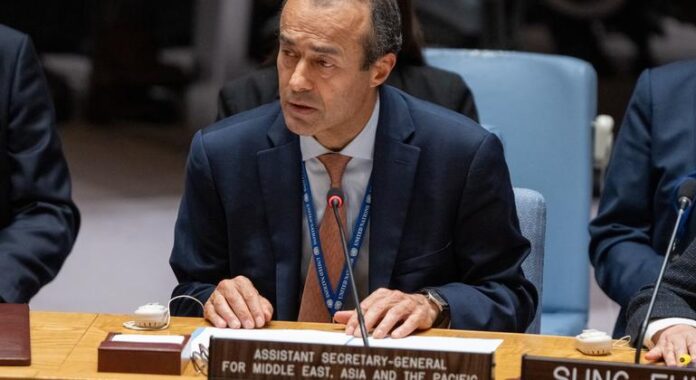
Briefing ambassadors in the Security Council, Assistant Secretary-General for the Middle East Khaled Khiari said more than 1,000 Palestinians had been killed since mid-June alone, many of them while seeking aid.
Citing figures from the Gazan health authorities, he reported that the total number of Palestinian fatalities since 7 October 2023 had surpassed 56,500.
“The level of suffering and brutality in Gaza is unbearable,” Mr. Khiari said. “The continued collective punishment of the Palestinian people is unjustifiable.”
Killed trying to access aid
Mr. Khiari cited multiple incidents involving the Israel Defense Forces (IDF) opening fire near food distribution points.
On 17 June, at least 50 people were killed and 200 injured in Khan Younis when an IDF tank opened fire on a crowd waiting for UN World Food Programme (WFP) aid trucks.
Once again a week later, IDF troops reportedly opened fire near Gaza Humanitarian Foundation sites, this time killing 49 Palestinians and injuring 197 others.
“We strongly condemn the loss of lives and injuries of Palestinians seeking aid in Gaza,” Mr. Khiari said. “We call for an immediate and independent investigation into these events and for perpetrators to be held accountable.”
He emphasised that the UN “will not participate in any aid delivery modality that does not comply with the fundamental humanitarian principles of humanity, impartiality, independence, and neutrality,” a sentiment which other UN officials have repeatedly said as well.
Strong condemnation
Mr. Khiari reiterated the UN’s strong condemnation of Hamas and other Palestinian armed groups for their attacks in Israel, which killed over 1,200 people and led to more than 250 being taken hostage. Fifty hostages, including one woman, remain in captivity.
“Nothing can justify these acts of terror. We remain appalled that hostages may be subjected to ongoing ill-treatment and that the bodies of hostages continue to be withheld,” he said.
At the same time, he also condemned “the widespread killing and injury of civilians in Gaza, including children and women, and the destruction of homes, schools, hospitals and mosques.”
Rising violence in the West Bank
In the occupied West Bank, Israeli raids and settler violence have escalated.
Mr. Khiari reported that a 15-year-old boy and an elderly woman were killed in separate incidents on 25 June. Armed settlers also killed several Palestinians during attacks in Surif and Kafr Malik.
“The escalating violence in the occupied West Bank is alarming,” Khiari said, warning that military operations and settler expansion are leading to fatalities, displacement and destruction.
Iran-Israel ceasefire brings hope to the region
Mr. Khiari concluded his briefing with comments on the wider Middle East region, particularly the recent flare-up between Israel and Iran.
He welcomed the 24 June ceasefire agreement between the two countries, announced by US President Donald Trump, and credited US and Qatari mediation.
“We hope that this ceasefire can be replicated in the other conflicts in the region – nowhere is this more needed than in Gaza,” he said.
Gaza: one exhorts Israel to allow fuel to get into a band

“In the midst of the current Israeli military operations, Dozens of people were said to have been killed and injured, especially while waiting for food“The United Nations Bureau for the Coordination of Humanitarian Affairs (Ochha) Say.
“During the weekend, there were many attacks of attacks that hit houses, as well as schools organizing displaced people,” he added.
Catastrophic hunger
OCHA noted that in the midst of “strong constraints” on the contribution of supplies and the realization of humanitarian operations through Gaza, people are hungry.
“The World Food Program (Wfp) report that One in five people faces catastrophic hunger and more than 90,000 women and children need urgent treatment for malnutrition“He said.
PAM has around 130,000 metric tonnes of food positioned in the region, ready to serve people in Gaza if improved access is granted.
Call for access
OCHA reiterated calls to Israel to facilitate access and entry of essential supplies to Gaza, through the cross points and the corridors available, to meet the desperate needs of people. The fuel, in particular, is urgent.
“” The UN and its partners use the Israeli authorities, with the greatest emergency, to allow fuel entry to Gaza. This is critically for vital operations-including hospitals, water and sanitation equipment, telecommunications, moving goods of level passages and kitchens of the operating community, “he said.
Continuous displacement
The mass displacement continues in the enclave torn by the war.
The Israeli army published new evacuation orders for some parts of Jabalya and Gaza City on Sunday, which has an impact on around 150,000 people. Those forced to flee join thousands of people already crowded in shelters without water, sanitation and medical care. Shelter materials such as tents and wood have not entered Gaza for 17 weeks.
Most of the territory remains under travel orders, said OCHA, and Israel, as occupying power, has a legal obligation to protect civilians.
Look for the missing
Meanwhile, in Gaza torn by the war, thousands of families remain trapped in a spiral of anxiety and despair while they are looking for their missing loved ones.
Among them, Anwar Hawas, a young woman in their twenties, desperately looking for Hadi, his 17 -year -old autistic brother who has disappeared for weeks.
“Every day, I go out in the morning and I come back in the evening, hoping to find it,” she said UN News.
The Palestinian Statistics Central Office reports that more than 11,000 people have been missing in Gaza since the start of the war on October 7, 2023, the majority of women and children.
Originally published at Almouwatin.com
Report reveals significant rise in civilian casualties and rights violations in Ukraine

It covers the period from 1 December 2024 to 31 May 2025, during which 986 civilians were killed and 4,807 injured – a 37 per cent increase compared to the same period the previous year.
“The war in Ukraine – now in its fourth year – is becoming increasingly deadly for civilians,” said Danielle Bell, Head of the UN Human Rights Monitoring Mission in Ukraine (HRMMU).
“We continue to document patterns of violence that are inconsistent with obligations under international humanitarian law.”
Concern over use of short-range drones
Most casualties occurred in areas under Ukrainian Government control, primarily due to Russian attacks using long-range explosive weapons in populated areas and short-range drones near frontline locations.
Nearly half of all casualties were caused by missiles, loitering munitions and air-dropped bombs in densely populated areas. At least three attacks involved the use of missiles with fragmentation warheads which detonated above ground and scattered fragments across large open areas, killing and injuring many civilians at once.
The use of short-range drones is driving the rise in civilian casualties, the report said. OHCHR verified that 207 civilians were killed and 1,365 injured in these attacks.
Among the deadliest incidents was a Russian drone strike on a civilian bus transporting employees of a mining company to work in the Dnipropetrovsk region. Eight women and two men were killed, and 57 people were injured.
“The high number of civilian casualties from the use of short-range drones, which allow operators to see their targets in real time, raises grave concerns,” Ms. Bell said.
“Our findings strongly suggest a failure to distinguish between civilian and military targets, and to take all feasible precautions to verify the military nature of those targets – or worse, an intentional decision not to.”
During the same period, Russian forces struck at least five hospitals directly. Some of the attacks used multiple loitering munitions, suggesting potential deliberate targeting of the hospitals in violation of international humanitarian law.
Prisoners of war
Serious violations against prisoners of war (POWs) also remain a major concern, according to the report. OHCHR documented credible allegations that at least 35 Ukrainian POWs and one Russian POW were executed during the reporting period.
Staff interviewed 117 recently released Ukrainian POWs and two detained medical personnel, nearly all of whom described being tortured and ill-treated in captivity. This included severe beatings, electric shocks, sexual violence, dog attacks, and deliberate humiliation, often carried out by personnel wearing balaclavas to conceal their identities.
Ms. Bell said the continued brutalization of Ukrainian prisoners of war is not only inhumane, but a serious violation of international law.
“These are not isolated incidents – they point to well-documented patterns of widespread and systematic torture that demand urgent and unambiguous accountability, and measures toward prevention,” she said.
Meanwhile, more than half of the Russian POWs and third-country nationals held by Ukraine also reported abuse – including torture, ill-treatment, threats, and internment in unofficial facilities – which mostly occurred in transit places before arrival at official places of internment.
Rights concerns in Russian-occupied areas
The report highlights ongoing human rights concerns with Ukrainian civilians unlawfully detained by Russian authorities, predominantly in occupied territory. People who have been released described torture, ill-treatment, and dire conditions of detention.
Ukrainians in occupied territory faced increased coercion to adopt Russian citizenship. OHCHR documented over 16,000 homes listed by Russian occupation authorities as potentially “abandoned” and therefore at risk of being confiscated.
Displaced residents faced severe legal and logistical obstacles, as well as security risks, to reclaim their property.
Ukrainian children recruited
Another issue covered in the report is the recruitment and use of Ukrainian children “for sabotage activities of increasing gravity against Ukrainian military objectives.”
The children reportedly were recruited by unidentified actors, likely affiliated with Russia, according to Ukrainian law enforcement authorities. Some of these youngsters were killed or injured, while others are facing prosecution after being enticed via social media to commit arson or plant explosives.
“Using children to commit acts of sabotage or violence exploits their vulnerability and endangers their lives,” Ms. Bell said. “It compounds their suffering by exposing them to violence, coercion, and harsh legal consequences.”
OHCHR also voiced concern over the situation of older people, mainly women, as well as persons with disabilities, who remain at disproportionate risk, particularly in frontline areas.
Many are unable to evacuate due to poverty and limited housing options, while those who can often face long stays in shelters that lack appropriate facilities, or they are placed in institutional settings due to the absence of suitable alternatives.
Human rights can be a “strong lever for progress” in climate change, explains the head of the United Nations

Talk to Human Rights Council In Geneva, the High Commissioner, Volker Türk, asked the Member States so sufficiently done to protect people from climate change impacts.
“” Do we take the necessary measures to protect people from climate chaos, protect their future and manage natural resources so as to respect human rights and the environment? »» asked delegates during the current human rights session in Geneva.
His answer was simple – we don’t do enough.
Türk stressed that if climate change has disastrous risks of human rights – especially for the most vulnerable – it can also be a strong lever for progress.
At the heart of this is a “transition” far from environmental destructive activities.
“” What we need now is a roadmap that shows us how to rethink our societies, economies and policies in a fair and sustainable manner“He said.
The right to decent work
One of the main routes through which the Council – the highest intergovernmental body of the United Nations on human rights – examined the link between human rights and climate change was the right to decent work.
“” Due to climate change, the very human right of decent work is fundamentally challenged today“Said Moustapha Kamal Gueye, a senior official of the International Labor Organization (Ilo).
He warned that 80 million full -time jobs will no longer exist in 2030 if the world continues its current climate trajectory. More than 70% of global workforce – 2.4 billion workers – will be exposed to excessive heat at a given time.
These alarming statistics highlighted the urgent need for robust social protection systems, including social security, for workers while the climate crisis continues to intensify, said Gueye. Less than 9% of workers in the 20 countries most impacted by the climate have a form of social protection.
“” From the point of view of climate resilience, nations are far from achieving human right to social protection“Said Mr. Gueye.Investments in social protection must be extended, which must pass from responses to shocks to institutionalized approaches and based on rights.“”
On a more optimistic note, he added, an evolution towards economies with low carbon content can potentially generate more than 100 million jobs by 2030. However, he warned that these jobs may not emerge when others are lost, strengthening the need for high safety and planning nets.
“Debicate” the economy and knowledge
Elisa Morgera, the United Nations Special Rapporteur on Human Rights and Climate Change, also presented her latest report, which calls for the “loss” of economies. The suppression of fossil fuels, she said, is the most effective way to reduce climate impacts while protecting human rights.
Of course, this is not a simple task, because Ms. Morgera noted that fossil fuels have invaded all parts of our lives and savings.
“” Fossil fuels are everywhere: in our food systems, in our ocean and in our body, including in our brain – in many cases without our knowing or choosing so that they are in our lives“Said Ms. Morgera.
Ms. Morgera – who is mandated and appointed by the Human Rights Council, and is not a member of the UN staff – also underlined the need to “defose knowledge”, noting how the interests of fossil fuels distorted the understanding of the public and attacked the defenders of the climate.
Although geopolitical divisions can slow down progress, it insisted that action can start now at all levels. “We can feed hope and share a concrete learning that can inspire a course correction in the current decade, towards a safe climate for all.”
A people centered on people
Mr. Türk has concluded his remarks reinforcing that a just transition must ensure that no one is left behind.
“” If we do not protect people’s lives, their health, their work and their future opportunities, the transition will happen again and exacerbate injustices and inequalities in our world“He said.
Mr. Gueye echoes this message: “The global climate program is a human story and it is human rights. The ambition that the nations and the global community are looking for cannot be confined to digital targets and indicators – It must be fundamentally concerned people. »»
Originally published at Almouwatin.com
Danish presidency of the Council of the European Union

The Danish EU Presidency will work for a strong and resolute EU that takes responsibility for its own security and for strengthening its competitiveness. This calls for the EU to match words with action and deliver on the challenges it faces. The green transition is essential to building a more secure and competitive Europe.
Danish presidency of the Council of the European Union

DISCLAIMER: Information and opinions reproduced in the articles are the ones of those stating them and it is their own responsibility. Publication in The European Times does not automatically means endorsement of the view, but the right to express it.
DISCLAIMER TRANSLATIONS: All articles in this site are published in English. The translated versions are done through an automated process known as neural translations. If in doubt, always refer to the original article. Thank you for understanding.
Gaza: UN urges Israel to allow fuel into Strip
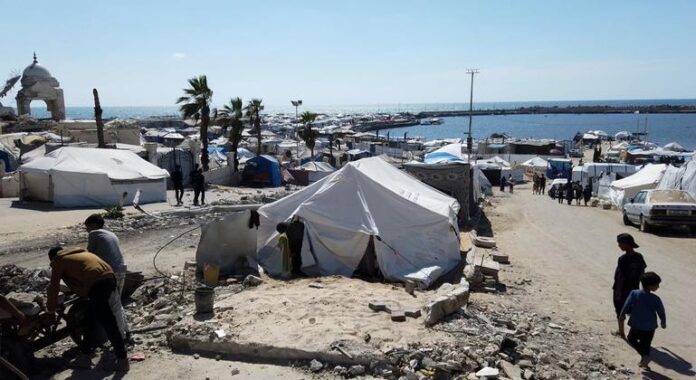
“Amid ongoing Israeli military operations, scores of people have reportedly been killed and injured, including while waiting for food,” the UN Office for the Coordination of Humanitarian Affairs (OCHA) said.
“Over the weekend, there were numerous reports of attacks hitting homes, as well as schools hosting displaced people,” it added.
Catastrophic hunger
OCHA noted that amid the “heavy constraints” on bringing in supplies and carrying out humanitarian operations across Gaza, people are going hungry.
“The World Food Programme (WFP) reports that one in five people faces catastrophic hunger, and more than 90,000 women and children urgently require treatment for malnutrition,” it said.
WFP has about 130,000 metric tons of food positioned in the region, ready to serve people in Gaza if improved access is granted.
Call for access
OCHA reiterated calls on Israel to facilitate the access and entry of essential supplies into Gaza, through the available crossing points and corridors, to address people’s desperate needs. Fuel, in particular, is urgently needed.
“The UN and its partners call on the Israeli authorities, with utmost urgency, to allow the entry of fuel into Gaza. This is critically needed for life-saving operations – including hospitals, water and sanitation equipment, telecommunications, moving cargo from crossings, and operating community kitchens,” it said.
Displacement continues
Mass displacement continues in the war-torn enclave.
On Sunday, the Israeli military issued new evacuation orders for parts of Jabalya and Gaza City, impacting around 150,000 people. Those forced to flee join thousands already crowded into shelters lacking water, sanitation, and medical care. Shelter materials such as tents and timber have not entered Gaza in 17 weeks.
Most of the territory remains under displacement orders, OCHA said, and Israel, as the occupying power, has a legal obligation to protect civilians.
Search for the missing
Meanwhile, in war-torn Gaza, thousands of families remain trapped in a spiral of anxiety and despair as they search for their missing loved ones.
Among them is Anwar Hawas, a young woman in her twenties, searching desperately for Hadi, her 17-year-old autistic brother who has been missing for weeks.
“Every day I go out in the morning and return in the evening, hoping to find him,” she told UN News.
The Palestinian Central Bureau of Statistics reports that more than 11,000 individuals are missing in Gaza since the war started on 7 October 2023, the majority among them women and children.
Gaza: “unbearable” suffering continues, the UN official said to the Security Council

Briefing ambassadors in the Security adviceThe deputy secretary general for the Middle East, Khaled Khiari, said that more than 1,000 Palestinians had been killed since mid-June, many of them looking for help.
Citing figures from the Gazan health authorities, he indicated that the total number of Palestinian deaths since October 7, 2023 had exceeded 56,500.
“” The level of suffering and brutality in Gaza is unbearable“Said Mr. Khiari.The continuous collective punishment of the Palestinian people is unjustifiable.“”
Killed while trying to access the help
Mr. Khiari cited several incidents involving the opening fires of the Israel Defense Forces (FDI) near food distribution points.
On June 17, at least 50 people were killed and 200 injured in Khan Younis when an FDI reservoir opened fire on a crowd while waiting for the United Nations World Food Program (Wfp) Help trucks.
Once again a week later, the TSAhal troops would have opened fire near the sites of the Gaza humanitarian foundation, this time killing 49 Palestinians and injuring 197 others.
“We strongly condemn the loss of lives and the injuries of the Palestinians in search of aid to Gaza,” said Khiari. “We call an immediate and independent investigation into these events and that the authors must be held responsible.”
He stressed that the UN “will not participate in any aid delivery modality which does not respect the fundamental humanitarian principles of humanity, impartiality, independence and neutrality”, a feeling that other UN officials have also said on several occasions.
Strong conviction
Mr. Khiari reiterated the strong condemnation by the UN of Hamas and other Palestinian armed groups for their attacks in Israel, which killed more than 1,200 people and led more than 250 to be taken hostage. Fifty hostages, including a woman, remain in captivity.
“” Nothing can justify these acts of terror. We remain dismayed that hostages can be subject to in progress ill -treatment and that the hostage bodies continue to be retained“He said.
At the same time, He also condemned “the widespread murder and the injuries of civilians in Gaza, including children and women, and the destruction of houses, schools, hospitals and mosques”.
Increased violence in the West Bank
In occupied West Bank, Israeli raids and the violence of the settlers have increased.
Khiari reported that a 15 -year -old boy and an elderly woman had been killed in separate incidents on June 25. The armed settlers also killed several Palestinians during attacks in Surif and Kafr Malik.
“” The climbing of violence in occupied West Bank is alarming“Said Khiari, warning that military operations and the expansion of settlers lead to deaths, movements and destruction.
The ceasefire Iran-Israel brings hope to the region
Mr. Khiari concluded his briefing with comments on the wider region of the Middle East, in particular the recent push between Israel and Iran.
He praised the ceasefire agreement of June 24 between the two countries, announced by American president Donald Trump, and credited American and Qatari mediation.
“” We hope that this cease-fire can be reproduced in other conflicts in the region-nowhere is it necessary in Gaza,He said.
Originally published at Almouwatin.com
