Monday, May 4, 2026
Home Blog Page 457

Afghanistan: Statement by the Spokesperson on the latest executions

0
Afghanistan: Statement by the Spokesperson on the latest executions

Afghanistan: Statement by the Spokesperson on the latest executions

Source link

Sudan war has created suffering of ‘industrial proportions’, aid agencies warn

0
Sudan war has created suffering of ‘industrial proportions’, aid agencies warn

With no viable peace in sight, the Sudanese are trapped in a humanitarian crisis of industrial proportions,” said Jens Laerke, spokesperson for the UN aid coordination office, OCHA.

Two out of three people need aid, that’s 30 million people…This, of course, demands a massive ramp-up of international support; what we see instead is donors pulling back funding across the world.”

The war between rival militaries – the Sudanese Armed Forces (SAF) and the paramilitary Rapid Support Forces (RSF) – began on 15 April 2023 after a breakdown in transition to civilian rule, following the overthrow of long-time President Omar al-Bashir. Heavy fighting has levelled towns and cities and claimed tens of thousands of lives.

At least 12.4 million people have been uprooted from their homes, including more than 3.3 million refugees.

Rape as a weapon of war

Since the outset, relief workers and others including the UN human rights office, OHCHR, have repeatedly warned that sexual violence remains pervasive across Sudan.

One survivor recounted that she was told, ‘We are your men now,’ before RSF fighters raped her in front of her children,” said Li Fung, OHCHR Representative in Sudan, speaking to journalists in Geneva via video link from Nairobi.

Meanwhile, the UN World Food Programme (WFP) reiterated deep concerns about the 25 million Sudanese facing famine. “Two years of war has turned Sudan into the world’s largest hunger catastrophe and famine is spreading,” said Leni Kinzli, WFP Communications Officer for Sudan, also speaking from the Kenyan capital.

Invaluable support

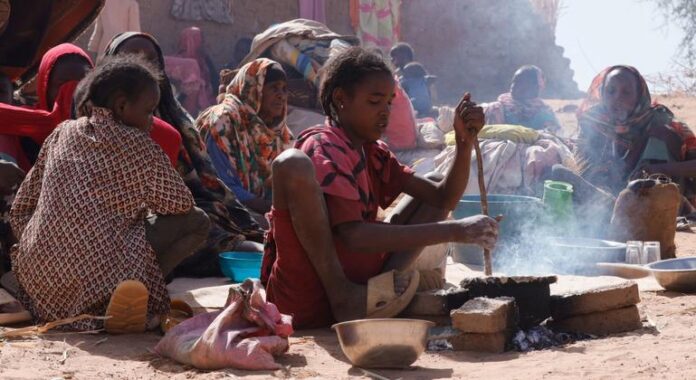
In an appeal for funding to support the UN agency’s work, she testified to the value of food assistance for internally displaced people (IDPs): “It means that a father who has been torn from his home in Khartoum can feed his family of four; it means that a mother in an IDP camp in Kassala can cook a simple meal for her young daughters and so that they don’t fall into malnutrition.”

Amid reports that the paramilitary RSF paramilitary had taken the key Darfur town of Um Kadadah from the SAF, the UN World Health Organization (WHO) warned that attacks on healthcare personnel and facilities “are on the rise”.

The past two years have seen 156 confirmed attacks on health “causing more than 300 deaths and over 270 injuries among either patients or healthcare workers”, said Dr. Shible Sahbani, WHO Representative in Sudan, speaking via video link from Cairo.

Echoing those concerns, gender equality agency, UN Women, reported that 80 per cent of hospitals in conflict areas are no longer functioning, with maternal deaths rising “alarmingly”.

A full eight in 10 displaced women and girls in Sudan now lack access to clean water, said Sofia Calltorp, UN Women Director in Geneva. 

Funding cuts dilemma

The latest global cuts in humanitarian funding have put critical programmes at risk, with teams forced to make unreasonable choices and refugees being left to resort to harmful strategies to meet their basic needs,” said UN refugee agency (UNHCR) spokesperson Olga Sarrado.

“Inside Sudan, reduced funding will cut access to clean water for at least half a million displaced people, significantly increasing risks of cholera and other waterborne diseases,” she added.

Source link

Media advisory – Fourth Accession Conference with Albania of 14 April 2025

0
Afghanistan: Statement by the Spokesperson on the latest executions

Main agenda items, approximate timing, public sessions and press opportunities.

Source link

Gaza: UN rights office condemns Israeli buffer zone plan

0
Gaza: UN rights office condemns Israeli buffer zone plan

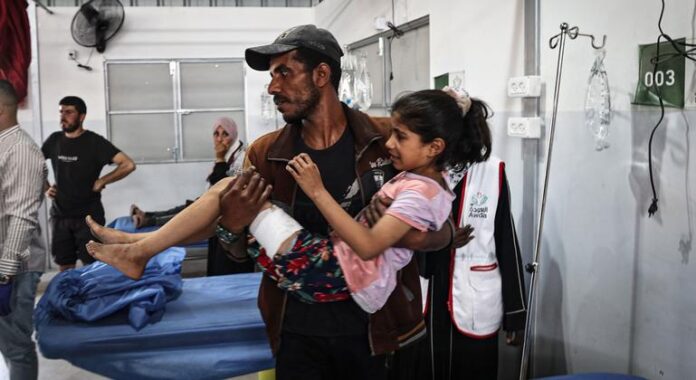
Hostilities in the Gaza Strip resumed mid-March following the collapse of the ceasefire and Israel’s border closure.

As it enters its sixth week, the denial of aid into the enclave has left more than 2.1 million Gazans trapped without access to food, drinking water, and basic services.

Israel in recent weeks has ramped up its attacks on civilian infrastructure such as  residential buildings and camps, leaving many more dead or missing under the rubble.  

Between March 18 and April 9, Israeli forces have struck housing and tents for internally displaced people (IDPs) on 224 occasions during 36 separate strikes, according to the UN rights office, OHCHR

Vast new exclusion zones

Earlier on Friday, Israeli authorities issued two new displacement orders “covering vast areas in northern and southern Gaza,” UN Spokesperson Stéphane Dujarric said at the regular noon briefing in New York.

“Together, these areas span more than 24 square kilometres – roughly the size of everything south of Central Park here in Manhattan.”

Some medical facilities and storage sites containing critical supplies are located within the newly designated zones, prompting aid coordination office OCHA to warn that this could have life-threatening consequences for people in urgent need of care.

“This leaves Palestinians with less than a third of Gaza’s area to live in – and that remaining space is fragmented, it’s unsafe and it’s barely livable following 18 months of hostilities.”

‘Forcible transfer’

OHCHR spokesperson Ravina Shamdasani also highlighted the growing trend in attacks against media workers, reporting that at least 209 journalists have been killed in Gaza since the deadly Hamas-led terror attacks of October 2023, as Israel continues to deny international media entry into the Strip.

The OHCHR spokesperson acknowledged that the temporary evacuation of civilians in certain areas can be legal, under strict conditions.

But “the nature and scope of the evacuation orders raises serious concerns that Israel intends permanently to remove the civilian population from these areas in order to create a so-called buffer zone”, she said.  

Permanently displacing the civilian population within occupied territory amounts to forcible transfer, which is a grave breach of the Fourth Geneva Convention and a crime against humanity.”

War crimes

Combatants need to demonstrate compliance with the rules of war, particularly the principles of distinction – meaning defenceless civilians should not be targeted – as well as proportionality and precaution.

Intentionally directing attacks against civilians not taking a direct part in hostilities constitutes a war crime, further compounding the desperate conditions for Palestinian civilians,” Ms. Shamdasani said.

OHCHR has also repeatedly warned that collective punishment and the use of starvation of the civilian population as a method of war, constitute crimes under international law.

Ms. Shamdasani also stressed that her office was “seriously concerned that Israel appears to be inflicting on Palestinians in Gaza, conditions of life increasingly incompatible with their continued existence as a group”.

Women wait to receive food at a distribution point in Gaza City.

Supplies pile up

With stocks of drugs sharply declining, medicines and other essential supplies have been piling up at the shuttered border crossings.  

Almost 36 million tons of supplies in Dubai are on standby for entry into the enclave, according to Dr. Rik Peeperkorn, World Health Organization Representative (WHO) for the West Bank and Gaza.

Medical evacuations for patients in need of urgent treatment have slowed significantly. Likewise, the number of international emergency medical teams deployed has dropped, depriving hospitals of the help they crucially need, “because the caseload is immense”, Dr. Peeperkorn stressed.

“We urgently call for the immediate resumption of medical evacuation through all possible routes, particularly restoring the medical referral pathway to the West Bank and Jerusalem.”

Source link

Media advisory – 1st EU-Palestine High-Level Political Dialogue of 14 April 2025

0
Afghanistan: Statement by the Spokesperson on the latest executions

Main agenda items, approximate timing, public sessions and press opportunities.

Source link

Myanmar: Military strikes persist amid earthquake response efforts

0
Myanmar: Military strikes persist amid earthquake response efforts

At a moment when the sole focus should be on ensuring humanitarian aid gets to disaster zones, the military is instead launching attacks,” spokesperson Ravini Shamdasani told journalists in Geneva.

Since the 28 March disaster, military forces have reportedly carried out over 120 attacks, she said, and more than half occurred after a declared ceasefire was due to have gone into effect on 2 April.

Devastated areas hit

Most attacks involved aerial and artillery strikes, including in areas impacted by the quake. 

Numerous strikes have been reported in populated areas, with many appearing to amount to indiscriminate attacks and to breach the principle of proportionality in international humanitarian law,” she added.

Myanmar was already facing political, humanitarian, human rights and economic crisis before the earthquake struck.  

The miliary seized power from the democratically elected government in February 2021 and has been engaged in a brutal civil war with opposition militias.

Aid obstacles, amnesty appeal

Ms. Shamdasani said UN human rights chief Volker Türk is calling on the military to remove any and all obstacles to aid delivery and to cease military operations. 

She noted that areas at the epicentre of the quake in Sagaing, particularly those controlled by opponents of the military, have had to rely on local community responses for search and rescue, and to meet basic needs.

“As the traditionally festive season of Thingyan and the start of a new year begins on Sunday in Myanmar, we call for common efforts to assist those in greatest need,” she added.

In this regard, OHCHR called on the military to announce a full amnesty for detainees it has incarcerated since February 2021, including State Counsellor Aung San Suu Kyi and President U Win Myint.

‘Perfect storm’ for disease

Meanwhile, the UN Children’s Fund (UNICEF) is worried that the earthquake has created “a perfect storm for the emergence of infectious disease outbreaks.”

Eric Ribaira, UNICEF Myanmar’s chief of health said that even before the disaster, the country faced outbreaks of vaccine preventable and communicable diseases such as measles, malaria, dengue and cholera.

The situation is so much more dangerous now for people, especially children, in these earthquake-affected areas,” he told UN News.

Mr. Ribaira explained that earthquakes spark population displacement which can lead to overcrowded areas, such as temporary shelters, while water and sanitation systems are disrupted causing contaminated water supplies and poor hygiene conditions.

Children may also get respiratory infections from dust and debris from collapsed buildings, he added.

UNICEF is helping to provide clean drinking water and sanitation, as well as necessary supplies so that pregnant women can deliver safely. 

So far, we have reached about 700 pregnant and lactating women with newborn and clean delivery kits. And we plan to reach much, much more in the coming days,” said Mr. Ribaira.

UNICEF and aid partners have also deployed general medical kits to cover approximately 250,000 people for the next three months, but he stressed that more support is critical.

“The needs are huge, and we must do everything we can to prevent these outbreaks and ensure that women can deliver their babies safely and the general population has urgent medical support when they need it,” he said.

UN mobilizing aid

This week, the UN and partners launched a $275 million appeal as an addendum to a humanitarian plan to reach some 1.1 people in Myanmar.

The earthquake has pushed two million people into reliance on aid. They join nearly 20 million others who already required humanitarian assistance.

UN agencies, partners and Member States have rapidly mobilized aid, including medical care, shelter, safe water, hygiene kits, and food.

To further strengthen efforts on the ground, the UN Central Emergency Response Fund (CERF) has allocated an additional $5 million for earthquake response, which follows an earlier disbursement of $5 million. 

Source link

INTERVIEW: Don’t forget Sudan, UN humanitarian coordinator urges |

0
INTERVIEW: Don’t forget Sudan, UN humanitarian coordinator urges |

We appeal to the international community not to forget Sudan,” Clementine Nkweta-Salami, UN Resident and Humanitarian Coordinator for the country, said recently in an exclusive interview with UN News.

The Sudanese Armed Forces (SAF) and former ally the Rapid Support Forces (RSF) have been battling since 15 April 2023. The war has decimated Sudan and sparked the world’s worst displacement crisis. Some 12 million people have been forced to flee their homes for other areas in the country, or across the border.

This year, humanitarians are seeking $4.2 billion to support a staggering 30 million people in Sudan.

Ms. Nkweta-Salami underscored the commitment of the UN and partners to continue assisting war-weary civilians trapped in a dangerous and deadly environment.

The interview has been edited for length and clarity.

Clementine Nkweta-Salami: The humanitarian situation is catastrophic; I think we’ve used that adjective many times now. We are almost two years into the conflict, and we would have hoped to have been able to ensure that we could provide humanitarian assistance comprehensively to those in need.

We’re still struggling. We don’t have access to all the hotspot areas. We are trying our best to make sure that the resources we have can be moved out as quickly as possible using all the modalities that we have available to us.

But the displacement is significant, the needs are enormous, we’ve already had famine identified in some parts of the country, and we’re working against the clock to try and prevent it spreading.

So, all in all, I would say that we still need to make a mammoth effort. We still need support from the international community in terms of resources, and we still need greater facilitation by all the armed groups engaged in this conflict.

UN News: Your focus is on humanitarian operations and getting aid to people, but is there anything you can tell us about the current phase of the fighting and political developments?

Clementine Nkweta-Salami: Humanitarian assistance needs to continue in the absence of a political solution to the conflict, in the absence of a ceasefire. We continue to work with the international community – Member States who are engaged in the political discussions and negotiations – to try and use the discussions to facilitate our work through humanitarian pauses and trying to get the armed groups to agree to routes that we could use which would not be subject to attacks, shelling or bombardment.

In the absence of a political solution, we will continue to forge ahead with the humanitarian response.

The needs of the people are significant. They need health services. They need access to water. They need electricity.  But more importantly, they need access to food, medicines, and shelter. And one of the areas that we believe is critical, and perhaps is not readily as visible, is of course protection.

We have high numbers of gender-based violence. We have children in need of protection, children out of school, and we continue to insist in line with international humanitarian law and human rights law that the protection of civilians be upheld as this conflict continues.

And this is something we haven’t seen, and we continue to push. Civilians are really bearing the brunt of this conflict, and all armed actors need to abide by international humanitarian law and ensure the protection of civilians: those in the cities and those who want to flee.

UN News: This is a good time to remind our audience about how the UN is providing humanitarian assistance to the Sudanese people.

Clementine Nkweta-Salami: We’re trying to bring in assistance across lines – that  is throughout the territory, arriving at Port Sudan and trying to push it to those areas where there is the greatest need. We’re also trying to use the cross-border entry points as well.

We need to use as many of these options [as possible], keep them open, ensure that we have agreements with all the armed groups so that we can use them to bring assistance at scale and as quickly as possible to the highly impacted areas.

We have convoys of food. We also have medicines. We have nutrition supplies. We have supplies to address some of the endemic issues. We’ve had cholera outbreaks. We need to ensure that populations have clean and safe drinking water.

I should also underline that it’s not the UN alone. The UN works with international NGOs, many of whom are able to work in parts of the country where we have no access, where we have no permission to establish a presence, and implement some of our activities.

We also have a large national NGO network – and some of these are female-headed NGOs. They are really at the frontlines, and we are channelling assistance to them, either cash, money or in-kind.

Displaced children in Zamzam camp, where famine was confirmed in August.

UN News: Famine conditions have been confirmed in some areas in Sudan, particularly the Zamzam camp in North Darfur. You mentioned that there’s also the chance of it spreading to other parts of the country. How worrying is this?

Clementine Nkweta-Salami: Very worrying. If you allow me to just perhaps turn to the situation in Darfur. El Fasher remains under siege, with civilian populations trapped for many months, and they face daily shelling, displacement and rapidly deteriorating humanitarian conditions.

Many of the populations have wanted to leave. They’ve been prevented from leaving. Many of them have moved many times, and the situation is very dire.

We are very, very concerned, and I strongly condemn the intensifying deliberate attacks on civilians – particularly those in North Darfur but other parts of Darfur as well, and more recently, the airstrike on the market where we registered a significant loss of life.

I’ve mentioned international humanitarian law before. I think particularly in the Darfurs the protection of civilians is key, and we remind the parties as often as necessary to take all feasible precautions to avoid civilian harm, to provide safe and hindered passage for civilians seeking to flee areas of active conflict.

Now, coming to the actual levels of food insecurity, let me just say that the situation at the Zamzam camp is catastrophic: severe shortages of food, water and medical supplies; the prices of basic goods have skyrocketed, making essential items unaffordable for most families, and Zamzam is a site in which famine conditions were identified last August and re-confirmed in December.

We also had areas in Khartoum at risk of famine, and also in the Kordofans and in the Blue Nile state as well.

UN News: You mentioned attacks, and humanitarians are also under fire. Can you talk about how the insecurity and the fighting affect aid delivery?

Clementine Nkweta-Salami: We have lost an unacceptable number of humanitarian actors during this conflict, and humanitarian actors shouldn’t lose their lives trying to provide support to those in need.

There is conflict in various parts of the country. Khartoum previously was a hot spot, but the Darfurs continue to be a hot spot, more significantly around the border area with Chad, El Fasher and of course Zamzam. We also have hot spots in Nyala and now very recently in the Kordofans where we have seen an uptick in fighting, and also the Blue Nile.

The security situation is impacting our work negatively. But even where there is conflict, humanitarian workers are willing – and do have means and methods of being able to access these locations.

UN humanitarian partners provide emergency assistance at a gathering site in Gedaref State, Sudan.

UN humanitarian partners provide emergency assistance at a gathering site in Gedaref State, Sudan.

UN News: You’ve outlined the challenges, but also the work that the UN and partners are doing to bring aid to people in Sudan. This is taking place against the backdrop of an immense shortfall in funding for humanitarian operations worldwide this year.

Clementine Nkweta-Salami:  Indeed, we are concerned that we will not be able to obtain a level of funding for this crisis that would allow us to address the urgent needs of the population.

We have been informed by some of our donors that there will be reductions in the resources that they will make available to us during the course of this year.

I think it’s important to know that since this crisis began, the humanitarian needs have only grown. We started 2024 with about 24 million people. We ended with about 30 million people.

[Looking at] our Humanitarian Needs and Response Plan, the figures seem to be quite high but when you break them down it’s about 50 cents per person per day.

People are in a dire situation and we appeal to the international community not to forget Sudan, not to forget the men and the women and children of Sudan who find themselves in this very difficult situation at this moment in time.

Source link

EIT Water Info Session: Deep dive into the evaluation process of the Call

0
EIT Water Info Session: Deep dive into the evaluation process of the Call

EIT Water Info Session | Deep dive into the evaluation process of the Call 

The May edition of the EIT Water Info Session will spotlight the timeline, key stages, and qualitative aspects of the evaluation process following the closure of the Call for Proposals for a new Knowledge and Innovation Community (KIC) in the water, marine, and maritime sectors. Tailored for prospective applicants, the session will offer valuable insights into the strategic objectives of the call, the evaluation criteria, and the legal considerations involved.

The online session will open with remarks from Stefan Dobrev, Chair of the EIT Governing Board, and David Tas from EIT, setting the stage for an in-depth presentation by Laura Hanin, the Call’s coordinator, who will walk participants through the evaluation process and selection criteria. Beata Hartwig, EIT Legal Officer, will provide guidance on the legal framework and compliance requirements. The event will wrap up with a Q&A segment, giving attendees the chance to engage directly with the EIT team and get clarity on any outstanding questions.

10:00 – 10:05 Setting the scene — David Tas (Head of Supervision and Monitoring Unit, EIT)
10:05 – 10:20 Welcome address – Stefan Dobrev (EIT Governing Board Chair)
10:20 – 11:00 Evaluation process and Call Criteria — Laura Hanin (EIT Water Call Coordinator) 
11:00 – 11:15 Legal aspects of the EIT Water Call – Beata Hartwig (EIT Legal Officer)
11:15 – 12:00 Questions and Answers 


Register Here

Source link

WHO warns of severe disruptions to health services amid funding cuts

0
US funding cuts threaten global health response, WHO chief warns

Speaking on Thursday at a press conference in Geneva, Tedros said that in around 25 per cent of countries, some health facilities have had to close completely due to cuts, according to figures from more than 100 countries compiled by WHO.

Severe disruptions

Out-of-pocket payments for health services have led to disruptions to the supply of medicines and other health products, as well as rising job losses in the healthcare sector.

As a result, “countries are revising budgets, cutting costs and strengthening fundraising and partnerships,” said the UN health agency chief.

From aid dependency to self-reliance

Having to revise budgets, cut costs and strengthen partnerships and fundraising, some countries are relying on WHO’s support to transition away from aid dependency towards sustainable self-reliance.

We are now supporting countries to accelerate that transition,” said Tedros, citing examples of countries such as South Africa and Kenya, who are successfully working towards averting the health impacts of sudden and unplanned cuts.

WHO recommendations

Tedros provided countries with several recommendations on ways to mitigate funding cuts:

  • The world’s poorest populations need prioritising by limiting their exposure to out-of-pocket spending
  • Resist reductions in public health spending and protect health budgets
  • Channel donor funds through national budgets, rather than parallel donation systems
  • Avoid cutting services or closing facilities, and absorb as much of the impact as possible through efficiency gains in health system

New revenue sources

Through short and long-term tools, WHO also encourages countries to generate new sources of revenues.

Immediate measures such as introducing or increasing taxes on products that harm public health is another effective tool to maintain spending on health, he added.

Countries such Colombia and the Gambia, which in recent years have introduced such taxes, have seen revenues increase and consumption fall, said Tedros.

In the longer term, WHO is advocating for social and community-based health insurance policies, where individuals or families can contribute a small amount to a fund which boosts health service financing.

Although not all measures will be right for every country, WHO is “working with affected countries to identify which measures are best for them, and to tailor those measures accordingly.”

Source link

Myanmar: Military strikes persist amid earthquake response efforts

0
Myanmar: Military strikes persist amid earthquake response efforts

At a moment when the sole focus should be on ensuring humanitarian aid gets to disaster zones, the military is instead launching attacks,” spokesperson Ravini Shamdasani told journalists in Geneva.

Since the 28 March disaster, military forces have reportedly carried out over 120 attacks, she said, and more than half occurred after a declared ceasefire was due to have gone into effect on 2 April.

Devastated areas hit

Most attacks involved aerial and artillery strikes, including in areas impacted by the quake. 

Numerous strikes have been reported in populated areas, with many appearing to amount to indiscriminate attacks and to breach the principle of proportionality in international humanitarian law,” she added.

Myanmar was already facing political, humanitarian, human rights and economic crisis before the earthquake struck.  

The miliary seized power from the democratically elected government in February 2021 and has been engaged in a brutal civil war with opposition militias.

Aid obstacles, amnesty appeal

Ms. Shamdasani said UN human rights chief Volker Türk is calling on the military to remove any and all obstacles to aid delivery and to cease military operations. 

She noted that areas at the epicentre of the quake in Sagaing, particularly those controlled by opponents of the military, have had to rely on local community responses for search and rescue, and to meet basic needs.

“As the traditionally festive season of Thingyan and the start of a new year begins on Sunday in Myanmar, we call for common efforts to assist those in greatest need,” she added.

In this regard, OHCHR called on the military to announce a full amnesty for detainees it has incarcerated since February 2021, including State Counsellor Aung San Suu Kyi and President U Win Myint.

‘Perfect storm’ for disease

Meanwhile, the UN Children’s Fund (UNICEF) is worried that the earthquake has created “a perfect storm for the emergence of infectious disease outbreaks.”

Eric Ribaira, UNICEF Myanmar’s chief of health said that even before the disaster, the country faced outbreaks of vaccine preventable and communicable diseases such as measles, malaria, dengue and cholera.

The situation is so much more dangerous now for people, especially children, in these earthquake-affected areas,” he told UN News.

Mr. Ribaira explained that earthquakes spark population displacement which can lead to overcrowded areas, such as temporary shelters, while water and sanitation systems are disrupted causing contaminated water supplies and poor hygiene conditions.

Children may also get respiratory infections from dust and debris from collapsed buildings, he added.

UNICEF is helping to provide clean drinking water and sanitation, as well as necessary supplies so that pregnant women can deliver safely. 

So far, we have reached about 700 pregnant and lactating women with newborn and clean delivery kits. And we plan to reach much, much more in the coming days,” said Mr. Ribaira.

UNICEF and aid partners have also deployed general medical kits to cover approximately 250,000 people for the next three months, but he stressed that more support is critical.

“The needs are huge, and we must do everything we can to prevent these outbreaks and ensure that women can deliver their babies safely and the general population has urgent medical support when they need it,” he said.

UN mobilizing aid

This week, the UN and partners launched a $275 million appeal as an addendum to a humanitarian plan to reach some 1.1 people in Myanmar.

The earthquake has pushed two million people into reliance on aid. They join nearly 20 million others who already required humanitarian assistance.

UN agencies, partners and Member States have rapidly mobilized aid, including medical care, shelter, safe water, hygiene kits, and food.

To further strengthen efforts on the ground, the UN Central Emergency Response Fund (CERF) has allocated an additional $5 million for earthquake response, which follows an earlier disbursement of $5 million. 

Source link