

We are safer too, thanks to Schengen. Reducing barriers internally was accompanied by increased cooperation between police forces, customs authorities and external border control authorities, helping to make Europe more secure and reinforcing our external borders and managing migration more effectively. This is essential to fight terrorism, organised crime and hybrid threats. Schengen Information System (SIS) is the […]
Celebrating 40 years of Schengen

We are safer too, thanks to Schengen.
Reducing barriers internally was accompanied by increased cooperation between police forces, customs authorities and external border control authorities, helping to make Europe more secure and reinforcing our external borders and managing migration more effectively.
This is essential to fight terrorism, organised crime and hybrid threats.
Schengen Information System (SIS) is the most widely used and largest information sharing system for security and border management in Europe and allows authorities to share and access security alerts in real time across Schengen.
More gas has been killed by trying to get food, health care near the `Complete disaster ”

“We walk the fine gray line between operational capacity and complete disaster, every day,” said Dr Thanos Gargavanis, WHO Trauma surgeon and emergency manager, speaking of the enclave.
The comments of the United Nations veteran came in the midst of new reports on Tuesday morning that more Palestinians had been killed by trying to access food, this time near a help distribution site in Khan Younis in southern Gaza.
The mass victim event left “hundreds of victims, a medical complex of Nasser completely” in Khan Younis, said who is representative of the occupied Palestinian territory, Dr. Rik Peeperkorn.
Prohibited area
Through Gaza today, health services are “barely available” and difficult to access, said Dr. Peeperkorn, because more than 80% of the Gaza territory is under evacuation orders.
“The narrowing humanitarian space makes each health activity much more difficult than the day before,” added Dr. Gargavanis.
Nasser’s medical complex is the largest reference hospital in Gaza and the only main hospital remaining in Khan Younis. It is located in the evacuation zone announced by the Israeli army on June 12.
The neighboring Al-Aal hospital-operated by Palestinian Red Crescent Society (PRCS)-continues to provide services to patients already there, but it is unable to admit anyone else because of the ongoing military operations.
“This is what we call a completely minimal functional hospital,” said Dr. Peeperkorn.
Mortal impact of fuel shortages
Only 17 of the 36 Gaza hospitals are currently partially functional, medical supplies are extremely low and no fuel has entered the band for more than 100 days.
The latest mass victim event is only the last gasans who are trying to access aid in the middle of severe continuous restrictions imposed on the amount of aid authorized in the band by Israel.
Monday, more than 200 patients arrived at the Red Cross hospital in Al Mawasi-the greatest number received by the establishment in a single mass incident. Of this number, 28 patients were reportedly declared dead, said Dr. Peeperkorn.
One day earlier, on June 15, the same hospital received at least 170 patients, who would have tried to access a food distribution site.
“The recent food distribution initiatives by actors not one entail mass incidents each time,” insisted Dr. Gargavanis.
Fallout of private aid plan
Since the end of May, UN partners and humanitarian aid have been sidelined in Gaza as a new aid distribution model supported by Israel and the United States began operations as part of Gaza Humaninitarian Foundation (GHF), which uses private military entrepreneurs.
The WHO trauma trauma surgeon highlighted a “constant correlation” between the locations of food distribution places and the incidents of mass victims in Rafah, Khan Younis and along the Netzarim corridor.
Asked about the type of injury suffered by those asking for help and is responsible, Dr. Garavanis stressed that who is not a forensic agency.
“We are unable to clearly identify the nature of the injury,” he said, he said. “What we can say, however, is that we are talking about ball injury, and we are talking about very few incidents of shell injury. »»
The UN has repeatedly warned that the new aid distribution system does not meet the humanitarian principles of humanity, impartiality, independence and neutrality. The World Organization has also called for the lifting of aid restrictions.
Dr. Peeperkorn insisted that the WHO should be facilitated to move supplies to Gaza profitably “via all possible routes” to prevent other medical services closings. He said that 33 who trucks with supplies are waiting in Al Arish in Egypt to obtain a passage in the enclave, with 15 others standing in the occupied West Bank.
Originally published at Almouwatin.com
EULEX : Council renews the mandate of the EU civilian mission in Kosovo*

The Council prolonged the mandate of EU Rule of Law Mission in Kosovo* until 14 June 2027. Source link
Major Brussels-to-Luxembourg Motorway Upgrade Nears Completion: Faster Travel Ahead

Brussels, 16 June 2025 — After more than two years of extensive renovations, the critical E411 motorway connecting Brussels to Luxembourg is set to reopen in full by 11 July, promising drivers a smoother and faster journey between Belgium’s capital and the Grand Duchy.
Stretching nearly 19 kilometers between Daussoulx and Thorembais-Saint-Trond, the €50 million upgrade marks the culmination of a long-awaited modernization effort on one of Belgium’s busiest transport corridors. The project, launched in March 2023, involved resurfacing both directions of the three-lane highway, including emergency lanes, as well as comprehensive structural improvements, as reported by Luxembourg Times.
A Much-Needed Facelift
The E411 has long been a source of frustration for commuters and freight operators alike. Narrow lanes, frequent bottlenecks, and deteriorating infrastructure have contributed to chronic congestion and delays. Over the past decade, the condition of the road had worsened significantly, with potholes, uneven surfaces, and crumbling bridges making for an often nerve-wracking driving experience.
To address these issues, engineers renovated bridges with new waterproofing layers and concrete repairs, installed a central berm drainage system, and reinforced retaining structures along vulnerable stretches. Noise barriers were also erected along a one-kilometer section to mitigate environmental impact on nearby communities.
In recent weeks, some lanes have already reopened to traffic with a temporary 70 km/h speed limit. From Brussels heading toward Namur, the central and right lanes were restored on 3 June, offering a preview of the improved conditions to come.
Europe’s Mobility Paradox
The completion of this stretch of the E411 comes at a time when the region’s broader mobility challenges are under scrutiny. Earlier this year, European Commission President Ursula von der Leyen, Council President António Costa, and Parliament President Roberta Metsola traveled from Brussels to Luxembourg by private jet for a Europe Day ceremony — bypassing the notoriously sluggish rail link that currently takes over three hours.
This stands in stark contrast to the 1980s, when the train journey was shorter and more efficient. Despite a major rail modernization project launched in 2007, progress has been hampered by disputes over cost-sharing between Belgium and Luxembourg. With a projected total price tag of €750 million, the high-speed rail upgrade is now expected to be completed only by the end of the decade.
Green Innovation on Site
One standout feature of the E411 upgrade was the creation of the Ostin recycling platform near Éghezée — a first-of-its-kind initiative in Wallonia. Designed to minimize environmental impact, the platform processed 652,000 tonnes of construction materials on site, including 495,000 tonnes for recycling and 157,000 tonnes for reuse in new road layers.
Without the local facility, transporting materials to distant treatment centers would have generated over 2.6 million kilometers of truck travel. Thanks to Ostin, that number was reduced to just 450,000 kilometers, significantly cutting emissions and fuel consumption.
Legacy of Neglect: The Chabert Circular
The current wave of roadworks across Wallonia can be traced back decades, to a fateful decision made in 1981. In response to economic pressures during the oil crisis, then-Public Works Minister Jos Chabert drastically cut costs on road construction projects. Among other measures, he eliminated a crucial 5–6 cm waterproof “sandwich layer” between concrete slabs — a move that would prove catastrophic in the long run.
By the late 1980s, Walloon highways were plagued by “punch-out” failures — a phenomenon where concrete slabs cracked under repeated stress. Water seeped into unprotected foundations, causing widespread structural damage. Today, the consequences of those austerity measures still haunt the region’s road network.
A Network Under Pressure
Wallonia’s motorways are among the most densely used in Europe, carrying a disproportionately high volume of heavy goods vehicles — around 35%, compared to 10–15% elsewhere. Moreover, six out of ten trucks on the region’s roads are foreign-registered, underscoring its role as a key transit corridor within the EU.
Compounding the issue, regional authorities inherited an aging infrastructure network after decentralization without adequate funding for maintenance. As a result, preventative upkeep has often been replaced by costly emergency interventions.
Unpredictable weather patterns further complicate matters. Construction windows are limited due to the need for specific temperature and humidity conditions for asphalt and concrete applications.
The New Normal: Permanent Roadworks
Despite significant investment — over €3 billion since 2010 by public infrastructure financier Sofico — the scale of needed upgrades remains staggering. The 2019–2024 Mobility Plan identified over 5,000 projects requiring €6.65 billion in total.
With increasing demands from electric vehicle infrastructure, climate adaptation, and growing traffic volumes, roadworks are likely to remain a fixture of daily life in Wallonia and beyond.
“In the medium term, the trend will not be downward,” warns Brussels Mobility, which reported 95,000 construction sites in the capital region alone in 2023 — up from just 25,000 in 2014.
While the reopening of the upgraded E411 offers a welcome reprieve for motorists, it also underscores the broader reality facing European transport networks: decades of underinvestment must now be addressed alongside the demands of a rapidly evolving mobility landscape.
For now, however, Belgian and Luxembourgish drivers can look forward to a less stressful commute — at least until the next round of construction begins.
Brutal cuts mean brutal choices warns UN relief chief, launching ‘survival appeal’
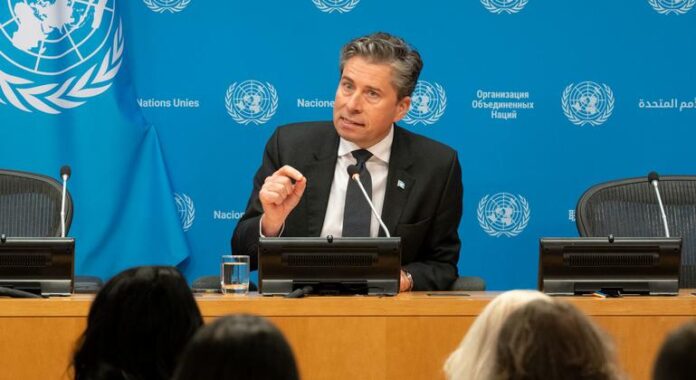
“We have been forced into a triage of human survival,” said Mr. Fletcher. “The math is cruel, and the consequences are heartbreaking. Too many people will not get the support they need, but we will save as many lives as we can with the resources we are given.”
New priorities
The appeal aims to reprioritise individual country plans in pursuit of two main goals: first, to reach people and places facing the most urgent humanitarian needs, and second, to prioritise life-saving support based on existing planning for the 2025 humanitarian response.
This is intended to ensure that limited resources are directed where they can do the most good, as quickly as possible.
Rather than limiting lifesaving aid to a predetermined matrix, humanitarian partners are focused on addressing the most urgent needs in ways that respect the dignity of affected people, allowing them to choose what they need most, OCHA said.
The appeal prioritises but does not replace the Global Humanitarian Overview 2025 (GHO), launched last December, which covers 180 million vulnerable people across 70 countries. The GHO calls for $44 billion, but at the halfway point of the year, less than 13 per cent of that amount has been received.
A call for global solidarity
“Brutal funding cuts leave us with brutal choices,” said Fletcher. “All we ask is one per cent of what you chose to spend last year on war. But this isn’t just an appeal for money – it’s a call for global responsibility, for human solidarity, for a commitment to end the suffering.”
Press briefings – Economic and Financial Affairs Council of 20 June 2025 and General Affairs Council of 24 June 2025

Press briefings ahead of the upcoming Economic and Financial Affairs Council of 20 June 2025 and General Affairs Council of 24 June 2025 will take place on 17 June 2025 at 16.00
EU Reforms Visa-Free Travel Suspension Mechanism to Tackle Abuse and Security Risks

Brussels, 17 June 2025 — In a major development aimed at strengthening the integrity of Europe’s visa-free travel system, the Council of the European Union and the European Parliament have reached a provisional agreement to overhaul the rules governing the suspension of visa exemptions for third countries.
The reform, announced today, updates a mechanism in place since 2013 that allows the EU to temporarily suspend visa-free access when certain conditions are met. The updated framework is designed to respond more effectively to emerging threats, including abuse of the system, hybrid threats, and breaches of international norms.
New Grounds for Suspension
Under the revised rules, the EU can now trigger the suspension of visa-free travel on several new grounds:
- Misalignment with EU visa policy , particularly by countries near the EU whose lax policies may lead to increased irregular migration.
- Investor citizenship schemes that grant nationality without genuine ties to the country, often exploited for circumventing border controls.
- Hybrid threats and weak document security , which pose risks to internal security.
- Deterioration in external relations , especially concerning violations of human rights or breaches of the UN Charter.
These new criteria supplement existing triggers such as spikes in unfounded asylum applications, overstaying, and high rates of entry refusals.
Clear Thresholds for Action
To ensure clarity and consistency, the agreement introduces specific thresholds that must be met before suspension can take effect. For example:
- A 30% increase in cases of refused entry, overstays, asylum applications, or serious criminal offenses linked to nationals of a given country.
- An asylum recognition rate below 20% , indicating a significant number of baseless claims.
These benchmarks aim to make the mechanism more predictable and objective, reducing ambiguity in its application.
Extended Suspension Periods
The deal also extends the duration of temporary suspensions from 9 to 12 months , with an option to extend the measure by up to 24 additional months —up from the previous 18. This longer timeframe gives the European Commission more room to engage in dialogue with the affected country to address the root causes of the suspension.
If no progress is made, the EU may opt for permanent revocation of visa-free access—a rare but powerful tool meant to incentivize compliance with shared values and obligations.
Targeted Sanctions Instead of Blanket Measures
One of the most notable improvements in the new framework is the ability to target only those responsible for the problematic situation—such as government officials or diplomats—during the extended suspension phase.
Previously, all citizens of a country faced restrictions once the second phase began, which critics argued could unfairly punish ordinary people. Under the new rules, the EU can maintain targeted measures against individuals while sparing broader populations from collateral impact.
Why It Matters
Visa-free travel has long been a symbol of trust and cooperation between the EU and partner countries. However, recent years have exposed vulnerabilities in the system. Some nations have become gateways for irregular migration, with travelers exploiting liberal entry rules to move onward illegally into the EU.
In addition, concerns over national security and geopolitical tensions have grown, prompting calls for a more robust and responsive legal framework.
This reform addresses those concerns head-on, offering the EU greater flexibility and precision in safeguarding its borders while maintaining diplomatic channels for resolution.
Next Steps
The provisional agreement will now undergo formal confirmation by both the Council and the European Parliament before it becomes law. Once adopted, the updated mechanism will immediately apply to all EU member states within the Schengen Area.
Background
The visa suspension mechanism was first introduced in 2013 to serve as a safeguard against the misuse of visa-free arrangements. While these agreements promote mobility and economic ties, they also carry risks—ranging from overstays and false asylum claims to security threats and political pressure points.
Today’s agreement marks a significant evolution in the EU’s approach to managing these challenges, reinforcing both the union’s security and its strategic interests.
Without urgent funding, global hunger hotspots are set to grow, UN warns
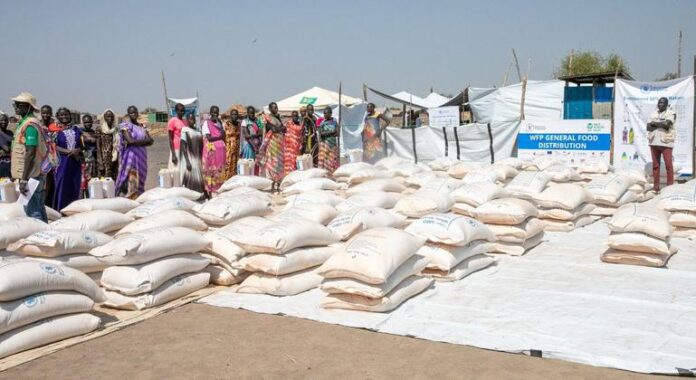
But hunger has followed them. Over 57 per cent of the population in the world’s youngest country to the south is already facing high levels of acute food insecurity.
Sudan and South Sudan are among five global hunger hotspots of “highest concern”, trapped in a worsening cycle of conflict, climate shocks and economic decline.
Continued fighting in Sudan, anticipated flooding impacting its southern neighbour and deteriorating economic conditions in both countries are set to intensify hunger in the coming months.
A new report released on Monday by the World Food Programme (WFP) and the Food and Agriculture Organization (FAO) also identified Palestine, Mali and Haiti as the other top-priority hunger hotspots, with a further seven countries likely to see worsening food security over the next five months.
The report, which analyses existing data to project the nature of food insecurity, emphasised that without immediate humanitarian assistance, people living in these hotspots will face severe food conditions and high risks of starvation and death.
“This report makes it very clear: hunger today is not a distant threat – it is a daily emergency for millions. We must act now and act together to save lives and safeguard livelihoods,” said FAO Director General QU Dongyu.
Conflict-driven hunger
The report identified that the main driver of hunger is conflict which is often compounded by climate and economic shocks.
“There’s an on-going famine in Sudan and also a risk of famine in the case of Gaza. And all of those are driven by conflict and lack of access for humanitarians,” said Jean-Martin Baucer, FAO food security analysis director.
In Gaza, the entire population of 2.1 million people is projected to experience crisis levels of food insecurity in the next months as a result of protracted military operations, with almost 500,000 projected to face catastrophic levels of food insecurity.
Sawsan was an artist in Gaza before the conflict began. Since then, she and her four children have been displaced, losing everything that they owned. They do not have enough to eat: Sawsan described to WFP that she now reduced to crushing macaroni to make bread for her children.
The report also noted that climate shocks and conflict often cause protracted economic declines, diminishing the purchasing power and self-sustaining capacity of households and communities.
Window closing fast
In recent months, humanitarian food operations have faced significant food shortages and have been geographically impeded by security crises which make the delivery of aid simply dangerous.
WFP and FAO are calling for the international community to drastically step up funding for food and nutrition related humanitarian aid in the coming months and advocate for an end to the fighting.
“Urgent, sustained investment in food assistance and recovery support is crucial as the window to avert yet more devastating hunger is closing fast,” said WFP executive director Cindy McCain.
‘Red alert’
In May, the food aid sector estimated that it would need $12.2 billion, but only nine per cent of this was funded.
The report also underlined the importance of moving towards longer-term humanitarian strategies which equip communities with self-sustaining capabilities and are less expensive.
“This report is a red alert. We know where hunger is rising and we know who is at risk. We have the tools and experience to respond but without funding and access, we cannot save lives,” said Ms. McCain.
Supporting a Secure and Border-Free Europe

In 2025, Europe marks two major milestones: 40 years of the Schengen Area and 30 years of the Schengen Information System (SIS) — the IT backbone that helps keep this border-free zone both secure and operational.
Since its launch in 1995, SIS has enabled real-time cooperation between national authorities across Europe, safeguarding citizens while supporting one of the EU’s greatest achievements — the freedom to travel without internal borders.
SIS is more than just a system — it is a cornerstone of trust, cooperation, and security in Europe.
A System at the Heart of European Security
SIS is much more than a database — it is an operational tool vital to public safety, judicial cooperation, and migration management across the EU.
Every day, SIS helps authorities locate missing persons, intercept criminals at borders, recover stolen assets, and support cross-border investigations — reinforcing trust between Member States.
At eu-LISA, we are committed not only to keeping SIS running reliably, but also to ensuring it evolves to meet future needs — by expanding capabilities, integrating new technologies, and supporting the EU’s broader interoperability objectives.
What is SIS?
The Schengen Information System (SIS) is Europe’s largest and most frequently used information-sharing platform for border security and law enforcement. It allows participating countries to issue and consult alerts related to:
By enabling instant data exchange, SIS helps police officers, border guards, customs officials, immigration authorities, and judicial actors to make fast, informed decisions across national borders.
Who Uses SIS?
As of 2025, SIS is used by 30 European countries, including all EU Member States (with both Ireland and Cyprus now connected), as well as Iceland, Liechtenstein, Norway, and Switzerland.
In addition, EU agencies such as Europol, Frontex, and Eurojust have access to the system to support their operational mandates.
The countries connected to SIS are:
Austria, Belgium, Bulgaria, Croatia, Cyprus, Czech Republic, Denmark, Estonia, Finland, France, Germany, Greece, Hungary, Iceland, Ireland, Italy, Latvia, Liechtenstein, Lithuania, Luxembourg, Malta, the Netherlands, Norway, Poland, Portugal, Romania, Slovakia, Slovenia, Spain, Sweden, and Switzerland.
Across Europe, more than 250,000 authorised users access SIS, including:
Each participating country operates a SIRENE Bureau (Supplementary Information Request at the National Entry), which coordinates follow-up actions when SIS alerts are triggered.
How is SIS Managed?
Since 2013, eu-LISA — the EU Agency for the Operational Management of Large-Scale IT Systems in the Area of Freedom, Security and Justice — has been responsible for the management and further development of SIS.
eu-LISA’s tasks include:
A major upgrade, known as the SIS Recast, went live in March 2023. It introduced new features to better support counter-terrorism efforts, child protection, and the fight against irregular migration.
SIS in Numbers – 2024 Highlights
According to the SIS Annual Report 2024, the system continues to be a cornerstone of operational cooperation:
While alerts on individuals make up less than 2% of all entries, they are among the most critical. These include:
