Monday, September 28, 2026
Home Blog Page 491

Getting ready to support wildfire-hit countries during the summer

0
Getting ready to support wildfire-hit countries during the summer

The EU has put together teams of firefighters and aircraft to help European countries affected by wildfires during the upcoming summer. Throughout July and August almost 650 firefighters from 14 European countries will be strategically prepositioned in key high-risk locations.

Source link

Gazans’ suffering goes on amid intensifying Israeli strikes

0
Gazans’ suffering goes on amid intensifying Israeli strikes

In occupied East Jerusalem, meanwhile, Israeli protesters illegally entered a compound of the UN agency for Palestine refugees, UNRWA.

The development comes after the Israeli military coordination unit COGAT said on Saturday that 388 trucks had entered Gaza since last Monday – the first aid to arrive in well over two months of blockade that have caused hunger levels to spike.

Humanitarians have repeatedly warned that at least 500 to 600 trucks need to cross into Gaza every day to provide people with their daily needs – as they did before war erupted on 7 October 2023 after Hamas-led terror attacks on Israel.

Token assistance

“We are on the back of 11 weeks of nothing entering the Gaza Strip, no food, no medicines for 11 weeks, nothing apart from bombs,” said James Elder, a spokesperson for the UN Children’s Fund (UNICEF).

“And so today, a week after life-saving aid was finally allowed into Gaza again, the scale of that aid is painfully inadequate,” he told UN News. “It looks like a token that appears more like cynical optics than any real attempt to tackle the soaring hunger crisis among children and civilians in Gaza.”

Today, Gazans remain at “critical risk of famine”, UN-backed food security experts warned earlier this month. In their latest update, they estimated that one in five people in Gaza – 500,000 – faces starvation.

Another school hit

Reports on Monday indicated meanwhile that Israel’s intensifying military operation in northern Gaza against alleged terrorists and their infrastructure had killed at least 50 people in air strikes.

One attack hit a school in Gaza City sheltering hundreds of people uprooted by more than 19 months of violence. Footage reportedly taken after the incident showed the silhouette of a child stumbling through a classroom set ablaze at Fahmi al-Jarjawi school.

Another air strike hit a home elsewhere in Gaza City killing four people, according to the health authorities.

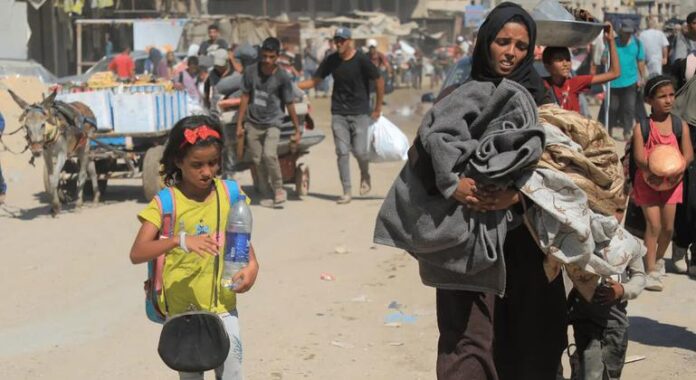
UN-run shelters are now “overwhelmed with displaced people desperately seeking safety”, the UN agency for Palestinian refugees (UNRWA) said in an update on Monday. It also underscored that the lack of food has added to people’s suffering.

“Many families are sheltering in abandoned, unfinished, or damaged buildings,” the agency explained. “Sanitation conditions are dire; in some cases, hundreds of people are having to share a single toilet. Others, including children and pregnant women, are sleeping in the open.”

Farming smashed

Across Gaza, less than five per cent of the Strip’s cropland remains available for cultivation, according to UN Food and Agriculture Organization (FAO) and the United Nations Satellite Centre (UNOSAT).

Using high-definition imagery, the agencies’ findings emphasize just how much food production capacity has shrunk in Gaza because of the war, exacerbating  the risk of famine.

As of April 2025, more than 80 per cent of the Gaza Strip’s total cropland area has been damaged (12,537 hectares out of 15,053) and 77.8 percent is not accessible to farmers, leaving just 688 hectares (4.6 percent) available for cultivation.

The situation is particularly critical in Rafah and in the northern governorates, where nearly all cropland is not accessible.

Settler protest

Following the protest at the UNRWA compound in occupied East Jerusalem on Monday, a spokesperson for the UN agency noted that one member of the Israeli Knesset had joined the settlers inside the gates. Monday is a national holiday in Israel, marking the moment following the Six-Day War in 1967 when the country’s troops occupied East Jerusalem and the West Bank.

The UNRWA facility – located in the Sheikh Jarrah neighbourhood of occupied East Jerusalem – has been targeted in past arson attacks that set light to the perimeter fence.

At the end of January, UNRWA withdrew its staff from the compound in protest at the entry into force of an Israeli law banning the agency’s operations in occupied East Jerusalem.

The location retains its status as a UN facility that is protected under international law. 

Source link

Frontex Executive Director Hans Leijtens Participated in European Police Congress 2025 Panel on Migration and Security

0
Frontex Executive Director Hans Leijtens Participated in European Police Congress 2025 Panel on Migration and Security

The Executive Director of Frontex, Hans Leijtens, took part in the 2025 European Police Congress in Berlin, highlighting the Agency’s growing role in shaping a united European approach to migration and internal security.

Source link

Syrians face staggering needs amid insecurity and healthcare crisis

0
Syrians face staggering needs amid insecurity and healthcare crisis

Wrapping up a visit to the country, Edem Wosornu, who heads operations and advocacy for the UN humanitarian affairs coordination office (OCHA) said that she could “feel the momentum for change” on the ground after years of suffering and hardship under the Assad regime ended with its overthrow last December.

But formidable challenges remain as 16.5 million Syrians require humanitarian assistance and protection, and needs are “staggering”.

Speaking from Gaziantep, a humanitarian hub in Türkiye just across the Syrian border, Ms. Wosornu noted an “encouraging trend of returns” since last December.

Over one million internally displaced people have come back to their areas of origin, she said, and more than half a million refugees have returned from neighbouring countries according to the UN refugee agency (UNHCR).

Devastated homes and opportunities

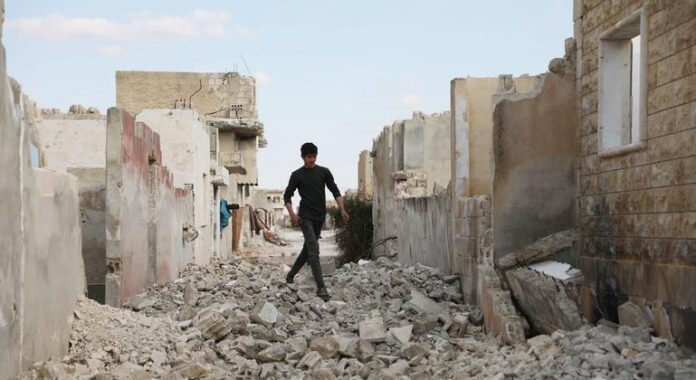
The OCHA official cited insecurity, damaged homes, inadequate services, lack of livelihood opportunities and the threat of unexploded ordnance as “key barriers” preventing people returning.

“People say, first and foremost they want security,” she stressed.

While the level of hostilities in the country has subsided, Ms. Wosornu said, localized tensions and clashes remain a “major concern”.

Remnants of heavy fighting pose a continued threat to civilians, said Dr Altaf Musani, the UN World Health Organization (WHO)’s Director of Health Emergencies.

He pointed to at least 909 casualties from unexploded ordnance since December 2024, including some 400 deaths – a majority of them women and children.

“We’re starting to see the admission rates and consultation rates in emergency rooms increase… Children and women, going about their daily life, trying to get water, trying to get food, trying to rebuild,” are walking through agricultural land, roads and rivers where unexploded munitions could be hiding, he said.

Camp residents at highest risk

Diseases, such as cholera and acute watery diarrhoea, are spreading, Dr. Musani said, stressing that more than 1,444 suspect cases of cholera and seven associated deaths have been recorded.

“This is particularly in Latakia and Aleppo, particularly around displacement camps,” he said.

“We know that when cholera gets hold in camps, it can serve as a brush fire, increasing both morbidity and mortality.”

The WHO official warned that more than 416,000 children in Syria are at risk from severe malnutrition and that more than half of children under five suffering from severe acute malnutrition are not receiving treatment.

“From a public health standpoint, we need to be able to watch that risk and intervene and save those children,” he said.

Boys play in an informal camp in Syria.

Pregnancy dangers

Dr. Musani also noted that half of the maternity hospitals in northwest Syria have suspended operations since September 2024 owing to financial cuts, which humanitarians are “witnessing globally” but which are “really apparent” in Syria.

Underfunding of the humanitarian operation in Syria is already severe. Earlier this week, OCHA’s Coordination Division head, Ramesh Rajasingham, told the Security Council that out of the $2 billion required for the UN and its partners to reach eight million of the most vulnerable people from January through June 2025, only 10 per cent has been received.

The country’s cash-strapped health facilities face a lack of skilled workers and equipment, said WHO’s Dr. Musani. The war had pushed some 50 to 70 per cent of the health workforce to leave the country in search of other opportunities, and the health infrastructure is in dire need of investment.

The WHO official noted that for the health system – the “heartbeat of the nation” – the sanctions imposed on the country during the Assad regime had resulted in a lack of much-needed upgrades, compromising the purchase of new MRI machines, CT scanners, laboratory equipment and software upgrades.

Over the past two weeks, both the United States and the European Union have moved to lift the sanctions. OCHA’s Ms. Wosornu expressed hope that thanks to this development “we’ll see the impact on goods and services, on the cost of doing operations in the country, on the ability to move goods quicker into the country”.

But “it will take time”, she added. “I believe the people of Syria are hopeful that this will change their everyday lives.”

Source link

Statement by the High Representative on behalf of the EU on the alignment of certain countries with Council Decision concerning restrictive measures in respect of actions undermining or threatening the territorial integrity, sovereignty and independence…

0
Frontex Executive Director Hans Leijtens Participated in European Police Congress 2025 Panel on Migration and Security

Statement by the High Representative on behalf of the EU on the alignment of certain countries with Council Decision concerning restrictive measures in respect of actions undermining or threatening the territorial integrity, sovereignty and independence of Ukraine.

Source link

Statement by the High Representative on behalf of the EU on the alignment of certain countries with Council Decision concerning restrictive measures against cyber-attacks threatening the Union or its Member States

0
Statement by the High Representative on behalf of the EU on the alignment of certain countries with Council Decision concerning restrictive measures against cyber-attacks threatening the Union or its Member States

Statement by the High Representative on behalf of the EU on the alignment of certain third countries with Council Decision concerning restrictive measures against cyber-attacks threatening the Union or its Member States. Source link

Source link

UN rights chief calls on South Sudan’s warring parties to end renewed fighting

0
UN rights chief calls on South Sudan’s warring parties to end renewed fighting

At least 75 civilians have been killed in hostilities between the national army (SSPDF) and the Sudan People’s Liberation Army-In Opposition (SPLA-IO) – which is both a political party and militia group loyal to First Vice President Riek Machar – and their respective allied armed groups, said UN human rights office, OHCHR, in a press release.

Thousands have been displaced from their homes.

South Sudan was plunged into civil war in 2013 between supporters of the President Salva Kiir and his rival Mr. Machar but a 2018 peace accord led to a fragile power-sharing agreement.

Escalating hostilities “portend a real risk of further exacerbating the already dire human rights and humanitarian situation,” said Volker Türk, head of the UN human rights office (OHCHR), urging all parties to the conflict to “urgently pull back from the brink.”

Intensifying hostilities

The latest armed violence erupted in February when a militia group identified as the White Army reportedly launched a series of attacks in Upper Nile State, OHCHR said.

Hostilities intensified between 3 May and 20 May with reports of indiscriminate aerial bombardments and river and ground offensives by the SSPDF on SPLA-IO positions in the states of Jonglei and Upper Nile.

Civilian displacement further increased on 21 May because of the SPLA-IO and allies’ counter-offensive in Jonglei State.

“I urge all parties to uphold the 2018 peace agreement,” said the UN human rights chief, calling for the warring parties to “ensure protection of civilians and civilian objects,” and facilitating “humanitarian access in line with their obligations under international law.”

Concern of arbitrary detention

Between 5 and 26 March, at least 55 high-ranking government officials affiliated with the SPLM-IP, among them civilians, have been arrested across the country. Notably, South Sudan’s first vice-president, ministers, members of parliament and military officers were among the dozens of politicians who have been detained.

“I am concerned that many of the detentions are arbitrary in nature,” Mr. Türk said, as these arrests were conducted without warrant or due process.”

Mr. Türk called for the immediate and unconditional release of those arbitrarily detained, as he urged for authorities to grant the UN Mission in South Sudan (UNMISS) access to National Security Service detention sites to assess the welfare of those detained there.

Finally, the UN also urged the authorities to take “prompt, effective and meaningful” steps to halt the spread of hate speech in the country.

Source link

Guterres calls on Israel to accept UN’s ‘detailed, principled’ aid plan for Gaza

0
Guterres calls on Israel to accept UN’s ‘detailed, principled’ aid plan for Gaza

Addressing reporters outside the Security Council, António Guterres called once again for a permanent ceasefire to end the fighting between Israeli forces and Hamas militants, the immediate and unconditional release of all hostages and full humanitarian access so aid can flow in following nearly 80 days of Israeli blockade.

‘Cruellest phase’

He said Palestinians in the enclave are now “enduring what may be the cruellest phase of this cruel conflict,” with families being “starved and denied the very basics,” as Israel intensifies its offensive and promotes a new privatised aid distribution network reportedly due to begin on Sunday which would bypass the UN and partner organizations’ aid operation.

Israel has clear obligations under international humanitarian law to treat civilians in Gaza humanely, Mr. Guterres added, and “must not forcibly transport, deport or displace the civilian population of an occupied territory.”

He noted that despite authorising a “trickle of aid” to enter in recent days, supplies from only 115 out of 400 trucks have been cleared for collection and distribution – while nothing has reached the besieged north.

UN ‘working round the clock’

“We are working around the clock to get whatever aid we can to people in need,” the UN chief said, but “needs are massive – and the obstacles are staggering.”

Israel is causing unnecessary delays, imposing quotas on distribution and barring essentials such as fuel, shelter, cooking gas, and water purification supplies – are prohibited.

Furthermore, the lives of UN and other humanitarian staffers are being placed at risk if they continue to be prevented from distributing food parcels and flour to those in desperate need, the UN chief continued.

He said absent rapid, reliable, safe and sustained aid access, more Gazans will die – with profound long-term consequences.

Without making direct reference to the US-backed Israeli plan to create new distribution sites overseen by private contractors in coordination with the military, Mr. Guterres said the UN had been clear: “We will not take part in any scheme that fails to respect international law and the humanitarian principles of humanity, impartiality, independence and neutrality.”

5-point aid plan

Instead, he said the UN and partners had “a detailed, principled, operationally-sound 5-stage plan” – supported by UN Member States.

  1. Ensure the delivery of aid to Gaza
  2. Inspect and scan aid at crossing points
  3. Transport aid from crossing points to humanitarian facilities
  4. Prepare aid for onward distribution
  5. And transport aid to people in need

“We have the personnel, the distribution networks, the systems and community relationships in place to act,” said the UN chief. “The supplies – 160,000 pallets, enough to fill nearly 9,000 trucks – are waiting.

“This is my appeal for life-saving aid for the long-suffering people of Gaza: Let’s do it right.  And let’s do it right away.”

Source link

G7 Finance Ministers and Central Bank Governors’ Communiqué, Banff, Alberta, 20-22 May 2025

0
Frontex Executive Director Hans Leijtens Participated in European Police Congress 2025 Panel on Migration and Security

G7 Finance Ministers and Central Bank Governors, met on 22 May 2025 in Banff, Canada and issued a joint communiqué.

Source link

UN rights mission deplores deadly Russian strikes in Ukraine

0
UN rights mission deplores deadly Russian strikes in Ukraine

According to the UN mission, the overnight assault from Saturday into Sunday – one of the largest of its kind since Russia’s full-scale invasion in February 2022 – resulted in civilian casualties and damage to homes and infrastructure across 10 regions of Ukraine, including the capital, Kyiv.

At least three children were among those killed and nine children were reported injured. The mission is currently working to verify the full extent of the casualties and the broader impact of the attack.

“With at least 78 people reported killed or injured across the country, last night’s attack tragically demonstrates the persistent deadly risk to civilians of using powerful weapons in urban areas, including those far away from the frontline,” Danielle Bell, HRMMU Head, said in a news release on Sunday.

“It is yet another addition to the staggering human toll this war continues to inflict on civilians, with more families across the country now grieving their losses.”

No place is safe

Matthias Schmale, the UN Humanitarian Coordinator for Ukraine, also voiced deep concern over the civilian suffering.

“I am horrified that yet again civilians – among them children – were killed in last night’s massive attacks,” he said in a statement posted on the social media platform X.

“Across Ukraine, no place is safe. Homes and civilian infrastructure were hit. Grateful to humanitarian NGOs and state services who are immediately supporting affected people. Civilians must never be a target.”

Use of long-range weapons

Ukrainian authorities reported that the Russian armed forces launched at least 367 missiles and loitering munitions during the night, in a coordinated attack with air, sea and land-based systems.

The strike followed a similar assault the previous night, which had mainly targeted the Kyiv region.

HRMMU noted that the use of long-range weapons in urban areas has been a major driver of civilian casualties in March and April. While the number of casualties in May had been somewhat lower than April before the latest attack, the toll from this weekend’s strikes will add to the monthly figures.

Source link