Wednesday, May 6, 2026
Home Blog Page 511

From collaborative R&I to scaled up impact in waterborne: building on EU research excellence

0
From collaborative R&I to scaled up impact in waterborne: building on EU research excellence

The European Union’s commitment to collaborative research and innovation is making its mark.

Technologies developed through Horizon 2020 and Horizon Europe programmes are now scaling up with support from the Innovation Fund, ensuring Europe leads the way in tackling climate challenges and laying the foundation for a greener, more sustainable future.

Transformative waterborne projects supported by EU R&I

  1. SUSTAINSEA – Reducing maritime transport CO2 emissions using wind

Spanish startup Bound 4 Blue, incubated by the European Space Agency and supported by the EIT Climate-KIC Accelerator programme, developed wind-assisted propulsion systems to reduce greenhouse gas emissions in maritime transport. The company secured further funding through Horizon Europe, including participation in the collaborative research project RETROFIT55, which advanced wind-assisted ship propulsion, and the ZHENIT project, focusing on wingsail propulsion for zero-waste heat vessels. The company is also involved in the SeaStars project, which demonstrates greenhouse gas emissions reduction and energy efficiency improvements across eight market-ready vessel designs. In addition, it is also participating in the TwinShip project, which aims to accelerate the maritime industry’s digital and environmental transformation toward achieving net-zero emissions by 2045. The wind-assisted propulsion technology is now being deployed in five large cargo vessels under the Innovation Fund-supported SUSTAINSEA project. This initiative will help reduce emissions by up to 91% while lowering dependence on fossil fuels.

2. SOL – Sugar Oil as sustainable marine fueLs

Vertoro BV, a pioneer in sustainable biofuels, created a fuel called Crude Sugar Oil (CSO™) using cellulose. In its journey the company was supported by various EU research programmes in the following three collaborative research projects. Under Horizon 2020, the IDEALFUEL project studied how lignin, a byproduct of biomass, could be converted into renewable bio-HFO fuel for use in maritime fleets. The EHLCATHOL project worked on innovative methods to transform lignin waste into high-quality liquid fuels. Under Horizon Europe, the CARBIOW project explored advanced approaches to utilizing bioenergy sources for fuel production. These projects have contributed to a broader understanding of renewable fuel technologies. Today, with Innovation Fund backing, the SOL project is validating and scaling this fuel for use in shipping, achieving more than an 80% reduction in greenhouse gas emissions compared to traditional fuels.

3. GREENMOTRIL – Development and operation of a GREEN energy community in the port of MOTRIL

Cuerva is an energy company playing a key role in advancing smart renewable energy solutions with the support of several EU-funded programs by participating in the following five collaborative research projects. Through Horizon 2020, the SYNERGY project developed a Big Energy Data Platform and AI Analytics Marketplace, while the BEYOND project worked on a data management platform with advanced AI tools. Under Horizon Europe, Cuerva continued exploring energy innovation with the COCOON project, which focuses on creating adaptive cyber-physical protection strategies, and the ODEON project, introducing a federated framework for transforming the energy landscape. Additionally, the TwinEU project is delivering a digital replica of energy infrastructure, further supporting smart energy management.

These diverse projects set the stage for GREENMOTRIL, funded by the Innovation Fund, which is transforming the Port of Motril into Europe’s first off-grid seaport powered entirely by renewable energy.

4. IRIS – Innovative low caRbon hydrogen and methanol productIon by large Scale carbon capture

Motor Oil (Hellas) has been actively engaged in driving innovation in carbon capture and sustainable fuels, supported by EU funding in the following four collaborative research projects. Under Horizon 2020, the CARMOF project focused on developing a new, efficient process for CO₂ capture. Following this, Horizon Europe funded the AURORA project, which accelerated the deployment of integrated carbon capture, utilization, and storage (CCUS) chains using solvent-based technology. In 2023, the COREU project worked on establishing open-access networks to connect CO₂ emitters with storage sites, while the SAFeCRAFT project showcased the safety and efficiency of sustainable alternative fuels for maritime transport. These efforts paved the way for the IRIS project, now supported by the Innovation Fund. This initiative is scaling up carbon capture at an industrial facility in Greece, with plans to produce 10,000 tonnes of e-methanol annually for use as an energy carrier in mobility and industrial applications. 

These projects demonstrate the tangible impact of EU research investments in creating meaningful change. The collaborative research parts of Horizon 2020 and Horizon Europe have built a bridge from innovative ideas to large-scale action. From clean fuels to off-grid ports, these solutions tackle some of today’s toughest environmental challenges.

READ MORE

DG Research and Innovation: Waterborne Transport Research 

CORDIS Synergies Results Pack on Waterborne Transport for a Greener Future

Source link

EUBAM Rafah: Statement by the Spokesperson on the redeployment of the mission at the Rafah Crossing Point

0
EUBAM Rafah: Statement by the Spokesperson on the redeployment of the mission at the Rafah Crossing Point

EUBAM Rafah: Statement by the Spokesperson on the redeployment of the mission at the Rafah Crossing Point

Source link

Gazans depend on us for ‘sheer survival’ insists UNRWA

0
Aid efforts in Gaza escalate, as risk from deadly unexploded ordnance grows

The development came as more than 462,000 people are estimated to have crossed from south Gaza to the north since the opening of the Salah ad Din and Al Rashid roads on Monday.

The UN and humanitarian partners are assisting those on the move by providing water, high-energy biscuits and medical care along these two routes.

Once back in the north, UN aid workers have reported seeing Gazans using shovels to remove rubble and setting up makeshift shelters or tents where their homes used to be.

Impending catastrophe

Any disruption to UNRWA’s work will have “catastrophic consequences on the lives and futures of Palestine refugees”, insisted Juliette Touma, Director of Communications for the UN Relief and Works Agency, pointing to the agency’s massive reach into the communities where it has provided free healthcare and education for decades.

Last October, the Israeli parliament – the Knesset – passed two laws that called for ending UNRWA’s operations in its territory and prohibiting Israeli authorities from having any contact with the agency.

That developed followed Israeli accusations that UNRWA workers were involved in the 7 October attacks that sparked the war in Gaza. Nine staff were sacked after an internal UN investigation for possible involvement.

Under the Knesset ban, UNRWA was ordered to vacate all premises in occupied East Jerusalem and cease operations in them by 30 January.

“Our teams continue to serve, even though they themselves in Gaza as an example, they themselves are impacted, they themselves have been forced to flee their homes,” Ms. Touma explained.

“They continue to serve and we are committed as UNRWA to stay and deliver across the Occupied Palestinian Territory. That includes the Gaza Strip, it includes the occupied West Bank, including East Jerusalem.”

She noted that no official communication has been received from the Israeli authorities on how the Knesset ban will be implemented across the Occupied Palestinian Territory.

No alternative

In the absence of any durable solution, Palestine refugees will continue to depend on UNRWA for basic services including health and education; and in Gaza, in the aftermath of the devastation caused by the war, for their sheer survival,” Ms. Touma maintained.

She noted that UNRWA’s health centres continued to receive patients in East Jerusalem in the West Bank on Thursday, while schools were expecting to reopen on Sunday after a scheduled break.

“Our teams…will continue to provide learning for children. We have around 50,000 boys and girls across the West Bank, including East Jerusalem, who go to UNRWA’s schools,” Ms. Touma said.

Aid boost continues

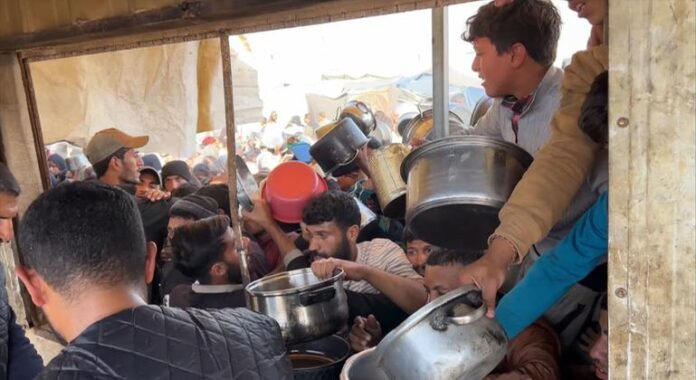
As the UN-wide effort to flood Gaza with aid continues, the World Food Programme (WFP) announced plans to set up more aid distribution points this week in the north, where all of its bakeries are now running once again.

The UN agency reported that together with UNRWA it has resumed “fully-fledged” food parcel distribution and reached 350,000 people since the ceasefire took effect on 19 January.

Some 20,000 hot meals are also being distributed daily in Beit Lahia, in the far north, said Antoine Renard, WFP’s Country Director in Palestine, who underscored the need for non-food supplies – so-called dual use items – to be allowed into the war-shattered enclave also.

Medical emergency

Echoing that message, the UN World Health Organization (WHO) said that only 18 of Gaza’s 36 hospitals are even partly functional, with just one-third – 57 of the 142 primary healthcare centres and 11 field hospitals – also partly functional.

“The ceasefire is good news for our scale up of aid,” said  Dr Rik Peeperkorn, WHO representative in OPT. “As we know, the influx in the north has increased health needs. So 450,000 people have crossed into northern Gaza [and] there’s only there 10 partially functional hospitals in Gaza City and one minimally functional hospital in north Gaza.”

Amid reports that 2,500 children at risk of imminent death in Gaza need immediate medical evacuation, Dr Peeperkorn said that between 12,000 and 14,000 people need specialized care outside the enclave.

“So, what we have been asking for all the time…is first and foremost a restoration of the referrals, the traditional referral pathway to West Bank and East Jerusalem. The East Jerusalem hospitals and the West Bank hospitals are ready to receive Gazan and Palestinian critical patients,” he said.

Briefing journalists in New York on Friday, UN Spokesperson Stéphane Dujarric said UN aid coordination office, OCHA, remained “deeply alarmed” by the worsening conditions for residents in norther areas of the occupied West Bank, as Israeli counter-terrorism operations continued for an 11th day.

“Nearly all of the Jenin refugee camp’s 20,000 residents have been displaced over the past two month in the context of operations by both the Palestinian Authority and Israeli security forces.

A further Israeli operation is occurring in Tulkarm where aid partners report that over 110 families have been displaced from the refugee camp there.

Freed hostage says she was held in UNRWA facility

One of the hostages freed from captivity in Gaza reportedly told the UK Prime Minister in a phone call on Friday that she had been held by Hamas for some time in facilities belonging to UNRWA, according to her mother.

Emily Damari was freed 12 days ago and is missing two fingers following her 15-month ordeal. She told Keir Starmer that Hamas had twice denied her access to medical treatment after being shot twice, in the hand and the leg.

Responding to Ms. Damari’s statement that she had been held inside an UNRWA facility, the UN Palestine refugee agency’s spokesperson Juliette Touma told the BBC that most UNRWA buildings were turned into shelters as soon as the war began and claims that any hostage had been held in one of their facilities was extremely serious.

Ms. Touma said the agency had repeatedly called for independent investigations into these claims, including the misuse and disregard of UNRWA premises by Palestinian armed groups, including Hamas.

Source link

UN agencies warn of worsening humanitarian and human rights crisis in eastern DR Congo

0
UN agencies warn of worsening humanitarian and human rights crisis in eastern DR Congo

The rebels have already seized the provincial capital, Goma, and reports indicate that they are closing in on the key city of Bukavu, capital of South Kivu province.

The hostilities are occurring in a mineral-rich region that has been volatile for decades amid a proliferation of armed groups, which has forced hundreds of thousands to flee their homes over the years and seek safety in displacement camps.

A camp in eastern DR Congo provides security for some of the seven million displaced people in the country.

Critical supplies dwindling

UN humanitarians warn that the situation continue to worsen for civilians likely trapped by days of intense fighting in and around Goma, which has a population of over one million.

Displacement camps on the city’s outskirts, previously hosting more than 300,000 people, are emptying out as people flee the violence. Medical services are overwhelmed by the number of injured, both civilians and military personnel.

The World Food Programme (WFP) said water and food are running low, and the next 24 hours are crucial.

“People are really running out of food, clean water, medical supplies and that’s a big concern. So, the supply chain has really been strangled at the moment,” said WFP Spokesperson Shelley Thakral.

Several WFP warehouses have been looted and teams are taking stock of what they will need to procure locally and transfer by road to ensure they have provisions once operations resume in the critically affected areas.

WFP’s priority is keeping its staff and their dependents safe, and only critical staff remain in the area who are getting ready to resume operations as soon security permits.

Summary executions and sexual violence

Meanwhile, the human rights crisis also continues to deepen in the east.  

At least two sites for internally displaced persons (IDPs) have been bombed, causing civilian casualties, the UN human rights office, OHCHR, reported.

Spokesperson Jeremy Laurence said OHCHR has documented summary executions of at least 12 people by the M23 between 26 and 28 January.

The Office has also documented cases of conflict-related sexual violence by the army and allied Wazalendo fighters in Kalehe territory, located in South Kivu.  

It is also verifying reports that 52 women were raped by Congolese troops in South Kivu, including alleged reports of gangrape.

Violations could worsen

Meanwhile, in other areas under M23 control in South Kivu, such as Minova, fighters have occupied schools and hospitals, forced IDPs out of camps and subjected the civilian population to forced conscription and forced labour.

Additionally, DRC officials report that at least 165 women were raped by male inmates during the mass prison break from Goma’s Muzenze prison on 27 January, as M23 began its assault on the town.

Mr. Laurence recalled that conflict-related sexual violence has been an appalling feature of armed conflict in eastern DRC for decades, and the UN High Commissioner for Human Rights, Volker Türk, “is particularly concerned that this latest escalation risks deepening the risk of conflict-related sexual violence much further.“

End the violence

He said OHCHR continues to receive urgent requests from civilians for protection and is working with UN colleagues and other partners to ensure their safety. 

“As M23 reportedly advances towards Bukavu, the capital of South Kivu, the High Commissioner calls for an end to the violence and for all parties to uphold their obligations under international human rights law and international humanitarian law,” he said.

Recognize the crisis

The International Organization for Migration (IOM) also voiced deep concern over the hundreds of thousands of civilians uprooted by the heavy fighting and violence in Goma, some of whom were already previously displaced.

IOM appealed to the international community to recognize the staggering scale of the crisis and support the humanitarian response. 

“With the current alarming upsurge in fighting, an already dire situation is rapidly becoming very much worse,” said Director General Amy Pope. 

“IOM joins the UN Secretary-General’s call for an immediate cessation of hostilities and full humanitarian access, so that we can rapidly scale up our response and ensure that life-saving aid reaches those in need.”   

Appeal for support

The UN agency has been supporting displaced and host communities in Goma and surrounding areas by providing emergency shelter, water, sanitation, and hygiene assistance, among other aid.

IOM warned, however, that both the agency and humanitarian partners are struggling to meet the urgent needs in the DRC.

This year, humanitarians are seeking $2.5 billion for the country, with at least $50 million urgently needed to address the latest displacement, scale-up life-saving assistance, and prevent further suffering.


Death and disease

Humanitarian organizations in Goma continue to assess the impact of the crisis, including the widespread looting of warehouses and the offices of aid organizations, the UN said on Friday.

The World Health Organization (WHO) and partners conducted an assessment with the Government over the past five days.

They report that 700 people have been killed and 2,800 injured are receiving treatment in health facilities, though numbers are expected rise as more information becomes available. 

On Friday, the UN aid coordination office, OCHA, and partners visited sites for internally displaced people in the areas of Bulengo and Lushagala, located on the outskirts of Goma.

They found that water and healthcare services are still operational, but conditions remain dire. However, cholera cases have been reported and there are risks of an Mpox outbreak among displaced people.

OCHA warned that without urgent action, the risk of waterborne disease outbreaks will continue to increase. 

Source link

‘Robbed’ of their childhood: UNICEF warns of crisis facing Haiti’s youth

0
‘Robbed’ of their childhood: UNICEF warns of crisis facing Haiti’s youth

In a briefing on Friday, UN Spokesperson Stéphane Dujarric reported that more than 1,600 men, women and children have fled. 

Two-thirds are seeking refuge with host families and over 500 sheltering in three newly established displacement sites, according to the International Organization for Migration (IOM).

Children at risk

The situation for children remains particularly dire. The number of internally displaced children in Haiti has increased by nearly 50 per cent since September, now exceeding half a million. 

UNICEF reports that approximately one in eight children in the country is now displaced.

The agency also warns of a 70 per cent rise in child recruitment by gangs over the past year, with up to half of gang members in Haiti now estimated to be children.

‘Childhood is a right’

Speaking from a prison in Port-au-Prince where dozens of children are being held, UNICEF spokesperson James Elder described the growing desperation:

“I’m in a prison in Port-au-Prince where dozens of children are being held,” he said, explaining that 85 per cent of this capital city is controlled by armed groups.

“So, child recruitment into armed groups is rampant. Children get recruited. It’s out of desperation. It’s out of manipulation, out of being engulfed in violence,” he emphasised.

Mentioning a 16-year-old girl who dreamt of being a paediatrician, but was caught up in a raid, he said: “The point of this is that childhood should not be a gift. Childhood is a right.”

Humanitarian needs grow

The crisis is further aggravated by forced returns from neighbouring countries. 

In the first two weeks of January alone, nearly 15,000 Haitians were returned from the Dominican Republic, adding to the 200,000 people deported across the region last year.

Meanwhile, natural disasters have worsened conditions across the country. 

Since November, nearly 330,000 people have been affected by floods in six of Haiti’s departments, leaving dozens dead and damaging or destroying nearly 50,000 homes.

UN appeals 

The UN has launched a $908 million humanitarian appeal to assist 3.9 million people in Haiti this year.

“We urge the international community to scale up its support so that we and our humanitarian partners can support the people of Haiti who need it,” said Mr. Dujarric. 

As conditions deteriorate, UN agencies and humanitarian organizations stress the need for urgent international action to protect Haiti’s most vulnerable, particularly its children – trapped in a cycle of violence, displacement and deprivation.

“For those of us with freedom, those with safety, those who have an opportunity – we also have a responsibility. We have a responsibility to raise our voices for those who simply do not have one,” Mr. Elder said.  

Source link

Myanmar/Burma: statement by the High Representative on behalf of the EU on the Fourth Anniversary of the Coup

0
EUBAM Rafah: Statement by the Spokesperson on the redeployment of the mission at the Rafah Crossing Point

On the fourth anniversary of the military coup in Myanmar, the European Union (EU) reiterates its strongest condemnation of the actions taken by the Myanmar military since 1 February 2021 and calls…

Source link

UNOPS: the UN agency turning commitments into reality

0
UNOPS: the UN agency turning commitments into reality

Despite immense security risks and logistical challenges, the agency worked with international partners to transport and eliminate hundreds of tonnes of chemical materials under strict deadlines. This mission drew praise from global leaders, illustrating how a UN body with the right expertise can help neutralize threats to international peace and security.

The devastating 2004 tsunami left Indonesian provinces Aceh and Nias in ruins. Amid overwhelming damage, UNOPS constructed 225 earthquake-resistant schools in the region, providing children with secure, modern learning environments. By combining engineering expertise, local labor, and a rapid implementation timeline, education was revitalized for communities that had lost so much.

UNOPS commitment to helping protect the environment was also highlighted through its work on the Montreal Protocol, the international treaty that led to the healing of the ozone layer. By providing technical guidance and project support, UNOPS helped countries transition to safer alternatives for nearly 100 chemicals that harm the ozone layer.

A newly installed tap in Mirtala Village, India provides a clean water supply

Bridging the gap between ambition and action

In any country coming out of conflict, rebuilding essential infrastructure can make the biggest difference. UNOPS remains committed to supporting countries in conflict – building on its recent work in Ukraine, Syria and Gaza, which has been practically reduced to rubble. The ceasefire between Israel and Hamas is still in its early stages, but UNOPS stands ready to support a coordinated UN reconstruction response.

From its beginnings as a small department to its evolution into a driving force for concrete action, the UNOPS journey is a testament to the power of resilience, innovation, and partnership. As global challenges multiply, the agency’s role in bridging the gap between humanitarian, developmental and environmental needs is an example of what the UN can achieve through determination, expertise, and a global commitment to improving lives worldwide.

Today, the office is committed to bridging the gap between ambitions and tangible action, building foundations for countries to recover and thrive, from constructing schools and hospitals, building roads that connect communities in remote areas, and strengthening health systems.

In 2025, as it marks its 30th anniversary, UNOPS is planning for the future, to ensure that it provides solutions where needs are greatest, with a focus on serving some of the world’s most vulnerable communities. 

Source link

Myanmar/Burma: statement by the High Representative on behalf of the EU on the Fourth Anniversary of the Coup

0
EUBAM Rafah: Statement by the Spokesperson on the redeployment of the mission at the Rafah Crossing Point

EU issued a statement on the fourth anniversary of the military coup in Myanmar reiterating its strongest condemnation of the regime’s violence and calling for an end to all atrocities.

Source link

Four years on from the Military Coup in Myanmar: joint statement by Australia, Canada, the European Union, the Republic of Korea, New Zealand, Norway, Switzerland, the United Kingdom and the United States

0
EUBAM Rafah: Statement by the Spokesperson on the redeployment of the mission at the Rafah Crossing Point

Four years on from the Military Coup in Myanmar: joint statement by Australia, Canada, the European Union, the Republic of Korea, New Zealand, Norway, Switzerland, the United Kingdom and the United States

Source link

Sudan: UN rights chief ‘alarmed’ by summary executions, attacks on civilians

0
Sudan: UN rights chief ‘alarmed’ by summary executions, attacks on civilians

Government forces and a rival military – the Rapid Support Forces (RSF) – have been battling for control of the country since April 2023 in what Mr. Türk called a “senseless war”, which has recently taken an “even more dangerous turn for civilians” as reports of people brutally killed in ethnically targeted attacks mount.

In a statement released on Friday, the High Commissioner reported that at least 18 civilians, including one woman, were killed in seven separate incidents after SAF forces regained control of the area around Khartoum North – Sudan’s third largest city – on 25 January, according to verified information from the rights chief’s office (OHCHR).

Many of the victims were originally from the Darfur and Kordofan regions, raising concerns about targeted violence.

“These reports of summary executions, following similar incidents earlier this month in Al Jazirah State, are deeply disturbing,” said Mr. Türk.

“Such killings must not become normalised. Deliberately taking the life of a civilian or anyone not or no longer directly taking part in hostilities is a war crime,” he emphasised.

Disturbing threats circulate online

OHCHR is also investigating disturbing video footage that surfaced on 30 January, in which men in SAF uniforms and members of the Al Baraa Bin Malik Brigade in Khartoum North appear to read out a list of alleged RSF collaborators, saying “Zaili,” which is Arabic for “killed”, after each name.

Meanwhile, further threats of violence have emerged, with a video showing a member of the same brigade threatening to slaughter residents of El Hadj Yusif in East Nile, another area of Khartoum North mainly inhabited by people from Darfur and Kordofan.

Mr. Türk urged all parties to the conflict to protect civilians and respect international humanitarian and human rights law.

“Independent investigations must be held into these incidents in line with relevant international standards,” he underscored.

Civilians under fire

Meanwhile, attacks on civilians by the RSF continue across Sudan.

In El Fasher, North Darfur, the Abu Shouk camp for internally displaced people (IDPs) was shelled again on 29 January, killing nine civilians, including two women and a child, and injuring at least 12 others.

Hospitals have also been targeted. On 24 January, a drone attack attributed to the RSF killed at least 67 people and injured 19 at Al-Saudi Maternity Hospital in El Fasher. The attack severely damaged the emergency unit, rendering it inoperable.

The hospital – the only facility providing specialised maternal care in the area – has now been struck twice this month and was shelled at least 13 times in 2024.

“Deliberate attacks on civilians and civilian objects are abhorrent,” Mr. Türk stated. “They must end immediately and so must incitement to violence against civilians,” he emphasised.

As violence escalates, Mr. Türk reiterated the urgent need for all parties to uphold their legal obligations and ensure the protection of civilians. 

Source link