Monday, September 28, 2026
Home Blog Page 535

EU rolls out plan to promote sustainable, repairable and energy efficient products

0
EU rolls out plan to promote sustainable, repairable and energy efficient products

The EU has issued a list of products that should be prioritised to introduce eco-design requirements and energy labelling over the next five years. The list includes steel, aluminium, textiles, furniture, tyres and mattresses as well as consumer electronics and small household appliances.

Source link

Horizon Europe – Space: call for experts

0
Horizon Europe – Space: call for experts

EU Space Research aims to foster a cost-effective, competitive, and innovative space industry and research community. Under Horizon Europe Cluster 4 – Space (Destination 5), HaDEA is funding projects that prepare future evolutions of the EU Space Programme components, foster the EU space sector’s competitiveness, reinforce its independent capacity to access space, and secure its autonomy of supply for critical technologies.

To evaluate project proposals submitted under the upcoming Horizon Europe EU Space Research call 2025 (HORIZON-CL4-2025-02), HaDEA is looking for experts with knowledge and professional experience in one or more of the following (or related) areas:   

  • European Spaceports: Spaceports; Launch Systems; Launch Operations; Launch Standards and Regulatory Practices; Spaceport Interoperability and Safety Equipment.
  • Space Transportation Systems: Disruptive Technologies for Digitalisation; Eco-design Software Tools to enhance In-orbit Reconfigurability; Smart Avionics; Health Monitoring Systems and Smart Sensors; On-board High-data Rate Processing; Thermo-mechanical Monitoring and Damage Detection; Ground and Flight Software for Data Management.
  • In-Space Operations and Services:  In-space Servicing, Assembly and Manufacturing (ISAM); Satellite Life Extension; In-space Logistics; In-space Refuelling; Rendezvous, Proximity Operations and Docking (RPOD); Functional Satellite Modules; Spacecraft Service Interfaces; Space Robotics.
  • Satellite Communication: Digitalisation; End-to-End SatCom Mission Capabilities; Satellite Network Interconnectivity; Optical Communication; Inter-Satellite Links; Reconfigurable Payloads; 5G/6G Interoperability; Distributed Computing; Flexible and Modular Testbeds; Data Fusion; System Security; Resource Usage Optimisation; Processing Payload Hardware; Data Downlink.
  • Earth Observation: Digitalisation; On-board Processing Software and AI; Multi-source Data Fusion; Equipment and Instruments Digitalisation; Ground Segment Interfaces; Active and Adaptive Optics; High-power Electronics; Miniaturised Instruments Design; System Security; Resource Usage Optimisation; Processing Payload Hardware; Data Downlink; Remote Sensing of Maritime Litter and Ship Source Pollution.
  • Copernicus Services: Copernicus Climate Change Service (C3S); Copernicus Atmosphere Monitoring Service (CAMS); Copernicus Anthropogenic CO₂ Emissions Monitoring & Verification Support (CO2MVS); Copernicus Marine Environment Monitoring Service (CMEMS); AI/ML Digital Transition of Copernicus Services.
  • Space Critical EEE Components and Equipment: RISC-V Microprocessors on 7nm; Chip Scale Atomic Clocks; Solar Cells; Connectors; Advanced Packages; MRAM Memories.
  • Quantum Space Gravimetry: Exploitation of Quantum Space Gravimetry (QSG) Mission Data; Quantum Sensing Technology; International Scientific Cooperation.

Interested experts with a very good command of written and spoken English are invited to register their profile in the European Commission’s expert database (see Call for expression of interest for experts 2021-2027). 

In case you are already registered in the database, please make sure to update your profile and include relevant keywords and/or topic areas.  

The final selection of experts will be made on the basis of selection criteria such as professional expertise and experience, as well as the absence of conflict of interest. In addition, we strive for a balanced composition in terms of geographical diversity, private-public sector representation, and gender. For reasons of gender balance, we particularly encourage new applications from women.

Contracted experts act in their individual capacity to assist HaDEA with the evaluation of project proposals and/or the monitoring of approved projects. Please consult the Standard briefing on Horizon Europe proposal evaluation for more details on the overall evaluation process and the role of individual experts.

In case of questions, please contact HADEA-SPACE-CALLSec [dot] europa [dot] eu (HADEA-SPACE-CALLS[at]ec[dot]europa[dot]eu)with your expert registration number and your specific field(s) of expertise.

Source link

Towards more resilient health systems in the EU: New EU4Health contracts signed

0
Towards more resilient health systems in the EU: New EU4Health contracts signed

On its mission to implement actions that strengthen Europe in the health domain, making European health systems more robust and resilient, the European Health and Digital Executive Agency (HaDEA) has signed two new contracts under the EU4Health programme. They will aim to deliver key results in the areas of pharmaceutical legislation and data-driven policy for medical products, as well as healthcare provision for Adolescent and Young Adults (AYA) cancer patients. 

Framework contract in cascade for the implementation of pharmaceutical legislation and data-driven policy for medical products 

A newly signed Framework Contract (FWC) on the implementation of pharmaceutical legislation and data-driven policy for medical products will allow the European Commission to access, when needed, sector-specific data and specialised economic expertise to support policy making related to medicinal products and medical devices. 

The contractors will rely on both quantitative and qualitative data to analyse the market development in order to assess how relevant policies are performing and how changes in the regulatory framework can affect the functioning and structure of the medical products’ market. Contractors will consider factors that influence pricing, competition and market structure, as well as the interaction with key healthcare actors – including patients, healthcare providers, public payers and industry, and actors within supply chains.  

Signed on 24 March 2024, the new FWC will have a duration of 48 months and a total financial support of €6 million under the EU4Health programme. 

Read the award notice to know more.

Exploratory study on the provision of care for Adolescent and Young Adult (AYA) cancer patients in the Union  

There are estimated to be 12 million cancer survivors in Europe – including around 300 000 children – thanks to early detection, effective therapies and supportive care.

Yet, cancer survival rates vary from country to country, and more action needs to be taken to ensure that everyone has the same access to high quality care, diagnosis and treatment, regardless of where they live.

With this objective, and with a focus on younger generations, HaDEA has signed a contract under the EU4Health programme to produce a study to map the provision of healthcare to Adolescent and Young Adults (AYA) cancer patients and survivors in all EU countries, Norway and Iceland.

Based on the evidence collected, the study will document and analyse major barriers and enabling factors for the design and provision of quality care before, during and after cancer treatment, while also highlighting best practices and innovative approaches.  

The contractors will develop recommendations for future actions directed at EU countries, Norway and Iceland, and suggest strategies to improve the provision of targeted healthcare to AYA cancer patients and survivors.

Signed on 2 April 2024, the contract will have a duration of 18 months and a total financial support of €797 723.75 under the EU4Health programme.

Read the award notice to know more. 

Background

EU4Health is the fourth and largest of the EU health programmes. The EU4Health programme goes beyond an ambitious response to the COVID-19 crisis to address the resilience of European healthcare systems. The programme provides funding to national authorities, health organisations and other bodies through grants and public procurement, contributing to a healthier Europe. HaDEA manages the vast majority of the total EU4Health budget and implements the programme by managing calls for proposals and calls for tenders.     

Source link

ESAs publish Joint Annual Report for 2024

0
ESAs publish Joint Annual Report for 2024

The Joint Committee of the European Supervisory Authorities (EBA, EIOPA and ESMA – ESAs) today published its 2024 Annual Report, which provides an overview of the joint ESAs work completed during the past year.

The ESAs continued to explore and monitor potential emerging risks for financial markets participants and the financial system.

The main areas of cross-sectoral focus in 2024 were joint risk assessments, sustainable finance, operational risk and digital resilience, consumer protection, financial innovation, securitisation, financial conglomerates and the European Single Access Point (ESAP). Among the Joint Committee’s main deliverables were policy products for the implementation of the Digital Operational Resilience Act (DORA) as well as ongoing work related to the Sustainable Finance Disclosure Regulation (SFDR).

Go to the Annual Report

Background

In 2024, ESMA chaired the Joint Committee with all three ESAs coordinating discussions and the exchange of information across their institutions, the European Commission and the European Systemic Risk Board (ESRB). 

The Joint Committee is a forum with the objective of strengthening cooperation between the European Banking Authority (EBA), the European Insurance and Occupational Pensions Authority (EIOPA) and the European Securities and Markets Authority (ESMA), collectively known as the three European Supervisory Authorities (ESAs).Through the Joint Committee, the three ESAs coordinate their supervisory activities in the scope of their respective responsibilities regularly and closely and ensure consistency in their practices.

Source link

Record number of alerts in 2024 for dangerous non-food products in the EU

0
EU rolls out plan to promote sustainable, repairable and energy efficient products

The European rapid alert system for dangerous non-food products recorded more than 4000 alerts in 2024. Cosmetics (36%) remain the most frequently reported products posing health risks, followed by toys (15%), electrical appliances (10%), motor vehicles (9%) and chemical products (6%).

Source link

Thousands of Gaza patients waiting for urgent medical evacuation

0
Thousands of Gaza patients waiting for urgent medical evacuation

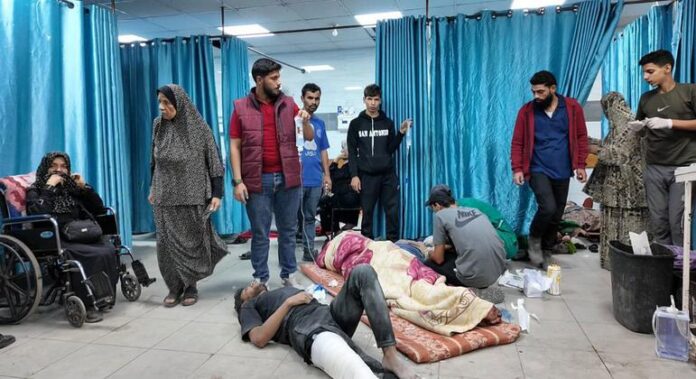
On Monday, World Health Organisation (WHO) Representative Rik Peeperkorn told UN News about the desperate conditions he had seen at Al-Ahli before the attack, and the severe restriction on movement that is preventing thousands being evacuated for medical treatment outside of Gaza.

“I was in Gaza several weeks ago and I came out in early March, just before the aid blockade started and the attacks started up again.

When I was there, during the ceasefire, we were organising polio vaccinations and medevacs (medical evacuations), and we stocked up on essential medicine and medical supplies. This was also the only time there were proper food stocks in Gaza.

There was almost a ray of hope among all the misery. Places I’d been before, like Rafah in the south, or Jabalia in the north, were utterly devastated wastelands, but people, including our own staff, were going back to their homes, trying to repair destroyed houses or building makeshift camps. You saw commercial activities restarting, and a choice of food.

But then, of course, with the blockade, food, water and essential medicines very quickly began running out. Even though we stocked up during the ceasefire, we are now critically low on supplies and it is challenging to keep hospitals even partly open.

We have completely run out of therapeutic milk, antibiotics, to treat severe infections, trauma painkillers, insulin, ambulance spare parts, oxygen tanks etc.

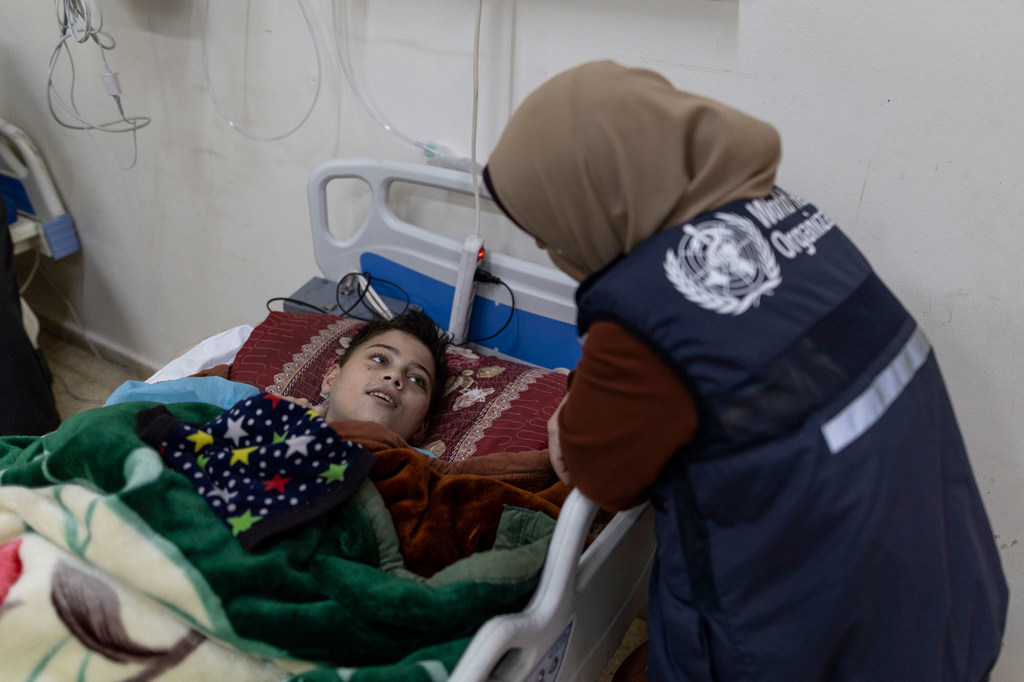
Medical evacuation of patients from Gaza (file)

Medical evacuation of patients from Gaza (file)

A couple of days before the attack on Al Ahli, a medical specialist there told us that the hospital was already overflowing because it’s one of the key hospitals in the north for trauma patients [those who have suffered severe and life-threatening injuries], and that they were forced to perform surgery under questionable sterile conditions.

They were lacking enough surgical gowns, drapes or gloves. They even had to wear the same gloves from one operation to the next. Because of the lack of equipment, surgeries could take hours, increasing the risk of permanent disability or amputations.

The staff asked us for the supplies that we have in our two warehouses in the south of Gaza, but we were not allowed.

This aid blockade needs to be lifted, and we have to get back to an arrangement whereby we can have humanitarian corridors throughout Gaza, without being denied or delayed entry. Even when a war is going on, humanitarian supplies should be allowed in and aid workers should be able to do their work.

Today I spoke to my team leads in Gaza, who have been to Al-Shifa hospital. Al-Shifa, now the major surgical and trauma centre for the north, is completely overwhelmed and under-supported. We are looking at the possibility of getting some patients from Al-Shifa to the south but everything is complex.

Far too few patients have been able to leave Gaza for the urgent care they so desperately need. We estimate that up to 12,000 patients need medical evacuation but, since the blockade we have only been able to evacuate 121 people, including 73 children.

“We call for the immediate resumption of medical evacuation through all possible routes. That should happen now.”

Source link

Habitats directive: Council agrees on the targeted proposal to change the protection status of the wolf

0
Habitats directive: Council agrees on the targeted proposal to change the protection status of the wolf

Today, member states’ representatives (Coreper) agreed on the Council’s position concerning the targeted proposal to change the protection status of wolves in the EU, by amending the habitats directive.

Source link

Council agrees on the targeted proposal to change the protection status of the wolf

0
Council agrees on the targeted proposal to change the protection status of the wolf

Today, member states’ representatives (Coreper) approved the Council’s mandate on changing the protection status of the wolf, aligning EU legislation with the updated Bern Convention. The mandate includes a targeted amendment of the habitats directive – the EU law that implements the Bern Convention – to reflect the revised protection level of wolves from ‘strictly protected’ to ‘protected’.

The objective is to provide more flexibility in managing wolf populations across EU countries, in order to improve coexistence and to minimise the impact of the growing population of the species, including socioeconomic challenges. Member states may have stricter protection levels in place.

The Council’s position contains no changes vis-à-vis the initial Commission’s proposal on this targeted amendment of the habitats directive.

Member states’ representatives endorsed the objective of aligning EU legislation with the recent decision of the Bern Convention which entered into force on 7 March 2025, following the EU proposal to modify the protection status of the wolf from strictly protected to protected species.

While wolves would no longer be under the status of strictly protected species, member states should still ensure the wolf favourable conservation status and apply monitoring measures which may lead to temporary or local bans on hunting. Moreover, EU funding and support will still be available for coexistence and prevention measures and state aids for compensating affected farmers may remain in place.

However, member states still have the possibility to list the wolf as a strictly protected species in their national legislation, and to have stricter measures in place for its protection.

Next steps

The European Parliament aims to adopt its position in May 2025. If this position is identical to the Council’s mandate, the Council will then formally adopt the amending directive.

Background

The Bern Convention, which was adopted in 1979 and entered into force in 1982, is an international treaty under the aegis of the Council of Europe which aims to ensure the conservation and protection of wild plant and animal species and their natural habitats.

To this end, the convention imposes legal obligations on contracting parties, protecting over 500 wild plant species and more than 1 000 wild animal species.

Its decision-making body, the Standing Committee, meets every year in Strasbourg. The EU and its member states are parties to the Bern Convention.

On 20 December 2023, the Commission forwarded to the Council a proposal for a decision to adapt the protection status of the wolf under the Bern Convention. Changing the protection status of the wolf under the Bern Convention is a prerequisite for any corresponding changes to its status at EU level. On 26 September 2024, the Council adopted a decision to submit, on behalf of the European Union, a proposal to amend the conservation status of the wolf. The decision of the Bern Convention entered into force on 7 March, allowing the EU to adapt the corresponding laws.

The conservation status of the wolf has shown a positive trend over the last few decades. The species has successfully recovered across the European continent, and the estimated population has almost doubled in 10 years (from 11 193 in 2012 to 20 300 in 2023).

This continued expansion has led to socio-economic challenges, in particular as regards coexistence with human activities and damage to livestock. According to the latest available data from member states, wolves are estimated to kill at least 65 500 heads of livestock each year in the EU.

Source link

Sudan war: ‘Darkest chapters’ ahead as Darfur massacre claims over 100 lives

0
Sudan war: ‘Darkest chapters’ ahead as Darfur massacre claims over 100 lives

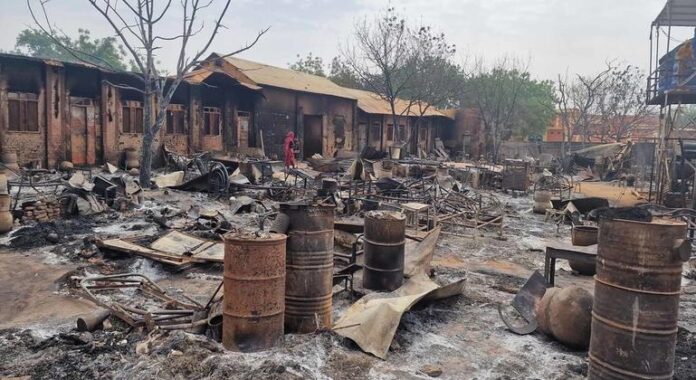
The latest attacks, which began on 11 April, saw Rapid Support Forces (RSF)-affiliated forces launch coordinated assaults on Zamzam and Abu Shouk – two of the largest camps for internally displaced people (IDPs) in Darfur – as well as the regional capital, El Fasher.

Among those killed were 23 children as well as nine humanitarian workers who were operating one of the last remaining health posts.

No end in sight to suffering

The UN Independent International Fact-Finding Mission (FFM) for Sudan condemned the violence, warning that the situation is deteriorating as ethnically driven violence and hate speech escalate.

“The world has witnessed two years of ruthless conflict which has trapped millions of civilians in harrowing situations, subjecting them to violations and suffering with no end in sight,” Mohamed Chande Othman, FFM chair, said in a statement on Monday.

“Amid the rising tide of hate speech and ethnically driven violence and reprisals, we fear the darkest chapters of this conflict have yet to unfold.”

Bring perpetrators to justice

UN Secretary-General António Guterres also condemned the latest violence, stressing that attacks on civilians, humanitarian and medical personnel are strictly prohibited under international law.

“The perpetrators of these attacks must be brought to justice,” he said, calling for urgent, safe and sustained access to besieged areas like Zamzam camp, where famine conditions have already been identified.

Tens of millions in Sudan are in desperate need of humanitarian assistance and protection. (file photo)

Two years of atrocities

The Darfur attacks are the latest flashpoints in a conflict that erupted on 15 April 2023, when fighting broke out in Khartoum between the Sudanese Armed Forces (SAF) and the RSF.

The power struggle quickly descended into a nationwide civil war, killing thousands and displacing over 12.4 million people – more than 3.3 million as refugees into neighbouring countries.

According to the FFM, both sides have committed serious violations of international humanitarian law, including deliberate attacks on civilians, rape and sexual violence, starvation tactics, mass looting and destruction of civilian infrastructure.

Aid workers targeted

Clementine Nkweta-Salami, UN Humanitarian Coordinator in Sudan, described the escalation as “deadly and unacceptable,” and condemned the deliberate targeting of civilians and aid workers.

“These families – many of whom have already been displaced multiple times – are once again caught in the crossfire, with nowhere safe to go. This must end now,” she stressed.

Survivors from Zamzam camp – once home to over 750,000 people, half of them children – were reported as being placed under siege-like conditions, according to the FFM.

Humanitarian access inside the camp remains nearly impossible, while children are reported to be dying from hunger and the few remaining health outposts have been overrun or destroyed.

Protect children

The UN Children’s Fund (UNICEF) also sounded the alarm.

“These unconscionable acts of violence against civilians, children and aid workers must end immediately,” said Executive Director Catherine Russell.

“Children must be protected from this senseless violence, and humanitarian workers must never be targets.” 

Ms. Russell warned that with aid blocked and violence surging, famine is already “stalking children,” placing over one million people at high risk in and around El Fasher and Zamzam camp.

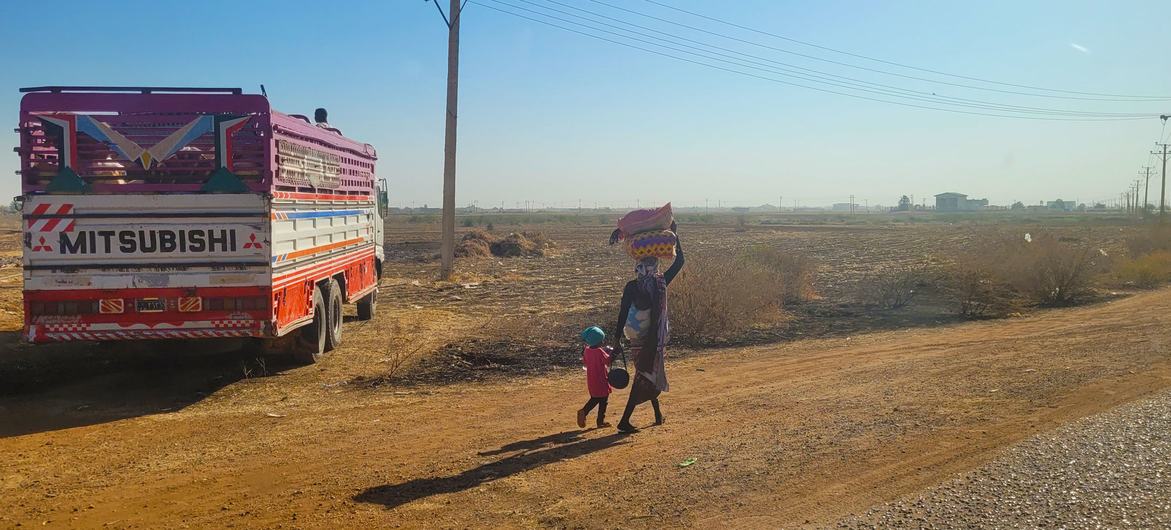
Clashes and insecurity in Sudan has forced millions to flee their homes in search of safety. (file photo)

© UNICEF/Proscovia Nakibuuka

Clashes and insecurity in Sudan has forced millions to flee their homes in search of safety. (file photo)

Situation beyond Darfur

Violations are not confined to Darfur.

The SAF and its allies have allegedly committed reprisal attacks in areas recently recaptured from the RSF, particularly in Sinja and Al-Dinder in Sennar state and Wad Madani in Al-Jazirah (also spelled Gezira).

Witnesses described arbitrary detentions, mass arrests and public executions, including in newly controlled areas of southern Khartoum, the FFM said. Many of those detained have reportedly disappeared.

“These acts highlight the urgent need to prevent further escalation and to protect civilians and the lifesaving systems they rely on,” said FFM member Mona Rishmawi.

Stop encouraging the war

In the midst of the violence, the Fact-Finding Mission alongside humanitarian agencies continue to call for international accountability and support.

As key regional and global actors set to meet this week in London to discuss humanitarian funding and strategies for civilian protection, the FFM reiterated the need for all States to “respect and ensure respect” for the Geneva Conventions – the core of international humanitarian law.

“This means that States should neither finance the war nor provide weapons, as this may encourage, aid and assist the warring parties in committing violations,” said Ms. Rishmawi.

The Human Rights Council – UN’s primary human rights forum – established the Independent International Fact-Finding Mission for Sudan in October 2023 and extended its mandate until October this year.

Its core task is to investigate all alleged human rights violations and violations of international humanitarian law linked to Sudan’s ongoing conflict since April 2023.

Source link

We’re Moving In: A New Home for AMLA in Frankfurt

0
We’re Moving In: A New Home for AMLA in Frankfurt

We’re excited to share a major milestone for AMLA —we have officially signed a lease for our new office space in Frankfurt!

Our future home will be located in the iconic MesseTurm, where we’ll be occupying the top floors. The lease agreement marks the beginning of our permanent presence in Frankfurt and our long-term commitment to the city.

This is a big step for AMLA as we establish our first-ever official seat. With sweeping views from the upper floors and modern office infrastructure, our new space will support a dynamic, collaborative work environment and position us to deliver on our mission.

“After kindly being hosted in the building since the start of the year, we are excited to make our long-term stay in the building official,” said Bruna Szego the Chair of AMLA. “We look forward to continuing our work in this vibrant and welcoming environment, and to deepening our connection with the city of Frankfurt.”

We’re thrilled to become part of the Frankfurt community and contribute to the city’s growth, innovation, and international relevance.

Source link