Wednesday, September 30, 2026
Home Blog Page 542

Myanmar: UN seeks additional $240 million to bolster earthquake relief

0
Myanmar: UN seeks additional 0 million to bolster earthquake relief

The 7.7 magnitude earthquake – which struck on March 28 – has claimed over 3,600 lives, injured a further 4,800 people and left 184 still missing.

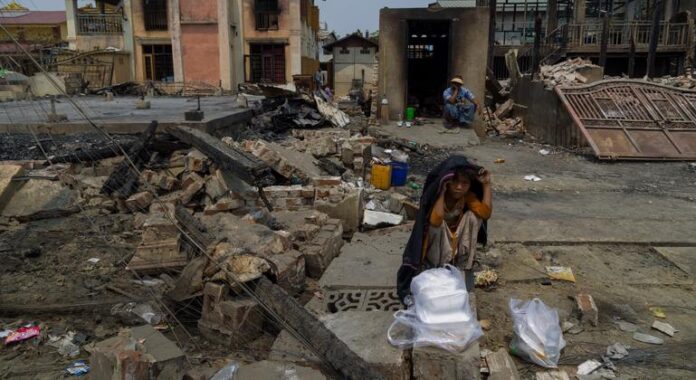
The disaster has affected more than nine million people across 58 townships, with thousands of buildings, including hospitals and schools, reduced to rubble. Aftershocks continue to rattle the hardest-hit regions, exacerbating an already dire humanitarian crisis.

In response, UN agencies are calling for an additional $241.6 million to aid those in the most affected regions, while also channelling $134 million from the 2025 Humanitarian Needs and Response Plan for Myanmar – which was released in December 2024.

The revised plan identifies around two million newly affected people in urgent need of assistance, adding to the 4.3 million who were already in need before the quake.

Myanmar was already in crisis before the disaster, with nearly 20 million – roughly a third of the population – in need of humanitarian assistance and protection, amid a brutal civil war between the forces of the military junta which seized power in February 2021 and opposition militias.

Heartbreaking destruction

During a visit to Myanmar, UN Special Envoy Julie Bishop met with communities devastated by the quake and urged international support for both immediate relief and long-term reconstruction.

She reiterated the urgent need for a ceasefire to enable humanitarian response and recovery.

“We need to continue to urge for a ceasefire, to stop the killing, stop the conflict so that the humanitarian workers, the search and rescue teams and those involved in rebuilding and reconstruction have the space to operate safely and securely,” she said.

Ms. Bishop described the destruction as “heartbreaking” and praised the resilience of survivors.

“I was particularly struck by those who have lost their homes but are determined to rebuild amid the rubble,” she said, stressing the need for global support.

“The international community has a significant role to play in supporting additional funding during this particular time of need but also using their influence to ensure…that all actors in this conflict put down their arms and focus their efforts on restoring the shattered lives of the people of Myanmar.”

Response overwhelmed

UN agencies report that Myanmar’s vital public services, already strained by conflict and instability, are now overwhelmed.

Myanmar’s remaining health facilities have critical shortages of medical supplies, the UN Children’s Fund (UNICEF) said in a humanitarian bulletin.

More than 193 healthcare centres and 2,311 schools have been damaged or destroyed, while ongoing infrastructure failures have led to food shortages, rising prices, and an increased risk of infectious diseases.

A cluster of acute watery diarrhoea (AWD) cases has already been reported in Sagaing and Mandalay, exacerbated by the destruction of sanitation systems.

Furthermore, extreme heat – reaching 44°C (111°F) – and heavy, off-season rains have worsened conditions for survivors, many of whom remain without shelter.

Fragile infrastructure exposed

The earthquake has also reignited concerns about Myanmar’s fragile infrastructure.

The UN Economic and Social Commission for Asia and the Pacific (ESCAP) warned that rebuilding roads, bridges and key public buildings must be prioritised to prevent future disasters inflicting a similar level of damage.

“This is not optional – it is a social and economic imperative,” the commission said.

Source link

AK rifles and grenades seized as firearms trafficking route into France dismantled

0

Seven suspects have been arrested in connection with the gang, which is believed to have sourced high-powered weapons from illegal markets in the Western Balkans and trafficked them into France for onward distribution.The joint operation – supported by Europol and Eurojust – has taken down the full supply chain behind the trafficking route, from source to destination.Caravan weapons cache sparks…

Source link

Child protection: Council and Parliament strike a deal on a law to make toys safer

0
Child protection: Council and Parliament strike a deal on a law to make toys safer

Council and Parliament strike provisional deal on the toy safety regulation.

Source link

Sudan war: UNHCR chief stresses need to help refugee hosts in Chad

0
Sudan war: UNHCR chief stresses need to help refugee hosts in Chad

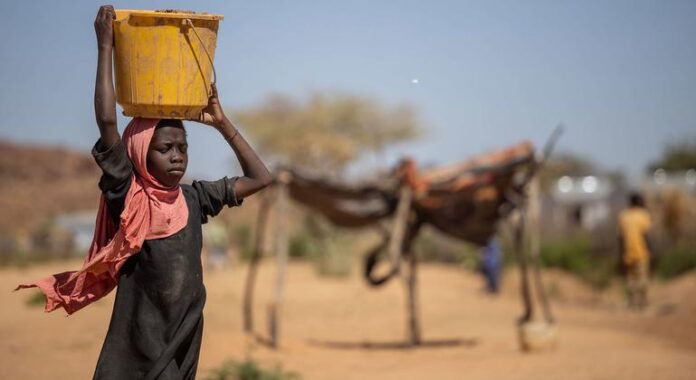
Chad hosts 1.3 million forcibly displaced people, according to the UN agency, UNHCR despite it being one of the world’s poorest countries. More than half of these vulnerable individuals are Sudanese who’ve fled the fighting between rival militaries which erupted in April 2023.

Speaking from the Chadian border with Sudan, Mr. Grandi described the continued fighting as “absurd”.

He also condemned the ongoing “vicious human rights abuses” against civilians before calling for far greater international support for Sudanese refugees and their Chadian hosts.

The arrivals are mostly women and children – some of whom have been crawling, exhausted across the border with barely any possessions, according to aid teams on the ground.

Funding crisis

The UN agency stressed once again that the crisis rocking humanitarian funding globally has only made matters worse.

Large cuts to overseas aid provision in the United States and elsewhere have made it impossible to pay teachers, the UN agency said.

Clinics and schools that protect women and children from violence and exploitation have been forced to shut down.

Some 8,500 displaced children in Chad are at risk of losing access to secondary education this year. If the cuts carry on into next year, more than 155,000 could be impacted.

Lost futures

“Children have dropped out of school,” said Abdelrahim Abdelkarim, headteacher of a secondary school in Farchana refugee settlement in eastern Chad.

“Many students will take dangerous and illegal migration routes, attempting to cross the sea. Some may drown while others end up working in gold mines,” he warned.

High Commissioner for Refugees Grandi has previously described the funding shortfall as “a crisis of responsibility” in which “the cost of inaction will be measured in suffering, instability and lost futures”.

‘Siege-like conditions’

And as funding dries up for Sudan, relief teams are scaling back or withdrawing – leaving vulnerable communities to fend for themselves as their homes turn to rubble.

Today, after nearly two years of fighting, attacks against civilians, displacement, and climate shocks have left nearly two-thirds of Sudan’s 50 million people in need of aid and protection.

Speaking from the capital Khartoum, recently liberated from the opposition Rapid Support Forces by the Sudanese Armed Forces, Mohammed Refaat, Sudan Chief of Mission at the International Organization for Migration (IOM), said that he has seen the impact of insufficient funding in just the last few days.

“The people who were in these areas have been trapped in siege-like conditions with no escape, no hope and often forced to face unspeakable abuse,” Mr. Refaat said, describing the destruction and suffering in the country as “immeasurable”.

Little access to basic services

The power struggle between Sudan’s rival generals — Mohamed Hamdan Dagalo of Sudan’s paramilitary Rapid Support Forces and Sudanese army chief Abdel Fattah al-Burhan — has killed tens of thousands of people and uprooted more than 12 million.

Both sides have been accused of atrocities and rights violations, the UN High Commissioner for Human Rights has previously reported.

Many families have returned to the capital now that the Sudanese Armed Forces are in control, but with little access to basic services, UN agencies have urged support to ensure relief.

Yet the crisis is far from over – and refugees continue to face hunger.

UN Children’s Fund, UNICEF, has projected that more than three million children under the age of five will likely suffer from acute malnutrition this year.

In Zamzam refugee camp in North Darfur, the crisis is pushing families to eat what is normally used as animal feed. Children also lack water, according to the UN Office for the Coordination of Humanitarian Affairs (OCHA).

People fleeing insecurity in Blue Nile state in southwest Sudan, are moving towards state capital Ed Damazine, with clashes and access blocked hampering relief efforts, OCHA reported.

Source link

Fear and uncertainty are daily staples for Gaza’s most vulnerable

0
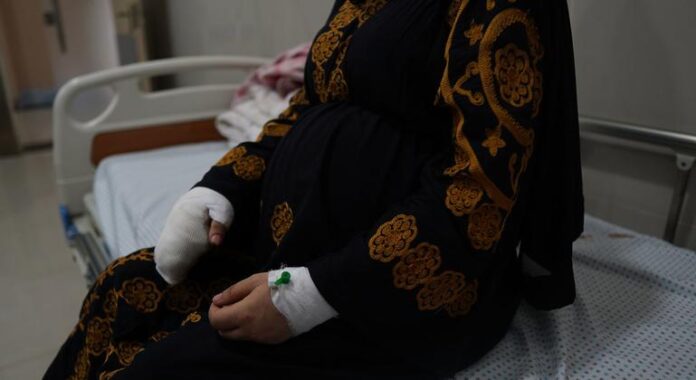
Fear and uncertainty are daily staples for Gaza’s most vulnerable

Fear and uncertainty are daily staples for Gaza’s most vulnerable

Source link

Media advisory – Eurogroup meeting and Informal meeting of Economic and Financial Affairs Ministers of 11 – 12 April 2025, Warsaw, Poland

0
Child protection: Council and Parliament strike a deal on a law to make toys safer

Main agenda items, approximate timing, public sessions and press opportunities.

Source link

South Sudan: Conflict and hunger push millions to the brink

0
South Sudan: Conflict and hunger push millions to the brink

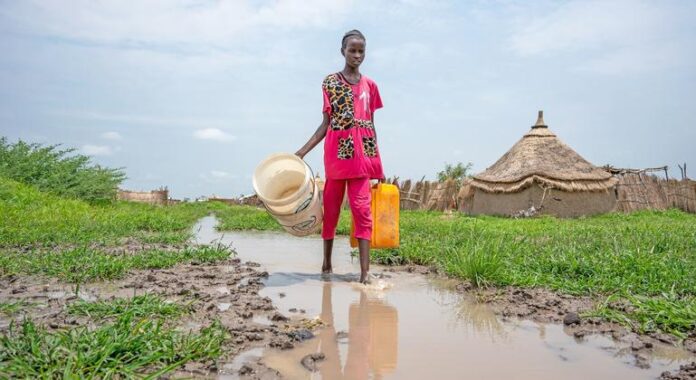
The situation is especially dire for returnees fleeing violence in Sudan, who now account for nearly half of those experiencing catastrophic hunger levels.

The influx of over 1.1 million displaced people into already fragile communities has overwhelmed resources and relief efforts, according to the UN World Food Programme (WFP).

With the pre-harvest lean season underway, conditions are expected to deteriorate further. WFP is calling on donors to step up support to avert a deepening humanitarian catastrophe.

“This is among the worst levels of food insecurity that we have ever seen in the country since the independence,” Mary-Ellen McGroarty, WFP Country Director in South Sudan, told journalists in New York via video link from the country.

“We are witnessing the devastating impact of the conflict in driving hunger. Communities have fled with just the clothes on their backs, and already meager livelihoods and seasonal coping strategies are abandoned.”

Years of volatility

South Sudan gained independence from Sudan in 2011, but the world’s youngest nation has been plagued by conflict and instability ever since.

A civil war erupted in 2013 between forces loyal to President Salva Kiir and those aligned with his former deputy, Riek Machar. The war – marked by ethnic violence, mass atrocities and widespread humanitarian crisis – lasted until a fragile peace deal was signed in 2018.

There are fears of a relapse into the civil war following skyrocketing tensions between the South Sudanese leaders, including the reported house arrest of Mr. Machar at the end of last month.

Conflict and disease

The crisis extends beyond hunger with a cholera outbreak now underway in volatile Upper Nile state. In response, WFP has airlifted 35 metric tons of aid to affected areas, with additional stock awaiting transport once security conditions allow.

The agency also aims to deliver food assistance to more than 450,000 people in the region, focusing on those facing emergency (IPC4) and catastrophic levels (ICP5) of hunger, tracked by the UN-supported food security classification system known as the IPC.

However, active conflict is hampering aid efforts and food distributions have been paused in six counties due to active fighting and insecurity.

“[We and our] partners have the food ready to deliver and distribute once conditions allow,” it said.

Women at the crossroads

As conflict spreads and hunger deepens, women and girls are bearing the brunt of the crisis. Many have been forced to flee insecurity multiple times.

Recurrent, relentless climate shocks are also taking a particularly heavy toll, leaving them at risk of being coerced into sex work, trafficked or sexually assaulted as they venture far and often alone in search of food, water and work.

To respond to growing needs, UN agencies – such as reproductive health agency, UNFPA – are operating safe spaces to provide not only shelter but also counselling, skills training and vital information on gender-based violence prevention.

Funding cuts have meant at least two safe spaces are set to close by May, leaving thousands of women and girls without access to support.

“In the face of this crisis, every dollar matters, every intervention counts, and every life saved is a step toward peace,” said UNFPA Executive Director Dr. Natalia Kanem.

UNFPA urgently needs $8.8 million to sustain lifesaving services but has received just a fraction of that amount.

Source link

Europol signs Working Arrangement with the Arab Republic of Egypt, first agreement with an African country

0

The Working Arrangement provides for a structured and enhanced exchange of information (non-personal data) on transnational, serious and organised crime. Following the signing of the Working Arrangement, Egypt’s Ministry of Interior will be able to deploy a liaison officer to join Europol’s liaison officer community at its headquarters in The Hague. The Working Arrangement does not provide a legal basis…

Source link

Ukraine: Joint press release following the 10th meeting of the EU-Ukraine Association Council

0
Child protection: Council and Parliament strike a deal on a law to make toys safer

Ukraine: Joint press release following the 10th meeting of the EU-Ukraine Association Council

Source link

March proves deadly month for civilians in Ukraine

0
March proves deadly month for civilians in Ukraine

“The near daily barrage of long-range drones killed and injured scores of civilians across the country last month, and disrupted life for millions more,” said the head of the UN Human Rights Monitoring Mission in Ukraine (HRMMU), Danielle Bell, in the independent human rights team’s latest monthly update.  

The mission was mandated by the UN human rights chief at the invitation of the Ukrainian Government in 2014, to help safeguard rights during the escalating conflict.  

With at least 164 Ukrainians killed and 910 injured, March 2025 saw a 50 per cent spike in civilian casualties from the previous month. These numbers represent a 71 per cent increase in civilian casualties compared with March last year, says the latest HRMMU Protection of Civilians Report.

Russian attacks on cities such as Dnipro, Kharkiv, and Sumy, combined with multiple munitions strikes on Dobropillia, exacerbated the high number of casualties in March.  

Kryvyi Rih, located around 65 kilometers from the frontline, was one of the places most heavily affected, suffering five waves of Russian attacks which killed at least six civilians and injured 66.  

Civilian buildings in the city – home town of Ukraine’s President Volodymyr Zelenskyy – including two hotels and a restaurant, were amongst the sites hit.  

Some 29 medical and 50 educational facilities were damaged by Russian armed forces during last month, while two medical centres and six educational facilities were totally destroyed.  

“Hospitals enjoy special protection under international humanitarian law and should not be subjected to attack,” Ms. Bell said.

Indiscriminate attacks are prohibited under international humanitarian law, said UN human rights chief, Volker Türk, emphasising that parties to a conflict ought to differentiate military from civilian infrastructures.  

Hostilities continue  

UN Human Rights in Ukraine noted that deadly attacks by Russian armed forces continued into April. “It’s an unimaginable horror,” said Mr. Türk, referring to an April 4 attack where a ballistic missile detonated over a playground, killing 19 civilians, including nine children.  

Another wave of attacks in Eastern Ukraine caused damage to residential buildings and injured scores of civilians on Wednesday. Aid workers are currently on the ground assessing the needs of the affected population.  

“Ukrainians deserve to live a normal life, free from violence,” said UN aid coordination office, OCHA, in Ukraine.

Source link