
A genetic variant that protects against stomach virus infections appeared when humans began farming. This is shown by
Protection against winter vomiting bug spread with arrival of agriculture
Gaza: A ceasefire that still kills children is not enough, says UNICEF
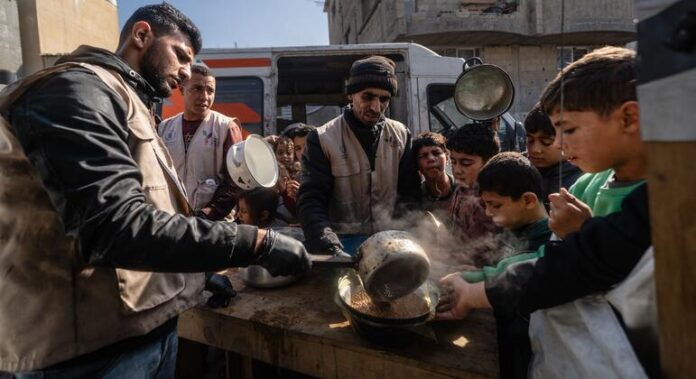
“That’s roughly a girl or a boy killed here every day during a ceasefire,” UNICEF spokesperson James Elder told reporters in Geneva.
“These children are killed from airstrikes, drone strikes, including suicide drones,” he said, speaking from Gaza City. “They’re killed from tank shelling, they’re killed from live ammunition, they’re killed from [remote-controlled] quadcopters.”
Mr. Elder pointed out that more children have also died of hypothermia in the last few days, as harsh winter conditions expose the most vulnerable Gazans.
Sheer cold kills six children
“We’ve now gone to six children who died of hypothermia just this winter,” he said. “I wish I could take a camera and show you 30, 40-kilometre [per hour] winds ripping through tents on the beach. It’s bitterly cold, it’s bitterly wet.”
The UNICEF spokesperson stressed that the ceasefire has allowed “genuine progress” in primary healthcare, with UNICEF and partners setting up the first health clinics in the north of the Strip and expanding immunization services.
But desperately needed medical evacuations of children remain at a standstill.
Mr. Elder noted “no noticeable improvement” both on approvals to get children with life-threatening injuries out of Gaza and in convincing more host countries take in the young patients.
He said that in his latest mission to the enclave, he spoke to many children and families denied evacuation despite completing an arduous, formal process.
These included a nine-year-old with shrapnel lodged in his eye who “will lose sight in an eye, maybe both”, a girl in Al Shifa hospital in Gaza City who “may well die” and another child whose leg needs amputating. “All three of those are absolute candidates for medical evacuation; all three of those have so far been denied,” Mr. Elder explained.
Before war erupted in Gaza following Hamas-led attacks in Israel on 7 October 2023, between 50 and 100 patients were evacuated from the enclave every day, according to the UN World Health Organization (WHO).
In an alert on Tuesday, the agency warned that extensive clearance procedures by the Israeli authorities continue to cause delays to deliveries of medicine and food.
“Some essential medical items are classified as ‘dual-use’ and denied entry,” WHO said in a post on X, in reference to goods that are primarily intended for civilian use but which the Israeli authorities believe could be diverted by Hamas or other militant groups for military purposes.
International NGO ban looms
The UNICEF spokesperson also highlighted the dangers of a recent Israeli ban on international NGOs, which will come into effect in the coming month and mean “blocking life-saving assistance”, he alleged. Mr. Elder also stressed the importance of allowing international media into the enclave, which has not been granted despite the ceasefire.
“There needs to be a lot more pressure on allowing international journalists to come in,” he said. “This is my seventh mission [to Gaza] and every time I see the 360-degree devastation, flattening of homes, my jaw drops.”
“It is absolutely as staggering yesterday as it was the first time I saw it more than two years ago,” he insisted.
Mr. Elder warned that two years of war have “left life for Gaza’s children unimaginably hard,” explaining that “the psychological damage remains untreated, and it’s becoming deeper and harder to heal, the longer this goes on”.
“A ceasefire that slows the bombs is progress, but one that still buries children is not enough,” he concluded.
World News in Brief: Ending famine, refugee solidarity in Kenya, Ukraine civilian casualties update
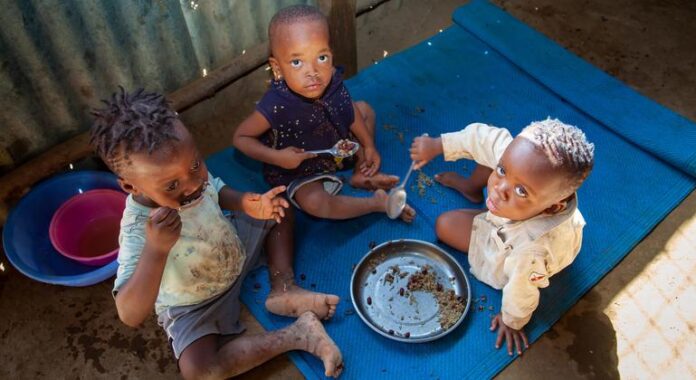
In an alert, Cindy McCain – who heads the World Food Programme (WFP) – attributed a “dangerous and deepening global hunger crisis” to violent conflicts, extreme weather and economic downturns.
The development comes as WFP faces massive shortfalls in funding; it has received less than half of the $13 billion it needs to reach 110 million of the world’s most vulnerable people.
This means that millions may be cut off from vital assistance, threatening lives and the stability of regions, the agency warned.
“WFP has proven time and again that early, strategic and innovative solutions can halt famine, stabilize communities, deter migration and enable families to recover,” Ms. McCain insisted.
Her comments come in a context of increasing hunger crises now affecting 318 million people around the world. In addition, “hundreds of thousands” are already suffering from “famine-like” conditions, WFP says.
Kenya plan showcases bold vision for refugee self-reliance
Barham Salih has made his first official visit as UN High Commissioner for Refugees, in charge of UNCHR, calling in the Kenyan capital for stronger global support to develop the solutions refugees need to rebuild their lives.
Over 800,000 refugees and asylum seekers live in the East African nation. Some 300,000 refugees, mostly from South Sudan, Burundi and the Democratic Republic of Congo, have found safety in the Kakuma region over many years – a place of “transformation and innovation,” said the UNHCR chief.
He warned that the consequences of a growing lack of humanitarian funding were “stark” in Kakuma.
“Despite scarce resources, Kenya continues to show remarkable solidarity for people in need, through smart policies that foster self-reliance and economic growth,” said Mr. Salih.
Lack of funding
Last year, less than a quarter of UNHCR’s budget for Kenya was funded – severely constricting access to healthcare, water, education and protection services for both refugees and host communities.
In light of this, Kenya’s Shirika Plan seeks to transition from humanitarian aid to refugee self-reliance and harmony with host communities, providing refugees with legal IDs, financial services, education, and health care.
“These inclusive policies hold great promise for transforming the futures of both refugees and the communities hosting them.” said M Salih.
Ukraine: 2025 was deadliest for civilians since full-scale conflict erupted
More than 2,500 civilians were killed in Ukraine in 2025, and nearly 12,250 injured – marking a 31 per cent increase compared to 2024, according to UN human rights monitors.
The figures refer to those verified, with the actual total likely to be considerably higher.
In December alone, more than 150 were killed and 888 injured. During that month, long-range attacks by Russian forces using missiles and drones caused 33 percent of all civilian casualties (34 killed and 308 injured), hitting cities and towns far from the frontline.
Some 67 per cent of civilian casualties occurred near the frontline (122 killed and 571 injured).
Attacks on energy infrastructure
Since the conflict began in 2014, nearly 18,500 civilians have been killed.
According to the UN Human Rights Monitoring Mission (UNHRMM), the number of civilian casualties is likely to be significantly undercounted in cities such as Mariupol (Donetsk region), Lysychansk, Popasna, and Sievierodonetsk (Luhansk region), where there was protracted intensive fighting at the start of the full-scale Russian invasion which began in February 2022.
On top of civilian casualties, the Russian Federation also conducted large-scale, region-specific attacks on Ukraine’s energy infrastructure.
In December, the Odesa region was among the most affected areas, experiencing repeated strikes that resulted in prolonged outages in several cities.
Security Council LIVE: Attacks against Ukrainian civilians unacceptable, unjustifiable and must stop, says UN
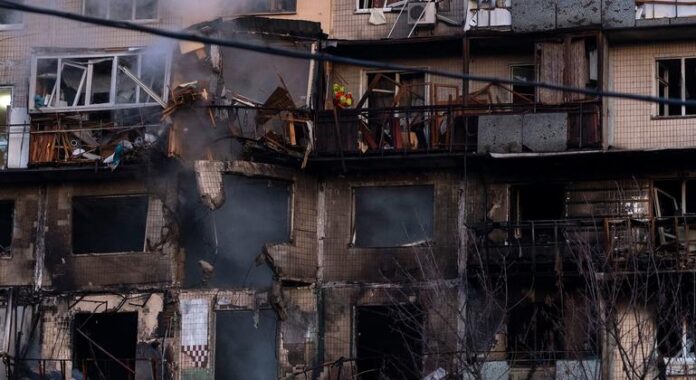
Security Council LIVE: Attacks against Ukrainian civilians unacceptable, unjustifiable and must stop, says UN
Investing in climate adaptation strengthens European competitiveness
DISCLAIMER: Information and opinions reproduced in the articles are the ones of those stating them and it is their own responsibility. Publication in The European Times does not automatically means endorsement of the view, but the right to express it.
DISCLAIMER TRANSLATIONS: All articles in this site are published in English. The translated versions are done through an automated process known as neural translations. If in doubt, always refer to the original article. Thank you for understanding.
Protection against winter vomiting bug spread with arrival of agriculture
A genetic variant that protects against stomach virus infections appeared when humans began farming. This is shown by
Protection against winter vomiting bug spread with arrival of agriculture
A genetic variant that protects against stomach virus infections appeared when humans began farming. This is shown by Source link
Europe’s Plan to Patch Ariane 6: A Rocket Retrofit That’s Already a Decade Behind
Europe’s space agency wants to breathe new life into its barely two-year-old Ariane 6 rocket by grafting reusable
Investing in climate adaptation strengthens European competitiveness | Press releases

Climate-proofing the agriculture, energy and transport sectors would help avoid billions of euros in losses from the accelerating extreme weather events related to climate change. At the same time, it would increase Europe’s competitiveness, according to a briefing published today by the European Environment Agency (EEA).
The three economic sectors are highly vulnerable to climate change, shows the EEA briefing “Making agriculture, energy and transport climate resilient: how much money is required and what will it deliver?”.
As Europe is the fastest-warming continent, the effects of climate change are already here with accelerating extreme weather events such as floods, droughts, heatwaves and wildfires costing Europe EUR 40-50 billion per year.
Investment gap of more than EUR 100 billion per year
The investments required range between EUR 53bn and 137bn annually by 2050 and a further EUR 59-173bn annually by 2100 depending on whether the temperature will rise by 1.5°C to 2°C, or by 3°C compared to pre-industrial temperatures. Current committed funding levels are estimated at just EUR 15-16bn per year for these sectors. The funding comes mostly from the public sector, at EU, national and regional level.
To put things into perspective, the EU experienced annual economic losses of around EUR 40-50 bn per year between 2021 and 2024 due to extreme weather events, totalling EUR 822 bn over the period 1980–2024. The costs are increasing, the years between 2021 and 2024 accounting for the biggest annual losses. As those figures account for direct losses only, the sum of total costs will be higher.
Return on investment for climate-proofing
Investing in climate adaptation delivers benefits beyond just avoiding losses from extreme events: adapting to rising coastal flood risks in the EU would deliver EUR 6 for every euro invested, according to a study by the Joint Research Centre of the European Commission.
Another study, on a global level, by the World Resources Institute, concluded that every US dollar invested in adaptation may bring over USD 10.50 in benefits over a 10-year period and yield average returns of 27% per project.
Double and triple dividend of adaptation investments
When discussing benefits of climate adaptation, two concepts are relevant:
- The double dividend concept: reducing climate risks not only protects people, infrastructure and economies from the damages created by climate impacts (adaptation dividend) but also helps cutting greenhouse gas emissions or boosts sustainability (mitigation dividend). For example, in the case of nature-based solutions, restoring wetlands both protects against floods and stores CO2.
- The triple dividend concept: not only avoiding losses but also unlocking economic potential and generating development co-benefits, as illustrated in Figure 1 and 2.
Figure 1. The ‘Triple Dividend’ concept
Please select a resource that has a preview image available.
Figure 2. Examples of the ‘triple dividends’ in adaptation measures in the EU
Please select a resource that has a preview image available.
The case is clear: investing now in making agriculture, energy and transport climate resilient would contribute to Europe’s competitiveness and would help with other challenges, such as food security.
This briefing is part of an ongoing series of EEA products that explore the costs and benefits of climate adaptation. Together, these products provide insight into the economics of climate resilience.
Our latest press releases
Cannabis edibles pose major crash risk
The study, which concluded in 2025 with data currently unpublished, measured driving performance using a simulator that tracked Source link
