

Statement by the High Representative on the Arab Plan for Gaza
UN rights chief raises alarm over escalating violence in Syria

The killing of civilians in coastal areas in northwest Syria must cease immediately, the UN rights chief said on Sunday following a series of coordinated attacks reportedly launched by elements of the former government and other local armed men.
Syria: Up to one million people plan to return home in desperation
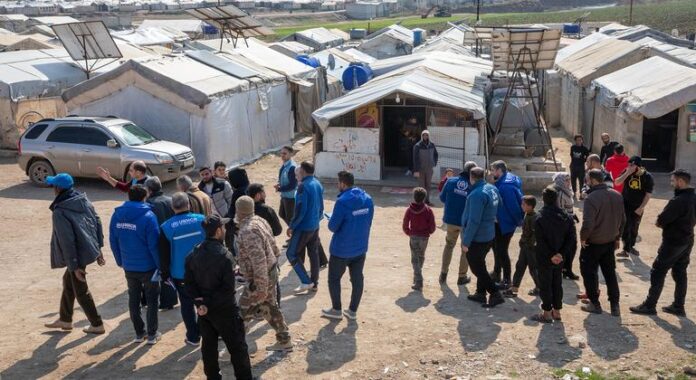
According to UN refugee agency, UNHCR, 600,000 people could be on the move in the next six months, according to its latest survey.
UNHCR spokesperson Celine Schmitt said on Friday that people will need “housing, jobs, schools, hospitals, electricity and clean water” – all of which are lacking after 14 years of civil conflict.
She described meeting one mother living in a tent with her children having fled from the rubble of her former home, without access to water, or employment – with the nearest school two kilometers away.
Yearning for home
The mother said she was “planning to take her tent and to go back home and put the tent next to her house, just to be back home…She was asking for small humanitarian help to be able to restart, to rebuild her life.”
Twenty-three districts in Syria could see their populations at least double, placing additional strain on already overstretched basic services and infrastructure.
The survey showed that 51 per cent of households intend to return to their areas of origin, with 93 per cent planning to go home within three to twelve months.
The survey took place between 26 January and 23 February, surveying 4,800 households – more than 29,000 individuals – in 514 displacement sites across northwest Syria.
As of January, more than 3.4 million IDPs were still in the northwest. The intention to return is particularly strong among IDPs in Idleb, where two in three households are opting to head home. Former frontline areas in the Idleb and Aleppo governorates are the primary intended destinations.
UN support for returnees
UNHCR and partners are providing transport, legal assistance and support in repairing damaged homes as well as mattresses, blankets and winter clothing for the tough months ahead.
“Nearly 14 years after the crisis began, Syria is at a crossroads, urgently needing support for rebuilding as years of conflict have devastated the economy and infrastructure, leaving 90 per cent of the population reliant on aid,” said Ms. Schmitt.
“There is now hope and a historic opportunity. UNHCR calls on the international community to make a firm commitment to support Syrians with essential aid for returnees and by investing in early recovery.”
Temporary shelters stand in rows in rural Aleppo in Syria.
Seven million displaced overall: IOM
A new report released on Friday by the UN migration agency, IOM, shows that around 750,000 IDPs have already returned to their places of origin in Syria since November 2024. – but some seven million remain displaced.
IOM’s Displacement Tracking Matrix (DTM) – the first such report on Syria since 2022 – shows that one in five displaced people in Syria are residing in tents or makeshift shelters, facing harsh living conditions.
Around 28 per cent of those who returned to their places of origin are residing in damaged or unfinished buildings.
“Syria remains a major humanitarian crisis, and the needs are immense.” said IOM Director General Amy Pope.
“IOM is dedicated to helping the people of Syria on their journey to recovery, and collecting and analyzing data like we’ve done in this new Displacement Tracking Matrix report is one of the key ways we will do that.”
As it re-establishes its presence in Damascus, IOM is reactivating its data collection operations in Syria so it can address critical knowledge gaps and enhance humanitarian coordination.
Returns from Lebanon, Türkiye and Iraq
Since January 2024, a total of 571,388 individuals have returned to Syria from abroad, of whom 259,745 returned to the country after November 2024, when events that led to the toppling of the Assad regime in early December gathered pace.
About 76 per cent of arrivals from aboard returned to their place of origin, while others returned to another location likely due to significant damage and security concerns in their place of origin, said IOM.
Fifty percent of Syrians returning from outside the country came from Lebanon, 22 per cent from Türkiye and 13 per cent from Iraq.
Millions in Central Sahel and Nigeria face food cuts amid WFP funding crisis
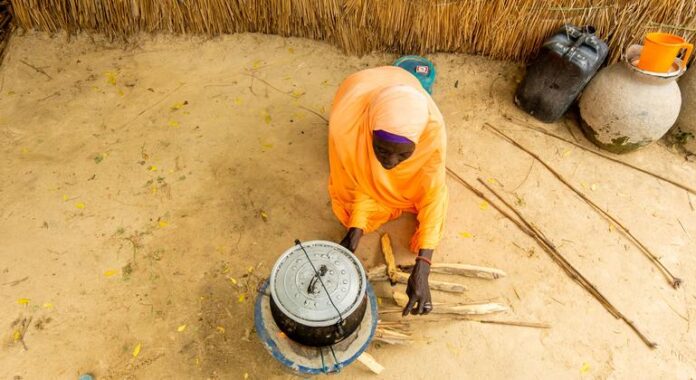
The crisis is being exacerbated by the expected early arrival of the lean season – the period between harvests when hunger peaks. Chronic hunger is being driven by conflict, displacement, economic instability and severe climate shocks, WFP said, with devastating floods in 2024 affecting over six million people across West Africa.
Funding shortfalls will force the agency to suspend food assistance for two million crisis-affected people, including Sudanese refugees in Chad, Malian refugees in Mauritania, internally displaced persons (IDPs) and vulnerable food-insecure families in Burkina Faso, Mali, Niger and Nigeria.
“With millions expected to face emergency levels of hunger at the peak of the lean season, the world must step up support to prevent this situation from getting out of control,” said Margot van der Velden, WFP’s Regional Director for Western Africa.
The UN food agency urgently requires $620 million to ensure continued support to crisis-affected people across the Sahel and in Nigeria over the next six months.
Acute food insecurity
An estimated 52.7 million women, men and children are projected to experience acute hunger between June and August 2025, according to the latest projected regional food security analysis.
Despite the ever-increasing needs in West and Central Africa, the proportion of the population facing extreme hunger is projected to increase by over 20 per cent by June 2025.
An underfunded region
Needs are chronically underfunded. As a result, WFP underscores that it is being forced to regularly make the difficult decision to cut rations, effectively taking from the hungry to feed the starving.
In Chad, the influx of refugees arriving from Sudan is placing enormous pressure on already limited resources, fuelling tension and competition between communities.
This is particularly concerning as the country enters its sixth consecutive year of severe food insecurity in 2025, with more than a 200 percent increase since 2020.
In neighbouring Nigeria, the prolonged humanitarian crisis, worsened by high inflation and weather-related shocks, is endangering the lives of children, pregnant women and entire communities.
During the June-August lean season, 33.1 million Nigerians are expected to face severe food shortages.
A call to action
WFP is working with national governments to assess and adapt its response to ensure urgent assistance reaches the most vulnerable, while also calling for safe and unhindered access to crisis-affected families.
“We need to act now to allow WFP to reach those in need with timely support. Inaction will have severe consequences for the region and beyond, as food security is national security,” Ms. van der Velden warned.
Occupied Palestinian Territory: Israeli operations continue to have dire consequences
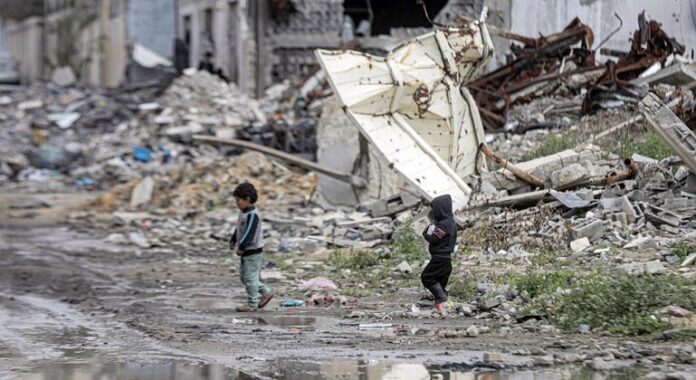
The UN relief agency for Palestine refugees (UNRWA) reports that Israeli authorities have started demolishing more than 16 buildings in Nur Shams refugee camp, after destroying more than two dozen homes over the past week in the occupied West Bank.
Those displaced are staying at public shelters in Jenin and Tulkarm, with many lacking bare necessities, according to a new assessment from the UN aid coordination office (OCHA).
“Less than half of the people our teams interviewed said they could afford food, with many reducing or skipping meals. Children are also unable to attend school,” UN Spokesperson Stéphane Dujarric told reporters at the regular daily briefing in New York.
Humanitarian efforts
Since the beginning of the Israeli operation in January, humanitarian partners have been providing life-saving assistance, distributing food parcels and daily meals.
Over 5,000 families have received cash assistance to meet their basic needs, and relief efforts have included the provision of bedding, dignity kits, water storage tanks and mobile latrines in Jenin, Tulkarm and Tubas.
Access restrictions
Meanwhile, according to OCHA, the closure of the Tayaseer checkpoint since February has severely hampered movement for more than 60,000 Palestinians.
On the first Friday of Ramadan, these restrictions prevented thousands of Palestinian worshippers from reaching holy sites.
While the Israeli authorities have allowed Palestinians access to East Jerusalem and the H2 area of Hebron, they have set up hundreds of metal barriers and imposed restrictions based on age and gender, with the condition that worshippers possess Israeli-issued permits.
OCHA has deployed teams to identify potential protection risks and possible measures for Palestinians to cross, with particular attention to the most vulnerable.
No aid entering Gaza
In Gaza, humanitarian organizations warned on Friday that the closure of all crossings for nearly a week has cut off the flow of critical aid, exacerbating suffering among civilians who have already endured months of hardship.
“It is critical that humanitarian assistance is allowed to enter Gaza without delay,” said Mr. Dujarric.
Under international humanitarian law, Israel, as the occupying power, is required to ensure that people’s essential needs are met, including by facilitating aid into Gaza.
