Wednesday, September 30, 2026
Home Blog Page 568

US aid cuts will make world ‘less healthy, less safe and less prosperous’: Guterres

0
US aid cuts will make world ‘less healthy, less safe and less prosperous’: Guterres

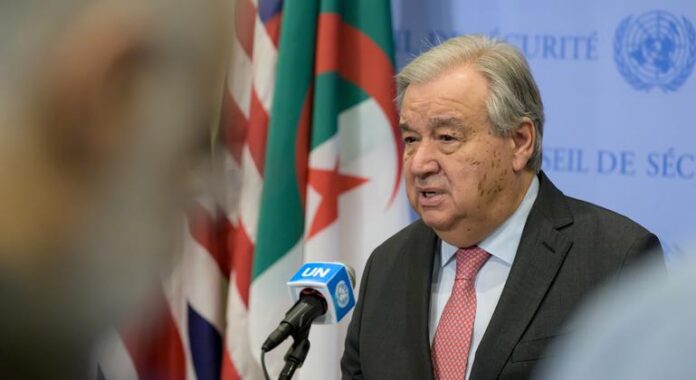
“These cuts impact a wide range of critical programmes,” he told reporters at the UN Headquarters in New York, highlighting the potential disruption to lifesaving humanitarian work, development projects, counterterrorism efforts and initiatives to combat drug trafficking.

He expressed the UN’s gratitude “for the leading role” the US has played over decades providing overseas aid, highlighting that thanks to US taxpayers’ dollars and other donors, over 100 million people each year receive humanitarian support through UN programmes.

However, the cuts come at a time when global crises are intensifying, leaving millions at risk of hunger, disease and displacement, he said.

“The consequences will be especially devastating for vulnerable people around the world,” Mr. Guterres said.

Millions at risk

In Afghanistan, more than nine million people could lose access to health and protection services, as hundreds of mobile health teams and other critical programmes face suspension. 

In northeast Syria, where 2.5 million people require humanitarian assistance, the absence of US funding will have a major impact.

The cuts have been felt already in Ukraine, where cash-based aid that supported one million people in 2024 has been suspended. In South Sudan, funding has run out for programmes assisting refugees fleeing conflict in neighbouring Sudan, creating overcrowded and unsanitary conditions at border areas.

Beyond direct humanitarian relief, the cuts will also severely affect global health and security efforts.

The UN Office on Drugs and Crime (UNODC) will be forced to halt many counter-narcotics operations, including those targeting the fentanyl crisis and dramatically scale back its activities against human trafficking.

“And funding for many programmes combatting HIV/AIDS, tuberculosis, malaria and cholera have stopped,” Mr. Guterres said.

A vital partnership

Mr. Guterres emphasized that US support has long been central to global humanitarian efforts.

“The generosity and compassion of the American people have not only saved lives, built peace and improved the state of the world. They have contributed to the stability and prosperity that Americans depend on,” he added.

Think again

The Secretary-General urged the US Government to reconsider the funding cuts, warning that reducing America’s humanitarian role would have far-reaching consequences, not only for those in need but also for global stability.

“Going through with these cuts will make the world less healthy, less safe, and less prosperous,” he said, stating that UN agencies stand ready to provide the necessary information and justification for its projects.

“We look forward to working with the United States in this regard,” he added.

Mr. Guterres said the UN would continue to do everything possible to provide lifesaving assistance and diversify funding sources.

“Our absolute priority remains clear. We will do everything we can to provide life-saving aid to those in urgent need,” he said.

“We remain committed to making the global humanitarian effort as efficient, accountable and innovative as possible while continuing to save lives.”

Full audio of Secretary-General Guterres remarks to the press.

Source link

Weekly schedule of President António Costa

0
Weekly schedule of President António Costa

Weekly schedule of President António Costa, 3–9 March 2025

Source link

Children already dying in Sudan’s stricken Zamzam camp: WFP

0
Children already dying in Sudan’s stricken Zamzam camp: WFP

The UN World Food Programme (WFP) confirmed that it has had to pause the distribution of life saving food and nutrition assistance, due to escalating violence.

WFP spokesperson Leni Kinzli said the UN agency’s partners in the camp had no choice but to evacuate their staff to safety.

“The recent violence in Zamzam has also left the central market destroyed…residents of the camp, which is around half a million people, are even further away from accessing food and essential food.

Government troops have been battling their former allies turned adversaries, the Rapid Support Forces militia, for nearly two years. The RSF now controls virtually all of Darfur but has been laying siege to the city of El Fasher for months, close to ZamZam.

RSF Militia stormed the camp on 11 February triggering several days of clashes with army troops and allied forces, according to news reports.

Deadly consequences

“People, particularly children, are already dying of hunger in Zamzam. And the fact that we are forced to suspend operations will make that even worse,” she added.

WFP and partners provided 60,000 people with food vouchers before heavy shelling forced the UN agency to pause aid operations in Zamzam.

The food vouchers allow families to purchase essential food supplies such as cereals, pulses, oil and salt, directly from local markets which are stocked by the private sector.

“As WFP, we’ve been trying every possible way to get vital aid into the hands of people whose lives hang in the balance,” Ms. Kinzli said. She explained that the UN agency is “continuously having to overcome barriers and obstacles” caused by the ongoing violence and insecurity.

Illustrating the need to find alternative ways of providing support to communities who are cut off by conflict such as in Zamzam, WFP has launched an online self-registration aid platform which is now active and provides cash-based assistance in remote Sudanese locations.

“We have done it in other parts of Sudan, like Khartoum, and we have received an overwhelming response from communities,” Ms. Kinzli said. “It does work well despite the patchy communications networks.”

Once registered, recipients can expect to receive digital transfers via a mobile money app which provides them with critical assistance until conditions permit the safe passage of humanitarian personnel and convoys, the WFP officer explained.

Aid delivery must resume

“We must resume the delivery of life-saving aid in and around Zamzam safely, quickly and at scale,” she insisted. For that the fighting must stop, and humanitarian organizations must be granted security guarantees.”

In 2024, two out of every three people in famine or risk of famine areas in Sudan received WFP assistance. But this is not enough, humanitarians warn.

“Regular, monthly deliveries to starving communities are the only way to push back the famine in Sudan,” WFP said, warning that access to famine and famine-risk areas is “sporadic and inconsistent”.

Today, two million people in 27 locations across Sudan are now experiencing famine or on the brink of it.

Source link

Sudan: Statement by the Spokesperson calling for a ceasefire

0
Weekly schedule of President António Costa

Sudan: Statement by the Spokesperson calling for a ceasefire

Source link

Digital sprint to disrupt sexual exploitation of Ukrainian nationals

0
Digital sprint to disrupt sexual exploitation of Ukrainian nationals

In a coordinated effort to combat human trafficking, Europol hosted an international operational action between 25 and 28 February 2025, bringing together analytical, OSINT and investigative experts from 12 countries, including Ukraine*. The action took place at Europol’s headquarters in The Hague, coinciding with the third anniversary of the start of the Russian war of aggression against Ukraine.The operational action…

Source link

‘A litany of human suffering’ in Myanmar, warns UN rights chief

0
‘A litany of human suffering’ in Myanmar, warns UN rights chief

Addressing the Human Rights Council on Friday, he detailed the devastating toll of the ongoing conflict and economic collapse on civilians – many of whom have been displaced by the fighting.

Earlier in the day the Council discussed the deteriorating situation in South Sudan, having heard a report from rights investigators serving on the Commission on Human Rights in the country.

“Conflict, displacement and economic collapse have combined to cause pain and misery across Myanmar and civilians are paying a terrible price,” Mr. Türk said.

The number killed in violence last year was the highest since the military coup in 2021. Over 1,800 civilians were killed in 2024, many in indiscriminate airstrikes and artillery shelling, with attacks on schools, places of worship and healthcare facilities having become routine.

Mr. Türk condemned the military’s brutal tactics, including beheadings, burnings, mutilations, and the use of human shields. He also noted that nearly 2,000 people have died in custody since the coup, most due to summary executions and torture.

Deepening humanitarian crisis

Fighting between the junta forces and opposition armed groups has fuelled a humanitarian catastrophe, with more than 3.5 million people displaced and 15 million facing hunger – two million of whom are at risk of famine.

In Rakhine state, clashes between the military and the Arakan Army have intensified, with thousands of civilians killed and Rohingya communities caught in the crossfire.  

Tens of thousands of Rohingya fled to Bangladesh in 2024, despite border restrictions. More than 8,000 fled by sea – an 80 per cent increase over 2023 – but at least 650 people, nearly half of them children, perished on the dangerous journey.

Economic collapse

Myanmar’s economic collapse has fuelled corruption and crime, with one global tracker ranking it the world’s biggest nexus of organized crime. It remains the top producer of opium and a major manufacturer of synthetic drugs.

Furthermore, scam centres in eastern Myanmar have become notorious for human trafficking, where victims are coerced into cybercrime and subjected to torture, sexual violence, and forced labour.

Military conscription

Mr. Türk also condemned the junta’s activation of military conscription laws, which have led to arbitrary arrests and forced recruitment, particularly targeting young men and women. Fear of conscription has driven many to flee the country, exposing them to trafficking and exploitation.

“Given the humanitarian, political and economic impacts fuelling instability across the region, the international community must do more,” Mr. Türk underscored.

He reiterated his call for an arms embargo, coupled with targeted sanctions – including on jet fuel and dual-use goods – to better protect the people of Myanmar.

He also stressed the need for accountability, citing efforts at the International Criminal Court (ICC) and the International Court of Justice (ICJ) to hold Myanmar’s military leaders accountable for atrocities.

Displaced South Sudanese people arrive at a camp in Upper Nile State. (file)

South Sudan: Leaders failing their own people

The UN Commission on Human Rights in South Sudan presented its latest report to the Human Rights Council earlier in Geneva, detailing widespread violations, including extrajudicial killings, forced recruitment of children and systematic sexual violence.

Despite South Sudan winning independence over a decade ago and repeated commitments to peace during years of civil war, the Commission found that the same patterns of abuses persist, often implicating high-ranking officials.

“It is unconscionable that so many years after its independence, political leaders continue their violent contestations across the country and are abjectly failing the people of South Sudan,” said Yasmin Sooka, Chair of the Commission.

Extreme ethnic violence

The report described the situation in Tambura, where armed forces and militias inflicted extreme violence along ethnic lines in 2024, reigniting tensions from the 2021 conflict.

Political elites at both local and national levels have actively fuelled this violence while remaining in power despite past crimes.

The Commission also raised alarms over the “Green Book” law introduced in Warrap State in 2024, which authorizes extrajudicial executions for suspected cattle raiding and communal violence.

Address corruption

South Sudan’s leaders agreed in September 2024 to extend the transitional political arrangements by two years, citing funding constraints.

The Commission’s report noted that the government generated $3.5 billion in revenue between September 2022 and August 2024, while essential institutions – such as courts, schools, and hospitals – remain underfunded and civil servants go unpaid.

“Financing essential services and rule of law institutions requires an end to the corruption. The theft of national wealth robs citizens of justice, education, and healthcare,” said Commissioner Carlos Castresana Fernández.

“Without addressing this systemic looting, no peace agreement will ever translate into meaningful change,” he added.

The Commission on Human Rights in South Sudan is an independent body mandated by the UN Human Rights Council. First established in March 2016, it has been renewed annually since. Its three Commissioners are not UN staff, they are not paid for their work and serve in an independent capacity.

Source link

$2.5 billion plan to deliver aid to 11 million people in DR Congo

0
.5 billion plan to deliver aid to 11 million people in DR Congo

The 2025 Humanitarian Response Plan (HRP) for the DRC, announced on Thursday, aims to deliver lifesaving assistance to 11 million Congolese, including 7.8 million internally displaced persons (IDPs) – among the highest displacement figures globally.

Overall, some 21.2 million Congolese are affected by multiple crises, notably armed conflict, natural disasters, and epidemics.

Multidimensional crises

The HRP was launched in the DRC capital Kinshasa by the Government and humanitarian partners.

It comes as the country is facing unprecedented multidimensional crises, characterized by three major destabilizing factors: a spiral of violence spreading from Ituri to Tanganyika provinces; the presence of M23 rebels who now control key areas of North Kivu and South Kivu, where humanitarian needs are immense, and a major funding crisis that threatens humanitarian response.

“All warning signals are flashing red. Yet, despite immense challenges, humanitarian action continues to prove its effectiveness in saving lives every day,” said Bruno Lemarquis, the UN Humanitarian Coordinator in the DRC. 

“We must adapt to keep delivering this vital aid without ever compromising the fundamental principles that guide humanitarian action: neutrality, impartiality, independence, and humanity,” he added.

Support for families 

Humanitarians said response this year aims to meet the most urgent needs and alleviate suffering through swift and effective assistance, adapted to the conditions on the ground. 

The HRP includes treating 1.5 million children suffering from acute malnutrition, providing access to safe drinking water for five million people, and combating outbreaks of diseases such as cholera, measles, and Mpox. 

The plan will also support the return of displaced families, restoration of livelihoods, and preparedness for climate-related shocks. Furthermore, in a context marked by extreme violence, protecting civilians and the most vulnerable – especially women and children – remains a top priority in all they do. 

However, operations are threatened by a sharp decline in financial support. 

‘At a crossroads’

Last year, humanitarians received a record $1.3 billion in funding, allowing them to reach 7.1 million in the DRC. Leading donor the United States covered 70 per cent of the funding. Washington announced in January that it was freezing all foreign aid payments for at least 90 days.

“We stand at a crossroads. Without increased international mobilization, humanitarian needs will skyrocket, regional stability will be further jeopardized and our capacity to respond will be severely compromised,” Mr. Lemarquis said.

The humanitarians called on the Congolese Government, the international community, and national and international humanitarian partners for a collective surge of solidarity to implement the plan with the necessary resources, access, and support. 

“Humanitarian assistance is essential to save lives. However, it is not the solution,” said Mr. Lemarquis.

“Real solutions are, above all, political and require targeted, sustainable actions to address the root causes of the conflicts.”

Peacekeeping chief visits DRC 

 In related developments, the head of UN Peace Operations, Jean-Pierre Lacroix, arrived in the DRC capital Kinshasa on Thursday. 

Accompanied by a delegation from the UN peacekeeping mission in the country, MONUSCO, he had discussions with Prime Minister Judith Suminwa Tuluka and other top officials responsible for Interior Affairs, Defense and Foreign Affairs. 

Talks focused on the security situation in the east, as well as the ongoing diplomatic and political efforts aimed at achieving an immediate cessation of hostilities in North Kivu and South Kivu.   

The Council unanimously adopted the resolution last Friday, calling for the Rwanda-backed rebel movement to immediately cease hostilities, withdraw from areas it controls, and fully reverse the establishment of illegitimate parallel administrations in Congolese territory. 

Source link

ESMA publishes the results of the annual transparency calculations for equity and equity-like instruments

0
ESMA publishes the results of the annual transparency calculations for equity and equity-like instruments

The European Securities and Markets Authority (ESMA), the EU’s financial markets regulator and supervisor, has today published the results of the annual transparency calculations for equity and equity-like instruments, which will apply from 7 April 2025.

The calculations made available include:

  • the liquidity assessment as per Articles 1 to 5 of CDR 2017/567;
  • the determination of the most relevant market in terms of liquidity as per Article 4 of CDR 2017/587 (RTS 1);
  • the determination of the average daily turnover relevant for the determination of the pre-trade and post-trade large in scale thresholds;
  • the determination of the average value of the transactions and the related the standard market size; and
  • the determination of the average daily number of transactions on the most relevant market in terms of liquidity relevant for the determination of the tick-size regime.

Currently, there are 1,283 liquid shares and 1,003 liquid equity-like instruments other than shares, subject to MiFID II/MiFIR transparency requirements.

Market participants are invited to monitor the release of the transparency calculations for equity and equity-like instruments on a daily basis to obtain the estimated calculations for newly traded instruments and the four-weeks calculations applicable to newly traded instruments after the first six-weeks of trading. 

ESMA’s annual transparency calculations are based on the data provided to Financial Instruments Transparency System (FITRS) by trading venues and approved publication arrangements in relation to the calendar year 2024.

The full list of assessed equity and equity-like instruments will be available through ESMA’s FITRS in the XML files with publication date from 28 February 2025 and through the Register web interface. 

Next steps

The transparency requirements based on the results of the annual transparency calculations published from 1 March 2025 for equity and equity-like instruments will apply from 7 April 2025 until 5 April 2026. From 6 April 2027 the next annual transparency calculations for equity and equity-like instruments, to be published by 1 March 2026, will become applicable. 

Source link

Gaza: Despite challenges, UNRWA says ‘unparalleled progress’ made during ceasefire

0
Gaza: Despite challenges, UNRWA says ‘unparalleled progress’ made during ceasefire

Agency teams have worked around the clock to provide services to a people who are overwhelmed following 15 months of constant bombardment, forced displacement, and lack of critical supplies, the agency said in a press release.

“This reflects UNRWA’s commitment to supporting families in Gaza through this unprecedented humanitarian crisis,” said Sam Rose, UNRWA’s acting director of Gaza Affairs, speaking from an UNRWA health centre in southern Gaza.

“Despite every political and logistical challenge to the Agency, UNRWA remains resolute in its mission to provide essential services to families who need them now more than ever.”

Last October, Israel’s parliament, the Knesset, adopted two bills banning UNRWA from working in Israeli territory and enforcing a no-contact policy between national authorities and agency representatives. The laws took effect in January.

Two million reached

In a significant milestone, and in close coordination with other humanitarian partners, UNRWA has now provided food assistance to two million people, or over 90 per cent of the population, helping to bring some improvement to overall food security.

The agency has also restored healthcare access to nearly 180,000 people in Khan Younis, Rafah and Gaza City through the re-opening of health centres.

In addition, agency teams reached more than half a million with blankets, mattresses, floor mats, clothes, cooking equipment, and tarpaulins to protect from the rain.

All agencies scale up support

The recent polio campaign in Gaza concluded successfully, reaching over 600,000 children under the age of 10, UN Spokesperson Stéphane Dujarric told journalists at UN Headquarters in New York on Thursday.

The World Health Organization (WHO) provided supplies to three hospitals and five health partners, benefiting 250,000 people across the Strip. Additionally, WHO supported the expansion of triage and emergency departments in Al-Shifa hospital with tents and 20 extra beds.

Children’s agency UNICEF has delivered essential health kits, paediatric medicines, and newborn supplies for over 20,000 people at Al Awda Hospital in northern Gaza.

UN partners have also scaled up food security, distributing 860,000 cooked meals daily – a 10 per cent increase from the previous week.

Back to school, for some

The World Food Programme (WFP) has made subsidised bread available at 24 retail shops in the South and re-established four food distribution points in the north.

Efforts to improve water and sanitation continue, with two water points established and expanded in North Gaza governorate, and two sections of water networks repaired in Khan Younis.

As of Wednesday, 100,000 children have enrolled in school, marking a return to in-person learning after 16 months. A total of 165 public schools have reopened across Gaza.

West Bank emergency: 40,000 forcibly displaced

In the West Bank, Israeli forces’ operations in Jenin, Tulkarm, and Tubas have led to further casualties and displacement, hindering access to essential services.

The UN stresses the importance of respecting international law and protecting civilians.

Listen below to audio from Ajith Sunghay who is the top UN human rights official for the Occupied Palestinian Territory. He told UN News on Thursday that with 40,000 now forcibly displaced from refugee camps in the West Bank, it seems “return is not an option” for at least a year as Israel forces dig in.

Source link

Rare Disease Day: an in-depth look at how the European Reference Networks (ERNs) are tackling rare diseases

0
Rare Disease Day: an in-depth look at how the European Reference Networks (ERNs) are tackling rare diseases

Rare diseases represent a major health challenge for healthcare systems due to the limited knowledge available to diagnose them, the limited number of  treatment options (95% of the known rare diseases still lack an approved treatment) and their low prevalence*. That is why rare diseases have been a priority for the European Union over the past two decades, resulting in collective action to facilitate knowledge sharing and access to specialised care for patients. 

The EU’s strategic objective for rare diseases is to improve patient access to diagnosis, information and care. It assists in pooling scarce resources spread across the EU, enabling patients and professionals to share expertise and information.

The European response can be characterised by a combination of key elements:

  • Setting up and supporting European Reference Networks (ERNs);
  • Supporting the definition, codification and inventory of rare diseases;
  • Supporting the designation and authorisation of orphan medicinal products;
  • Building and broadening the knowledge base, also through research;
  • Empowering patient organisations.

ERNs are cross-border networks that bring together European centres of expertise and hospitals to tackle rare, low prevalence and complex diseases and conditions requiring highly specialised healthcare.  

ERNs enable specialists in Europe to discuss cases of patients affected by rare, low-prevalence and complex diseases, providing advice on the most appropriate diagnosis and the best treatment available. 

On Rare Disease Day, HaDEA interviewed Professor Luca Sangiorgi, Coordinator of ERN BOND, the European Reference Network of Rare Bone Disorders, and Chair of the ERN Coordinators Group, which is the governing board of the 24 ERNs. 

  1. Can you explain the relevance of ERNs in the field of rare diseases? 

ERNs gather over 1600 European centres of expertise dealing with rare, low prevalence and complex diseases and conditions which require highly specialised healthcare. Their relevance in the rare disease field resides in the possibility of enabling knowledge exchange and creating common patient pathways and guidelines, which will then be shared with the entire healthcare community. Patient representatives are involved and engaged in all ERNs’ processes, to ensure that their perspective is taken into account in the work of the ERNs.

  1. The ERNs have been funded by the EU since 2017. What do you consider their main successes?  

The main success of ERNs is that they allow patients with a rare disease to have a proper harmonised pathway for diagnosis and treatment. Moreover, ERNs are favouring more homogeneous treatment of patients across participating countries.  This is done, for instance, through the ERNs’ virtual discussion tool (CPMS) that allows clinicians to discuss the most challenging cases.  

Furthermore, ERN registries, which collect pseudo-anonymised data on patients with rare diseases, are helping to develop a clear picture of the natural history of the various disorders treated by the ERNs. This may one day make it possible to find new treatments for disorders that are currently untreatable. Very few rare diseases have a therapeutic option available and the ERNs registries make a real contribution to the discovery of new treatments. 

ERNs have also helped the EU respond to different crises in recent years, such as the COVID-19 pandemic and the Russian’s war of aggression against Ukraine. A framework has been put in place by the Commission for Ukrainian healthcare providers to seek advice from members of the European Reference Networks on Ukrainian rare or complex disease patients. Moreover, the ERNs undertake collaboration activities, capacity building and best practice sharing for competent Ukrainian authorities and healthcare units. 

  1. What are the main objectives and expectations for the ongoing grants?  

The main objectives are to stabilise and further increase the opportunities that ERNs are creating for the treatment of patients. We also expect to explore future possibilities for better therapeutic and better care options, such as the use of artificial intelligence. 

  1. What are the main challenges to cross-border cooperation for rare diseases in Europe, and how do the ERN grants help to face these?  

There are still some obstacles which hinder effective cross-border cooperation. To face these limits, the ERN coordinators’ group has recently set up specific working groups. At the same time, support to Ukrainian patients has given us a clear example that cross-border cooperation is working. ERNs are not only providing treatments to those patients in countries where they are not available, but are also training referral doctors in order to facilitate knowledge transfer and the implementation of new procedures. 

For instance, my hospital, which is part of ERN BOND and is located in Italy, will operate on a patient from another country where the surgical expertise is not currently available. Surgeons from the clinical centre which referred the patient will participate in the surgery after following a specific training. This will allow them to repeat this therapeutic strategy in their home country.

  1. How important is the support of EU funding for ERNs? 

EU funding is essential: without this support, many of the activities I have mentioned would not be feasible. ERNs have received EU funding since their creation in 2017 and a direct grant of more than €77 million is covering their activities for the period 2023-2027. 

There are ongoing actions aimed to raise awareness in EU countries of the importance of ERNs as a strategic initiative  to support rare diseases patients. This is one of the main objectives of the Joint Action on integration of ERNs into national healthcare systems (JARDIN). The support of the EU to ERNs, by facilitating interaction between EU countries, is essential for the existence of ERNs and for the rare disease community. 


* Prevalence: the proportion of a particular population found to be affected by a medical condition at a specific time

Background 

European Reference Networks  

HaDEA manages the 24 ERN grants running from 2023 to 2027 with a total EU contribution of €77.4 million. HaDEA also manages the Joint Action on integration of ERNs into national healthcare systems (JARDIN), for a total EU contribution of €15 million. 

HaDEA has also managed the contract on the independent evaluation of ERNs: ERNs evaluation results report – Independent Evaluations of European Reference Networks and of Healthcare Providers – European Commission 

EU4Health is the fourth and largest of the EU health programmes. The programme provides funding to national authorities, health organisations and other bodies through grants and public procurement, contributing to a healthier Europe. 

HaDEA manages the vast majority of the total EU4Health budget and implements the programme by managing calls for proposals and tenders from 2021 to 2027. 

Source link