
The study, which concluded in 2025 with data currently unpublished, measured driving performance using a simulator that tracked
Cannabis edibles pose major crash risk
Sudan war leaves millions hungry and displaced as health system nears collapse
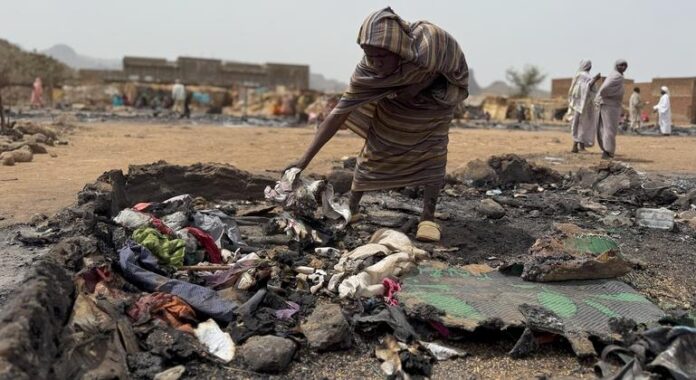
UN agencies warn that nearly three years of sustained violence, restricted humanitarian access and shrinking funding have pushed Sudan into what they describe as the largest humanitarian emergency in the world.
An estimated 33.7 million people – around two thirds of the population – are expected to need humanitarian assistance in 2026. More than 20 million people now require health assistance, while 21 million face acute food insecurity.
Devastating impact
The conflict erupted in April 2023 following a power struggle between the Sudanese Armed Forces (SAF) and the paramilitary Rapid Support Forces (RSF), plunging the country into a civil war that has spread from the capital Khartoum to Darfur, Kordofan and other regions.
The fighting has devastated infrastructure, fractured state institutions and left civilians exposed to widespread violence, displacement and deprivation.
Repeated ceasefire efforts have failed, and large swathes of the country remain inaccessible to humanitarian actors due to insecurity, bureaucratic constraints and ongoing hostilities.
Patients receive treatment in a tent outside a hospital in Khartoum, as Sudan’s health system comes under severe strain from attacks, shortages, disease outbreaks and natural disasters.
A health system on the brink
According to the World Health Organization (WHO), Sudan’s health system has been pushed close to collapse by ongoing fighting, mass displacement and repeated attacks on medical facilities. More than one third of health facilities nationwide are non-functional, cutting millions off from essential and lifesaving care.
Since the conflict began, WHO has verified 201 attacks on healthcare, resulting in 1,858 deaths and 490 injuries. Such attacks violate international humanitarian law and place patients, caregivers and health workers at grave risk.
“One thousand days of conflict in Sudan have driven the health system to the brink of collapse,” said Shible Sahbani, WHO Representative in Sudan. “Under the strain of disease, hunger and lack of access to basic services, people face a devastating situation.”
Despite insecurity and access constraints, WHO continues to support lifesaving services, having delivered more than 3,300 metric tonnes of medicines and medical supplies worth around $40 million. It also supported cholera vaccination campaigns and helped millions access care through hospitals, primary health centres and mobile clinics.
Mass displacement
Sudan is also the world’s largest displacement crisis, with an estimated 13.6 million people uprooted by the fighting – around 9.3 million internally displaced and a further 4.3 million seeking refuge in neighbouring countries.
Overcrowded living conditions, poor sanitation and disrupted services have fuelled outbreaks of cholera, malaria, dengue and measles across much of the country.
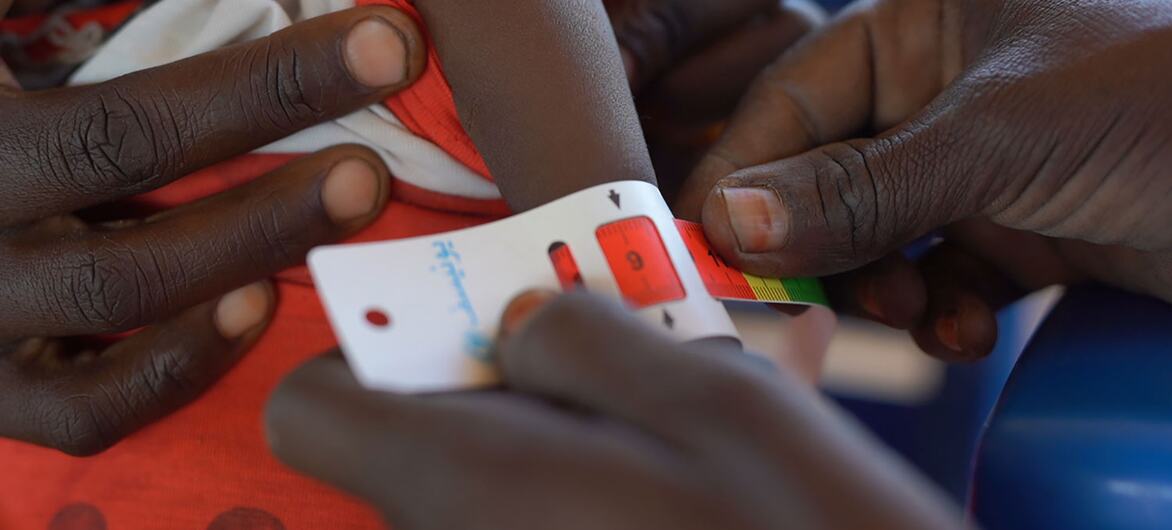
A child is screened for malnutrition at a UNICEF-supported nutrition centre in North Darfur, Sudan in December 2025. The red color signifies Severe Acute Malnutrition (SAM).
Children bearing the heaviest burden
Children make up about half of those expected to need humanitarian assistance in 2026, according to the UN Children’s Fund (UNICEF).
“Children continue to be killed and injured,” said UNICEF Regional Director for the Middle East and North Africa Edouard Beigbeder, noting that eight children were reportedly killed in a single attack in North Kordofan this week alone.
In North Darfur alone, nearly 85,000 children suffering from severe acute malnutrition were treated between January and November 2025 – roughly one child every six minutes – underscoring the scale of the crisis.
Calls for peace and access
Both WHO and UNICEF stress that humanitarian action, while lifesaving, cannot substitute for peace.
“To meet the mounting needs and prevent the crisis from spiralling out of hand, WHO and humanitarian partners require safe and unimpeded access to all areas of Sudan, and increased financial resources,” Dr. Sahbani said.
For children, UNICEF warns, only an end to the fighting can halt the erosion of safety, health and hope.
“All parties must uphold their obligations under international humanitarian law: protect civilians, stop attacks on infrastructure, and allow safe, sustained and unimpeded humanitarian access,” Mr. Beigbeder said.
At the heart of change: Spotlight Initiative highlights breakthroughs in tackling gender-based violence
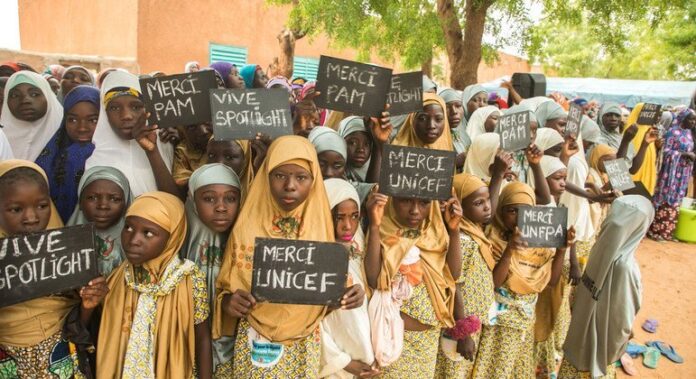
At the heart of change: Spotlight Initiative highlights breakthroughs in tackling gender-based violence
When it comes to protecting women and girls from gender-based violence, change happens when they are “at the heart of every decision,”according to Erin Kenny, Global Coordinator of the Spotlight Initiative a United Nations–European Union partnership aimed at tackling all forms of abuse against women and girls.
Since 2017, Spotlight, has been working to prevent violence, sexual and gender-based violence (GBV), as well as femicide, human trafficking, and labour exploitation.
Worldwide, one in three women has experienced physical or sexual violence, and in many places, this number is even higher.
Here are some of the initiative’s major breakthroughs highlighted in a report focusing on its innovative approaches, and its sustained achievements over the past seven years.
Finding empowerment in Zimbabwe
In Zimbabwe, rural women with disabilities meet to advocate for their rights.
In Zvimba, Ndakaitei Matare, a mother of one and chair of a disability support group, knows firsthand the challenges of living with a disability having faced, since an early age, barriers to education, assistive devices, and economic opportunities.
Through a partnership between Spotlight and the government, Ndakaitei and other women with disabilities have found empowerment, raising awareness through disability support groups about GBV, rights and inclusion.
“We are capable of doing a lot if we unite and work together,” she said, a testament to how knowledge and community can transform lives.
Access to justice for women
Since, access to justice for survivors of sexual violence has significantly improved. Victim-Friendly Courts now offer safe spaces for women and children, and the Judicial Services Commission continues to support survivors with transport and food allowances and has expanded three more courts with separation rooms.
Supporting child survivors in Haiti
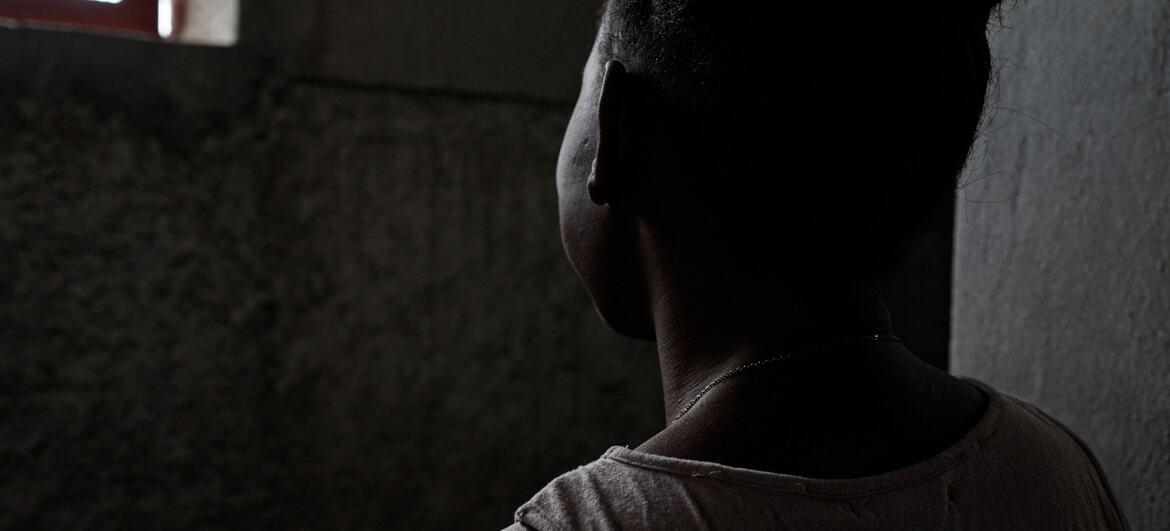
A teenage survivor of gender-based violence is recovering in Haiti.
In summer 2023, Taina* was kidnapped and held captive for a week by a Haitian gang.
She recalled being held in a residence where two men raped her one after the other, describing it as a ‘nightmare week’.
While others were also held captive, she was the only minor.
Thanks to Spotlight, Taina received medical, psychological, and social support, housing, microfinance and income-generation training, school fee assistance, and emergency relocation.
“In this environment, I could finally breathe,” said Taina.
She now looks to the future with determination, dreaming of becoming a police officer and planning to resume her studies while pursuing courses in beauty treatment and cooking.
Tackling sexual violence
More than one in three Haitian women has experienced violence from a partner or husband. Nearly 30 per cent of women of childbearing age have suffered physical violence — almost half from an intimate partner. Twelve per cent have experienced sexual violence, including many girls aged 15 to 17.
Supporting women migrant workers’ rights in Thailand

Migrant workers like Namwaan* need support to ensure safe and decent jobs.
Namwaan* left Myanmar in 2003 to pursue a better life in Thailand.
The first job she found was in a textile factory. She recalled working long hours for little income. “I had to work 12-16 hours per day for only 70 baht ($3).”
Invisible, exploited, abused, silenced. These are just some of the words used by women migrant workers to describe their working conditions.
As Namwaan didn’t read or speak Thai, she was not able to negotiate her working conditions and she feared she’d be punished by her employer if she tried to speak up.
“Some of my colleagues were harassed, locked up, or faced physical abuse when they spoke up about their working conditions,” she said.
Recovering from abuse
Through awareness campaigns, support desks located at airports, and service provider training, the Spotlight Initiative has explained therisks faced by women migrant workers.
For Namwann, the training offered a space to connect with others who had faced similar abuse.
“I felt completely connected to their stories,” she said. “This programme gives millions of women hope for decent work free from violence.”
Banning corporal punishment in Tajikistan
In 2023, Tajikistan became the 66th country in the world to ban corporal punishment, a transformative policy shift which was made possible through the Spotlight Initiative.
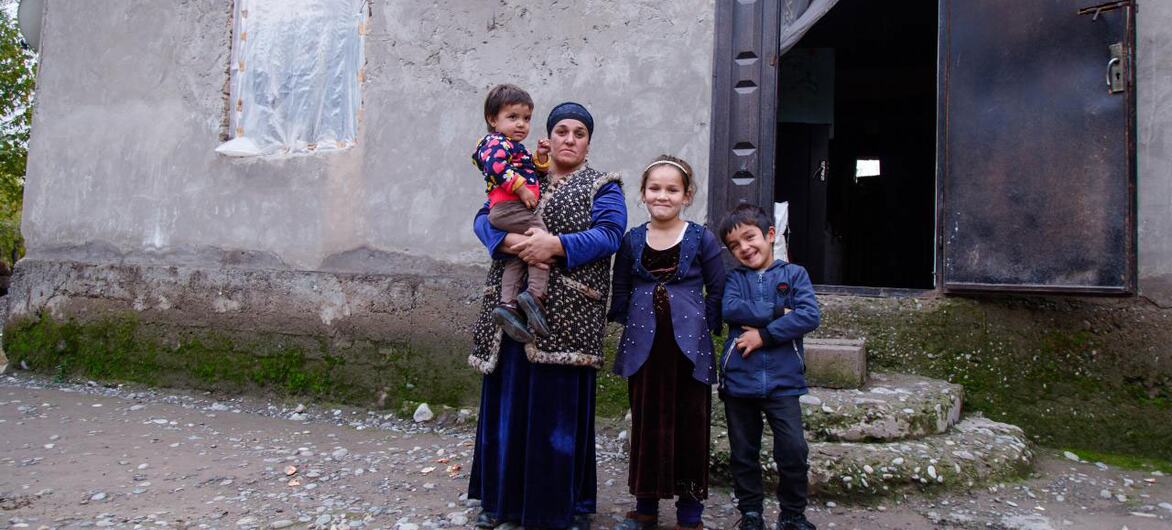
A mother and her three children stand outside their home in Tajikistan.
Partnering with the Ministry of Health, the initiative established 15 victim support rooms — offering integrated medical, psychological, and referral services, including short-term shelter.
More notably, transformation extended into communities — strengthening the role of religious leaders as advocates for gender equality and key actors in violence prevention efforts.
In more than 300 schools, Spotlight supported the creation of a national incident reporting mechanism which the government took full ownership of and publicly committed to expanding nationwide by 2030.
Surprising nanoscopic heat traps found in diamonds
University of Warwick scientists discover “hot spots” around atomic defects in diamonds – challenging assumptions about the world’s
Surprising nanoscopic heat traps found in diamonds
University of Warwick scientists discover “hot spots” around atomic defects in diamonds – challenging assumptions about the world’s Source link
Sudan: After 1,000 days of war, millions of civilians still bearing brunt

Latest UN data indicates that 9.3 million people have been uprooted by conflict across the country and more than 4.3 million have fled across borders, placing immense strain on neighbouring countries. More than 21 million people are also believed to be acutely food insecure across the country.
Although many of those displaced have returned to the capital, Khartoum, massive challenges and dangers for civilians remain there, including from unexploded weapons. Elsewhere, fighting is continuing “across multiple fronts in Kordofan” further west, OCHA spokesperson Jens Laerke said.
Speaking to journalists in Geneva, he noted that sieges have cut off the towns of Kadugli – capital of South Kordofan state – and Dilling – a town to the north of Kadugli – restricting food, healthcare and access to farms and markets.
Daily drone, missile strikes
In Darfur, meanwhile, “fighting on the ground and drone attacks from the sky continue”, while long-range strikes on civilian infrastructure have also been recorded far beyond the front lines, Mr. Laerke added.
Children continue to be killed and injured amid ongoing clashes between the Sudanese Armed Forces and paramilitary Rapid Support Forces, with eight children reportedly killed in an attack in Al Obeid, North Kordofan, earlier this week.
According to the UN Children’s Fund (UNICEF), a staggering 5,000 youngsters have been displaced every day since the conflict began in April 2023. “Many have been displaced not once but repeatedly, with violence following them wherever they flee,” said UNICEF spokesperson Ricardo Pires.
He warned that millions of children are also at risk of rape with survivors including babies. “Behind every one of these numbers is a child, frightened, hungry, sick and wondering why the world has not come to help,” Mr. Pires added.
Sexual attacks scourge
Women are also victims of “rampant” sexual violence and abuse, with some 12 million people – mostly women and girls – at risk of gender-based violence, according to OCHA. “Female-headed households are now three times more likely to be food insecure and three-quarters of these households report not having enough to eat,” said Mr. Laerke.
The global crisis in humanitarian funding has impacted the UN’s work and that of its partners in Sudan, with only 36 per cent of the $4.2 billion requested last year finally funded by donors.
In light of this reduced financial support, for 2026, OCHA aims to assist 20 million people out of the nearly 34 million people believed to be in need of humanitarian support in Sudan. The plan has been costed at $2.9 billion.
“Today our call is urgent: first, an immediate cessation of hostilities and real steps towards a lasting peace,” Mr. Laerke said. “Second, adherence to international humanitarian law with access facilitated across conflict lines and protection of civilians including aid workers and civilian infrastructure.”
Ukraine: Massive overnight attack leaves millions in the dark
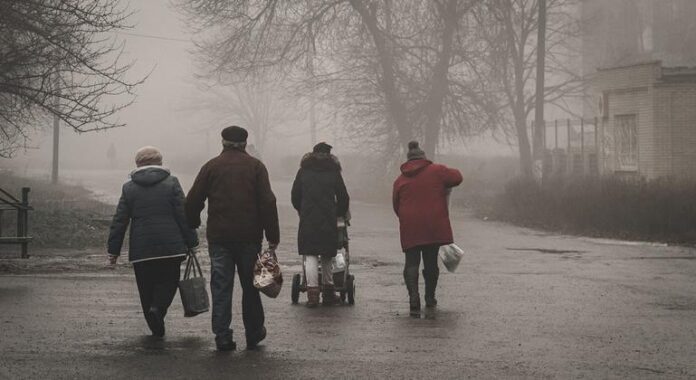
Russian forces launched hundreds of drones and several missiles in the capital Kyiv and other cities, including one that can carry nuclear warheads, according to media reports.
At least four people were killed in Kyiv, and roughly 25 others injured, while thousands of apartment buildings in the city were left without heat in the cold weather.
The victims included a medic who was saving others as part of an emergency services team, the UN World Health Organization (WHO) said in a tweet. Four healthcare workers were injured, and three ambulances were damaged.
Attacks ‘must stop immediately’: Guterres
UN Secretary-General António Guterres said in a statement issued by his Spokesperson that he strongly condemned the ongoing targeted missile and drone attacks.
“These attacks have resulted in significant civilian casualties and deprived millions of Ukrainians of essential services, including electricity, heating and water at a time of acute humanitarian need,” the statement added.
“Attacks against civilians and civilian infrastructure violate international humanitarian law. No matter where they occur, they are unacceptable, unjustifiable, and must stop immediately.”
Millions without heat
In a social media post, UNICEF said that three children were reportedly injured in the massive attack across Ukraine which “left millions without heating, water and power.”
The agency “is further bolstering energy systems to also enable repairs and is working around the clock with local authorities to help keep critical services for children and families running.”
In the city of Kryyvi Rih in central Ukraine, aid workers distributed hot meals to affected residents and first responders, in addition to providing construction materials to cover damaged apartments, the UN Office for the Coordination of Humanitarian Affairs (OCHA) tweeted.
A continuing ‘trend’
The attack occurred in a week when massive airstrikes were carried out on Kharkiv in the northeast, Dnipro in the east, and the Kherson region in the southeast, said Elisabeth Haslund, spokesperson for the UN refugee agency, UNHCR.
“It’s really emphasising the continuation of this trend with intensified Russian attacks on Ukraine that we have witnessed on the ground for several months. And this is clearly continuing now into 2026,” she told UN News.
The ongoing war together with severe attacks, winter weather conditions and targeting of the energy infrastructure are making the humanitarian situation in Ukraine “extremely serious,” she added.
UNHCR and local partners have been responding with critical and life-saving emergency aid, which includes providing emergency shelter materials to families, psychosocial support, counselling and legal aid for people who have lost documents or need assistance in accessing compensation.
Support for families
The UN continues to call for an end to the full-scale Russian invasion of Ukraine, which began on 24 February 2022. Since then, more than 50,000 civilians have been killed or injured, although the actual number is likely higher.
WHO said that so far this year, it has documented nine attacks on healthcare, two deaths and 11 injuries.
UNICEF has been in the country since before the conflict began.
It supports families in numerous ways, including working to ensure the functionality of heating infrastructure, providing solid fuel as well as winter clothing and blankets for children, rehabilitating school shelters, and enabling access to safe water in areas where supply networks have been damaged or destroyed.
Last month, UNICEF launched a $350 million appeal to provide humanitarian assistance in Ukraine this year with the goal of supporting 4.3 million people, including 725,000 children.
NSF NCAR mini-satellite will give scientists a detailed view of the Sun’s chromosphere
DISCLAIMER: Information and opinions reproduced in the articles are the ones of those stating them and it is their own responsibility. Publication in The European Times does not automatically means endorsement of the view, but the right to express it.
DISCLAIMER TRANSLATIONS: All articles in this site are published in English. The translated versions are done through an automated process known as neural translations. If in doubt, always refer to the original article. Thank you for understanding.
NSF NCAR mini-satellite will give scientists a detailed view of the Sun’s chromosphere
The U.S. National Science Foundation National Center for Atmospheric Research (NSF NCAR) was selected by NASA to construct
World News in Brief: Fighting intensifies in Syria’s Aleppo and South Sudan’s Jonglei state, acute hunger in Niger
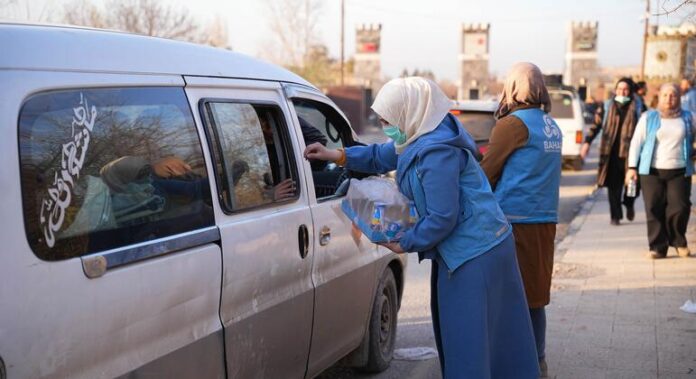
Clashes between government troops and Kurdish forces have intensified in recent days and tens of thousands of people have been displaced.
Representatives of the Office of the Secretary-General’s Special Envoy for Syria continue to be in contact with all concerned parties, UN Spokesperson Stéphane Dujarric told journalists in New York.
Civilians killed, health facilities shuttered
The UN aid coordination office (OCHA) reported that as of Wednesday, at least five civilians – including two women and a child – were reportedly killed and dozens more injured, according to local authorities.
Several health facilities have also been impacted, including three hospitals, with some reportedly ceasing operations due to damage and attacks. Movement restrictions have also been imposed on key roads.
“Since yesterday morning, thousands of families have fled their homes, with many seeking shelter with host communities in Aleppo city and the various districts of Afrin,” said Mr. Dujarric.
Authorities have announced the opening of two humanitarian corridors for civilians to evacuate.
Humanitarians are mobilizing resources to respond to the growing displacement, he said. A UN team in Aleppo has carried out an assessment mission to Yad Al Aoun camp in Afrin to evaluate immediate needs and the capacity to respond.
South Sudan: Violence in Jonglei state sparks displacement, disrupts aid operations
A surge in conflict and airstrikes in Jonglei state, South Sudan, has forced people to flee their homes and disrupted humanitarian operations, OCHA said in its latest update.
Since 29 December, renewed fighting between the army and opposition has displaced some 100,000 people, mainly women, children and older persons, local authorities report.
Most are now sheltering in remote areas, while others have fled to neighbouring states, with authorities in Lakes state registering more than 11,000 arrivals.
Aid efforts affected
Meanwhile, several humanitarian organizations in northern Jonglei state have relocated their staff due to the insecurity and instructions by parties to evacuate the area.
Those organizations that continue to operate with local staff, report growing challenges including in restocking health facilities and sustaining other essential activities.
“The situation is further compounded by reports from several humanitarian organizations that their facilities and assets have been looted or confiscated by both parties,” OCHA said.
This is disrupting provision of essential health services for thousands at a time when South Sudan continues to grapple with food insecurity, disease outbreaks and the impact of flooding last year.
OCHA continues to engage with all parties to ensure that aid can reach people safely.
Food security experts warn of acute hunger and disease in Niger
More than 1.6 million young children in Niger are suffering from acute malnutrition – with many more at risk, UN-backed food insecurity experts said on Thursday.
The warning comes in an assessment from the international food security monitoring platform, or IPC, which noted that at least 306,000 pregnant and breastfeeding women are also in danger.
The security situation in Niger remains volatile following a military coup in July 2023, with jihadist insurgents still active.
Although nutrition levels have improved since the last UN-backed assessment, there are still concerns for refugees living in Agadez, Diffa and Maradi regions.
The worst conditions were reported in Diffa region that borders Chad and in Maradi region close to Nigeria, between August and November last year.
While the situation is expected to improve between now and April – marked by fewer cases of diarrhoea, malaria and better food availability – conditions are expected to deteriorate again with the onset of the lean and rainy season in May.
