Wednesday, September 30, 2026
Home Blog Page 570

Conflict has turned parts of Sudan ‘into a hellscape,’ Security Council hears

0
Conflict has turned parts of Sudan ‘into a hellscape,’ Security Council hears

“Now more than ever, two years on, the people of Sudan need your action,” Edem Wosornu of the UN humanitarian affairs office, OCHA, said in a briefing to ambassadors on Wednesday.

“Nearly two years of relentless conflict in Sudan have inflicted immense suffering and turned parts of the country into a hellscape,” she added, listing some of the impacts.

Fighting between the Sudanese Armed Forces (SAF) and the paramilitary Rapid Support Forces (RSF) has left more than half the country, 24.6 million people, experiencing acute hunger.

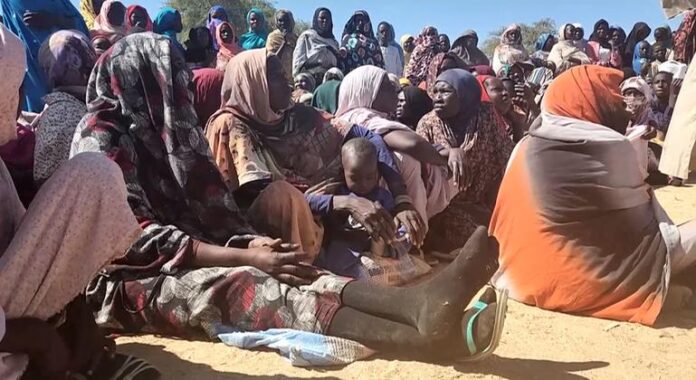
Additionally, more than 12 million are now displaced, including 3.4 million who have fled across the border. Health services have collapsed, millions of children are out of school and relentless patterns of sexual violence have occurred.

Recent alarming developments

Ms. Wosornu focused on the latest alarming developments in North Darfur state, including the Zamzam displacement camp, and in Khartoum as well as the south of the country.

She said eight months after the Council adopted Resolution 2739 (2024), civilians in North Darfur remain under attack. The resolution demanded the RSF stop besieging the state capital, El Fasher.

Meanwhile, violence in and around Zamzam camp has further intensified. It is estimated that hundreds of thousands of civilians are living there, where famine conditions have been confirmed. 

She said satellite imagery confirms the use of heavy weaponry in and around Zamzam in recent weeks, and the destruction of the main market facilities there. 

“Terrified civilians, including humanitarian workers, were unable to leave the area when the fighting was most intense. Many were killed, including at least two humanitarian workers,” she added.

The deteriorating security situation forced the medical humanitarian organization MSF – the main provider of health and nutrition services in Zamzam camp – to halt its operations there, while the World Food Programme (WFP) confirmed suspension of the voucher-based food assistance system.

Famine conditions were confirmed in Zamzam last August and since then, WFP has managed to transport just one convoy of humanitarian supplies into the camp despite repeated attempts to deliver more.        

The UN agency warned that without immediate assistance, thousands could starve in the coming weeks. 

Fierce fighting elsewhere

Civilians also continue to be directly impacted by ongoing fierce fighting in parts of Khartoum, where the UN human rights office, OHCHR, has verified reports of summary executions of civilians in areas that have changed hands.

“We remain deeply concerned about the very serious risks faced by local responders and community volunteers, in Khartoum and elsewhere,” she said.

Ms. Wosornu noted that in southern Sudan, there are reports of fighting spreading into new areas in North Kordofan and South Kordofan states, increasing risks for civilians and further complicating movements of humanitarian personnel and supplies.

Shocking reports of further atrocities in White Nile state have also emerged, including a wave of attacks earlier this month reported to have killed scores of civilians.

Sudan. Offloading of barge transported food aid

Support humanitarian response

She recalled that last week saw the launch of the 2025 humanitarian response plans for Sudan and the region. Together they call for $6 billion to support nearly 25 million people in Sudan and up to five million others, mainly refugees, in neighbouring countries.

She said the international community, particularly Security Council members, must spare no effort to mitigate the crisis.

Ms. Wosornu concluded her remarks by presenting three “key asks”. 

“We call on the Security Council – and all Member States with influence – to take immediate action to ensure all actors comply with international humanitarian law and protect civilians and the infrastructure and services they rely on,” she said. 

Her second request highlighted the importance of access, as “we need real implementation of the repeated commitments to facilitate and enable unhindered, unfettered humanitarian access to civilians in need.”

Finally, she highlighted the funding shortfall. 

“The scale of Sudan’s needs is unprecedented and requires an equally unprecedented mobilization of international support, including flexible funding,” she said. 

Source link

Press releases – European Union

0
Press releases – European Union

EU needs fairer and simpler rules to stay competitive

Giorgia BATTIATO
Wed, 26/02/2025 – 15:06

Expanding across borders in the EU means navigating a maze of conflicting VAT rules and paperwork, driving up costs…

Source link

Human Rights Council: Gaza ceasefire must hold, Türk insists

0
Human Rights Council: Gaza ceasefire must hold, Türk insists

Addressing the Human Rights Council in Geneva on conditions inside the Occupied Palestinian Territory, Mr. Türk condemned the Hamas-led terror attacks on Israel that sparked the war in October 2023.

The UN High Commissioner for Human Rights also said there was no justification for Israel’s devastating military operations in Gaza, which have left more than 48,000 Palestinians dead, according to local authorities.

Search for a better future

“At this tenuous moment the world must ask itself how to resolve this decades old conflict and stop the cycle of violence,” he said.

“Any plans for a better future must deal with the past, so accountability and justice for violations are crucial.”

The High Commissioner added that each phase of the ceasefire must be implemented “in good faith, and in full. All of us must do everything in our power to build on it.”

He said it must be for the Palestinians themselves to determine their own future.

According to news reports, the delayed release by Israel of Palestinian prisoners is expected to go ahead imminently, in exchange for the return of the bodies of four hostages.

‘Unprecedented disregard’

Summing up the “raft of human rights violations” inside the Occupied Palestinian Territory and lack of accountability, he said there had been “an unprecedented disregard” for basic principles of international humanitarian law by both sides since the outbreak of hostilities in October 2023.

Mr. Türk maintained there were serious doubts over Israel’s capacity and will to deliver full accountability, notably in relation to unlawful killings in Gaza and the West Bank.

With Hamas and other Palestinian militants who have taken and tortured hostages, fired indiscriminate projectiles into Israel – amounting to war crimes – there are concerns that they may also have committed serious breaches “including the intentional co-location of military objectives and Palestinian civilians.”

“Any attempts at shaping a peaceful future where such horrors do not recur must ensure that perpetrators are held to account,” said the High Commissioner. 

Impunity when given free rein, harms not only those directly impacted but generations down the line, he contended.

In an apparent response to the outlawing of the UN Palestine refugee relief agency, UNRWA, by Israel and the sanctions against the International Criminal Court by the US earlier this month, the UN rights chief said that “delegitimising and threatening international institutions that are there to serve people and uphold international law also harms us all.”

He also said any attempt to annex Palestinian land or “forced transfer” of civilians must be resisted.

“This is the moment for voices of reason to prevail; for solutions that will deliver justice and make space for compassion, healing and truth telling,” said Mr. Türk.

‘Systemic’ repression in Nicaragua

Investigators tasked by the UN Human Rights Council to track alleged grave abuses of power by top Nicaraguan officials insisted on Wednesday that the International Court of Justice (ICJ) should prosecute what they called the systematic and systemic repression of the country’s people.

The Group of Experts on Nicaragua – who act in an independent capacity and are not UN staff – have previously reported that the Government’s violations appear to constitute crimes against humanity of murder, imprisonment and torture – including rape.

Their latest report will be presented later this week to the Council.

The group maintains that President Daniel Ortega and his wife, Rosario Murillo, have created “an authoritarian State where no independent institutions remain, opposition voices are silenced and the population…faces persecution, forced exile, and economic retaliation”.

Stifling dissent

It was in response to grave concerns about the severe repression of civil rights in Nicaragua that the international community decided in 2018 to establish an investigative body to report back to the Council.

“We call on States to hold Nicaragua accountable for its violations of the UN Convention on Torture and the UN Convention on Statelessness before the International Court of Justice…the international community cannot just bear witness. It needs to take concrete measures,” said Reed Brody, member of the Group of Experts.

“No country in the world has used the arbitrary detention of nationality against political opponents at the same scale that Nicaragua has done; and this is a violation of its obligations under international law under the Convention on the Reduction of Statelessness,” Mr. Brody continued.

‘Machine of repression’

According to the panel’s chair, Jan-Michael Simon, State machinery and the ruling Sandinista party “have virtually fused into a unified machine of repression with domestic and transnational impact.”

This development – which has reduced the judicial, legislative and electoral powers “to mere bodies coordinated by the presidency” – has resulted in myriad deaths, “arbitrary detentions, enforced disappearances, torture, expulsion of nationals, arbitrary deprivation of nationality,” Mr. Simon insisted.

Source link

Syria: UN scales up aid deliveries as regional fighting continues

0
Syria: UN scales up aid deliveries as regional fighting continues

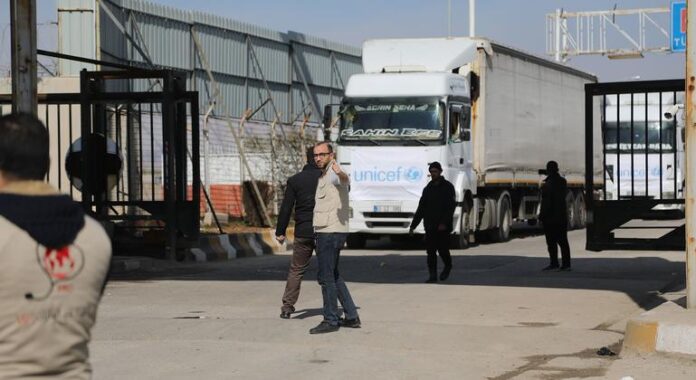
UN Spokesperson Stéphane Dujarric told journalists at a regular news briefing in New York that aid trucks from Türkiye to Idlib via Bab Al-Hawa are continuing to get through with vital assistance to communities in need.

“Yesterday, 43 trucks carrying more than 1,000 metric tonnes of food from the World Food Programme (WFP), as well as blankets, solar lamps and other items provided by the International Organization for Migration (IOM) crossed the border,” he said.

Since the start of the year, nearly 400 trucks have crossed from Türkiye into Syria – five times the number recorded during the same period last year.

Rehabilitation efforts underway

Across Syria, humanitarian organizations are working to rebuild infrastructure and restore essential services.

In northwest Syria, 350 homes have been rehabilitated since last month, while in Damascus and surrounding rural areas, more than 700 people have received support to repair their damaged homes.

Over the past two weeks, three water stations in Latakia have been restored, providing much-needed access to clean water.

“We and our partners continue to provide this assistance as security, logistical and funding conditions permit,” Mr. Dujarric added.

Despite these efforts, “the toll of destruction remains overwhelming”, he added.

In Aleppo, 34 facilities in former frontline areas have sustained severe damage or complete destruction, requiring urgent rehabilitation to restore healthcare, education, and other essential services.

Hostilities continue

While humanitarian assistance is reaching many communities, the fighting continues to take a toll on civilians and restrict aid access in various regions.

“In eastern Aleppo – including in the vicinity of the Tishreen Dam and the Al-Khafsa water pumping station – and in the south of the country, hostilities have resulted in casualties, as well as restrictions in humanitarian access and movements of people,” Mr. Dujarric said.

Returns top a million

Meanwhile, more than one million displaced Syrians have returned home since the fall of the Assad regime in early December last year, according to a recent update from the Office of the UN High Commissioner for Refugees (UNHCR).

The number includes approximately 292,150 Syrian refugees returning from neighbouring countries, including Türkiye, Lebanon, Jordan, Iraq and Egypt as of 20 February. An additional 829,490 internally displaced persons (IDPs) have also returned to their places of origin.

UNHCR continues to monitor voluntary returns, offering legal counselling, as well as support with transportation, particularly in Jordan.

Inside Syria, the agency is delivering protection and humanitarian assistance to refugees moving home and IDPs, including early recovery interventions.

“In view of the cold winter months and continued electricity shortages, distributions of core relief items and warm winter clothing, as well as urgent shelter repairs, such as new windows and doors, continued to be priority interventions,” UNHCR said.

Source link

Renovated hospital and preschool open in Lviv Oblast with EU bank support

0
Renovated hospital and preschool open in Lviv Oblast with EU bank support

EIB
  • Lviv’s St Luke’s Hospital has been upgraded to provide better medical care and a more resilient environment for patients, visitors and healthcare workers amid wartime challenges.
  • Preschool No.7 in Truskavets has been renovated to improve energy efficiency to provide a stable learning space for children and educators, including those displaced by the war.
  • These projects are part of the Ukraine Early Recovery Programme, aimed at rebuilding essential social infrastructure in Ukrainian communities.

As Ukraine marks three years of Russia’s full-scale war, the European Union continues to support the reconstruction of the country’s vital infrastructure. Two public buildings in Lviv Oblast – St Luke’s Hospital in Lviv and preschool No.7 “Dzvinochok” in Truskavets – have officially opened after renovations. Supported by the European Union and its financial arm, the European Investment Bank (EIB), these projects are part of the broader Ukraine Early Recovery Programme that funds the restoration of essential social infrastructure, including schools, hospitals, water and heating systems and social housing. As war-affected communities continue to face immense challenges, these investments help ensure access to critical services and create more resilient spaces.

Lviv’s St Luke’s Hospital, a key emergency and specialised care centre, has undergone a €940 000 renovation to improve services for its 50 000 annual patients. Home to western Ukraine’s largest burn unit, it plays a crucial role in treating severe injuries. The upgrades, in particular facade insulation and energy efficiency improvements, enhance the hospital’s resilience while creating a more comfortable space for patients, including internally displaced persons.

A €330 000 renovation of preschool No.7 “Dzvinochok” in Truskavets, Lviv Oblast, has created a more energy-efficient and welcoming learning space for pupils including for children displaced by the war and for staff. The project significantly increased the appeal of the building, while increasing its energy efficiency and reducing energy costs. With improved insulation the preschool is now more resilient and sustainable.

In Lviv Oblast, two facilities have already been renovated and six are undergoing reconstruction under the EIB recovery programmes, with a total investment of over €15 million. This includes six educational institutions and two medical facilities, improving access to education and healthcare in the region. 

EIB Vice-President Teresa Czerwińska, who is responsible for the Bank’s operations in Ukraine, said: “From day one of Russia’s full-scale war and throughout these three difficult years, the EIB has stood by Ukraine, providing vital support to help the country withstand, recover and rebuild. The reopening of renovated hospital and school in Lviv Oblast is a testament to this ongoing effort, bringing tangible improvements to people’s daily lives.”

EU Ambassador to Ukraine Katarína Mathernová said: “Every rebuilt hospital, school, and kindergarten sends a clear message: the EU stands firmly with Ukraine. Together with the EIB, we are not only helping to repair what has been damaged but also laying the foundations for a stronger, safer Ukraine that is ready to thrive as part of the EU.”

Deputy Prime Minister for Restoration of Ukraine – Minister for Development of Communities and Territories of Ukraine Oleksii Kuleba said: “Together with the EIB, EU Delegation and UNDP, we are modernising outdated and war-damaged infrastructure across Ukraine. Millions of Ukrainians already benefit from renovated schools, hospitals and kindergartens. We have recently launched the first phase of the Ukraine Recovery III programme, paving the way for additional impactful initiatives that will enhance communities and improve the lives of Ukrainians thanks to the EU support.”

Minister of Finance of Ukraine Sergii Marchenko said: “Rebuilding Ukraine’s infrastructure is crucial for strengthening resilience and improving living conditions for our people. With the support of the EU, we are delivering critical projects that enhance healthcare, education and public services. The three EIB-backed recovery programmes, worth €640 million, play a key role in this effort, helping communities rebuild and move forward despite ongoing challenges.”

Head of the Lviv Oblast Military Administration Maksym Kozytskyi said: “The EU bank’s investment in Lviv Oblast is strengthening our region’s infrastructure at a critical time. With many communities hosting large numbers of displaced people, improving healthcare, education and essential services is more important than ever. These projects help ensure that our cities and towns remain functional, resilient and able to meet the needs of all who live here.”

Mayor of Lviv Andriy Sadovyi said: “Restoring and strengthening our city’s infrastructure is essential to supporting both our residents and those who have found refuge here due to the war. With the support of the EU, we are rebuilding vital facilities to ensure Lviv remains a city of resilience, opportunity and hope. Today, we inaugurated a renovated hospital, with many other projects underway to improve daily life and build a stronger future for our community.”

Mayor of Truskavets Andriy Kulchynsky said: “We are grateful to the EU for this investment in our community. The renovation of Preschool No.7 creates a warm, modern and energy-efficient space where our children can learn and grow.”

UNDP Resident Representative to Ukraine Jaco Cilliers said: “Behind every rebuilt hospital and renovated school, we see renewed hope for Ukrainian families and communities. UNDP’s partnership with local authorities isn’t just about infrastructure – it’s about restoring essential services that affect people’s daily lives. Working alongside the EU and EIB, we’re helping transform technical recovery projects into tangible improvements for children seeking education, patients needing care and citizens rebuilding their futures.”

Background information

EIB in Ukraine 

The EIB Group has been supporting Ukraine’s resilience, economy and efforts to rebuild since the very first day of Russia’s full-scale invasion. In 2024, the Bank supported projects aimed at securing Ukraine’s energy supply, repairing critical infrastructure that has been damaged, and ensuring that essential services continue to be delivered across the country. This brings the total amount of aid the EIB has disbursed since the start of the war to over €2.2 billion.

EIB recovery programmes in Ukraine

Renovations of a hospital and kindergarten in Lviv Oblast were carried out under the Ukraine Early Recovery Programme (UERP), a €200 million multisectoral framework loan from the EIB. Overall, the Bank finances three recovery programmes, totalling €640 million, which are provided as framework loans to the government of Ukraine. Through these programmes, Ukrainian communities gain access to financial resources to restore essential social infrastructure, including schools, kindergartens, hospitals, housing, heating, and water systems. These EIB-backed programmes are further supported by €15 million in EU grants to facilitate implementation. The Ministry for Development of Communities and Territories of Ukraine, in cooperation with the Ministry of Finance, coordinates and oversees the programme implementation, while local authorities and self-governments are responsible for managing recovery sub-projects. The United Nations Development Programme (UNDP) in Ukraine provides technical assistance to local communities, supporting project implementation and ensuring independent monitoring for transparency and accountability. More information about the programmes is available here.

Source link

New action plan to lower energy costs for European citizens and businesses

0
New action plan to lower energy costs for European citizens and businesses

High energy costs are hurting EU citizens and businesses. The Affordable Energy Action Plan sets out concrete measures to lower costs, complete the Energy Union, attract investments, and be better prepared for potential energy crises, to save €260 billion annually on energy by 2040.

Source link

Commission presents plan for competitiveness and decarbonisation in the EU

0
New action plan to lower energy costs for European citizens and businesses

The new Clean Industrial Deal outlines concrete actions to turn decarbonisation into a driver of growth for European industries. It’s a bold business plan to support the competitiveness of EU industry, decarbonise faster and secure the future of manufacturing in Europe.

Source link

Success for polio campaign in Gaza while West Bank tensions continue

0
Success for polio campaign in Gaza while West Bank tensions continue

The campaign has been extended until Wednesday to ensure full coverage, UN Spokesperson Stéphane Dujarric told journalists at the regular news briefing in New York, citing UN humanitarian coordinators.  

As of Monday, the third day of the campaign, some 548,000 children had been inoculated, or 93 per cent of the target population.

Aid efforts continue

Humanitarian partners have been working to expand aid distribution since the fragile ceasefire began last month.  

According to latest news reports, the Israeli Government is seeking to extend the first stage of the agreement, threatening to resume fighting without progress in talks this week on phase two.  

The World Food Programme (WFP) has delivered over 30,000 metric tonnes of food, with more than 60 community kitchens across the Strip distributing nearly 10 million meals.

Similarly, the UN relief agency for Palestine refugees (UNRWA) has provided food parcels to two million people and flour to 1.3 million.

The UN Food and Agriculture Organization (FAO) also delivered animal feed in northern Gaza for the first time since the ceasefire, benefiting livestock-owning families in Gaza City and Deir al Balah.

Efforts are also underway by partner organizations to repair and reopen schools that had been used as shelters for displaced families in Rafah, Khan Younis, and Deir al Balah.

Biting cold claims lives

Despite the steady flow of aid, children in Gaza continue to suffer.

The head of Gaza’s Ministry of Health reported on Tuesday that six children died from the severe cold in recent days, bringing the total number of cold-related child deaths to 15, Mr. Dujarric said.

Ongoing military operations in the West Bank

In the West Bank the security situation remains volatile, with Israeli military operations in the north leading to further casualties, mass displacement and destruction of essential infrastructure.

A two-day military operation in Qabatiya, Jenin governorate, ended Monday, Mr. Dujarric said.

The operation involved bulldozers and exchanges of fire between Israeli forces and Palestinians, as well as detentions, disruption to electricity lines, water lines, and school closures.

“We once again warn that lethal, war-like tactics are being applied, raising concerns over use of force that exceeds law enforcement standards,” Mr. Dujarric emphasised.

Source link

Haiti: Gang violence displaces 6,000 people in one month

0
Haiti: Gang violence displaces 6,000 people in one month

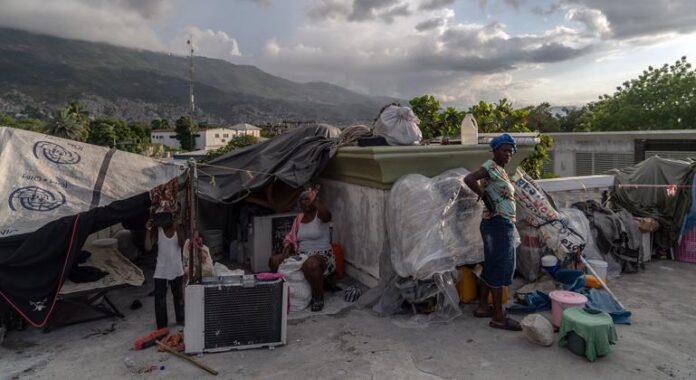
Since the end of January, a wave of extreme brutality has led to widespread loss of life and the displacement of over 6,000 people in the capital, Port-au-Prince.

“We are deeply alarmed and appalled by the unacceptable and inhumane intensity of violence in Haiti,” the Haiti Humanitarian Country Team, which is made up of UN agencies, national and international NGOs and donors, said in a statement.

Entire families were killed in their homes, while others, including children and babies, were shot dead as they tried to escape.

The killings follow a massacre last December, when an outbreak of violence in the commune of Cité Soleil in Port-au-Prince led to the execution of more than 200 people by the Wharf Jérémie gang.

UN condemns attacks on civilian population

According to the UN, the daily life of many Haitians is marked by violence, fear, exhaustion, hunger, disease and an uncertain future. Women, girls and children are increasingly at risk, particularly that of sexual violence.

By the end of 2024, violence had claimed the lives of at least 5,600 Haitians and displaced more than a million.

“We condemn in the strongest possible terms any attack against the civilian population and infrastructure, in this case the one that targeted the hospital of the State University of Haiti on February 13. These acts violate human rights and deprive the most vulnerable of essential vital services,” said Humanitarian Coordinator Ulrika Richardson.

On the ground, the humanitarian community is showing its determination to continue providing life-saving assistance to millions of children, women and men in vulnerable situations.

Beyond immediate humanitarian assistance, the agencies are also committed to coordinating efforts with development and peacebuilding actors, so that these collective efforts contribute to sustainable solutions that build community resilience.

“The mobilization actions of the international community in favour of Haiti will continue in order to guarantee the necessary funding to meet urgent needs and restore the dignity of the affected people,” the Humanitarian Country Team stressed.

The UN continues to support people who have been displaced by ongoing violence in Haiti.

Humanitarian response plan: Over $900 million to save Haitians on the brink

An appeal for $908 million to help some 3.9 million Haitians facing food insecurity, in a country where basic services are nearing collapse, has been launched by the UN.

The Office for the Coordination of Humanitarian Affairs (OCHA) released the 2025 humanitarian response plan on 19 February, which focuses on addressing acute needs caused by recent events, including armed violence, forced displacement, epidemics, and the consequences of natural disasters.

The funding is earmarked to tackle Haiti’s profound challenges, including mobile teams to help humanitarians deliver aid, protection against sexual exploitation and abuse, and programmes aimed at supporting the country’s long-term development.

Source link

UN rights chief decries substantial rise in death penalty executions

0
UN rights chief decries substantial rise in death penalty executions

“While a number of countries argue that it lies within their national sovereignty, from my perspective, it is incompatible with human dignity and the right to life,” the High Commissioner told Member States, during a discussion about the contribution of judiciaries to advancing human rights over the issue.

The punishment had “no place” in the 21st century, Mr. Turk, continued, noting that “the top executing countries over recent years” include Iran, Saudi Arabia, Somalia, and the United States.

Clear evidence

Latest UN data indicates that in 2023, 1,153 executions took place in 16 countries, representing a 31 per cent increase from 2022 and the highest number in the past eight years.

“That followed a 53 per cent increase in executions between 2021 and 2022,” the High Commissioner said, adding that the figures do not take into account China, “where there is a lack of transparent information and statistics on the death penalty. I call on the Chinese authorities to change this policy and join the trend towards abolition.”

Global South leading abolition

Although drug-related offences do not meet the “most serious crimes” justification for executions under international human rights law, they account for more than 40 per cent of death penalty executions – the highest number since 2016.

“This proportion has also risen sharply over the past two years, and almost all of these executions took place in the Islamic Republic of Iran,” Mr. Türk explained.

In more positive developments and despite a global rise in executions, a growing number of countries are abolishing the practice – spurred by the Global South.

Today, 113 countries have scrapped the death penalty completely. This includes Zimbabwe – where President Emmerson Mnangagwa approved a law ending executions at the end of 2024 – along with 26 other countries in Africa.

Key to abolition are judicial reform and discretion in commuting executions to lesser punishments, the High Commissioner insisted. Malawi and Malaysia have implemented such reforms, leading to fewer death sentences, Mr. Türk continued, as he called for greater efforts globally to ensure fair trials and avoid wrongful convictions.

He urged nations to move towards the complete abolition of the death penalty, advocate for moratoriums, and ensure that the death penalty is only used for the most serious crimes.

Zimbabwe focus

Also addressing the Council, Zimbabwe Attorney General Virginia Mabiza explained that the death penalty had been introduced by colonial rulers in the 18th century, enduring beyond the country’s independence in 1980.

She said that more than 56 per cent of the population wanted the death penalty to remain in the statute books when asked in 1999, while between 1980 and 2005, 105 convicted offenders were executed.

“Since then, no other executions have been carried out in Zimbabwe, and this can be attributed to policy decisions coupled with judicial discretion against capital punishment,” the Attorney General told the Council.

Ms. Mabiza noted that a wide range of offences had been formerly punishable by the death penalty including conspiracy and attempted robbery, but by 2013, only a murder conviction could lead to death for the convicted offender, in compliance with the UN General Assembly resolution on reducing the number of offences that attract the death penalty.

And pointing to several instances where the Supreme Court in Harare determined that the death penalty constituted a violation of a prisoner’s human rights, Ms. Mabiza said that sentences were “often commuted death sentences to life imprisonment”.

Source link