Sunday, March 22, 2026
Home Blog Page 58

World News in Brief: Fighting intensifies in Syria’s Aleppo and South Sudan’s Jonglei state, acute hunger in Niger

0
World News in Brief: Fighting intensifies in Syria’s Aleppo and South Sudan’s Jonglei state, acute hunger in Niger

Clashes between government troops and Kurdish forces have intensified in recent days and tens of thousands of people have been displaced. 

Representatives of the Office of the Secretary-General’s Special Envoy for Syria continue to be in contact with all concerned parties, UN Spokesperson Stéphane Dujarric told journalists in New York. 

Civilians killed, health facilities shuttered 

The UN aid coordination office (OCHA) reported that as of Wednesday, at least five civilians – including two women and a child – were reportedly killed and dozens more injured, according to local authorities. 

Several health facilities have also been impacted, including three hospitals, with some reportedly ceasing operations due to damage and attacks.  Movement restrictions have also been imposed on key roads. 

“Since yesterday morning, thousands of families have fled their homes, with many seeking shelter with host communities in Aleppo city and the various districts of Afrin,” said Mr. Dujarric. 

Authorities have announced the opening of two humanitarian corridors for civilians to evacuate.  

Humanitarians are mobilizing resources to respond to the growing displacement, he said. A UN team in Aleppo has carried out an assessment mission to Yad Al Aoun camp in Afrin to evaluate immediate needs and the capacity to respond. 

South Sudan: Violence in Jonglei state sparks displacement, disrupts aid operations  

A surge in conflict and airstrikes in Jonglei state, South Sudan, has forced people to flee their homes and disrupted humanitarian operations, OCHA said in its latest update. 

Since 29 December, renewed fighting between the army and opposition has displaced some 100,000 people, mainly women, children and older persons, local authorities report.  

Most are now sheltering in remote areas, while others have fled to neighbouring states, with authorities in Lakes state registering more than 11,000 arrivals. 

Aid efforts affected 

Meanwhile, several humanitarian organizations in northern Jonglei state have relocated their staff due to the insecurity and instructions by parties to evacuate the area.  

Those organizations that continue to operate with local staff, report growing challenges including in restocking health facilities and sustaining other essential activities.  

“The situation is further compounded by reports from several humanitarian organizations that their facilities and assets have been looted or confiscated by both parties,” OCHA said. 

This is disrupting provision of essential health services for thousands at a time when South Sudan continues to grapple with food insecurity, disease outbreaks and the impact of flooding last year. 

OCHA continues to engage with all parties to ensure that aid can reach people safely. 

Food security experts warn of acute hunger and disease in Niger 

More than 1.6 million young children in Niger are suffering from acute malnutrition – with many more at risk, UN-backed food insecurity experts said on Thursday. 

The warning comes in an assessment from the international food security monitoring platform, or IPC, which noted that at least 306,000 pregnant and breastfeeding women are also in danger. 

The security situation in Niger remains volatile following a military coup in July 2023, with jihadist insurgents still active. 

Although nutrition levels have improved since the last UN-backed assessment, there are still concerns for refugees living in Agadez, Diffa and Maradi regions. 

The worst conditions were reported in Diffa region that borders Chad and in Maradi region close to Nigeria, between August and November last year. 

While the situation is expected to improve between now and April – marked by fewer cases of diarrhoea, malaria and better food availability – conditions are expected to deteriorate again with the onset of the lean and rainy season in May. 

Source link

Aid continues despite winter hardship in Gaza and West Bank, UN says

0
Aid continues despite winter hardship in Gaza and West Bank, UN says

That’s according to UN Spokesperson Stéphane Dujarric, briefing journalists in New York on Thursday.

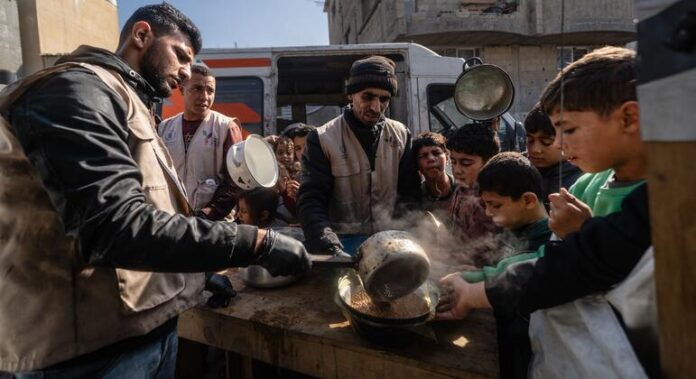
Citing the UN aid coordination office, OCHA, Mr. Dujarric said humanitarian teams are continuing to support the most vulnerable families in Gaza “despite impediments” and the cumulative impact of two years of conflict between Israeli forces and Hamas militants.

“Over the past days, one of our partners distributed 7,000 dignity kits, more than 5,600 dignified family hygiene kits and 1.3 million bars of soap to some 200,000 people,” he said, stressing that assistance is reaching communities in both the north and south of the devastated Strip.

Just trying to survive

Emergency shelter support remains a priority as temperatures drop.

Humanitarian partners have reached more than 16,000 households across Gaza with tents, tarpaulins and other essential materials, including kits to weatherproof and reinforce makeshift shelters. “These are people trying to survive winter in extremely fragile conditions,” Mr. Dujarric noted.

Winterisation assistance has also included the distribution of thousands of blankets, mattresses and bedding kits to improve sleeping conditions, alongside kitchen sets and clothing assistance for hundreds of households. 

At the same time, water trucking operations are continuing across the territory. “Thirty-six partners are distributing more than 21,500 cubic metres of fresh water every day to over 2,300 collection points,” he said.

Education efforts, while constrained, are also progressing. More than 420 temporary learning spaces are now operating across Gaza, serving over 230,000 students with the support of some 5,500 teachers. 

Critical to scale up

Mr. Dujarric underscored that scaling up remains “a critical priority” but depends on the entry of essential supplies that are still being denied. Even so, renovation work in public schools continues, with new classrooms in Gaza City now allowing more than 1,800 children to return to learning.

On health, Mr. Dujarric said the World Health Organization (WHO) recently facilitated the evacuation of 18 patients and 36 companions for medical treatment outside Gaza. “These medical evacuations remain absolutely essential,” he added.

West Bank demolitions continue

Turning to the West Bank, OCHA reports that severe winter weather has damaged or destroyed dozens of tents and makeshift shelters in Bedouin and herding communities. 

The UN is also warning of continued demolitions of Palestinian-owned structures by Israeli authorities for lack of permits, with 50 structures demolished over the past two weeks.

“Our message is simple,” Mr. Dujarric said. “Across Gaza and the West Bank, the UN and its partners are doing everything possible to keep assistance going for people in need, despite extremely difficult conditions.”

Source link

LZ experiment sets new record in the hunt for dark matter, glimpses neutrinos from the sun’s core

0


With contributions from Brown faculty and students, the LUX-ZEPLIN experiment analyzed the largest dataset ever collected by a

Source link

Drones, fear and exhaustion: The daily reality of providing aid to Ukraine

0
Drones, fear and exhaustion: The daily reality of providing aid to Ukraine

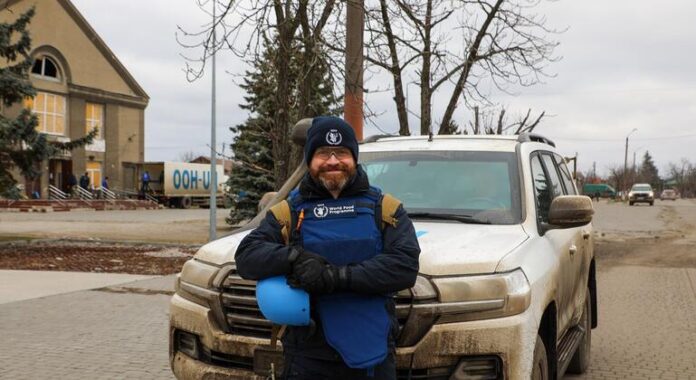
For frontline workers like Oleg Kemin from the UN World Food Programme (WFP), this involves travelling deep into disputed territory along the 1,000-kilometre contact line separating Ukraine from Russia, where attack drones are a deadly menace.

In an exclusive interview with UN News, Oleg describes his work as a security officer and the challenges he faces, trying to deliver food aid to vulnerable communities. 

There’s little respite even away from the front, he notes, with cities including the capital Kyiv shelled repeatedly and pitched into darkness – as was the case just before we spoke to him.

His conversation with Daniel Johnson has been edited for length and clarity:

Oleg Kemin: “Every night like this, with the shelling attacks, it’s quite difficult for us; the energy infrastructure of Ukraine is under fire, so each such attack can mean new blackouts all across the country. Also, there are new victims which creates additional tensions.

Let’s say that people who are spending sleepless nights in the shelters cannot be as productive as usual. As a Security Operations Officer for the UN, my job is to track those constant air raid alerts, trying to keep our staff safe and warning them about the alerts.

UN News: How do you cope with the constant threat of attack?

Oleg Kemin: Next month it will be four years since the war started. I still remember the first attacks, I still remember the first air raid alert and it was very scary. It’s impossible to get used to it, especially when you can see the damage and destruction, but people are somehow getting used to everything. 

But from time to time, when you’ve been at work and you are tired, you do not hear the air raid alert on your phone app, or the air raid siren in the street. Other times you’re waking up with the first explosion and it’s impossible to move to the shelter, because there is already an attack happening. 

You create mechanisms – not to cope – but to understand the situation more clearly, and you follow emergency procedures. For example, if the attack is over, should we start the headcount and assess needs? 

All across the country, people who are working in the energy companies and the water companies are doing their best to maintain normal life as much as possible, to restore electricity. In the capital, we have more opportunities to make repairs very quickly, but in some cities – even the left bank of Kyiv – was without electricity for quite a long time.

UN News: Where are needs greatest in Ukraine today?

Oleg Kemin: Some of the most vulnerable communities are in Pokrovsk, Kupyansk, Konstantynivka and Dobropillya – they’re all in the news today. We used to send aid convoys to these locations. It’s really sad to see with the gradual moving of the frontline, how life starts to escape from these cities. 

On your first trip it’s a normal city, but then the shops start to close, more building become damaged and there are fewer people on the streets. On the final mission, you see only an empty and closed city and people who have no place else to go.

UN News: How are aid teams protecting themselves from drone attacks?

Oleg Kemin: At the moment in frontline areas, there is a high presence of first-person view (remote-controlled) drones. They are relatively small and usually each of them is directed by an operator. When any of our humanitarian convoys are moving toward such a zone, we inform both sides to the conflict of their GPS coordinates using the standard Humanitarian Notification Systems (HNS), so they can safely reach their destination.

Here is the tomb of my husband, of my kids, I have nowhere else to go; the only thing I can do is to look after their tombs

But that only applies to UN vehicles; the rest of the civilian and military vehicles in the convoy can be vulnerable, so to deter drones, the Ukrainian armed forces build corridors of nets mounted on pylons either side of the road for 10 to 15 kilometres. 

The small drones don’t have enough velocity to penetrate through the netting, so they get stuck in it, and that can offer some protection. Let’s say it’s the very, very last hope, but at least it exists. In such a corridor, you feel safer, because there is at least some layer of protection around your vehicle.

Of course, wars are constantly developing and there are already ways of penetrating these nets, or drones look for gaps in the netting, especially in the autumn and winter when strong winds can rip the canopy. This is a double risk because if the net wraps around a wheel, it will stop the vehicle and incapacitate it.

A WFP vehicle passes under drone-protection nets in Kherson, Ukraine

UN News: What can you tell us about the people who need WFP’s help? 

Oleg Kemin: Last summer, we went on missions to remote communities in Kharkiv region (in northeast Ukraine, close to the Russian border). There are villages we assessed which are impossible to reach now, because it’s a very active combat zone, but people are still living there.

In one of those villages, when I had the opportunity to ask one of inhabitants, an elderly  woman, why she was not leaving the village and she said, ‘Here is the tomb of my husband, of my kids, I have nowhere else to go; the only thing I can do is to look after their tombs.’

It’s our land, it’s the house in which I grew up, it’s a house which was built by my great-grandparents, it’s my land and I don’t want to leave

People are still living in these communities, and to get to them it was impossible by truck, so we removed the back seats from our armoured vehicles, filled them to the very top with food kits, and we literally drove through the mud. 

Our partners’ vehicles got stuck, so we had to pull them out. People were living so close to the fighting – they were just 4.5 kilometres from the Russian border and drone activity from both sides was very high over there – so, sometimes with such communities, we bring them double the amount of food kits, because we never know if we will be able to reach them in the coming months.

UN News: What more can you tell us about the Ukrainian communities you’ve reached?

Oleg Kemin: It’s elderly people, pensioners especially. A few times people who are living there have been telling us, ‘It’s our land, it’s the house in which I grew up, it’s a house which was built by my great-grandparents, it’s my land and I don’t want to leave!’ 

Other times, we’ve met people who’ve been telling us that they had tried to go to European countries or western Ukraine, but because of their age, they were not able to find a job to make enough income to rent a house, so they had to return home to their war-contested communities. Also, for people with disabilities and their relatives, it’s not so easy for them to move from those communities. 

The State offers evacuation and assistance, but still a lot of people are planning to stay there. And they’re among those we are helping in the communities closest to the frontline where shops are closed and no one is bringing food. Further away, if markets are open, our donors provide a little cash-based help so people can choose what to add to their food basket.

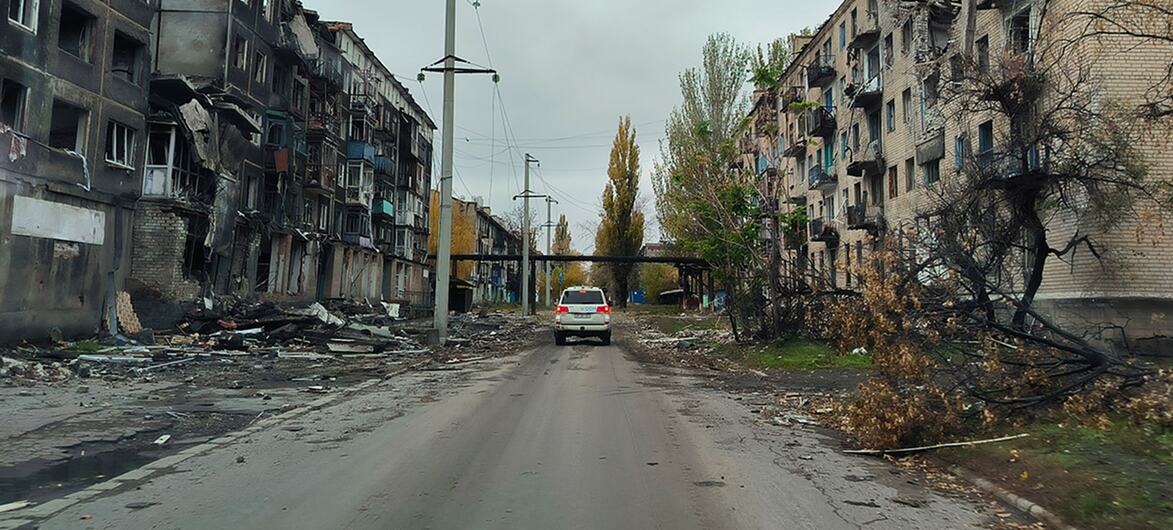
A white car drives down a damaged street in Ukraine, flanked by heavily bombed apartment buildings with broken windows and charred facades.

A UN vehicle passes through a destroyed town in Ukraine.

UN News: Another key part of WFP’s mission is making farmland safe again so that Ukrainians can work their land. What more can you tell us?

Oleg Kemin: Yes, we are involved in mine-clearing work. Ukraine is a huge agricultural country and a huge amount of land – up to 25 to 30 per cent – is polluted with the unexploded ordnance and explosive remnants of war. 

So, WFP works in demining to make land available for agricultural works again. As you know, grain from Ukraine helps to feed countries in Africa and almost all over the world, so one of the goals for us is to participate in that activity to make it possible to fight hunger, not only in Ukraine, but using, let’s say, Ukrainian grain also all around the globe.”

Source link

Scientology’s New Year 2026 Celebration Reviews Global Expansion and Social Programmes at Los Angeles’ Shrine Auditorium

0
Scientology’s New Year 2026 Celebration Reviews Global Expansion and Social Programmes at Los Angeles’ Shrine Auditorium

KINGNEWSWIRE // PRESS RELEASE // More than 6,500 guests attended the year-end event, which highlighted organisational developments, heritage restorations and the reach of education, prevention and volunteer programmes followed internationally—including by Scientology communities across Europe.

LOS ANGELES / BRUSSELS — 31 December 2025 — The Church of Scientology held its New Year’s Celebration 2026 at the Shrine Auditorium in Los Angeles, bringing together more than 6,500 attendees for an evening that combined a concert programme with a year-in-review presentation on developments across the Church’s international network during 2025.

The programme opened with live performances by international artists, then shifted to a review led by Scientology’s ecclesiastical leader Mr David Miscavige. In remarks quoted from the stage, Mr Miscavige framed the evening as a moment to measure results before turning the calendar, stating: “So while the rest of the planet may still be winding down its clocks—we’re here for something else entirely: to see what happens when a full year of Scientology accomplishments is unleashed all at once.”

The year-end review focused on several themes that the Church presented as defining the past year: growth in digital access and online learning; expansion and planning of new facilities; preservation of sites associated with Scientology founder L. Ron Hubbard; and a selection of social programmes applying Mr Hubbard’s methodologies to issues such as drug prevention, literacy and values education.

Digital access and online learning

A significant portion of the presentation centred on the Church’s digital platforms and learning tools. The event highlighted Scientology Network, stating that viewership has grown to 11 times its level since the network’s launch and noting more than 170 awards for creative and technical excellence. The presentation showed that over one million students have enrolled in online courses, presenting those figures as part of a wider effort to make introductory materials available across languages and time zones.

For European audiences, these digital metrics are often viewed as a practical indicator of how international religious movements are adapting to changing media habits—expanding beyond in-person events to formats that can be accessed from any location, including across the continent.

Facilities and heritage: “Ideal Org” development and landmark restorations

The review also returned to the Church’s ongoing programme of facility development—often referred to as “Ideal Orgs”—highlighting openings and planned projects presented as strengthening local capacity for religious services and community engagement. One of the featured openings was the Grand Opening of the Church of Scientology in South Africa’s Eastern Cape, a 10-storey church serving Nelson Mandela Bay.

The programme also included an announcement regarding a forthcoming Ideal Church in San Juan, Puerto Rico, the first of its kind in the Caribbean and expected to open in the coming months.

Alongside these developments, the International Hubbard Ecclesiastical League of Pastors (I HELP) and Scientology Missions International (SMI) continued to expand Dianetics and Scientology introductory services through a growing network of Missions. In Valencia, Spain, the city’s Ideal Scientology Mission sustained delivery of religious services while supporting community initiatives through nearly 200 volunteers involved in United for Human Rights, The Way to Happiness and Drug-Free World. The Mission’s Volunteer Minister response was also highlighted for its role during Spain’s deadliest floods of the century, with Valencia’s Civil Guard recognising the Mission for strengthening the city’s social foundation.

The year also included a sequence of ribbon-cutting ceremonies reflecting broader Mission growth, with new European Ideal Missions opening in Plzeň (Czech Republic) and Budapest (Hungary), as well as additional openings in the United States, including Montrose (north of Los Angeles), San Jose and Riverpark near Sacramento—followed by Lakeway, Texas, which closed out the year’s schedule of openings.

Alongside new facilities, the presentation underscored a parallel emphasis on preservation—particularly sites tied to key moments in the development of Dianetics and Scientology. The Church highlighted the opening of three new L. Ron Hubbard Landmark Sites during 2025, presented as restored locations with historical significance to the movement:

These restorations are more than symbolic markers they are public-facing heritage sites—part of a broader effort to preserve buildings associated with major milestones, while making them accessible to visitors and members.

Beyond organisational and heritage developments, the year-end review placed substantial emphasis on social initiatives associated with the Association for Better Living and Education (ABLE) and on professional networks described as applying Hubbard’s administrative methods in civic and commercial contexts.

Among the examples highlighted was a youth-focused Narconon facility in Sonora, Mexico, referred to as “Narconon Jóvenes”, presented as addressing addiction among teenagers. The programme also cited an example from Kenya connected to The Way to Happiness, with reductions in school drug use and lower reoffending rates in a community initiative led by former inmates.

Another case study spotlighted a Sri Lankan educator adopting Applied Scholastics study methods, with classroom gains, teacher training and subsequent discussions aimed at broader adoption across the country’s schools, as presented in the Church’s New Year 2026 year-end event.

The review additionally referenced examples linked to the World Institute of Scientology Enterprises (WISE), including European-based business and professional training stories presented as applications of administrative and organisational methods in everyday settings.

European context: visibility in Brussels and across the continent

Although the New Year event took place in the United States, the Church’s year-end review is followed by Scientology communities internationally, including across Europe. Scientology’s footprint in the continent scores more than 140 churches and missions (plus thousands of local communities and social betterment groups in at least 27 European nations. Worldwide, Scientology operates through more than 11,000 churches, missions, related organisations and affiliated groups in over 165 countries.

In Brussels, the Churches of Scientology for Europe place of worship and community building sits at Boulevard de Waterloo 103, 1000 Brussels, a European hub for religious services, information and engagement with visitors from across the continent.

Commenting on the value of year-end reflection in a European civic context, Ivan Arjona-Pelado—Representative of the Church of Scientology to the EU, OSCE, Council of Europe and the UN—said:

“At the start of a new year, Europeans traditionally look to what strengthens social cohesion—education, prevention and respect for human dignity. What matters most is sustained civic responsibility: people choosing, day after day, to help their neighbours and uphold fundamental rights in everyday life without having to ask the other if he/she is from a religion or another or from none.”

As presented during the evening, the New Year 2026 celebration was framed as both a cultural event and a structured review of priorities for 2026, with the Church pointing to continued development in digital access, facilities, heritage preservation and the community programmes highlighted in the year-in-review.

The Church of Scientology is a contemporary world religion founded by L. Ron Hubbard in the early 1950s. In Europe, Scientology churches, missions, groups and members are present across the continent and support community initiatives focused on education, prevention and community betterment, alongside religious services for Scientologists. The Church recognition as a charitable and bona fide religion continues to grow in a number of jurisdictions, reflecting ongoing engagement with civic life, humanitarian programmes and education initiatives.

Source link

Brigitte Bardot, Film Icon and Activist, Dies at 91

0
Brigitte Bardot, Film Icon and Activist, Dies at 91

Brigitte Bardot—the French screen legend whose early stardom helped define a new era of European cinema, and whose later life became inseparable from animal-rights campaigning—has died aged 91. She passed away on 28 December 2025 at her home, La Madrague, in Saint-Tropez, according to reporting by Le Monde and Euronews. A funeral service in the town on 7 January 2026 drew mourners and renewed debate about a legacy that mixed cultural liberation, fierce advocacy, and lasting controversy, as described by Euronews and Le Monde.

From post-war France to a global symbol

Bardot rose to international fame in the 1950s, becoming one of France’s most recognisable exports at a moment when European culture was breaking with old codes. On screen, she embodied a new frankness—youthful, modern, and unafraid of scandal—that many admirers saw as part of a wider shift in attitudes to women, desire, and celebrity.

Saint-Tropez, long intertwined with her public image, was not just a backdrop to that mythology but also her chosen refuge. The same Mediterranean light that drew photographers and filmmakers eventually became the private horizon of her later years—far from film sets, but never far from headlines. (For a lighter internal reference to the region’s enduring pull, see: European Beach Escapes: the best coastal destinations.)

The activist years: a life re-anchored around animals

In 1973, Bardot stepped away from acting. What followed was not a quiet retirement but a second public life built around animal welfare. Over decades, she became one of Europe’s most high-profile advocates, using her fame to pressure governments, mobilise donors, and keep issues such as cruelty, hunting, and industrial practices in the public conversation.

Her flagship vehicle became the Fondation Brigitte Bardot, which campaigns and funds animal protection work in France and internationally. The foundation is also listed among the members of Eurogroup for Animals, the Brussels-based umbrella network advocating for animal welfare at EU level.

Supporters say her campaigning helped normalise animal protection as a mainstream political concern rather than a niche cause. Critics argue her methods could be confrontational, and that her celebrity sometimes overshadowed the wider movement. Yet even opponents have acknowledged the force of her visibility: when Bardot spoke about animals, France listened—sometimes with admiration, sometimes with fatigue, often with argument.

A complicated public voice

Any account of Bardot’s life must also confront the disputes that followed her beyond cinema. In later decades, her political positions—and repeated legal convictions in France related to discriminatory or hateful statements—deeply polarised public opinion, a complexity noted in major retrospectives including Le Monde and funeral coverage such as Euronews.

This tension—between the causes she championed and the rhetoric that drew condemnation—has shaped the way France marks her death: with recognition of cultural impact and campaigning, alongside a refusal by many to separate legacy from accountability.

Saint-Tropez says goodbye

On 7 January, Saint-Tropez gathered for her funeral service at the Notre-Dame-de-l’Assomption church, before her burial locally, according to Euronews. The ceremony, reported as private in tone but closely watched, brought together those who knew her personally, figures from French public life, and residents who remembered how deeply her name became woven into the town’s modern identity.

In the end, Bardot’s story remains distinctly European: a post-war rise to stardom, an enduring conversation about women and fame, and a civic landscape where cultural icons are remembered not only for what they created, but also for what they defended—and what they damaged.

Source link

Syria: Aleppo fighting leaves civilians dead, displaces thousands

0
Syria: Aleppo fighting leaves civilians dead, displaces thousands

Clashes resumed on Tuesday between General Security Forces of the transition Government and the mainly Kurdish Syrian Democratic Forces (SDF), following a brief pause after the ceasefire announced in late December 2025.

Initial fighting near the Alleramoon roundabout – on the historic city’s western outskirts – spread to the predominantly Kurdish neighbourhoods of Ash-Sheikh Maqsoud and Ashrafiyeh, with shelling also affecting surrounding government-controlled areas.

Significant damage has been reported to homes and public infrastructure, including healthcare. At least three major hospitals have ceased operations, while flights in and out of Aleppo International Airport have also been suspended since Tuesday.

Protect civilians, de-escalate now

The Secretary-General is alarmed by reports of civilian deaths and injuries after hostilities re-escalated earlier this week in the city’s northeastern neighbourhoods, UN Spokesperson Stéphane Dujarric told reporters in New York on Wednesday.

The United Nations reiterates that all parties have a clear obligation, under international humanitarian law, to protect civilians and civilian infrastructure,” he said, urging all actors to “immediately de-escalate, exercise maximum restraint, and take all measures to prevent further harm to civilians.”

The UN Office for the Coordination of Humanitarian Affairs (OCHA) estimates that approximately 30,000 people have been displaced, with more than 2,000 families relocating to Afrin district and around 1,100 people sheltering in nine collective centres inside Aleppo.

Thousands more fled Ashrafiyeh and Ash-Sheikh Maqsoud on Wednesday, seeking refuge with host communities.

Local authorities have designated some places of worship as temporary shelters, opened humanitarian corridors to allow civilians to evacuate, and mobilized public buses to transport displaced families.

Drone footage of the town of Latamneh in Hama, which was completely destroyed during the conflict. Mines and unexploded ordnance continue to litter the area, posing deadly risk for civilians, especially children.

Push to revive March agreement

The Secretary-General called on all parties to demonstrate flexibility and goodwill on both the military and political tracks and to resume negotiations to fully implement the 10 March agreement between the two sides.

Asked what concrete steps were needed, Mr. Dujarric said an agreement between the Government and the SDF on placing security forces under a unified national command would be a key measure, stressing the need for a state in which “all Syrians…would feel safe and protected.”

The latest violence comes amid an uneasy transition following the fall of the Assad Government in December 2024.

Since then, flare-ups of violence in several parts of the country – including renewed sectarian attacks targeting predominantly Alawite coastal areas and Druze communities in Sweida and other governorates – have triggered new displacement and deepened fears among Syrians still recovering from nearly 14 years of war.

Worsening humanitarian conditions

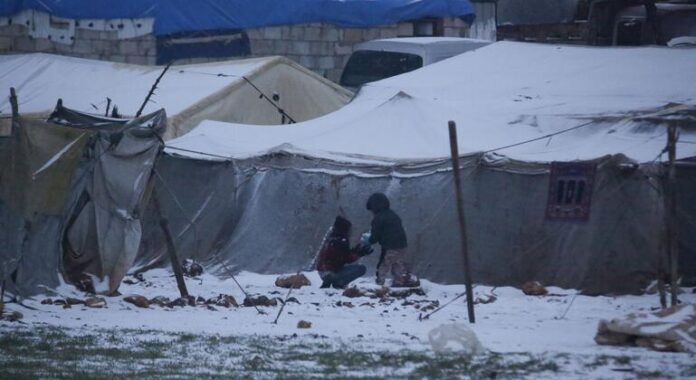
Millions of Syrians remain dependent on aid, with many forced to spend another winter in tents or damaged homes.

According to OCHA, heavy snowstorms that hit northern Syria at the end of December affected around 158,000 internally displaced people across Aleppo, Idleb and Al-Hasakeh governorates.

Two infants died from extreme cold in displacement camps in northern Idlib, while thousands of shelters were damaged, leaving families exposed to freezing temperatures.

OCHA cautioned that without rapid scale-up, health risks – particularly for children, older people and those with chronic illnesses – will continue to rise, even as insecurity further constrains access and aid delivery.

Source link

Trends and projections: greenhouse gas emissions largely on track to 2030 targets

0

The European Union remains largely on track to achieve its 2030 targets to reduce net greenhouse gas emissions, according to the latest annual check-up on EU progress to its energy and climate targets published by the European Environment Agency today. Total net greenhouse gas emissions in the EU fell by a further 2.5% in 2024, […]

Source link

Venezuela’s people must be heard, insists UN human rights chief

0
Venezuela’s people must be heard, insists UN human rights chief

The US action made “all States less safe around the world”, said Ravina Shamdasani, spokesperson for the High Commissioner.

Speaking to journalists in Geneva, Ms. Shamdasani rejected the US justification for its intervention on the grounds of the Venezuelan Government’s “longstanding and appalling” human rights record. 

“Accountability for human rights violations cannot be achieved by unilateral military intervention in violation of international law,” she insisted.

“Far from being a victory for human rights, this military intervention, which is in contravention of Venezuelan sovereignty and the UN Charter, damages the architecture of international security…And this is a point that the Secretary-General has also made.”

Ms. Shamdasani explained the High Commissioner’s position that the military operation “violates the fundamental principle of international law (and) the UN Charter, which states that States must not threaten or use force against the territorial integrity or political independence of any State”.

Calling out abuse

The UN human rights office, OHCHR, was expelled from Venezuela in February 2024, following its consistent reporting on the deteriorating situation there. Independent probes commissioned by the Human Rights Council have also detailed grave and ongoing abuses against opponents of the country’s ruling party.

“The people of Venezuela deserve accountability through a fair victim-centred process,” Ms. Shamdasani said, adding that the rights of the Venezuelan people “have been violated for too long”. 

The OHCHR spokesperson expressed concerns that the instability and further militarization in the country in response to the US intervention might make the situation worse.

A state of emergency was declared on Saturday that restricts the free movement of people, the seizure of property necessary for national defence and the suspension of the right to assembly and to protest, Ms. Shamdasani noted. “We’re particularly concerned, given the record that the Government has in suppressing free speech, protest, freedom of assembly, using the pretext of national security.”

“The High Commissioner calls on the US and the Venezuelan authorities, as well as the international community, to ensure full respect for international law, including human rights,” she said, adding that the future of Venezuela “must be determined by the Venezuelan people alone, with full respect for their human rights, including the right to self-determination, and sovereignty over their lives and their resources”.

One in four Venezuelans need aid

Beyond the political crisis in Venezuela, almost eight million people, or one in four people, need humanitarian assistance today, after years of economic decline, repression and instability.

The UN aid coordination office, OCHA, said that a response plan remains in place requiring approximately $600 million.

“It’s very dramatic what has happened on the political level in Venezuela. But for the broad mass of people, their humanitarian day-to-day situation hasn’t changed that radically,” said OCHA spokesperson Jens Laerke.

“So, the situation as it was immediately before [the US intervention] has continued until this day and that is the basis for our work on the humanitarian side going forward this year.”

Out of the eight million identified as needing assistance, 900,000 have “very high” multisectoral needs including food, nutrition, education, health services; “basically all the things that the state of Venezuela has not been able to provide to its citizens for a number of years”, Mr. Laerke said.

The OCHA spokesperson added that Venezuela was one of the least-funded aid operations globally. Despite this obstacle, the UN had managed to reach some two million people with aid in 2025.

Refugees in flux

The situation remains tense for the millions of refugees living outside Venezuela, too, although for the moment there has been no major displacement across the country’s borders linked to Saturday’s US military operation, according to the UN refugee agency, UNHCR.

“Of course, we’re closely monitoring the situation and the border, cross-border movement and then we stand together with other UN agency and humanitarian partners to support the emergency relief effort and to protect the displace people in need as required,” said UNHCR spokesperson Eujin Byun, also in Geneva.

The agency says that nearly 7.9 million people have left Venezuela in search of protection and a better life. The majority – more than 6.9 million people – have found shelter in in Latin American and Caribbean countries. 

UNHCR works in the Americas and beyond to support the inclusion of Venezuelans in the societies that have welcomed them and find solutions, create stability and foster growth and development in these communities. 

Source link

10 Best Compliance Tools Teams Rely On During SOC 2 Audits in 2026

0

I’ve watched too many growing tech companies stumble through SOC 2 audits the hard way. Teams cobble together Source link

Source link