For many workers, defending human rights is not just a job, but a calling. As he noted, many “work out of a deep sense of service to others, and a desire to make a meaningful impact.”
From conflict zones to post-war societies, they provide crucial support to detainees and victims of torture, deliver emergency relief, document violations and expose the root causes of conflict.
“Human rights defenders are key to conflict resolution. They are the messengers of dignity, justice and peace,” said Mr. Türk.
However, despite their invaluable work, human rights defenders face “unacceptably high” threats, with some attacks amounting to war crimes.
Mounting risks
For journalists and humanitarian workers, being killed, kidnapped, harassed or detained has become an increasingly likely reality.
Women are particularly vulnerable, often targeted by sexual violence, online threats and risks to their family.
Mr. Türk stressed the importance of ensuring defenders’ safety, arguing that it is both a legal imperative and a vital step toward achieving justice and peace.
A global pushback
Mr. Türk cited the criminalisation of dissent, the forceful suppression of peaceful protests and restrictions on non-governmental organisations as alarming developments.
These events often force human rights defenders to operate in exile, exposing them to new forms of persecution and repression, including online surveillance.
“The full impact of digital technologies on the work and safety of human rights defenders is not yet known,” he warned, underlining the urgency of addressing these modern threats.
Concrete action needed
Mr. Türk urged governments to take decisive action, including establishing well-resourced national protection systems and supporting civil society networks that provide cross-border protection. He also noted the importance of reacting swiftly to emerging threats.
“The risks of this work must not be shouldered by the defenders alone,” he said, emphasising the need to support NGOs at risk and to push back against the labelling of defenders as terrorists, foreign agents or traitors.
“We must do everything we can to make sure [defenders] can operate safely wherever they are,” he concluded.
DISCLAIMER: Information and opinions reproduced in the articles are the ones of those stating them and it is their own responsibility. Publication in The European Times does not automatically means endorsement of the view, but the right to express it.
DISCLAIMER TRANSLATIONS: All articles in this site are published in English. The translated versions are done through an automated process known as neural translations. If in doubt, always refer to the original article. Thank you for understanding.
Henry Rodgers teaches English language at “La Sapienza” University, Rome and has published extensively on the discrimination issue.
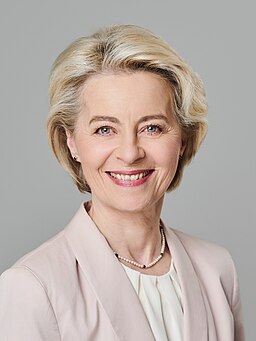
The Asso. Cel. L open letter of 14 January 2025 to President of the European Commission, Ursula von der Leyen, is the most recent of many representations to help end the decades-long discrimination against foreign-language lecturers (Lettori) in Italian universities. It is a discrimination which persists in defiance of 4 clear-cut sentences of the Court of Justice of the European Union (CJEU), the first of which was handed down in1989.
My own active involvement in Lettori affairs dates back to 1996 and to my lobbying of Irish politicians to ask the Commission to open infringement proceedings against Italy for non-implementation of the Allué case law of the CJEU. Pilar Allué, a Spanish national, had won the first of her two victories before the Court in 1989. A misreading of that ruling by Italy caused her to have recourse to the Court again. In 1993 the Court ruled in her favour for the second time. Essentially the breach of the Treaty for which the Commission prosecuted Italy in a subsequent infringement case(C-212/99), and a follow-on enforcement case(C-119/04), and for which the Commission will again prosecute Italy in a case pending before the Court(C-519/23), equates to non-implementation of the 1993 Allué verdict.
As part of my lobbying of Irish politicians, I had been in contact from Rome with the Joint Committee on European Affairs of Dáil Éireann, the Irish parliament. Back in November 1996, I received an invitation from the Clerk of the Committee to come to Dublin and testify.
The Clerk accommodated me in an anteroom, where I awaited my turn to testify. In the anteroom I could follow the proceedings of the Committee on close-circuit television. At that moment I had a strong attack of stage fright. Among the Committee members in the chamber that day were some very prominent figures in Irish politics. I reflected that I had been watching these figures on television all my life and that in a few minutes time I would have to leave the anteroom and speak before them.
Fortunately, the panic passed. I must have done reasonably well, as the Committee unanimously resolved to write to the Commissioner for Social Affairs, calling on him to open infringement proceedings against Italy on the grounds of the discriminatory treatment of the Lettori, about which I had testified.
One story of my subsequent dealings with the Joint Committee is revealing of Italy’s reluctance to debate the Lettori question in the public domain. Then Chairman of the Committee, Bernard Durkin TD, was known as a very fair-minded, plain-speaking politician. He gruffly informed me that the Committee had heard my side, the Lettori side, of the story. Now he planned to hear the Italian side.
To this end he issued an invitation to the Italian Ambassador to Ireland to testify. I was to be invited also, with a right to respond to the Ambassador’s testimony. I looked forward to the occasion, but it never materialized. The Ambassador excused himself from appearing before the Joint Committee on the grounds that he had little knowledge of EU law.
Neither, at that point, had I much knowledge of EU law, and I was feeling the handicap. In Hodges Figgis, a bookshop immortalized in James Joyce’s Ulysses, there were many textbooks on EU law on the shelves. With no education in law to speak of, I was ill-equipped to evaluate their respective merits.
What warmed me to EU Law: Text, Cases, and Materials, by Prof. Paul Craig and Prof. Grainne De Burca, was Prof. De Burca’s dedication of the textbook: “Do mo mháthair agus i gcuimhne m’athar”. This is Gaelic, my grandmother’s first language. It was purely on the basis of my love for the language that I purchased the book.
I set myself to the study of EU law: Text, Cases, and Materials. I had no tests, no examinations to measure my progress. So, it was very gratifying when the co-authors, my teachers, cited an article I had written for the Irish Law Society Gazette on discrimination against Lettori in the infringement chapter of the textbook. The editor, with an evident liking for alliteration, had entitled the piece Lettori of the Law.
Lettori of the Law is an attempt at a legal history of the Lettori cases from 1989 to February 2022, the date of publication of the piece. The Court first found for Allué on 30 May 1989 in her reference for a preliminary ruling case against her employer, Università Degli Studi di Venezia. Her victory should have ended the discrimination against Lettori. Instead, it serves a marker, a starting point from which to measure the persistence and duration of the discrimination against our category. Year-by-year, with a sort of gallows humour, some of us gather to commemorate 30 May 1989, Pilar Allué Day, and the accretion of the discrimination against us.
As Lettori of the Law can be consulted online, there is no need to go into all of its detail here. Allué has long retired from her teaching post at Università Degli Studi di Venezia. She retired without ever receiving the compensation for discrimination to which her landmark victories before the CJEU should have entitled her. Her cases continue to feature in textbooks of EU law and, of course, in the Commission infringement cases against Italy for non-implementation of her jurisprudence.
One particular case in the Allué line of litigation to which I draw attention in my letter to President von der Leyen is the ruling in the Commission’s enforcement case against Italy: Case C-119/04. Of all the cases in the line of litigation, this case, tried before a Grand Chamber of 13 judges, was the one that attracted the most public attention. It is easy to understand why. The Commission had asked for the imposition of daily fines of €309, 750 on Italy for its discriminatory treatment of the Lettori. By the deadline specified in the reasoned opinion, Italy had not complied with the ruling in earlier infringement case, C-219/02.
Italy enacted a last-minute law under which provision was made for the payment of settlements to Lettori for the discriminatory treatment they had suffered. The Court’s acceptance of its conformity to EU law was somewhat lukewarm. In the wording used in the official English translation of the sentence, the judges observe that the law “cannot … be regarded as having provided an incorrect legal framework”. The language of the case was of course Italian. As one legal wit caustically put it: “in infringement cases the member states enjoy the privilege of being prosecuted in their own languages.”
As the last-minute Italian law was ruled to be compliant with EU law, just one outstanding question remained to be addressed. This was the question of whether the settlements provided for in the last-minute law had, in fact, been correctly made. This issue is taken up in paragraphs 43 and 45 of the 2006 ruling.
As I wrote in my letter to President von der Leyen, “over 18 years later, paragraphs 43 and 45 of that ruling still rankle with the Lettori and make for difficult reading.” Italy maintained that the correct settlements had been made. In paragraphs 43 and 45 of their ruling, the 13 judges of the Grand Chamber pointedly noted that the Commission depositions did not contain any information from the Lettori to contest this and hence declined to impose the requested daily fines.
These paragraphs highlight the grave injustice to complainants which can result from the confidentiality requirement of infringement proceeding. Had the Commission checked with the Lettori, we could easily have refuted Italy’s claim that the correct settlements had been made. But the confidentiality requirement precluded the Commission from revealing Italy’s evidence to us. I underline the moral in my letter to President von der Leyen: “Tragically, the rules of procedure in infringement cases prevailed over the justice the same proceedings are supposed to deliver.”
That the Commission went on to open further infringement proceedings against Italy is proof that it accepts that the correct settlements due to the Lettori under EU law had never been made. But this could easily have been proven in Case C-119/04 had the Commission consulted on the point with the Lettori and included their counterevidence in the depositions. Had the daily fines been imposed in 2006, the discrimination would have very soon ended.
Since the ruling in Case C-119/04, Italy has introduced 4 pieces of legislation to purportedly end the discrimination against Lettori. They are lengthy, of byzantine complexity, often inconsistent. The most troubling of them, the one with the most worrying implications for European citizenry, is the Gelmini Law of 2010, a retrospective law introduced to “authentically” interpret the Italian depositions in Case C-119/04 and in the process quash the scope for rulings favourable to Lettori. which the local Italian courts had been handing down in the immediate wake of that CJEU ruling. I deal with the Gelmini Law in great detail in my letter to President von der Leyen.
One of the most popular posts on the web site of Asso.CEL.L, an association I co-founded, is Harry Houdini and the Italian Lettori. The post is most probably popular because of the fact that Italy to date has shown an almost Houdini-like ability to escape the supposedly binding case law of the CJEU. This discourages. But there is a positive side to the analogy also.
E.L. Doctorow, in his novel Ragtime describes Harry Houdini as the last of the great mother lovers in history. So, it surprised people who knew him that Houdini did not mourn when his beloved mother died. There was a reason. With his supreme confidence in his own great gifts, his ability to escape any physical or spatial restriction, Houdini thought he could cross the line that divides this world from the next and get to his mother.
Along the way Houdini, like the Lettori, became a campaigner. And a very successful one too! He testified before the United States Congress and was influential in getting legislation passed curtailing the activities of fortune tellers, spiritualists, holders of seances etc. He had in vain enlisted their help in his attempt to get to his mother. Then he discovered they were frauds and wanted to expose them as such.
These then are some of the stories with which we try to hearten ourselves and find spirit to continue. As I mention in the conclusion of my letter, President von der Leyen is the Ultimate Guardian of the Treaties. We hope that in this role she will intervene to ensure that justice is finally done in the Lettori case.
The Copernicus Global Climate Highlights Report 2024, published today, confirms 2024 as the warmest year on record and the first to exceed 1.5°C above pre-industrial levels for the annual global average temperature. Last year was also the warmest for all continental regions, including Europe, except Antarctica and Australasia.
As also highlighted in the 2023 European State of the Climate Report and the European Climate Risk Assessment, the European continent has been warming twice as fast as the global average since the 1980s, becoming the fastest-warming continent on Earth. European land in the Arctic remains the fastest-warming region on Earth, and changes in atmospheric circulation are favouring more frequent summer heatwaves. Likewise, glaciers are melting and there are changes in the pattern of precipitation.
The overall frequency and severity of extreme weather events are increasing. Sea surface temperatures remained exceptionally high, with July to December 2024, being the second warmest on record for the time of year, after 2023.
The EU is committed to supporting global climate action and becoming climate-neutral by 2050. It has agreed on targets and legislation to reduce greenhouse gas emissions by at least 55% by 2030 and the Commission has already recommended a 90% net GHG emissions reduction target for 2040. The Commission published a Communication in April 2024 on how to effectively prepare the EU for climate risks and build greater climate resilience.
Copernicus, Europe’s eyes on Earth, is the Earth observation component of the European Union’s Space programme. Funded by the EU, Copernicus is a unique instrument that looks at our planet and its environment to benefit all European citizens.
Myles Smith, a 26-year-old singer-songwriter from Luton, England, has rapidly ascended the music industry, captivating audiences with his heartfelt lyrics and soulful melodies.
His journey from local open-mic nights to international recognition epitomizes the transformative power of talent and perseverance.
Early Life and Musical Beginnings of Myles Smith
Born on June 3, 1998, Smith’s musical inclinations were nurtured from a young age. By 12, he was performing covers of artists like Ed Sheeran, Marcus Mumford, and Chris Martin at local open-mic nights and parties, showcasing a burgeoning talent that resonated with diverse audiences.
Breakthrough and Viral Success
The global lockdowns of 2020 became a pivotal period for Smith. Turning to social media platforms, he began sharing acoustic covers on TikTok. His rendition of The Neighbourhood’s “Sweater Weather” went viral in 2022, amassing millions of views and significantly expanding his fanbase. This digital success caught the attention of major record labels, leading to a deal with Sony’s RCA label in 2023.
Achievements and Accolades
In May 2024, Smith released his breakout single, “Stargazing,” which peaked at number four on the UK Singles Chart and is now certified Platinum in the UK.
The track’s success was further amplified when it was included in former U.S. President Barack Obama’s summer playlist, introducing Smith to a global audience.
Smith’s accomplishments were recognized at the inaugural TikTok Awards on December 3, 2024, where he was honored as Breakthrough Artist of the Year. Shortly thereafter, he was announced as the winner of the prestigious BRITs Rising Star award for 2025, marking him as a leading figure among emerging artists.
Musical Style and Message
Smith’s music seamlessly blends folk, Americana, and pop influences, creating a sound that is both contemporary and timeless. His lyrics delve into themes of love, self-discovery, and resilience, often carrying messages of hope and connection. In interviews, Smith has expressed that music serves as his way of making sense of the world, aiming to help listeners feel understood and less alone.
Future Endeavors
Looking ahead, Smith is set to support Ed Sheeran on his European tour in 2025, an opportunity he describes as “insane,” considering Sheeran was one of his early inspirations. Additionally, his debut album is slated for release later this year, with industry insiders predicting that his soulful voice and poignant songwriting will establish him as a global icon.
Myles Smith’s trajectory from local performances to international acclaim underscores the dynamic nature of today’s music industry, where digital platforms can catapult talented individuals into the global spotlight. As he continues to inspire with his music and message, the world eagerly anticipates the next chapters of his unfolding story.
At the beginning of each year, UNICEF looks ahead to the risks that children are likely to face and suggests ways to reduce the potential harm. The latest report, Prospects for Children 2025: Building Resilient Systems for Children’s Futures, demands strengthening national systems that are designed to mitigate the impacts of crises on children and ensure they have access to the support they need.
Here is a breakdown of the main trends to look out for in 2025.
A doubling of children living in conflict zones
Intensifying armed conflict will continue to pose serious risks to children in 2025. Conflicts are also increasing in intensity and violence.
Over 473 million children — more than one in six globally — now live in areas affected by conflict, with the world experiencing the highest number of conflicts since World War II. And the percentage of the world’s children living in conflict zones has doubled — from around 10 per cent in the 1990s to almost 19 per cent today.
Amid growing geopolitical rivalries and the paralysis of multilateral institutions, both state and non-state actors appear increasingly willing to flout international laws designed to protect civilian populations, with attacks on civilian infrastructure like schools and hospitals becoming ever more common.
This unravelling of decades of efforts to safeguard civilians is taking a heavy toll on children. As well as the risks to their lives, children face displacement and the threat of starvation and disease. There are also substantial risks to their psychological wellbeing.
The multilateral system has struggled to respond effectively. A concerted and sustained effort is needed to reverse the losses of recent years.
Governments of developing countries are finding it increasingly difficult to fund key investments in children, thanks to slow growth, rising debt and inadequate tax revenues and development assistance.
Another important factor is the growing burden of sovereign debt. Nearly 400 million children live in countries in debt distress, and without major reforms this figure is set to rise. The cost of servicing this debt is squeezing out essential investments for children.
In 2025, we face crucial decisions about reforms to the framework of institutions, policies, rules and practices that govern the global financial system.
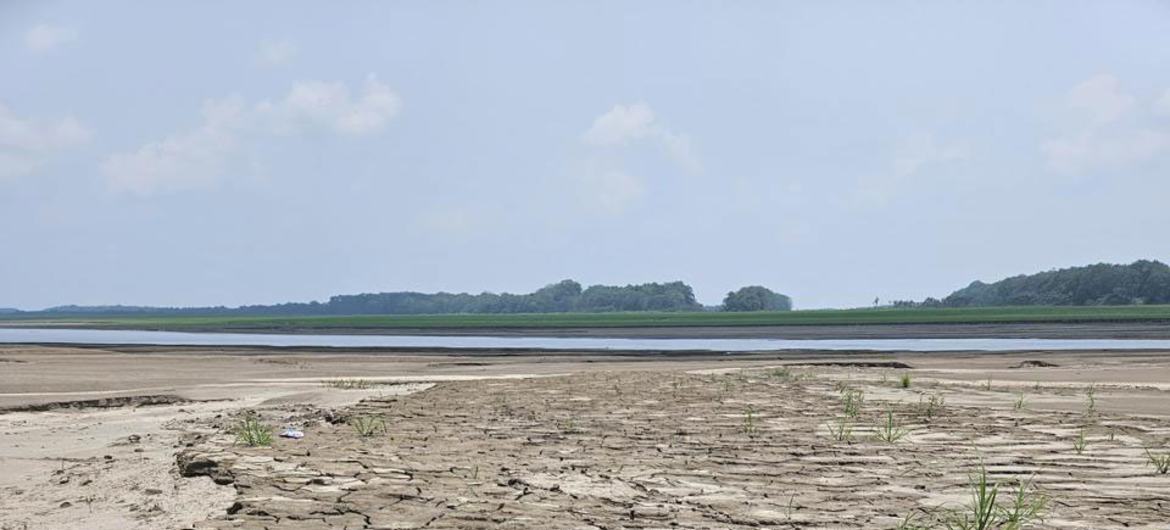
In Tabatinga -Amazonan State- in Brazil on October 2024.
The irreversible consequences of the climate crisis
Children are disproportionately impacted by climate change and the effects on their development, health, education and well-being can be lifelong and irreversible.
2025 presents crucial opportunities to make progress towards global climate goals. This means comprehensive and robust policymaking, adequate and equitable financing and investments, strong regulatory and accountability frameworks, and effective monitoring systems.
Improved access to digital services
Several digital trends are poised to shape our future in 2025 and beyond. Rapid advancements in emerging technologies will continue to shape all spheres of children’s lives from education to communication to participation in digital economy.
One key trend is the emergence of digital public infrastructure (DPI). DPI is a set of shared digital systems that can provide equitable access to public and private services. It allows large-scale delivery of digital public services, including for children, and is now being rapidly adopted around the world.
DPI has the potential to fundamentally shift how governments serve and engage with their citizens, including children. It can also be central to promoting rules driving development, inclusion, trust, innovation, and respect for human rights.
But persistent inequalities in digital access, particularly in least-developed countries, are a major barrier to ensuring DPI serves every child. There are issues, too, with ensuring data harmonization across systems and with guaranteeing adequate data protection and security.
Youth advocates at the 2023 G20 meeting (file)
Global governance under pressure
New and ongoing crises will continue to challenge the future of global governance.
In 2025, nations and institutions must address the critical question of whether the global multilateral framework will unify to form a cohesive response to our shared challenges or fragment further, risking a loss of collective action.
The direction we take will deeply impact efforts to protect children’s rights and well-being across the world.
Rights of children must remain at the forefront
The conclusion drawn by the report’s authors is the critical importance of adopting and promoting systems to improve the lives and prospects of children.
These systems must embody principles of inclusion, equity, and accountability, ensuring that the rights and needs of children remain at the forefront. And, just as importantly, they must not only address current global challenges but also anticipate and prepare for what lies ahead.
Alaska Educator Sues Psychiatric Facility After Being Forcibly Committed for Expressing Her Faith
Mary Fulp, a respected educator and the 2022 Alaska Principal of the Year, never expected that her heartfelt expression of faith would lead to a harrowing ordeal. In January 2023, Fulp was forcibly removed from her home, involuntarily committed to a psychiatric facility, and injected with psychotropic drugs—all because she shared her love for Jesus Christ in a video posted online. Now, Fulp is fighting back, filing a lawsuit against the Mat-Su Regional Medical Center and others involved in what she calls a blatant violation of her civil and religious rights.
As reported by John Blosser in Freedom magazine, Fulp’s case sparked a national conversation about the intersection of religious freedom, mental health, and civil liberties.
“This traumatic experience is a free citizen’s worst nightmare,” Fulp said. “It’s about abuse of power, disregard for the law, and violations of basic human and constitutional rights.”
A Testimony of Faith Leads to Unthinkable Consequences
Fulp’s ordeal began on January 15, 2023, when she posted a video online sharing a deeply personal religious experience. In the video, she spoke about her love for Jesus and described receiving the spiritual gift of “speaking in tongues,” a practice common among charismatic and Pentecostal Christians. While her testimony was a sincere expression of her faith, it alarmed some members of her family, who believed she might be experiencing a mental health crisis.
When Fulp’s family visited her home to express their concerns, she asked them to leave. Instead, they contacted the police. A female officer responded and, after speaking with Fulp, determined that she was of “sound mind and body” and posed no threat to herself or others. The officer left without taking further action.
However, as detailed in John Blosser’s original reporting for Freedom magazine, Fulp’s family persisted. They later contacted the police again, presenting what they claimed was a court order mandating a psychiatric evaluation. Relying on this document, officers returned to Fulp’s home, handcuffed her, and transported her to the Mat-Su Regional Medical Center.
“I’m actually being taken away because I love Jesus,” Fulp recalled thinking at the time. “I’m in the back of a cop car for my testimony. And so here I am getting a psych eval because I love Jesus.”
A Forged Document and a System’s Failure
Two days after Fulp’s involuntary commitment, authorities discovered that the court order her family had presented was a forgery. By then, the damage had already been done. Fulp had been strapped to a gurney, forcibly injected with psychotropic drugs, and held in a cold, dark hospital room for three days. During her confinement, staff allegedly violated her HIPAA rights by discussing her case with unauthorized individuals.
“It appears that we made a mistake by transporting the adult female for an evaluation,” Alaska Department of Public Safety Commissioner James Cockrell admitted in a statement. “Our staff should have taken additional steps to verify the information presented by the complainant and the validity of the court order. We take full responsibility for this and want to assure the public that we are taking necessary steps to ensure that incidents like this never happen again.”
But for Fulp, the apology rings hollow. “My faith is not a disorder—it is my strength,” she said. “Instead of respecting my right to freely express my religion, the defendants dismissed my beliefs, labeling them as ‘delusions’ and ‘religiously preoccupied.’ This discriminatory mindset shaped their reckless decisions, leading to the physical, emotional, and spiritual harm I endured.”
A Broader Issue of Human Rights
Fulp’s case, as highlighted in John Blosser’s reporting for Freedom magazine, has sparked outrage among civil rights advocates and religious freedom organizations. The Citizens Commission on Human Rights International (CCHR) has condemned the use of involuntary psychiatric commitment, calling it a violation of human rights.
“Involuntary detention and forced treatment policies in the U.S. are unworkable and harmful,” the CCHR stated. “Involuntary commitment is a fate that can be worse than criminal incarceration—though in the case of a mental health commitment, the person has not committed a crime.”
Jan Eastgate, president of CCHR International, echoed these sentiments, describing the psychiatric system as one that “exemplifies human rights abuse and denies individuals their inherent rights.”
Fighting for Justice and Reform
Fulp’s lawsuit against the Mat-Su Regional Medical Center seeks not only accountability for the harm she endured but also systemic reforms to prevent similar incidents in the future. Her legal team is calling for behavioral health centers to adopt policies that respect patients’ legal and constitutional rights, including their right to religious freedom.
“The people who are defending me are looking at every violation that has happened to me,” Fulp said. “We’re going to right these wrongs in a very public, powerful way.”
Fulp’s case serves as a stark reminder of the fragility of civil liberties and the potential for abuse within systems designed to protect public health. Her courage in speaking out has already inspired others to question the ethics of involuntary psychiatric treatment and to advocate for greater protections for religious expression.
As Fulp continues her fight for justice, one thing is clear: her faith remains unshaken. “I love Jesus, and no one can take that away from me,” she said. “What happened to me was wrong, but it has only strengthened my resolve to stand up for what I believe in.”
For Mary Fulp, the question is no longer, “What would Jesus do?” but rather, “What will we do to ensure this never happens again?”
It has been almost three years since the 24 February 2022 full-scale Russian invasion of Ukraine, which has killed thousands of civilians and destroyed vital infrastructure, putting the economy under enormous strain.
The UN has recorded more than 28,000 civilian casualties and over 10,000 deaths, but acknowledges that the actual toll is very likely to be higher.
As the frontline shifts and hostilities increase, more than 14 million Ukrainians are estimated to be in need of humanitarian assistance. The conflict is responsible for the largest refugee crisis since the Second World War. Over 6.3 million refugees have fled to neighbouring countries and 3.7 million people are internally displaced.
That means nearly one-third of the population has been forced to flee their homes, including more than half of all Ukrainian children. Some 30 per cent of the jobs that existed before the invasion have been erased, and the population has faced tax hikes and funding shortages, not to mention frequent power outages resulting from attacks on energy infrastructure.
Ukraine, Kyiv, was heavily targeted in the early days of the war. (file)” title=”The capital of Ukraine, Kyiv, was heavily targeted in the early days of the war. (file)” loading=”lazy” width=”1170″ height=”530″/>
The capital of Ukraine, Kyiv, was heavily targeted in the early days of the war. (file)
UN aid lifeline: Millions supported amidst devastation
Throughout the conflict, the UN has been at the core of relief operations, working closely with Ukrainian authorities, local partner organizations and volunteers to make sure that assistance reaches those who need it, particularly in frontline communities.
In every part of the country, emergency assistance is mobilized in the wake of attacks. UN agencies are helping to demine, remove debris, provide basic services, find shelter for displaced people and provide healthcare, including mental health and psycho-social support. Last year alone, the World Food Programme (WFP) supported 1.6 million Ukrainians each month by providing food and cash assistance, demining agricultural land and supporting feeding programmes in schools and other institutions, whilst the UN humanitarian office reached 2.6 million people with health-related assistance over the course of 2024.
Despite the ongoing bombardments, Ukraine is rebuilding. . Dozens of projects are in the pipeline, focusing on the construction and repair of schools, kindergartens, hospitals, social housing, heating and water systems, and other social infrastructure.
Efforts to rebuild damaged energy infrastructure are not deterred by the continuing attacks. UN agencies and partners are providing over 500 MW of critical power generation and solar capacity, to ensure access to electricity, heating, and water.
There has been a decisive focus on decentralization to ensure that every region, including small towns and villages, is less reliant on electricity supplies from large, centralized power stations, reducing vulnerability to blackouts in the case of an airstrike.
Whilst the destruction of a large power plant could paralyse a wide area and cut off tens of thousands of people from the grid, a decentralized system with a large number of small, renewable plants is better able to resist an attack: solar panels hit in a bombardment can be replaced within a single day. The UN Development Programme is fostering this new approach, assisting with everything from contract negotiations to training in solar panel installation.
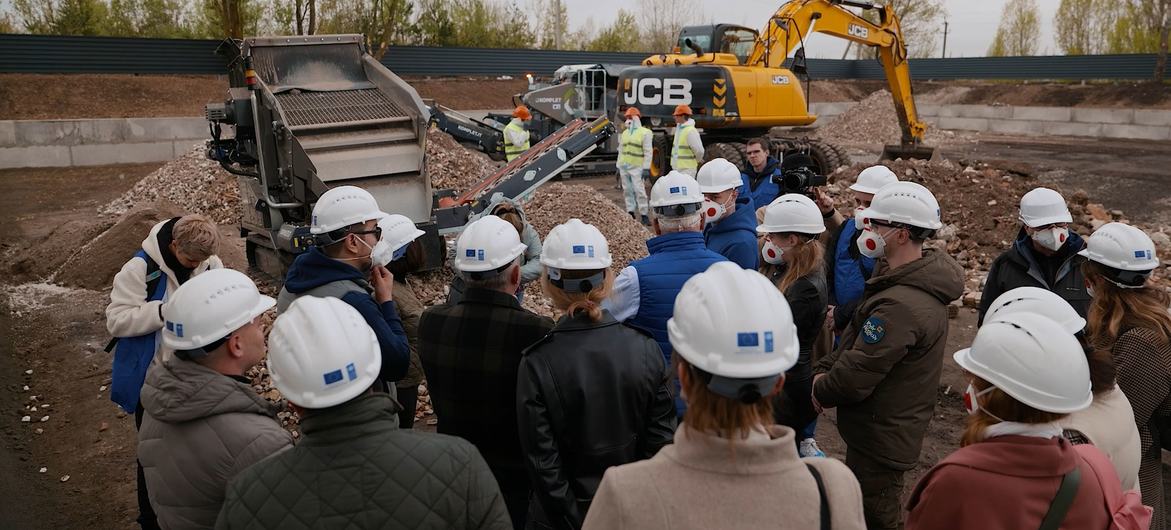
A debris recycling initiative in Ukraine (file)
‘The future starts as soon as sirens stop’
Despite the large numbers who have left the country, many of those who have stayed are content to remain, according to senior UN officials. For Matthias Schmale, the UN Resident and Humanitarian Coordinator in Ukraine, the willingness of the population to endure and even thrive throughout the conflict is a remarkable sign of their resilience.
Speaking to UN News, Mr. Schmale expressed his hope that the UN’s commitment to support Ukrainians for as long as needed would give them hope for a more dignified future. “I see that people start rebuilding as soon as possible, whether it’s businesses, homes or lives. The future starts as soon as sirens stop. People don’t want to leave.”
The strength of the population is also praised by Kenan Madi, Chief of Field Operations at the Ukraine UNICEF (UN children’s agency) office. “Despite the challenges, despite everything they are going through, they all want to stay in their area, in their villages. They don’t want to leave,” he told UN News in a recent interview. No one is dreaming about leaving. It’s the opposite. Everyone is dreaming about staying. It gives me the assurance that hopefully when this war stops, the Ukrainian population is ready to immediately start rebuilding in a better way and build back better”.
The characterization of Ukrainians as a resilient people goes beyond the anecdotal: a large scale UN-backed 2024 study, based on in-depth interviews with over 7,000 respondents in all of the territories under government control, showed that Ukrainians continue to demonstrate a strong sense of national identity and belonging to their homeland. The findings highlight the strength of Ukraine’s national identity as an important unifying force in the face of the ongoing war.
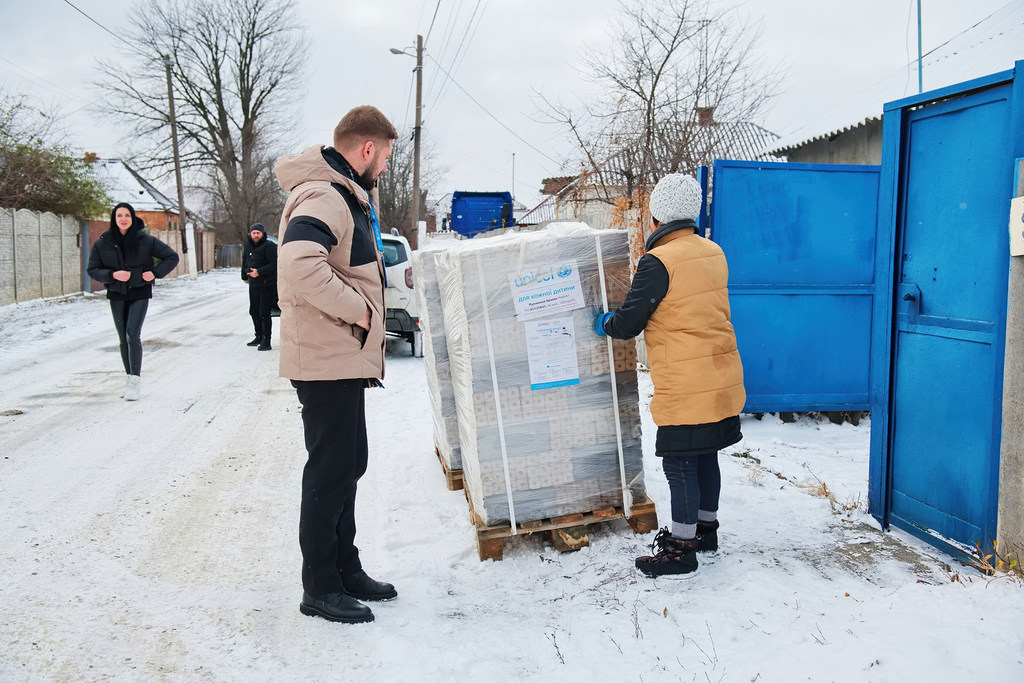
Solid fuel is delivered to families in Derhachi, Kharkiv region, near the front line.
A costly path to recovery
Nevertheless, the challenges facing the country are enormous, and extremely costly. The full cost of reconstruction and recovery is now estimated to be around $468 billion, according to a joint assessment by the Ukrainian government, World Bank, European Commission and the UN.
With winter temperatures dropping well below freezing, the UN’s humanitarian winter response plan aims to address emergency needs, including providing solid fuel, cash assistance, and water system repairs. Some $500 million is required to fully implement these efforts by March 2025.
In the coming days, UN humanitarian officials will travel to Ukraine to assess the latest situation, ahead of the launch of a fresh humanitarian appeal. Additionally, a broader humanitarian appeal for $2.2 billion is being prepared for 2025 to assist an estimated 12.7 million people.
These deaths represent an increase of over 1,000 on the total killings for 2023, according to figures verified by OHCHR. A further 2,212 people were injured and 1,494 kidnapped.
“These figures alone cannot capture the absolute horrors being perpetrated in Haiti but they show the unremitting violence to which people are being subjected,” said the UN High Commissioner for Human Rights, Volker Türk.
Shocking massacre
OHCHR recalled that in one of the most deadly and shocking incidents, at least 207 people were killed in a massacre in early December orchestrated by the leader of the Wharf Jérémie gang in the Cité Soleil area of the capital, Port-au-Prince.
Many of the victims were older people accused of causing the death of the leader’s son through alleged voodoo practices. To erase evidence, gang members mutilated and burned most of the bodies, while others were thrown into the sea.
OHCHR also documented 315 lynchings of gang members and people allegedly associated with gangs, which on some occasions were reportedly facilitated by Haitian police officers.
Additionally, 281 cases of alleged summary executions involving specialized police units occurred during 2024.
Impunity still prevalent
“It has long been clear that impunity for human rights violations and abuses, as well as corruption, remain prevalent in Haiti, constituting some of the main drivers of the multi-dimensional crisis the country faces, along with entrenched economic and social inequalities,” said Mr. Türk.
“Additional efforts from the authorities, with the support of the international community, are needed to address these root causes.”
The human rights chief stressed that restoring the rule of law must be a priority. He added that to this end, the UN-backed Multinational Security Support Mission (MSS) in Haiti needs the logistical and financial support it requires to successfully implement its mandate.
Furthermore, the Haitian National Police, with the support of the international community, should also strengthen its oversight mechanism to hold accountable police officers reportedly involved in human rights violations.
Implement sanctions and arms embargo
Mr. Türk restated his call for the full implementation of the UN Security Council‘s sanctions regime on Haiti, as well as the arms embargo, which are crucial to preventing the supply of firearms and ammunition to the country.
“Weapons flowing into Haiti often end up in the hands of the criminal gangs, with tragic results: thousands killed, hundreds of thousands displaced, essential infrastructure and services, such as schools and hospitals, disrupted and destroyed,” he said.
He further noted that deportations of Haitians continue even though the acute insecurity and resulting human rights crisis in their homeland do not allow for safe and dignified return.
The High Commissioner reiterated his call to all States not to forcibly return anyone to Haiti.
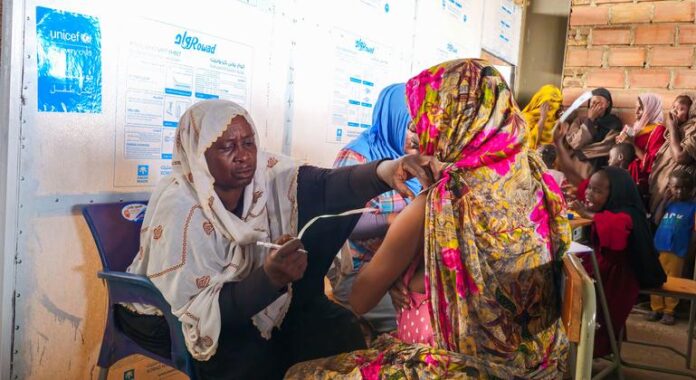
The World Food Programme (WFP) provided lifesaving assistance to 7.8 million people, while the UN Children’s Fund (UNICEF) reached nearly three million children with essential nutrition support.
This was done in the face of an escalating crisis resulting from the brutal war between rival militaries which erupted in April 2023 between the forces of the military Government and the so-called Rapid Support Forces militia.
The UN Office for the Coordination of Humanitarian Affairs (OCHA) reports that over 25.6 million people remain acutely food insecure.
Disruptions to agriculture caused by conflict, mass displacement, heavy rainfall, floods and limited financing have crippled food production for a second consecutive year.
Famine has now spread to five regions according to WFP, leaving some 755,000 people on the brink of starvation.
UN Spokesperson Stéphane Dujarric told correspondents in New York that as the conflict rages on, “families and communities trapped in the middle of it and in hard-to-reach areas are continuing to bear the brunt of the violence and the suffering.”
He said the lack of access to sufficient food and basic services in these hard-to-reach areas inside Sudan is likely to swell while “the risk of destitution and death increases.”
Immediate and unimpeded humanitarian access is essential, for the UN and aid partners to deliver the assistance required.
Five million children displaced
Nour, who is internally displaced, is only surviving thanks to Ombaz – a type of animal feed, UNICEF reported.
The agency said ongoing fighting has displaced around five million children, including one-year-old Samah. Her mother walked for 20 days to reach safety in a refugee camp.
Aid workers have scaled-up efforts under the Famine Prevention Plan launched in April 2024. However, with challenges in access and resource shortages persisting, the UN has urgently called for international support to prevent further catastrophe.
Deep alarm over civilian deaths in Myanmar’s Rakhine state
The UN’s Humanitarian Coordinator in Myanmar, Marcoluigi Corsi, said on Friday that aid workers are deeply alarmed by the spike in civilian casualties in Rakhine state, as the military regime battles multiple insurgencies and armed groups for control across the country.
On Wednesday there was an aerial attack on Kyauk Nima Village in Rakhine state – home to the persecuted Rohingya minority – which reportedly killed over 40 civilians, including women and children, and injured more than 20 people, UN Spokesperson Stéphane Dujarric told reporters.
Abide by international law
Around 500 homes were also allegedly destroyed due to the onslaught.
Mr. Dujarric reiterated the UN’s call on all parties to the conflict to uphold their obligations under international humanitarian law to protect civilians, including humanitarian workers, as well as hospitals, schools and humanitarian assets.
“We also stress the need to facilitate unimpeded humanitarian access to the most vulnerable people,” he added.
Guterres strongly condemns detention of Venezuelan opposition figures
As Venezuela’s Nicolas Maduro was sworn in for a third presidential term on Friday, the UN chief said he was continuing to follow events in the country “with great concern.”
Secretary-General António Guterres strongly condemned the detention of opposition politicians, journalists and human rights defenders which has increased after years of repression and economic decline, since the disputed presidential election of 28 July.
According to news reports, the legislative building where Mr. Maduro was sworn in was heavily guarded by security forces as he pushed back on criticism from the United States and other governments who have joined opposition groups in declaring the election stolen.
Nationwide protests at the result led to the arrest of thousands of demonstrators and a fresh wave of arrests and crackdowns.
Fresh sanctions
The US, Canada, the United Kingdom and the European Union, announced a fresh round of sanctions on Friday on over 20 officials of the Venezuelan Government, accusing them of destroying the country’s democratic institutions and the rule of law.
Brazil and Colombia were among the countries which rejected the result of the July elections.
“A peaceful way out of the political crisis requires full respect for human rights, including the right to freedom of expression and to hold opinions without any interference, and to peaceful assembly,” said UN Spokesperson Stéphane Dujarric, briefing journalists.
The UN chief urged the Venezuelan authorities to “guarantee and respect” the rights of all those arbitrarily detained.
On Monday the United States military sent 11 long-term detainees from the facility to Oman after reaching agreement with the Government there on relocation and resettlement.
Only 15 detainees now remain, according to news reports. The prison opened in 2002 and at its peak it held more than 600 prisoners overseen by over 2,000 military and civilian personnel.
Captured in Pakistan
Captured in March 2002 in Faisalabad, Pakistan, following the 11 September 2001 attacks, Abu Zubaydah was transferred to CIA custody and held at multiple secret locations, where he was reportedly tortured, the experts reminded in a press release issued on Wednesday.
Despite being imprisoned for nearly two decades, he remains in Guantánamo Bay without any formal charges having been made.
Release ‘long overdue’
“We are exceptionally requesting a Presidential pardon for Mr. Abu Zubaydah, owing to his treatment while in detention and the lack of due process since he was first detained,” the experts stated. “His immediate release and relocation to a third safe country are long overdue.”
The Human Rights Council-appointed experts highlighted Abu Zubaydah’s serious health conditions, which include injuries sustained during torture that have allegedly been exacerbated by the denial of medical attention.
They also noted significant impediments to lawyer-client communication.
Various international and regional human rights mechanisms have examined Abu Zubaydah’s case, establishing that he has suffered multiple human rights violations within the context of the US rendition and secret detention programme, the experts noted.
“In addition to his liberation, we request that Mr. Abu Zubaydah is accorded an enforceable right to compensation and other measures of reparation, in accordance with international law,” the working group members and Special Rapporteurs said.
The experts emphasised the profound psychological and physical trauma he has endured due to torture, cruel, inhuman, and degrading treatment, and enforced disappearance. They reiterated their call for the US Government to immediately release and relocate him to a safe third country.
“We recall the principle of joint responsibility that applies to States when more than one of them was involved in the perpetration of a human rights violation,” the experts said. “Accordingly, we call on States to proactively offer their territory for the prompt relocation of Mr. Abu Zubaydah.”
The experts also expressed concerns about the continued detention of 14 other individuals at Guantánamo Bay, who are in varying stages of legal proceedings and face allegations of ongoing human rights abuses.
Independent rights experts are not UN staff, receive no salary for their work and are independent of any organisation or government.