Projects FLORA, MSP-OR, C-FAARER and A-AAGORA were distinguished with an Atlantic Project Award each at the 11th Atlantic Stakeholder Platform Conference in Bordeaux on 22 November 2024.
These prestigious awards, presented by the Atlantic Steering Committee members and the European Commission, celebrate outstanding success stories achieved by projects within the geographical area covered by the Atlantic Strategy.
This year, six awards were granted as recognition of the projects’ outstanding performance in the five award categories corresponding to the Pillars of the Atlantic Action Plan 2.0:
The project is developing an industrial-scale prototype of an ocean station with renewable energy generation and oceanographic capabilities.
Healthy Oceans and Resilient Coasts: C-FAARER (Horizon Europe Mission Ocean) and MSP-OR (EMFF)
C-FAARER supports ocean farmers in the Atlantic and Arctic Sea basin to develop community-driven business models for regenerative ocean farming and policymakers to take enabling actions.
MSP-OR helps national authorities with the implementation of maritime spatial planning in the outermost regions of the Macaronesia (Azores, Madeira and Canary Islands) and French Guiana.
International Cooperation: A-AAGORA (Horizon Europe Mission Ocean)
Atlantic-Arctic Agora (A-AAGORA) supports the European Commission Mission on “Restore our Ocean and Waters by 2030” within the “Atlantic- Arctic lighthouse” through the reduction of pressures in coastal areas to boost resilience to climate change and mitigate its impacts.
Both EMFAF and Horizon Europe Mission Ocean programmes are implemented by CINEA.
The main objective of HYDEA is to assess, develop and promote the use of technologies based on green hydrogen from renewable energy sources (like marine energy) in ports in the Atlantic Area.
Blueskilling Innovation will deliver the necessary skills for marine renewables and green shipping technology in the Atlantic Area.
With 23 very diverse applications it was challenging to select the projects that contribute most to the priorities of the Atlantic Action Plan 2.0 as well as their potential for replicability and expansion across the sea basin – and beyond.
Achievements and challenges in the Atlantic blue economy
For the first time, the conference also featured two hackathons on future project ideas. Common interest has been shown on:
Ensuring resilient coasts while enhancing the port infrastructures.
Decarbonising ports for sustainable coastal communities
As in the previous years, the Conference has been organised in close liaison with the Annual Interreg Atlantic event. This approach illustrates the strong cooperation between the Atlantic Steering Committee and the Interreg Atlantic Managing Authority to support the Atlantic Action Plan 2.0 implementation.
To tap even further into synergies, the Conference also took place back-to-back with the “Assises de l’économie de la mer 2024”.
CINEA Project Adviser Julia Beile, responsible for the Assistance Mechanism for the Atlantic Action Plan, participated in the event sharing relevant information on CINEA funding programmes.
Recent attacks on energy infrastructure have decimated 65 percent of Ukraine’s energy generation capacity, severely disrupting electricity, heating and water supplies across the country.
“The deepening emotional toll on innocent people became clear during my visit to the country last week,” Kelly Clements, UN Deputy High Commissioner for Refugees reported, noting that, “the intense attacks on critical infrastructure and civilian sites – constant war-raid attacks on critical infrastructure and civilian sites” and air raid warnings, “are exacting a grave toll on physical and mental health”.
Since August, approximately 170,000 people have been forced to flee their homes in Eastern Ukraine, adding to the nearly four million who remain displaced within Ukraine and 6.7 million more who have ought refuge outside the country.
This includes 400,000 new refugees who fled to other European countries, from the beginning of 2024 to the end of August.
Daily life under constant threat
In Kharkiv, one of the most war-affected regions of the country, the reality of conflict is starkly evident.
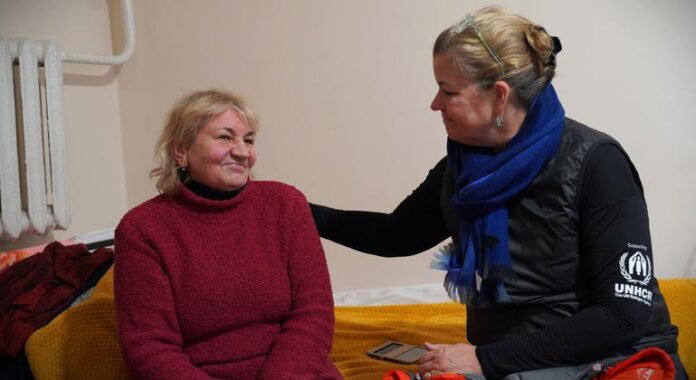
During a visit to a centre supported by UNHCR, Ms. Clements recalled that “explosions sounded in the background”.
During her visit, Ms. Clements met Svitlana, a 65-year-old woman whose apartment was destroyed by a glide bomb, describing her “quiet determination” as a powerful reminder of “Ukraine’s spirit, even as the trauma of war permeates daily life”.
The visit coincided with the season’s first snow, marking the start of what will be the third winter of full-scale war. With continued attacks on energy facilities and civil structure, civilians face severe challenges in the months ahead.
The impact of education has been particularly severe, with countless children missing out on social interaction and classroom experiences. In Kharkiv, children have been forced to study in underground shelters; “metro” schools which lack natural light and playgrounds, to avoid frequent air raids.
Recovery efforts continue amid funding shortfall
Despite these challenges, there are signs of resilience and recovery. The Government of Ukraine, has been “leading humanitarian and recovery efforts with impressive speed,” stated Ms. Clements. She added that “local responders quickly clear rubble and board up strike sites, symbolising Ukraine’s strength and determination”.
However, UNHCR’s 2024 appeal seeking $1 billion for 2024 is only just over half funded.
“Now is not the time for partners to turn away,” warned Ms. Clements, emphasising the urgent need for continued support as Ukraine enters its third winter of full-scale war.
The vibrant city of Brussels offers a treasure trove of cultural gems waiting to be explored. As one of Europe’s key cultural hubs, it boasts an array of museums and art galleries that showcase everything from contemporary art to historical artifacts. You can dive deeper into your exploration by checking out the Museums and art centres | City of Brussels, where you will find a comprehensive list of venues to visit during your stay. So gear up for an artistic adventure that will enrich your experience of this charming city!
Embracing the Cultural Heritage
About every corner you turn in Brussels, you’ll find a piece of its rich cultural heritage. The city is steeped in history, with grand museums that date back centuries and showcase artistic traditions from various eras. Whether you’re captivated by the stunning paintings of the Old Masters or intrigued by the contemporary exhibits in modern art spaces, you’ll discover a wealth of creativity and inspiration that can ignite your passion for art and history.
Brussels is more than just a feast for the eyes; it’s a chance to connect with your own narratives through the diverse collections. Engaging with the stories of artists, social movements, and historical moments will surely deepen your understanding and appreciation for the culture that defines Brussels. It’s a journey through time that invites you to reflect and ponder your own story in relation to this dynamic city.
A Sneak Peek into What’s Ahead
Across the city, you can expect to uncover a delightful mix of exhibitions, workshops, and events to enrich your cultural escapade. Whether you choose to visit renowned places such as the Royal Museums of Fine Arts or smaller, lesser-known galleries, there’s something for everyone to enjoy. Your experience will be filled with opportunities to interact with artists, pose questions, and even join guided tours that bring insight into the artistic process and inspirations behind the works.
Another highlight to look forward to is the city’s vibrant art scene, which often includes seasonal festivals, pop-up galleries, and community art projects. This makes Brussels a living, breathing canvas where creativity thrives, and you can easily immerse yourself in the local culture. So, get ready to mark your calendar and explore the artistic wonders that await you in this incredible city!
Must-Visit Museums
It’s time to explore the rich cultural landscape of Brussels, where art and history come alive in an array of spectacular museums. With the help of the Free museums | Brussels-Capital Region, you can explore a variety of exhibitions without breaking the bank. Whether you’re an art aficionado or just looking for a leisurely Sunday outing, Brussels has something for everyone. So, let’s jump into some must-visit museums that should be on your list!
Royal Museums of Fine Arts
Arts lovers, get ready to indulge in the masterpieces at the Royal Museums of Fine Arts. This impressive collection spans several centuries, featuring works from renowned artists such as Rubens, Magritte, and Van Dyck. You’ll find that the museum is split into different sections, each boasting unique themes and artworks, providing a rich experience that will surely captivate your imagination. As you wander through the halls, take the time to appreciate the breadth of artistic expression showcased in this cultural gem.
Each gallery tells its own story, inviting you to lose yourself in the colors, strokes, and narratives that come alive before your eyes. Whether you’re admiring a classic piece or discovering a lesser-known artist, the Royal Museums of Fine Arts promise an enriching visit, perfect for art enthusiasts and casual visitors alike. Be sure to carve out time to explore everything this remarkable institution has to offer!
Magritte Museum
Overview of the surreal and thought-provoking, the Magritte Museum is dedicated to the works of the legendary Belgian surrealist René Magritte. You’ll be entranced by the cleverly whimsical and often paradoxical nature of his art, which challenges your perceptions and encourages you to think beyond the obvious. With over 200 pieces on display, including paintings, drawings, and sculptures, you can really explore into the mind of one of the 20th century’s most influential artists.
Consequently, visiting the Magritte Museum is not just an art trip; it’s an experience that will spark your creativity. As you explore the captivating installations, you’ll find yourself questioning reality and the meanings behind the images presented. This museum is a must-visit for anyone looking to gain a deeper understanding of surrealism and its impact on the art world. So, grab your notebook and prepare to be inspired!
Engaging Galleries
Your exploration of Brussels would be incomplete without a investigate its engaging galleries, where art comes alive and engages the senses. Whether you are an aficionado of contemporary vibrancy or a lover of vintage treasures, the galleries here promise an enriching experience that stimulates your curiosity and expands your horizons. With a captivating mix of the new and the old, these spaces offer a wonderful reflection of the city’s rich cultural tapestry.
Contemporary Art Galleries
With a growing reputation in the contemporary art scene, Brussels is home to numerous galleries showcasing the works of both emerging and established artists. You’ll find the likes of the WIELS Contemporary Art Centre and the ZAVENTEM ART GALLERY, each offering thought-provoking exhibitions that invite interaction and inspire dialogue. Don’t hesitate to wander through these innovative spaces, as they often host exciting events, workshops, and talks that allow you to engage more deeply with the art and the artists.
With each visit to a contemporary art gallery, you’re likely to experience something fresh and unexpected. From installations that play with light and sound to provocative pieces that challenge societal norms, there’s something for every taste and interest. You may also stumble upon pop-up exhibitions that delight and surprise, making each visit a unique adventure!
Vintage and Antique Galleries
Galleries dedicated to vintage and antique items present a delightful opportunity to discover a slice of history. You can spend hours sifting through ornate furniture, delicate porcelain, and timeless jewelry, each piece with its own story to tell. These galleries not only showcase artifacts from bygone eras but also give you a chance to uncover unique treasures that can become cherished additions to your own collection.
It’s in these vintage and antique galleries where the charm of the past meets the curiosity of the present. You may come across everything from eclectic art deco pieces to rustic farm antiques, and each corner you explore is steeped in nostalgia. Whether you’re looking for a conversation starter for your home or simply want to appreciate the craftsmanship of earlier times, these galleries provide a delightful experience that connects you with the heritage of Brussels. Enjoy the hunt, and who knows what wonderful finds await you!
Themed Cultural Sundays
Now that you’re excited about immersing yourself in Brussels’ rich cultural scene, let’s probe into the themed Cultural Sundays. These events offer a fantastic opportunity for you to experience the city’s cultural heart through unique lenses, whether you’re an art aficionado or a history buff. Each month, various museums and galleries host dynamic programs tailored around specific themes, inviting you to deepen your understanding of art, history, and society in an engaging way.
Monthly Events and Celebrations
For those looking to add a sprinkle of fun to their Sundays, the monthly events and celebrations in Brussels are a must-see. Each month, different museums host special events that coincide with seasonal festivities, providing you with a perfect excuse to explore a new venue. From interactive workshops to guided tours led by passionate curators, these events transform your usual Sunday routine into something special, allowing you to make wonderful memories.
For instance, February often embraces the theme of love, featuring romantic art exhibitions or Valentine’s Day-themed activities that let you bring someone special along for the adventure. Similarly, in autumn, many venues integrate harvest celebrations, showcasing local artists and interactive displays that highlight the cultural tapestry of the region. Each month offers something fresh and exciting, waiting for you to discover.
Special Themes to Explore
Across Brussels, special themes are often the highlight of Cultural Sundays, providing you a chance to explore various aspects of the city’s artistic and historical narrative. These themes can range from focusing on a specific artist or movement to celebrating a particular cultural phenomenon. By engaging with these rich topics, you can expect not just to learn but also to be inspired. You’ll find yourself discussing new perspectives with fellow attendees and enjoying unique activities that are geared toward a deeper understanding of each theme.
Celebrations of cultural milestones, such as anniversaries or local traditions, often lead to unique and memorable experiences. You might discover a hidden gem of a gallery dedicated to a local artist or participate in innovative workshops that encourage you to channel your own creativity. These special themes are a perfect way to indulge your curiosity, connect with Brussels’ artistic community, and perhaps even give you a new favorite spot to revisit throughout the year.
Family-Friendly Cultural Spots
After a week of bustling activities, Sundays can be a wonderful time to explore the cultural gems of Brussels with your family. You’ll find that there are plenty of attractions tailored to engage both kids and adults, making it an ideal way to bond and learn together. From energy-filled museums to colorful galleries, the options are endless, ensuring that your family’s cultural adventure is anything but boring.
Museums for Kids
Between the captivating collections at Brussels’ museums, you’ll discover wonderful spaces specifically designed with children in mind. The Belgian Comic Strip Center is a fantastic spot where your kids can explore the world of their favorite comic book heroes. As they explore colorful exhibits showcasing the history of Belgian comics, they’re likely to develop a love for storytelling and art that will stick with them long after your visit.
Another delightful venue is the Train World museum, where children can marvel at the fascinating world of trains. This interactive experience allows them to explore everything from vintage locomotives to futuristic models. You’ll enjoy watching their eyes light up as they engage with the exhibits, fostering a spark of curiosity about engineering and history.
Interactive Exhibits to Enjoy
Above all, you’ll find that many museums in Brussels create engaging spaces where children can touch, play, and interact with the exhibits. The Natural Sciences Museum, for example, features a wide range of interactive displays that help bring the wonders of the natural world to life. Your kids will be excited to investigate fossils, dinosaurs, and even live insects, turning a regular museum visit into a memorable exploration of the planet.
Exhibits like these allow your family to learn through play, making education fun and accessible. Interactive installations encourage hands-on experiences, which can help your children retain information better while having a blast. Be prepared for lots of questions and laughter as your family examines into the world of science, art, and history in a way that feels fresh and exciting!
Tips for a Memorable Experience
Keep these tips in mind to ensure your museum and gallery visits in Brussels are truly enjoyable and engaging!
Dress comfortably to navigate between exhibits easily.
Bring a notepad or your smartphone to jot down interesting facts or moments.
Embrace guided tours—they’re a fantastic way to deepen your understanding.
Check if the museums offer any special exhibitions or workshops before you go.
Take your time; there’s no rush, and the art deserves your full attention.
The more you prepare, the more enriching your cultural experience will be.
Planning Your Visit
Beside knowing which museums and galleries to visit, planning your itinerary can enhance your overall experience. Consider checking the opening hours and any special events like exhibitions or workshops that might be happening during your visit. You can also save time by purchasing tickets online to skip the queues, especially on weekends or during public holidays when foot traffic can be high.
Also, think about your interests. If you’re into modern art, prioritize galleries that feature contemporary artists. Alternatively, if history speaks to you, museums that showcase local culture and heritage might be more appealing. Tailoring your visit according to your personal tastes can lead to a richer and more enjoyable experience.
Navigating the City
Any trip to Brussels wouldn’t be complete without figuring out how to get around the city. Public transportation, such as trams and buses, is both efficient and easy to use. The metro system offers a convenient way to reach various museums and art institutions, while walking lets you soak in the vibrant atmosphere of the city streets.
Plus, don’t hesitate to take advantage of various tourist passes, which can offer discounts on both transportation and entry fees to multiple attractions. Renting a bike could also be a fun way to explore the city’s artistic avenues, allowing you to travel at your own pace while enjoying the scenic views lining your route. The city is rich with art and history on every corner, so keep your camera handy for unexpected moments of inspiration!
Local Culinary Delights
Despite its vibrant art scene and rich history, Brussels is equally famous for its delectable culinary offerings. As you explore the city’s cultural gems, don’t forget to treat your taste buds with local specialties that will complement your museum and gallery visits perfectly. The culinary landscape here is steeped in tradition, and you’ll find that each bite reflects the unique character of this beautiful city.
Cafés Near Museums and Galleries
Among the many delights that Brussels has to offer, the charming cafés nestled near its museums and galleries enhance your cultural itinerary. Whether you are looking for a cozy spot to relax after soaking in art or a lively place to recharge with a cup of coffee and a pastry, you will find plenty of options. Many cafés are adorned with art and have fun atmospheres, giving you a taste of local culture while enjoying a brief respite.
Take a moment to unwind at one of the café terraces that overlook stunning architecture, where you can sip on a velvety cappuccino or indulge in a freshly baked croissant. The café environment is very much a part of Belgian life, so don’t hesitate to sit and people-watch, allowing the ambiance of the city to envelop you.
Regional Specialties to Try
For a true taste of Belgium, you simply must look into the regional specialties while you’re in Brussels. Begin with the iconic moules-frites (mussels and fries), a dish that showcases the quality of local seafood and is a favorite among both locals and tourists alike. Another must-try is the delectable waffle, which comes in different varieties, either crispy or fluffy, and can be topped with anything from fresh fruits to rich chocolate sauce!
In addition to these classics, don’t miss the opportunity to sample traditional chocolate from the many famous chocolatiers in the city. Engaging with local flavors will enhance your Brussels experience, leaving you with a delightful memory of culinary exploration alongside your cultural adventures. So, make sure to take that time to savor every bite and sip while you wander between the amazing museums and galleries.
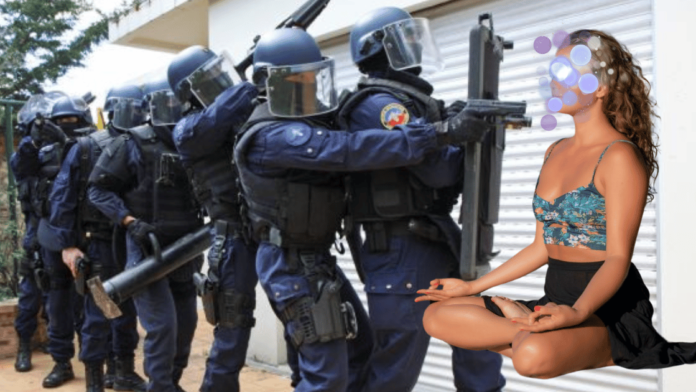
On 28 November, it will be one year since a SWAT team of around 175 policemen wearing black masks, helmets, and bullet proof vests, simultaneously descended at 6 am on eight separate houses and apartments in and around Paris but also in Nice where Romanian yoga practitioners had decided to go into spiritual retreat. The police forces were then brandishing semi-automatic rifles, shouting, making very loud noises, crashing doors and putting everything upside down.
The November 2023 raids were not an operation against a terrorist or armed group or a drug cartel. They were raids targeting eight private places mainly used by peaceful Romanian yoga practitioners, but the police suspected these places to be used for illegal activities: traffic in human beings, sexual exploitation and forcible confinement.
In fact, most of the yoga practitioners had chosen to combine the pleasant with the useful in France: yoga and meditation in villas or apartments kindly and freely put at their disposal by their owners or tenants who were also mainly yoga practitioners of Romanian origin and at the same time to enjoy picturesque natural or other environments.
They were IT experts, engineers, designers, artists, medical doctors, psychologists, teachers, university and high school students, and so on.
About the absence of victims and questions raised by the search warrant
The objective of the raid was not only to arrest criminals but also to save victims or survivors of such alleged illegal activities. The ‘problem’ is that the yoga practitioners interrogated by the police strongly denied being victims of anything during their stay and consequently, did not file any complaint against their hosts.
One year later, it is still not officially and publicly known which actors and which preliminary investigation elements convinced a prosecutor to launch raids of such a magnitude.
The law enforcement forces had just been told that the operation was based on a search warrant meant to catch criminals involved in “trafficking in human beings”, “forcible confinement” and “abuse of vulnerability” in organized gang.
Noteworthy is that the wording of the warrant shaped the minds of the interrogators on the search places and in police stations as well as of the lawyers hired for legal assistance and interpreters in their interaction with the arrested people, around 50. This is what emerged from the testimonies of numerous yoga practitioners placed in police custody collected by Human Rights Without Frontiers. In the eyes of all these actors, this was a very serious case and among them there might have been some traffickers in human beings, sexual abusers and mind manipulators.
In November 2023, six people were arrested and put in pretrial detention. Among them Gregorian Bivolaru, the spiritual master of MISA (Movement for Spiritual Integration into the Absolute), an esoteric yoga movement that he founded in 1990 in Romania and had 30,000 practitioners throughout the world before the COVID. He was the subject of an Interpol arrest warrant because six former disgruntled students of MISA lodged a complaint against him many years ago for trafficking in human beings, sexual abuse and forced confinement but as of end 2024, there has not been any trial and therefore any confirmation of such accusations.
The other detainees were the owners or the tenants of the searched places who were investigated about their possible involvement in the criminal activities mentioned in the French warrant.
The arrest of Mihai and Adina Stoian in Georgia
On 22 August 2024, Mihai and Adina Stoian, known as esoteric yoga teachers and trainers, were arrested when they entered Georgia, as part of a tourist trip, through the border with Turkey at Sarpi.
Georgian media reported that the Stoians were arrested on the basis of an Interpol arrest warrant and are wanted by the judicial authorities in France. Additionally, the Georgian press said that they have also been prosecuted “in Finland and Romania for child prostitution and rape.” This last information is however false.
As far as we know, the Stoians are not under any prosecution in Finland or Romania. It is only when they were arrested in Georgia that they were notified of an international arrest and extradition warrant from the Court of Paris, in France.
According to some French media, Mihai and Adina Stoian are considered to have been close to Gregorian Bivolaru for many years and are said to run the movement in his absence.
Mihai and Adina Stoian deny having been involved in the administration of the MISA movement. However, they had working relations with other yoga movements, such as the ATMAN Federation and NATHA.
ATMAN, the International Federation of Yoga and Meditation, was created by yoga teachers and trainers from various yoga movements on 7 December 2004 and registered in the UK where it is still located. In 2006, Mihai and Adina Stoian joined ATMAN and trained other yoga teachers on a voluntary basis. As senior teachers, they started unifying the teaching program and methodology. At some point, MISA became a member of ATMAN and consequently, the Stoians claim that their relationship with MISA was only indirect. On 27 October 2016, Mihai Stoian became one of the three directors of ATMAN. Adina went on training yoga teachers and has never been a member of the board.
While the Stoians are in prison in Georgia, a dozen policemen in Denmark accompanied by a representative of the French prosecutor searched the common spaces of the NATHA Yoga Association in Denmark where the Stoians were working part-time. Nobody was arrested or interrogated during the search. The police just took away some electronic devices.
Some conclusions
The French warrant leading to the raids in France in November 2023 and the international arrest warrant implemented in Georgia, as they were drafted, created prejudices and shaped the minds of all the actors involved in the investigation who obviously failed to consider the charges as nothing more than allegations.
Moreover, many journalists and media outlets wrongly perceived the accusations as solid facts, failing quite often to mention the absence of victims and the presumption of innocence of the suspects as the case is still being investigated and as we are still far from any court decision.
Last but not least, it is noteworthy that a significant number of Romanian female and male yoga practitioners kept in custody after the raids in France have lodged complaints against the French authorities for failing to respect the legislation during their detention.
However, the grim statistic is just the surface of a larger crisis, independent human rights experts warned on Friday, as the military junta intensifies its attacks on civilians, including persons with disabilities.
“The junta is doubling the impact of its extensive use of landmines to crush nationwide resistance,” said Tom Andrews, Special Rapporteur on Myanmar, and Heba Hagrass Special Rapporteur on the rights of persons with disabilities.
They highlighted egregious violations, including forcing civilians to walk through minefields ahead of military units and systematically denying victims access to life-saving aid such as medical care and prosthetics.
The impact of landmines and unexploded ordnance is particularly severe on Myanmar’s children, with UNICEFdata released earlier this year revealing that over 20 per cent of the 1,052 verified civilian casualties from such incidents in 2023 were children.
This was a significant rise from 2022, when 390 incidents were recorded.
Children are particularly vulnerable to landmines and unexploded ordnance (UXO), often unable to recognise their dangers.
In addition, the indiscriminate placement of these deadly weapons in and around homes, schools, playgrounds, and farming areas, puts children at constant risk.
A child who lost his left leg after accidentally stepping on a landmine in his family’s paddy fields in central Myanmar.
Victims facing criminalisation
The consequences for landmine victims extend beyond physical injuries.
Amputees, already grappling with life-altering trauma, are being criminalised by the junta, which associates missing limbs with resistance activity.
“Now amputees are being forced into hiding to avoid harassment and arrest. Losing a limb is being seen as evidence of a crime,” the experts said.
Reality far worse
Amidst the dire picture, the reality is even worse for landmine victims and their families.
“I was heartbroken talking with a young woman who had lost her leg after stepping on a landmine near her home,” Mr. Andrews said.
“But I was infuriated when her doctor told me that she had no hope of securing a prosthesis because junta forces were blocking access to the materials necessary to build one,” he added.
Call for action
Mr. Andrews and Ms. Hagrass urged UN Member States to take coordinated measures to weaken the military junta’s ability to harm civilians.
They also called on all parties to the conflict in Myanmar to immediately stop laying landmines and begin removing them without delay.
Related interview: Independent rights expert urges stronger, coordinated actions against Myanmar junta
Special Rapporteurs are independent human rights experts, appointed by the UN Human Rights Council as part of its Special Procedures. They are mandated to monitor and report on specific thematic issues or country situations and work on a voluntary basis.
They serve in their individual capacity, are not UN staff and do not receive a salary.
An Italian teenager will be the first saint canonized in the millennium by the Catholic Church, Pope Francis announced at his weekly audience at the Vatican on Wednesday.
Carlo Akutis, 15, who died of leukemia, will be canonized in April after being beatified in 2020. The church recognized two miracles performed by the deceased in 2006. young man
The teenager, who has been dubbed “God’s influencer”, was a devout Catholic and used his computer coding skills to create a website detailing Catholic miracles and visions. His body wrapped in wax, wearing jeans and sneakers, is on display in a tomb in Assisi, Politico writes.
The IX All-Russian scientific and practical conference of the Russian Orthodox Church and the penal system of the Russian Federation was held at the Academy of the Federal Penitentiary Service of Russia.
The event was held at the beginning of November within the framework of the International scientific and practical conference on the problems of execution of criminal punishments, dedicated to the 90th anniversary of the Academy of the Federal Penitentiary Service of Russia, and was dedicated to the introduction of the probation system in Russia and the establishment of the institution of assistants to pre-trial detention facilities for work with believers.
The conference was attended by: the head of the group for organizing work with believers of the Federal Penitentiary Service of Russia’s Department of the Supreme Court of the Russian Federation Sergei Gurov, assistants to the heads of the Federal Penitentiary Service for organizing work with believers, assistants to the heads of pretrial detention centers for working with believers, clergy of religious associations traditional for Russia, the faculty of the Academy of the Federal Penitentiary Service of Russia, representatives of public organizations providing assistance to prisoners, as well as persons released from places of imprisonment.
The forum was headed by the acting chairman of the Synodal Department for Prison Ministry, priest Kirill Markovsky.
The first section of the conference was devoted to the consideration of issues related to the introduction of a penitentiary probation system in Russia from January 1, 2024, and post-penitentiary probation from January 1, 2025. Before the conference participants began their speeches, priest Kirill Markovsky presented awards from the Synodal Department for Prison Ministry to the executive secretary of the board of departments for prison ministry of the Don Metropolitanate, the head of the Spas charity shelter, priest Andrei Mnatsaganov, the chairman of the department for prison ministry of the Saransk diocese, assistant to the head of the pre-trial detention center No. 1 of the Federal Penitentiary Service of Russia for the Republic of Mordovia for work with believers, Archpriest Vladimir Menshoikin, and the chairman of the board of the public organization “House of Diligence “Noah”” Emelyan Sosinsky for many years of work in providing assistance to prisoners and people released from places of imprisonment. Opening the conference, priest Kirill Markovsky emphasized its importance and practical significance, pointing out that the main goal of cooperation between the Church and the penal system is to really help a person who is in prison or has just been released from prison to survive a difficult period of trials, to find the meaning of life that extends into eternity, to find strength for a new life in society not only according to human laws, but also according to the laws of God; to help employees of the penitentiary system worthily carry out the important and responsible service that God has entrusted to them and the state has entrusted to them. According to priest Kirill Markovsky, by adopting the law on probation, the state has certainly extended a hand to a person who has found himself in a difficult life situation. However, it is important to remember that it is impossible to integrate a person into society if he is convinced that it is possible to achieve well-being in life by committing illegal acts, or if he does not have the spiritual strength to resist those sinful desires that have taken root in him due to his past criminal life. “Therefore, first of all, our efforts should be aimed at achieving those positive changes in the mind and soul of the convicted person, which will be the basis for his law-abiding behavior after release. And this work, which is the foundation of probation, must begin in the pre-trial detention center, where the person who committed the unlawful acts ends up. If we do not succeed in this work, then all our other efforts may prove fruitless,” the head of the Synodal Department emphasized. Priest Kirill Markovsky noted that the Church, which has a thousand-year experience in healing the human soul, is currently doing a lot of work in places of forced detention. The UIS has created all the conditions for this, introduced the positions of assistants to the heads of territorial bodies of the Federal Penitentiary Service of Russia for work with believers, assistants to the heads of pre-trial detention centers for work with believers, who are replaced by clergy. The administration of the institutions for the most part tries to meet the prison clergy halfway. But the clergy themselves are not always sufficiently active.
“Yes, we have many wonderful pastors, zealous workers in the field of Christ, who bring worthy fruit to God, bring many to Christ, and bring many despairing people back to life. We express our sincere gratitude to such clergy. But not all pastors fully realize in their prison ministry the gift that was given to them “with the laying on of hands of the priesthood” (1 Tim. 4:14). The chairmen of the prison ministry departments must closely monitor how the clergyman carries out his pastoral work in the pretrial detention center or correctional institution. Give advice to young priests, explain the importance of the ministry of the Church’s pastor in places of human sorrow, which were and will be places of imprisonment,” the priest noted. The head of the synodal department emphasized that the work of a priest in a correctional institution should not be limited to celebrating the Liturgy. It is necessary to hold meetings and talks with the general mass of convicts, actively interact with the institution’s psychologists to identify individuals in a crisis situation, more actively involve lay specialists in the field of church service, and conduct spiritual and educational work with the UIS employees.
Assistant to the head of the Main Directorate of the Federal Penitentiary Service of Russia for St. Petersburg and the Leningrad Region for organizing work with believers, professor of the Department of Church and Practical Disciplines of the St. Petersburg Theological Academy, Archpriest Oleg Skomorokh, spoke about the participation of the Russian Orthodox Church in the implementation of the Federal Law “On Probation in the Russian Federation”, noting that with the adoption of this law, the activities for the resocialization and social adaptation of individuals subject to probation have finally become systemic. In addition, the Church has opportunities to participate jointly with non-profit organizations in the activities of probation centers. Archpriest Evgeny Lishchenyuk, head of the joint commission of prison ministry of the Voronezh Metropolitanate, shared his experience of prison and social ministry, providing assistance to former convicts, including work on the rehabilitation of alcohol and drug addicts. Priest Andrei Mnatsaganov spoke about the activities of the “Spas” charity shelter or “halfway hotel” that he created and heads, where those who want to start a law-abiding life on the outside or have no fixed place of residence can come immediately after their release from prison.
The founder and chairman of the board of this public organization, Yemelyan Sosinsky, reported on the work of the largest network of homeless shelters in Russia, the Noah House of Labor, located in the Moscow Region and including labor and social homes where more than 1,200 people live. Noah has become a “social lift” for a huge number of people. Now many of those who were previously at the very bottom and doomed to perish have found work, a family and a meaning in life.
The second section of the conference was devoted to the formation and development of the institute of assistants to the heads of pretrial detention centers for work with believers. The positions of full-time prison clergy in pretrial detention centers were introduced on January 1, 2024, and at present almost all of them are staffed.
As noted by priest Kirill Markovsky, all priests who have been appointed to the positions of assistants to the heads of pretrial detention centers are pioneers. Being both clergy and officials, they perform, without exaggeration, a sacrificial service associated with a wide range of responsibilities. In addition, pastoral work with suspects and accused has its own characteristics in comparison with the spiritual care of convicts in a correctional institution. And if in a penal colony convicts who have committed crimes of approximately the same degree of severity serve their sentences, then in a pre-trial detention center a priest encounters suspects and accused of a wide variety of crimes – from minor crimes to especially serious ones. He must be able to provide spiritual assistance to men, women, and minors. In this regard, special attention should be paid to the preparation of priests for such a service. Currently, assistants to the heads of pre-trial detention centers for work with believers are trained at the Academy of the Federal Penitentiary Service of Russia, but the pastoral block for priests of the Russian Orthodox Church is missing from the curriculum. It is extremely necessary to include meetings with experienced prison chaplains who have been ministering to pretrial detention centers for many years in the training program. Moreover, in some pretrial detention centers, priests appointed to the position of assistants to the heads of work with believers have not previously had experience in pastoral work with suspects and defendants.
The head of the group for organizing work with believers of the Federal Penitentiary Service of Russia, Sergei Gurov, told the conference participants about the legislative norms and the specifics of the work of prison chaplains in pretrial detention centers.
Archpriest Oleg Skomorokh, assistant to the head of the Federal Penitentiary Service of Russia for organizing work with believers, spoke about the multifaceted activities of priests in the largest Russian pretrial detention center No. 1 “Kresty” in St. Petersburg. The assistant to the head of the pretrial detention center No. 3 of the Federal Penitentiary Service of Russia for the Republic of Bashkortostan, Imam-Khatib Insaf-khazrat Iskandarov, spoke about the spiritual care of people who profess Islam and the prevention of extremism and terrorism in places of imprisonment.
The conference became a discussion platform that allows one to become familiar with the best practices in providing spiritual and social assistance to prisoners and persons released from places of imprisonment, to see problematic issues that arise in the process of implementing prison ministry, to concentrate the efforts of various social institutions on solving one of the most important tasks – the decriminalization of society.
Source: Synodal Department for Prison Ministry/Patriarchia.ru
President of Ukraine Volodymyr Zelensky signed a decree to strip 34 traitors of state awards to Ukraine
The document, published on the official website of the Ukrainian president, puts into effect the decision of the National Security and Defense Council to strip persons considered traitors to Ukraine of state awards, UNIAN reported.
These persons include former civil servants, deputies, heads of the SBU and the Prosecutor General’s Office, prosecutors, artists, as well as Russian political, religious and cultural figures. All of them are deprived of state awards of Ukraine indefinitely.
In addition, ten of them are subject to the maximum package of sanctions – 21 types of measures, including blocking assets, cancellation of licenses and permits, as well as complete cessation of commercial operations.
Key figures on the list:
Alexander Efremov – former first deputy leader of the political party “Party of Regions” and chairman of the corresponding faction. Deprived of the Orders of Merit I-III degree and Prince Yaroslav the Wise V degree.
Renat Kuzmin – former First Deputy Prosecutor General of Ukraine, holder of the Orders of Merit II-III degree and the title of Honored Lawyer of Ukraine.
Viktor Medvedchuk – former deputy and close ally of Russia. Deprived of the Orders of Merit I-III degree and Prince Yaroslav the Wise V degree, as well as the title of Honored Lawyer of Ukraine.
Other famous names:
Dmitry Tabachnyk – former Minister of Education and Science (2010-2014).
Mykola Azarov – former Prime Minister of Ukraine (2010-2014), holder of numerous orders and the title of Honored Economist of Ukraine.
Viktor Pshonka – former Prosecutor General of Ukraine.
Patriarch Kirill – head of the Russian Orthodox Church, deprived of the Order of Prince Yaroslav the Wise I degree.
Artists on the list:
The titles of “People’s Artist of Ukraine” and “Honored Artist of Ukraine” have been stripped from a number of popular Russian performers, including Nikolai Baskov, Philip Kirkorov, Ani Lorak, and Taisiya Povaliy.
Context of the decision:
On November 20, 2024, the Verkhovna Rada of Ukraine adopted a bill by President Zelensky that allows for the deprivation of state awards from persons who promote Russia, spread propaganda, or commit other actions against Ukraine.
According to the law, persons deprived of state awards lose all rights and privileges associated with them.
In a new report the Council of Europe Group of Experts on Action against Violence against Women and Domestic Violence (GREVIO)welcomes the Spanish authorities’ steady commitment and the progress achieved in measures to prevent and combat violence against women. GREVIO also identifies areas which require urgent action for the country to fully comply with the Istanbul Convention, particularly improving the training of professionals dealing with victims and perpetrators of violence against women, including in the judiciary.
GREVIO recognises that the Spanish authorities have continued to expand the legislative and policy framework to prevent and combat violence against women, in particular by adopting, in 2022, the Organic Law on the Comprehensive Guarantee of Sexual Freedom, which criminalises all sexual acts with a person who has not given free consent.
Other positive steps include the adoption of the Multi-Annual Joint Plan on Violence Against Women (2023-2027), substantial measures to widen the scope of policies and services to other forms of violence against women than intimate-partner violence, and the ongoing setting up of 24-hour comprehensive assistance centres for victims of sexual violence across the country. The allocation of funds for preventing and combating violence against women has continued to increase steadily.
The approach of law-enforcement agencies to women victims of violence, especially among specialised units, has improved substantially. Despite this progress, GREVIO urges the authorities to take several measures to ensure support, protection and justice for victims of violence against women and domestic violence.
GREVIO urges the Spanish authorities to step up the training of all professionals dealing with victims and perpetrators of violence against women on all forms of violence and to address the specific needs of women belonging to vulnerable groups. This training should be provided to justice, law enforcement, social welfare, healthcare, and education professionals.
Furthermore, GREVIO urges the authorities to ensure mandatory training of judges presiding over cases involving custody and visitation rights on the negative effects that witnessing violence against women has on children and the nature and dynamics of domestic violence.
GREVIO observes with particular concern that migrant and refugee women, women with disabilities, and women living in rural areas are disproportionately represented among victims of gender-based violence and calls on the authorities to step up their efforts to provide them protection and support.
Finally, GREVIO is concerned about the increase in reported cases of gang rapes, in which both perpetrators and victims are frequently very young. It stresses the impact, in Spain and elsewhere, of violent pornography on young men committing such crimes and the fact that it is exacerbated where access to contextualised discussions around sexuality, gender equality, non-stereotyped gender roles, mutual respect, gender-based violence against women and the right to personal integrity is limited.
The 2023 wildfire season ranks among the EU’s worst in over two decades, fuelled by climate change. Fires devastated vast areas, threatening ecosystems and lives. As fire risks rise, Europe must prevent and prepare for intensifying wildfire seasons.
The latest JRC report on Forest Fires in Europe, Middle East and North Africa 2023 shows that last year was one of the worst five years for wildfires in EMEA since 2000. Wildfires affected over 500 000 hectares of natural lands, roughly half the size of the island of Cyprus.
In recent years, catastrophic wildfires have been common in the European Union and neighbouring countries. 2023 was no exception: the region experienced wildfires that were impossible to bring under control by traditional firefighting means – the so-called ‘megafires’ – including a fire near the city of Alexandroupolis in the Greek region of East Macedonia and Thrace. This was the largest single wildfire recorded in the EU since the European Forest Fire Information System (EFFIS) started tracking them in 2000.
This year was also critical in terms of damage to human lives and assets: at least 41 deaths were reported due to wildfires.
Climate change was a key driver for the increased severity of wildfires in recent years
The unprecedented wildfires sweeping Europe over the last four years show the undeniable effects of climate change on wildfire regimes. Climate change is not only increasing the size of the areas affected by wildfires, but also making individual fires more intense, prolonging the fire season beyond the traditional summer period, and causing fires to happen in areas that were not usually affected by them.
The high frequency and intensity of wildfires during prolonged fire seasons pose a new challenge to firefighting services across Europe and globally, as aerial firefighting becomes more arduous, and ground operations become more difficult or even impossible.
So far, the 2024 wildfire season has been less severe in the EU
As summer has ended, we can also make a preliminary assessment of the 2024 wildfire season in the EU. Until mid-September, the area burnt by fires in the EU was below the average of the last two decades. This is mainly due to the intermittent rainfall that affected much of the EU territory throughout spring and summer.
In September, multiple wildfires broke out simultaneously in Portugal. This brought the 2024 wildfire damage above the EU average of the last decades. Regardless, 2024 can be considered a less severe wildfire season as it marks a downturn in damage after three consecutive years of devastating fires.
The European Commission and the EU Member States are improving their prevention, preparedness and firefighting capabilities, which might have contributed to containing damage across the EU this year.
Tackling the root cause of wildfires and raising awareness about the changing climate
To tackle wildfires in Europe and globally, it is necessary to minimise the number of wildfire ignitions and manage the landscape in vulnerable regions to prevent the accumulation of high-risk fuel types and their spatial continuity.
Roughly 96% of wildfires in the EU are caused by human actions, meaning that education and awareness-raising campaigns are an essential part of the solution. As the climate crisis worsens, it is crucial that Europe’s population prepares for more frequent and intense wildfires. Prevention measures must target all sectors of the population, including rural communities in direct contact with natural areas, as well as the particularly vulnerable population that lives in the ‘wildland urban interface’.
Background
The European Forest Fire Information System (EFFIS) is a network of 43 countries that exchange harmonised information on forest fires and assess their effects in Europe. It is also a platform for exchange of good practices on fire prevention, firefighting, restoration, and other fire management activities.
Since 2015, EFFIS is one of the components of the Emergency Management Services of Copernicus, the EU Earth observation programme which provides information on the planet and its environment from both satellite monitoring and in situ data.