The healthcare industry is undergoing a digital transformation, and one of the most significant innovations is the rise
The Impact of AI Documentation Tools on Patient Trust and Satisfaction
OSCE meeting probes democratic lawmaking
At the midpoint of a two-day OSCE human-dimension meeting in Vienna, the focus has settled on a growing concern across Europe and beyond: how democracies can be weakened not only by open repression, but also by the laws they pass, the way they pass them, and the safeguards that fail to stop democratic erosion in time.
As delegates moved through the second day of the first Supplementary Human Dimension Meeting of 2026, the discussion in Vienna was centred on a theme that has become increasingly relevant across the OSCE region: “Lawmaking for Democratic Resilience.” The meeting, held on 16 and 17 March at the Hofburg Conference Center, was organized by the Swiss OSCE Chairpersonship together with the OSCE Office for Democratic Institutions and Human Rights (ODIHR).
The framing is significant. According to the official agenda, the meeting starts from the premise that democratic backsliding increasingly happens not through obviously unlawful acts, but through the weakening or circumvention of legislative procedures. In plain terms, the concern is no longer only what governments do, but how they make law, who gets heard, and whether democratic checks still function when political pressure rises.
That theme shaped the opening day. Monday’s programme began with remarks from Ambassador Raphael Nägeli, Chairperson of the OSCE Permanent Council, and ODIHR Director Maria Telalian, followed by a keynote address from Eirik Holmøyvik, Vice President of the Venice Commission. The first working session then turned to the role of robust lawmaking itself as a democratic safeguard, examining inclusive deliberation, meaningful consultation, evidence-based policy and proper parliamentary scrutiny as early protections against democratic decline.
By Tuesday morning, the meeting had shifted from general principles to practical accountability. Session II focused on the role of civil society and independent oversight in defending democratic lawmaking. The agenda underlines that legislation is not simply a technical drafting exercise. It requires policy discussion, impact assessment and meaningful consultation before and during the drafting process. Civil society organisations, ombuds institutions and national human rights bodies were therefore placed at the centre of the discussion on how transparency, participation and rights-based scrutiny can help prevent abuse or exclusion.
The importance of that discussion goes well beyond Vienna. Across many democracies, concern is growing over rushed laws, reduced consultation, shrinking civic space and tighter control over public information. The OSCE meeting suggests that these are not side issues. They go to the heart of democratic resilience. A system cannot credibly claim to defend democracy if its laws are drafted behind closed doors, pushed through without scrutiny, or shielded from independent criticism.
Later on Tuesday, the meeting turns to what may be its most consequential session: judicial review and accountability in democratic lawmaking. Introduced by Oleksandr Vodiannikov of the Constitutional Court of Ukraine, Róbert Dobrovodský, the Public Defender of Rights in Slovakia, and Chinara Aidarbekova of the Constitutional Court of the Kyrgyz Republic, the session is designed to examine what happens when preventive safeguards and public scrutiny fail. In those cases, courts may become the last corrective mechanism.
That emphasis on judicial review reflects a broader truth that many European legal systems are now confronting. Democratic erosion is often gradual. It can happen through procedural shortcuts, weak consultation, or legislation that appears formally legal while undermining pluralism, accountability or equal protection in practice. Courts, ombuds institutions and constitutional review bodies are therefore not secondary actors in a healthy democracy. They are part of the system’s emergency brakes.
The meeting also highlights the value of these ODIHR gatherings as spaces where participating States, institutions, civil society groups and other stakeholders can openly test ideas against democratic standards. As The European Times noted during an earlier ODIHR meeting in Vienna, these forums matter not only because of official speeches, but because they create room for states and non-state actors to challenge each other’s assumptions on rights, procedure and accountability.
This year’s first Supplementary Human Dimension Meeting is not expected to produce a binding political text. Its significance lies elsewhere. It is helping define the terms of a debate that is becoming more urgent across the OSCE area: whether democratic resilience can still be defended through transparent, participatory and accountable lawmaking before institutional damage becomes harder to reverse.
As the event moves toward its closing session later today, one message is already clear. Democracy is not protected only at election time or during moments of constitutional crisis. It is also protected in committee rooms, consultation processes, parliamentary scrutiny, judicial review and the daily discipline of making law in a way that remains open, rights-respecting and accountable.
Readers following the discussions can consult the official ODIHR event page, where the meeting details and livestream information are published, together with the full agenda.
Germany’s €500bn Fund Faces a Reality Check
Germany’s flagship infrastructure fund was meant to help revive Europe’s largest economy. Instead, a sharp new debate has emerged over whether the money is producing real new investment or simply replacing spending that would have happened anyway. The answer matters far beyond Berlin, because if Germany cannot turn large-scale borrowing into visible growth, the wider […]
Originally published at Almouwatin.com

Germany’s €500bn Fund Faces a Reality Check
Germany’s flagship infrastructure fund was meant to help revive Europe’s largest economy. Instead, a sharp new debate has emerged over whether the money is producing real new investment or simply replacing spending that would have happened anyway. The answer matters far beyond Berlin, because if Germany cannot turn large-scale borrowing into visible growth, the wider European recovery may prove weaker than many hoped.
A major Reuters report published on 17 March has put Germany’s €500 billion infrastructure fund back under the spotlight. According to calculations by the German Economic Institute (IW) and the ifo Institute, most of the borrowing linked to the fund may not have generated genuinely additional investment. Instead, economists argue that a large share of the money appears to have substituted for expenditure that would otherwise have come from the normal federal budget.
That is a serious criticism, because the fund was presented as a strategic answer to Germany’s long-running investment gap. Roads, rail, hospitals, digital systems and energy infrastructure all need upgrades. Berlin’s political message was that special borrowing would help close that gap while supporting economic activity at a difficult time for both Germany and the wider European Union.
Yet the new analysis suggests the impact may have been far smaller than advertised. Reuters reported that IW estimated around 86% of the fund was redirected away from truly additional purposes, while ifo placed the figure even higher. Actual public investment rose only modestly in 2025, despite the large sums attached to the programme. The concern is not simply technical. If correct, it would mean Germany has created the appearance of a major investment push without delivering the full real-economy effect expected from it.
The timing is awkward. Germany has been trying to emerge from a prolonged period of weakness, and the latest official data have not painted a strong picture. The Federal Statistical Office reported this month that exports fell by 2.3% in January 2026, while industrial production slipped by 0.5% and new orders in manufacturing dropped by 11.1%. These are not numbers that suggest an economy already enjoying a powerful rebound.
Across the euro area, the picture has been slightly better, but still fragile. The European Central Bank said euro area GDP grew by 0.3% in the fourth quarter of 2025 and by 1.5% over the full year. Even so, Eurostat reported that industrial production in January 2026 fell by 1.5% in the euro area and by 1.6% across the EU compared with the previous month. Europe is still growing, but not with much room for disappointment.
This is why Germany’s investment debate matters to Europe as a whole. For months, Brussels and national capitals have spoken about the need for competitiveness, productive investment and greater economic resilience. Public money is supposed to help bridge that gap, especially where private investment is too weak or too cautious. But large headline figures are only politically useful if they translate into actual construction, modernisation and stronger productive capacity.
The German government rejects the idea that the fund is failing by definition. On its official Special Fund for Infrastructure and Climate Neutrality page, the finance ministry argues that the programme is legally additional because investment in the core federal budget remains above the required threshold. It says total federal investment spending reached around €87 billion in 2025, including roughly €24 billion financed by the special fund, and is planned to rise to around €120 billion in 2026, with €58 billion expected from the fund.
That defence matters, but it does not fully answer the political question. The issue is no longer only whether the spending passes a legal test. It is whether voters, businesses and Europe’s partners can see clear proof that the money is changing Germany’s economic foundations. A fund of this scale was never meant to be a bookkeeping exercise. It was meant to modernise the country and help restore confidence in the capacity of Europe’s biggest economy to lead.
The debate also fits into a wider European pattern. The continent has become more aware that growth, competitiveness and strategic autonomy depend on practical investment rather than declarations alone. Energy systems, transport links, digital networks, industrial capacity and innovation all require money that arrives quickly and reaches the real economy. As The European Times recently noted in its coverage of Europe’s latest energy shock, the challenge is not simply spending more, but spending in ways that genuinely reduce structural weakness.
Germany’s infrastructure fund may still prove valuable. It is too early to say that it has definitively failed. Large projects take time, and governments often argue that headline borrowing and real implementation do not move at the same speed. But the criticism published today is a warning that in the current economic climate, Europe can no longer rely on announced billions alone to inspire confidence.
If Berlin wants this fund to become a model for recovery rather than a symbol of accounting ambiguity, it will have to show faster, clearer and more measurable results. That is now the real test. In 2026, Europe does not only need public investment. It needs public investment that is visibly additional, economically productive and politically credible.
What to Do If You’re Scammed Online in Europe
The message looked convincing. A delivery notice, a bank alert, or a message from a marketplace seller asking for a quick payment. Only later do many people realise the truth: the money is gone, the website has vanished, and the “company” never existed.
Online scams are now one of the most common consumer crimes in Europe. Fraudsters exploit urgency, impersonate trusted institutions, and rely on the fact that victims often feel embarrassed or unsure about where to turn next. But acting quickly can limit the damage and increase the chances of recovery.
If you believe you’ve been scammed online in Europe, here is what to do step by step.Data snapshot
• Consumers in the EU reported billions of euros in losses from online fraud and scams in recent years.
• The Europol cybercrime centre warns that phishing and online shopping scams remain among the most widespread digital crimes.
• Victims can report cross‑border consumer scams through the European Consumer Centres Network (ECC‑Net), which operates across EU countries plus Iceland and Norway.
• Consumer protection enforcement across Europe is coordinated through the European Commission’s consumer protection framework.
Step 1: Stop the payment immediately if possible
If you realise the scam quickly, contact your bank or payment provider immediately. Ask them to block or reverse the transaction if it has not yet been processed.
Many banks have dedicated fraud hotlines and can freeze payments or cancel cards when suspicious activity occurs. If the payment was made by credit card, chargeback procedures may apply.
Acting within hours — rather than days — can make a significant difference.
Step 2: Secure your accounts and passwords
Many scams are designed not only to steal money but also to capture login credentials. If you entered passwords, personal details, or banking information on a suspicious website, change your passwords immediately.
Focus first on sensitive accounts:
- online banking
- email accounts
- shopping platforms
- social media profiles
Enable two‑factor authentication wherever possible. This extra security step can prevent criminals from accessing your accounts even if they obtained your password.
Step 3: Preserve evidence of the scam
Before deleting messages or closing the webpage, collect evidence. Save screenshots of:
- emails or messages from the scammer
- the website or advertisement involved
- payment confirmations
- order numbers or transaction IDs
These records are essential when reporting the fraud to authorities or requesting reimbursement from banks or platforms.
If the scam involved identity misuse or suspicious access to personal information, you may also want to review your rights under Europe’s privacy rules. Our earlier guide explains how GDPR protects personal data in the EU.
Step 4: Report the fraud to the platform
If the scam occurred through a marketplace, social network, or messaging service, report the account immediately using the platform’s fraud reporting tools.
Large platforms often suspend scam accounts quickly once they receive credible reports. Reporting also helps prevent other people from becoming victims.
Step 5: File a complaint with authorities
Online fraud is a crime. Victims should report scams to their national police or cybercrime reporting service.
For cross‑border consumer scams, the European Consumer Centres Network can help consumers understand their rights and coordinate complaints when traders are based in another EU country.
In large-scale fraud operations affecting multiple countries, agencies such as Europol often coordinate investigations.
Step 6: Monitor your finances and identity
After a scam attempt, continue monitoring your accounts carefully. Criminals sometimes reuse stolen data weeks or months later.
Watch for:
- unknown bank transactions
- new credit applications
- password reset notifications
- unexpected parcels or financial letters
If identity theft becomes a concern, notify your bank and consider placing fraud alerts with financial institutions.
The bottom line
Online scams thrive on speed and confusion. Victims often feel pressured to act quickly — which is exactly what fraudsters want. But the moment you realise something is wrong, slowing down and following a clear process can limit the damage.
Contact your bank, secure your accounts, preserve evidence, and report the fraud. Taking these steps not only protects you but also helps authorities track and shut down the networks behind these scams.
What to Do If You’re Scammed Online in Europe
The message looked convincing. A delivery notice, a bank alert, or a message from a marketplace seller asking for a quick payment. Only later do many people realize the truth: the money is gone, the website has vanished, and the “company” never existed. Online scams are now one of the most common consumer crimes in […]
Originally published at Almouwatin.com
‘Glimmer of hope’ in Haiti amid shifting gang frontlines
At least 1.4 million people largely in the capital Port-au-Prince, have been forced to flee their homes due to gang violence, creating what the UN’s Designated Expert on the situation of human rights in Haiti, William O’Neill, has called an “unprecedented level of internal displacement.” Speaking to journalists at UN Headquarters in New York on […]
Originally published at Almouwatin.com
‘Glimmer of hope’ in Haiti amid shifting gang frontlines
At least 1.4 million people largely in the capital Port-au-Prince, have been forced to flee their homes due to gang violence, creating what the UN’s Designated Expert on the situation of human rights in Haiti, William O’Neill, has called an “unprecedented level of internal displacement.” Speaking to journalists at UN Headquarters in New York on […]
Originally published at Almouwatin.com
‘Glimmer of hope’ in Haiti amid shifting gang frontlines
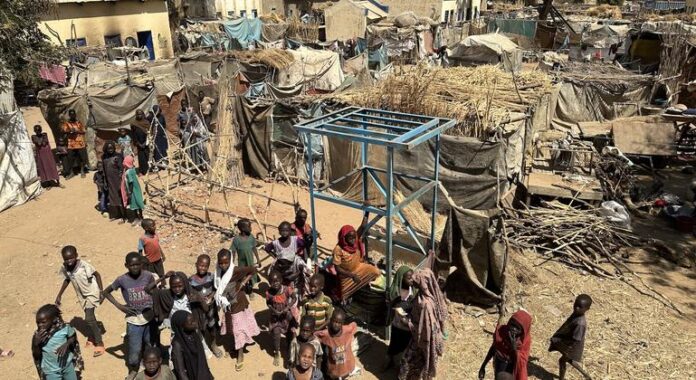
At least 1.4 million people largely in the capital Port-au-Prince, have been forced to flee their homes due to gang violence, creating what the UN’s Designated Expert on the situation of human rights in Haiti, William O’Neill, has called an “unprecedented level of internal displacement.” Speaking to journalists at UN Headquarters in New York on […]
Originally published at Almouwatin.com
MIDDLE ORIENT LIVE March 16: UN increases aid as crisis deepens into third week
The crisis in the Middle East has entered its third week, with fighting continuing across the region and humanitarian needs increasing. Oil prices continue to hover above $100 a barrel, while shipping disruptions and temporary flight suspensions affect travel and […]
Originally published at Almouwatin.com