Sunday, September 20, 2026
Home Blog Page 72

SPAN Plans Mini AI Data Centers in 80,000 Homes

0
SPAN Plans Mini AI Data Centers in 80,000 Homes


A San Francisco startup thinks the answer to AI’s enormous power appetite isn’t another warehouse-sized facility somewhere out by the freeway. It’s your house.

Mini in-house AI data center. Image credit: SPAN

Key Takeaways:

  • SPAN’s XFRA nodes pack 16 Nvidia RTX Pro 6000 Blackwell GPUs and 4 AMD EPYC CPUs into a single unit attached to the side of a home.
  • The company plans to scale from a 100-home pilot to 80,000 nodes across the US by 2027, providing over 1 gigawatt of distributed compute.
  • Homeowners get paid utility bills (or a flat $150 fee), free internet, and a 16 kWh backup battery – but experts flag concerns about grid strain, physical theft, and side-channel attacks.

SPAN has begun pilot testing a plan to install compact, liquid-cooled GPU nodes on the exterior of newly built homes, with the homeowner getting subsidized electricity, internet, and a backup battery in return. A 100-home trial is set for this year, with much larger ambitions to follow.

How the home-attached node would work

SPAN calls the approach a “distributed data center solution.” Each XFRA node sits beside a house, runs almost silently thanks to liquid cooling, and taps into the spare electrical capacity that most modern American homes already have. The pitch to utilities and AI companies is straightforward: instead of waiting years for a hyperscale facility to be sited, permitted, and built, deploy thousands of small nodes inside the existing electrical grid.

“Data centers are loud, ugly, and often drive up local electricity bills,” Chris Lander, vice president of XFRA at SPAN, told Ars Technica. “[This] is quiet, discreet, and makes energy more affordable for the host and community.”

According to a CNBC interview, SPAN claims 8,000 XFRA units can be installed for one-fifth the cost of building a typical 100-megawatt data center with the same compute output. The first wave focuses on new construction – SPAN pays for and runs all the equipment – though a company whitepaper hints at later retrofits and larger commercial node configurations.

What’s inside the box

A SPAN animation shows each XFRA node housing 16 Nvidia RTX Pro 6000 Blackwell Server Edition GPUs, 4 AMD EPYC Server CPUs, and 3 terabytes of memory. Alongside the node, every participating home gets a wall-mounted SPAN smart panel and a 16 kilowatt-hour battery. The company’s proprietary PowerUp software handles energy management across the whole setup. Rooftop solar may be added in suitable locations.

Power capacity is the linchpin. Most US homes built in the last three decades have 200-amp utility service, and Lander said SPAN’s analysis shows about 80 amps are typically idle. That headroom defines the ceiling for a single node. “Virtually all homes with 200-amp utility services have 80 amps available at all times, so we set that as the maximum power consumption for a single XFRA node,” Lander said. The nodes “operate as always-on loads within verified residential capacity,” running continuously under normal conditions.

What homeowners actually get

For people who agree to live with a data center bolted to their wall, the financial arrangement looks generous on paper. SPAN takes over both the electricity and internet bills, then either charges a flat fee – the example mentioned to Realtor.com was $150 per month – or nothing at all. Internet service plan details are still being worked out.

The company insists daily life inside the house would feel normal. Appliances would run as expected because the node uses only the slack in the home’s electrical service. If consumption ever spikes, the home battery kicks in first to keep the GPUs fed. Should that not be enough, the system temporarily throttles “non-critical flexible loads” like EV charging. Homeowners can use the PowerUp app to set their own priorities for which loads get curtailed and in what order. Lander said those interventions would be “rare and brief.”

Full node shutdowns only happen during power outages, utility demand response events, or safety triggers. When that occurs, the affected workload shifts elsewhere on SPAN’s network and the household keeps using the backup battery for its own circuits. “This home backup is provided to the host at no cost to them, contributing to greater energy resilience in addition to affordability,” Lander said.

Why utilities might like this idea

Power companies across the country are wrestling with AI-driven demand growth that often requires expensive grid upgrades, with the costs eventually showing up on customer bills. SPAN argues distributed nodes use grid capacity that already exists. “Networks of XFRA nodes make electricity more affordable for the entire community because they increase sales over grid infrastructure that already exists, saving utilities from costly upgrades to support big data centers,” Lander said.

Ari Peskoe, director of the Electricity Law Initiative at Harvard Law School, called the homeowner subsidy “fascinating”, but raised a practical question about clustering. “If there’s a block that has several homes with these devices, maxing out compute and energy would force a lot of power to that local area,” Peskoe said. Local distribution networks weren’t designed for sustained heavy industrial loads dropped into residential streets.

The case for edge inference

Benjamin Lee, a computer architect and engineer at the University of Pennsylvania, sees technical logic in the distributed model – at least for the right workloads. “Computation for AI inference can and should be distributed at the ‘edge,’ deployed on smaller platforms closer to population centers and users,” he said. “The strategy could impose much smaller impacts on the grid because inference requires a few GPUs, unlike training which requires thousands of them working in concert.”

Training the largest AI models will keep happening at the centralized hyperscale facilities being built by Google, Microsoft, and similar companies. SPAN’s nodes would handle the downstream work: cloud gaming, video streaming, and applying already-trained models to user queries. But inference tasks vary widely – answering questions about a document is a different beast from generating code or holding a long conversation – so each node will need enough horsepower for whatever lands on it, plus reliable connectivity to the rest of the network.

Lee also wondered whether shrinking compute all the way down to “the granularity of a few GPUs” is even necessary. Building 20-megawatt data centers rather than 1-gigawatt megastructures might solve much of the same problem with fewer logistical headaches.

Security, theft, and the curious neighbor

Distributing pricey hardware into thousands of suburban backyards creates risks that walled, guarded facilities don’t have. Side-channel attacks – the class of exploits that pull data out of a chip by measuring power draw, electromagnetic emissions, or timing – generally need close physical access. “Many side-channel attacks require physical proximity to the machine, which data centers can guard against,” Lee said. “Distributed GPUs in individual homes are much more difficult to protect.”

Then there’s the simpler problem of someone walking off with the hardware. Each Nvidia RTX Pro 6000 Blackwell sells for roughly $10,000, and a node contains sixteen of them. Reddit threads on the announcement have already speculated about theft, with a few commenters joking that the host might be the first suspect. “Of course, there is the risk of losing the actual hardware itself to theft,” Lee said.

What comes next

SPAN plans the 100-home pilot in 2026 and aims to ramp to 80,000 nodes nationwide starting in 2027, delivering more than 1 gigawatt of distributed compute capacity. The pilot will produce the data needed to evaluate whether the economics, reliability, and security claims hold up outside a slide deck.

While other parts of the AI industry chase ideas like orbital data centers and floating offshore facilities, the suburban version might be the most grounded of the bunch – assuming homeowners, neighbors, and HOAs don’t push back once the first nodes start humming next to someone’s fence.

Written by Alius Noreika


Source link

What to Do If Your Landlord Refuses to Return Your Deposit in Europe

0
What to Do If Your Landlord Refuses to Return Your Deposit in Europe

The keys are back. The room is empty. You have cleaned the flat, sent your new address, and waited for the money you need for your next home. Then the landlord stops replying — or says the whole deposit is being kept for vague “damage” you have never seen. For tenants across Europe, especially students, migrants and people moving between countries, a withheld rental deposit can mean debt, insecurity and a loss of trust at the exact moment they are trying to move on.

There is no single EU-wide rental deposit law. Housing rules are mainly national, regional or local. But tenants still have practical rights: to receive reasons, to challenge unfair deductions, to use evidence, and to seek help through housing bodies, consumer centres, mediation services or courts. The key is to act quickly, calmly and in writing.

Quick Answer: What to Do First

  • Do not rely on phone calls only — move the dispute into writing.
  • Ask for an itemised list of deductions, invoices and photos.
  • Gather your own evidence: contract, inventory, photos, messages and bank transfers.
  • Send a formal deadline letter requesting the return of the deposit.
  • Escalate to a tenant union, housing authority, mediation body or small claims court if needed.

Step 1: Check What Your Contract Actually Says

Start with the rental agreement. Look for clauses on the deposit amount, what it covers, how it must be held, and when it should be returned. In many countries, a landlord may deduct money for unpaid rent, unpaid utilities or damage beyond normal wear and tear. But they usually cannot keep a deposit simply because they are unhappy with the tenant, want to redecorate, or prefer to delay payment.

If you paid the deposit by bank transfer, keep the payment record. If you paid in cash, look for a receipt, message confirmation or witness. If you never signed a written contract, you may still have rights if you can prove the tenancy existed through rent payments, messages, keys, registration documents or correspondence.

Step 2: Separate Damage from Normal Wear and Tear

A deposit is not a renovation fund. Landlords can usually claim for real damage caused by the tenant, but ordinary use of a home is different. Faded paint, minor marks, worn flooring or ageing appliances may be considered normal wear and tear, depending on national law and the length of the tenancy.

Ask the landlord to explain each deduction in writing. A fair claim should normally include:

  • What was damaged;
  • When it was recorded;
  • Why the tenant is responsible;
  • The repair cost or invoice;
  • Why the amount deducted is proportionate.

Step 3: Build a Clear Evidence File

Create one folder with every relevant document. This helps if you need to contact a tenant association, housing office, lawyer or court.

  • Rental contract and deposit clause;
  • Move-in and move-out inventory reports;
  • Photos or videos from the day you moved in and out;
  • Messages with the landlord or agency;
  • Proof of rent and deposit payments;
  • Cleaning receipts or repair receipts, if any;
  • Witness statements from flatmates or neighbours, where useful.

For cross-border renters, the Your Europe residence rights portal can help explain broader rights when living in another EU country, while national tenant organisations can explain the exact deposit rules in the country where the property is located.

Step 4: Send a Formal Deposit Return Letter

If the landlord delays or gives unclear reasons, send a formal letter or email. Keep the tone factual. State the amount paid, the date you moved out, the condition of the property, and the amount you are requesting back. Ask for payment by a clear deadline, such as 10 or 14 days, depending on local practice.

Your letter should include:

  • Your full name and former address;
  • The deposit amount and payment date;
  • Your bank details for repayment;
  • A request for itemised deductions, if the landlord disputes the amount;
  • A deadline for response;
  • A statement that you may seek mediation, legal advice or court action if there is no reply.

Send it by a traceable method if possible. In some countries, registered mail carries more legal weight than ordinary email. Keep proof of delivery.

Step 5: Use Local Tenant Support Before Going to Court

Many deposit disputes are resolved before court when the tenant presents evidence and uses the right channel. Depending on the country, help may be available from municipal housing offices, rent tribunals, consumer bodies, tenant unions, ombuds services or legal aid clinics.

If you rented across borders — for example, through an agency or platform based in another EU country — the European Consumer Centres Network may be able to guide you on cross-border consumer options. If the issue involves discrimination, intimidation or harassment, support from equality bodies or civil society organisations may also be relevant.

Step 6: Consider Mediation or Small Claims Procedures

If the landlord still refuses to return the money, you may be able to use mediation or a simplified court procedure. Small claims routes are often designed for people without large legal budgets. The correct route depends on the country, the amount at stake and whether the landlord is local or cross-border.

For cross-border civil claims within the EU, information on the European Small Claims Procedure is available through the European e-Justice Portal. This may be relevant where the tenant and landlord are in different EU countries, though national procedures may still be simpler in many cases.

Step 7: If You Are a Migrant, Student or Short-Term Renter, Be Extra Careful

People new to a country are often more exposed to deposit abuse because they may not know local rules, may lack language confidence, or may need housing urgently. If you are renting as a student, seasonal worker, refugee, posted worker or short-term tenant, do not assume that an informal arrangement leaves you without protection.

Practical safeguards include paying by bank transfer, photographing the property before unpacking, asking for a written inventory, and refusing pressure to pay large sums without receipts. The European Federation of National Organisations Working with the Homeless has repeatedly highlighted the wider housing pressures affecting vulnerable people in Europe, including insecurity linked to affordability and access.

Data Box: Rental Deposits and Housing Pressure

Key figures and facts

  • Rental deposit rules are not harmonised across the EU; they are mainly set by national or regional law, as reflected in the European Commission’s overview of rental market regulation in the European Union.
  • In Germany, official guidance for EU citizens states that a rental deposit may be a maximum of three months’ net rent excluding running costs and heating, according to the EU Equal Treatment Office information centre.
  • Across the EU, 10.6% of the population lived in households spending 40% or more of disposable income on housing in 2023, according to Eurostat housing statistics.

What Not to Do

  • Do not threaten the landlord or post accusations online before getting advice.
  • Do not ignore a written deduction claim — answer with evidence.
  • Do not accept vague deductions without invoices or explanation.
  • Do not return keys without documenting the property condition, if possible.
  • Do not assume the rules are the same in every European country.

When the Dispute Is About More Than Money

A withheld deposit can sometimes be part of a wider pattern: harassment, discrimination, illegal eviction, unsafe housing or pressure on undocumented or precarious tenants. If you feel unsafe, seek local legal or social support immediately. Housing is closely linked to dignity, privacy and family life, and tenants should not be forced into silence because they fear losing money or accommodation.

The European Times has also reported on housing-related policy changes, including Greece’s decision to postpone mandatory rent payment by bank transfer, a measure linked to transparency in rental payments. Read more in our coverage of Greece’s rent payment rules.

Why This Matters

A rental deposit is often more than a financial guarantee. It may be the money a person needs to secure their next room, protect their family budget, or leave an unsafe housing situation. When landlords keep deposits without fair reasons, the burden falls hardest on people with the least margin for error.

The most effective response is practical: document everything, ask for reasons, use local support, and escalate when necessary. Tenants do not need to be aggressive to be firm. They need evidence, deadlines and a clear understanding that housing rights are part of everyday human dignity.


Keywords
rental deposit Europe
landlord refuses deposit
tenant rights Europe
security deposit refund
housing rights EU
small claims rental dispute

Source link

Strengthen protection for vulnerable people on the move

0
Strengthen protection for vulnerable people on the move

Churches can also reach remote parts of the territory where others cannot sustain a presence, Morales continued, “but as faith-based organizations, we cannot replace or substitute the state and other international organizations.” There is a need to strengthen accountable public systems to promote sustainable policies and guarantee the dignity of migrants who bring hope to their host communities,” she added.  

Faith-based organizations are key partners, but not substitutes, for a coherent whole-of-society response to migrant support, integration and inclusion. Access to rights should not depend on the existence of solidary organizations. It should be guaranteed directly by accountable public systems.” 

For Rev. Sonia Skupch, LWF Regional Secretary for Latin America, the Caribbean and North America, the forum marked a vital opportunity for networking in order to strengthen those partnerships and pursue the goals of the Global Compact. “We have been able to engage in dialogue with representatives from governments, UN officials and civil society organizations,” she noted. “I have observed how the voice of the churches is valued both for their local presence and for being trusted partners,” she concluded. 

Source link

Source link

Dutch Hospital Quarantines 12 Over Hantavirus

0
Dutch Hospital Quarantines 12 Over Hantavirus


A hospital in the Dutch city of Nijmegen has placed twelve of its own medical staff into a six-week quarantine after blood and urine samples from a hantavirus patient were processed without the maximum level of safety procedures.

Image credit: Radboudumc

Key Takeaways:

  • Twelve Radboudumc staff face a six-week quarantine after lab samples were handled under standard — rather than maximum — biosafety procedures.
  • The WHO now counts nine confirmed hantavirus cases linked to the cruise ship Hondius, plus two suspected cases and three deaths.
  • Health authorities stress the situation is not comparable to COVID-19, since hantavirus rarely passes between people.

The Radboudumc facility called the step purely precautionary, insisting the chance of any actual infection among the team is very low and that day-to-day patient care has not been disrupted.

The incident shows how difficult it is to switch hospitals over to a tougher rulebook on short notice, particularly when the pathogen involved is the same strain tied to the outbreak aboard the luxury cruise ship Hondius. The patient at the heart of the Nijmegen case was a passenger from that voyage, admitted on May 7.

Speaking to the Dutch parliament, Health Minister Sophie Hermans explained what went wrong. “What happened … is that strict procedures were followed, but not the very strictest procedures that apply in cases involving this hantavirus,” she said. “The likelihood that staff have been infected as a result is small, but because we know we are dealing with a serious virus, (the hospital) has said: we will play it safe.”

She drew a sharp line between the current scare and the early days of the pandemic. “It really is a different situation than with COVID. With the knowledge we have and the measures we are taking, we are confident we can keep this virus under control,” Hermans told lawmakers.

The cluster grows, but slowly

The World Health Organization lifted its confirmed case count to nine, two higher than the day before. WHO Director-General Tedros Adhanom Ghebreyesus said additional patients are likely given how long the virus can lie dormant before symptoms appear, but he was clear that this is not a pandemic and bears no resemblance to COVID-19. Hantavirus can kill, yet it rarely jumps from one person to another.

So far, three people have died since the outbreak began: a Dutch couple and a German citizen. The virus is normally carried by wild rodents, with human-to-human transmission limited to rare cases of very close contact.

On top of the nine confirmed infections, the WHO is tracking two suspected ones — a patient who died before testing could be done, and another on Tristan da Cunha, a remote island in the South Atlantic where no tests are available. Every known case so far appears to have picked up the virus during the cruise or just before boarding. Tedros said all suspected patients have been isolated and are receiving close medical supervision to cut off any chain of transmission.

“At the moment, there is no sign that we are seeing the start of a larger outbreak, but of course the situation could change and given the long incubation period of the virus, it’s possible we might see more cases in the coming weeks,” he said. Tedros noted that passengers had spent considerable time mingling on board before anyone knew the virus was present.

The ship sails home

The Hondius itself left Spain’s Canary Islands on Monday evening, after the last of its passengers had stepped off. Twenty-five crew members along with a doctor and a nurse remain on board for the journey north. Ship owner Oceanwide Expeditions expects the vessel to dock in the Netherlands by May 17.

Tedros said authorities have managed to locate every passenger who disembarked at earlier points in the cruise, and that each country now bears responsibility for stopping any onward spread.

A trial run for post-COVID cooperation

Italy’s leading infectious diseases hospital announced it will analyse biological samples from a man who had been near the Dutch woman who died of hantavirus, making him the latest potential case to enter the international tracking system.

Arnaud Fontanet, head of Epidemiology of Emerging Diseases at France’s Pasteur Institute, told Reuters that the search for new patients could stretch on for months because the incubation window runs up to six weeks. Even so, he expects no more than a few dozen additional cases overall, given how poorly the virus transmits between humans. For him, the outbreak doubles as an exercise: “is a good way for us to try to test all that has been done since COVID-19,” to see whether the channels of international coordination actually work.

Spain confirmed on Monday night that one of its nationals had tested positive, part of a group of fourteen people quarantining at a military hospital in Madrid. The thirteen others returned negative results on Tuesday. A French passenger who tested positive after the ship reached the Canary Islands on Sunday is in intensive care but stable.

Meanwhile, the U.S. Department of Health and Human Services said eighteen Hondius passengers had been flown back to the United States and put into quarantine. One of them, who returned a weakly positive test, is now in a biocontainment unit in Nebraska.

Written by Vytautas Valinskas


Source link

Children shot, stabbed and pepper-sprayed in occupied West Bank

0
Children shot, stabbed and pepper-sprayed in occupied West Bank

“We’re seeing attacks become increasingly coordinated,” UN Children’s Fund (UNICEF) spokesperson James Elder told reporters in Geneva. “Documented incidents include children shot, stabbed, children beaten, and children pepper-sprayed.”

Some 70 children have been killed since January 2025 – at least one on average every week – and a further 850 injured, mostly by live ammunition, UNICEF says.

“All this comes amid historic levels of settler attacks,” Mr. Elder continued, explaining that March 2026 saw the highest number of Palestinians injured by settler attacks in the last 20 years.

Bludgeoned by attackers

Following a recent West Bank visit, the UNICEF spokesperson described meeting an eight-year-old who had been beaten with a piece of wood in a settler attack and hospitalized for head injuries.

The boy’s mother “had both her arms broken when she reached across to protect her four-month-old baby, putting therefore her arms between her baby and the attacker’s club”.

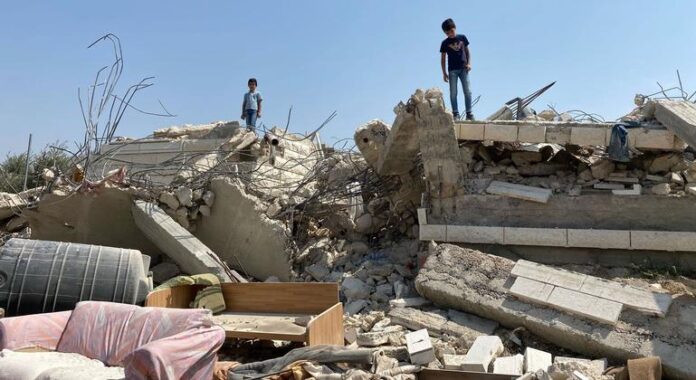
Mr. Elder also highlighted the prevalence of education-related attacks, including the killing, injury and detention of students, as well as the demolition of schools.

“Schools, which should be places of safety and stability, are increasingly becoming places of panic,” he stressed.

“I walked with schoolchildren through the West Bank so as to try and help them avoid any attacks,” the UNICEF spokesperson recounted. “It’s interesting to watch them walk…They don’t walk in a straight line because they’re constantly looking over their shoulder.”

“This is a walk to school. It’s become a walk through fear,” he insisted.

Record detention numbers

Mr. Elder also reported on a “sharp rise” in the arrest and the detention of Palestinian children from the occupied territory, saying that 347 of them are being held in Israeli military detention “for alleged security-related offences” – the highest number in eight years.

“Alarmingly, more than half of these children, 180, are held under administrative detention and without the procedural safeguards, including detention without regular access to legal counsel and the right to challenge detention,” he said.

Gaza children killed and maimed

Meanwhile in Gaza, Mr. Elder said that since the October 2025 ceasefire, the UN has documented at least 229 children killed and 260 injured.

Dr Reinhilde Van de Weerdt, the UN World Health Organization (WHO)’s representative in the Occupied Palestinian Territories, told reporters that some 10,000 children in the devastated Strip live with life-changing injuries.

Overall, an estimated 43,000 of the 172,000 people injured in Gaza since October 2023 have sustained such trauma, affecting limbs, the spinal cord or brain. Almost 2,500 people have been injured since the October 2025 ceasefire.

“Of the 2,277 people that have had a limb amputated, less than 25 per cent have been fitted with permanent prosthetics,” Dr Van de Weerdt said, due to a severe shortage of prosthetics in Gaza.

Amputees denied prosthetic limbs

Speaking from Jerusalem, the WHO representative explained that no less than 18 shipments of rehabilitation-related supplies such as wheelchairs or prosthetic limbs are pending clearance to enter Gaza, with waiting times ranging from 130 days to more than a year.

In total, more than 50,000 conflict-related injuries require long-term rehabilitation; no rehabilitation facilities are functional in the enclave.

“Every day that rehabilitation services in Gaza remain under-resourced is a day that preventable disability risks become permanent,” she concluded.

Source link

Storm, displacement and hidden wartime explosives deepen emergency in Solomon Islands

0
Storm, displacement and hidden wartime explosives deepen emergency in Solomon Islands

The Category 4 storm brought destructive winds, flooding and heavy rainfall to vulnerable coastal and island communities after intensifying in the Solomon Sea in the South Pacific.

Displacement remains widespread, with many families sheltering in evacuation centres, schools, churches and host communities,OCHA said in a humanitarian bulletin on Sunday.

Agencies warn that women, children and persons with disabilities face growing protection risks due to overcrowding and disrupted community support systems.

WWII bombs

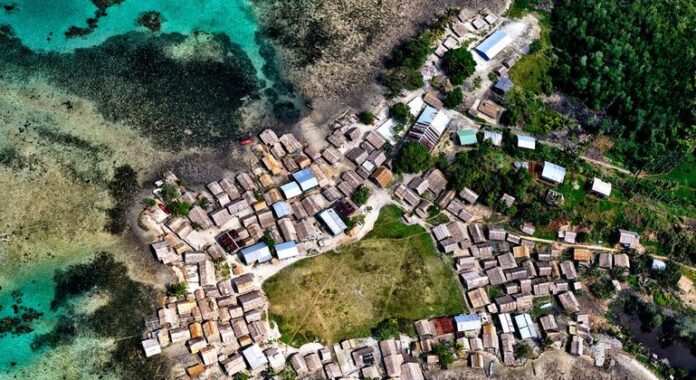
Flooding and erosion in the archipelago’s Western Province have also exposed unexploded ordnance (UXO), creating additional dangers for affected communities and responders.

The unexploded ordnance was left over from the battles which took place in the Solomon Islands during the Second World War.

The UN Emergency Relief Coordinator has allocated $2.5 million from the Organization’s central emergency response fund to support urgent lifesaving assistance.

Resources strained

Health services have also been strained. An estimated 3,600 pregnant women have been affected, while 21 health facilities sustained damage.

Many women face difficulties reaching clinics because of damaged infrastructure and transportation disruptions.

Food insecurity is worsening as crops and fishing livelihoods are destroyed, with communities reporting reduced meals and growing reliance on humanitarian aid.

Education has also been disrupted, with 84 schools across Western, Choiseul and Guadalcanal Provinces damaged, affecting nearly 15,800 students.

The UN Children’s Fund (UNICEF) and partners are establishing temporary learning spaces and distributing emergency school supplies.

Broader weather pattern

The storm is part of a broader wave of extreme weather across the Pacific.

In the Federated States of Micronesia, an archipelago in the Western Pacific, Typhoon Sinlaku prompted a state of emergency earlier in April after damaging homes, infrastructure and water systems.

“This is yet another reminder that extreme weather events are becoming more frequent and unpredictable,” said Iori Kato, the Regional Director for Asia and the Pacific for the UN International Organization for Migration (IOM).

Without sustained investment in preparedness and early warning systems, the region risks facing devastating human and economic costs. This is a critical window for action,” he added.

Listen to the update from IOM’s Solomon Kantha, Chief of Mission/Sub-regional Coordinator for the South Pacific: 

Source link

Venezuela: outreach program offers new model of ministry

0
Venezuela: outreach program offers new model of ministry

Medical supplies and home visits

Outreach often begins with a conversation, a prayer or simply quiet companionship enabling people to feel seen and heard. Over time, activities such as Bible readings, songs or shared reflections help to build trust, restoring dignity and hope. Through regular visits and close relationships with congregations, the leaders of this ministry aim to ensure that no one feels forgotten or alone.

With access to healthcare often limited and costly for people in many communities, the church provides practical support in the form of medicines and home visits to the sick, especially children and older people. Over the past year, more than 140 people have received medical assistance from the IELV.

“What began as medical support in Valencia grew into something more, reaching beyond our original goals to provide sustained care, comfort, and dignity to elderly people and children living with chronic illnesses,” Hands noted. Regular pastoral visits and gatherings for elderly people also offer spiritual care, companionship and moments of joy, including special Christmas and end-of-year celebrations.

In Valencia, a workshop titled ‘Action of Liberating’ led by psychologist Angélica Castillo, has provided safe spaces for women to share their experiences, reflect together and reconnect with their faith. Held in a variety of locations, the workshops have been attended by more than 60 women, many of whom reported that they gained confidence and a stronger sense of purpose.

Source link

Source link

Existing medication can restore HIV-affected immune cells

0
Existing medication can restore HIV-affected immune cells


HIV exhausts the body’s immune system by overactivating it, despite effective antiviral treatment. Researchers from Linköping University have conducted cell studies showing that an existing medication restores immune cell function. The findings raise hopes that this medication could improve the health of people living with HIV.

The LiU researchers have shown that HIV exhausts the body’s immune system by overactivating it, despite effective antiviral treatment. Image credit: Charlotte Perhammar / LiU

For people living with HIV, antiviral treatment is effective in limiting the amount of virus in the blood and slowing the progression of AIDS. But the virus can stay hidden in the body for many years and contribute to premature ageing of the immune system. Despite effective treatment, the immune system is commonly impaired in people with HIV. Linköping University researchers therefore investigated how the virus causes dysregulation of the immune system.

In healthy people infected with a virus, a protein called type I interferon is activated that plays a very important role in the body’s immune system. Type I interferon is the first protection against viral infections and also ensures that other parts of the immune system kick in. Once the infection is combated, the amount of type I interferon falls back to a very low level.

In their study, the researchers show how HIV exploits the body’s type I interferon signalling to drive chronic immune activation, also when the virus is under control due to medication.

“In the case of an HIV infection, type I interferon provides protection in the first stage when the body gets infected. But if the interferon is chronically activated, an overactivation of the immune system will instead facilitate the spread of HIV in the body,” says Cecilia Svanberg, postdoctoral fellow at Linköping University and lead author of the study, published in the journal PLOS pathogens.

May be treateable

A chronically activated immune system eventually leads to several different types of cells in the immune system becoming exhausted and less effective. Two important cell types affected are dendritic cells and T cells.

The researchers’ experiments on human cells showed that the chronic activation of interferon occurs precisely when dendritic cells and T cells are in contact with each other. This opens up an opportunity to restore immune cell function.

“When we treated the cells with a medication currently used to treat another disease, this perfectly restored the function of the immune cells. It looks just like when HIV is not present,” says Cecilia Svanberg.

The medication, anifrolumab, blocks type 1 interferon and is used to treat systemic lupus erythematosus, SLE, an autoimmune disease. Other research groups have conducted studies on animals with HIV-like infections, treating them with either anifrolumab or other substances with the same function. The amount of HIV virus in the blood has decreased and the animals’ health has improved.

“Using this interferon blocker together with existing antiviral treatment could possibly improve the health of people living with HIV. We think it would be worth investigating further,” says Marie Larsson, professor of virology at Linköping University, who led the study.

The study was funded by, among others, the Swedish Research Council and Region Östergötland.

Article: HIV-1 derived oligonucleotides induce a type I IFN/STING dependent immune suppression reversible by targeting IFNARI, Cecilia Svanberg, Ravi Prasad Mukku, Sabri O. Besler, Francis R. Hopkins, Christopher Sjöwall, Sofia Nyström, Esaki M. Shankar and Marie Larsson, PLOS Pathogens, published online on 13 January 2026, doi: https://doi.org/10.1371/journal.ppat.1013868

Written by Karin Söderlund Leifler

Source: Linköping University


Source link

World News in Brief: Human rights in Mongolia, surge in sexual violence in Haiti, worsening hunger in Afghanistan

0
World News in Brief: Human rights in Mongolia, surge in sexual violence in Haiti, worsening hunger in Afghanistan

“At a time when some powerful global actors are openly defying and even vilifying human rights, including through transnational repression, Mongolia’s positive commitment stands out,” UN High Commissioner for Human Rights Volker Türk said.

However, concerns over corruption remain. One civil society representative told him, “corruption is the biggest bottleneck to the development of the country”. 

“Stronger anti-corruption measures are clearly necessary, including to earn the trust of the population and reinforce the rule of law,” Mr. Türk said.

Young people driving change

Climate change remains a major threat to sustainable development in Mongolia, including through increasingly severe winter freezes, droughts, floods and storms that could affect a wide range of human rights.

Mr. Türk also highlighted Mongolia’s young and active population, many of whom are increasingly concerned about the future, the planet and the impact of digital technology and social media on society.

“It is important that governments are responsive and think in terms of long-term intergenerational impact, not just short-term political or economic gains,” he said.

Haiti: Alarming rise in rape cases

The first three months of this year saw nearly 2,000 incidents of gender-based violence in Haiti – about 21 cases per day – according to the UN relief coordination office, OCHA.

More than 70 per cent of the cases involved rape, a sharp increase from the previous quarter, when rapes accounted for 49 per cent of incidents. Most were reportedly gang rapes carried out by armed groups, with women and girls making up the majority of survivors.

The rise follows a broader increase in gender-based violence last year, when partners recorded more than 8,000 incidents – a 25 per cent increase compared to 2024.

Support services only eight per cent funded

Despite the worsening crisis, support services remain severely underfunded. So far this year, only $1.2 million of the $15 million required has been received – just eight per cent of the total needed.

The funding gap is severely limiting access to emergency medical care within the critical 72-hour period after assault, as well as psychosocial support and temporary shelter.

Overall, Haiti continues to face a deep humanitarian crisis. Around 1.45 million people are internally displaced, while nearly six million – about half the population – are acutely food insecure.

Hunger surges in Afghanistan, women and children worst affected

Afghanistan is grappling with overlapping crises, including economic collapse, job losses and climate shocks, compounded by rising regional tensions that are driving up prices and worsening food insecurity.

 “The little food we can afford we give to our children, but that is not enough,” said Raqiba Ahmadi in the northeastern city of Faizabad. Her youngest daughter is recovering from malnutrition and her husband is unemployed.

The UN World Food Programme (WFP) warned that these combined pressures have depleted stocks of specialized food used to help women and children recover from malnutrition.

Lifeline under threat

“Programmes such as nutrition assistance are essential, not optional,” said John Aylieff, WFP Country Director in Afghanistan.

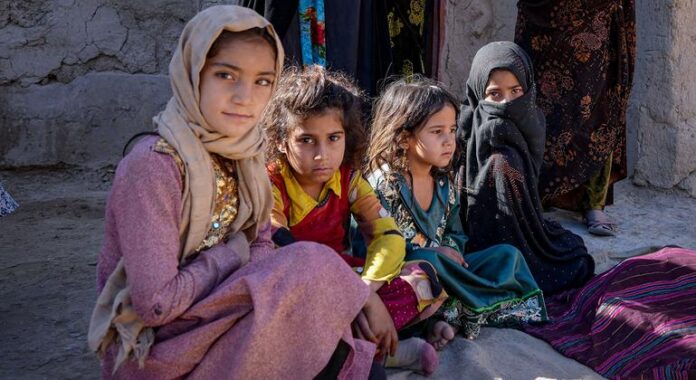
Even before the latest shocks, Afghanistan was facing record levels of hunger and malnutrition. More than 13.8 million people now face acute food insecurity, while nearly five million children and pregnant or breastfeeding women are malnourished.

Nutrition assistance and food rations remain a lifeline for millions of women and children across the country, Mr. Aylieff said.

“But unfortunately, this lifeline has already been severed, threatening the lives of hundreds of thousands of mothers and children,” he warned.

Source link

Minor restrained for over 100 hours, treated with high-dose neuroleptics, threatened with electroshock therapy

0
Minor restrained for over 100 hours, treated with high-dose neuroleptics, threatened with electroshock therapy
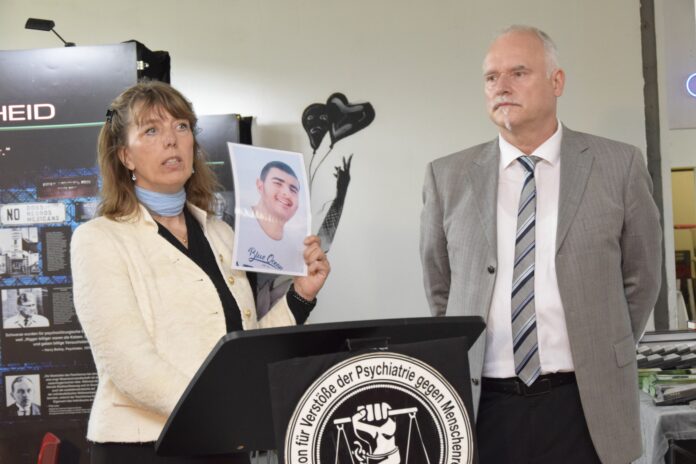
Copyright KVPM - David died aged 17 – Board members of KVPM Germany e.V. with a picture of the late David M. at the opening event of the international exhibition “Psychiatry: Death Instead of Help”. - - Editorial use is free of charge.

Exhibition ‘Psychiatry: Death Instead of Help’ documents practices criticised by the WHO and the UN

PRESSETEXT // Düsseldorf/Stuttgart (pts001/10 May 2026/08:30) – In German psychiatric institutions, patients and their relatives report treatments in which minors are allegedly medicated with very high doses of neuroleptics not approved for children, restrained for many hours and subjected to electroconvulsive therapy – in some cases against their expressly stated will. At the same time, the World Health Organisation (WHO) and the UN High Commissioner for Human Rights point out in their guidelines that electroconvulsive therapy (ECT) without free and informed consent violates physical and mental integrity and may be classified as ill-treatment or torture. The international travelling exhibition ‘Psychiatry: Death Instead of Help’ addresses this criticism and documents accounts from those affected.

A mother reports that her son David (name changed), who was 15 at the time, was restrained for a total of 107 hours in a child and adolescent psychiatric clinic in 2023 with a court order. A year later, the teenager died following a serious illness; based on current knowledge, no causal link with the psychiatric treatment can be established. The police are investigating the case.

An international exhibition entitled “Psychiatry: Death Instead of Help” ended on 18 April in Düsseldorf after seven days, attracting 664 visitors. It was promoted, among other things, with 1,000 posters and via digital advertising displays in the city centre. The focus was on documented accounts which, according to the organisers, left many visitors stunned.

One mother described how her underage autistic son had been given a highly potent psychotropic drug at a child and adolescent psychiatric facility, which, she claimed, is not approved for the treatment of children and adolescents. She describes her son as a peace-loving boy with no history of aggression and makes serious allegations against those responsible: “My son’s life was destroyed by psychiatric abuse.”

Subsequently, the boy developed cancer and died at the end of 2024. The mother has filed a criminal complaint on suspicion of unlawful detention, mistreatment of a person under her care, and bodily harm in connection with the 7-point restraint of her son.

Another case was documented during the exhibition by volunteers from the KVPM together with the now 26-year-old woman concerned, “Sarah H.” (name changed). According to her account, she has filed a criminal complaint against the then head of a child and adolescent psychiatric ward on suspicion of bodily harm through the administration of poison or other harmful substances.

According to the patient records submitted by the victim, the then 14-year-old girl was treated in 2014 with a neuroleptic that is not authorised in Germany for those under 18. The documented dosage was 1,100 mg daily – significantly higher than the maximum dose specified for adults – plus so-called on-demand medication, whereby further doses were reportedly administered depending on her behaviour. These details were verified against the medical records. Police officers also expressed concern after reviewing the documents.

Alongside these individual cases, there is an international debate regarding the use of coercive psychiatric measures and electroconvulsive therapy (ECT). In their guidelines, the WHO and the UN High Commissioner for Human Rights recommend that ECT should not be used on children and should be prohibited by law. At the same time, it is emphasised that ECT without free and informed consent violates physical and mental integrity and could be classified as ill-treatment or torture.

One German psychiatrist is demonstratively opposed to these positions: the Mannheim-based psychiatrist Prof. Alexander Sartorius publicly defends electroconvulsive therapy and sharply attacks the WHO in a report in the Süddeutsche Zeitung on 1 April 2026. Sartorius is one of the best-known advocates of electroconvulsive therapy in Germany. He also expressly supports the use of electroconvulsive therapy on children. In an interview with the psychiatric journal ‘Eppendorfer’ in 2018, he responded to the question of whether someone would be treated against their will by saying: ‘We’ve already done that’ – referring to a minor girl.

According to the organisers, this highlighted a fundamental conflict for many visitors to the exhibition: whilst international organisations warn against certain practices, these continue to be advocated and practised in Germany as therapeutic measures.

Critical voices are also being reported from within the psychiatric system itself. After visiting the exhibition, a nurse explained that, for reasons of conscience, she could no longer practise her profession in a psychiatric institution.

The debate has been further fuelled by a report from a care home in Düsseldorf: a nun working there stated that, according to her observations, almost all of the over 150 residents receive one to three psychotropic drugs daily – partly due to alleged aggression. According to the KVPM, she was informed on site that, according to the package leaflets, many of these drugs can themselves trigger aggression and violent outbursts.

Current case: Coercive measures and the prospect of electroconvulsive therapy in North Rhine-Westphalia

Another recent case brought to the attention of the KVPM in the context of the exhibition concerns a patient in a psychiatric facility in North Rhine-Westphalia. According to the documents available to the KVPM and the patient’s own account, treatment with strong psychotropic drugs was carried out against her expressly stated will and on the basis of a court order. In the event of refusal, she reports being subjected to physical restraints and further coercive measures.

The patient has provided the KVPM with the court order. According to the KVPM’s account, this shows that she was classified by the treating psychiatrist as uncooperative regarding her illness, and the order explicitly specifies the dose of neuroleptics with which she may be treated.

The patient further reports that she has been told she may undergo electroconvulsive therapy (ECT); a court hearing is reportedly scheduled for this purpose. According to her, this has so far only been communicated to her verbally during a consultation with a doctor.

The patient denies posing a danger to herself or others and describes herself as well-adjusted and organised in the daily routine of the facility. At the same time, she describes significant side effects from previous treatments, including a marked tendency towards aggression whilst on neuroleptics.

In the view of the KVPM, this case demonstrates the far-reaching extent to which interventions in the self-determination and physical integrity of psychiatric patients can go – including the threat of highly controversial measures such as electroshock therapy and heavy medication, even against the express will of those affected.

The international travelling exhibition “Psychiatry: Death Instead of Help” was on display at the Wehrhahn in Düsseldorf, presenting a chronology of psychiatric practices that have been criticised internationally for years – from restraints and electroshock therapy to fatalities – through 14 large-format panels and films featuring over 160 experts and those affected. Whilst cuts to talk therapy are being discussed, according to the KVPM, billions continue to flow into the psychiatric system every year for psychotropic drugs, and substantial funds are spent on electroconvulsive therapy.

In the view of KVPM Germany, the psychiatric methods described frequently lead to permanent physical and psychological damage and are a key factor in prolonged hospital stays, relapses and new disorders induced by psychotropic drugs.

The organisers’ conclusion is clear: in their view, the documented accounts reveal conditions that are incompatible with a modern constitutional state. “We demand the implementation of the international WHO/UN guideline ‘Mental Health, Human Rights and Legislation’ in Germany and, consequently, the abolition of coercive practices in psychiatry.”

When, according to available documents, a 14-year-old is treated with the maximum dose of a neuroleptic not approved for children, when it is publicly acknowledged that electroconvulsive therapy was administered against the will of minors, and when a woman currently in a psychiatric institution in North Rhine-Westphalia states that she fears being treated with electroconvulsive therapy against her will, even though the WHO and UN emphasise that ECT without consent violates physical and mental integrity and can be classified as ill-treatment or torture, a fundamental question arises:

How can such practices continue to be a reality in Germany – in a democracy committed to human rights and the special protection of children and young people?

In the organisers’ view, silence or relativisation is no longer an option. The exhibition will continue in Germany and worldwide. It is currently on display until 16 May 2026 in a marquee on Pariser Platz in Stuttgart city centre. As always, admission is free.