
The Council today agreed on its negotiating position on key proposals to strengthen the euro currency and, in turn, improve the EU’s strategic autonomy, economic security and resilience.
SAFE: member states endorse agreement on the participation of Canada

Council endorsed the agreement for the participation of Canada in SAFE to further strengthen their joint defence cooperation.
Security Council takes note of diminishing electoral prospects in Libya

Hannah S. Tetteh, who also heads the United Nations Support Mission in Libya (MANUL), stressed the need to overcome delays in the implementation of the political roadmap this paves the way for presidential and legislative elections, a new unified government and a structured dialogue on crucial issues of governance, economy, security and reconciliation.
Since the overthrow of Muammar Gaddafi in 2011, Libya has been divided between the internationally recognized Government of National Accord (GNA) based in the capital Tripoli in the west and a rival administration in Benghazi in the east.
Lack of confidence
Ms. Tetteh collaborated with stakeholders on the implementation of the roadmap she presented to the Council in August.
However, the first two steps – the formation of a board of directors of the High National Electoral Commission (HNEC) and the adoption of the constitutional and legal amendments necessary for the elections – have not been achieved.
“We believe that the delays are a manifestation of the lack of trust between the two institutions, their own internal divisions and their inability to overcome their differences and agree on the way forward from the current impasse,” she said.
The two institutions she referred to are the two Libyan parliaments: the High Council of State (HCS) in Tripoli and the House of Representatives (HoR) in Benghazi. Although the HNEC board currently has enough members to conduct its business, the East is not represented. Despite this, municipal elections were able to be held in October.
“It would be desirable for the HNEC to have a fully constituted board of directors to manage the process of conducting what would be the most important elections in the history of the country,” she said.
Following simultaneous protests in five cities last month, House Speaker Aguila Saleh called for presidential elections. The HNEC also said it was ready to begin preparations for presidential and parliamentary elections starting in April, and GNA Prime Minister Abdulhamid Dbeibeh echoed these calls.
On the issue of constitutional and legal amendments needed for the elections, Ms Tetteh said the HCS had dissolved its delegation to the “6+6 Committee” – tasked with proposing new electoral laws to govern voting – as early as 2023. The reconstituted delegation was only announced on December 17 this year following internal conflicts.
A structured dialogue begins
This month also saw the launch in Tripoli of the inaugural meeting of the Structured Dialogue, with UNSMIL bringing together 124 representatives from key sovereign institutions, civil society, political parties, academia and the cultural world.
“This is the first process of this scale to take place on Libyan soil,” she said, and the plan is to facilitate meetings of the four thematic working groups across the country, as well as online.
The process “should help facilitate the creation of the political conditions necessary for a peaceful electoral process to take place, and also contribute to maintaining peace and stability in the aftermath of the elections.”
Economic fragility and rights violations
Meanwhile, Libya continues to make do with a weak economy. In November, delegates from the House of Representatives and the HCS signed an agreement on a common framework for development spending. The UN Mission welcomed this as a step in the right direction “provided it is implemented with transparency, effective monitoring and alignment with Libyan law and international public financial management standards”.
Addressing the human rights situation, Ms. Tetteh expressed deep concern over violations, including violence against women, migrants and minorities, and deaths in custody. She said the assassination of blogger Khansa Al-Moujahed in Tripoli last month “sends a frightening message to women about their participation in public life and risks silencing them at a time when their contribution is most needed.”
UNSMIL has also verified the deaths of 25 people in custody since March 2024, which “raises serious concerns about broader patterns of arbitrary detention, ill-treatment and lack of accountability.”
Rise above differences
Concluding her speech, Ms. Tetteh insisted that “the political process must not be held hostage by the inaction of the main political actors who, voluntarily or not, maintain the status quo.”
She highlighted that Libyans will celebrate Independence Day on December 24, when national elections are due to take place in 2021.
“Four years later, the country’s path to elections remains fraught with challenges that are difficult but can be overcome,” she said.
“I call on all Libyan leaders to respond to the demands of the Libyan people and overcome their differences in the interest of the unity and integrity of the Libyan state and to advance the well-being of the Libyan people.”
Originally published at Almouwatin.com
Sudan war: Kordofan’s El-Obeid ‘one or two steps’ away from being attacked
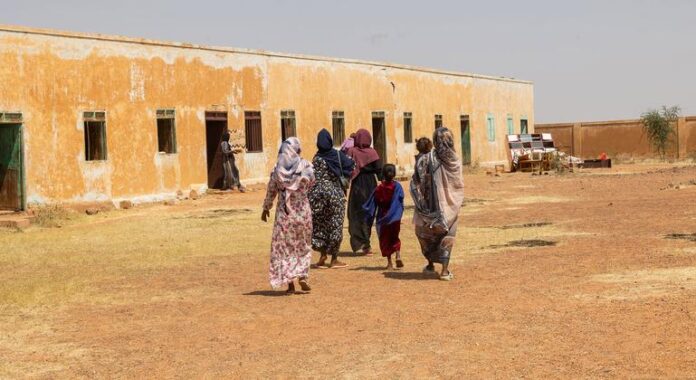
“People in Sudan are not moving by choice, they are running just to find safety,” said Mohamed Refaat, IOM Chief of Mission in Sudan.
Speaking from Port Sudan to journalists in Geneva, he urged all Member States and “everyone who can provide support” for Sudan’s people, to ensure their protection.
Heavy shelling alert
Latest reports from the wartorn country indicate that the paramilitary Rapid Support Forces (RSF) along with allies in the Sudan People’s Liberation Movement-North (SPLM-N) shelled residential buildings in Dilling, South Kordofan in the last 48 hours.
The RSF have been at war with the Sudanese army since April 2023 following a breakdown in transition to civilian rule. On 26 October, the paramilitary force overran El Fasher – the regional capital of North Darfur – after a 500-day siege, prompting further mass displacement. Deep concerns persist for those believed to still be trapped inside the city who had to eat peanut shells and animal feed to survive the ordeal.
‘People are scared’
“Those displacements from Kordofan are not happening sporadically, they are happening because people are scared,” IOM’s Mr. Refaat said. He noted that people were now fleeing from Babanusa, Kadugli and El-Obeid.
Highlighting deep concerns for vulnerable individuals on the move, the veteran humanitarian official noted that “only women and children” are arriving in White Nile and Gedaref to the east.
Deep insecurity and violence persist across Sudan, increasing protection risks for civilians and hampering safe humanitarian access.
There are growing concerns over the rapidly deteriorating situation in Kadugli, the capital city of South Kordofan state where six peacekeepers from Bangladesh were killed in drone attacks last Saturday. The UN blue helmets were at a logistics base in the city, deployed with the UN force in Abyei, the disputed region on the border with South Sudan.
Hundreds of thousands at risk
“In the town of Kadugli, we estimate that there are around 90,000 to 100,000 people in this area who will be displaced if something happened if the fighting continued, if they get access to leaving the city,” Mr. Refaat said. He added that El-Obeid – the capital of North Kordofan – appeared to be just “one or two steps from being the next city under attack…we estimate more than half a million are already going to be impacted.”
Returning to the crisis in El Fasher, the IOM official noted that the UN agency’s displacement tracking matrix had recorded more than 109,000 people who had managed to flee the city and its surrounding villages since it fell in late October to the RSF.
“Many of them are still stuck in the neighbouring villages not able to move further because of logistics [and] security issues” he said, fuelling concerns for those trying to survive when the essentials for survival have been “completely obliterated”, UN aid teams warned one week ago.
Asked about the impact of severe funding cuts for aid work in the UN and beyond, the IOM chief of mission explained that the agency had lost $83 million worth of resources this year alone. This has forced aid teams to reduce its footprint “massively”, Mr. Refaat explained.
“Because of those cuts, we have to choose which lives we can save and which support we have to stop. So, we would go crossing places where we know that people are absolutely in dire need, but we will leave them and not be able to help them because we have to prioritize those who are absolutely dying.”
Gaza famine pushed back, but millions still face hunger and malnutrition, UN says
According to the latest IPC report – a global tracking of malnutrition and food insecurity – no areas of Gaza are currently classified as being in famine (IPC Phase 5), following improved humanitarian and commercial access after the 10 October ceasefire.
However, nearly the entire Gaza Strip remains in emergency (IPC Phase 4), with hundreds of thousands of people still experiencing very high acute malnutrition rates.
Between mid-October and the end of November, around 1.6 million people – roughly 77 per cent of the population analysed – faced crisis-level hunger (Phase 3) or worse. This included more than 500,000 people in emergency (Phase 4) and over 100,000 people in catastrophe (Phase 5), the report said.
Gains ‘perilously fragile’
UN Secretary-General António Guterres said the latest findings show progress, but warned that the gains remain “fragile – perilously so.”
“Famine has been pushed back. Far more people are able to access the food they need to survive,” he told reporters at UN Headquarters, in New York
He added, however, that 1.6 million people in Gaza – more than 75 per cent of the population – “are projected to face extreme levels of acute food insecurity and critical malnutrition risks.”
The IPC analysis projects that through mid-April 2026, around 571,000 people will remain in emergency conditions, while approximately 1,900 people are expected to continue facing catastrophe-level hunger. Under a worst-case scenario – including renewed hostilities or a halt in humanitarian and commercial inflows – the entire Gaza Strip could again face famine.
Malnutrition major concern
Malnutrition remains a major concern, particularly among children and pregnant and breastfeeding women.
Nearly 101,000 children aged six to 59 months are expected to suffer from acute malnutrition through mid-October 2026, including more than 31,000 severe cases. An estimated 37,000 pregnant and breastfeeding women are also projected to require treatment.
While food aid has increased, the report stresses that assistance is largely meeting only basic survival needs. Health services, water and sanitation systems, housing and livelihoods remain badly damaged, leaving families vulnerable – particularly during winter.
Projected acute food insecurity and acute malnutrition in the Gaza Strip.
‘Truly durable’ ceasefire needed
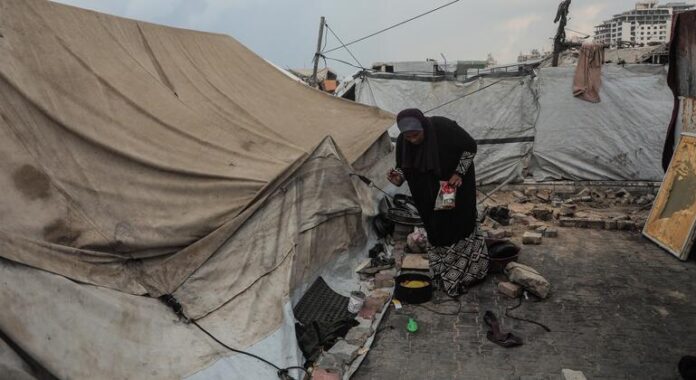
“Families are enduring the unendurable,” Mr. Guterres said, describing children sleeping in flooded tents and buildings collapsing under heavy rain and wind.
He said humanitarian teams are preparing more than 1.5 million hot meals daily, reopening nutrition centres and restoring water and health services, but warned that needs continue to grow faster than aid delivery.
“We need a truly durable ceasefire,” he said, calling for more crossings into Gaza, fewer restrictions on critical supplies, safe routes within the Strip, sustained funding and unimpeded humanitarian access.
The IPC report underscores that without sustained and expanded access, continued aid and the rebuilding of essential infrastructure, Gaza’s food security situation could rapidly deteriorate again, with long-lasting consequences for an already traumatized population.
Challenging outlook for meeting the EU’s long-term environment and climate objectives
Despite progress in key areas, the European Union (EU) remains likely off track for most 2030 environmental goals, according to the European Environment Agency’s (EEA) new 8th EAP assessment. Rising climate risks, slow transitions in production and consumption system and weakening enabling conditions highlight the urgent need for stronger, better financed and faster policy implementation. […]
Flaring black hole whips up ultra-fast winds

The gigantic black hole lurks within NGC 3783, a beautiful spiral galaxy imaged recently by the NASA/ESA Hubble Space Telescope. Astronomers spotted a bright X-ray flare erupt from the black hole before swiftly fading away. As it faded, fast winds emerged, raging at one-fifth of the speed of light.
“We’ve not watched a black hole create winds this speedily before,” says lead researcher Liyi Gu at Space Research Organisation Netherlands (SRON). “For the first time, we’ve seen how a rapid burst of X-ray light from a black hole immediately triggers ultra-fast winds, with these winds forming in just a single day.”
Devouring material
To study NGC 3783 and its black hole, Gu and colleagues simultaneously used the European Space Agency’s XMM-Newton and the X-Ray Imaging and Spectroscopy Mission (XRISM), a JAXA-led mission with ESA and NASA participation.
The black hole in question is as massive as 30 million Suns. As it feasts on nearby material, it powers an extremely bright and active region at the heart of the spiral galaxy. This region, known as an Active Galactic Nucleus (AGN), blazes in all kinds of light, and throws powerful jets and winds out into the cosmos.
“AGNs are really fascinating and intense regions, and key targets for both XMM-Newton and XRISM,” adds Matteo Guainazzi, ESA XRISM Project Scientist and co-author of the discovery.
“The winds around this black hole seem to have been created as the AGN’s tangled magnetic field suddenly ‘untwisted’ – similar to the flares that erupt from the Sun, but on a scale almost too big to imagine.”
A little less alien
The winds from the black hole resemble large solar eruptions of material known as coronal mass ejections, which form as the Sun hurls streams of superheated material into space. In this way, the study shows that supermassive black holes sometimes act like our own star, making these mysterious objects seem a little less alien.
In fact, a coronal mass ejection following an intense flare was spotted at the Sun as recently as 11 November, with the winds associated with this event thrown out at initial speeds of 1500 km per second.
“Windy AGNs also play a big role in how their host galaxies evolve over time, and how they form new stars,” adds Camille Diez, a team member and ESA Research Fellow.
“Because they’re so influential, knowing more about the magnetism of AGNs, and how they whip up winds such as these, is key to understanding the history of galaxies throughout the Universe.”
A joint discovery

XMM-Newton
XMM-Newton has been a pioneering explorer of the hot and extreme Universe for over 25 years, while XRISM has been working to answer key open questions about how matter and energy move through the cosmos since it launched in September 2023.
The two X-ray space telescopes worked together to uncover this unique event and understand the black hole’s flare and winds. XMM-Newton tracked the evolution of the initial flare with its Optical Monitor, and assessed the extent of the winds using its European Photon Imaging Camera (EPIC). XRISM spotted the flare and winds using its Resolve instrument, also studying the winds’ speed, structure, and figuring out how they were launched into space.
“Their discovery stems from successful collaboration, something that’s a core part of all ESA missions,” says ESA XMM-Newton Project Scientist Erik Kuulkers.

XRISM spacecraft
“By zeroing in on an active supermassive black hole, the two telescopes have found something we’ve not seen before: rapid, ultra-fast, flare-triggered winds reminiscent of those that form at the Sun. Excitingly, this suggests that solar and high-energy physics may work in surprisingly familiar ways throughout the Universe.”
Source: European Space Agency
Flaring black hole whips up ultra-fast winds

Leading X-ray space telescopes XMM-Newton and XRISM have spotted an extraordinary blast from a supermassive black hole. In a matter of hours, the gravitational monster whipped up powerful winds, flinging material out into space at eye-watering speeds of 60 000 km per second.

Artist’s impression of the flaring, windy supermassive black hole in spiral galaxy NGC 3783
The gigantic black hole lurks within NGC 3783, a beautiful spiral galaxy imaged recently by the NASA/ESA Hubble Space Telescope. Astronomers spotted a bright X-ray flare erupt from the black hole before swiftly fading away. As it faded, fast winds emerged, raging at one-fifth of the speed of light.
“We’ve not watched a black hole create winds this speedily before,” says lead researcher Liyi Gu at Space Research Organisation Netherlands (SRON). “For the first time, we’ve seen how a rapid burst of X-ray light from a black hole immediately triggers ultra-fast winds, with these winds forming in just a single day.”
Devouring material
To study NGC 3783 and its black hole, Gu and colleagues simultaneously used the European Space Agency’s XMM-Newton and the X-Ray Imaging and Spectroscopy Mission (XRISM), a JAXA-led mission with ESA and NASA participation.
The black hole in question is as massive as 30 million Suns. As it feasts on nearby material, it powers an extremely bright and active region at the heart of the spiral galaxy. This region, known as an Active Galactic Nucleus (AGN), blazes in all kinds of light, and throws powerful jets and winds out into the cosmos.
“AGNs are really fascinating and intense regions, and key targets for both XMM-Newton and XRISM,” adds Matteo Guainazzi, ESA XRISM Project Scientist and co-author of the discovery.
“The winds around this black hole seem to have been created as the AGN’s tangled magnetic field suddenly ‘untwisted’ – similar to the flares that erupt from the Sun, but on a scale almost too big to imagine.”
A little less alien
The winds from the black hole resemble large solar eruptions of material known as coronal mass ejections, which form as the Sun hurls streams of superheated material into space. In this way, the study shows that supermassive black holes sometimes act like our own star, making these mysterious objects seem a little less alien.
In fact, a coronal mass ejection following an intense flare was spotted at the Sun as recently as 11 November, with the winds associated with this event thrown out at initial speeds of 1500 km per second.
“Windy AGNs also play a big role in how their host galaxies evolve over time, and how they form new stars,” adds Camille Diez, a team member and ESA Research Fellow.
“Because they’re so influential, knowing more about the magnetism of AGNs, and how they whip up winds such as these, is key to understanding the history of galaxies throughout the Universe.”
A joint discovery
XMM-Newton
XMM-Newton has been a pioneering explorer of the hot and extreme Universe for over 25 years, while XRISM has been working to answer key open questions about how matter and energy move through the cosmos since it launched in September 2023.
The two X-ray space telescopes worked together to uncover this unique event and understand the black hole’s flare and winds. XMM-Newton tracked the evolution of the initial flare with its Optical Monitor, and assessed the extent of the winds using its European Photon Imaging Camera (EPIC). XRISM spotted the flare and winds using its Resolve instrument, also studying the winds’ speed, structure, and figuring out how they were launched into space.
“Their discovery stems from successful collaboration, something that’s a core part of all ESA missions,” says ESA XMM-Newton Project Scientist Erik Kuulkers.
XRISM spacecraft
“By zeroing in on an active supermassive black hole, the two telescopes have found something we’ve not seen before: rapid, ultra-fast, flare-triggered winds reminiscent of those that form at the Sun. Excitingly, this suggests that solar and high-energy physics may work in surprisingly familiar ways throughout the Universe.”
Source: European Space Agency
UN urges calm in Bangladesh after killing of protest leader sparks unrest

The United Nations has urged calm in Bangladesh after the killing of a prominent youth protest leader sparked fresh unrest, raising concerns about political violence and the safety of civic space as the country prepares for elections early next year.
Grant Assurance Officer (AD6) | EIT
The EIT is now organising a call for expressions of interest with a view to establishing a reserve list for Temporary Staff (TA) for the profile of Grant Assurance Officer. The place of employment will be Budapest, where the EIT seat is located.
Reporting to the Head of Unit Grant Implementation, the Grant Assurance Officer will be responsible for ensuring a high level of assurance in the implementation of EIT financed programmes through grants provided to the Knowledge and Innovation Communities (KICs) in line with the strategic objectives set in the EIT’s Strategic Innovation Agenda and Single Programming Document.
TASKS
In particular, the tasks of the Grant Assurance Officer will include the following:
- Supporting the Head of Section in financial management, including coordination of the financial aspects within the grant cycle management processes, implementation of contracts, operational initiation/ verification, financial verification of grants, reporting;
- Financial control and monitoring of EIT grant agreements;
- Cost-related assessment of grants within the entire grant cycle management, e.g. at proposal/ amendment/ reporting stages;
- Providing guidance to KICs in relation to financial aspects of grants and regular implementation of the grant agreements;
- Evaluation, monitoring and supporting the improvement of the audit and control mechanisms of the KICs;
- Initiating procurement procedures, managing experts/ procurement contracts, operational initiation/ verification and reporting;
- Analysis of financial data.
The jobholder may be asked to carry out any other tasks as deemed necessary in the interest of the service.
Deadline for applications: 28 January 2026 (12:00 PM Budapest time)
