
Sudan: Needs rise as people continue to flee fighting in Kordofan
EU institutions define priorities for 2026 | News

Given the speed and complexity of challenges faced by the European Union, unity, urgency and ambition are key. That is also the spirit behind which President of the European Parliament, Roberta Metsola, Danish Prime Minister, Mette Frederiksen, representing the Council of the EU, and President of the European Commission, Ursula von der Leyen, signed the Joint Declaration on the margins of the European Council today.
The Joint Declaration prioritises legislative actions that focus on boosting the EU’s competitiveness and resilience, safeguarding citizens and businesses, while pursuing ambitious simplification goals and working towards agreement on the next Multiannual Financial Framework. Utmost priority will be given to key policy objectives for a new era for European defence and security, to secure Europe’s sustainable prosperity, competitiveness and simplification, to strengthen our societies and our social model and quality of life, to ensure comprehensive approach to broader management and migration, to protect our democracy, uphold our values and to leverage our global influence and partnerships.
The Joint Declaration highlights legislative priorities which the three Institutions have committed to prioritise in 2026. Progress on these proposals should be regularly monitored throughout the year, both to provide updates on the state of play and to allow for early warning of any developments that risk any delay in their progress.
President Metsola said: “Europe moves when we all pull in the same direction. This Joint Declaration for 2026 is more than just words on a paper – it is a sign of unity and our firm conviction to deliver on people’s expectations. For the first time, it sets out a clear and focused list of ten legislative priorities to make our Union stronger, safer, and more competitive. Parliament is ready to get to work”.
President von der Leyen, said: “Today we stand united with a shared vision for our Union’s future. We must deliver a new era of European security – and that starts with a just and lasting peace for Ukraine an strengthening our own defences. We must also build a more competitive, fairer Europe for our citizens and businesses. And finally we are committed to reaching a swift agreement on the next long-term EU budget. Because to turn our common vision into reality, we must have the means to deliver it”.
Next steps
The Joint Declaration will be published in the EU’s Official Journal in the coming days. The co-legislators will ensure the timely and effective implementation of this Joint Declaration.
Background
As set out in the Interinstitutional Agreement on better law-making, signed in 2016 by the three institutions, the European Parliament, the Council, and the Commission discuss and agree on legislative priorities for the next year through an annual Joint Declaration, after the Commission adopts its work programme. This approach helps the institutions collaborate more efficiently on key legislative proposals, with the Parliament and the Council acting as co-legislators.
EU institutions define priorities for 2026 | News

Given the speed and complexity of challenges faced by the European Union, unity, urgency and ambition are key. That is also the spirit behind which President of the European Parliament, Roberta Metsola, Danish Prime Minister, Mette Frederiksen, representing the Council of the EU, and President of the European Commission, Ursula von der Leyen, signed the Joint Declaration on the margins of the European Council today.
The Joint Declaration prioritises legislative actions that focus on boosting the EU’s competitiveness and resilience, safeguarding citizens and businesses, while pursuing ambitious simplification goals and working towards agreement on the next Multiannual Financial Framework. Utmost priority will be given to key policy objectives for a new era for European defence and security, to secure Europe’s sustainable prosperity, competitiveness and simplification, to strengthen our societies and our social model and quality of life, to ensure comprehensive approach to broader management and migration, to protect our democracy, uphold our values and to leverage our global influence and partnerships.
The Joint Declaration highlights legislative priorities which the three Institutions have committed to prioritise in 2026. Progress on these proposals should be regularly monitored throughout the year, both to provide updates on the state of play and to allow for early warning of any developments that risk any delay in their progress.
President Metsola said: “Europe moves when we all pull in the same direction. This Joint Declaration for 2026 is more than just words on a paper – it is a sign of unity and our firm conviction to deliver on people’s expectations. For the first time, it sets out a clear and focused list of ten legislative priorities to make our Union stronger, safer, and more competitive. Parliament is ready to get to work”.
President von der Leyen, said: “Today we stand united with a shared vision for our Union’s future. We must deliver a new era of European security – and that starts with a just and lasting peace for Ukraine an strengthening our own defences. We must also build a more competitive, fairer Europe for our citizens and businesses. And finally we are committed to reaching a swift agreement on the next long-term EU budget. Because to turn our common vision into reality, we must have the means to deliver it”.
Next steps
The Joint Declaration will be published in the EU’s Official Journal in the coming days. The co-legislators will ensure the timely and effective implementation of this Joint Declaration.
Background
As set out in the Interinstitutional Agreement on better law-making, signed in 2016 by the three institutions, the European Parliament, the Council, and the Commission discuss and agree on legislative priorities for the next year through an annual Joint Declaration, after the Commission adopts its work programme. This approach helps the institutions collaborate more efficiently on key legislative proposals, with the Parliament and the Council acting as co-legislators.
War in Sudan: El-Obeid, in Kordofan, “one or two steps” from being attacked

“The Sudanese are not moving by choice, they are simply fleeing to find safety,” said Mohamed Refaat, IOM Head of mission in Sudan.
Speaking from Port Sudan to journalists in Geneva, he urged all member states and “all those who can provide support” to the Sudanese people to ensure their protection.
Violent bombing alert
The latest reports from the war-torn country indicate that paramilitary Rapid Support Forces (RSF) and their Sudan People’s Liberation Movement-North (SPLM-N) allies have bombed residential buildings in Dilling, South Kordofan, over the past 48 hours.
The RSF has been at war with the Sudanese army since April 2023 following a failed transition to civilian rule. On October 26, paramilitary forces invaded El Fasher – the regional capital of North Darfur – after a 500-day siege, triggering further mass displacements. Deep concerns remain for those still believed to be stuck inside the city and who have had to eat peanut shells and animal food to survive the ordeal.
“People are afraid”
“These displacements from Kordofan are not happening sporadically, they are happening because people are afraid,” said IOM’s Refaat. He noted that people were now fleeing Babanusa, Kadugli and El-Obeid.
Underscoring his deep concerns about vulnerable people on the move, the veteran humanitarian official noted that “only women and children” are arriving in the White Nile and Gedaref in the east.
Deep insecurity and violence persist across Sudan, increasing protection risks for civilians and hampering safe access for humanitarian assistance.
The situation is rapidly deteriorating in Kadugli, the capital of Southern Kordofan state, where there are growing concerns. six Bangladeshi peacekeepers killed in drone attacks last Saturday. The UN peacekeepers were at a logistics base in the city, deployed with the UN force in Abyei, the disputed region on the border with South Sudan.
Hundreds of thousands of people in danger
“In the town of Kadugli, we estimate that there are about 90,000 to 100,000 people in that area who will be displaced if something happens, if the fighting continues, if they can leave the town,” Refaat said. He added that El-Obeid – the capital of North Kordofan – appeared to be only “a few steps away from being the next town attacked… we estimate that more than half a million people will already be affected”.
Returning to the crisis in El Fasher, the IOM official stressed that the UN agency’s movement monitoring matrix had recorded more than 109,000 people who had managed to flee the city and its surrounding villages since their fall at the end of October at the hands of the RSF.
“Many of them are still stuck in neighboring villages and cannot travel further due to logistical problems. [and] security concerns,” he said, fueling concerns among those trying to survive as essentials for survival have been “completely wiped out,” UN humanitarian teams warned a week ago.
Asked about the impact of severe cuts in funding for humanitarian work within the UN and beyond, the IOM chief of mission explained that the agency had lost $83 million in resources this year alone. This forced humanitarian teams to “massively” reduce their footprint, Refaat said.
“Because of these cuts, we have to choose which lives we can save and which support we have to stop. So we would go through places where we know people absolutely need people, but we would leave them and not be able to help them because we have to prioritize those who are absolutely dying.”
Originally published at Almouwatin.com
Revolutionizing Hiring: The Power of Top AI Recruitment Software
In today’s fast-paced business world, organizations are increasingly relying on top AI recruitment software to streamline hiring, reduce bias, and identify top talent faster. Platforms like GoPerfect provide cutting-edge tools to help recruiters find, engage, and hire the most suitable candidates efficiently. By leveraging AI technology, companies can transform traditional hiring processes and make smarter, faster recruitment decisions.
Hiring the right talent has never been more challenging. The competition for skilled professionals, especially in fields like technology, healthcare, and data analytics, is intense. Traditional recruitment methods are time-consuming and prone to errors, often relying on keyword matches rather than true candidate potential. AI recruitment software addresses these challenges by using machine learning, predictive analytics, and semantic search to identify ideal candidates with greater precision.
With GoPerfect’s AI platform, recruiters can automate repetitive tasks such as resume screening, candidate ranking, and initial outreach. This allows hiring teams to focus on strategic planning and building meaningful relationships with prospective hires.
Key Features of Top AI Recruitment Software
Intelligent Candidate Matching
Unlike basic tools that filter candidates solely by keywords, AI-driven recruitment platforms analyze experience, skills, and career paths to ensure a more accurate match. This increases the chances of hiring high-quality talent while significantly reducing manual effort.
Automated Outreach and Engagement
Engaging potential hires is crucial for a successful recruitment process. AI recruitment software can automate personalized outreach messages via email, SMS, or professional networks, increasing candidate response rates and overall engagement.
Predictive Insights and Bias Reduction
Top AI platforms offer predictive analytics, helping recruiters identify candidates most likely to succeed in their roles. Additionally, AI algorithms minimize unconscious bias, promoting more equitable hiring decisions.
How GoPerfect Enhances Recruitment
GoPerfect integrates seamlessly with existing Applicant Tracking Systems (ATS) such as Greenhouse, Lever, and Workday. This ensures organizations can adopt AI recruitment technology without disrupting their current workflow. Key benefits include:
- Faster Talent Sourcing: Identify qualified candidates quickly, saving time and resources.
- Smart Screening: Evaluate candidates using advanced AI models that understand professional experience and potential.
- Personalized Communication: Increase candidate engagement with automated, tailored outreach campaigns.
For organizations looking to optimize their hiring strategy, GoPerfect also offers industry-specific insights, including best practices for recruiting in healthcare and tech.
Benefits Beyond Efficiency
Investing in AI recruitment software provides more than speed. Organizations experience:
- Reduced time-to-hire through automated sourcing and screening
- Improved quality of hire thanks to intelligent candidate matching
- Enhanced candidate experience through personalized communication
- Scalability to manage growing hiring demands without additional staff
Conclusion
As the recruitment landscape evolves, using top AI recruitment software has become a strategic necessity. Tools like GoPerfect empower HR teams to combine human expertise with advanced AI insights, making hiring faster, smarter, and more effective. Businesses that adopt these technologies gain a competitive edge in attracting and retaining the best talent while fostering a fair and efficient recruitment process.
Your EU – Your projects in Hungary: speeding up sustainable transport

Sustainable transport is central to Europe’s efforts to cut emissions, reduce congestion and ensure reliable connections for people and businesses. The EU supports infrastructure upgrades, innovation and cross-border cooperation so that mobility becomes safer, cleaner and more inclusive.
Hungary’s central location makes it a key transport hub, but bottlenecks and capacity constraints, particularly around the capital, Budapest, present an ongoing challenge. Through major investments in modern infrastructure and innovative mobility solutions, including projects managed by CINEA, the EU is helping Hungary move towards a more sustainable transport future.
Below we explore three EU-supported initiatives that illustrate how ambition is being turned into reality.
Kelenföld – Százhalombatta – Pusztaszabolcs railway upgrade: removing bottlenecks
With almost €370 million from the EU’s Connecting Europe Facility (CEF Transport), nearly 50 km of double-track railway on the Kelenföld – Százhalombatta – Pusztaszabolcs section has been modernised. The works included full track reconstruction and the deployment of trackside ERTMS (European Rail Traffic Management System).
As part of the wider Budapest–Kelenföld–Croatian border corridor upgrade, this project removed a major bottleneck along the Mediterranean Core Network Corridor – an EU priority route linking Spain to Hungary and a vital east-west route for freight and passenger traffic.
This has resulted in increased capacity and supported a shift from road to rail, while contributing to regional and national economic development. The modernised line improves safety, efficiency, reliability and quality of rail services.
UPPER: strengthening cooperation to modernise public transport
Public transport is essential for sustainable urban mobility. Backed by €20 million from the Horizon Europe research programme, the UPPER project helps cities and regions make public transport more attractive and user-friendly. Budapest’s public transport authority (BKK) is one of the partners.
Within UPPER, Budapest is enhancing its BudapestGO journey planner with predictive travel planning in direct response to customer requests. This will also generate data to inform the future design of integrated multimodal mobility services. To improve reliability, the city is rethinking public transport prioritisation, including enhanced bus and tram priority lanes and updated traffic-light programmes.
“UPPER is helping cities and regions learn from one another and adopt solutions that can be scaled across Europe. Measures now being tested by BKK can make public transport an even more competitive and attractive option, not only in Budapest but across Europe,” explains Mircea Steriu, UITP, UPPER Coordinator.
STARGATE: greening airport operations in Budapest
Aviation also plays a key role in Europe’s mobility system, and airports are under increasing pressure to reduce emissions and boost operational efficiency. Budapest International Airport participates in the EU-funded STARGATE project – led by Brussels Airport – which tests practical solutions for cleaner and smarter airport operations. The project’s results are shared widely so other airports can benefit from the same approaches.
In Budapest, one of the activities underway is the development of an airport-specific navigation app. It will provide precise route planning for service vehicles and improve situational awareness on aircraft movement areas. Covering the airport’s complex 1,500-hectare layout, the tool will enhance safety for up to 1,000 users and is set to launch in 2026.
“As a ‘fellow airport’, we are drawing inspiration from the digital tools and innovations being tested as part of the STARGATE project. The solutions will allow Budapest Airport to become more competitive and sustainable, supporting our decarbonisation goals,” said Sarolta Katona, Head of Sustainability, Budapest Airport.
Cleaner, more resilient and better connected
Together, these projects – from major rail upgrades and smarter public transport to greener, digitally enhanced airport operations – show how EU support is helping Hungary build a transport system that is cleaner, more resilient and better connected for everyone.
Your EU – Your projects: where EU support makes a difference
These examples show how EU programmes managed by CINEA translate European ambitions into concrete results and impact. By combining funding with expert advice and cross-border cooperation, the EU helps innovative projects scale up, deliver benefits for citizens and businesses, and support a more sustainable, resilient Europe. Discover more stories in other countries.
More information about the projects
Info session: AI Continent (DIGITAL-2026-EDIH-AC-09) – Materials available

On 16 December 2025, HaDEA organised an info session on the call AI Continent (DIGITAL-2026-EDIH-AC-09), funded under the Digital Europe Programme.
The session focused on call topics and the application process, and was followed by Q&A sessions.
All presentations and the recording from the session are now available below for your reference.
Presentations:
Submitting a successful proposal via Funding & Tenders Portal

Digital Transformation Accelerator
Legal validation Financial capacity assessment
Strategic Technologies for Europe Platform
Recording:
2024 EU4Health Work Programme: Three newly awarded grants on European Union Reference Laboratories (EURLs) on human pathogens

Today’s cross-border public health risks call for continued strengthening of the capacities for disease detection, information exchange and joint efforts to strengthen public health preparedness and response within the EU.
The European Commission designates and funds EU Reference Laboratories (EURLs) in public health to support national reference laboratories in improving diagnostics, testing methods and surveillance of serious cross-border health threats. The purpose is to facilitate data comparability and promote good practice and alignment on diagnostic testing methods and uniformity of disease surveillance, notification and disease reporting across EU countries.
To strengthen EU-wide health threat preparedness and response, the European Commission has recently established three new EURLs for public health, specialising on:
- Food- and water-borne viruses (e.g. Hepatitis A and E);
- Food- and waterborne bacteria (e.g. Salmonella spp., Shiga toxin-producing E. coli, Listeria monocytogenes, Campylobacter spp., Shigella spp);
- Food-, water- and vector-borne helminths and protozoa (e.g. Echinococcus spp., Toxoplasma gondii, Trichinella spp., and Plasmodium spp).
EURL on food- and water-borne viruses (EURL-PH-FWDV)
The EU population is largely susceptible to hepatitis A virus (HAV) and there is a constant risk of hepatitis A virus (HAV) being introduced in the EU from countries where this virus is much more common. HAV cases must be reported to public authorities. While diagnostics and typing of HAV are well established, there are areas for improvement, for instance, in the techniques used to identify the different HAV strands (“HAV typing methods”).
On the other hand, hepatitis E virus (HEV) is the most common cause of acute hepatitis in the EU. However, the infection often remains undetected since testing methods are not sufficiently standardised. Another issue is under-reporting of HEV and inconsistent HEV data sharing. This prevents timely detection and effective response to HEV outbreaks across the EU. Therefore, this novel EURL-PH-FWDV tool will:
- Improve diagnostic techniques and capabilities of EU countries’ laboratories, for example, through training, workshops, scientific advice, use of standardised protocols, quality assessment schemes for hepatitis A and E viruses and collaboration;
- Provide robust reference diagnostics including molecular typing, i.e. analyses of the genetic material of pathogens to identify differences and classify them into specific strains or types;
- Serve as a ‘central hub’ to the disease network on HAV and HEV reference diagnostics, technical support and standardised protocols and data sharing and analysis, e.g. by gathering and integrating genome sequencing data for hepatitis A and E. This boosts HAV and HEV surveillance and outbreak detection across the Union.
EURL-PH-FWDV also provides the European Centre for Disease Control services on outbreak investigation, risk assessments and bioinformatics pipelines for genomic data analysis, all contributing to improved public health response and data management.
EURL for food- and waterborne bacteria (EURL-PH-FWDB)
Over 200 diseases are caused by eating food contaminated with bacteria, viruses, parasites or chemical substances, according to the World Health Organisation. Moreover, contaminated water and poor sanitation expose individuals to preventable health risks. This growing public health challenge causes considerable strains on healthcare and contributes significantly to the global burden of disease and mortality.
Supporting laboratories in the food- and waterborne disease network, the new EURL focused on bacteria will:
- Enhance diagnostic accuracy and consistency;
- Strengthen collaboration between network laboratories to enhance knowledge sharing, standardise testing and improve surveillance and outbreak response;
- Align laboratories with international standards by providing training and technical support, while fostering global collaboration through a One Health approach to address zoonotic diseases, antimicrobial resistance (AMR) and climate-related health risks.
Focusing on parasitic pathogens, the EURL for food-, water- and vector-borne helminths and protozoa (EURL-PH-HP) will:
- Develop and validate diagnostic methods;
- Establish harmonised and uniform testing for helminths (Echinococcus spp and Trichinella spp) and protozoa (Toxoplasma spp and Plasmodium spp) that cause disease in humans;
- Support existing networks on diagnostics, testing methods and use of tests, allowing for uniform disease surveillance, notification and reporting across the EU.
Background
EU4Health is the fourth and largest of the EU health programmes. The EU4Health programme goes beyond an ambitious response to the COVID-19 crisis to address the resilience of European healthcare systems. The programme provides funding to national authorities, health organisations and other bodies through grants and public procurement, contributing to a healthier Europe. HaDEA manages the vast majority of the total EU4Health budget and implements the programme by managing calls for proposals and calls for tenders from 2021 to 2027.
Aid agencies warn Gaza response at breaking point as Israel urged to lift new restrictions
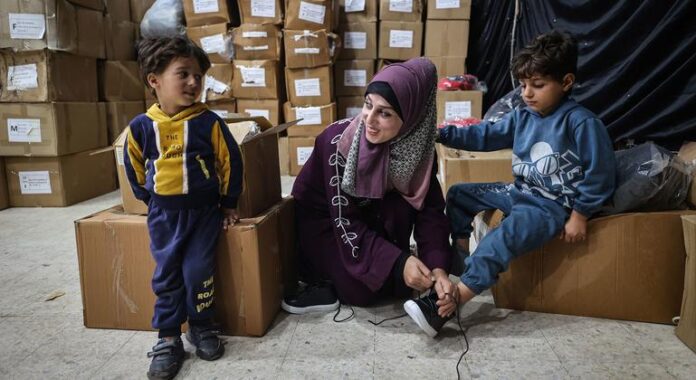
In a sharply worded statement issued on Tuesday, the Humanitarian Country Team – which brings together senior UN officials and more than 200 local and international aid groups – called on the international community to press Israeli authorities to reverse measures that are choking humanitarian work, particularly in the Gaza Strip.
At the centre of concern is a new registration system for international non-governmental organisations, introduced earlier this year.
Flawed Israeli system
Aid groups say the process is vague, politicised and impossible to meet without breaching humanitarian principles.
Under the current rules, dozens of organisations face deregistration by the end of December, followed by the forced closure of their operations within weeks.
“These organisations are not optional extras,” the statement said. “If they are pushed out, the humanitarian response will not survive.”
International NGOs, working alongside UN agencies and Palestinian partners, deliver around one billion dollars’ worth of assistance each year across the territory.
Yet millions of dollars’ worth of food, medicines, hygiene supplies and shelter materials are now stuck outside Gaza, unable to reach families in need.
The warning comes as winter deepens and amid fears that further restrictions could destabilise a fragile ceasefire.
Impossible loss
Aid agencies stressed that the impact of losing international NGOs could not be absorbed by the UN or local groups, especially after Israeli limits on Palestine refugee relief agency, UNRWA, have already stretched the response to breaking point.
According to the Humanitarian Country Team, international NGOs support or run much of Gaza’s basic infrastructure for survival.
They underpin field hospitals and primary health clinics, provide clean water and sanitation, distribute emergency shelter, and treat children suffering from severe malnutrition.
Health facilities will close
If they are forced to leave, one in three health facilities in Gaza would close almost immediately, cutting off care for tens of thousands of patients.
Aid leaders said they had repeatedly raised these concerns with Israeli authorities and sought workable solutions to keep operations running.
“There has been no adjustment,” the statement said, warning that the dismantling of NGO operations now appears imminent.
Humanitarian access, the agencies insisted, is a legal obligation, not a political choice.
“Lifesaving assistance must be allowed to reach Palestinians without further delay,” the statement concluded, urging Israel to allow rapid and unimpeded aid deliveries and to ensure that humanitarian organisations can operate independently and safely.
Without swift action, the team warned, the consequences for civilians in Gaza would be catastrophic.
