Parliament’s Environment Committee agrees to an ambitious reduction of fluorinated greenhouse gases emissions, to further contribute to EU’s climate neutrality goal.
To accelerate innovation in, and the development of, more climate-friendly solutions and to provide certainty for consumers and investors, MEPs want to strengthen new requirements proposed by the Commission that prohibit the placing on the single market of products containing F-gases (Annex IV). The text also adds prohibitions on the use of F-gases for sectors where it is technologically and economically feasible to switch to alternatives that do not use F-gases, such as refrigeration, air conditioning, heat pumps and electrical switchgear.
Accelerate the transition to climate neutrality
The report introduces a steeper trajectory from 2039 onwards to phase down hydrofluorocarbons (HFCs) placed on the EU market, with the goal of a zero HFC target by 2050 (Annex VII). Phasing out HFC production and consumption in the EU would align these updated rules with the EU’s 2050 climate neutrality goal.
According to MEPs, the Commission should closely monitor market developments in key sectors such as heat pumps and semiconductors. For heat pumps, the Commission needs to ensure that the HFC phase-down would not endanger the RePowerEU heat pump deployment targets as the industry has to work towards replacing HFCs with natural alternatives.
Enhance enforcement to prevent illegal trade
MEPs propose more action on illegal trade in these gases by proposing minimum administrative fines for non-compliance. They also want customs authorities to seize and confiscate F-gases imported or exported in violation of the rules, in line with the environmental crime directive.
Quote
Rapporteur Bas Eickhout (Greens/EFA, NL) said: “F-gases are not well known, but have major implications for our climate, as they are very powerful greenhouse gases. In most instances, natural alternatives are readily available. That’s why we voted for an ambitious position to fully phase out F-gases by 2050 and in most sectors already by the end of this decade. We are providing clarity to the market and a signal to invest in alternatives. Many European companies are already at the forefront of this development and will benefit from it, because of their market position and export opportunities.”
Next steps
The report is scheduled to be adopted during the 29-30 March 2023 plenary sitting and will constitute Parliament’s negotiating position with EU governments on the final shape of the legislation.
Background
Fluorinated greenhouse gases, which include hydrofluorocarbons (HFCs), perfluorocarbons (PFCs), sulphur hexafluoride and nitrogen trifluoride, are man-made greenhouse gases (GHG) with high global warming potential. They are used in common appliances such as refrigerators, air-conditioning, heat pumps, fire protection, foams and aerosols. They are covered by the Paris Agreement together with CO2, methane and nitrous oxide and account for around 2,5% of EU’s GHG emissions.
Tibetan activists from Students for a Free Tibet (SFT), National Democratic Party of Tibet (NDPT) and Tibetan Youth Congress (TYC) staged a protest at the Chinese Embassy in New Delhi against Chinese Foreign Minister Qin Gang’s visit to India on Thursday. Mr. Qin will attend the G20 Foreign Ministers’ meeting in New Delhi on March 2 at the invitation of India’s External Affairs Minister S. Jaishankar, a statement from the Foreign Ministry read. This will be Qin’s first visit to India after he succeeded foreign minister and State Councillor, Wang Yi in December last year.
The protesters shouted slogans, “Qin Gang Go Back!” and “G20 Protect Tibetan Children”. police detained the protestors, but were later released. The activists condemned the Chinese Communist Party’s policy of sinicization that enforced nearly 1.2 million Tibetan children in colonial boarding schools in occupied Tibet by separating them from their families at the age of just four or five. The rights group also called out G20 leaders around the world to protect the millions of Tibetan children forced into these colonial boarding schools and are stripped of their identity to learn Mandarin and the Chinese way of life.
Meanwhile, banners and posters calling out Mr. Qin and G20 leaders have been torn and taken down around the Indian capital, to which Students for a Free Tibet (SFT) responded by saying, “this shows the insecurity level of CCP China and also the suppression of freedom of speech of Tibetans in a free country,” on their social media handle. “China should be held accountable for all the atrocities and human rights violations in Tibet and other occupied countries,” they added.
Mr. Qin’s visit to the G20 meeting marks the first high-level leadership visit from China to India since March 2022. Since early 2022, bilateral exchange between the two sides was stalled following tensions along the Line of Actual Control (LAC) and China’s mobilisation of troops at the friction areas.
Tibetan activist protesting Qin Gang’s India’s visit at the Chinese embassy in New Delhi (Photo/SFT)
Mr. Secretary-General, High Commissioner Turk, President Bálek, fellow members of the United Nations Human Rights Council: we are marking 75 years since the adoption of the Universal Declaration of Human Rights.
At its heart is a simple, yet revolutionary, idea: human rights are universal. Or, as the drafters of the Declaration put it, human rights belong to, “all members of the human family.” And these rights are indivisible, interdependent, and co-equal.
These principles were not shaped by any one country, region, or ideology. They were discussed, debated, and meticulously drafted by experts from countries big and small…North and South…centuries-old and newly independent. Each delegate brought to the collective enterprise ideas and perspectives that helped define the Declaration.
Charles Malik, the delegate from Lebanon, argued that human rights must be defined in terms of the individual – not the nation… or any other group.
Representing China, P.C. Chang suggested the entire framework should be built, in his words, “with a view to elevating the concept of man’s dignity.” And dignity is the first principle in the first line of the Declaration.
Hansa Mehta of India – one of three women delegates, together with Pakistan’s Begum Ikramullah and America’s Eleanor Roosevelt – insisted that rights be framed as belonging to all people, not just men.
Indeed, the fact that the Declaration was forged and agreed upon by people representing nations with such diverse backgrounds, histories, and political systems is what gave it such unimpeachable legitimacy and moral force.
That’s still true today, even as some try to cast the Declaration’s definition of human rights as reflecting the view of one region or ideology… or argue that different countries can have different conceptions of human rights…or try to put the sovereignty of states ahead of the human rights of individuals.
It’s the responsibility of this Council – and every UN Member State – to uphold the Declaration’s universal vision…and defend the human rights of everyone, everywhere.
That includes protecting the human rights of our most vulnerable populations, a central tenet of the Vienna Declaration that we adopted 30 years ago. That’s why the United States partnered with countries from around the world to renew the mandate for the UN’s Independent Expert on Sexual Orientation and Gender Identity; and why we made a voluntary contribution to support the vital work of the Permanent Forum on People of African Descent in countering anti-Black discrimination – the only country to do so.
Upholding the Declaration’s vision also means continuing to advance economic, social, and cultural rights. The United States is committed to enabling people around the world to enjoy these rights. We invest more than any other country in the capacity of fellow Member States to provide health care and food security for their populations. And last year, we joined 160 fellow Member States in supporting a resolution that affirms the right to a clean, healthy, and sustainable environment.
Fulfilling the Declaration’s universal promise also means advancing human rights within our countries – something we have sought to do in the United States, especially over the past two years.
Since President Biden issued an open invitation in 2021 to all UN special procedures mandate holders, the United States has welcomed the Special Rapporteur on Minority Issues and the Independent Expert on Sexual Orientation and Gender Identity. And just a few weeks ago, the Special Rapporteur on the Promotion and Protection of Human Rights and Fundamental Freedoms while Countering Terrorism made the first-ever visit by a UN mandate holder to the detention facility in Guantanamo Bay, Cuba.
We do this because we believe transparency and openness are not a threat to our sovereignty, but a way to make our government better at advancing the rights, needs, and aspirations of the people we serve. We see our ability to accept critical feedback, and to strive, always, to address enduring injustices and inequities, as a sign of strength – not weakness.
Holding ourselves to the same standards as we do every other government is particularly important at a time when human rights around the world are under assault, perhaps nowhere more than in Russia’s brutal war on Ukraine.
This Council has played a crucial role in shining a spotlight on Moscow’s horrific and ongoing abuses, including through the creation of the Independent International Commission of Inquiry on Ukraine. The COI’s first report in October concluded that Russia has committed war crimes and violations of international humanitarian law.
As long as Russia continues to wage its war, the COI should continue to document such abuses, providing an impartial record of what’s occurring, and a foundation for national and international efforts to hold perpetrators accountable.
Governments that commit atrocities abroad are also likely to violate the rights of people at home – and that’s exactly what Russia is doing. The Russian government now holds more than 500 political prisoners. In January, it shuttered the Moscow Helsinki Group – one of the last human rights organizations still allowed to operate in the country. The government’s systematic muzzling of independent voices in Russian civil society makes the work of the Special Rapporteur on human rights in the country even more important.
The Iranian regime is also once again cracking down on citizens demanding their human rights and fundamental freedoms. Since the killing of Mahsa Amini in September brought Iranians of all ages out into the streets, the regime has killed at least 500 people, and imprisoned tens of thousands more, many of whom have been tortured, according to human rights groups. In November, the Council came together to create an independent fact-finding mission to investigate Iran’s human rights violations; we must ensure the team can do its work.
We condemn the Taliban’s draconian repression of women and girls in Afghanistan, including barring them from universities and secondary schools. The Taliban’s recent edict prohibiting Afghan women from working for NGOs has closed off yet another pathway that should be open to them. And in a country where 29 million people depend on humanitarian aid for survival, the Taliban’s decision will significantly reduce the amount of food, medicine, and other life-saving assistance reaching vulnerable people. Especially women and girls.
We remain gravely concerned about the ongoing genocide and crimes against humanity that China is committing against Muslim Uyghurs and other members of minority groups in Xinjiang. The report issued last year by the Office of the High Commissioner for Human Rights affirmed serious abuses perpetrated by the PRC in Xinjiang, including the large-scale arbitrary deprivation of liberty of members of Uyghur and other predominantly Muslim communities, and credible allegations of torture and sexual and gender-based violence.
Nearly a dozen years since launching its crackdown on Syrians demanding their human rights, the Assad regime continues to commit widespread abuses, which is why we urge Council members to renew the mandate of the country’s Commission of Inquiry, even as we surge humanitarian assistance to help those in Syria and Turkey impacted by the devastating earthquake.
On this Council, we have a responsibility to act in a way that’s true to the spirit of the Universal Declaration on Human Rights, including treating every country equally. That’s why the United States continues to strongly oppose biased and disproportionate treatment of Israel, reflected in the Commission of Inquiry with no end date, and standing Agenda Item 7.
In the 75 years since the Universal Declaration of Human Rights was adopted, there has rarely been a time when delivering on its commitments has been more urgent…or more consequential. To international peace and security. To development. To human dignity.
The vision the drafters set out 75 years ago is as clear today as it was then: All members of the human family are entitled to human rights. Let us continue to strive to make those words real – through the actions of the Human Rights Council, within our countries, and around the world.
Jan-Leonid Bornstein:We have heard from you about a new legislative initiative ofthe Government of Georgia concerning submitting a draft of the new Defense Code In December 2022. In case of adoption the submitted version of the Draft, the law in force, which exempts (defers) Ministers of any religion from compulsory military service, will be withdrawn. What risks do you see in this new initiative?
Archil Metreveli: To be more precise, this is not even a “risk” but an “evident fact” that will be constituted if this legislative modification is adopted. Namely, initiated regulation will nullify the possibility for Ministers of minority religions, meaning all religions but the Georgian Orthodox Church, to beneficiate from the exemption for compulsory military service.
Jan-Leonid Bornstein:Could you elaborate so our readers can understand the challenges better?
Archil Metreveli: Two norms of the Georgian legislation in force ensure the exemption of Ministers from compulsory military service. First, Article 4 of the Constitutional Agreement between the State of Georgia and the Apostle Autocephalous Orthodox Church of Georgia (exclusively the Ministers of the Orthodox Church of Georgia) and second, Article 30 of the Law of Georgia on Military Duty and Military Service (the Ministers of any religion, including the Orthodox Church of Georgia).
Article 71 of the submitted draft Defense Code, which is an alternative to Article 30 of the above-cited law in force, governing the deferment of conscription into Military Service, no longer includes the so-called Ministerial Exception. Hence, according to the new draft law, no Minister of any religion previously exempted from military service will no longer be able to have the privilege of Ministerial Exception. On the other hand, Article 4 of the Constitutional Agreement of Georgia, which exempts from military service exclusively the Ministers of the Orthodox Church of Georgia, remains in force.
It is significant that according to the Constitution of Georgia (Article 4) and the Law of Georgia on Normative Acts (Article 7) the Constitutional Agreement of Georgia takes hierarchical precedence over the Laws of Georgia and, in case of adoption, also over the Defense Code. Therefore, the Ministerial Exception (which will be withdrawn for the Ministers of all religions) will not by itself annul this privilege for to the Ministers of the Orthodox Church of Georgia as it remains to be granted by a hierarchically higher normative act – the Constitutional Agreement of Georgia.
JLB: I understand. Why do you think this legislation is proposed? How is it justified?
AM: The Explanatory Note of the submitted draft states that this modification intends to eliminate the legislative gap that allows “unscrupulous” and “false” religious organizations to help individuals avoid compulsory military service. The specified purpose corresponds to the practice set by the Church of Biblical Freedom – a religious association established by the political party Girchi. The Church of Biblical Freedom, as an instrument of the political protest of Girchi against compulsory military service, grants the status of “Minister” to those citizens who do not want to perform military duty. The practice of the Church of Biblical Freedom relies precisely on the law on Military Duty and Military Service in force.
JLB: Do you think it will have any further repercussions to the Georgian legislation or legislative practice?
AM: Yes, and it already has. The amendments also have been submitted to the Law on Georgia on Non-military, Alternative Labor Service. In particular, according to the draft amendment the ground for releasing a citizen from compulsory military service and performance of non-military, alternative labor service, along with conscientious objection, will also be the status of a “Minister”. According to the Georgian Authorities, this new “Privilege” will replace the withdrawn Ministerial Exception, as this new legal regulation will apply equally to the Ministers of all religions, including the Orthodox Church of Georgia. However, this interpretation is not honest, as the Constitutional Agreement of Georgia prohibits State from conscripting Orthodox Ministers into compulsory military service, thus, it will not be necessary to extend the “privilege” of non-military, alternative labor service to them. As a result, if the submitted draft is adopted, the Orthodox Ministers will be unconditionally exempted from compulsory military service, while the Ministers of all other religions will be subject to non-military, alternative labor service.
JLB: But is that privilege, meaning full exemption from compulsory military service, a fundamental right?
AM: Our concern relates to the fundamental Right to Equality and Non-Discrimination based on religion. Evidently, the exemption of a Minister from military service (as opposed to an exemption based on conscientious objection) is not a right protected by Freedom of Religion or Belief. This privilege has been granted to them considering the public importance of their status and by the political will of the State.
Nevertheless, the fundamental Right to Equality and Non-Discrimination based on religion implies that, when there is no objective reason for different treatment, the privileges granted by the State should be extended equally to any group or individual regardless of their religious identity or practice. The submitted regulation is obvious and blunt discrimination based on religion, as it doesn’t include any objective and sensible justification for the established different treatment.
JLB: In your opinion, what would be the proper approach of the state regarding this matter?
AM: Finding answers to such questions is not difficult. The modern experience of Freedom of Religion and Democracy clearly determines that the State should not relieve its burden at the expense of the Fundamental Rights and Freedoms of individuals or groups. Thus, if the Court would find that the Church of Biblical Freedom was actually abusing the Freedom of Religion or Belief, the State should eliminate exclusively the practice of destruction and not the Right to Equality and Non-Discrimination based on religion and belief, entirely.
“The prison sentences delivered today in Belarus against four human rights defenders, including Nobel Peace Prize laureate Ales Bialiatski, are deeply troubling and indicative of the ongoing repression in the country,” said Ravina Shamdasani, spokesperson for the UN human rights office, OHCHR.
UN human rights chief Volker Türk has called for an end to the persecution of human rights defenders and of people expressing dissenting views, and for an end to arbitrary detention once and for all, she said.
Authorities announced today that Mr. Bialiatski, chair of the Viasna Human Rights Center, received a 10-year prison sentence related to smuggling and extremism-related charges.
Three other Viasna members – Valiantsin Stefanovich, Uladzimir Labkovich, and Dzmitry Salauyou – were given sentences of nine, seven, and eight years respectively. Mr. Salauyou was tried in absentia.
“We remain deeply concerned that, as of today, some 1,458 people are reported to be in detention in Belarus on politically motivated charges,” she said.
Convicted for rights work
“The lack of independence of the judiciary and other violations of fair trial guarantees have resulted in human rights defenders in Belarus being criminally prosecuted, convicted, and sentenced for their legitimate human rights work,” she said.
This includes recent prison sentences meted out related to charges of extremism and high treason, she added.
On 17 February, 10 members of the workers movement Rabochy Rukh, were sentenced to between 12 and 15 years, and on 8 February, journalist Andrzej Poczobut, was sentenced to eight years in prison.
A better understanding of the costs and benefits of adaptation measures to counter climate change is needed according to a European Environment Agency (EEA) briefing which assesses the main methods, challenges and constraints in taking action.
There is an urgent need to speed up the implementation of adaptation measures according to the EEA briefing ‘Assessing the costs and benefits of climate change adaptation’. This is due to rising economic losses from weather and climate-related extremes across the EU.
With climate conditions rapidly changing, there is an increasing need for adaptation and social preparedness for climate change. But the resources available to government decision-makers are limited. This means that better understanding is needed about the costs and benefits of adaptive actions — and the costs of adaptation compared to the costs of failing to take action.
Understanding of the concepts involved in assessing the costs and benefits of a successful plan to counter climate extremes is still lacking. Assessing the benefits of such measures needs to take account of the reduced impact of natural hazards but also how such measures contribute to economic development or other benefits, for example, to biodiversity, air quality, water management, greenhouse gas emission reductions as well as health and well-being.
Gaining this understanding is challenging. One problem is limited access to information on adaptation expenditure at national and regional level. Another has to do with difficulties in calculating the economic, social and environmental impacts of climate change.
The briefing notes that current data do not allow for a systemic assessment of all programmes of measures affecting a given sector or area. Further, current knowledge does not allow easy comparison between the costs and benefits of adaptive actions across various economic sectors. This indicates a need for methodological improvements in benefit-cost analysis.
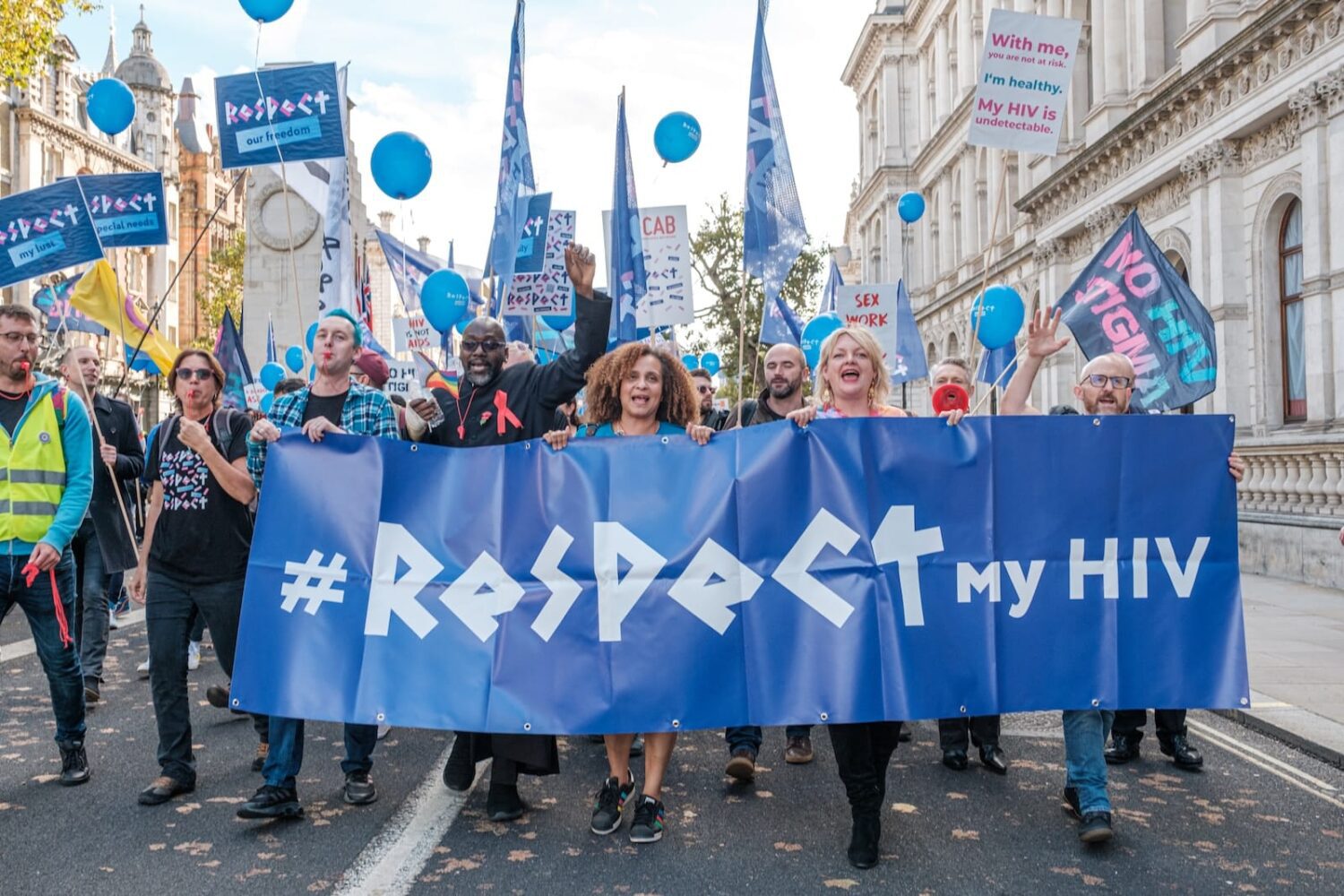
HIV/AIDS – “The only reason people are still dying of AIDS is the inequalities in society, and all these come together to make them more at risk,” Winnie Byanyima, Executive Director of UNAIDS, said. “Criminalizing laws chase people away from life-saving treatment and need to be removed.”
Commemorated on 1 March, Zero Discrimination Day aims at emphasizing how people can become informed about and promote inclusion, compassion, peace, and a movement for change. The 2023 theme – Save Lives: Decriminalize – points to the positive impact on health and life outcomes when discriminatory and punitive laws are removed.
Despite recent reforms and gains across all regions, she said the world is not on track to reach a goal set in 2021: to ensure that less than 10 per cent of countries have punitive legal and policy environments that create barriers to accessing HIV services.
The UN agency fighting to end AIDS reports that HIV exposure, non-disclosure, or transmission has been criminalized in 134 reporting countries in 2021. In 153 nations, at least one aspect of sex work is illegal. Consensual same-sex sexual activities are against the law in 67 nations, and 20 reporting countries criminalized and/or prosecuted transgender persons, UNAIDS said.
In addition, 48 countries still place restrictions on entry into their territory for people living with HIV, while 53 countries report that they require mandatory HIV testing, for activities from getting marriage certificates to performing certain professions. Parental consent for adolescents to access HIV testing is required in 106 countries.
Such laws and sanctions violate international human rights norms and stigmatize and discriminate against already marginalized populations, Ms. Byanyima said.
Ending social injustice
“At the country level, repealing criminal laws that are driving people away from HIV prevention and treatment is critical,” she said.
Research in sub-Saharan Africa demonstrates that HIV prevalence among men who have sex with men was five times higher in countries that criminalize same-sex sexual activity compared to those that do not, she said. HIV prevalence soared 12 times higher in nations where there had been recent criminal prosecutions.
Similarly, criminalizing sex work increases both the risk of sex workersacquiring HIV and their vulnerability to violence perpetrated by clients, police, and other third parties.
“HIV is a disease, but it’s more a social injustice,” she said. “It’s driven by inequalities in society. These are not things that can happen without a consensus in the society, so we need everybody on board.”
Evidence shows that decriminalizing drug use and possession for personal use can significantly decrease HIV incidence among people who are drug injectors. Related efforts include greater access to harm reduction services.
“Law reform is therefore critical if we are to end AIDS as a public health threat by 2030,” she said.
A young woman tests negative for HIV at her home in Ndjamena, the capital of Chad.
Realistic targets
The targets are ambitious, but not impossible, she explained, citing examples of judicial success stories. In 2022, Belgium and Australia have removed laws criminalizing sex work, Zimbabwe decriminalized HIV exposure, non-disclosure, and transmission, and the Central Africa Republic reduced the scope of its HIV criminal laws.
Pointing to other examples, she said Antigua and Barbuda, St. Kitts and Nevis, Singapore and Barbados have repealed old colonial laws criminalizing same-sex sexual activity. Kuwait repealed a law targeting transgender persons, while New Zealand removed HIV-related travel restrictions.
The decision of an International Mock Trial on Human Rights on Ernst Rüdin was rendered by judges of the highest standing and experience. The trial however was not a real court case, but an action part of an educational program for young leaders organized by the Social Excellence Forum at the United Nations Headquarters in New York. It was part of the 2023 Holocaust Remembrance under the UN Outreach Programme on the Holocaust.
In an imagined courtroom, 32 students between 15 and 22 years old, from ten countries representing a diversity of nationalities, religions, ethnicities and beliefs from around the world, interrogated the so-called father of Nazi Racial Hygiene, ardent Nazi Ernst Rüdin (his person was presented by an actor). A psychiatrist, geneticist, and eugenicist Ernst Rüdin was responsible for untold suffering and death during the 1930s and 40s.
Young litigator. Photo Credit: THIX Photo
The young litigators introduced the Mock Trial with the statement: “The man on trial today never faced a court of law. He was never made to answer for the murderous acts he condoned and facilitated, nor did he have to face the consequences of the role he played in supporting the genocidal policies of the Nazis – in part due to lack of evidence at the time – which we now have – and in part due to a prosecution strategy.”
Young Prosecutor confronting the defendant Ernst Rüdin with the 1933 Nazi Sterilization law for which he co-authored the official commentary as evidence presented to the Court. Photo Credit: THIX Photo
It was further noted, that while this trial did not happen at the time, and the man who was portraying Ernst Rüdin is an actor, the man Ernst Rüdin was very real. And while “he never found a single shred of actual scientific evidence to back up his “Racial Hygiene” ideology, he did not hesitate to promote it with the full force, reputation and authority of medical science,” in service of his personal bias.
Rüdin helped formulate and especially worked on the implementation of the 1933 Nazi “Law for the Prevention of Offspring with Hereditary Diseases” that legalized the forced sterilization of some 400,000 Germans between 1934 and 1939. Rüdin helped to implement the so-called “T4 programme,” — the first mass murder committed under National Socialism (Nazi). Rüdin was directly involved in the killing of children in order to conduct post-mortem research. Because of a loophole in the law, Rüdin was never prosecuted for his crimes.
Young litigator. Photo Credit: THIX Photo
When asked why holding a mock trial today some 70 years after the fact? The answer given was, that through exposing the injustices Ernst Rüdin brought about, some form of justice is restored – it is the justice of acknowledging the irrefutable facts of what took place in Nazi Germany, who the perpetrators and collaborators were, and never forgetting the victims.
Young litigator. Photo Credit: THIX Photo
They added that “We wish to convey an unequivocal and clear message to everyone in the world, that humanity has a multi-generational memory, and those who violated human rights of others will be remembered and brought to justice even after many decades have passed.”
After the Second World War, Ernst Rüdin, who was considered one of the major figures in German psychiatry, genetics and eugenics in the first half of the 20th century, claimed that he was a scientist and not a politician, and thus innocent. He was believed, denazified and classified a nominal party member. The psychiatrist who helped develop the Nazi mass sterilization law, and played a key part in the murder of over 300,000 people deemed to be unworthy of life, died in retirement in 1952, a free man.
Young litigator. Photo Credit: THIX Photo
The panel of three judges of the International Mock Trial consisted of distinguished and proven judges with experience at the highest level. The presiding Judge, the Honorable Judge Angelika Nussberger is a former Vice President of the European Court of Human Rights, the Honourable Judge Silvia Fernández de Gurmendi has been the President of the International Criminal Court (Ret.), and the Honourable Judge Elyakim Rubinstein is a former Vice President of the Israeli Supreme Court.
Following the hours long proceedings by the young prosecution and defense litigators, the judges deliberated and found Ernst Rüdin guilty of:
1. Incitement to Crimes against Humanity of murder, extermination, torture and persecution
2. Incitement as well as directly causing the crime against humanity of sterilization
3. Membership in Criminal Organizations [the Association of German Neurologists and Psychiatrists] as per Articles 9 and 10 to the Nuremberg Principles.
Young litigator. Photo Credit: THIX Photo
The young litigators noted, “today, we believe that justice was served because Rüdin’s lie that he was innocent, has been proven beyond doubt, false.”
They further noted, “We, young leaders from around the world, are not here only to restore historical justice; We are here to make a change. To inspire. To create an effect. To warn of the danger of racism in all its forms and the terrible consequences of classifying and discriminating against people on the basis of a disability, religious affiliation, genetic or ethnic belonging or any other arbitrary reason.
Young litigator. Photo Credit: THIX Photo
We are here today because it is important for us to make the world recognize and respect the diversity and uniqueness of each and every one of us, and to encourage everyone to strengthen international solidarity for the protection of human rights.
The United Nations Headquarters in New York hosted the International Mock Trial on Human Rights as part of the 2023 Holocaust Remembrance under the UN Outreach Programme on the Holocaust. In an imagined courtroom, 32 students between 15 and 22 years old, from ten countries, interrogate the so-called father of Nazi Racial Hygiene, ardent Nazi Ernst Rüdin (his person was presented by an actor). A psychiatrist, geneticist, and eugenicist, Rüdin was responsible for untold suffering and death during the 1930s and 40s. On trial was the right for those most vulnerable to be protected from harm; the responsibility of leadership; and the place of ethics within the sciences.
The panel of three judges of the International Mock Trial consisted of distinguished and proven judges with experience at the highest level.
The presiding Judge, the Honorable Judge Angelika Nussberger is a German professor of law who was the judge in respect of Germany at the European Court of Human Rights from 1 January 2011 to 31 December 2019; from 2017 to 2019 she was the Court’s Vice-President.
The honorable Judge Silvia Alejandra Fernández de Gurmendi is an Argentine lawyer, diplomat and judge. She has been a judge at the International Criminal Court (ICC) from 20 January 2010 and President of the ICC from March 2015 to March 2018. In 2020 she was elected to serve as President of the Assembly of States Parties to Rome Statute of the International Criminal Court for the twentieth to twenty-second sessions (2021-2023).
And the Honourable Judge Elyakim Rubinstein, a former Vice President of the Supreme Court of Israel. Prof. Elyakim Rubinstein has also been an Israeli diplomat and longtime civil servant, who served as the Attorney General of Israel from 1997 to 2004.
Indictment: In the Special International Court for Human Rights: Case no. 001-2022 Prosecutor: Humanity Defendant: Professor Ernst Rüdin, dual citizen of Switzerland and Germany For the purpose of this trial, the honorable court is asked to issue a declarative judgment whether the defendant bears direct or indirect responsibility, as per the legal definitions of a non-military commander or what is known as “Co-Perpetrator”, to the following acts or omissions: 1. Incitement to Crimes against Humanity of murder, extermination, torture and persecution in accordance with articles 7(1)(a), 7(1)(b), 7(1)(f), 7(1)(g) and 7(1)(h) to the Statute of Rome, as well as Article 6(c) from 1945; 2. Incitement to Genocide in accordance with Article 6 of the Statue of Rome as well as Article 3(c) to the Convention on the Prevention and Punishment of the Crime of Genocide from 1948; 3. Incitement as well as directly causing the crime against humanity of sterilization in accordance with Article 7(1)(g) to the Statute of Rome as well as Articles 7, 17(1). 4. Membership in Criminal Organizations as per Articles 9 and 10 to the Nuremberg Principles.
The presiding Judge, the Honorable Judge Angelika Nussberger. Photo credit: THIX Photo
“Let me start by explaining in a few words why this case is so important. I want to highlight five aspects.
First, the case illustrates the disastrous consequences of an ideology where the individual and his or her dignity and destiny do not matter. In Nazi Germany, the propagandistic slogan was “You are nothing, your people are everything”. The case shows to which extremes such an ideology may lead. It is not only in the past, but also in the present that such ideologies exist, even if Nazi Germany was the most atrocious example. That is why the inviolability of the dignity of each human being should be the starting point for all legal assessments.
Second, the case illustrates white collar criminal responsibility, more concretely, the responsibility of scientists. They cannot act in an ivory tower and pretend not to be responsible for the consequences of their research, theories, and findings.
Third, the non-prosecution of someone who has committed atrocious crimes is an injustice so painfully felt even by later generations, that it has to be addressed. Even if justice cannot be done any more, it should be made clear what justice would have required to do.
Forth, even if a crime is committed by many and in many countries, it is still a crime.
And fifth, it is true that values and convictions change over time. Nevertheless, there are core values like human dignity and the right to life and to physical integrity that must never be put in question.
“Now, let me come to the assessment of Mr Rüdin’s case based on international criminal law.
The Prosecution is “Humanity”, so the case is not fixed in time and space. That is an important factor.
The Prosecution has brought the case against the Accused under the Statute of Rome, under the Genocide Convention and under the Statute of the International Military Tribunal of Nuremberg. These laws did not yet exist at the time when – according to the Prosecution – the Defendant committed his crimes, that is, before 1945. The principle of “nullum crimen sine lege” (“no crime without a law”) can be seen as part of the universally recognized principles of law. But this principle allows trial and punishment based on general principles of law recognized by civilized nations. Thus, the Statute of Rome, the Genocide Convention and the Statute of the International Military Tribunal of Nuremberg are applicable insofar as they mirror general principles of law valid already before 1945.
The first crime the Accused is charged with is incitement to crimes against humanity of murder, extermination, torture and persecution against an identifiable group or collectivity, here people with disabilities. It has been convincingly shown by the Prosecution that the Accused acted intentionally – based on deep convictions – in supporting the euthanasia and the sterilization program of the Nazi government in his writings and in his speeches and proclamations. There was a direct causal link between his research and public statements and the enactment of the programs based on those theories. The euthanasia and the sterilization program encompass the criminal acts of murder, extermination, torture, and persecution against an identifiable group. Accordingly, I find that the Accused should be held responsible in respect of charge number one.
The second crime the Accused is charged with is incitement to genocide. According to the Genocide Convention as well as to the Rome Statute genocide has to be committed with intent to destroy, in whole or in part, a national, ethnical, racial or religious group. It is not, however, related to disabled people. Thus, it cannot be argued that before or even after 1945 there existed a general principle of law recognized by civilized nations identifying acts committed against people with disabilities as “genocide”. Accordingly, the accused cannot be found guilty of incitement to genocide and would have to be acquitted under charge number two.
The third crime the Accused is charged with is incitement to as well as directly causing the crime against humanity of sterilization. Sterilization is to be considered as an act of torture. Thus, what has been said under charge number one applies here as well. Accordingly, I find that the Accused should also be held responsible in respect of charge number three.
The fourth crime is membership in the criminal organization of the Association of German Neurologists and Psychiatrists. This organization was, as was shown by the Prosecution, responsible for the implementation of the Euthanasia program. Accordingly, I find that the Accused should also be held responsible in respect of charge number four.”
Honourable Judge Silvia Fernández de Gurmendi:
The Honourable Judge Silvia Fernández de Gurmendi. Photo credit: THIX Photo
“Before giving my assessment of the crimes committed in the case we try here, I would like to congratulate all parties and participants for their presentations, you have all greatly contributed to a better understanding of the circumstances and ideas that escalated into heinous acts and ultimately led to the Holocaust.
Having listened carefully to all arguments, I am convinced beyond reasonable doubt that Mr Ernst Rüdin is guilty on all charges, except for the charge of incitement to genocide, for the reasons I will develop further.
I would like to focus briefly on three crucial arguments raised by the Defence.
First, according to the defense, Ernst Rüdin, who died 70 years ago, cannot be judged through the lens of our current laws and values.
Indeed, the principle of legality requires us to judge Mr Rüdin according to the law and values that were applicable at his time, not ours.
However, based on the evidence that was presented, including the public uproar provoked by the killings when they became known, I am convinced that his acts were neither legal nor acceptable at the time of their commission.
It is true that the theories advocated by the defendant were not initiated by him and were also endorsed in many other countries, including here in the United States, where many states had passed sterilization laws.
However, Mr Rüdin’s culpability is not based only on the theories he upheld but, rather, on the concrete actions he promoted to ensure their extreme implementation. This went far beyond forced sterilization, resulting in hundreds of thousands of deaths and ultimately paved the way to the Holocaust.
Second set of arguments. The defendant cannot be responsible for criminal acts because he held no official position.
However, I cannot agree with this argument, the Nuremberg Tribunal convicted and sentenced to death Julius Streicher, owner of the newspaper Der Sturmer, for his involvement in the Nazi propaganda against the Jews, although he did not hold any administrative position nor harm anyone directly.
Mr Rüdin was not part of the state apparatus either, but he exercised leadership in relation to the entire field of Psychiatry and Racial Hygiene. The Society of German Neurologists and Psychiatrists, which he led, became itself a criminal organisation as virtually all members and managing board were directly involved in the execution of the forced sterilization and the so-called “euthanasia” program.
Third set of arguments. The defendant’s conduct does not qualify as incitement to genocide because the “disabled” is not one of the groups included in the applicable definition of genocide.
I believe this is correct, as already referred here by the presiding judge Nussberger. Only attacks to destroy national, ethnic, racial, or religious groups may constitute genocide under existing law. Again based on the principle of legality, an expansion of this law cannot be done by judges but would require a reform of the Rome Statute. It is therefore not applicable to the defendant.
Distinguished participants, today’s trial demonstrates the dangerous slippery road that starting with discrimination, even in a theoretical form, may escalate to atrocious crimes. Indeed, genocide does not happen overnight. It is the culmination of a long process, which may begin with words, hateful messages, or, as in this case, pseudo-scientific theories to justify discrimination of a group.
Considering what we have learned today, it is now up to you to identify any current gaps in national or international law and to seek to promote additional standards as may be necessary to prevent and sanction more effectively any form of prejudice or intolerance.”
Honourable Judge Elyakim Rubinstein:
The Honourable Judge Elyakim Rubinstein. Photo credit: THIX Photo
“It is amazing and disappointing that Ernst Rüdin escaped indictment in the post-Nazi era, and was able to end his life peacefully. How did it happen? Reading the shocking evidence poses this question, indeed shouts the question.
And I will not repeat the legal reasons brought by my honorable colleagues. The Shoah was the major Nazi crime. That does not mean that the wicked race ideology did not bear other rotten fruit, that may have lead to the Shoah, as mentioned before. Euthanasia and the crimes again connected with it, including the evidence of “the forced sterilization of 400,000 human beings” and “the systematic killings of 300,000 human beings including 10,000 children, who were labeled ‘feeble-minded’ or mentally ill or handicapped”, consisted a part and an implementation of that theory, for which the defendant was especially responsible. There is no real denial of that, supported by documents and not even by the speech by the defendant.
And beyond that there is the slippery slope: what started with euthanasia deteriorated into a much wider dark picture – the systematic murder of six million Jews and many others: Roma (Gypsies) and other human groups. In particular in an era of renewed antisemitism it is our sacred duty to remember and never forget. And this mock trial is a good reminder against those human rights violations.
The defendant argues concerning eugenics and sterilization that such actions were acceptable in different countries during the Nazi era. After having studied the evidence, I believe this is different in theory and practice. Here we deal with a major murder plan, whatever “scientific” packaging and theorizing was used. It is very difficult, indeed unacceptable, to compare it with an American case, albeit bad and puzzling such as Buck v. Bell. It stands by itself, as in the Unites States, while sad and totally unacceptable deeds indeed happened, it never developed into a “strategy of mass killing” of extermination.
I concur with my two colleagues and their well-written opinions. The main point that distinguishes Rüdin and his policy from other countries and their doctors was the translation of the theory into mass implementation, a pathway to the Holocaust. Indeed, he had no official position, but had “indirect direct” involvement, by training doctors and others to implement the crimes envisioned by him and his colleagues in the Society of German Neurologists and Psychiatrists, many of whom performed the “real” work. And I agree that the genocide treaty, initiated by a Jewish refugee from Poland, Raphael Lemkin, for legal reasons of interpretation of the Statute of Rome, should not be part of the conviction in the eyes of the criminal law which insists on the principle of legality.
I mentioned before, the subject of this trial, and Rüdin’s history and wicked influence, are ideologically and practically a part of the Nazi era, the climax of which was the Holocaust.
In this particular Rüdin case, Germans were a major part of the victims. The Shoah, of course, consisted mainly of Jewish victims. Humanity made a long way since 1945, both in international and domestic legislation of Treaties and Laws.
And I would like to express the hope and my two colleagues in fact, represent [through] their former positions as judges in the international effort for human rights and for criminal convictions of perpetrators. I would like to express the hope that crimes such as Rüdin’s could not happen today. Regretfully, I am not sure. There is the bad slippery slope; you begin with a step which may seem innocent, even scientific. You end up with millions of people exterminated.
The rise of antisemitism rather human rights violations is evident. It should be fought against by all legal means – public, diplomatic and judicial.
“This trial is not for revenge, which is in God’s possession. But we can speak of a positive revenge. New generations who rose from the ashes of the Shoah, those who survived who now have great grand-children and some of them are part of the team here.
Having said that, I am still optimistic that wherever there are perpetrators of crimes under international law, there will nowadays be efforts to enforce the law. Courts will stand up to the challenge.
Finally, the idea to conduct this mock proceeding was indeed right. The educational benefits are very important and self-explanatory. We all have to work against racist occurrences, foreign or domestic, with an eye to the future.”
Discarded textiles in Europe, including used clothing and footwear, are an increasing waste and export problem. Rapidly increasing EU exports of used textiles — some of which is reused and some of which ends up in landfills — show that Europe faces a challenge in how to handle its own used textiles, according to a European Environment Agency (EEA) briefing published today.
The amount of used textiles exported from the European Union (EU) has tripled over the past two decades, and the amounts may increase further, according to the EEA briefing ‘EU exports of used textiles in Europe’s circular economy’. The briefing is based on a more detailed analysis by the EEA’s European Topic Centre of Circular Economy and Resource Use.
Europe faces major challenges in the management of used textiles, which are to be collected separately in the EU by 2025. As reuse and recycling capacities in Europe are limited, a large share of discarded and donated clothing and other textile products are exported to Africa and Asia. Common public perceptions that used clothing donations are always of use in those regions do not reflect the reality. Once exported, the fate of used textiles is often uncertain, according to the EEA briefing which looks at the patterns of and trends in EU exports of used textiles from 2000 to 2019.
According to analysed data from the United Nations, EU exports of textiles have increased and shifted from mainly African destinations to both Africa and Asia. The briefing also shows how some challenges related to these exports are being addressed in current and proposed EU policies. In the EU strategy on sustainable and circular textiles, published in March 2022, the need for addressing the challenges from exports is specifically mentioned.
The amount of used textiles exported from the EU has tripled over the past two decades from slightly over 550,000 tonnes in 2000 to almost 1.7 million tonnes in 2019.
The amount of used textiles exported in 2019 was on average 3.8 kilogrammes per person, or 25% of the approximately 15 kg of textiles consumed each year in the EU.
In 2019, 46% of used textiles exported from the EU ended up in Africa. The textiles primarily go to local reuse as there is a demand for cheap, used clothes from Europe. What is not fit for reuse mostly ends up in open landfills and informal waste streams.
In 2019, 41% of used textiles exported from the EU ended up in Asia. Most of these textiles are directed to dedicated economic zones where they are sorted and processed. The used textiles are then mostly downcycled into industrial rags or filling, or re-exported for recycling in other Asian countries or for reuse in Africa. Textiles that cannot be recycled or re-exported likely end up in landfills.
Bio-based fibre products: do they offer a ‘greener’ alternative?
Bio-based fibres that are used in clothing and other textile products are often regarded as more sustainable alternatives, but a new technical report by the EEA’s European Topic Centre of Circular Economy and Resource Use demonstrates that this picture requires some caution.
While bio-based fibres offer potential to steer away from synthetic textiles made from plastics (mainly derived from oil and gas), they cause other environmental pressures, including water and land use related to agricultural activities, deforestation and fibre processing. Moreover, the report highlights that their bio-based origin does not free them from environmental concerns related to microfibres, waste and recyclability.