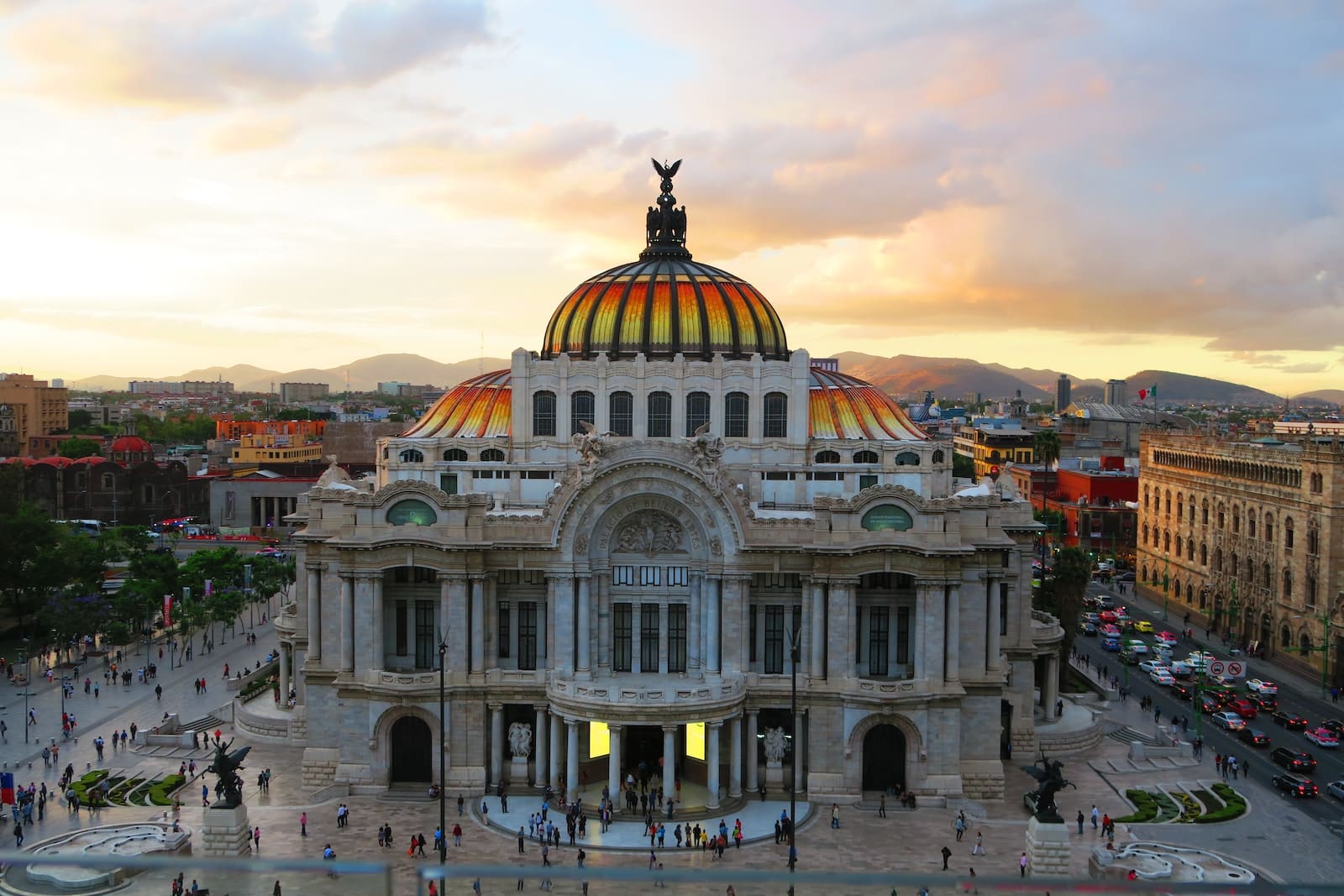
Relics – The Metropolitan Cathedral was built over the course of centuries – in the period between 1573 and 1813, and it is not the first time that experts have found finds in the walls
Experts restoring the interior of the main Catholic cathedral in the capital of Mexico have discovered 23 lead boxes with religious inscriptions and relics such as small paintings, wooden or palm crosses, the Associated Press reported.
The texts on the boxes are dedicated to saints. A handwritten note was also left in one of them, which gives reason to believe that they were found in 1810, after which they were buried again.
The message said one of the boxes was found by masons and painters in 1810. The note asked anyone who found it to “pray for their souls”.
The finds were in niches carved into the walls at the base of the cathedral’s windproof lantern, which tops the dome. They were covered with clay slabs and hidden under plaster.
They were discovered at the end of December during restoration work. Mexico’s National Institute of Anthropology and History says they may have been placed there to provide divine protection for the cathedral or the city.
Once cataloged, the boxes and their contents will be returned to the niches and covered with plaster again.
The cathedral was built over centuries – between 1573 and 1813. One of the reasons it took so long is that almost immediately after construction began, the massive, heavy structure began to sink into the soft soil characteristic of the city.
It is not the first time that experts have found finds in the walls of this temple.
In 2008, researchers discovered a time capsule from 1791 placed atop the cathedral’s bell tower. Its purpose was to protect the building from lightning. The lead box was filled with religious artifacts, coins and parchments.
One of them – perfectly preserved, describes the contents of the capsule, including 23 medals, five coins and five small palm crosses. A sign informs that “everyone is for protection from the storms”, notes AP.
Plastics have many useful applications, but the global production and consumption trends of these materials are currently unsustainable. Circular and sustainability practices throughout the lifecycle of plastics can help reduce greenhouse gas emissions, pollution and waste. According to a European Environment Agency (EEA) analysis, published today, many such good practice examples already exist and would need to be scaled up to enable a circular plastics economy in Europe.
Using plastics in a smarter way include reducing unnecessary packaging and single-use products, as well as more circular design that makes products last longer and easier to reuse and repair. Other examples to use plastics in a smarter way also already exist across Europe in the form of gear rentals, car and tool sharing and, for example, reusing crates and pallets in the food sector, the EEA briefing notes.
Increasing circularity requires longer use and reuse of products and better collection, sorting and recycling of plastics. Good practice examples include stores that offer to take back their own products at the end of product life-cycle, which can improve the quality of recycled materials or enable some type of reuse. The role of consumers is also critical in choosing what to buy and ensuring proper recycling. Overall, many European markets of recycled raw materials, including for mixed plastics, are not functioning well, according to a recent EEA analysis.
Increasing the use of renewable materials involves, for example, using more recyclable, biobased plastics, instead of relying solely on fossil fuels and their imports. According to the EEA briefing, increasing the use of renewable materials should focus on the second- and third-generation feedstocks that do not compete with food and feed production.
Businesses, policymakers and citizens can all contribute to more sustainable and circular plastics production and consumption, the EEA briefing concludes. There is vast potential in scaling up circular business models, strengthening policies, increasing demand for sustainable products, reducing unnecessary consumption and improving recycling.
A complementary report, ‘The fate of EU plastic waste’, by the EEA’s European Topic Centre on Circular Economy and Resource Use, investigates the dynamics of plastic waste trade within the EU and exports from the EU. The report demonstrates that EU plastic waste exports continue to decline and are concentrated in few receiving countries. Raising environmental concerns, case study results also indicate that plastic waste leaving the EU is of much lower quality than that traded within the EU, and that receiving countries often lack proper waste management infrastructure.
The World Evangelical Alliance and FaithInvest have signed a collaboration agreement setting out how they will work together to increase faith-consistent investing globally to achieve a more just and sustainable world.
The aim is to inspire the Alliance’s network of 600 million evangelical Christians worldwide to take a deeper look at how and where their money is used as well as to support faith-based entrepreneurs and communities to develop investible enterprises designed to protect the environment and address social concerns.
As well as providing opportunities for WEA’s network to access FaithInvest’s training, services and expertise, the two organisations will work together on joint events and projects. One of the first of these is a proposed major event in Geneva, Switzerland, in January 2024 bringing faith-based investors together in an ‘alternative Davos’ to look at values-driven approaches to the economy, around the time of the World Economic Forum’s annual meeting.
Other joint activities agreed include sharing knowledge and expertise – for example, in supporting faith groups to set investment policies and guidelines (FaithInvest) and in developing financial vehicles to fund faith-based projects (WEA Global Foundation Fund). They will also work together to identify investment engines that produce win-win-win scenarios (people, planet, profit) for values-driven investors, including members of the WEA Business Coalition which provides strategic and thought leadership for evangelical leaders of businesses, ministries and churches.
WEA Secretary General Bishop Dr Thomas Schirrmacher (left) and FaithInvest CEO Martin Palmer after signing the collaboration agreement. (c) FaithInvest
WEA Secretary General Bishop Dr Thomas Schirrmacher said it was vital for evangelical churches and institutions to consider whether their values were reflected in their investments. ‘I am deeply convinced that there is a need for evangelical churches and their many ministries to look into what we own, the assets we have – the many schools, the many buildings and all the gifts that have been given to us that, in the end, come from the hand of God,’ he said.
‘This money and these assets have to serve the same purposes that we ourselves serve and to have the same goals that we want to achieve with our overall ministry, such as a free society, a just society, a society that gets the good news that there is forgiveness, that we can start anew, that we can be reconciled. All those things have to be seen in our money and in how our money works for us.’
In FaithInvest, the WEA has a partner that understands that the way faith groups invest money is different to other organisations, Bishop Schirrmacher said: ‘So take this seriously as an offer. If you are interested as an evangelical institution to talk about this, connect to us and to our Business Coalition and we will connect you to FaithInvest, for training and for support to find the right place to invest your money.’
FaithInvest CEO Martin Palmer said FaithInvest was honoured and delighted to be working closely with the WEA, the second biggest network of Christians worldwide after the Catholic Church. FaithInvest is an international non-profit organisation founded to support faith groups to invest in line with their values by helping them develop values-driven investing policies and guidelines.
Martin Palmer said: ‘At FaithInvest, we talk about faith-consistent investing by which we mean: what do your teachings, your values, your beliefs lead you to want to see for the world? And is your money serving that purpose? What has impressed us about the World Evangelical Alliance is that it really wants to know how you can be faithful from beginning to end; not just at the points at which you have the money to do good but also how that money is generated and where it’s used.
‘We are very excited, through this collaboration agreement, to work together to support the WEA’s network of evangelical churches and institutions in ensuring their money and their assets reflect their purpose.’
FaithInvest FaithInvest is a UK-based international non-profit organisation founded to empower the faiths to invest in line with their beliefs and values, for the benefit of people and planet. We support faith-based asset owners to develop faith-consistent investing policies and guidelines to enable them to align their investments and their values.
The World Evangelical Alliance Over two billion Christians in the world today are represented by three world church bodies. The World Evangelical Alliance (WEA) is one of those, serving more than 600 million evangelicals belonging to churches that are part of 143 national Evangelical Alliances in nine regions. Launched in London in 1846, the WEA unites evangelicals across denominations for prayer, evangelism, mission, theological education, religious freedom, human rights advocacy and engagement in a wide range of social issues. It speaks with one voice to United Nations, governments and media in public or through behind-the-scenes diplomacy on issues of common concern to the Church.
Europe is a continent brimming with a rich and diverse cultural tapestry, woven together by centuries of history, art, and traditions. From the vibrant flamenco of Spain to the lively Oktoberfest celebrations in Germany, Europe offers a captivating journey through a mosaic of traditions. Embark on an exploration of the continent’s multifaceted cultural heritage, and discover the fascinating stories and customs that have shaped its nations.
Unveiling Europe’s Multifaceted Cultural Tapestry: A Voyage through a Mosaic of Traditions
As one sets foot on European soil, a world of cultural wonders unfolds. Each country boasts its own unique heritage, resulting in a mesmerizing tapestry of traditions. From the elegant ballet of Russia to the haunting chants of Gregorian monks in Italy, Europe’s cultural tapestry is a testament to the continent’s diverse history and influences. Exploring each nation’s customs and traditions is like peeling back layers of a complex and intricate artwork, revealing the beauty and depth within.
The beauty of Europe’s cultural tapestry lies in its ability to bring people together while celebrating their differences. Whether it is the lively carnival parades in Portugal or the solemn religious processions in Malta, these traditions have been passed down through generations, carrying the essence of a nation’s identity. Europe’s multifaceted cultural tapestry is a reminder of the power of diversity and the importance of preserving traditions for future generations to cherish.
From Flamenco to Oktoberfest: A Captivating Expedition into Europe’s Varied Cultural Heritage
Europe’s cultural heritage is as varied as the continent itself. From the passionate rhythms of Flamenco in Spain to the boisterous revelry of Oktoberfest in Germany, each tradition offers a unique glimpse into the soul of its people. The fiery spirit of Flamenco reflects the intensity and passion of Spain, a country known for its vibrant culture and zest for life. Meanwhile, Oktoberfest showcases Germany’s love for community, beer, and merriment, with millions of visitors flocking to Munich each year to join in the festivities.
Beyond the well-known traditions, Europe’s cultural tapestry is woven with countless hidden gems. The haunting melodies of traditional Irish music playing in a cozy pub, the intricate lacework of Belgian lace artisans, or the centuries-old art of Venetian glass blowing are just a few examples of the diverse heritage waiting to be discovered. Europe’s traditions are an invitation to step back in time, to understand the roots of a nation and appreciate the craftsmanship and creativity that have shaped its cultural identity.
Exploring Europe’s rich cultural tapestry is a fascinating journey that reveals the continent’s vibrant history and the interconnectedness of its nations. From the grandeur of historical landmarks to the intimate rituals of everyday life, Europe’s traditions are a testament to the resilience and creativity of its people. Embark on a voyage through Europe’s multifaceted cultural heritage, and you will discover a captivating world where the past merges seamlessly with the present, creating a tapestry that is as diverse and colorful as the people who call it home.
energy – Scientists in China have proposed and realized a new concept—barocaloric thermal batteries based on the unique inverse barocaloric effect. With this they can extract thermal energy from low-temperature waste heat sources and reuse it on demand, simply by controlling the pressure
A Chinese research team has developed a new concept for extracting thermal energy from low-temperature waste heat sources and reusing it on demand simply by controlling the pressure.
Heat production accounts for more than 50% of the world’s final energy consumption and analysis of waste heat potential shows that 72% of the world’s primary energy consumption is lost after conversion, mainly in the form of heat. It is also responsible for more than 30% of global greenhouse gas emissions.
Against this background, researchers led by Prof. LI Bing from the Institute of Metal Research of the Chinese Academy of Sciences have proposed and realized a new concept—barocaloric thermal batteries based on the unique inverse barocaloric effect.
The study will be published today (February 17, 2023) in the journal Science Advances.
Barocaloric thermal batteries: Concept and realization. Credit: Institute of Metal Research
An inverse barocaloric effect is characterized by a pressure-induced endothermic response, in sharp contrast to a normal barocaloric effect where pressurization leads to an exothermic response. “A barocaloric thermal battery cycle consists of three steps, including thermal charging upon pressurization, storage with pressure, and thermal discharging upon depressurization,” said Prof. LI, corresponding author of the study.
The barocaloric thermal battery was materialized in ammonium thiocyanate (NH4SCN). Discharge was manifested as the heat of 43 J g-1 or a temperature rise of about 15 K. The heat released was 11 times greater than the mechanical energy input.
To understand the physical origin of the unique inverse barocaloric effect, the working material NH4SCN has been well characterized using synchrotron X-ray and neutron scattering techniques. It undergoes a crystal structural phase transition from a monoclinic to an orthorhombic phase at 363 K, accompanied by a volumetric negative thermal expansion of ~5% and entropy changes of about 128 J kg-1 K-1.
This transition is easily driven by pressure as low as 40 MPa, and it is the first inverse barocaloric system with entropy changes greater than 100 J kg-1K-1. Pressure-dependent neutron scattering and molecular dynamics simulations showed that the transverse vibrations of SCN¯ anions are enhanced by pressure and the hydrogen bonds that form the long-range order are then weakened.
As a result, the system becomes disordered in response to external pressure and thus the material absorbs heat from the environment.
As an emerging solution for manipulating heat, barocaloric thermal batteries are expected to play an active role in a variety of applications such as low-temperature industrial waste heat harvesting and reuse, solid-state refrigeration heat transfer systems, smart grids, and residential heat management.
Reference: “Thermal batteries based on inverse barocaloric effects” 17 February 2023, Science Advances. DOI: 10.1126/sciadv.add0374
This study was supported by CAS, the Ministry of Science and Technology of China, and the National Natural Science Foundation of China.
This incredible image was captured on the International Space Station (ISS) on February 12, 2023. In it, NASA astronaut and Expedition 68 Flight Engineer Nicole Mann‘s image is refracted through a sphere of water flying weightlessly in microgravity.
Refraction is the bending of light as it passes from one transparent medium to another, such as when light passes from air to water or from air to a glass lens. When light enters a new medium, such as water or glass, it changes speed and direction, which causes it to bend or change its path. The amount of bending that occurs depends on the angle at which the light hits the surface of the medium and the difference in the refractive indices (a measure of how much the speed of light changes in the medium) of the two media.
The phenomenon of refraction has many practical applications, such as in lenses used in eyeglasses or cameras, in the design of optical instruments, and in the study of the properties of materials. Refraction also plays an important role in the formation of optical illusions and mirages.
Nicole Mann is one of the Crew-5 astronauts that arrived on station on October 6, 2022, after launching aboard a SpaceX Falcon 9 rocket on October 5. She conducted spacewalks on January 20 and February 2, accompanied by Japan Aerospace Exploration Agency (JAXA) astronaut Koichi Wakata, in construction work related to the installation of the International Space Station Roll-Out Solar Arrays (iROSAs).
NASA
Established in 1958, the National Aeronautics and Space Administration (NASA) is an independent agency of the United States Federal Government that succeeded the National Advisory Committee for Aeronautics (NACA). It is responsible for the civilian space program, as well as aeronautics and aerospace research. Its vision is “To discover and expand knowledge for the benefit of humanity.” Its core values are “safety, integrity, teamwork, excellence, and inclusion.” NASA conducts research, develops technology and launches missions to explore and study Earth, the solar system, and the universe beyond. It also works to advance the state of knowledge in a wide range of scientific fields, including Earth and space science, planetary science, astrophysics, and heliophysics, and it collaborates with private companies and international partners to achieve its goals.
SpaceX
Commonly known as SpaceX, Space Exploration Technologies Corp. is a private American aerospace manufacturer and space transport services company that was founded by Elon Musk in 2002. Headquartered in Hawthorne, California, the company designs, manufactures, and launches advanced rockets and spacecraft. SpaceX’s ultimate goal is to reduce space transportation costs and enable the colonization of Mars.
JAXA
Formed in 2003, the Japan Aerospace Exploration Agency (JAXA) was born through the merger of three institutions, namely the Institute of Space and Astronautical Science (ISAS), the National Aerospace Laboratory of Japan (NAL) and the National Space Development Agency of Japan (NASDA). JAXA performs various activities related to aerospace, from basic research in the aerospace field to development and utilization and is responsible for research, technology development, and launch of satellites into orbit, and is involved in advanced missions such as asteroid exploration and possible human exploration of the Moon.
NASA astronaut and Expedition 68 Flight Engineer Nicole Mann’s image is refracted through a sphere of water flying weightlessly in microgravity. Credit: NASA
The New York Times is suing the European Commission because to date its president Ursula von der Leyen has not made public the text messages exchanged during the Covid-19 pandemic with the CEO of Pfizer. Vaccine contracts still not made public
While civil society has been demanding for almost two years the publication of all the contracts signed between the European Commission and Pfizer, the case has been re-launched by the powerful American media, The New York Times, which has filed a complaint against the European Commission for refusing to publish the text messages exchanged between Albert Bourla, CEO of Pfizer and Von Der Leyen, President of the European Commission.
The American media justifies its decision to sue the European Commission because it has the obligation to make public these exchanges which would contain information on the contracts of vaccines signed between the EU and Pfizer.
As a reminder, in April 2021, the New York Times published an article in which it reported that the Commission President and Pfizer CEO had exchanged text messages related to the purchase of COVID-19 vaccines. This prompted a journalist to request public access to text messages and other documents relating to the exchange. The Commission identified three documents as falling within the scope of the request – an e-mail, a letter and a press release – all of which were published. The complainant turned to the Ombudsman because the Commission had not identified any SMS.
In January 2022, the Ombudsman criticised the Commission’s handling of the request for public access to SMS messages. After his investigation, it turned out that the Commission, instead of requesting a search of SMS messages, asked his office to search for documents that met the Commission’s internal registration criteria (text messages are currently not considered to meet these criteria). She urged the Commission to “conduct a more thorough search for relevant messages.
“The handling of this request for access to documents leaves the unfortunate impression of a European institution that is not forthcoming on major issues of public interest,”
On 29 June, EU Transparency Commissioner Věra Jourová replied that the search for messages had “not yielded any results”.
Following this the European Ombudsman had severely criticised the European Commission and considered the lack of willingness to find these SMS messages a red flag.
The European Commission does not consider SMS to be part of its duty of transparency, and says it cannot retrieve them either. Oversight bodies such as the European Ombudsman and the European Court of Auditors have already denounced the opacity that the Commission continues to maintain. So has the European Parliament.
The vaccine contract affair has caused a furore in Europe, with many politicians calling for an investigation into an extremely opaque deal. In fact, on 16 December, seven Green MEPs declared war on the President of the European Commission.
The final report of the Independent Commission for the Study of Sexual Abuse of Children in the Catholic Church in Portugal, releases validated testimonies relating to abuse cases that occurred between 1950 and 2022 and points to over 4,800 victims.
By Linda Bordoni
Reacting to the final report of the Independent Commission charged with investigating sexual abuse cases of minors in the Catholic Church in Portugal, the President of the Portuguese Episcopal Conference (CEP) said his first thought is for the victims, and the second for the commission towards whom the Church is grateful for its competent, passionate and humane work.
The Commission’s 8-point report points to a minimum number of 4815 victims in 70 years. The body was set up by the Portuguese Conference to examine abuse in recent decades.
Bishop Josè Ornelas said the results will not be ignored and launched a message of reassurance to the victims pledging to work for transparency and justice.
“We have heard things that we cannot ignore. It is a dramatic situation that we are living,” he said, “pointing out that that the Bishops’ Conference was not in denial about the consequences of the outcome.
He asked the victims for forgiveness and apologized for the Church having failed to grasp the scale of the problem.
Child sex abuse is a “heinous crime,” Ornelas said in a statement, adding: “It is an open wound which pains and embarrasses us.”
Present for the press conference at the Catholic University of Portugal, in Lisbon, was a number of Catholic experts and leaders, including Father Hanz Zollner, a member of the Pontifical Commission for the Protection of Minors.
The report
Releasing the report at a press briefing, Commission coordinator and president, Pedro Strecht, said 512 testimonies have been validated, out of a total of 564 received, relating to cases that occurred between 1950 and 2022.
He explained that the testimonies, presented to the organization between January and October of last year, point to a “much more extensive” network of victims, calculated in a “minimum, very minimum number of 4815 victims”.
“It is not possible to quantify the total number of crimes”, Strecht said, given that some victims were abused several times.
However, he noted that it is important “not to confuse the part with the whole,” and said the number of abusers within the Church is “low”. “The percentage of its existence, as practiced by members of the Church,” Strecht explained, “is very small, on the reality of the subject of sexual abuse of minors in general”,
Work done with freedom
Strecht emphasized that the Portuguese Episcopal Conference “always supported” this work, and he thanked all the victims who “dared to give voice to silence”.
He spoke of work done with “freedom”, recognized as necessary by several of the testimonies.
A total of 25 cases have been passed to public prosecutors, many others fell outside the statute of limitations.
The alleged abusers who are still alive will be identified, and a list of their names will be sent to the Catholic Church and to Judicial authorities by the end of February.
The Independent Commission ceases the functions for which it was designated by the CEP.
Strecht said its members “reached the end of this long and also painful work with the feeling of accomplishment”, and stressed that “the pain of the truth hurts, but it sets you free”.
On March 3, in Fátima, an extraordinary plenary assembly of the CEP is scheduled to analyze the CI report.
Vienna (Austria), 13 February 2023 — In many of the world’s drug crop-growing areas, isolation and poverty are inherent. Farmers in vulnerable populations cultivate illicit drug crops such as coca and opium poppy because they are unable to obtain sufficient income from legal activities. This is due to factors including a lack of available markets for licit crops, an absence of basic infrastructure, and communities being pushed onto marginal land by conflict or natural disasters.
This is the understanding around which the United Nations Office on Drugs and Crime (UNODC)’s concept of alternative development centres. UNODC’s alternative development interventions aim to provide sustainable livelihoods to communities that cultivate illicit drug crops. They also target communities that have stopped illicit cultivation but used to cultivate illicit drug crops in the past or are vulnerable to doing so again in the future.
The programmes have provided development assistance amounting to more than USD 70 million since 2020. UNODC teams have been working in Afghanistan, Bolivia, Colombia, Iran, Lao People’s Democratic Republic (Lao PDR), Myanmar and Nigeria to support entrepreneurship, empower the disenfranchised and help to preserve the environment.
The three phases of UNODC’s alternative development projects
The projects can be divided into three phases. The first is introducing high-value crops and new technologies. Technical assistance provided by UNODC delivers effective food security and product diversification initiatives to mitigate the effects on vulnerable groups of the eradication processes of illicit crops and their substitution for licit crops, in the context of sustainable agricultural development and in harmony with local ecosystems.
The second phase is consolidating farmers’ organizations, ensuring market access and competitiveness, and expanding to further farmers. Crop producers are encouraged to implement improved quality standards and generate sustainable income through strategic and commercial partnerships.
The final stage is ensuring sustainability and transferring responsibilities to communities. UNODC has supported farmers to obtain land ownership certificates, helped women to access land ownership, and educated farmers on sustainable forest management and reforesting valuable forest species to remove the root causes of deforestation in project areas.
These second and third phases are equally as important as the first. As UNODC Executive Director Ghada Waly mentioned during the 63rd session of the Commission on Narcotic Drugs in 2020, “alternative development is much more than switching from one crop to another. It requires creating products for which there is market demand, supporting entrepreneurship, involving civil society, empowering the disenfranchised and preserving the environment. This is truly sustainable development.”
Highlighting the importance of market demand in successful income generation from producing licit alternative products, UNODC is working with partners worldwide to provide producers with access to sustainable markets. One of the prominent success stories has been UNODC’s partnership with the French coffee roaster Malongo to empower communities to grow coffee instead of illicit crops.
UNODC and Malongo’s cooperation agreements
Farmers from the Green Gold cooperative in Myanmar, ASIPAEM (a Spanish acronym for the local association of agroecological producers) in Bolivia, and the Vanmai Coffee Cooperative in Lao PDR directly signed long-term commercial agreements with Malongo, respectively in 2018, 2020 and 2021.
These agreements are forward contracts renegotiated each year according to stock exchange prices. They include provision of a roadmap for technical assistance to help ensure quality control and yields, and a plan to increase export to 400 tonnes over the next five years. In 2022, this partnership exported 300 tonnes of Fairtrade-certified coffee to Europe, generating profitable and sustainable income for thousands of farmer households in Bolivia, Myanmar, and Lao PDR.
As each cooperative has successfully obtained a Fairtrade license, Malongo can ensure that the coffee that reaches consumers is ethical and traceable, and that farmers are guaranteed a fair price for their coffee. Fairtrade certification promotes organic agriculture and supports agroforestry systems, and it prohibits the use of dangerous pesticides and GMO products. It also empowers women and helps each partner organization progress towards gender equity.
Soon, the alternative development programme will also be implemented in Colombia. In October 2022 UNODC and Malongo, in coordination with the Colombian government, selected two coffee-producing organizations, with high potential for quality production, with whom the partners will define a roadmap for technical assistance.
The producers are located in the municipalities of Ituango, in the department of Antioquia, and Miranda, in the department of Cauca. The partners aim to begin exporting Fairtrade premium coffee to Europe in 2023, from areas affected by illicit crop economies, and improving quality of life for 400 households.
Further information
UNODC’s alternative development project with Malongo has been supported by the French Interministerial Mission to Combat Drugs and Addictive Behaviour (Mildeca) in Bolivia, from the governments of Finland and Germany in Myanmar, and by the Germany, Japan, Luxembourg and United States governments in Lao PDR.
This project contributes directly towards the achievement of the following Sustainable Development Goals (SDGs):
SDG 1 by addressing poverty;
SDG 2 by fighting hunger;
SDG 5 by working towards achieving gender equality and ethnic inclusiveness;
SDG 8 by growing local business and opening access to markets;
SDG 13 by contributing towards environmental protection; and
SDG 16 by strengthening institutions and the rule of law.
A second UN aid convoy reached northwest Syria on Friday to help earthquake victims, but humanitarians have warned that far more lifesaving help is needed, and much more quickly.
A total of 14 trucks crossed into opposition-held areas of Syria from Türkiye at Bab al-Hawa, the UN migration agency, IOM, confirmed.
DEATH TOLL CONTINUES TO CLIMB AND @UN & PARTNERS ARE RACING AGAINST THE CLOCK TO SAVE LIVES & PROVIDE SUPPORT. 1,347 DEATHS & 2,295 INJURIES HAVE BEEN REPORTED SO FAR MAINLY IN ALEPPO, LATTAKIA, HAMA, IDLEB COUNTRYSIDE & TARTOUS. #SYRIA HCT FLASH UPDATE 4 HTTPS://T.CO/VM78OCKXQF — OCHA Syria (@OCHA_Syria) February 10, 2023
Echoing the growing international calls for quicker and easier access into northwest Syria via new routes, the UN World Food Programme (WFP) said that it was ready to move supplies there, although roads had been damaged by Monday’s earthquakes.
“That slows down our deliveries,” said Corinna Fleischer, WFP Regional Director in the Middle East, Northern Africa and Eastern Europe. “We need to be able to go across the borders, we need customs officials to be there in sufficient numbers…We need all parties to do the right thing now.”
Crossline deliveries need to restart and be stepped up from Government-controlled areas into opposition territory, the WFP official insisted, as she explained that a full 90 per cent of people in the northwest depend on humanitarian assistance.
Prepositioned stocks supplied by crossline deliveries that were carried before the earthquakes are being distributed already, the UN refugee agency (UNHCR) said, adding that it hoped an agreement with the Government would allow for “fast and regular access” to the northwest.
Supplies depleted
“We are running out of stocks and we need access to bring new stocks in,” Ms. Fleischer said, as she noted calls for the crossing at Bab al-Salam – also into northwest Syria – to be reopened.
In the first four days since deadly earthquakes struck the region, WFP has delivered food assistance to 115,000 people in Syria and Türkiye, it reported.
More than 22,000 have died, according to latest reports, and many tens of thousands are too scared to move back into buildings that they fear may collapse, forcing them to sleep in cars, tents and anywhere else they can find shelter, amid freezing winter temperatures.
Hot meals, ready-to-eat food rations and family food packages that require no cooking facilities have been provided already by WFP.
“For the thousands of people affected by the earthquakes, food is one of the top needs right now and our priority is to get it to the people who need it fast,” Ms. Fleischer said.
In total, WFP requires $77 million for food rations and hot meals to 874,000 quake-affected people in Türkiye and Syria. This includes 284,000 newly displaced people in Syria and 590,000 people in Türkiye, which includes 45,000 refugees and 545,000 internally displaced people.
In another update, the UN World Health Organization (WHO) said that it had released medical supplies in northwest Syria to 16 hospitals treating survivors of Monday’s earthquakes.
On Thursday, medical and surgical trauma supplies from the WHO’s logistical hub in Dubai also reached Türkiye, but needs remain massive, with hundreds of clinics in both Türkiye and Syria damaged in the disaster, along with many hospitals.
Specialist international emergency medical teams coordinated by the WHO have been deployed “and there will be more coming” to complement the national teams already hard at work, said WHO spokesperson, Dr. Margaret Harris.
“We provide a much wider range of services as appropriate and needed,” Dr. Harris continued, not least for mothers anxiously preparing to give birth. “Of course, we do indeed have the trauma specialists, the people who can deal with multiple fractures, crush injuries, know how to deal with the complications and can bring in their expertise and also their specialist equipment.”
As the UN and partners step up the aid effort, the UN refugee agency, UNHCR, said that some 5.3 million people in Syria may have been left homeless by the disaster at the start of the week.
“There are 6.8 million people already internally displaced in the country. And this was before the earthquake,” said Sivanka Dhanapala, UNHCR Representative in Syria, speaking from Damascus.
Providing shelter and relief items remains the focus of the UNCHR response, and ensuring that collective centres for displaced people have adequate facilities, tents, plastic sheeting, thermal blankets, sleeping mats and winter clothing.
The UN sexual and reproductive health agency UNFPA, said late on Friday that it has begun distributing 60,000 dignity kits to women and girls in the worst-affected areas of northwest Syria.
On Saturday, UNFPA plans to send two trucks from Türkiye as part of a cross-border convoy, carrying 330 reproductive health kits to 181 health facilities in northwest Syria. The kits will contain essential medicines, and equipment.
A convoy of 13 trucks arrived in Aleppo from Damascus on Friday, containing 9,500 female hygiene kits, 1,000 winter blankets and clothing for 5,000 people, which will be distributed to temporary shelters in Aleppo.
And more than 20 UNFPA-supported mobile health teams are taking reproductive health and psychosocial support to women and girls in the three most impacted areas of Aleppo governorate.
Six trucks are currently being prepared to carry supplies from Damascus to Lattakia and Hama over the weekend, UNFPA added.