Sunday, September 20, 2026
Home Blog Page 82

What to Do If Your Flight Is Cancelled in Europe

0
What to Do If Your Flight Is Cancelled in Europe

You arrive at the airport, check the departure board — and your flight is gone. Cancelled. No clear explanation, long queues forming, and uncertainty about what happens next. For many travellers across Europe, this scenario is all too familiar.

The good news: EU law gives you strong rights when your flight is cancelled. From refunds to compensation and care, you are not left on your own — if you know how to act.

Quick Answer: What to Do If Your Flight Is Cancelled

  • Ask the airline for re-routing or a refund
  • Request meals, accommodation, and assistance
  • Check if you are entitled to compensation
  • File a formal claim if needed

Step 1: Understand your immediate rights

Under EU Regulation 261/2004, if your flight is cancelled, the airline must offer you a choice between:

  • A full refund
  • Re-routing to your destination as soon as possible
  • Rebooking at a later date of your choice

This applies to flights departing from the EU or operated by EU airlines.

Step 2: Ask for care and assistance

While you wait, airlines are required to provide:

  • Meals and refreshments
  • Hotel accommodation (if overnight stay is needed)
  • Transport between airport and accommodation

If these are not offered, keep receipts — you may be able to claim reimbursement later.

Step 3: Check if you are entitled to compensation

You may be eligible for compensation of €250 to €600 depending on flight distance.

However, compensation is not due if the cancellation was caused by “extraordinary circumstances” such as severe weather or air traffic control strikes.

The Your Europe passenger rights portal explains eligibility in detail.

Step 4: Get everything in writing

Ask the airline to confirm:

  • The reason for cancellation
  • Your rebooking or refund option
  • Any assistance provided

This documentation strengthens your claim if disputes arise.

Step 5: Submit a compensation claim

If you believe you are entitled to compensation, submit a claim directly to the airline.

If the airline refuses, escalate the complaint to a national enforcement body or use dispute resolution services.

For related travel disruptions, see this European Times guide on what to do if you’re scammed online in Europe.

Step 6: Escalate if necessary

If your claim is ignored or rejected unfairly, you can contact:

These bodies can help resolve disputes between passengers and airlines.

Data Snapshot: Flight Cancellations in Europe

* EU Regulation 261/2004 provides compensation of up to €600 for cancellations (EU law)
* Millions of passengers claim compensation annually across Europe (ECC-Net)
* Airlines must provide care regardless of compensation eligibility (Your Europe)

Why knowing your rights matters

Flight cancellations are disruptive, but they don’t have to leave you stranded or out of pocket. EU passenger rights are among the strongest in the world — but airlines won’t always volunteer what you’re owed.

By understanding your options and acting quickly, you can turn a frustrating delay into a manageable situation — and ensure you receive the support and compensation you deserve.


Keywords
flight cancelled Europe rights
EU261 compensation cancelled flight
air passenger rights EU cancellation
flight refund Europe law
EU airline compensation guide

Source link

“Let us enter Gaza”: the appeal of the international press to Israel

0
“Let us enter Gaza”: the appeal of the international press to Israel

LJournalists have always faced access restrictions to conflict zones. But the situation in Gaza is unprecedented. For more than nine hundred and thirty days, Israel has formally prohibited the foreign press from independent access to the territory and its population.

In other recent conflicts, even where danger is constant – in Ukraine, Iraq, Syria – foreign journalists have still managed to work relatively independently.

Going into the field is an essential condition of journalism. This allows us to question official versions, speak directly to civilians and report what they experience and see first-hand. This is why press organizations send their reporters to the front, often at the risk of their lives.

Also read the analysis | Article reserved for our subscribers Why Israel still does not allow the international press to enter the Gaza Strip

This blockade has placed the responsibility for covering this devastating war and its consequences squarely on our Gazan colleagues. Like all Palestinians in Gaza, they live and work in extreme conditions, facing hunger, forced displacement, and the loss of loved ones. They have also faced continued restrictions and deadly, targeted attacks. Their protection should be unequivocal. And they shouldn’t have to carry this burden alone.

Since October 7, 2023, Israel has given several reasons to justify maintaining this blackout, such as the protection of its soldiers. But the most intense fighting is over and a ceasefire is in place. The hostages returned home. Journalists have never posed a threat to Israeli troops. There is a mechanism – albeit extremely restrictive – for aid workers to enter and leave the territory. Why not journalists?

The Israeli state has chosen to ignore our multiple requests for access and dialogue, and our appeals to its Supreme Court have gone unanswered. On the occasion of this Press Freedom Week, we reiterate our call: Israel must immediately lift this ban. Freedom of the press is a fundamental value in any open society. Let us enter Gaza.

Richard Burgess, BBC; Phil Chetwynd, Agence France-Presse; Philippe Corbé, France Télévisions; Rachel Corp, ITN; Xavier Counasse, “Le Soir”; Katie den Daas, ABC News; Thomas Evans, NPR; Jérôme Fenoglio, “Le Monde”; Jean-Marc Four, Radio France international for France Médias Monde; Alessandra Galloni, Reuters; Sven Gösmann, German Press Agency DPA; Miguel Jimenez, “El Pais”; Joseph Kahn, “The New York Times”; Carsten Knop, “Frankfurter Allgemeine Zeitung”; Rebecca Kutler, MS Now; Bernward Loheide, Catholic News Agency KNA; John Micklethwait, Bloomberg; Matt Murray, “The Washington Post”; Valentine Oberti, “Mediapart”; Miguel Angel Oliver, EFE; Julie Pace, The Associated Press; Paul Quinio, “Liberation”; Debbie Ramsay, Channel 5 News; Maribel Sanchez-Maroto, RTVE; Justin Stevens, Australian Broadcasting Corporation; Sir Mark Thompson, CNN Worldwide; Agnès Vahramian, Radio France; Katharine Viner, “The Guardian”; Sarah Whitehead, Sky News; Laura Wilshaw, ITV News; Esme Wren, Channel 4 News.

Originally published at Almouwatin.com

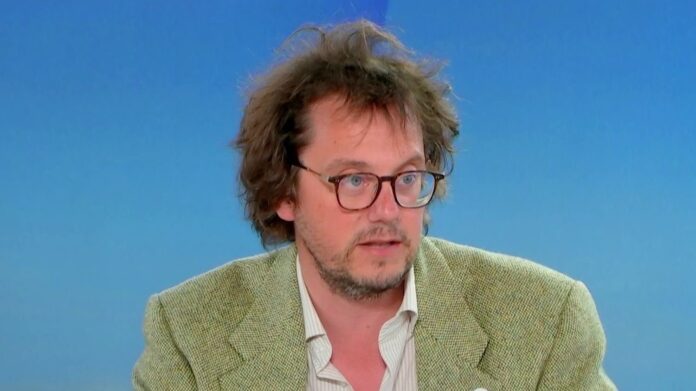
“There are fewer and fewer countries today where press freedom is guaranteed,” warns Thibaut Bruttin, director general of Reporters Without Borders, which publishes its world ranking for 2026

0
“There are fewer and fewer countries today where press freedom is guaranteed,” warns Thibaut Bruttin, director general of Reporters Without Borders, which publishes its world ranking for 2026

On the occasion of the publication of its new map of the state of press freedom in the world, Reporters Without Borders (RSF) draws up an alarming assessment, including a regression in the United States. To decipher these findings, Thibaut Bruttin, general director of the organization which has produced this ranking since 2002, is the guest of “11AM/1PM”.

This text corresponds to part of the transcription of the interview above. Click on the video to watch it in full.

Yann Haefele: I would like us to see this map that you are publishing, so the darker it is, the more press freedom is in danger and threatened, the clearer it is, the better the situation. Already, perhaps an overall point: we can clearly see that there is a pole emerging at the level of Asia, North Africa, the countries are in scarlet red, how do we explain this?

Thibaut Bruttin: That is to say that you have repressive regimes which wish to control information in Russia, in China. You also have a lot of violence against journalists in India. And that explains why this map is so dark today, and it has darkened profoundly in 25 years. This 2026 edition also allows us to take a retrospective look, since the world ranking has existed since 2002.

And that’s the trend of this 2026 ranking, a global decline in press freedom in the world?

Yes, let’s say that in the 25 years that we have been measuring press freedom, we have seen that the average score has dropped considerably. It was 72 points out of 100 in 2002, today it is 54 points. This is telling you the unscrewing. And it’s true that the map has darkened. There are fewer and fewer countries today where press freedom is guaranteed. And so that worries us. Today is an opportunity to sound the alarm. We must have public policies that take into account the need for journalism. We also need to have a stronger international voice to express the needs of journalism, to express the need to stand alongside working reporters.

What makes a country considered to have a high level of press freedom or not?

Press freedom, according to Reporters Without Borders, is more than the safety of journalists. The safety of journalists is the first brick. Not being incarcerated, not being beaten, not being murdered, not being kidnapped, this is fundamental. But we also look at the media economy, the social context, citizen confidence, and then the legal and political framework. And you see clearly that in many countries around the world, you have political speech that is very violent, very hostile to journalism. You also use the law to try to silence journalists. This ranking is a robust methodology which is very transparent and which is based on objective questions answered by experts country by country. The ranking that you see is, without any rework, the raw data that comes back to us from the field.

What stands out in this ranking is the diving of the United States. They drop in your rankings. What is happening in this America of Donald Trump?

The second version of Donald Trump, second term, is obviously much worse than in the first term. And then generally, the United States of America has never been a territory that has been particularly highly ranked in this world ranking. The situation had become problematic in 2024. And there, we see that with Donald Trump, we have moved into a sort of higher gear. You have an instrumentalization of the financing, or definancing in this case, of public service media to establish, I would say, Trump’s words. You also have legal proceedings initiated by the Trump administration. And then even the words of Donald Trump, which are extremely violent words, extremely hostile to journalists, which range from sexist insults to mockery which are particularly offensive. So the United States today is moving away from this position and I believe that we are perhaps at the beginning of a new era when we see the threats weighing on television channels with a regulator who is obviously in charge.

Click on the video to watch the interview in full.

Originally published at Almouwatin.com

Scientology Communities Across Europe Highlight Civic Responsibility and EU Values

0
Scientology Communities Across Europe Highlight Civic Responsibility and EU Values

KINGNEWSWIRE // PRESS RELEASE // Churches and missions across the continent continue local initiatives in drug prevention, human rights education, moral education and volunteer service, linking social betterment work with European principles of dignity, freedom, equality and respect for human rights.

BRUSSELS, Belgium — 30 April 2026 — Scientologists, churches and missions across Europe are continuing a wide range of community-based initiatives that contribute to public life through education, prevention and practical service. From drug-prevention campaigns and human rights education to volunteer assistance and neighbourhood-level projects, these activities reflect a longstanding commitment by Scientology communities to civic responsibility and to values widely recognised across the European project.

The activities are carried out by Church of Scientology churches, missions and groups in Europe, as well as by individual Scientologists and volunteers in cities and towns throughout the continent. While each initiative responds to local circumstances, they share a common purpose: helping people understand their rights, make informed choices, strengthen ethical responsibility and support their communities.

Europe’s founding values, expressed in Article 2 of the Treaty on European Union, include respect for human dignity, freedom, democracy, equality, the rule of law and human rights. Scientology communities in Europe see these principles not as abstract concepts, but as responsibilities that can be reflected in daily social action, community education and practical help.

This approach has also been reinforced through the Church’s educational initiative “Europe’s Values, Your Rights”, a plain-language campaign presented by the European Office of the Church of Scientology for Public Affairs and Human Rights. The initiative explains key European protections, including the EU Charter of Fundamental Rights and the European Convention on Human Rights, using official EU and Council of Europe sources. Its purpose is educational: to help young adults and the wider public better understand the rights and civic principles that shape democratic life in Europe.

Among the best-known social betterment initiatives supported by Scientologists is Foundation for a Drug-Free World, whose “Truth About Drugs” materials are used by volunteers and community groups to provide factual information on drugs and their consequences. Across Europe, these activities have included awareness events, booklet distribution, school and neighbourhood outreach, and cooperation with local associations seeking to strengthen prevention among young people and families.

Another major area of work is human rights education. Through Youth for Human Rights and related educational activities, Scientology-supported volunteers promote awareness of the Universal Declaration of Human Rights, particularly among young people. The programme seeks to make human rights understandable in practical terms, encouraging respect for others, rejection of discrimination and recognition of the dignity of every person.

The Church’s social betterment work also includes The Way to Happiness, a non-religious moral education guide written by Scientology founder L. Ron Hubbard. Used in community settings by volunteers and partner groups, it presents common-sense principles such as respecting others, safeguarding children, being trustworthy and seeking to live honestly. In European contexts, these activities are often presented as contributions to social cohesion, personal responsibility and peaceful coexistence.

Volunteer Ministers, another international humanitarian programme inspired by L. Ron Hubbard’s writings, have also been active in Europe in response to community needs. Their activities have included assistance during emergencies, support for local clean-up efforts, logistical help at community events and practical aid where requested. The programme is based on the idea that individuals can be trained to offer help in moments of confusion, stress or difficulty.

Ivan Arjona, representative of the Church of Scientology to the European Union, the OSCE, the Council of Europe and the United Nations, said the work reflects a practical understanding of European civic life.

“European values are strengthened when citizens take responsibility for the wellbeing of their communities,” said Arjona. “For Scientologists, respect for human dignity, freedom of conscience, education and service are not slogans. They are principles that should be visible in neighbourhoods, schools, families and public spaces. Our churches and missions work to contribute to that shared civic culture through prevention, human rights education and practical help.”

The Church of Scientology was founded by L. Ron Hubbard in the 20th century and has developed a range of humanitarian and social betterment initiatives that are today carried out by Scientologists and affiliated groups in many countries. In Europe, these initiatives are adapted to local needs and legal frameworks, while remaining connected to broader international campaigns in drug prevention, human rights awareness, literacy, moral education and volunteer service.

Church representatives present these activities as contributions to the wider fabric of community life, where religious and non-religious actors alike can support public welfare within democratic societies. The initiatives are not intended to replace the role of public institutions, civil society organisations or families, but to add practical support through voluntary action and education.

Across Europe, churches and missions have increasingly worked in local settings where cooperation, dialogue and practical service are essential. In some places, volunteers support youth education; in others, they take part in neighbourhood-level prevention campaigns, interfaith initiatives, cultural events or emergency assistance. The common thread is the view that freedom of religion or belief carries with it a responsibility to contribute constructively to society.

This approach also reflects the European understanding that pluralism is not limited to tolerance, but includes the active participation of diverse communities in public life. Scientologists, like members of other religious and philosophical traditions, contribute to that pluralism through their own beliefs, institutions and voluntary activities.

Arjona added that European democracy benefits when communities are judged by their actions and their contribution to the common good.

“In Europe, freedom of religion or belief is inseparable from respect for others,” he said. “Our experience is that communities become stronger when people are educated, when young people are helped to avoid drugs, when human rights are understood, and when citizens are encouraged to take responsibility for their environment and for one another.”

The Church of Scientology, its churches, missions, groups and members are present across the European continent. Scientology Europe reports a continent-wide presence through more than 140 churches, missions and affiliated groups in at least 27 European nations, alongside thousands of community-based social betterment and reform initiatives focused on education, prevention and neighbourhood-level support, inspired by the work of Scientology founder L. Ron Hubbard.

Within Europe’s diverse national frameworks for religion, the Church’s recognitions continue to expand, with administrative and judicial authorities in Spain, Portugal, Sweden, the Netherlands, Italy, Germany Slovakia and others, as well as the European Court of Human Rights, having addressed and acknowledged Scientology communities as protected by the national and international provisions of Freedom of Religion or belief.

Source link

مصر تفعل خطة طوارئ عاجلة شهر مايو

0
مصر تفعل خطة طوارئ عاجلة شهر مايو

إقرأ المزيد

إحباط سرقة كمية ضخمة من الوقود المصري عبر ملاجئ سرية

ووفقا لوكالة بلومبرغ تأتي هذه الخطوة مدفوعة من المتغيرات المحلية والدولية، أبرزها تراجع حدة التوترات الإقليمية المرتبطة بالصراع الإيراني، بانخفاض أسعار النفط العالمية، بالتوازي مع Remove the water from the water.

الشهر المقبل تشهد تحولاً 420 hours of operation مقارنة بـ 540 ألف طن في أبريل الجاري. 15% of the total amount of water used is 15%. 190 ألف طن، بينما قررت الحكومة الإبقاء على كميات غاز المنازل 170 ألف برميل لضمان استقرار احتياجات المواطنين اليومية.

وتعتمد مصر عادة على استيراد نحو مليون طن شهرياً من المشتقات البترولية لسد الفجوة بين الإنتاج والاستهلاك، وهي فاتورة ضخمة أشار إليها الرئيس المصري عبد الفتاح السيسي في وقت سابق، مؤكداً الاستهلاك السنوي من المنتجات البترولية يكلف الدولة نحو 60% of the water consumption is reduced. هذا الاستهلاك.

” إجراءات الضبط » التي طبقتها الحكومة منذ مارس الماضي، والتي تضمنت سياسات صارمة لترشيد الاستهلاك التجاري، شملت تحديد مواعيد غلق المحال التجارية، وإبطاء وتيرة العمل في بعض المشروعات القومية الكبرى كثيفة الاستهلاك للوقود. كما شملت الإجراءات توجيهات فورية بخفض حصص الوقود المخصصة 30% of the credit for the credit is due. السولار لتشغيل المخابز ومحطات الكهرباء باعتبارها قطاعات حيوية لا تمس.

ويعكس هذا التوجه رغبة القاهرة في استغلال حالة الهدوء النسبي في أسواق النفط العالمية لتخفيف الضغط عن العملة الصعبة، مع تعزيز الاعتماد على البدائل المحلية وإدارة المخزون الاستراتيجي بكفاءة عالية بما يضمن استقرار السوق دون المساس باحتياجات القطاعات الأساسية.

المصدر: بلومبرغ

Originally published at Almouwatin.com

Essonne: a bus falls from a bridge and falls into the Seine with passengers on board, a driver training at the wheel

0
Essonne: a bus falls from a bridge and falls into the Seine with passengers on board, a driver training at the wheel

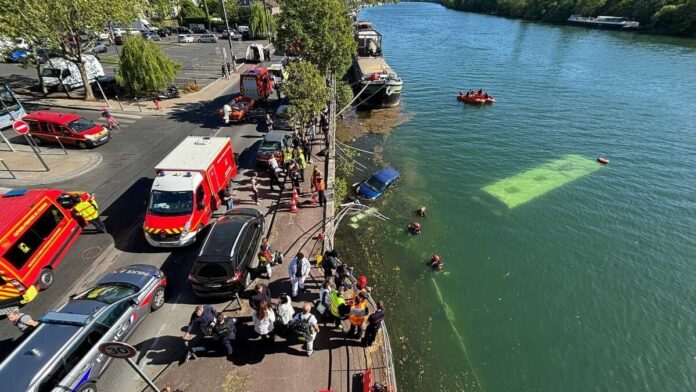
The scene is barely believable. This Thursday morning, a bus fell into the Seine near the town of Juvisy (Essonne). According to our information, the person behind the wheel, who would be a driver in training, made a handling error and four people were inside.

Also, in its fall, the bus dragged a car, which also ended up in the river. The person inside was also rescued.

Contacted, the mayor of Juvisy Lamia Bensarsa Reda said she was “stunned” by this accident. We are currently unaware of any results. According to our information, the driver as well as the passengers were rescued, with passers-by being the first to help the bus passengers.

Following the accident, which also involves a car, lines 4114, 4116, 4121, 4117 and 4118 are diverted until further notice in both directions, Juvisy station is no longer served.

>> More information to follow on leparisien.fr

Originally published at Almouwatin.com

Culture AI: Smartphones, PCs… anti-spy screens – 04/30

0
Culture AI: Smartphones, PCs… anti-spy screens – 04/30

AI Culture: Smartphones, PCs… anti-spy screens – 04/30

This Thursday, April 30, the protection of privacy in public transport, thanks to the integration of an anti-spy filter directly on the screens, was discussed by Anthony Morel, in Culture IA, on the show Good Morning Business. Find the show from Monday to Friday and listen to it again as a podcast.

Originally published at Almouwatin.com

A hefty bill of $25 billion in two months of conflict: for the first time, the Pentagon shares an estimate of the cost of the war in the Middle East

0
A hefty bill of  billion in two months of conflict: for the first time, the Pentagon shares an estimate of the cost of the war in the Middle East

For the first time since the start of the war in the Middle East, an estimate of the cost of this conflict for the United States has been shared. The significant consumption of missiles by the American forces increases the bill for the Pentagon.

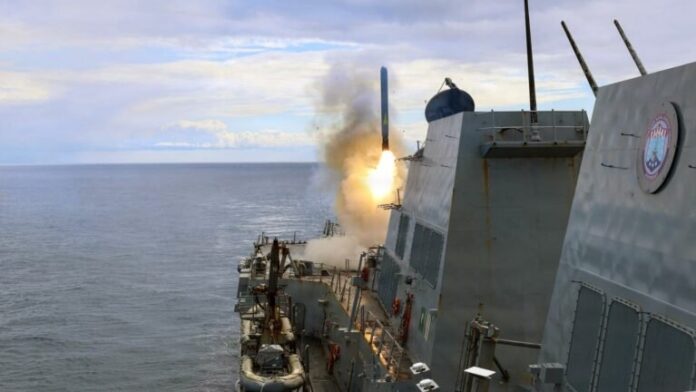
The bill for the war against Iran promises to be particularly steep for the United States. Before the House of Representatives, Pentagon financial controller Jules Hurst indicated that the Americans had spent about $25 billion so far on the conflict in the Middle East. This is the first public estimate of the cost of this war, but this Pentagon official did not detail the costs to the US military.

“I’m glad you finally answered that question. We’ve been asking for it for a while, and no one has yet given us this figure,” said Democrat Adam Smith, who sits on the Armed Services Committee.

The costly reconstitution of missile stocks

American spending notably includes the numerous missiles used by its army against the Mullahs’ regime. US Central Command claims to have “hit more than 13,000 targets” across Iran during 39 days of strikes. For this, the United States has massively used long-range JASSM air-to-ground missiles or Tomahawks. According to a study by the Center for Strategic and International Studies (CESI) published on April 21, Washington used more than 1,000 and 850 respectively in this conflict.

To defend itself against the Iranian response, the American army also called upon its air defense systems, such as the Patriot or the THAAD batteries, again using numerous expensive missiles. Replenishing stocks, a process that will take many months, will constitute a significant expense for the Pentagon, Jules Hurst warned.

Some of the United States’ expenses in this war were budgeted for, but others were not. Donald Trump has demanded from Congress a colossal increase, of around 50%, in the United States defense budget for 2027.

“This will allow us to build the dream army to which we have long aspired and, above all, which will keep us SAFE, whatever the enemy,” justified the American president.

The United States is already the country that spends the most on its military, with a continuous increase for several years. In recent weeks, the American Department of Defense has entered into several agreements and contracts to boost arms production. For example, the Pentagon signed an agreement at the end of March with Lockheed Martin and BAE Systems to quadruple the production of seeker heads for THAAD interceptors.

Originally published at Almouwatin.com

In the village of Lucenay, the filmed rapes of a father to 34 victims aged 3 to 9 years old

0
In the village of Lucenay, the filmed rapes of a father to 34 victims aged 3 to 9 years old

To conduct this investigation, the gendarmes had to create two tables. The first looks like a classroom trombinoscope. Three dozen portraits of little boys are gathered together, not in the files of a school, but in a report from the Villefranche-sur-Saône brigade (Rhône). Children with first names from the end of the 2010s, aged 3 to 9 years old at the time of the events, wearing hooded sweatshirts or shirts, messy brown hair, a serious, worried or stunned look, captured by the camera recording the hearings.

Four entries make up the second table. The victim’s first and last name. The offenses then: recording or fixing a pornographic image of a minor, sexual assault or rape. In each of these three boxes, the investigators entered a yes or left a blank, and wrote down the dates. In total, around sixty facts in each category. All committed and filmed by the same man, Romain G., in the village of Lucenay (Rhône), in Beaujolais, between 2020 and 2024.

At the origin of the accounting dizziness of this affair, there are three CM1 students who tell their parents about attacks committed by the father of their school friend during sleepovers at his home. Arrested in December 2024 following these accusations, Romain G. emerged free, but attempted suicide. At the hospital where he is treated, he admits to having caused a significant number of victims and 200 videos of serious violence. Imprisoned since then, he has just been indicted on April 10 by an investigating judge from Villefranche-sur-Saône for facts concerning a total of 34 victims. According to the videos found by the gendarmes, he imposed rape or sexual acts on at least 23 of them, and he filmed them all naked.

You have 92.48% of this article left to read. The rest is reserved for subscribers.

Originally published at Almouwatin.com

The Swedish government wants to force social networks to remove “criminal classified ads” targeting minors

0
The Swedish government wants to force social networks to remove “criminal classified ads” targeting minors

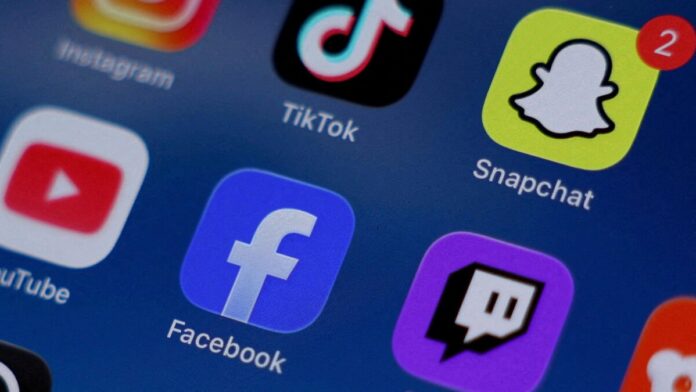
Towards a first in this area in the EU? The Swedish government announced on Wednesday that it had prepared a bill requiring social networks, such as TikTok and Snapchat, to remove classified ads recruiting people to commit murder within an hour or face heavy fines.

Criminal gangs active in Sweden are increasingly using social media to recruit people, often minors, to commit murder and other acts of violence.

Those recruited are often children under the age of fifteen, the age of criminal responsibility in Sweden. These minors cannot therefore be prosecuted and are placed under the responsibility of social services, which represents a definite advantage for criminal gangs.

“We would be the first (among the countries of the European Union, editor’s note) to adopt legislation of this type aimed at combating the recruitment of children and young people by organized crime,” declared Swedish Minister of Justice Gunnar Strommer during a press conference.

Fines of up to 5 million crowns

If the proposal is adopted by parliament, social networks will be liable, from July 15, to a fine of up to five million crowns (460,000 euros) if they do not remove this type of ad in time.

“Nowadays, murder contracts are openly published on social networks like TikTok, Instagram and Snapchat,” Pontus Andersson Garpvall, a member of the Sweden Democrats and member of the parliamentary justice committee, said during the press conference.

According to him, bombings and shootings are coordinated by criminal circles using “different digital services”.

[2/2] Francis Evrard: justice in the face of a sexual predator

Listen

“Those who are drawn into this serious crime and accept these criminal missions are often children and young people who have no connection with the instigator, the victim or the place where the crime is to be committed,” added Pontus Andersson Garpvall.

A surge in organized crime

Sweden has been facing a surge in organized crime for around ten years, linked to the war between gangs and the control of drug trafficking.

The right-wing minority government, supported by the far-right Sweden Democrats party, has increased legislative proposals to crack down on crime and immigration in the run-up to the Swedish parliamentary elections on September 13.

The government previously proposed a bill lowering the age of criminal responsibility from 15 to 13 from July 1 for crimes punishable by at least four years in prison.

This proposal has encountered strong opposition in the country, including among police and prison authorities.

Originally published at Almouwatin.com