Wednesday, April 1, 2026
Home Blog Page 842

Unprecedented global challenges are ‘not insurmountable’ – UN chief

0
Unprecedented global challenges are ‘not insurmountable’ – UN chief
Nearly a year ago, the UN chief released his report, Our Common Agenda (OCA), a blueprint for global cooperation moving forward, and reinvigorated multilateralism. On Thursday, he updated the General Assembly on progress made so far, saying the need for the report’s proposals “has only increased.”
“In addition to the triple planetary crisis of climate breakdown, air pollution and biodiversity loss, and the immense suffering caused by the COVID-19 pandemic, conflicts are raging across the world”, said Secretary-General António Guterres.

The ripple effects of the war in Ukraine, are contributing to surging food and energy prices, which are hitting vulnerable developing countries the most”, he added, “but while the problems before us are unprecedented, they are not insurmountable”.

Gloomy forecast

Mr. Guterres painted a grim picture of “unabated and growing” global shocks, and a world economy in which “developing countries are being squeezed dry” as new COVID variants again disrupt lives, throwing “the 2030 Agenda and the Sustainable Development Goals (SDGs) …further off course”.

Meanwhile, the climate catastrophe is “mounting by the day” as global greenhouse gas emissions are “at their highest levels in human history – and rising”.

And the risk of nuclear confrontation is “more acute than it has been for decades”.

“Business as usual will almost certainly guarantee a future of constant crises and devastating risks,” stated the UN chief.

‘Have we woken up?’

The report provides a framework and opportunity to “unite the international community around solutions to this situation,” he said.

“Our Common Agenda was intended as a wake-up call. One year on, we must ask ourselves: have we woken up?”.

It proposes a new global deal to divide up differently power and resources and re-establish social contracts to better manage future shocks and global crises.

The UN chief updated Member States on parts of the Agenda already in motion, including “well advanced” preparations for the Transforming Education Summit in September.

“The largest-ever gathering of learners and teachers will provide an opportunity to mobilize ambition, action, solidarity and solutions; to reimagine education systems fit for the future; and to generate fresh momentum for SDG4 and the 2030 Agenda overall,” said the Secretary-General, noting that the Pre-Summit in June had been “a remarkable success”.

And in September, he will speak about reforming international financial architecture “to tackle historic weaknesses and inequalities,” which will include short-term actions for immediate relief for developing countries, and long-term measures to guarantee resilience.

Agendas for change

The UN’s “five agendas for change” are fostering a “new culture and new capabilities” in the fields of data, digital, innovation, behavioural science, and strategic foresight.

New initiatives are being launched to “unleash the potential of data for people, planet and the SDGs,” he said, pointing to UN Behavioural Science Week that engaged thousands on how to translate scientific method into impacting people and a Futures Lab to strengthen long-term outcomes of programmes.

“Last week the General Assembly adopted a historic resolution declaring the right to a clean, healthy and sustainable environment, demonstrating your commitment to this important goal,” the Secretary-General continued.

Summit of the Future

He spoke in detail about the planned Summit of the Future, describing it as “a once-in-a-generation opportunity to reinvigorate global action, recommit to fundamental principles, and further develop the frameworks of multilateralism so they are fit for the future”.

Human rights and gender equality will be cross-cutting themes, with a consistent focus on a renewed social contract that includes marginalized groups.

“Inclusion of a wide range of voices is not only the right thing to do, but also the only way we will arrive at meaningful solutions,” he said.

UNHCR/Diego Moreno

Women in Rio Negro preparing the soil for planting.

Leaders’ Pact

The UN chief hoped that the Summit would yield an inter-governmentally negotiated Leaders’ Pact for the Future to “reinvigorate the multilateral system and make it fit for the challenges of today and tomorrow”.

It should re-focus efforts on existing climate commitments; address international peace and security threats; realize ambitions on human rights, international justice, and gender equality, including safeguarding rights in digital spaces.

“The Pact for the Future must demonstrate to the world that while we face daunting challenges, we can overcome them with co-operation, compromise and global solidarity,” he said.

The Secretary-General set out proposed tracks for and possible outcomes of the Pact, beginning with a New Agenda for Peace to better address “all forms and domains of threats” and prevent the outbreak and escalation of hostilities on land, at sea, in space and in cyberspace.

His second proposal, a Global Digital Compact, seeks an open, free and secure digital future and his third, a Declaration on Future Generations, includes establishing mechanisms to consider their needs as well as a dedicated envoy.

Stopping arms race in space

He hoped that the Summit would yield a high-level political agreement on the peaceful use of outer space, his fourth proposal, including a commitment to negotiate an international instrument to prevent an arms race there.

An emergency platform to manage future global crises in a “fast, coordinated way,” was his fifth proposal, saying the UN was uniquely placed to manage it.

“The world has paid a high price for our ad hoc responses to recent global shocks…No single organization exists to gather stakeholders in the event of such a global crisis”.

Despite the success of the Black Sea Grain Initiative, he stressed: “We do not yet have the mechanisms we need”.

Twin summits

In closing, he drew links between the proposed Summit of the Future, and next year’s SDG Summit in New York, to “rescue the SDGs”.

The twin summits aim to create conditions for a sustainable, inclusive future, which together with the Paris Agreement on climate change, are “our last, best chance to deliver on people’s demand for a multilateral system that manages and solves global challenges in a timely, effective and fair way”.

4 summer dangers for cats and how to protect them

0
brown tabby kitten
Photo by Tran Mau Tri Tam ✪

dangers for cats – All through the long and hard winter, summer is the only thing we think about. When it happens – we are all more than happy and can now quite calmly even start to complain about the heat. While we take care of ourselves, drink more water and wear a hat in the sun, we should not forget our pet.

Whether your purring pet lives inside or goes outside periodically, there are some risks for them during the hot months.

1. Shedding of fur

With the warmer weather, your cat may begin to shed the fluffy winter fur to replace it with lighter summer fur. This can lead to hairballs or more serious problems. This is a period when purring animals may ingest more fur than usual as they wash frequently. This can lead to hairballs or vomiting and even some dangerous blockages that require veterinary attention. To deal with the situation, it is important to regularly brush your pet more often than usual to remove dead fur. That way it will stay on the brush instead of going into the cat’s stomach.

2. Risk of skin burns

The good thing about this danger is that it is quite rare in domestic cats. An exception exists in the hairless representatives, such as the Sphynx, as they have no fur to protect them, which makes them a good “target” for the scorching rays of the sun.

Although you will rarely notice your cat lounging by the window in the heat of the day, still – provide enough shade or even move the purring pet to a cooler place.

3. Heat stroke

Hot temperatures are not only dangerous for us, but also for pets. Heatstroke is a scary thing, and it can look a little different in cats than you might expect. Cats don’t normally breathe with their mouths open, so any dog-like panting is a problem. Also, any lethargy or difficulty walking requires prompt veterinary attention.

If you suspect that the cat is warmer than it should be – you can use lukewarm water and spread it on the cat’s belly, paws or ears. However, if you are concerned that your purring pet is not looking well – see your vet. Older cats, kittens and those with illnesses are prone to heat stroke.

Signs of heat stroke include high body temperature, rapid heart rate, rapid breathing, stumbling, lethargy, vomiting and sweaty paws.

4. Insect bites or stings

Whether a purring pet lives outdoors or indoors, the danger of insects exists. Of course, indoor cats are less likely to be bitten or stung, but the risk is there. For purring friends walking outside – the danger becomes very real. Therefore, do not miss the deworming of the pampered pet. While this alone will not save the cat from being bitten, it will protect it from possible parasites and diseases that the insect may infect it with.

Although this is the favorite season for many of us, we should not underestimate the risks of warm weather and taking care of the pet. Even if your cat stays at home – provide it with enough shade and fresh water to drink from at any time.

Bishops of Africa: It is painful to see young people leave the continent

0
Bishops of Africa: It is painful to see young people leave the continent. - Vatican News

Paul Samasumo – Vatican City

At the end of the 19th Plenary Assembly of the Symposium of Episcopal Conferences of Africa and Madagascar (SECAM) held from 25 July to 1 August 2022 in Accra, Ghana, on the theme, Ownership f SECAM: Security and Migration in Africa and the Islands, the Bishops issued a communique signed by the new President of the continental body, the Ghanian Bishop of Wa Diocese, Cardinal-designate Bishop Richard Kuuia Baawobr.

It pains to see young people leave

“One can emigrate for various reasons: natural, economic, political, intellectual. Article 13 of the Universal Declaration of Human Rights makes migration a right. This is why migration cannot be considered illegal but could be irregular …. To all intending migrants, especially young people who seek to exercise their right to migrate, we urge them to do so in a manner that is administratively acceptable and with full knowledge of the challenges that await them,” said Bishop Baawobr.

Pope Francis with some young African migrants & refugees

The SECAM Bishops’ communique adds, “We wish to express our pain in seeing our youth leaving our countries, knowing that they are going to suffer and possibly lose their lives, and we lament our inability to stop them from leaving. We commit ourselves to take measures that will encourage their free choice and the ones that will involve them in the construction of their countries,” reads the statement.

Bishop Baawobr presented the communique at the SECAM Plenary Assembly’s closing Mass held Sunday at the Holy Spirit Cathedral of Accra, Ghana. 

The new leadership of SECAM

Pastoral care and programmes for migrants

“We encourage our youths not to lose hope and to hold on to God through a life of holiness,” the Ghanaian prelate said, adding, “Migration is a normal social phenomenon that is linked to the history of humankind. It has a Biblical basis. Thus, according to the book of Deuteronomy, the offering of the first fruits of the harvest to the Lord was accompanied by a solemn profession of faith: ‘My Father was a wandering Aramaean. He went down to Egypt, where he lived as a sojourner with the small number of people who accompanied him’ (Dt 26, 5),” said Bishop Baawobr.

The suffering and deaths of migrants are not linked directly to the fact of migration as such, he said. Still, migration can involve suffering such as the abuse of the social status of migrants, exploitation, and ignorance, among other violations, affirmed the SECAM President.

Migrants trying to cross the Mediterranean Sea.

The SECAM Bishops want Africa’s socio-political decision-makers to erect structures and conditions that discourage irregular migration. These structures should include good governance, employment opportunities, multifaceted security, political and social inclusion as well as the promotion of social justice. The Bishops further implore transit and host countries to respect the rights and human dignity of migrants.

Migrant young woman with child in Libya.

The Bishops’ communique encourages Christian communities on the African continent to develop active pastoral care for migration, summarised in four actions: welcome, protect, promote and integrate. 

Renewing SECAM

The Bishops of Africa dedicate time in the communique to promoting renewal and recommitment  to the continental body, SECAM. They appeal, in particular, to a new generation of African clerics and the Catholic faithful who perhaps are no longer familiar with the initial ideals of SECAM. They underline the importance of SECAM as a continental body of pastoral solidarity hence the urgency for re-engagement with the broader African Church. 

“SECAM is the organ of pastoral solidarity for the Church in Africa and Madagascar,” the African prelates emphasise and insist that it is, therefore, “urgent that SECAM should strive through concrete engagement of all her members to be financially and materially self-sufficient. We, your pastors, commit ourselves to henceforth support fully the mission of SECAM and urge you to identify with her in order to make her more dynamic and functional in the execution of her mission of evangelisation,” reads the Bishops’ message on the future of SECAM.

Insecurity on the continent

The Bishops encourage social and political stakeholders and decision-makers to continue to do their utmost to fight against insecurity on the continent. The Church, too, must take an important part in this search for peace and security. 

“This is why the Church must play her prophetic role, by firmly and clearly denouncing situations of insecurity and their causes. She must also continue to offer everyone reasons for hope and peace in collaboration with organisations working for reconciliation, justice and peace,” urged Bishop Baawobr.

SECAM and Social Communications

Social Communications as a priority of SECAM

In their communique, the Bishops of Africa once again place social communications as a pastoral priority on the continent. It was widely discussed in the aftermath of the first African Synod and led to the establishment of many Catholic diocesan radio stations in Africa. 

“As Church family of God in Africa and Madagascar, we remain committed to engaging the world of media through the traditional, modern and social means of communication and the new discoveries of the digital era. We shall intensify the ethical and technical formation of the professionals and practitioners of Church communications while engaging with the philosophies and ideologies that underpin contemporary media institutions, practice and expertise in order to help make them agents of communion, reconciliation and peace,” Bishop Baawobr told the Accra Cathedral congregation. 

The Synodal process in Africa

The Bishops of Africa also gave a collective nod to Pope Francis’s synodal process.

“This process of synodality has already begun at the level of basic Christian communities, parishes, dioceses, nations and regions. We are now entering the continental phase, whose assembly will be celebrated in the month of March 2023. We invite all the faithful to support this dynamism and to make it theirs through prayer and lifestyle,” said Bishop Baawobr.

New Research Demonstrates the Power of Sport For People With Disabilities

0
New Research Demonstrates the Power of Sport For People With Disabilities

University of Illinois study findings demonstrate the mental health and wellness benefits of adaptive sport

Our findings demonstrate the mental health and wellness benefits of adaptive sport for people with disabilities, especially during times when our daily lives are disrupted”
— University of Illinois Research Lead Dr. Jules Woolf

ROCKVILLE, MARYLAND, UNITED STATES, August 1, 2022 /EINPresswire.com/ — According to the Center for Disease Control, one in 4 U.S. adults – 61 million Americans, have a disability that impacts major life activities. Of those, 47 percent of people with a disability ages 18 to 64, reported they get no aerobic physical activity. For many of these Americans, the benefits that physical activity can have on their whole health are not widely understood.Existing, independent, peer-reviewed academic research has previously demonstrated that adaptive sports has positive, lasting physical and psychological effects – yet more work is needed. In December 2020, Move United, the national leader in community adaptive sports, partnered with a research team at the University of Illinois Department of Recreation, Sport and Tourism to conduct a study with over 1,000 individuals with a disability across the country. The study was conducted in the midst of the Coronavirus pandemic and looked at the benefit of Move United programming.

Research Lead Dr. Jules Woolf and his University of Illinois team recently published a paper in the Journal of Leisure Studies entitled “Disasters and catastrophes: the impact on people with disabilities’ leisure-time physical activity participation and associative mental health and well-being.”

Some of the keys findings published in the journal included:

• The social aspect of being active is important.

• More simply, participating with others is important for people’s mental health, especially when our lives are facing upheaval.

• Military veterans were more likely to be in the Heavily Impacted group that had poorer mental health and well-being indices, which is concerning given the challenges this population already experiences.

• For some people with disabilities, such as those with limb loss, continuing to be physically active during disasters may be more about motivating participation. In contrast, for others, such as those with TBI, tailored outreach and programming may be needed to overcome barriers to being active.

“Our findings demonstrate the mental health and wellness benefits of adaptive sport for people with disabilities, especially during times when our daily lives are disrupted. And importantly, it shows that people with different disabilities or different life experiences, such as veterans, experience these disruptions differently. That has major implications for adaptive sport programming and outreach,” Woolf said.

To learn more about adaptive sports opportunities across the country, visit moveunitedsport.org.

<

p class=”contact c9″ dir=”auto”>Shuan Butcher
Move United
+ 12402682180
email us here
Visit us on social media:
Facebook
Twitter
LinkedIn
Other

article gif 8 New Research Demonstrates the Power of Sport For People With Disabilities

Shocking demolitions and land grabs in persecution of Iran’s Baháʼís

0
aerial photography of grey concrete structure surrounded by trees at daytime

BIC GENEVA — In a cruel escalation, and just two days after previous attacks on Baháʼís across Iran, up to 200 Iranian government and local agents have sealed off the village of Roushankouh, in Mazandaran province, where a large number of Baháʼís live, and are using heavy earthmoving equipment to demolish their homes.

  • Roads into and out of the village have been blocked.
  • Anyone who tried to challenge the agents were arrested and handcuffed.
  • Agents have confiscated the mobile devices of those present and prohibited filming.
  • Neighbors have been warned to stay in their homes and barred from filming or photographing.
  • Four homes that were under construction have already been destroyed.
  • The authorities are installing robust metal fences to restrict access of the Baháʼís to their own homes.

The Baháʼís in Roushankouh have been targeted many times in the past with land confiscations and home demolitions. But this move follows weeks of intensifying persecution of the Baháʼís: over 100 have been either raided or arrested in recent weeks.

“We ask everyone to raise their voice and call for these dreadful acts of blatant persecution to be immediately stopped. Every day there has been fresh news of persecution of the Baháʼís in Iran, demonstrating unmistakably that the Iranian authorities have a step-by-step plan that they are implementing, first blatant lies and hate speech, then raids and arrests, and today land grabs, occupations, and the destruction of homes,” said Diane Ala’i, representative of the Bahá’í International Community (BIC) to the United Nations in Geneva, referring to the past several weeks. “What will be next? The international community must act before it is too late.”

Stone statue found in Transnistria, which is 500 years older than the pyramids

0

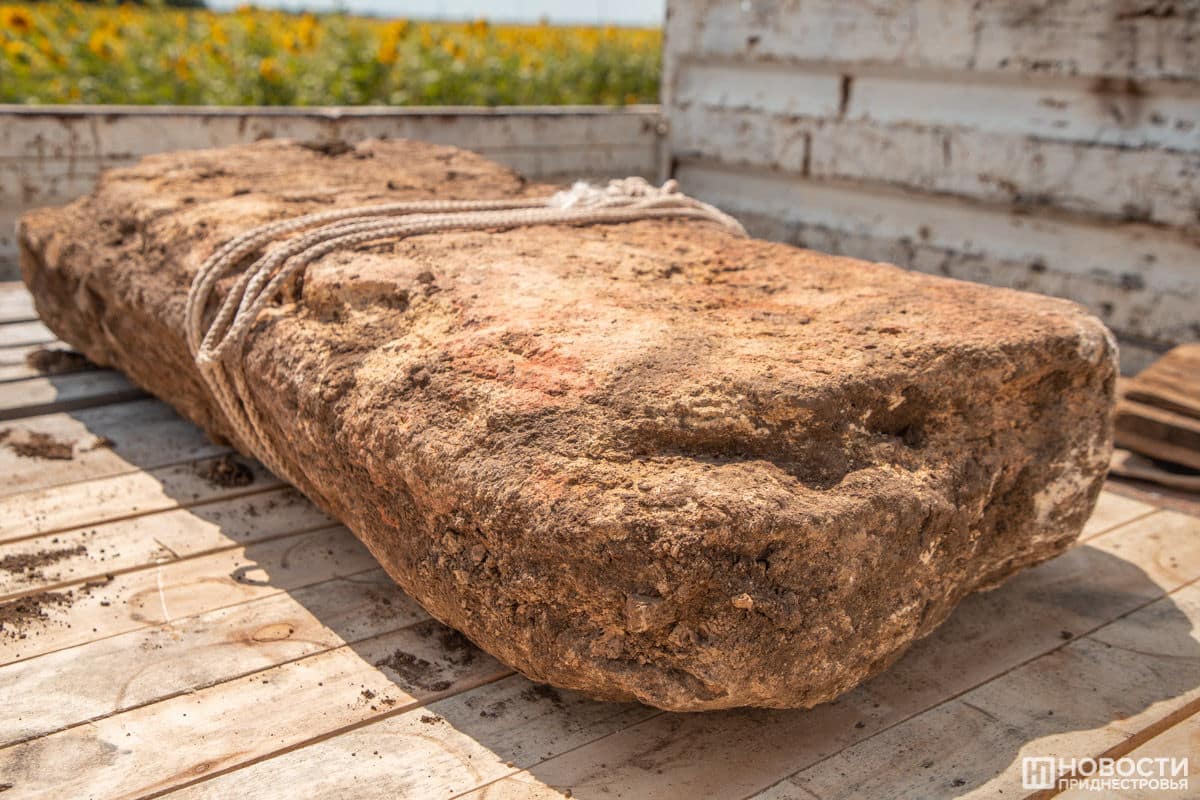
Archaeologists of the Pridnestrovian State University discovered the oldest stone sculpture in the Northern Black Sea region in the Slobodzeya region.

According to preliminary data, it is from 4.5 to 5 thousand years old. In other words, it is about 500 years older than the Egyptian pyramids.

As the leading researcher of the research laboratory “Archaeology” of the Pridnestrovian State University, Candidate of Historical Sciences Sergey Razumov, told reporters, the statue is an anthropomorphic stele, that is, a stone slab on which a rough image of a person is applied. At the same time, an image is carved on one side of the slab, and an ocher pattern is applied on the other – obtained from burnt clay with a high content of iron oxides, mixed with vegetable or animal fat. According to Sergei Razumov, such slabs usually depicted facial features, a belt, feet, weapons, signs of power.

The image has been preserved for so many years, thanks to the fact that this slab was laid face down on the burial, over which the barrow was then poured.

The burial belongs to the so-called pit cultural-historical community. A common feature of this community, which spread over the territory from the Danube to the Urals, is the burial of the dead in rectangular pits. Indo-European cattle breeders belonged to it, semi-nomadic tribes who moved across the steppe, lived in wooden carts, although they also knew agriculture.

Over time, this mound turned into a small cemetery, which was used for about 2 thousand years. The last discovered burial in it dates back to the Cimmerian time, that is, 2700-2300 years ago.

As noted by the head of the laboratory, Doctor of Historical Sciences Vitaly Sinika, over the past decades, the mound has been completely plowed up and almost leveled with the surrounding surface. To find it, we had to analyze data from old maps, aerial photography and satellite images.

A total of 7 burials were found in the barrow. The first of them, which refers to the period 2900-2700 years ago, was located directly under the arable land. Vitaly Sinika did not rule out that in the course of further work it would be possible to find two to five more burials.

As for the oldest of the found graves, the one that was covered by the slab found, it belongs to the early Bronze Age. Unfortunately, the remains buried in this grave were poorly preserved. Over time, the boards on which the slab was laid rotted, the stone collapsed into the grave and crushed the bones. Therefore, anthropologists who will analyze the finds will face significant difficulties. It is possible that they will not even be able to establish who was buried in the grave – a man or a woman, and this information will have to be obtained on the basis of DNA studies.

Be that as it may, Vitaly Sinika emphasized that the remains found under the slab are unlikely to belong to an ordinary person. There are no deposits of such a stone nearby, the slab for the statue had to be delivered from afar, and then also processed.

“Most often, in burials covered with such steles, there is nothing but human bones,” the archaeologist explained. – Because the significance of this stele exceeded everything possible that could be put in this grave. Very rarely, as my colleague who studies this period says, they have gold and silver temple decorations – such spirals of wire. So far, we have not had this, but according to the materials of past excavations, this has happened. ”

The finds found in the excavated burial mound will be the subject of study by anthropologists and other specialists. Thanks to this work, in six months or a year, a certain amount of unique information will be obtained in a variety of scientific areas.

As for the found stele, as Vitaliy Sinika emphasized, it is capable of becoming an adornment of the museum collection.

Source: newsstipmr.com

How the KGB would carry out a spy coup in Northern Ireland

0

Why Ireland failed to accept the Bolshevik revolution – although on paper it tried to do so

On January 30, 1972, British soldiers shot 26 civilians during a protest march in Northern Ireland. Of these, 14 people died and the rest were injured. The soldiers don’t even show mercy as the protesters run away and keep the pressure on. Some of the people have returned to help the wounded, but as thanks they also receive a bullet. Other victims were cut by rubber bullets, batons and kicks with military clubs. The British Army is simply on a roll and clearly has no mercy.

With a tribunal of inquiry set up with accusations that it was yet another abuse of rights, the judges concluded that the soldiers were innocent because they only used force against provocateurs and people who were carrying weapons – weapons such as oil bombs. The jury selected does not have a single Irishman. Bloody Sunday, as the day will be remembered, has caused some countries to think much more seriously about their influence on the island.

Ireland is the nest of spies who are always working to destabilize and increase tension. Favorites among all cadres are precisely the residents of the KGB, whose aspirations are to directly influence the West. After Dublin is shaken by the chaos and effect of the protests, Soviet agents rush to develop another interesting story – the officialization of the spy ring.

At the same time, institutions such as the CIA, MI6 and J2 – Irish military intelligence – began to report very serious activity in the Eastern Bloc.

In late 1972, the KGB organized the so-called Operation Splash. The purpose of the occupation is to supply weapons to the Irish Revolutionary Army, which professes to some extent Marxist ideas. In case you’re wondering if this could even be credible information, it’s described in considerable detail in Mitrokhin’s archives, who tells the secret history of the KGB in a long and not-so-romantic book.

The vessel sent is named Gearbox and is to pass through the fishing grounds, dropping anchor about 50 miles off Northern Ireland. The military organization must wait for the arsenal of 70 automatic rifles, two light machine guns, 10 Walthers and about 41,600 magazines covered in special containers to be handed over. The Russians throw the weapon into the fishing nets and in this way the same will reach the fishing boats.

Yuri Andropov has given permission for this mission, but officially does not want to have any connection with the USSR. The weapon sent was collected from West Germany, while military experts took pains to lubricate the old guns with special German oil, removing any doubt from them.

A few hours after the ship’s departure, a fishing boat will pass by to collect everything needed and start the little revolution. This is the first documented delivery, but it certainly won’t be the last. The IRA will get many more tools for waging war.

The KGB is making every effort to open a Soviet embassy somewhere in Ireland. Paddy Donegan – Foreign Secretary – would repeatedly refuse such an invitation. The first talks were documented as early as 1973. The informal ones continued for decades, but there is always a reason why diplomacy fails. Whenever the press asks him why he refuses, he explains very simply:

“If the USSR sends 22 diplomats to Dublin, they will come with at least 22 more partners. Of their total number, about 30 will be spies.’

Paddy’s connection to the USSR is Mr. No, or Andrei Gromyko, who has often demonstrated how he can twist the arms of the Western powers and find loopholes in every respect. Moscow’s dream is to get closer to London and he is the only man for this mission. Gromyko also once served as ambassador to the US, so opening a new consulate in Dublin is a no-brainer at this stage.

The battle between David and Goliath can be screened in the negotiations of the two with the search for an option in which no one gets hurt. The problem is that the Kremlin really wants to send at least 20-30 people. Paddy disagrees and against the backdrop of Moscow’s wishes, he proposes to open an Irish embassy in the USSR.

The Russians are ready to compromise and allow the entire diplomatic team to be a maximum of 6 people. Meanwhile, 17 people will fly to Dublin. The deal is signed at the UN headquarters in New York and marks the beginning of one of the newest and most advanced KGB spy bases in Western Europe. Even if we don’t want to admit it, it’s a small and unofficial holiday.

Anatoly Caplin will go to Dublin as the first ambassador to Ireland. Gennady Salin will be appointed first secretary and press secretary, while Viktor Lipasov arrives to fill the role of second secretary, along with his wife Irina. The USSR begins to arrange the pieces on the chessboard and everything becomes more than interesting. The Soviet delegation gets its quarters on a very special street – George Orwell.

The sum of 720,000 dollars was paid for their small complex of approximately 5 acres. After two years, the USSR claimed that the buildings were outdated and needed new ones, planning to demolish their old building and erect a new one with an additional 18 apartments, a library and even a cinema. And if the people of Dublin see nothing wrong, every intelligence begins to express dissatisfaction and look for a new way to sabotage Russian ambitions. People like Michael Quinn will point out some troubling facts:

“Irish J2 Military Intelligence is involved in the complete monitoring of people entering and exiting the estate on George Orwell Street, also known as ‘Orwell Road.’ MI6 spies, meanwhile, have been busy removing the IRA from Northern Ireland. Every opinion was considered at the table; forged letters, propaganda, sabotage of IRA weapons, even murder.

However, British Prime Minister Ted Heath wanted more. False stories were told that the IRA was involved in fraud, witchcraft and it was even claimed that Soviet grenade launchers would soon arrive on Irish shores. Another suggestion was to invent legends about bombs causing cancer.’

The Crown is slowly and surely losing its influence over Ireland, but it doesn’t mind sabotaging any flirtations with the USSR. The investment in propaganda is more than good, but the more important question: how successful is it? Of course, the CIA gets in on the fun too. The Washington Post will claim that this will be the first Russian intelligence coup that will go down in the history of the century.

Fortunately, a group of Americans and West Germans are working undercover with Crypto AG, a Swiss company run by Boris Hagelin. He is known for creating a special machine for encrypting information, which has been in the arsenal of Soviet agents since 1952.

The spies sell Hagelin’s device to all interested intelligence agencies around the world. Ireland paid the sum of $1.25 million in the early 1980s, and with the new equipment it became clear that the CIA could decipher anything sent from Dublin.

At that time, the KGB was walking in the most reliable place in the world – the pubs. Hitting the most vulnerable groups is more than enough as legends of a coup by the IRA, the movements of the British army, as well as the focus of NATO and the dispatch of American submarines begin to circulate.

More than 90 Russian intelligence agents have been able to transfer directly from Britain to Ireland so that the number of diplomats can still be maintained. Entering England may be considered a more difficult task, but in the meantime we must not forget that Ireland is open to anyone who wants to live there.

Gamophobia – the fear that prevents us from committing

0
white bouquet of flowers

Often people make excuses or make excuses, but they don’t recognize their fear of marriage

Gamophobia is an excessive fear of commitment or marriage. In this case, it is not about the temporary nervousness that comes over someone when he is about to connect his life with another person. It consists of excessive anxiety that can be accompanied by panic attacks.

Like other phobias, there is a fear that goes beyond the limits of the rational. And although it seems unfounded, it becomes so intense that it can be paralyzing. A person may even experience a panic attack.

The main characteristic of gamophobia is the irrational fear of marriage. This is accompanied by another series of traits that are typical of people with this disorder.

Such manifestations are the following:

    • Intense emotional response

It is common for the symptoms of gamophobia to manifest themselves when the affected person is faced with a situation where they are asked to consider marriage as an option. This can also happen at the very idea of ​​getting married or seeing another couple that does. This leads to chaotic or unusual behavior that is incomprehensible to others.

    • Lack of justification

Those who suffer from this disorder lack the ability to explain why. If asked, they do not find reasons for their behavior or try to minimize it. They often claim that this is a personality trait, but it doesn’t really cause them any problems.

  • Avoidance

They also often try to avoid any situations and even conversations related to marriage. If they are forced to undergo this, they may have a panic attack. Their fear provokes feelings of guilt and shame.

    • Physical manifestations

The anguish and anxiety they experience when faced with marital situations usually manifests itself in a series of physical reactions, such as the following:

• Difficulty breathing

    • Excessive sweating

    • Sensation of suffocation

    • Chest pain

    • Vertigo

    • Digestive problems

    • Increase in blood pressure

    • Muscle strain

    • Nausea

To overcome gamophobia, the first thing you need to do is recognize that you have a problem. Often people make excuses or make excuses, but they don’t recognize their fear of marriage. Therefore, this step is not so easy to take.

Once you have determined that you do have a psychological problem, you should get the help of a professional. There are different types of therapy that can help in these cases.

    • Exposure therapy

It is a behavioral psychotherapy that is usually very effective in treating gamophobia.

    • Cognitive therapy

This type of psychotherapy focuses more on identifying, analyzing, and correcting misconceptions about marriage.

    • Psychodynamic therapy

This type of therapy is based on an open and free conversation about the person’s feelings.

    • Medicines

In general, medication does not serve to overcome the phobia as such. However, in some extreme cases they can help mitigate the reactions caused by gamophobia and partially stabilize the mood.

Prolonged drought led to social tensions and the collapse of Mayapan

0

Scientists conducted an interdisciplinary study of materials from the city of Mayapan, the largest political capital of the Maya of the postclassic period. They found that as long as rainfall in the region remained at a sufficient level, the population of the city continued to grow. But prolonged droughts have led to increased social tensions and violence. Mayapan was eventually abandoned in the middle of the 15th century. It is noteworthy that, it seems, the researchers managed to find a collective burial of representatives of the Kokom dynasty, who were killed as a result of an uprising around 1441. This is reported in an article published in the journal Nature Communications.

At the turn of the 1st and 2nd millennia of our era, the crisis of the classical Mayan society occurred. Many territories were practically depopulated, state associations collapsed, many cities disappeared, and the social structure and economy collapsed. A number of scientists see climate change as the cause of this process, while others defend the idea that internal structural problems in Mayan society were to blame. At the initial stage of the postclassic period, around the second half of the 10th – mid-11th centuries, the city of Chichen Itza flourished, which controlled most of the northern Yucatan. However, soon he and several other cities fall into decay, and Mayapan establishes dominance over the peninsula at the end of the 12th century.

Mayapan is the largest political capital of the Maya of the postclassic period. It was inhabited from about 1100 to 1450 and exceeded the size of any city located in the lowlands of the Maya of Belize, Guatemala and Mexico, acting as the center of political, economic and religious life. Since the second half of the 13th century, Mayapan was ruled by the Kokom dynasty, whose power was largely based on control over trade with other regions. However, in 1441, the Kokoms were overthrown as a result of an uprising led by the Shiu dynasty, and Yucatan, as a result, was divided into a dozen and a half states that were at war with each other, but were closely connected by trade. Today Mayapan is the ruins of an ancient city. Archaeologists have discovered in it the remains of a city wall, several thousand buildings, including monumental temples, a sacred cenote (natural well), numerous art objects, burials and other things associated with the Mayan civilization.

Douglas Kennett of the University of California at Santa Barbara, together with colleagues from Australia, the UK, Germany, Canada, Mexico and the US, combined archaeological, historical, osteological and paleoclimatic data to test the link between climate change, civil conflict and political collapse. Mayapana in the XIV-XV centuries. Scientists also conducted radiocarbon analysis of the remains of 205 people to confirm or refute the information from written sources about a number of significant events in the history of the Mayapan, recorded using the Mayan calendar: from the period of “terror and war” (1302-1323) to the murder of representatives of the Kokom dynasty ( 1440-1461), as well as the political decline and abandonment of the city (after 1450).

To find out the climatic conditions in which the Maya lived during the studied period, scientists conducted an analysis of stable oxygen isotopes in speleothems, and also studied changes in the salinity level of water in a small lake located about 27 kilometers from Mayapan. As a result of this work, scientists found that around 1100–1340, a sufficient amount of precipitation fell in the region. This was accompanied by an increase in population that peaked around 1200–1350, after which the population began to decline, reaching a trough around 1450. This conclusion is confirmed by written sources.

Radiocarbon analysis of the remains from a collective burial excavated near the temple showed that 25 individuals died around 1302-1362. In three of them, scientists found post-mortem traumatic brain injuries, cuts on the bones, indicating dismemberment and deliberate desecration.

According to the researchers, this burial may correspond to historical evidence of conflicts in the Yucatan (possibly, these are sacrificed prisoners of war). Another type of collective burials are two objects from 1360-1400, excavated near ceremonial structures, which contained desecrated human remains with ritual pottery. A number of remains demonstrate that people died a violent death (wounds with stone knives in different parts of the skeleton), in addition, some of the remains were dismembered and burned. According to scientists, this is consistent with historical data on the struggle within the ruling factions. Notably, this event coincided with a major drought in Central Mexico. Historical evidence of Mayapan massacres is also consistent with evidence of population decline and architectural construction.

Another collective burial was found near the temple of Kukulkan. Scientists have suggested that it may correspond to the burial of representatives of the Kokom dynasty, who were killed by Shiu. The skulls and bones of the postcranial skeleton belonged to at least nine individuals, seven of whom were children. Scientists found traces of stab wounds in two people. Based on radiocarbon analysis, this event occurred between 1440–1460. Moreover, paleogenetic analysis confirmed that the buried were genetically close to each other on the maternal line.

The researchers concluded that Mayapan’s population decline coincided with a period of extreme drought (around 1350-1430). As a result, famine followed, trade was disrupted, and Mayapan was eventually abandoned, and its inhabitants founded many small states throughout the Yucatan. The scientists also concluded that the prolonged hardship caused by climate change led to social tensions fueled by politicians. This eventually led to more and more violence. In addition, they confirmed the written data about the decline of this city between 1441-1461.

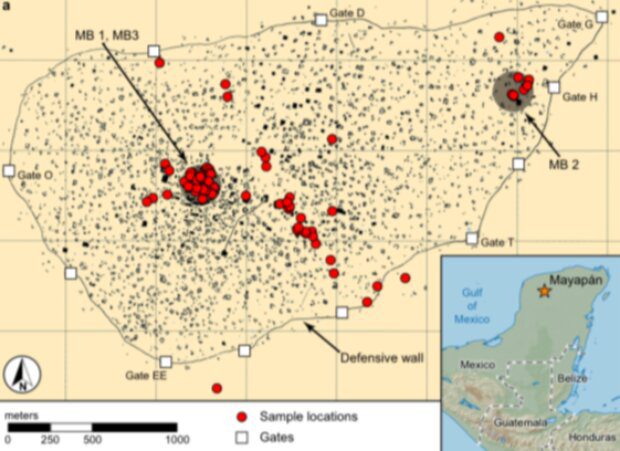
Photo: Location of the city of Mayapan on the map and the plan of this monument. The letters MB indicate the places where collective burials were discovered.

Douglas Kennett et al. / Nature Communications, 2022

Queens of Egyptology

0

We have all heard the name Howard Carter and know that he is the discoverer of the famous tomb of Tutankhamun in Egypt. However, history knows no less colorful ladies who left an important scientific legacy in Egyptology. I personally have a special sentiment and interest in two of them, with whom I feel connected in a special way.

We have all heard the name Howard Carter and know that he is the discoverer of the famous tomb of Tutankhamun in Egypt. However, history knows no less colorful ladies who left an important scientific legacy in Egyptology. I personally have a special sentiment and interest in two of them, with whom I feel connected in a special way.

Natasha Rambova

she is like a heroine from a movie. Her birth name was Winifred Kimball Shawhennessy. In the 1920s, she was a student of the Russian ballet master and choreographer Teodor Kozlov, and in his honor, when she was 17, she adopted the artistic pseudonym Natasha Rambova, which gradually became her official name. Later, she became one of the most extravagant designers of costumes for theater productions and film productions, and created her own fashion line. Her name is constantly mixed up in love affairs with both men and women.

They say that her mentor Teodor Kozlov and the actress and film producer Alla Nazimova, with whom they created the classic “Salome” in 1922, were also madly in love with her. Natasha Rambova played many roles in Hollywood, created costumes that are emblematic of the spirit of the time. She also went down in history with her stormy two-year marriage, followed by an equally stormy divorce from Hollywood’s sex symbol at the time, Rudolph Valentino. Spicy, passionate and uncontrollable, Rambova is fascinated by all forms of art, but also by esotericism and spiritualism, and more than once declares to the sweet and melodramatic

Valentino that it is completely impossible for her to stay at home, look after children and set the table for afternoon tea. A few years after her divorce from Valentino in 1925, she married the aristocrat Alvaro de Urzaiz, and in 1936 she visited Egypt for the first time – the country that enchanted her forever and with which she would connect her life. He is then 39 years old.

Natasha spends nearly a month in Luxor. It was there that she met Howard Carter – a fateful meeting, because from that moment she decided that she would devote the rest of her life, all her means, energy, strength and emotions to the science of Egyptology. At that time he wrote in his personal diary: “I felt as if at last, after a long journey and wandering, I had returned home. The first days I was in Thebes, I couldn’t stop my tears, they just flowed from my eyes. But no!… these weren’t tears of sadness, but some kind of emotional release, some kind of impact from the past – a return to yourself and to the place you’ve loved for too long and you’re finally back, where it’s always been. your heart I’m home, I’m finally home!!!’

Natasha Rambova’s research and contribution to the development of Egyptology is truly remarkable. He began collecting and studying various religious texts, until one afternoon, looking for information in the Cairo library, he met the director of the Institute at the time, the Russian-born Egyptologist Alexander Piankov. This acquaintance would lead to some of the most serious research and the publication of valuable books related to the sacred religious texts of Ancient Egypt – the pyramid texts from the pyramid of King Unas of the Fifth Dynasty of Egypt at Saqqara. Rambova took up research and editorial work and actively helped Piankov in his studies. Finds solid funding from foundations, helps field research in Luxor. The team obtained permission to photograph and study the inscriptions from the golden shrines that surround the sarcophagus of Tutankhamun in his tomb in the Valley. He worked as an editor on the first three volumes of the series “Egyptian religious texts” by Alexander Piankov and continued to deal with Egyptology until his last breath.

Nina McPherson Davis

She is the wife of another very talented and famous Egyptologist – Norman de Garris Davis. A true lady, a talented artist, copyist and Egyptologist, she is also known for her impeccable personal style – her long dark hair is always braided and smells of jasmine, her dress is unfailingly elegant and she always welcomes guests for afternoon tea at her house in Kurna, on The West Bank of Luxor, with fine china cups on a white linen tablecloth.

A fateful trip in 1906 to Alexandria linked her life to Egyptology. Then Nina was 25 years old and with a group of friends toured the sights of Ancient Egypt. Over a cup of tea, she meets Norman de Garris Davies, who is 16 years older than her. By this time, Norman was already an established Egyptologist, clearly stating his serious work and dedication to science. Behind him was work as an Egyptologist and copyist, and together with Sir William Matthew Flinders Petrie worked at Dendera (1897-1898).

He then headed the Egypt Exploration Fund mission, resulting in 11 volumes of copies of tombs from Saqqara, Amarna, Sheikh Said and Deir el-Gebrawi. Between 1905 and 1907 he worked with George Reisner on the Giza Plateau, as well as with James Henry Breasted, describing and studying the monuments in Nubia. Love between the two ignited at first sight, and upon returning from her trip, Nina was already engaged to Norman, and a year later, in 1907, they were married in London. In the same year, Norman headed the epigraphic mission to Egypt of major ancient Egyptian necropolises. He and his wife, Nina, settled in Luxor, where Norman began his work at Sheikh ab del-Qurna. Almost their entire life together was spent there studying the texts and images from the tombs of several major ancient Egyptian necropolises. This will become their life’s work.

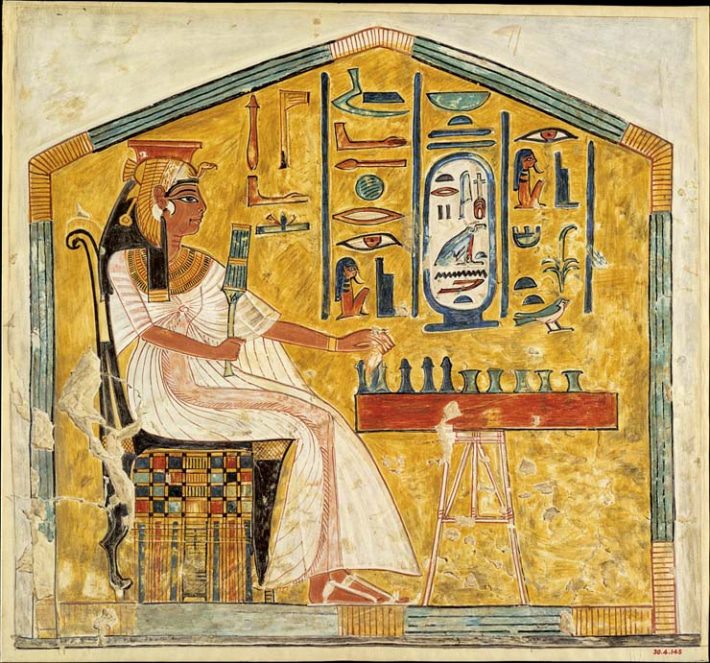
From 1913, Nina began working as a copyist for the Metropolitan Mission, just like her husband. This job requires extreme precision, an accurate eye and a talented hand. It is often dark and uncomfortable to work in the tombs. There is a lack of natural light in which to see the true colors. Texts and reliefs are destroyed, parts are missing, images are covered with layers of dust and dirt. Nina started using mirrors in her work to provide more light in the rooms.

Together with Norman, they began to use a new technique in their repaintings – instead of watercolor paints, they used tempera paints, with which they gave volume and density to the images. Nina mastered the technique, style and form of ancient Egyptian hieroglyphics and imagery to such an extent that her renderings can still easily fool even the professional eye today. They live in a small house in Luxor, where in the evening they like to listen to music on their old gramophone, drink tea, and after dinner continue to work until the early hours of the next day.

Sir Alan Gardiner, one of the most famous British Egyptologists, was impressed by Nina’s talent and managed to organize several solo exhibitions of her in London and Oxford, and Rockefeller himself was included as a donor. With his help, two volumes of her works were published.

For the first edition of his Egyptian grammar, Sir Alan Gardiner asked Nina and Norman to produce a hieroglyphic character pool. They do, and in fact the grammar that all Egyptologists use today is based on the hieroglyphs written by Nina and Norman de Garris Davies.

In 1939, because of the complicated political situation immediately before the Second World War, the two left their house in Kurna and returned to England. Half of their belongings remain in Egypt, clearly indicating their intention to return and continue their work. However, on November 5, 1941, Norman died in his sleep of heart failure. Left alone, Nina never returned to Egypt and devoted her entire life to arranging, editing and publishing her husband’s unfinished works.