Wednesday, April 1, 2026
Home Blog Page 848

26 June celebration across Europe: Putting an end to Drugs

0

The United Nations General Assembly by the Resolution 42/112 of 7 December 1987 decided to celebrate the 26 June, the International Day against Drug Abuse and Illicit Trafficking, “as an expression of its determination to strengthen action and cooperation to achieve the goal of an international society free of drug abuse.

“Supported each year by individuals, communities, and various organizations all over the world, this global observance aims to raise awareness of the major problem that illicit drugs represent to society.”

The Foundation for a Drug-Free Europe since 2004 is channelling the views of a hundred Say No To Drugs (SNTD) organizations and groups of volunteers across Europe (including in Ukraine, the United Kingdom and Ireland) whose purpose is to inform, to educate the public at large including the most vulnerable: the youth, on the harming effects of drug use. Indeed, despite what is spread by any organizations with vested interests in the business of drugs, there are no soft drugs. And this is very clear on the materials all these groups used, known as “The Truth About Drugs” campaign.

It is important to remind that legally speaking, the drug’s availability is strictly regulated by the International Drug Control Conventions (1961, 1971, 1988) and the Charter of Fundamental Rights of the European Union (2000/C 364/01) – Directive (EU) 2017/2103, to protect the population and prevent their illicit use. More specifically, the protection of the youth is provided by the European Charter of the Rights of the Child – Recommendation 874 (1979) and the Convention on the Rights of the Child, art.33, 1989.

But the data and legislations hardly reach the grassroots level despite the increasing efforts of the concerned institutions. Through contacts with the public, teachers, associations leaders or trainers at random from their booths/tents set up in the streets, markets, and squares and by visiting shops, the SNTD teams are witnessing a striking lack of education on this vital subject, thus leaving the way open for these highly organized and powerful networks of drug dealers. So, to contribute to raising the awareness of the public, educators, community leaders and officials, the SNTD Teams are distributing freely educative booklets on the 14 most used drugs and other video educative materials provided by the Foundation for a Drug-Free World in 17 languages. “Education is the progressive discovery of our own ignorance” rightly said the philosopher William Durant ( 1885-1981).

All the SNTD volunteers from Europe are very interested and concerned with this day celebration, enabling them to meet and inform the public and the youth and get them involved to take responsibility to protect themselves but also their family and friends from the harmful effects of drug use.

But drug use is not just harming. Ultimately and rapidly, due to the addictive psychoactive components, drug abuse is leading to the destruction of the user and more. The European Monitoring Centre for Drugs and Drug Addiction (EMCDDA) recently reported that “drug-related mortality accounts for a considerable percentage of deaths among young people in many European countries”. According to the last estimation (31 August 2021) “at least 5,141 overdose deaths occurred in the European Union in 2019. This rises to an estimated 5,769 deaths if Norway and Turkey are included”. A dreadful ignorance! 

Hereafter are some examples from Europe of SNTD Teams in action in the frame of the 26 June Celebration:

1) Austria

Austria 01 26 June celebration across Europe: Putting an end to Drugs

In Vienna, they held their tent at the Millennium City, a train station and shopping center, near the Donauinsel (Danube Island). The 8 volunteers distributed 800 booklets and collected 40 signatures on the board with the pledge to Stay Drug-free. In addition, they had their successful street paintings for the children and significant contacts were made with associations and educators for further lectures on drugs.

2) Belgium

Belgium 26 June celebration across Europe: Putting an end to Drugs

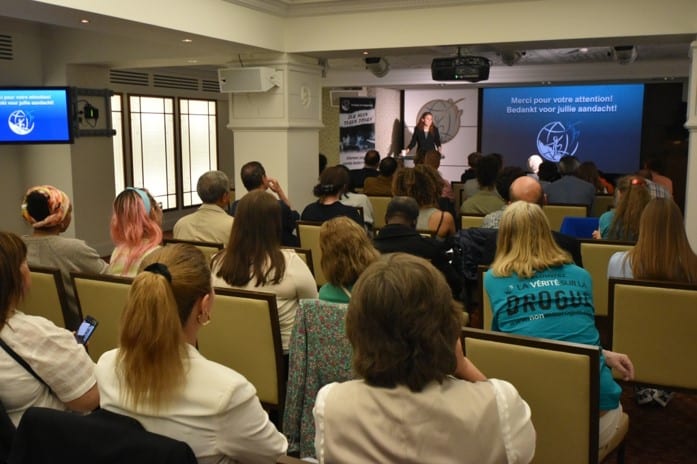
The team organized in Brussels an Open House on the drug subject followed by a 1h30 seminar in Dutch and French. More than 50 people were attending, very interested to get factual data on drugs. Then, they took: 22 booklet sets (a set containing 14 different booklets on the most used drugs), 9 info kits and 6 DVDs (with testimonies and short presentations) in French; 7 booklet sets, 5 info kits and 5 DVD’s in Dutch; 8 booklet sets and 5 info kits in English.

3) Czech Republic

Czech 26 June celebration across Europe: Putting an end to Drugs

This year was their 18th Cyclo-run, starting on 13 June for 10 days, covering some 1200 Kms and crossing 41 towns. Along the way, the “bikers and runners” met with town representatives, and community leaders did to say the less, lectures in 30 schools to more than 4,500 children, distributed 10,000 fliers and 35,000 booklets to the public, got 5 TV reports, several radios and newspapers, raising the awareness on the untold harming effects of drug use and spreading the message on the importance of a drug-free life.

4) Denmark

Denmark 26 June celebration across Europe: Putting an end to Drugs

A Team of some 10 persons were mobilized to hold info stands in front of the main train station of Copenhagen. This way 2,300 booklets from the series The Truth About Drugs and 200 fliers got distributed to the passers-by. This was also a good opportunity to answer questions on drugs and to get in relation with people interested in a follow-up on the drug subject.

5) France

France 26 June celebration across Europe: Putting an end to Drugs

Along the week some 4,261 booklets were hand-distributed and 160 shops were visited in cities and villages across France such as in Paris (with a singer) and suburbs, Lyon, Pau, Nice, Angers, Auray, Clermont-Ferrand, Riom, Erquy,  Cahors and in Marseille who in addition got in 1,5 hrs some 272 signatures on their pledges: An Engagement to Stay Drug-Free.  

6) Germany

Germany 26 June celebration across Europe: Putting an end to Drugs

The info stand was in the middle of the main walking street of Frankfurt for about 2,5 hours with 6 helpers. Among the visitors, they had a teacher interested in his school, ladies from the Techno-Scene for a lecture, and a group of 5 girls (around 13 years old) who took booklets for their friends. One came back half an hour later to take more booklets with her for more friends! 825 booklets were distributed and fruitful contacts were made.

7) Greece

Greece 26 June celebration across Europe: Putting an end to Drugs

They were 15 Volunteers from the Athens team who distributed 2,500 booklets during 1,5hrs in the Piraeus harbour area and also to some shops around. The motto: “Inform people before dealers do”. Adolescents, adults and young parents, all were interested to have more data on drugs and were happy to get these informative booklets for them and their friends. Many pertinent questions were answered to full satisfaction.

The FDFE and all the European SNTD volunteers are very concerned about the protection of the youth from the deleterious effects of drug use. The old saying “Prevention is Better than Cure” has a much greater implication than it seems: it encompasses not only the individual but the family circle and has a great incidence on the community and social living.  Aligned with the purpose of the 26 June celebration, let us remember these words of the humanist Ron Hubbard (1911-1986): “The drug scene is planet-wide and swimming in blood and human misery. Research demonstrates that the single most destructive element present in our current culture is drugs.” 

The drug problem is not a fatality. To curtail the drug demand an early education of the children as primary prevention, good parental examples, and the support of youth associations, community and authorities are the efficient tools. Indeed, as the old African proverb says: “It takes a whole village to educate a child”. This is the safe and sane way “to achieve the goal of an international society free of drug abuse”.

New Technique Could Lead to Improved Cancer, Alzheimer’s, and Lung Disease Drugs

0
New Technique Could Lead to Improved Cancer, Alzheimer’s, and Lung Disease Drugs

The paper provides a new technique for improving and changing the function of proteins.

Improved protein function opens the door to novel drug development possibilities.

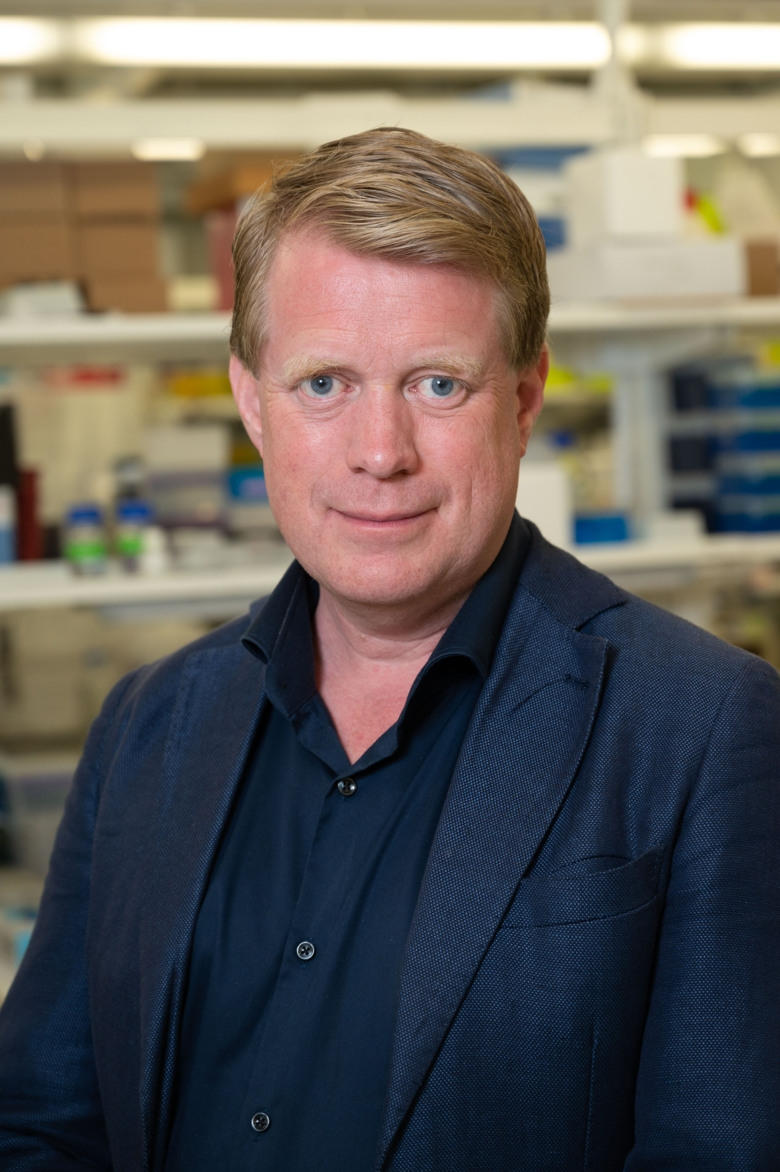
Maurice Michel

Maurice Michel, assistant professor at the Department of Oncology-Pathology, Karolinska Institutet. Credit: Stefan Zimmerman

In a paper that was published in the journal Science, scientists from Sweden’s Karolinska Institutet and SciLifeLab reveal how they were able to enhance a protein’s ability to repair oxidative DNA damage while also creating a new protein function. The researchers’ ground-breaking technique may result in better treatments for oxidative stress-related illnesses such as cancer, Alzheimer’s, and lung diseases, but they think it has even more potential.

Finding certain pathogenic proteins and developing medicines that inhibiting these proteins has long been the foundation of the drug development process. However, many illnesses are caused by a reduction or loss of protein function, which cannot be specifically targeted by inhibitors.

Inspired by a Nobel Prize-winning discovery

In the current study, scientists from the Karolinska Institutet enhanced the function of the protein OGG1, an enzyme that fixes oxidative DNA damage and is linked to aging and disorders including Alzheimer’s disease, cancer, obesity, cardiovascular diseases, autoimmune disorders, and lung diseases.

The team used a technique called organocatalysis, which was created by Benjamin List and David W.C. MacMillan, who were awarded the 2021 Nobel Prize in Chemistry. The process is based on the finding that tiny organic molecules have the ability to function as catalysts and start chemical processes without becoming a component of the end result.

The researchers examined how such catalyst molecules, previously described by others, bind to OGG1 and affect its function in cells. One of the molecules proved to be of particular interest.

Ten times more effective

“When we introduce the catalyst into the enzyme, the enzyme becomes ten times more effective at repairing oxidative DNA damage and can perform a new repair function,” says the study’s first author Maurice Michel, assistant professor at the Department of Oncology-Pathology, Karolinska Institutet.

Thomas Helleday

Thomas Helleday, professor of the Department of Oncology-Pathology at Karolinska Institutet. Credit: Stefan Zimmerman

The catalyst made it possible for the enzyme to cut the DNA in an unusual way so that it no longer requires its regular protein APE1 to work but another protein called PNKP1.

The researchers believe that OGG1 proteins improved in this way can form new drugs for diseases in which oxidative damage is implicated. However, Professor Thomas Helleday at the Department of Oncology-Pathology, Karolinska Institutet and the study’s last author also sees broader applications, where the concept of adding a small catalyst molecule to a protein is used to improve and change other proteins as well.

New protein functions are generated

“We believe that this technology could instigate a paradigm shift in the pharmaceutical industry, whereby new protein functions are generated instead of being suppressed by inhibitors,” says Thomas Helleday. “But the technique isn’t limited to drugs. The applications are virtually unlimited.”

Reference: “Small-molecule activation of OGG1 increases oxidative DNA damage repair by gaining a new function” by Maurice Michel, Carlos Benítez-Buelga, Patricia A. Calvo, Bishoy M. F. Hanna, Oliver Mortusewicz, Geoffrey Masuyer, Jonathan Davies, Olov Wallner Kumar Sanjiv, Julian J. Albers, Sergio Castañeda-Zegarra, Ann-Sofie Jemth, Torkild Visnes, Ana Sastre-Perona, Akhilesh N. Danda, Evert J. Homan, Karthick Marimuthu, Zhao Zhenjun, Celestine N. Chi, Antonio Sarno, Elisée Wiita, Catharina von Nicolai, Anna J. Komor, Varshni Rajagopal, Sarah Müller, Emily C. Hank, Marek Varga, Emma R. Scaletti, Monica Pandey, Stella Karsten, Hanne Haslene-Hox, Simon Loevenich, Petra Marttila, Azita Rasti, Kirill Mamonov, Florian Ortis, Fritz Schömberg, Olga Loseva, Josephine Stewart, Nicholas D’Arcy-Evans, Tobias Koolmeister, Martin Henriksson, Dana Michel, Ana de Ory, Lucia Acero, Oriol Calvete, Martin Scobie, Christian Hertweck, Ivan Vilotijevic, Christina Kalderén, Ana Osorio, Rosario Perona, Alexandra Stolz, Pål Stenmark, Ulrika Warpman Berglund, Miguel de Vega and Thomas Helleday, 23 June 2022, Science.
DOI: 10.1126/science.abf8980

The study was funded by the European Research Council, the Swedish Research Council, the Crafoord Foundation, the Swedish Cancer Society, the Torsten and Ragnar Söderberg Foundation, and the Dr. Åke Olsson Foundation for Haematological Research.

Many of the researchers involved in the study are listed in a patent application concerning OGG1 inhibitors and are associated with the organization that owns the patent. Two are employed by Oxcia AB, which licenses the patent, and many are shareholders in the company.

Yale Scientists Zero In on Genetic Causes of Parkinson’s Disease

0
Yale Scientists Zero In on Genetic Causes of Parkinson’s Disease

New research by Yale researchers offers important clues into the genetic causes of Parkinson’s disease, a severe and incurable motor disorder.


Although the development of Parkinson’s disease has been closely linked to variants of at least 20 different genes, scientists are still investigating exactly how they cause the severe and incurable motor disorder that afflicts around 1 million people in the U.S. alone.

Yale researchers have just completed new studies that offer important clues. In two new research papers, scientists provide insight into the function of a protein called VPS13C, one of the molecular suspects underlying Parkinson’s, a disease marked by uncontrollable movements including tremors, stiffness, and loss of balance.


“There are many roads to Rome; likewise there are many roads leading to Parkinson’s,” said Pietro De Camilli, the John Klingenstein Professor of Neuroscience and professor of cell biology at Yale and investigator for the Howard Hughes Medical Institute. “Laboratories at Yale are making progress toward elucidating some of these paths.”

De Camilli is the senior author of the two new papers, which have been published in the Journal of Cell Biology and Proceedings of the National Academy of Science (PNAS).

Previous research has shown that mutations of the gene VPS13C cause rare cases of inherited Parkinson’s or an increased risk of the disease. To better understand why, De Camilli and Karin Reinisch, the David W. Wallace Professor of Cell Biology and of Molecular Biophysics and Biochemistry, investigated the mechanisms by which these mutations lead to dysfunction on a cellular level.


They reported in 2018 that VPS13C forms a bridge between two subcellular organelles — the endoplasmic reticulum and the lysosome. The endoplasmic reticulum is the organelle that regulates the synthesis of most phospholipids, fatty molecules that are essential for building cell membranes. The lysosome acts as the cell’s digestive system. They also showed that VPS13C can transport lipids, suggesting that it may form a conduit for the traffic of lipid between these two organelles.

One of the new papers (Journal of Cell Biology) from De Camilli’s lab demonstrates that the lack of VPS13C affects the lipid composition and properties of lysosomes. Moreover, they found that in a human cell line these perturbations activate an innate immunity. Such activation, if occurring in brain tissue, would trigger neuroinflammation, a process implicated in Parkinson’s by several recent studies.

The second paper (Proceedings of the National Academy of Science) from De Camilli’s lab uses state-of-the-art cryo-electron tomography techniques to reveal the architecture of this protein in its native environment supporting a bridge model of lipid transport. Jun Liu, a professor of microbial pathogenesis at Yale, is co-corresponding author of this study.

Understanding these fine-grained molecular details will be crucial in understanding at least one of the roads that lead to Parkinson’s disease and may help identify therapeutic targets to prevent, or slow, the disease, researchers say.


References:

“ER-lysosome lipid transfer protein VPS13C/PARK23 prevents aberrant mtDNA-dependent STING signaling” by William Hancock-Cerutti, Zheng Wu, Peng Xu, Narayana Yadavalli, Marianna Leonzino, Arun Kumar Tharkeshwar, Shawn M. Ferguson, Gerald S. Shadel and Pietro De Camilli, 3 June 2022, Journal of Cell Biology.
DOI: 10.1083/jcb.202106046

“In situ architecture of the lipid transport protein VPS13C at ER–lysosome membrane contacts” by Shujun Cai, Yumei Wu, Andrés Guillén-Samander, William Hancock-Cerutti, Jun Liu and Pietro De Camilli, 13 July 2022, Proceedings of the National Academy of Science.
DOI: 10.1073/pnas.2203769119

Yale’s William Hancock-Cerutti is lead author of the paper appearing in the Journal of Cell biology and Shujun Cai is lead author of the paper published in PNAS.


Latvia files Allegations of Genocide re Ukraine v. Russian Federation

0
Grand_Hall_de_Justice_de_Palais_de_La_Paix_à_La_Haye_Pays-Bas
Lybil BER, CC BY-SA 4.0, via Wikimedia Commons

Latvia files a declaration of intervention in the proceedings under Article 63 of the Statute

THE HAGUE, 22 July 2022. Genocide – On 21 July 2022, the Republic of Latvia, invoking Article 63 of the Statute of the Court, filed in the Registry of the Court a declaration of intervention in the case concerning Allegations of Genocide under the Convention on the Prevention and Punishment of the Crime of Genocide (Ukraine v. Russian Federation).

Pursuant to Article 63 of the Statute, whenever the construction of a convention to which States other than those concerned in the case are parties is in question, each of these States has the right to intervene in the proceedings. In this case, the construction given by the judgment of the Court will be equally binding upon them.

To avail itself of the right of intervention conferred by Article 63 of the Statute, Latvia relies on its status as a party to the Convention on the Prevention and Punishment of the Crime of Genocide (the “Genocide Convention”). It states that “[a]s a Party to the Genocide Convention, Latvia has a direct interest in the construction that might be placed upon that treaty in the Court’s decision in the [proceedings”, indicating that it “wishes to intervene in order to make submissions on [the] construction of the Genocide Convention on issues relating to merits as well as jurisdiction”.

In accordance with Article 83 of the Rules of Court, Ukraine and the Russian Federation have been invited to furnish written observations on Latvia’s declaration of intervention.

Latvia’s declaration of intervention will soon be available on the Court’s website.

History of the proceedings

The history of the proceedings can be found in press releases Nos. 2022/4, 2022/6, 2022/7 and 2022/11, available on the Court’s website.

Note. The Court’s press releases are prepared by its Registry for information purposes only and do not constitute official documents.

The International Court of Justice (ICJ) is the principal judicial organ of the United Nations. It was established by the United Nations Charter in June 1945 and began its activities in April 1946. The Court is composed of 15 judges elected for a nine-year term by the General Assembly and the Security Council of the United Nations. The seat of the Court is at the Peace Palace in The Hague (Netherlands). The Court has a twofold role. first, to settle, in accordance with international law, through judgments which have binding force and are without appeal for the parties concerned, legal disputes submitted to it by States; and, second, to give advisory opinions on legal questions referred to it by duly authorized United Nations organs and agencies of the system.

Sri Lanka Cardinal condemns high-handed actions of new president – Vatican News

0
Sri Lanka Cardinal condemns high-handed actions of new president - Vatican News

By Francesca Merlo

In a heartfelt address to the people of Sri Lanka and the international community, Cardinal Malcolm Ranjith, Archbishop of Colombo, condemned Friday morning’s attack on the “beloved” citizens of Sri Lanka, in which security forces raided the main anti-government protest camp in the capital.

The Cardinal explains that the unarmed youth, even after having announced that they were preparing to leave the site, were attacked by an “unprovoked” group of policemen and army soldiers.

Some were injured and others were arrested, noted the Cardinal, stressing his desire to “completely condemn this high-handed action of the president”.

Only 24 hours 

President Ranil Wickremesinghe had been in power for less than 24 hours at the time of the attack, winning 134 votes in parliament, after former prime minister Gotabaya Rajapaksa was ousted.

“This is very sad”, stated the Cardinal, “because the president became president only on the vote of the parliamentarians, and because he came saying that he would protect the constitution”. Instead, continued the cardinal, “he has acted against the basic right of the people to protest, which is a democratic right, which was exercised non violently by the youth”. 

The president’s attack on this youth is completely contradictory to what he publicly announced and to what his duty as president of the country is, continued the Cardinal. 

He added that the parliament does not represent the majority of the people and that the president is trying to “dictate terms and force himself on the people with the use of thuggery and oppression is unacceptable”.  

Responsibility for any consequences

“We hold the president responsible”, continued the Cardinal, “for any future disaster that might come as a result of his actions”.

Cardinal Ranjith then went to note that amongst those injured during Friday’s attack were members of both local and foreign media. He went on to condemn these attacks, too, and “, especially on those who came from overseas”, warning of the discredit Sri Lanka will receive as a result of one person’s actions.

A suffering nation

He then turned his focus to the suffering people of the nation, who with unemployment and a lack of basic necessities to live with dignity protested this reality, peacefully, and demanded change, only to be attacked.

“It is the responsibility of the President to look into this attack”, stated the Cardinal, demanding that an inquiry be opened and that those guilty be held responsible.

Turning then to the international community, Cardinal Ranjith asked that should the government fail to open an inquiry, members of human rights organisations do so instead. “To attack the very same people whose protests lead to this change is like kicking the ladder after one reaches the top”, concluded the cardinal, adding “we wish to condemn that very firmly and call upon him not to act in that high-handed fashion hereafter”.

Listen to Cardinal Malcolm Ranjith

Mega-drought, glacier melt, and deforestation plague Latin America and the Caribbean

0
Mega-drought, glacier melt, and deforestation plague Latin America and the Caribbean

From the Amazon to the Andes and the snowy depths of Patagonia, extreme weather and climate change are causing mega-drought, extreme rainfall, deforestation and glacier melt across the Latin America and the Caribbean (LAC) region, according to a UN report published on Friday.

In its State of the Climate in Latin America and the Caribbean 2021, the World Meteorological Organization (WMO) highlights the far-reaching repercussions for ecosystems, food and water security, human health and poverty. 

“The report shows that hydrometeorological hazards, including droughts, heatwaves, cold waves, tropical cyclones and floods, have unfortunately led to the loss of hundreds of lives, severe damages to crop production and infrastructure and human displacement,” said WMO Secretary-General Petteri Taalas.

Worsening climate change…[has] stalled decades of progress – ECLAC

Glacier retreat

Climate change is threatening vital systems in the region, which are already approaching critical conditions, potentially causing irreversible damage.

The report revealed that since the 1980s, glaciers in the tropical Andes have lost 30 per cent or more of their area – with a negative mass balance trend during the 1990-2020 monitoring period.

In Peru, some have lost more than 50 per cent of their area.

Glacier retreat and corresponding ice-mass loss increases the risk of water scarcity for people in the Andes, and its ecosystems.

“For many Andean cities, melting glaciers represent the loss of a significant source of freshwater currently used for domestic use, irrigation, and hydroelectric power,” said the WMO chief.

Deforestation and dangerous rain

According to the report, deforestation in the Brazilian Amazon rainforest doubled from the 2009‑2018 average and reached its highest level since 2009.

WMO/Caio Graco

22-09-2021_WMO_Brazil.jpg  Caption Rising temperatures mean more weather extremes, including intense rainfall as illustrated by this storm over Dutra highway in Cachoeira Paulista, Sao Paulo State, Brazil.

Some 22 per cent more forest area was lost last year, compared to the previous one – a blow for both the environment and climate change mitigation.

“In South America, the continued degradation of the Amazon rainforest is still being highlighted as a major concern for the region but also for global climate, considering the role of the forest in the carbon cycle,” said the top WMO official.

Meanwhile, record-breaking rainfall last year triggered floods and landslides that caused hundreds of fatalities, left tens of thousands of homes destroyed or damaged, and hundreds of thousands of people displaced.

Floods and landslides in the Brazilian states of Bahia and Minas Gerais alone led to an estimated loss of $ 3.1 billion.

Sea level rise

Regional sea levels rose at a faster rate than elsewhere in the world, notably along the Atlantic coast of South America south of the equator, and the subtropical North Atlantic and the Gulf of Mexico.

The rising sea contaminates freshwater aquifers, erodes shorelines, inundates low-lying areas, and increases the risks of storm surges, threatening coastal populations.

“Increasing sea-level rise and ocean warming are expected to continue to affect coastal livelihoods, tourism, health, food, energy, and water security, particularly in small islands and Central American countries,” Mr. Taalas warned.

© UNICEF/Inti Ocon/AFP-Services

Children search for scraps of wood to help their parents rebuild their house after it was destroyed by the strong winds of Hurricane Iota in Nicaragua.

Drought

In South America overall, drought conditions led to a 2.6 per cent decline during the 2020-2021 cereal harvest compared with the previous season, the report said.

And the so-called Central Chile Mega Drought, which has continued for 13 years, is the longest drought in the region in a thousand years.

Additionally, a multi-year drought in the Parana-La Plata Basin, the worst since 1944, is affecting central-southern Brazil and parts of Paraguay and Bolivia.

The agricultural damage it has caused, such as by reducing soybean and corn production, has affect global crop markets.

Progress against poverty stalled

“Worsening climate change…have not only impacted the biodiversity of the region, but have also stalled decades of progress against poverty, food insecurity and the reduction of inequality in the region,” said Mario Cimoli of Economic Commission for Latin America and the Caribbean (ECLAC).

The report, which outlines how extreme weather will continue to adversely affect human health and natural ecosystems, can inform climate policy and decision-making.

“No matter how it is taken, action must be informed by science,” he underscored.

President Macron in Benin should demand the release of Reckya Madougou and Joel Aivo

0

On the eve of President Emmanuel Macron’s visit to Benin, the Brussels-based NGO “Human Rights Without Frontiers” urged the French President to demand the release of two famous opposition leaders, Reckya Madougou and Joël Aivo, respectively sentenced to 20 years and 10 years in prison.

This month, Human Rights Without Frontiers (HRWF) has filed a report with the United Nations Universal Periodic Review (UPR) for Benin, in which the organisation outlined its concerns over human rights abuses in Benin, with particular regard to the continued detention of opposition figures Reckya Madougou and Joël Aivo and the fact that they were not included in a list of 17 detainees due to be temporarily released after a 13 June 2022 meeting between President Patrice Talon and Thomas Boni Yayi, former President of Benin (2006-2016).

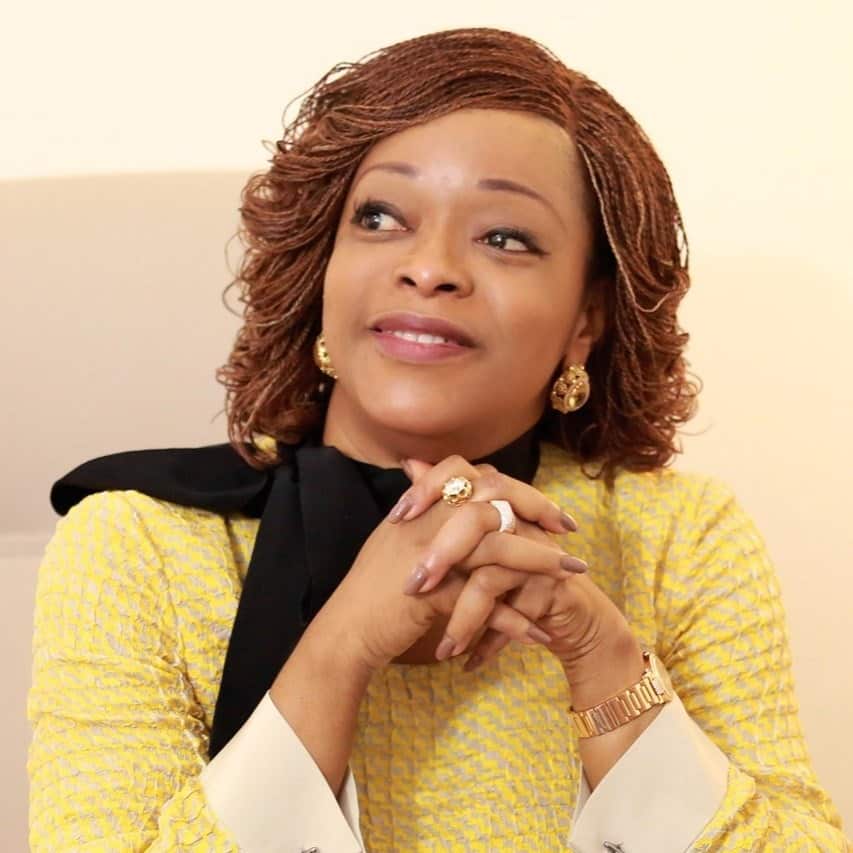
Reckya Madougou, from her Facebook account

The submission by HRWF included details about the case of Reckya Madougou who was sentenced at the end of 2021 to 20 years in prison for allegedly financing terrorism. She had been arrested in March 2021 accused of wiring thousands of dollars to a military officer for the purpose of killing unnamed authorities. Her candidacy had earlier been rejected by the electoral commission. HRWF went on to detail that Ms Madougou was the leader of the opposition party, Les Démocrates, and a presidential candidate. HRWF’s statement also described Ms Madougou’s civil society campaign — “Don’t touch my constitution” — that rallied against leaders seeking to extend their rule under the guise of constitutional reform. The movement spread across West Africa, gaining her a high profile.

Joel Aivo
RMTB, CC BY-SA 4.0, Joel Aivo – via Wikimedia Commons

The HRWF report to the UPR also gave details about the case of Joël Aivo and his December 2021 sentencing by the controversial Economic Crime and Terrorism Court (CRIET) to 10 years in prison for allegedly plotting against the state and laundering money.

HRWF explained in their submission that Mr Aivo is a law professor who challenged Talon in the 2021 election. He was held for eight months ahead of sentencing and pleaded not guilty to the charges of plotting against the state and money laundering.

HRWF has been monitoring the backsliding that has been taking place around human rights in Benin since 2016. “We were especially dismayed to see that Reckya Madougou and Joël Aivo were not on the June 2022 list of 17 detainees to be temporarily released. Ms Madougou and Mr Aivo should be fully released immediately. The persecution and detention of opposition figures has no place in a democracy and we are concerned for the welfare of these two politicians. President Macron must use his visit to Benin to demand that President Patrice Talon release them,Willy Fautré, director of Human Rights Without Frontiers told The European Times.

New Dance Track “It’s Hot” Sizzles – Infusing Positive Energy

0
New Dance Track

Artist Silk Releases “It’s Hot” Dance Track By Infusing Positive Energy With Sound For The Goal of Effecting Emotion

LONDON, ENGLAND, UK, July 21, 2022 – Classically trained musician and artist Silk had a vision… Use her many talents and creativity to write and produce music that makes a positive impact on people. As a lifelong positive thinker, Silk fully understands music’s ability to influence our emotions and the effects it has on our energy. Harnessing the beautiful aspects of sound, and focusing on how to create positive energy with various combinations.

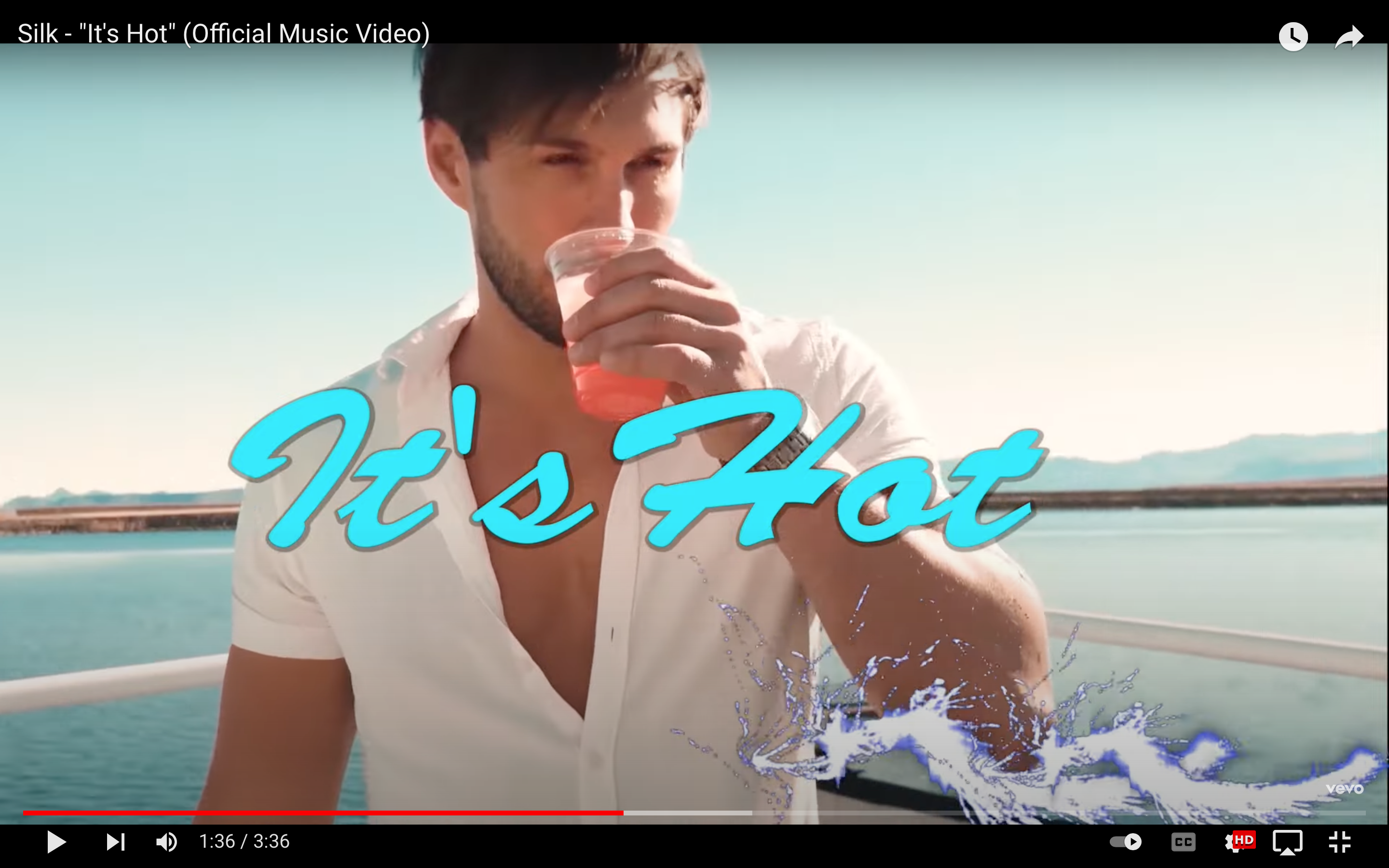
"It's Hot", Silk, artist
“It’s Hot”, Silk, artist

Silk explained; “The song is about what makes you happy personally- about you and what you find attractive and ‘what floats your boat’. Take in this song and experience it. Feel free to apply it to your own personal journey. For example, in the song “Favorite Things” by Julie Andrews from The Sound of Music, the focus is her favorite things. It’s the same thing here. What do you find hot? What makes you happy? What would you like to see happen more and more for yourself? This song is all about the listener and their preferences. Just listen to the song and imagine whatever you want to be actually is, but above all else, feel happy. The energy contained in “It’s Hot” and its lyrics will support you and what you are feeling when you listen. Give it a try.

"It's Hot", Silk, artist
“It’s Hot”, Silk, artist

“From my early childhood, I have always been able to transmute and convert negativity into positive. That’s just how I am wired. It happens automatically. Visualize a bunch of arrows being thrown at you. Can you convert those arrows into flowers? What I do is something like that. As those arrows theoretically come toward you, if you are able to change them into flowers, then what’s created in the atmosphere is flowers, and is something good and beautiful. That’s what happened here, but with sound, for the purpose of happiness.”

"It's Hot", Silk, artist
“It’s Hot”, Silk, artist

Silk penned the lyrics and music, as well as produced and had the video for “It’s Hot” filmed. To enhance the music track and turn up the sizzle that’s behind “It’s Hot”, Silk filmed her visuals in Las Vegas, Nevada. According to Silk, the meaning behind the first of her six new singles dropping in 2022 is simple; “Be happy and DANCE”. “It’s Hot” is light and the essence of dance. It’s easy to listen to and just be with the music. When you hear this track, you do not have to think too much, except to just be happy and feel light. Even if this song gives you a few seconds of happiness it’s done its job.

“Thunder God” is the next release coming from this modern day artist. Combining the essence and energy of nature with the power of sound is the next level creativity that will be dropping in the fall. Until then, the artist Silk hopes “It’s Hot” will surround you with positive energy, move you on the dance floor, and enable you to feel pure happiness.

Rive Music Video Team
Rive Music Video Promotion
+1 908-601-1409
email us here
Visit us on social media:
Facebook
Twitter
LinkedIn
Other

https://youtu.be/Gco7mj6Kve8
Silk – “It’s Hot” (Official Music Video)

Ukraine. Gallagher: We need to keep the hope of dialogue alive – Vatican News

0
Ukraine. Gallagher: We need to keep the hope of dialogue alive - Vatican News

By Isabella Piro

“A war of attrition” in which ” it is incumbent upon the international community to keep the hope of dialogue, the hope of negotiation alive”: this is how Archbishop Paul Richard Gallagher, Secretary for Relations with States and International Organizations, defines the ongoing conflict in Ukraine. In an interview with America magazine’s correspondent, Gerard O’Connell, the Vatican prelate recalls his recent visit to Ukraine in May: ”What I think I learned – said – was the resilience of the people, their determination, their courage. But also I learned about the degree of suffering” there, highlighted by “the great loss of life and by the growing concerns that the war will continue.  

The Holy See’s position

For this reason, Archbishop Gallagher underlines the role of the Holy See in calling for negotiations and for the “restoration of peace” “without ignoring the violence and the conflict”. He adds there has been “no explicit invitation” to the Holy See by Russia to mediate, though the two States have maintained contacts ”through the Apostolic Nuncio in Moscow”. Archbishop Gallagher remarks that the position of the Holy See “is appreciated” by Russia, that, however, hasn’t  gone a “step further” asking for a possible mediation, as there was no explicit invitation for the Pope to go to Moscow.

Archbishop Gallagher goes on to recall the Holy See’s support for “the sovereignty and territorial integrity of Ukraine”, reiterating that: “It’s up to the Ukrainians to negotiate with others, with the Russians, obviously, in particular”. Based on this “principle”, he says, the Holy See “would not recognize a unilateral declaration of independence of the Donetsk and Luhansk regions”.

The Pope’s visit to Ukraine

Regarding hopes for a papal visit to Kyiv in August, Archbishop Gallagher remarks that the Pope “has made great progress in his mobility” which has been hindered by his knee problem, and, therefore, may want to start looking into this matter “seriously” in the next month, after his trip to Canada from  24-29 July.

In any case, he says, Pope Francis “wants to and feels he should go to Ukraine”, despite the lack of an invitation from Moscow. “The two things are not linked”. It might be a good thing if they were linked. But I think the Pope’s main priority at this moment is to make the visit to Ukraine, meet with the Ukrainian authorities, meet with the Ukrainian people and with the Ukrainian Catholic Church”, the Vatican representative concluded

WMO warns of frequent heatwaves in decades ahead

0
WMO warns of frequent heatwaves in decades ahead
Extreme heat in western Europe is causing devastating wildfires in France and Spain, unprecedented drought in Italy and Portugal, and the United Kingdom recorded its highest-ever temperature of just over 40 degrees Celsius during Tuesday, at London’s Heathrow airport.
With temperatures expected to remain above normal until the middle of next week, the World Metrological Organization (WMO) warned that heatwaves will occur more and more frequently, into the 2060s.

The pattern is linked to the observed warming of the planet that can be attributed to human activity, raising serious concerns for the planet’s future, the UN weather agency said.

Harvests at risk

“We are expecting to see major impacts on agriculture. During the previous heatwaves in Europe, we lost big parts of harvest. And under the current situation -we are already having the global food crisis because of the war in Ukraine – this heatwave is going to have a further negative impact on agricultural activities”, warned Petteri Taalas, Secretary-General of the WMO at a press conference to launch the latest extreme weather findings, in Geneva.

In several countries, some economic sectors – including tourism that has only begun to fully recover in the wake of the COVID-19 pandemic – are suffering as a result.

Further warming inevitable

“The negative trend in climate will continue at least until the 2060s, independent of our success in climate mitigation”, Mr. Taalas added.

“We have already lost the game concerning the melting of glaciers. We expect that the melting of glaciers will continue for the coming hundreds of years or even coming thousands of years…Sea level rise will continue for the same period”.

Mr. Taalas reflected growing concerns over extreme weather patterns, in his sartorial selection on Tuesday, he told journalists, choosing to wear short sleeves and a red and blue tie, in recognition of the increasing number of red alerts flashing up across Europe.

WMO briefed journalists that the European heatwave may not end, until the middle of next week.

Air pollution

The heatwave also acts as a kind of atmospheric lid, WHO explained, trapping pollutants, and degrading air quality, with adverse health consequences, particularly for vulnerable people such as the elderly. In the major 2003 heatwave in Europe, some 70,000 people died. 

“Climate change is affecting our health in many ways, not only by heatwaves which are having direct consequences” but also other areas of essential healthcare, such as rising levels of disease, alerted Maria Neira, Director for public and environmental health at WHO.

She explained that reliable access to food and water is at stake, as with agricultural production levels at risk”, and there will be water scarcity for sure”.

She said that 99% of the global population is breathing air that does not meet the health standards set by WHO, hugely impacting chronic respiratory and cardiovascular conditions.

Ambition is key

“The best solution to this will be, again, being very ambitious on tackling the causes of this global warming.

“We have been alerting for a long time that climate change is affecting very much human health”, she emphasized, which will also impact the struggle to reach net zero carbon emissions, and the crucial transition to clean, renewable sources of energy.

More deaths among the elderly and those with pre-existing health conditions are feared due to the ongoing heatwave in the weeks ahead, and subsequent challenges to health systems, to keep up with rising demand.