Wednesday, April 1, 2026
Home Blog Page 849

UN summit galvanizes action for development agendas in Africa

0
UN summit galvanizes action for development agendas in Africa

Despite being “rich with human and natural resources and enormous untapped economic and social potential,” General Assembly President Abdulla Shahid told the high-level The Africa We Want dialogue that the continent “still faces challenges” in realizing the Sustainable Development Goals (SDGs).

Hard-won struggles

Africa has undergone a dramatic transformation since the end of the colonial era, with many countries struggling post-independence to secure socio-economic development, peace and security.

“Africa today is a region that has adopted and pursued a transformational agenda towards sustainable development, and is chartering a path towards prosperity, unity, peace, and integration,” said the senior UN official.

Noting its commitments throughout the New Partnership for Africa’s Development (NEPAD), Agenda 2063, and the SDGs, he said, “we are moving in the right direction, but we still need to do more”.

Challenges

Against the 2021 targets of Agenda 2063, Africa as a whole is only 51 per cent on track, according to a report issued in February.

While facing world challenges, such as climate change, COVID-19, rising fuel prices, and inequality, Africa has shown underlying vulnerabilities.

“Yet, progress remains possible,” Mr. Shahid affirmed, underscoring the importance of investing in people.

Ambition required

Describing Africa’s sustainable development as a “priority” for the UN and international community, he said collective action had often fallen short on delivery.

The Assembly President urged everyone to recommit to sustainable development on the continent, assess where action is lacking, foster progress, and fulfil existing commitments while generating new ones “that reflect our ever-changing world”.

“With resolve, continued commitment, perseverance and support from the international community and the UN system,” The Africa We Want could become a reality, he concluded.

Turn triple crises into an opportunity 

Speaking on behalf of the Secretary-General, his deputy, Amina Mohammed confirmed that the UN shares the AU’s vision of a continent shaped by its own narrative, informed by its own citizens, and representing a dynamic force on the world stage.

However, the pandemic, climate change and the war in Ukraine have placed at risk previous development gains.

She outlined measures to tackle these challenges, maintaining that Africa’s goals are still within reach.

To get there however, mindsets must change and the triple crisis must be turned into an opportunity. 

UN Photo/Mark Garten

Deputy Secretary-General Amina Mohammed addresses the High-level Dialogue on

Silver lining

Collen Kelapile, President of the Economic and Social Council (ECOSOC) and co-organizer of the session, called it “both timely and relevant”.

He advocated for “collective action and international solidarity to address the looming threat of food insecurity and famine…[and] the impacts of the Ukraine war on energy and the economy”.

“The silver lining here is that there is an unprecedented opportunity for Africa to step up to these challenges, speed up its industrialization and economic diversification, and integrate itself further upstream in global supply chains through increased value addition at source,” spelled out the ECOSOC chief.   

Support the agendas

For the first time in a generation, Africa has displayed the “collective decisive measures and leadership” required, to take its destiny in its own hands, he continued.

“As we are drawing nearer to the end of Agenda 2063’s First 10-Year Implementation Plan 2013-2023, this is the right moment to have this forward-looking dialogue”. 

The “mutually reinforcing and complementary” agendas bear testimony to the new narrative on Africa’s development

“I urge African Member States to accelerate implementation of both agendas, and to continue to show leadership, political will and vision as we move towards the target deadline of 2030 and beyond,” said Mr. Kelapile.

Financing Africa’s Development

Noting that external financing, such as Official Development Assistance (ODA), has “consistently fallen short of commitments,” he described domestic resources as “key” to development financing.

The question is how to “create and preserve the policy space needed” to reform and transform Africa’s “still untapped potential”.

“As African policymakers, we have a critical role to play in implementing and advocating for reforms that will strengthen Africa’s institutions and governance mechanisms, which will in turn improve its tax and revenue collection capacity and rationalize the expenditures in a transparent and accountable way”.

Vulnerable to climate change

He pointed out that while Africa has only contributed around 3.8 per cent to global carbon emissions, it is extremely vulnerable to global warming manifested through extreme weather, heatwaves, droughts, crop failures and hunger.

It also leads to further pressures in accessing resources, which result in vicious cycles of conflict on the continent and negative spill over to the rest of the world.

Dubbed the “African COP,” the next UN climate conference, COP27, set for Egypt in November is “a critical opportunity to address this imbalance,” said Mr. Kelapile. 

It will provide opportunities to invest in renewable energy, sustainable agriculture, efficient low-carbon transportation, digital transformations and climate resilient crops to break Africa’s dependence on food imports.

Empowering women and youth

Noting that by investing in human capital, every African can “earn a fair income, live a healthy life, and contribute to society,” he encouraged the participants to “harness its demographic dividend” and empower the region’s youth and women.

Investing in women and youth will “put the continent on track to realize the 2030 Agenda and its SDGs, as well as the aspirations and targets espoused in Agenda 2063,” said Mr. Kelapile.

In closing, he welcomed initiatives of the AU, UN, international and regional financial institutions and others to scale up their support for transformative change in Africa.

Protecting the EU budget: MEPs conclude a fact-finding visit to Poland

0

On Wednesday, a delegation of the Budgetary Control Committee, led by chair Monika Hohlmeier, concluded a fact-finding visit to Poland on the disbursement of EU funds.

The statements

“We want to see EU recovery funds reach as many people and organisations in Poland, given all that they are doing to help those fleeing the war and the damage done by the pandemic. However, we as MEPs need to ensure that EU taxpayers’ money is protected and fairly distributed, and what we’ve seen on our visit here raises concerns. It seems that there are systemic problems caused by the government that prevent Poland from meeting all conditions for receiving the EU money. In particular, there are issues relating to their adherence to the rulings of the European Court of Justice,” Monika Hohlmeier (EPP, DE), head of the delegation, said at the end of the visit.

“We made an effort to look from all angles at the distribution and management of EU funds in Poland, to check whether there are systems in place to protect the EU’s financial interests. We focused on current EU funding under shared management and found that the systems to protect and control the EU funds are in place. However, we ask the government to make up for the damage done to SME’s that have been victims of the misuse of funds by letterbox companies in cooperation with big companies.

“Regarding the Recovery and Resilience Facility money (RRF), we were informed that the management and control systems for RRF funds have not yet been decided nor prepared.”

“After speaking with government and opposition politicians, prosecutors and judges, NGO representatives, journalists, paying and oversight authorities, as well as the Polish audit authority, we now have to analyse the complaints and concerns around particular cases in depth. There are signs that the distribution of public funds, including EU money, is increasingly politicised and that the complicated criteria for the receipt of EU funds hamper its fair distribution,” Ms. Hohlmeier said.

“The lack of an independent judiciary, and political interventions into the work of judges and prosecutors, gives us reason to be concerned about a growing systemic problem with the independent verification of the spending of EU funds. We expect respect for the separation of powers that is a fundamental pillar of European law. We also call on the Polish government to urgently start cooperating with the European Public Prosecutor’s Office (EPPO), so that EU-wide tax fraud and money laundering schemes can be properly prosecuted,” she added.

“A shocking revelation for us was the restrictions in place on Poland’s national court of auditors. It is crucial that the audit authorities are independent, and that they are protected and empowered to do all audits as they deem appropriate. We are very concerned about the ongoing political pressure on members of the court, the prohibition on nominations of court members, the refusal of their access to necessary documents”.

“Similarly, we were informed of a lack of transparency by the state institutions towards members of the Polish Sejm and towards the press. This is worrying, given we are facing the disbursement of recovery funds in a system where there is more national responsibility required and where Parliament and the Commission will have less power of oversight and control”.

“We will follow up on the information we received during our visit and include it in 2023’s discharge process, as well as passing it on to the Commission, the European Court of Auditors, the EU anti-fraud watchdog OLAF and the EPPO”, she concluded.


Delegation programme

Participating MEPs met with independent investigative journalists, with Polish parliament (Sejm) and the state secretary, prosecutors and judges, Warsaw’s mayor, business owners with judicial issues, and Poland’s Supreme Audit authority. MEPs also visited the European Border and Coast Guard agency’s (Frontex) headquarters to continue discussions following Parliament’s initial decision to postpone the approval of Frontex’s accounts.


Members in the delegation

Monika Hohlmeier (Head of delegation) (EPP, Germany)

Tomáš Zdechovský (EPP, Czechia)

Lara Wolters (S&D, Netherlands)

Ramona Strugariu (RENEW, Romania)

Mikulas Peksa (Greens/EFA, Czechia)

Joachim Kuhs (ID, Germany)

Eider Gardiazabal Rubial (S&D, Spain) (accompanying member)

The Netherlands has banned another 24 super yachts from leaving the country because of links to Russia

0
aerial photo of white and orange boat on body of water
Photo by Ryan Wu

Dutch customs officials have identified another group of superyachts that may be owned by Russian individuals. The service is currently monitoring 24 of these luxury yachts worth a total of €1.6 billion, RTL Nieuws reports.

Two of the yachts are not allowed to leave the Netherlands. They are “frozen” because their owners are definitely known to be Russians or Russian companies on the list of sanctions that the European Union imposed after Russia’s invasion of Ukraine. The list is of individuals and countries that support Russian President Vladimir Putin’s war against Ukraine.

The owners of the remaining 22 yachts are not included in the sanctions list, but they cannot leave the Netherlands either. EU sanctions also prohibit the export of luxury goods worth more than 300 euros to Russia. The fact that customs officials are still finding Russian yachts in the Netherlands months after the invasion began is because the “ultimate beneficiary” is not always transparent and easily identifiable. Companies are required to clearly state who will take delivery of a given yacht, but this is not always the case. For three of the 22 yachts, the identity of the beneficial owner is still under investigation.

German scientists have developed a technology for mass production of the most advanced perovskite solar cells

0

The most prestigious scientific journal Nature Energy published an article by German scientists on the development of a technology for the scalable production of today’s most advanced perovskite solar cells. We are talking about a fully perovskite tandem solar cell, both layers of which contain the crystalline structures of only these minerals. This means that such elements can be produced simply and quickly without losing a fairly high efficiency.

Tandem solar cells allow cells to operate over a wider energy spectrum. For example, the upper silicon layer absorbs red and infrared spectra, while the lower perovskite layer absorbs blue and green. Last week, such tandem perovskite cells set a record for efficiency, when the efficiency of photovoltaic cells exceeded 30% for the first time in history (for a cell of 1 cm2, which is important, since efficiency decreases with increasing scale). The result is amazing, although it should be remembered that one of the layers of this element is silicon with all the ensuing production features, including expensive processing.

In a new study, scientists at the Karlsruhe Institute of Technology (KIT) set out to create a tandem cell exclusively from perovskite minerals with different band gaps, which would allow the upper and lower layers of the cell to work with different spectra and avoid the use of silicon. The result was so good that the scientists called the development a direct path to the mass production of tandem pure perovskite cells.

Using a combination of mechanical application of solutions and vacuum deposition, the researchers created a cell that, with a net area of ​​the photocell of 12.25 cm2 (excluding frames and contact electrodes), showed an efficiency of 19.1%. In the manufacture of the same element with an area of ​​0.1 cm2, the efficiency was 23.5%. The multiple scaling of the manufacturing process resulted in only an incomplete 5% drop in efficiency. This means that the process technology can be scaled up to mass without significant loss of efficiency. At the same time, the main advantages of the production of perovskite cells are retained – processing using liquid solutions and, as a result, the ability to create photovoltaic surfaces of complex shapes and on a flexible substrate.

Image Source: Bahram Abdollahi Nejand, KIT

Source: Karlsruhe Institute of Technology. The research is freely available from Nature Energy at https://rdcu.be/cRW93.

G-Shock launches “space” watch in honor of NASA

0
G-Shock NASA
Photo credit: CASIO NASA https://gshock.casio.com/us/products/limited/gwm5610nasa/

This model is approved for use in spacecraft and on board the ISS.

Launched Casio G-Shock watch in orange, which is dedicated to the NASA space agency. The full model name is GWM5610NASA4.

The case and strap of the novelty are made in the corporate color of the suits. Orange space suits are made that way for a reason. This color is intended to improve visibility in emergencies and rescue operations.

There is an agency logo on the watch strap, and an astronaut is engraved on the metal case back. G-Shock and NASA have been collaborating for years. The manufacturer claims that this watch is suitable for use in spacecraft and aboard the International Space Station.

The battery life of the model on a single charge is approximately 10 months in normal mode and 22 months in standby mode. The space watch costs $170.

COMECE welcomes launch of EU accession talks with Albania and North Macedonia

0
COMECE welcomes launch of EU accession talks with Albania and North Macedonia
The Bishops of the European Union congratulate Albania and North Macedonia on the opening of EU accession negotiations. Fr. Barrios Prieto: “a credible EU enlargement process is of strategic importance for stability, prosperity and peace on the European continent”.

Czech Republic’s Petr fiala, North Macedonia’s Dimitar Kovacevski, Albania’s Edi Rama and European Commission President Ursula von der Leyen. (Credit: EPA)

The Commission of the Bishops’ Conferences of the European Union (COMECE) congratulates Albania and North Macedonia on the opening of EU accessions talks officially lauched on Tuesday 19 July 2022 in Brussels in what can be described as a historic moment for the two Western Balkan countries and for the European Union.

Fr. Manuel Barrios Prieto, General Secretary of COMECE, reacted on behalf of the Bishops of the European Union by “warmly congratulating Albania and North Macedonia and their people, who have long awaited this moment with hope and faith”.

A credible EU enlargement process is of strategic importance for stability, prosperity and peace on the European continent”, the COMECE General Secretary added.

In June 2022, COMECE released a statement prepared by its External Affairs Commission urging the European Council to “renew its efforts for peace in Ukraine and to implement a credible EU enlargement process”, including the opening of accession negotiations with Albania and North Macedonia and granting a candidate status to Ukraine.

In February 2020, COMECE received a delegation from the Albanian Bishops’ Conference, facilitating exchanges with high-level representatives of the EU on the future European path.

In May 2018, a delegation from the International Bishops’ Conference of Saints Cyril and Methodius visited COMECE to draw attention to the importance of embedding the region of the Western Balkans in the EU integration process.

Syria and Ukraine break diplomatic relations

0

Syria became only the second country to do so, after Russia

Syria has announced that it is severing diplomatic relations with Ukraine as a reciprocal measure, reported AFP. Kyiv took a similar step late last month after Damascus recognized the independence of pro-Russian separatist republics in eastern Ukraine.

“The Syrian Arab Republic has decided to break diplomatic relations with Ukraine in accordance with the principle of reciprocity and in response to the decisions of the Ukrainian government,” said a representative of the Syrian Ministry of Foreign Affairs, quoted by the state news agency SANA.

The Syrian Foreign Ministry said that Ukraine effectively severed bilateral relations back in 2018 when it refused to confirm the status of Syrian diplomats in Kyiv, making it impossible for them to carry out their duties.

The Syrian embassy in Kyiv then suspended operations “as a result of the hostile attitude of the Ukrainian government,” the statement quoted by the Associated Press said.

On June 29, Ukrainian President Volodymyr Zelensky announced that he was cutting diplomatic ties with Syria after the regime in Damascus recognized the independence of the self-proclaimed Donetsk and Luhansk People’s Republics (DPR and LPR), supported by Moscow since 2014, earlier that month. recalls AFP.

“The Syrian Arab Republic has decided to break diplomatic relations with Ukraine in accordance with the principle of reciprocity and in response to the decisions of the Ukrainian government,” said a representative of the Syrian Ministry of Foreign Affairs, quoted by the state news agency SANA.

The Syrian Foreign Ministry said that Ukraine effectively severed bilateral relations back in 2018 when it refused to confirm the status of Syrian diplomats in Kyiv, making it impossible for them to carry out their duties. The Syrian embassy in Kyiv then suspended operations “as a result of the hostile attitude of the Ukrainian government,” the statement quoted by the Associated Press said.

Syria became only the second country to do so, after Russia. Moscow recognized the independence of the DPR and LPR a few days before launching its invasion of Ukraine.

As early as 2018, Damascus recognized the independence of Abkhazia and South Ossetia, two Georgian separatist regions that are also supported by Russia.

Damascus and Moscow have been allies for decades, with their ties further strengthened since the outbreak of the Syrian conflict. In 2015, Russia launched a decisive military intervention in Syria in support of the regime of President Bashar al-Assad.

Source: BTA

Putin signed a law: 20 years in prison if you go over to the enemy in war

0

Russian President Vladimir Putin has signed a federal law that equates crossing over to the enemy’s side during hostilities to treason, Gazeta.ru reports.

The Criminal Code introduces criminal liability in connection with the participation of Russian citizens in an armed conflict or military actions on the territory of a foreign country, when this is contrary to the interests of the Russian Federation.

Such an act carries a maximum penalty of 20 years in prison.

This penalty can also be applied in the case of espionage, as well as the transfer to a foreign country or a foreign organization of information that constitutes a state secret.

Earlier today, Putin also signed a law on the control of the activities of foreign agents, which comes into force on December 1 of this year. The law is about controlling the activities of persons who are under foreign influence.

Such people are prohibited from creative activity financed by the budget. They will no longer be allowed to provide environmental expertise and will not be recognized by employers’ associations and chambers of commerce and industry.

Othello syndrome: causes, symptoms and treatment

0
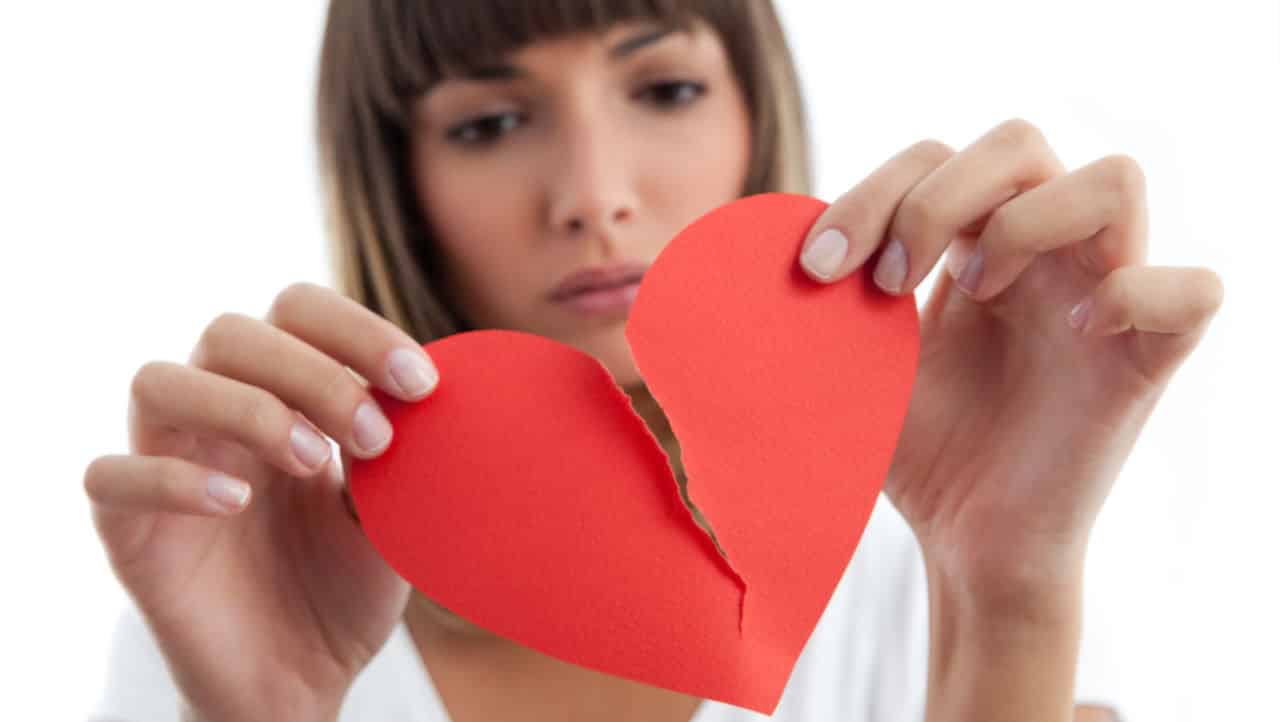
Pensive Girl breaking a paper heart.See similars:

People who have pathological jealousy need psychological treatment

Othello syndrome is known by this name because of the character in Shakespeare’s play, who is characterized by unhealthy jealousy and the constant belief that his partner is unfaithful.

Based on the story created by the famous author, psychological science chose the name.

Although the disorder is named this way, it is actually pathological jealousy or jealousy with serious consequences for people’s mental health and their daily functioning.

In the explanation of Othello syndrome, the focus is on different causes. Among them is the psychological vulnerability of the jealous person.

It manifests itself in emotional dependence, fear of abandonment, personal insecurity, excessive need for support, among other aspects.

Finally, it is very important to investigate the presence of other disorders that may underlie the development of pathological jealousy. For example, generalized anxiety disorders, obsessive-compulsive disorder or paranoid disorder.

The delusional belief about the alleged infidelity is constantly present, even when there is no evidence. Thus, a person with pathological jealousy will find signs of deception where there are none. He himself will look for reasons to question the fidelity of his partner.

There are three main characteristics of pathological jealousy:

• Lack of real reason

• Strange grounds for suspicion

• Excessive and irrational reaction

Among the typical symptoms of Othello syndrome we find the following:

• Hypervigilance and constant alertness: As this idea of ​​cheating is maintained all the time, there is also a state of alertness to check cheating at all times.

• Obsessive and controlling attitudes: these are manifested by a complete lack of respect for the other person’s space or their belongings. The partner is monitored, spontaneous visits are made either to the workplace or to their social gatherings.

• Physical or verbal abuse: against the person accused of infidelity. There are insults, shouting, accusations and attacks.

• Cognitive bias: confirmation bias leads to interpreting only that information that confirms what is already believed.

• Constant presence of negative emotions: such as anger, guilt, rage, resentment

People who have pathological jealousy need psychological treatment to work on delusional and paranoid thoughts about jealousy and infidelity. As the relationship continues, it is important to have couples therapy at some point.

Sometimes the partner of the jealous person can adjust to his demands, limiting his life. Another common scenario is to resort to certain behaviors to avoid the scenes without realizing that this reinforces them and increases mistrust.

For example, it is common to tell a lie to avoid starting an argument. However, the jealous person interprets this lie as actually concealing a deception.

On the other hand, jealousy has a huge emotional impact on the jealous person’s partner. Consequently, his mental health also starts to be affected at some point.

What Putin, Khamenei and Erdogan agreed on in Tehran

0
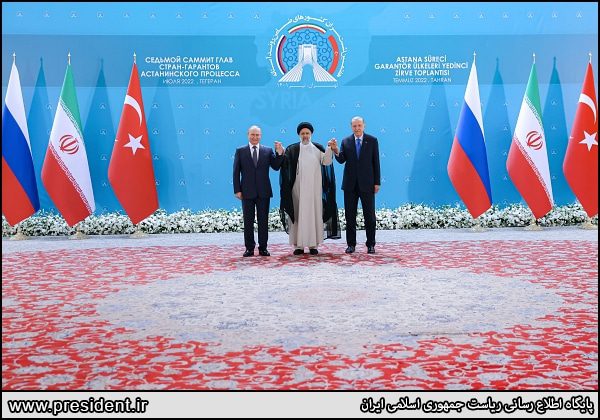
Putin, Khamenei and Erdogan
Photo credit: Official Iran website https://www.president.ir/en/138105

Iran’s Ayatollah Ali Khamenei called for strengthening long-term cooperation with Russia. The call was made today during his meeting with Russian President Vladimir Putin, held in Tehran, reported France Press.

Iran’s supreme leader told Putin that the US dollar should be removed from world trade by agreeing that payments between them would be in their national currencies. He urged the Russian president to remain vigilant against the “deceitful West”, saying that if Putin had not started the war in Ukraine, NATO would have eventually.

“War is a cruel and difficult matter and the Islamic Republic is in no way pleased that civilians are involved in it, but as far as Ukraine is concerned, if you did not take the initiative, the other side would take the initiative and start the war,” he said. Khamenei, quoted by his press office.

The two leaders also reportedly discussed bilateral relations and the gradual removal of the US dollar from bilateral trade, in addition to Syria, Israel and the South Caucasus.

“The long-term cooperation between Iran and Russia is very beneficial for both countries,” Khamenei said, according to an official statement. “There are contracts and agreements between the two countries in the oil and natural gas sector, which must be continued and fully implemented in practice,” he added.

The Iranian leader’s office released an image of Khamenei shaking hands with the Russian president, a rare occurrence since the COVID-19 pandemic. Khamenei only shook hands with Syrian President Bashar al-Assad, Iran’s other main ally in the region, who made a surprise visit to Tehran in May, Al Jazeera reported.

Putin arrived in Tehran on Tuesday. First, he held a meeting with Turkish President Recep Tayyip Erdogan on the topics of the export of Ukrainian grain through the Black Sea, the Syrian conflict, the conflict in Nagorno-Karabakh and bilateral relations. Erdogan is the first NATO head of state to meet the Russian president since the war in Ukraine began in February.

Reuters cited information from the Kremlin that Putin thanked Erdogan that, thanks to his mediation, progress had been made to restore Ukraine’s grain exports by sea.

“Thanks to your mediation, we have made progress. All issues are not settled yet, really, but there is movement and that is a good thing,” added Putin.

On Friday, the Russian Ministry of Defense said that a final document would soon be ready to allow the export of grain from Ukraine through the Black Sea, reports AFP.

The two leaders discussed the Syrian crisis, the problems in Nagorno-Karabakh, and topics on the bilateral agenda, TASS adds.

Then Putin and Erdogan met with Iranian President Ebrahim Raisi to talk about Syria, but also about Ukraine.

“Countries that have made claims to fight terrorism in West Asia have not taken any meaningful steps in this regard, but the Islamic Republic of Iran and Russia have shown their honest and serious will through serious cooperation in fighting terrorism,” Raisi said.

Erdogan, in turn, said that his country relies on the support of Russia and Iran in the fight against terrorism in Syria.

“What we expect from Russia and Iran is their support for terrorism,” Erdogan insisted, then mentioned the main Kurdish movements operating in northeastern Syria, on the border with Turkey, where he has threatened to intervene.

“Turkey will soon continue its fight against terrorist organizations in Syria,” he added. “It should be clear to everyone that there is no place in the region for separatist terrorist movements and their allies. We will soon continue our fight against terrorist organizations,” he warned.

At the meeting, Putin expressed concern about the situation in the territories that are not under the control of the Syrian authorities and suggested that his colleagues from Iran and Turkey take additional steps to stabilize the situation in these areas, TASS reported.

He added that real threats such as crime, extremism and separatism emanate from these areas and added that the “destructive line of Western countries, led by the United States, which uses a large arsenal of means” contributes to this to a large extent.

Putin suggested that the next meeting on Syria between the three presidents should take place in Russia. He described trilateral cooperation on the Syrian issue as productive.

The meetings in Tehran come after Putin’s delegation, which arrived late on Monday, earlier on Tuesday signed a $40 billion memorandum of understanding (MoU) with Iran to develop oil and gas fields. Iran has the world’s second-largest natural gas reserves after Russia, but has lagged behind in expanding its infrastructure due to sanctions that have prevented foreign investment.

This is Putin’s fifth visit to Tehran and his second visit abroad since the war in Ukraine began in February. Putin first visited the Iranian capital in 2007, and then in 2015, 2017 and 2018.

His visit now comes days after United States President Joe Biden wrapped up his tour of the region, which saw him visit Israel, the occupied West Bank and Saudi Arabia, where he also met with Arab leaders from the region.

Khamenei to Putin: The dollar must be thrown out

Iran’s Supreme Leader Ayatollah Ali Khamenei met with Russian President Vladimir Putin on Tuesday and said the US dollar should be phased out of world trade.

Khamenei warns of “Western deceptions” and expresses hope for improved bilateral relations between the two countries.

Khamenei also mentioned that war is bad and that his country is not happy that ordinary citizens suffer from it, referring to the war in Ukraine.

The meeting comes after Putin previously held talks with Turkish President Recep Erdogan.

The supreme leader’s office released an image of Khamenei shaking hands with the Russian president, a rare occurrence since the COVID-19 pandemic. Khamenei only shook hands with Syrian President Bashar al-Assad, Iran’s other main ally in the region, who made a surprise visit to Tehran in May, Al Jazeera reported.

“In terms of international security, we will strengthen our cooperation,” Putin said, adding that both countries play a major role in ensuring Syria’s security.

The Iranian president told him that cooperation between Iran and Russia has created stability and security in the region.

“Countries that have made claims to fight terrorism in West Asia have not taken any meaningful steps in this regard, but the Islamic Republic of Iran and Russia have shown their honest and serious will through serious cooperation in fighting terrorism,” Raisi said.

This is Putin’s fifth visit to Tehran and his second visit abroad since the war in Ukraine began in February. Putin first visited the Iranian capital in 2007, and then in 2015, 2017 and 2018.

His visit comes days after United States President Joe Biden wrapped up his tour of the region, which included visits to Israel, the occupied West Bank and Saudi Arabia, where he also met with Arab leaders from the region.

The meetings come after Putin’s delegation, which arrived late on Monday, earlier on Tuesday signed a $40 billion memorandum of understanding (MoU) with Iran to develop oil and gas fields.

Iran has the world’s second-largest natural gas reserves after Russia, but has lagged behind in expanding its infrastructure due to sanctions that have prevented foreign investment.

Photo: The Iranian leader’s office released a photo of him shaking hands with the Russian president, a rare occurrence since the COVID-19 pandemic