
Tuesday, March 24, 2026
Home Blog Page 85

From farm to classroom: feeding children and supporting farmers in Timor-Leste

0

In the mountainous municipality of Manufahi in southern Timor-Leste, where a healthy diet is often beyond the budget of most households, the UN is helping to ensure that the benefits of development are extended.

“Our students were not starving, but they should not have had a nutritious diet,” said Domingos de Jesus, principal of Cossamar primary school in the town of Same, where 500 students receive a meal each school day. “Now they eat more protein and vegetables and proportionately fewer carbohydrates.”

With full bellies, students are more alert and attentive in class, said Caetano Marcelo, principal of Betano primary school on the country’s southern coast. “It’s very important for their learning,” he added.
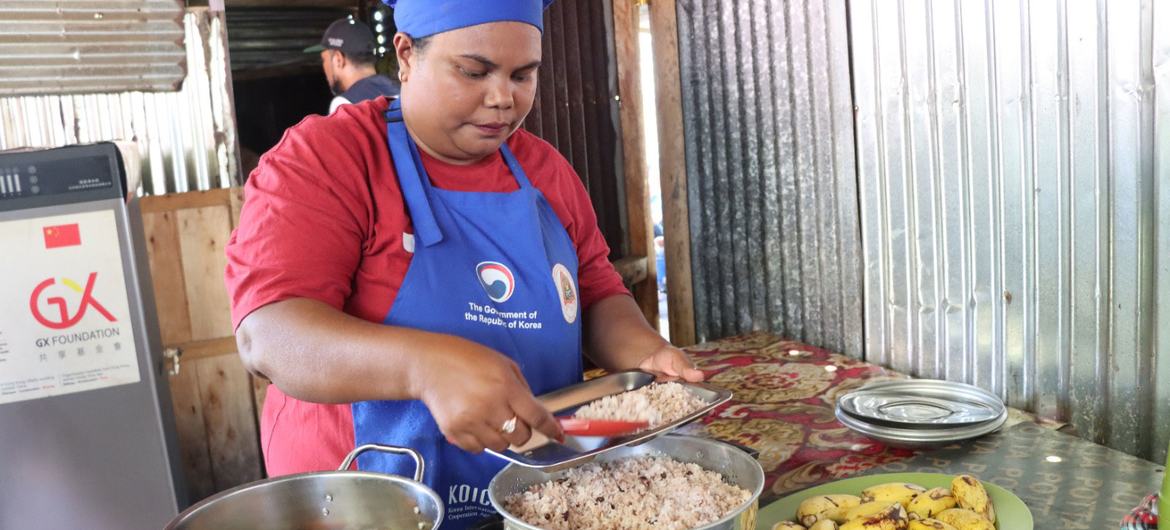
From farm to classroom: feeding children and supporting farmers in Timor-Leste

In Timor-Leste, a school cook prepares meals using local ingredients.

Some students’ families cannot afford breakfast, and most cannot afford nutritious meals. “Meat, eggs and some vegetables are difficult to buy for many families here,” Mr. de Jesus said. Most of the region’s 60,000 residents are small subsistence farmers.

In Timor-Leste18 percent of the population faces hunger on a daily basis and 45 percent of children under five suffer from stunted growth. Improving child nutrition is among the government’s top three priorities and a cornerstone of the new UN cooperation framework for sustainable development in the Asian island nation, which is expected to be signed in the coming weeks and implemented over the period 2026-2030.

The UN-supported school feeding program benefits more than 70,000 children across the country, while strengthening the government’s nutrition capacity, ensuring long-term sustainability.

The government has made school feeding a national priority, by decentralizing its management and financing to municipalities.

While this approach promotes local ownership and inclusion of locally grown produce, challenges remain in diversifying diets and ensuring consistent access to locally grown foods.
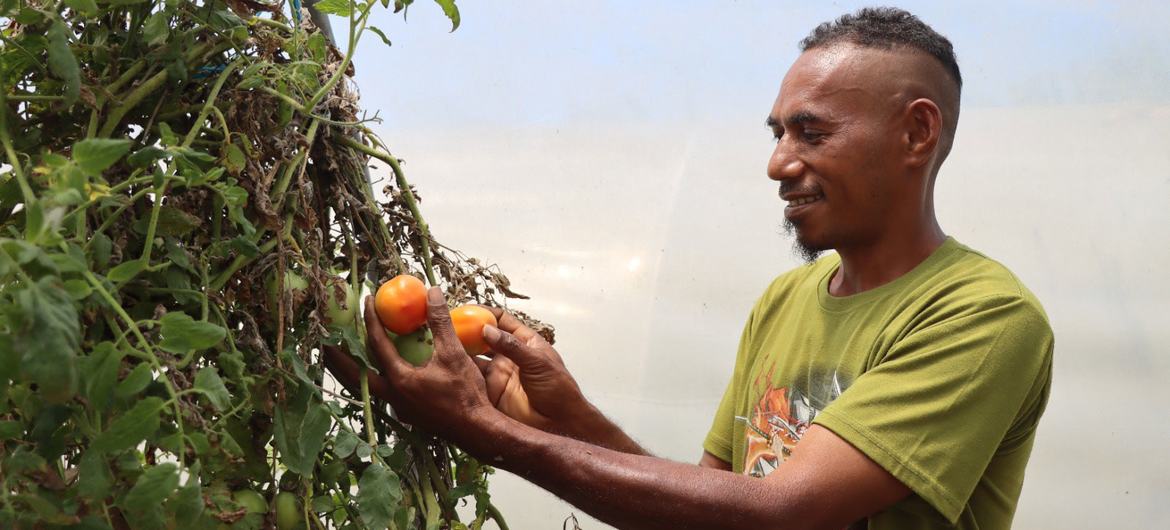
From farm to classroom: feeding children and supporting farmers in Timor-Leste

A farmer grows produce for school meal programs in Timor-Leste.

To fill these gaps, the World Food Program (PAM) and the Food and Agriculture Organization of the United Nations (FAO) are working alongside national and local authorities to strengthen menus and supply chains, improve kitchen infrastructure and train school staff in nutrition and hygiene, in support of the government’s vision of linking nutrition, education and local economic development for long-term sustainability.

Stew and Beans

On a recent Monday, the menu at the same school consisted of venison stew, vegetables and brown rice, all served on stainless steel trays provided by the Ministry of Education with support from PAM.

WFP also advised authorities on creating balanced meal plans using local ingredients and is helping to build a modern kitchen within the school grounds.

In Betano, where the children enjoyed chicken satay skewers with spinach, accompanied by rice and beans, on the same Monday, FAO kitchen equipment provided. WFP provided training on budget management, school menu preparation and kitchen hygiene.

“The students eat everything, and it’s great to see,” said Imana Imaculada Fernandes, the head cook at the Sámi school. “The meal plans – developed on advice from the government and WFP – include 75 percent local produce. »

Fernandes and her team can spend 35 US cents per day per child and an additional 7 cents for other costs, such as fuel and labor. “That’s 70 percent more than before – and that translates into more nutritious diets and better hygiene.”

Eat what you grow

The initiative also brings stable income to local farmers. Andre Pereira de Sousa and his neighbors in the suburb of Betano have seen steady demand for their tomatoes, watermelons, sweet potatoes and bananas.

“The biggest advantage is that we no longer waste time and use fuel going to the market,” he said. “We can use this time to improve our farms and spend more time with our families. » Stable demand has also reduced food waste and encouraged farmers to increase production.

The Betano farmers who supply the schools were among 9,000 households who benefited from an FAO program on conservation agriculture.

As a result, they have diversified into higher value crops and now use compost rather than fertilizer, reducing costs and the environmental impact of their farms. The group of farmers also received small mills to produce flour and prepare snacks to sell, as well as a trailer to transport their produce.

A united approach

The coordinated work of FAO and WFP illustrates an approach increasingly adopted by the United Nations, where agencies work in complementary ways to support the government.

“This is a great example where one plus one equals more than two, reinforcing the benefits of greater project sustainability,” said Funmi Balogun Alexander, the United Nations Resident Coordinator in Timor-Leste. “The new cooperation framework between Timor-Leste and the UN is built around such joint approaches.

Originally published at Almouwatin.com
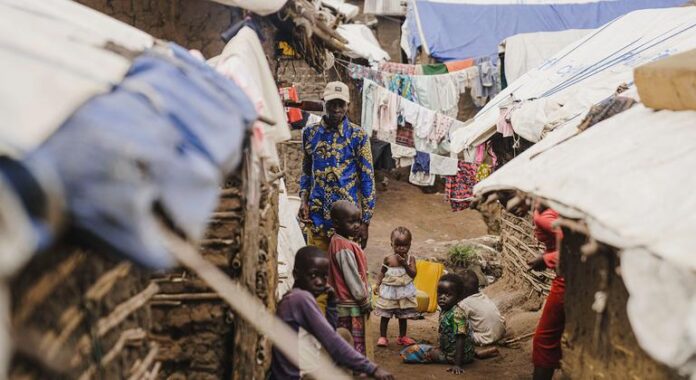
Peace falters as fighting in eastern DR Congo raises fears of regional war

0
Peace falters as fighting in eastern DR Congo raises fears of regional war

A new offensive by the Alliance Fleuve Congo/Mouvement du 23 mars (AFC/M23) has reignited large-scale hostilities in South Kivu, just days after international agreements were signed to de-escalate the conflict.

The renewed fighting has caused civilian casualties, destroyed infrastructure and driven hundreds of thousands from their homes, according to United Nations officials and humanitarian groups.

The UN and the Security Council have repeatedly described the majority-Tutsi M23 militia as backed by Rwanda – a claim Kigali has repeatedly denied.

US Ambassador Mike Waltz told the Council on Friday that having brought Rwanda and DRC together in Washington to sign a peace agreement just last week, the Government was “incredibly disappointed” in Kigali’s actions in recent days in support of the M23 rebels which they fully control.

A crisis of ‘incalculable consequences’

Jean-Pierre Lacroix, head of UN Peace Operations, warned that the offensive has revived “the spectre of a regional flare-up with incalculable consequences,” saying the territorial expansion of AFC/M23 and the weakening of the DRC Government’s authority in eastern areas threaten national unity, sovereignty and territorial integrity.

He said recent diplomatic breakthroughs – including the Washington Accords signed on 4 December between DRC and Rwanda, and the Doha Framework Agreement in November between DRC and the AFC/M23 – had generated genuine hope for de-escalation.

But persistent ceasefire violations and renewed fighting now risk unravelling that progress.

The growing gap between political commitments and their effective implementation on the ground undermines the credibility of peace processes and fuels the sense of abandonment felt by civilians,” Mr. Lacroix said.

MONUSCO/Didier Vignon Dossou-Gba

MONUSCO peacekeepers on patrol near Bunia, the provincial capital of Ituri in eastern DR Congo.

MONUSCO, a critical lifeline

As violence escalates, the UN peacekeeping mission MONUSCO remains a central – and increasingly strained – pillar of civilian protection in eastern DRC, just days before the Security Council is set to decide on the renewal of its mandate.

Mr. Lacroix told Council members that MONUSCO continues to provide direct physical protection to around 100,000 displaced people living near its bases, particularly in North Kivu and Ituri, through daily patrols, early-warning systems and close engagement with communities.

He said the mission has adopted a more preventive posture, focusing on deterrence, rapid response and sustained presence around displacement sites where armed groups operate in close proximity.

Operations constrained

However, he cautioned that MONUSCO’s ability to carry out its mandate is being increasingly constrained. Restrictions imposed by AFC/M23 on freedom of movement, fuel supplies, water and electricity – along with the continued closure of Goma airport – are limiting mobility, delaying rotations and hampering humanitarian access.

At the same time, funding shortages and reductions in uniformed and civilian personnel, linked to the UN’s broader liquidity crisis, are affecting the mission’s rapid response capacity and operational reach.

Mr. Lacroix stressed MONUSCO’s role in protecting civilians and supporting de-escalation remains essential, warning that “diplomatic progress must now translate into real improvements on the ground.”

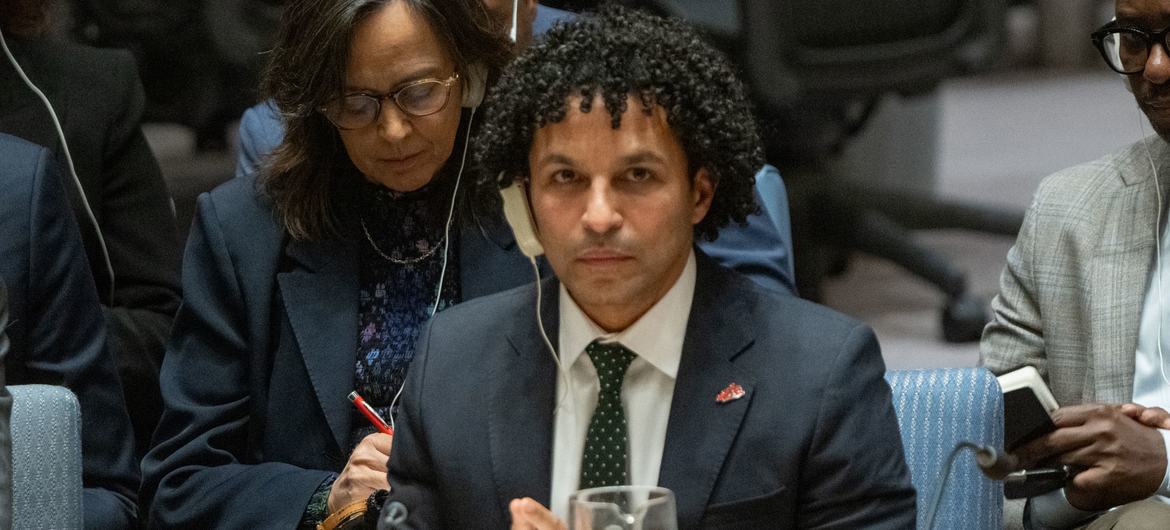
Dr. Javid Abdelmoneim of Médecins Sans Frontières, briefs the Security Council on health and humanitarian situation in eastern DR Congo.

Dr. Javid Abdelmoneim of Médecins Sans Frontières, briefs the Security Council on health and humanitarian situation in eastern DR Congo.

Health system collapsing

The humanitarian toll is mounting. Hospitals and clinics across North and South Kivu are struggling to cope with a steady influx of wounded civilians amid acute shortages of staff, medicines and equipment.

Dr. Javid Abdelmoneim, emergency medicine doctor and international president of Médecins Sans Frontières (MSF), said health systems in eastern DRC are “collapsing” under the combined impact of violence, mass displacement and shrinking humanitarian access.

“MSF teams continue to witness staggering levels of violence, displacement and deprivation,” he said. “This crisis is not easing.”

Sexual violence and disease outbreaks

Sexual violence remains widespread and systematic, particularly affecting women and girls.

Dr. Abdelmoneim said nearly 28,000 survivors sought care at MSF-supported facilities across eastern DRC in the first six months of the year alone – an average of more than 150 people a day. Many arrived too late for preventive treatment, while others never reached care at all.

At the same time, infectious diseases are spreading rapidly. Cholera cases have surpassed 38,000 this year, with deaths more than doubling compared to last year. Measles continues to spread, and malaria outbreaks are unfolding amid limited diagnostic and treatment capacity.

Broadcast of the Security Council meeting.

DR Congo pursuing solutions in good faith

The Democratic Republic of the Congo condemned what it described as a renewed Rwanda Defence Forces-M23 offensive launched shortly after the Washington Accord was signed, saying it violated commitments and worsened an already grave humanitarian situation.

Foreign Minister Thérèse Kayikwamba Wagner said Kinshasa had pursued diplomacy in good faith through US-, Qatari- and African-led processes but warned that continued attacks, civilian targeting and cross-border risks threaten regional stability.

She urged the Security Council to enforce resolution 2773 (2025), strengthen MONUSCO’s mandate and impose consequences for continued violations, stressing that durable peace requires accountability.

Rwanda alleges persecution in South Kivu

Rwanda rejected the accusations and said the renewed MONUSCO mandate should reinforce the Washington Peace Agreement and Doha Framework through strict impartiality and support for ceasefire implementation.

Ambassador Karoli Martin Ngoga stated that progress depended on political will from all parties and raised concerns over what he described as persecution of the Banyamulenge community in South Kivu, citing displacement, killings and blockades by Congolese forces and allied militias.

He called for a political solution and reaffirmed Kigali’s stated commitment to advancing durable peace through the Washington process.

Burundi condemns capture of Uvira

Ambassador Zéphyrin Maniratanga of Burundi condemned the reported capture of Uvira by Rwanda Defence Forces-backed M23 fighters, calling it a violation of resolution 2773 and warning of severe civilian suffering and mass displacement into his country.

He said cross-border artillery and drone strikes had hit Burundian territory, threatening sovereignty and regional stability.

He called for the full implementation of the Washington commitments, stronger civilian protection and urgent humanitarian assistance for refugees, while reaffirming its readiness to support peace efforts and defend its territorial integrity under the UN Charter.

Source link

Guterres condemns deadly attack on Hannukah celebration in Sydney

0

In a post on social mediaMr Guterres said he was “horrified” by the incident.

“My heart is with the Jewish community around the world on this first day of Hannukah, a holiday celebrating the miracle of peace and light overcoming darkness. » he wrote.

At least 11 people were killed when two gunmen opened fire on a Hanukkah celebration at Sydney’s Bondi Beach, which authorities described as a terrorist attack.

Two of the victims were police officers, according to media reports. One of the gunmen was killed and the other was taken into custody.

The Secretary-General was in Riyadh, Saudi Arabia, on Sunday, where he delivered a speech at the opening of the 11th Global Forum of the United Nations Alliance of Civilizations (UNAOC).

The initiative was launched 20 years ago to promote respect and understanding between cultures and religions.

Hannukah, also spelled Hanukkah, is the Jewish festival of lights.

It celebrates the return of the Jewish people to the freedom to practice their religion more than 2,000 years ago in a battle against Seleucid (Syrian-Greek) rule.

The eight-day celebration is marked by the lighting of candles each evening on a stand called a menorah which is placed in interior windows or doors.

Originally published at Almouwatin.com
Sudan: Kordofan cannot become ‘another El Fasher,’ Türk warns

0
Sudan: Kordofan cannot become ‘another El Fasher,’ Türk warns

The once allied Sudanese Armed Forces (SAF) and the Rapid Support Forces (RSF) have been locked in brutal conflict since April 2023, with the battlefront now shifting to the oil-rich region’s three states.

It comes after RSF fighters seized El Fasher, the capital of North Darfur, last month following a year-long siege marked by widespread killings, sexual violence, torture and other atrocities. 

History repeating itself

Mr. Türk urged all States with influence over the parties to take immediate action to halt the fighting, and stop the arms flows that are fuelling the conflict.

“It is truly shocking to see history repeating itself in Kordofan so soon after the horrific events in El Fasher,” he said.

“The international community stood united then, unequivocally condemning the barbarous violations and destruction. We must not allow Kordofan to become another El Fasher.”

Deadly airstrikes, revenge killings

The RSF captured Bara city in North Kordofan on 25 October.  Since then, the UN human rights office, OHCHR, has documented at least 269 civilian deaths from aerial strikes, artillery shelling, and summary executions.  

However, civilian casualties are likely to be higher as reporting has been hindered by telecommunications and internet outages. 

There have also been reports of retaliatory killings, arbitrary detention, abductions, sexual violence and forced recruitment – including of children. 

Many civilians have reportedly been detained, accused of “collaborating” with opposing parties, Mr. Türk added, while fears are mounting over the use of hateful and divisive speech.

The violence has also triggered mass displacement, with over 45,000 people fleeing to safety within or outside the region. 

Humanitarian response affected

Aid teams in Sudan issued a joint statement that condemns in the strongest terms the escalating violence across the Kordofan region and the ongoing sieges that have cut off multiple cities.

“The violence is restricting access to food, medicine and essential supplies, and is limiting farmers’ access to their fields and markets, heightening the risk of famine spreading across the Kordofan states,” it said.

Mr. Türk noted that an RSF drone strike reportedly killed 45 people in El Obeid, North Kordofan, on 3 November while an SAF strike in Kauda, South Kordofan, on 29 November reportedly resulted in the deaths of at least 48 people – most of them civilians.

Fears for Kadugli and Dilling

He warned that the towns of Kadugli and Dilling in South Kordofan are particularly at risk as they have been besieged by the RSF and an allied group, the Sudan People’s Liberation Movement (SPLM-N). 

Humanitarians reported that communities remain trapped, facing extreme hardship, severe restrictions on movement and limited access to essential services and protection. 

Famine conditions have also been identified in Kadugli, and sustained attacks have been reported in Babanusa, West Kordofan, over recent days.

‘We cannot stand idly by’

“We cannot remain silent in front of yet another man-made catastrophe,” Mr. Türk said, appealing for an end to the fighting and access to people facing starvation

“Have we not learned our lessons from the past? We cannot stand idly by and allow more Sudanese to become victims of horrific human rights violations. We must act, and this war must stop now.

The Sudan conflict has created one of the world’s largest humanitarian crises, with some 30 million people needing assistance.

Humanitarians continue to operate despite the immense risks, reaching some 1.1 million people across the Kordofan region alone. 

Source link

Challenging outlook for meeting the EU’s long-term environment and climate objectives

0

Despite progress in key areas, the European Union (EU) remains likely off track for most 2030 environmental goals, according to the European Environment Agency’s (EEA) new 8th EAP assessment. Rising climate risks, slow transitions in production and consumption system and weakening enabling conditions highlight the urgent need for stronger, better financed and faster policy implementation. […]

Source link

Largest study reveals best treatment options for ADHD

0
Largest study reveals best treatment options for ADHD

The most comprehensive review to date of ADHD treatments has found that medication for children and adults, and cognitive behavioural therapy for adults, remain the most effective approaches, backed by the strongest short-term trial evidence.

Pills – illustrative photo. Image credit: Pixabay (Free Pixabay license)

Researchers led by the Université Paris Nanterre (France), Institut Robert-Debré du Cerveau de l’Enfant (France), and the University of Southampton (UK) analysed over 200 meta-analyses covering different treatment types, participant groups, and clinical outcomes in a study published recently  [27 November 2025] in The BMJ.

The research was funded by public and peer-reviewed research grants from Agence Nationale de la Recherche (France), France 2030 program (France), and National Institute for Health and Care Research (UK).

To help people with attention deficit hyperactivity disorder (ADHD) and their clinicians make more informed, shared decisions, the team has created an interactive website that clearly presents the findings and the evidence behind each treatment based on the review ( ebiadhd-database.org ).

“We know that people with ADHD and their families are often overwhelmed by conflicting messages about which treatments work,” says Professor Samuele Cortese , an NIHR Research Professor at the University of Southampton and senior lead author on the paper.

“We believe this study and the accompanying website provide the most authoritative, evidence-based, and accessible guidance currently available.

“The Evidence-Based Interventions for ADHD website provides freely available, evidence-based, and continuously updated information in an easy-to-understand way. To the best of our knowledge, this is the first platform in the world to do so based on such a rigorous synthesis of the available evidence.”

Overall, five medications in children and adolescents, and two medications and cognitive behavioural therapy (CBT) in adults were shown to be effective while supported by a relatively robust evidence base. Critically, all this evidence was limited to the short-term, despite long-term treatment being common in clinical practice.

Treatments like acupuncture, mindfulness and exercise showed promise, but the evidence supporting their use was of a low quality due to small numbers of participants and risk of bias. The limitations applied to studies evaluating cognitive behavioural therapy in children and adolescents, as well as research on the long-term effects of mindfulness in adults, although mindfulness was the only intervention to demonstrate large beneficial effects at extended follow-up.

Dr Corentin Gosling, Associate Professor at the Paris Nanterre University and first lead author of the study, says: “Long waiting lists for mental health services are a major issue. Having incorrect information about treatments can make people’s journeys even more difficult, by wasting time and money on non-evidence-based approaches, for example.

“By contrast, taking the time to review all treatment options within a shared decision-making process using the web app we developed can empower people with ADHD, leading to better treatment adherence, improved outcomes, and an overall better patient experience.”

The findings generally complement current international clinical guidelines, not only by providing convenient access to current high-quality evidence, but also by covering interventions not usually mentioned in clinical guidelines.

The team hope this new project will achieve a similar impact in influencing clinical guidelines and practice as their previous project (ebiact-database.com), which looked at treatments for autism.

Benefits and harms of ADHD interventions: umbrella review and platform for shared decision making is published in The BMJ and is available online.

Source: University of Southampton

Source link

Largest study reveals best treatment options for ADHD

0
Largest study reveals best treatment options for ADHD


The most comprehensive review to date of ADHD treatments has found that medication for children and adults, and cognitive behavioural therapy for adults, remain the most effective approaches, backed by the strongest short-term trial evidence.

Largest study reveals best treatment options for ADHD

Pills – illustrative photo. Image credit: Pixabay (Free Pixabay license)

Researchers led by the Université Paris Nanterre (France), Institut Robert-Debré du Cerveau de l’Enfant (France), and the University of Southampton (UK) analysed over 200 meta-analyses covering different treatment types, participant groups, and clinical outcomes in a study published recently  [27 November 2025] in The BMJ.

The research was funded by public and peer-reviewed research grants from Agence Nationale de la Recherche (France), France 2030 program (France), and National Institute for Health and Care Research (UK).

To help people with attention deficit hyperactivity disorder (ADHD) and their clinicians make more informed, shared decisions, the team has created an interactive website that clearly presents the findings and the evidence behind each treatment based on the review ( ebiadhd-database.org ).

“We know that people with ADHD and their families are often overwhelmed by conflicting messages about which treatments work,” says Professor Samuele Cortese , an NIHR Research Professor at the University of Southampton and senior lead author on the paper.

“We believe this study and the accompanying website provide the most authoritative, evidence-based, and accessible guidance currently available.

“The Evidence-Based Interventions for ADHD website provides freely available, evidence-based, and continuously updated information in an easy-to-understand way. To the best of our knowledge, this is the first platform in the world to do so based on such a rigorous synthesis of the available evidence.”

Overall, five medications in children and adolescents, and two medications and cognitive behavioural therapy (CBT) in adults were shown to be effective while supported by a relatively robust evidence base. Critically, all this evidence was limited to the short-term, despite long-term treatment being common in clinical practice.

Treatments like acupuncture, mindfulness and exercise showed promise, but the evidence supporting their use was of a low quality due to small numbers of participants and risk of bias. The limitations applied to studies evaluating cognitive behavioural therapy in children and adolescents, as well as research on the long-term effects of mindfulness in adults, although mindfulness was the only intervention to demonstrate large beneficial effects at extended follow-up.

Dr Corentin Gosling, Associate Professor at the Paris Nanterre University and first lead author of the study, says: “Long waiting lists for mental health services are a major issue. Having incorrect information about treatments can make people’s journeys even more difficult, by wasting time and money on non-evidence-based approaches, for example.

“By contrast, taking the time to review all treatment options within a shared decision-making process using the web app we developed can empower people with ADHD, leading to better treatment adherence, improved outcomes, and an overall better patient experience.”

The findings generally complement current international clinical guidelines, not only by providing convenient access to current high-quality evidence, but also by covering interventions not usually mentioned in clinical guidelines.

The team hope this new project will achieve a similar impact in influencing clinical guidelines and practice as their previous project (ebiact-database.com), which looked at treatments for autism.

Benefits and harms of ADHD interventions: umbrella review and platform for shared decision making is published in The BMJ and is available online.

Source: University of Southampton


Source link

UN celebrates first World Turkish Language Family Day

0

The new commemoration highlights the common linguistic and cultural heritage of the Turkic-speaking peoples and strengthens UNESCOour country’s broader commitment to multilingualism and cultural diversity.

A historic date

The choice of December 15 is rooted in a historic moment in linguistic scholarship. On this day in 1893, Danish linguist Vilhelm Thomsen announced that he had deciphered the alphabet of Orkhon inscriptions – some of the oldest known written records of the Turkic language family.

His breakthrough opened the door to a deeper understanding of a linguistic tradition that today connects dozens of communities across Eurasia.

A global linguistic family

Turkic languages ​​– including Azeri, Kazakh, Kyrgyz, Turkish, Turkmen and Uzbek – are spoken natively by more than 200 million people across an area of ​​approximately 12 million square kilometers.

UNESCO notes that these languages ​​carry a rich written heritage, strong oral traditions and diverse cultural practices shared across many Member States.

The proclamation of the new Day follows a joint request from Azerbaijan, Kazakhstan, Kyrgyzstan, Türkiye and Uzbekistan and was supported by 21 Member States, reflecting broad recognition of the value of linguistic diversity.

Strengthen cooperation

UNESCO says this annual celebration aligns with the UN’s broader multilingualism agendaset out in General Assembly resolution 71/328.

By dedicating a day to the Turkish language family, the agency aims to encourage linguistic cooperation, cultural exchanges and dialogue between civilizations.

Planned activities include awareness-raising initiatives, academic research and programs aimed at safeguarding Turkish languages ​​and oral traditions.

Annual celebration

The day will be marked by exhibitions, conferences, literary events and artistic performances intended to highlight the historical depth and contemporary vitality of Turkish languages.

UNESCO says the commemoration is an opportunity to honor linguistic diversity as part of humanity’s common heritage and to strengthen international efforts to protect languages ​​as essential vehicles of identity, knowledge and cultural expression.

Originally published at Almouwatin.com

Fishing opportunities for 2026 in EU and non-EU waters: Council secures agreement

0
Fishing opportunities for 2026 in EU and non-EU waters: Council secures agreement

Council agrees on fishing opportunities in the Atlantic and the North Sea for 2026 and for certain stocks for 2027 and 2028, and in the Mediterranean and the Black Seas for 2026.

Source link

Syria: Effort to buttress human rights since Assad’s fall, ‘only the beginning of what needs to be done’

0
Syria: Effort to buttress human rights since Assad’s fall, ‘only the beginning of what needs to be done’

OHCHR is calling for more action to end the violence and achieve justice.

“While the interim authorities have taken encouraging steps towards addressing past violations, these steps are only the beginning of what needs to be done,” spokesperson Thameen Al-Kheethan told journalists in Geneva.

Summary executions and arbitrary killing

Since last December, Syria’s interim authorities have established national commissions for transitional justice and missing persons, among other measures.  

A draft law on transitional justice has been announced, and trials have begun into deadly violence that occurred in coastal areas in March.

“Yet, we continue to see distressing accounts of summary executions, arbitrary killings and abductions, mainly targeting members of certain communities and individuals accused of affiliation with the former government,” he said.

Minorities affected

Hundreds have been killed over the past year by the security forces and affiliated groups, elements associated with the former government, local armed groups and unidentified armed individuals. 

Other reported violations and abuses include sexual violence, arbitrary detentions, destruction of homes, forced evictions, and restrictions on freedoms of expression and peaceful assembly.

Alawite, Druze, Christian and Bedouin communities were mainly affected by the violence, which has been fed by rising hate speech both on and offline.

Incursions by Israeli forces

The past year has also been marked by repeated Israeli military operations, including incursions, and occupation of additional territory,” Mr. Al-Kheethan added. 

OHCHR has received reports of civilian casualties, as well as arrests and home searches.

The spokesperson noted that the integration of former armed groups into Syria’s new security forces has so far happened hastily and without proper human rights vetting.

This is crucial to ensure that perpetrators of serious violations do not enter their ranks and to prevent further violations.

A woman holds the new Syrian flag outside UN Headquarters in New York.

Accountability essential for Syria’s transition

“All violations – past and present – must be independently, thoroughly and transparently investigated, and those responsible held to account,” he said.

The UN High Commissioner for Human Rights, Volker Türk, has called on the authorities to take action to address the root causes of the violations.  

He stressed that accountability, justice, peace and security for all Syrians are absolute prerequisites for a successful transition.

Source link