MEPs criticize countries abusing their vetoes on tax matters and demand a relaunch of discussions to gradually introduce majority voting.
The resolution adopted on Wednesday with 450 votes in favour, 132 votes against and 55 abstentions, closes the debate which took place during June’s plenary part session.
It says that Hungary’s “reported demands” to lift its blocking of the international agreement on a minimum corporate tax rate for multinationals, “were already largely taken into account in the international agreement”, and calls on Hungary to “immediately end its blockage”. The resolution also urges the Commission and member states “not to engage in political bargaining” and to “refrain from approving Hungary’s national recovery and resilience plan unless all the criteria are fully complied with”. If Hungary persists with its veto, MEPs say alternative options should be explored to honour the EU’s commitments, including the possible use of ‘enhanced cooperation’.
The resolution also states that EU and global tax rules are outdated for dealing with the modern-day economy, since they allow for significant tax evasion and tax avoidance, lead to “unacceptable competitive advantages” for multinationals over SMEs, and undermine the EU single market.
MEPs remind member states that unanimity decision making in the EU requires a “very high level of responsibility, in line with the principle of sincere cooperation”, as set out in the EU Treaty. For the longer term, member states should consider the benefit of transitioning to qualified majority voting, and the Commission should relaunch the idea to gradually introduce majority voting on tax matters.
MEPs welcomed the decision to open the EU’s doors to Ukraine and Moldova, but asked leaders to strengthen the EU, and tackle the latest crisis.
MEPs discussed the conclusions of 23-24 June European Council summit with President Charles Michel and Commission Vice-President Maroš Šefčovič. Almost all speakers welcomed the decision to commence the accession process for Ukraine and Moldova, as Parliament had already asked. Many MEPs underlined that the road to accession is going to be long and will require many reforms for Ukraine and Moldova. They stresses that the EU should find other ways to support the countries in the meantime, including with military equipment, some argued.
Numerous speakers referred to the need to treat Western Balkan countries fairly and unblock their accession, as Parliament has already repeatedly asked in the past. Regarding the Conference on the Future of Europe and Parliament’s call for a Convention to revise the EU Treaties, many MEPs criticised the lack of ambition shown by the Council in this regard, highlighting that the need to reform the EU and the way it works is urgent. Citizens must not be let down and their expectations must be fulfilled, they insisted.
Many MEPs pointed to the need for more coordinated action to tackle the interconnected problems of skyrocketing energy prices, gas shortages caused by the Russian war against Ukraine, rising inflation, and the impact of this on households – with several across political groups asking for a cap on gas prices. Other topics raised were the need to reform the EU’s migration and asylum system, accession of more EU countries to the Schengen area, and Turkey’s aggression towards its EU neighbours.
You can watch extracts from the debate here, the first round of MEPs’ interventions here, and the full debate here.
New Business Integrity Portal launched to bolster anti-corruption efforts in the private sector
16 countries included in the portal thus far.
Vienna (Austria), 30 June 2022 —Tackling corruption requires all parts of society to play their part. One sector, though, has a particularly critical role as the world’s key economic driver: the private sector.
The private sector has a vested interest in curbing corruption. Corruption impedes the economic and financial growth of businesses by distorting markets and increasing costs. The private sector can therefore be a powerful agent for change by contributing to a culture of integrity and transparency and by strengthening the rule of law. It is not only possible but also beneficial for the business community to create stronger economies and more prosperous societies.
For over a decade, the United Nations Office on Drugs and Crime (UNODC) has been fostering dialogue between businesses and governments to find common solutions to a common problem and enhance the capacity of both sectors to prevent and counter corruption. By improving accountability and transparency in industries and supply chains, and by educating and empowering employees to speak up and report corrupt practices, UNODC promotes a culture of integrity in business. Educating youth on fairness and ethics today is key to building generations of integrity business leaders tomorrow.
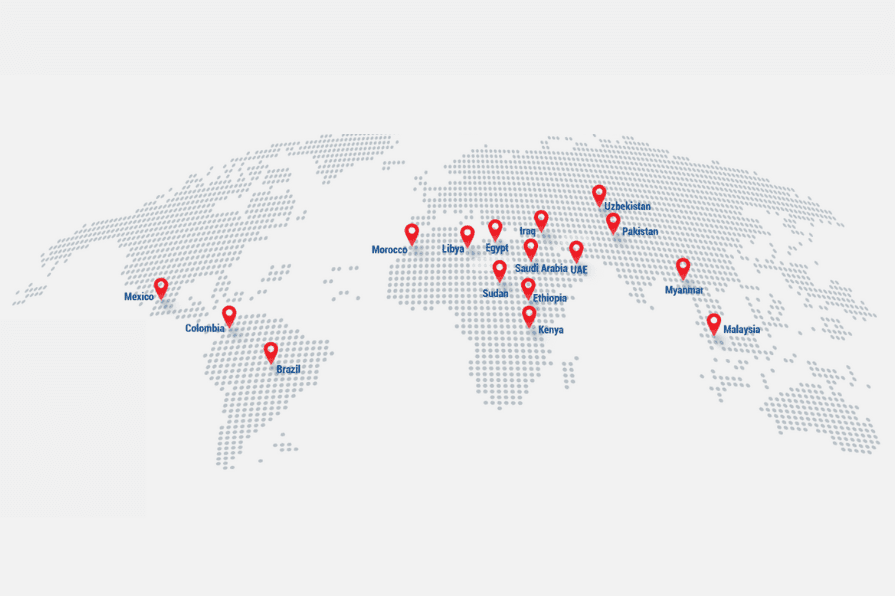
To ensure forward momentum on business integrity, UNODC has launched its brand-new Business Integrity Portal. Serving as an online one-stop shop, the Portal houses a wealth of resources, tools, and good practices, emerging from a range of anti-corruption projects for the private sector implemented by UNODC and funded by the Siemens Integrity Initiative. The projects, delivered in 16 countries across the globe, are designed to reduce corruption by strengthening legal frameworks, public-private dialogue and private sector capacity in line with the United Nations Convention against Corruption (UNCAC), the only legally binding universal anti-corruption instrument. Collective action increases the impact and credibility of individual action.
“Addressing corruption in the private sector demands collective action, which can be effective only when we cooperate and coordinate with one another,” commented UNODC’s Brigitte Strobel-Shaw on the launch of the Portal. “The Business Integrity Portal is another crucial step in the right direction. It showcases preventive action in the private and public sectors, a key driver for change and for the establishment of a culture of integrity.”
The Portal provides users with an overview of how governments and other stakeholders such as civil society and academia have joined forces with the corporate world to develop practical solutions to prevent and counter corruption in specific countries and sectors.
In addition to providing users with an in-depth look at UNODC activities in the area of business integrity, the Portal also offers opportunities to connect with the Office and participate in events. More details can be found here.
To support States parties’ efforts to fully implement the United Nations Convention against Corruption, UNODC delivers technical assistance in various corruption-related thematic areas, including prevention, education, asset recovery, and integrity in the criminal justice system, among others. Learn more here.
On Tuesday, the Greek Prime Minister focused on the need to broaden and deepen the EU while addressing MEPs during the fifth “This is Europe” debate.
At the beginning of his speech, Prime Minister Mitsotakis stated that his country suffered more than any other in the past few years, but was ultimately able to overcome the political and economic challenges that almost led to its exit from the euro. Now, in addition to being among the top growing economies in Europe, Greece is on the front line of fighting for the future of the EU – in the EU’s response to the pandemic, as well as in protecting the external border from Turkey’s instrumentalisation of migrants and its aggression against Greece and Cyprus.
Asking for more solidarity on these fronts, he also called for EU enlargement in the Western Balkans, in parallel to a push for more integration, especially in energy and defence. He underlined the role that Greece is ready to play in enhancing the EU’s energy autonomy and green transition, through an array of infrastructure and cooperation initiatives in the East Mediterranean. Referring to Russia’s war against Ukraine, he stressed that there is only one side to take – that of democracy, justice, peace, and international law. This means supporting Ukraine and preventing any kind of fait accompli that would create a dangerous precedent for other revisionist forces.
Mr Mitsotakis confirmed that he is in favour of coordinated action to rein in skyrocketing energy costs, which would also protect the European Union by limiting the space for populist narratives. The EU needs to protect the freedom and prosperity that previous generations fought for, while continuing to build a European identity and fighting for lasting stability, he concluded.
Watch President Metsola’s introduction and Prime Minister Mitsotakis’ speech here.
One round of EP speakers
In reaction to Mr Mitsotakis’ address, some MEPs focused on the Greek government’s successes in some areas of the economy and its important role in safeguarding the EU’s external border. Others pointed to the persistently very high unemployment rate and asked for more green and social investments, especially on young people. A few also focused on the large number of reports of illegal pushbacks of asylum seekers and concerns about the country’s recent record in respecting EU values, and the rule of law and media freedom in particular.
A recording of the round of EP speakers and the Prime Minister’s closing remarks is available here. You can watch the full debate here.
The 2030 Agenda for Sustainable Development and the Sustainable Development Goals (SDGs) are characterized by a “shallow commitment” to racial justice and equality, an independent UN-appointed rights expert told the UN Human Rights Council on Tuesday, adding that they fail to address systematic racism and xenophobia.
Presenting the conclusions of her report on the 2030 Agenda, SDGs and the fight against racial discrimination, Ms. Achiume acknowledged that while opening the door to important improvements on earlier development initiatives, more commitments are needed to effectively combat racism.
“Racial justice commitments are largely absent from the operationalization of the SDGs, as seen through the lack of racial disaggregation in the SDG Targets and Indicators,” she said.
“The persistent lack of resources, failure to collect disaggregated data and dearth of political willpower still limit progress toward racial justice in virtually all national and international contexts”.
Entrenched challenges
The Special Rapporteur attributed the entrenched challenges of promoting racial equality and justice through development initiatives, to the “racialised origins” of today’s international development structure.
Citing the deep racial inequalities revealed by the COVID-19 pandemic, she explained how global economic and financial systems continue to be engines of racially discriminatory “underdevelopment”.
This serious fault has left mainstream international development architecture ill-suited to challenging the status quo, she said.
Relentless cycle of inequity
A vast body of research available, has demonstrated that the international economic, development and financial order has perpetuated human rights problems and economic inequality.
As such, it has served to dismantle social safety nets in the global South and increase the dependency of formerly colonized peoples, she added.
Her report emphasized the urgent need to decolonize global economic, legal, and political systems.
To achieve this goal, international hierarchies must be disrupted and shifted beyond Euro-centric visions, models and means of economic development.
For anti-racism initiatives to be successful, institutional leaders must commit necessary resources and political willpower – UN expert
Altering the debate
During her presentation, the Special Rapporteur highlighted racial justice uprisings in 2020, which mobilized the global community and significantly shifted the terms of debate at the United Nations and elsewhere.
She noted that racially and ethnically marginalized employees in particular, were voluntarily taking on institutional anti-racism work – providing vital leadership without compensation.
Ms. Achiume expressed her unwavering support for those actively challenging systemic racism within international institutions.
“For anti-racism initiatives to be successful, institutional leaders must commit necessary resources and political willpower to transformation,” underscored the independent expert.
This can only be achieved by “making institutions more representative of the populations they serve, especially at decision-making levels,” she added.
Special Rapporteurs are appointed by the Geneva-based UN Human Rights Council to examine and report back on a specific human rights theme or a country situation. The positions are honorary and the experts are not paid for their work.
Harnessing partnerships to create a world of “peace and prosperity” that protects people and planet, is the main goal of a key annual development forum that started on Tuesday, the President of the UN Economic and Social Council (ECOSOC), Collen Kelapile, has said.
He opened the in-person High-Level Political Forum on Sustainable Development (HLPF) “on a note characterized by high hope and optimism” arguing that “we can and shall overcome our challenges”.
The senior UN official outlined five reasons for his optimism “against all odds”, beginning with successes in controlling the COVID-19 pandemic, in many countries.
While acknowledging its detrimental effects on societies, people and the global development agenda, he said the pandemic has also “served as a wakeup call in exposing many aspects of our societies which were not right”.
In this way, it has provided an opportunity to “rectify our ways of living…[and] fix the resilience of our socioeconomic and health systems”.
We know that the pandemic is not over yet & had a detrimental effect on our societies & peoples. It has slowed down the implementation of the #2030Agenda & the achievement of the #SDGs, reversing progress on many SDGs. #HLPFpic.twitter.com/TCgCg2gKJx
Despite rising inflation, major supply-chain disruptions, policy uncertainties and unsustainable debt in developing countries – all of which have slowed the global economy – Mr. Kelapile cited the latest forecast in the World Economic Situation and Prospects for global growth of 3.1 per cent.
“A good number of countries are institutionalizing the social protection measures they put in place during the pandemic…and [many] organizations are turning towards nature-positive economy”.
In addition to the potential they bring for global immunization, health system protections, and risk reduction of emerging variants, the senior UN official noted a number of existing economic, financial and social solutions with more being rolled out, including an increase in International Monetary Fund (IMF) Special Drawing Rights.
“We know the challenges and the solutions. What we need is the determination, courage, trust and solidarity to implement the solutions,” said the ECOSOC chief.
Reasons for hope
He drew attention to the Forum participants gathering with the common purpose “to renew our commitment to the 2030 Agenda… [and] agree on ways to deliver on the pledge we made in the 2019 SDG Summit, to accelerate action to implement the SDGs in the Decade of Action and Delivery”.
“And fifth, because of all this, I believe we are poised to have a successful 2022 HLPF…[that] comes up with actionable solutions…which strengthens global solidarity, deepens our understanding of our common challenges, allows us to learn from each other, expand our common ground and bolster our resolve to act together and support each other”.
The ECOSOC President concluded by inviting the Forum to “delve deeper into the discussions with open hearts and minds”.
Creative and cultural industries globally can unlock a transformative potential to accelerate the Sustainable Development Goals (SDGs).
Progress reports
Deputy Secretary-General Amina Mohammed reminded that Voluntary National Review (VNR) presentations – the process through which countries assess and present progress made toward implementing the 2030 Agenda – are now in their seventh year.
“The 44 countries presenting this year will bring the total number that have presented to 187 – meaning that we have achieved almost universal reporting,” she stated, commending all States which have taken part.
‘Unwavering commitment’
The deputy UN chief noted “a stark illustration of the setbacks” wrought by the pandemic, conflicts, and the triple environmental crisis of climate change, biodiversity loss and pollution, which have impacted education, health care, gender equality, and the economy.
However, she said that they also “offer hope” – drawing attention to cash transfer programmes, debt moratoriums for businesses, national resilience plans and government stimulus packages, which have brought “critical relief”.
“They signal countries’ unwavering commitment to sustainable development in the face of ongoing and new crises,” Ms. Mohammed said.
Not ‘halfway there’
Despite being halfway through the 2030 Agenda timeframe, we are not living in “the ‘halfway there’ world that we imagined in 2015,” she continued.
She explained that transitions in renewable energy, food systems and digital connectivity along with “investments in human capital, financing the opportunities,” are need to turn multiple crises into opportunities.
“The ‘SDG Moment’ during the General Assembly in September this year will be an opportunity to focus on these deep transitions, and on the work needed to get us back on track. It will also be an important milestone on the way to the 2023 SDG Summit,” she stated.
Surging poverty
Liu Zhenmin, Under-Secretary-General for Economic and Social Affairs (DESA) presented the Secretary-General’s SDG progress report along with another focusing on long-term future trends and scenarios, which takes stock of recent technological and policy trends as they impact the SDGs.
He pointed out that compared to the pre-pandemic level, an additional 75 million to 95 million people will be pushed into extreme poverty in 2022.
“The urgent need for international solidarity and multilateral cooperation cannot be stressed enough,” said the DESA chief.
“We must remain committed to the people-centered and planet focused path to prosperity that we set out in the 2030 Agenda. This can only happen if we all act together”.
UN voices in the lead
In her remarks, Natalia Kanem, Executive Director of the UN Population Fund (UNFPA) called attention to how sexual and reproductive health and rights accelerate the SDGs.
“The right to sexual and reproductive health – to make decisions over one’s own body and future – is central to gender equity,” she spelled out.
Meanwhile QU Dongyu, Director-General of the Food and Agriculture Organization (FAO) highlighted the need to increase the resilience of agrifood systems against shocks to prevent the acceleration of global food insecurity.
“We are at serious risk of facing a food access crisis now, and probably a food availability crisis for the next season,” putting at risk efforts to achieve the global goals, he warned.
UN chief António Guterres lent his support on Tuesday to international efforts to rebuild Ukraine, as a conference began in Switzerland to garner support for the war-shattered country.
In his video message to some 40 country representatives meeting in Lugano, the Secretary-General highlighted the tragic human impact of the conflict, as well as the long-term challenges that lie ahead:
“Russia’s war in Ukraine has taken thousands of lives and forcibly displaced millions of people”, the UN chief said. Millions of Ukrainians have lost their livelihoods risk of falling into poverty. The damage and devastation to homes, hospitals schools will take years to rebuild…This is a long road, but it must start now.”
In addition to the UN, international financial institutions such as the European Investment Bank attended the meeting.
On the agenda, projects to promote climate protection, the digital economy and the diversification of energy sources.
The development comes as the UN Food and Agriculture Organization (FAO) launched a bid to help Ukrainian farmers save their summer harvest later this month.
The $17 million project, funded by Japan, also aims to support the export of grain to unnamed “alternative” international markets, while also strengthening food security for countries that are dependent on importing Ukrainian cereals, vegetable oil and other commodities.
It involves restoring storage silos for Ukraine’s grain, and also ensuring that the country’s farmers have the tools they need to work in future, FAO said in a statement.
“Ukraine’s farmers are feeding themselves, their communities and millions more people around the world. Ensuring they can continue production, safely store and access alternative markets to sell their produce is vital to secure food availability, protect livelihoods, strengthen food security within Ukraine and ensure other import-dependent countries have a steady and sufficient supply of grain at a manageable cost,” said Rein Paulsen, Director of the FAO Office of Emergencies and Resilience.
Human Rights Council spotlight
Large numbers of civilian casualties and massive destruction to civilian infrastructure caused by the Russian military – and on a much smaller scale by Ukrainian armed forces – are not in compliance with International Humanitarian Law, said UN human rights chief Michelle Bachelet, in a report presented on Tuesday at the Human Rights Council in Geneva.
The report examines the human rights situation in Ukraine from the start of the Russian invasion on 24 February to 15 May.
The findings are based on information gathered by the UN Human Rights Monitoring Mission in Ukraine during 11 field visits, visits to 3 places of detention, and 517 interviews with victims and witnesses of human rights violations, as well as other sources of information.
Apartment buildings are destroyed after shelling in Obolon district, in Kyiv, Ukraine.
No access to occupied territory
“While we have yet to be provided with access to territory occupied by Russian armed forces, we document violations of international human rights law and international humanitarian law (IHL) committed by all parties,and we remain fully committed to monitoring the human rights situation across the entire territory of Ukraine”,said the UN High Commissioner.
As of 3 July, OHCHR has documented over 10,000 civilian deaths or injuries across Ukraine, with 335 children among the 4,889 documented as killed. However, the actual figures are likely to be much higher.
“Most of the documented civilian casualties were caused by the use of explosive weapons in populated areas”, said Ms. Bachelet “Shelling from heavy artillery, such as multiple launch rocket systems, and missile and air strikes, including weapons that can carry cluster munitions, were used repeatedly”.
The mass displacement of the civilian population – including over 8 million within the country – has had a disproportionate impact on women, children, older persons and persons with disabilities.
“Concerns persist about unlawful killings, including summary executions”,Ms Bachelet said. “Growing evidence gives my Office reasonable grounds to believe that serious violations of International Humanitarian Law in this regard have been committed by Russian armed forces”.
OHCHR is working to corroborate over 300 allegations of killings by Russian armed forces in situations that were not linked to active fighting.
The text of the following statement was agreed upon by the ministers of sport or their equivalent from the countries and individuals listed at the bottom of the statement.
Begin text:
Russia’s unprovoked and unjustifiable war of choice against Ukraine, facilitated by the Belarusian government, is abhorrent and a flagrant breach of its international obligations. Respect for human rights and peaceful relations between nations form the foundation of international sport.
We, as a collective of like-minded nations, reaffirm our statement of 8 March and, while recognizing the autonomy of sporting organizations, further state our governments’ position that:
Russian and Belarusian sport national governing bodies should be suspended from international sport federations.
Individuals closely aligned to the Russian and Belarusian states, including but not limited to government officials, should be removed from positions of influence on international sport federations, such as boards and organizing committees.
National and international sports organizations should consider suspending the broadcasting of sports competitions into Russia and Belarus.
In cases where national and international sports organizations, and other event organizers, choose to permit sportspeople (including athletes, officials and administrators) from Russia and Belarus to participate in sporting events:
It should be clear that they are not representing the Russian or Belarusian states.
The use of official state Russian and Belarusian flags, emblems and anthems should be prohibited.
Appropriate steps should be taken to ensure that any public statements made or symbols displayed at sporting events – by any athletes, officials and administrators involved – are consistent with this approach.
We call on all international sport federations to take account of these principles, applaud all those that have taken action already, and encourage our own domestic sporting bodies to engage with their international federations to do so. These restrictions should be in place until cooperation under the rules-based international order has become possible again.
Furthermore, we reiterate our encouragement for the international sport community to continue to show its solidarity with the people of Ukraine, including through supporting the continuation and reconstruction of Ukrainian sport where possible.
Signed by the following ministers or their equivalents:
Australia: The Hon Anika Wells MP, Minister for Aged Care and Minister for Sport
Austria: Vice-Chancellor Werner Kogler, Minister of Arts and Culture, Civil Service and Sport
Belgium: Valérie Glatigny, Minister for Higher Education, Adult Education, Scientific Research, University Hospitals, Youth Welfare, Houses of Justice, Youth, Sport and the Promotion of Brussels of the French-Speaking Community. This signature commits the French-speaking Community, the Flemish Community and the German-speaking Community of Belgium.
Canada: The Honorable Pascale St-Onge, Minister of Sport
Croatia: Dr Nikolina Brnjac, Minister of Tourism and Sport
Cyprus: Prodromos Prodromou, Minister of Education, Culture, Sport and Youth Office
Czech Republic: Filip Neusser, President of the National Sports Agency
Denmark: Ane Halsboe-Jørgensen, Minister for Culture
Estonia: Liina Kersna, Minister of Education and Research in the responsibilities of Minister of Culture
Finland: Petri Honkonen, Minister for Science and Culture
France: Amélie Oudéa-Castéra, Minister of Sports and the Olympic and Paralympic Games
Germany: Mahmut Özdemir MP, Parliamentary State Secretary at the Federal Ministry of the Interior and Community
Greece: Lefteris Avgenakis, Deputy Minister for Sports
Iceland: Ásmundur Einar Daðason, Minister of Education and Children
Ireland: Jack Chambers TD, Minister of State for Sport and the Gaeltacht
Italy: Valentina Vezzali, Secretary of State for Sport
Japan: H.E. SUEMATSU Shinsuke, Minister of Education, Culture, Sports, Science and Technology
Republic of Korea: PARK Bo Gyoon, Minister of Culture, Sport and Tourism
Latvia: Anita Muižniece, Minister for Education and Science
Liechtenstein: H.E. Dominique Hasler, Minister of Foreign Affairs, Education and Sport
Lithuania: Dr Jurgita Šiugždinienė, Minister of Education, Science and Sport
Luxembourg: Georges Engel, Minister of Sport
Malta: Dr Clifton Grima, Minister for Education, Youth, Sport, Research and Innovation
Netherlands: Conny Helder, Minister for Long-term Care and Sport
New Zealand: Hon Grant Robertson, Minister for Sport and Recreation
Norway: Anette Trettebergstuen, Minister of Culture and Equality
Poland: Kamil Bortniczuk, Minister of Sport and Tourism
Portugal: Ana Catarina Mendes, Minister in the Cabinet of the Prime Minister and for Parliamentary Affairs (in charge of Youth and Sport)
Romania: Carol-Eduard Novak, Minister of Sports
Slovakia: Ivan Husar, State Secretary for Sport
Slovenia: Dr Igor Papič, Minister of Education, Science and Sport
Spain: Miquel Octavi Iceta i Llorens, Minister of Culture and Sport
Sweden: Anders Ygeman, Minister for Integration and Migration
United Kingdom: The Rt Hon Nadine Dorries MP, Secretary of State for Digital, Culture, Media and Sport
United States of America: Elizabeth Allen, Senior Official for Public Diplomacy and Public Affairs
In South Sudan, some 8.9 million people, more than two-thirds of the population, are estimated to need significant humanitarian assistance and protection in 2022.
For over a decade people’s lives have been undermined by years of conflict, social and political instability, unprecedented climate shocks, ongoing violence, frequent displacements, the impact of the COVID-19 pandemic, food insecurity and multiple disease outbreaks. And now, among the consequences of the war in Ukraine is the suspension or reduction of international aid operations due to the rise in the cost of wheat and transport.
But, as Vatican Radio’s Francesca Sabatinelli discovered, in some parts of the country, cattle are a significant part of politics and the economy. People rely on their milk or their sale for food, school fees and medicine.
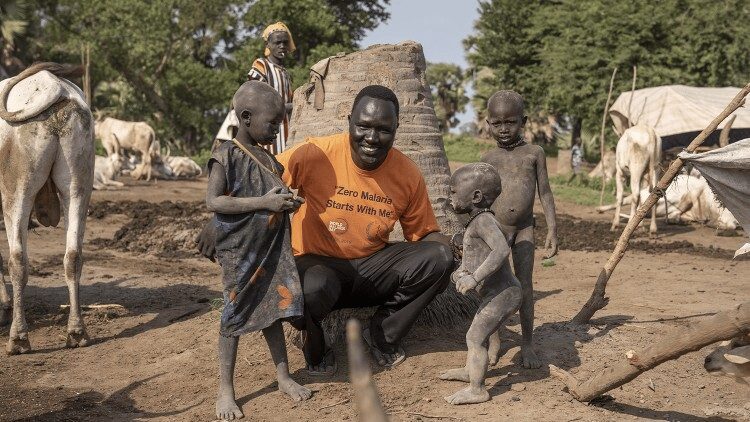
John Maker who works as a logistics expert for the Italian-funded NGO “Doctors for Africa CUAMM”, and who personally grew up in a cattle camp, explains that traditionally, cows have an enormous economic and symbolic value, for the people of South Sudan.
“In a cattle camp, sometimes life is difficult and sometimes it is easy!”
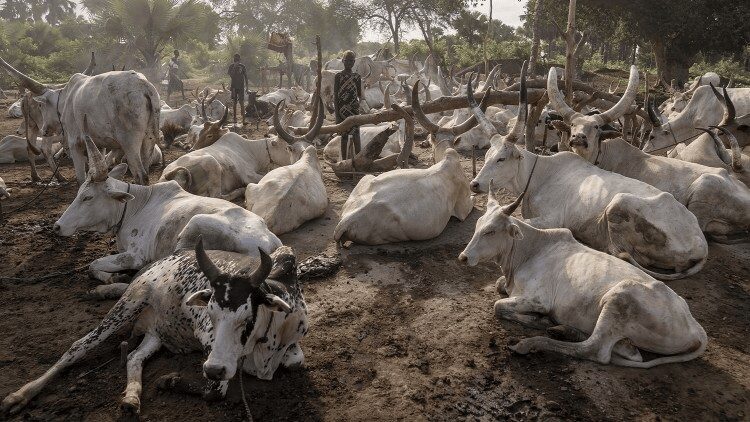
This is our life, says John Maker, who grew up in a cattle camp in Sudan’s Lakes State, explaining that cows are valuable property.
Cattle camp near Yirol, Lakes State, South Sudan
Right now, he says, “the situation is ok – because there is peace in Lakes State” – but for many years the State was ravaged by war and violence in which hundreds of people, including aid workers, were killed since conflict broke out in 2013.
But today, John continues, different families and many tribes live together in the cattle camp.
He explains that many of the inhabitants commute between the camp and the nearby town of Yirol nurturing an economy based on selling milk in order to buy other goods, such as maize flour, the basic food for the children and the community at large.
Currently, he says, “people are getting benefits from the cows.”
“And if there is hunger, the head of a family can choose to sell a cow”, he adds.
“The cows are like money in the bank”
John Maker at the cattle camp near Yirol
John himself spent the first 12 years of his life in a cattle camp before receiving an education.
His life changed when he was sent to school in the town, he says, and now that he is working for CUAMM his life “has changed for the best!”
“And I am happy to help my community”
Doctors with Africa CUAMM which was founded in 1950 is Italy’s leading organization working to protect and improve the wellbeing and health of vulnerable communities in Sub-Saharan Africa. In South Sudan, it provides displaced persons with healthcare assistance and essential supplies and supports hospitals and peripheral clinics.
The NGO, John says, has brought enormous change to Yirol because “where there is a health facility, is where the people come and it makes the town grow.”
When there were no Italian doctors, Yirol was not like this, he says, the community is grateful for their presence!
Opening of 4-7 July plenary session in Strasbourg: Changes to the agenda
President Metsola led MEPs in a minute of silence to remember the victims of the shooting in Denmark and glacier collapse in Italy, at the opening of the session.
Following a shooting in a shopping mall in Copenhagen in which three people died, President Metsola said “our thoughts are with the victims and their families and everyone in Copenhagen”.
President Metsola also expressed her deepest condolences on behalf of the Parliament to those affected by the collapse of a mountain glacier in Italy.
Changes to the agenda
The President has received requests for urgent procedure, pursuant to Rule 163, on the following legislative files:
Russia’s invasion of Ukraine: Temporary measures concerning driver documents issued by Ukraine,
Identification of the violation of European Union restrictive measures as crimes under Article 83(1) of the TFEU, and
Exceptional macro-financial assistance to Ukraine.
The vote on these requests will be held on Tuesday.
Information concerning the distribution of votes is available under the section “Priority information”.
Requests by committees to start negotiations with Council and Commission
Decisions by committees to enter into inter-institutional negotiations (Rule 72) are published on the plenary website.
If no request for a vote in Parliament on the decision to enter into negotiations is made by Tuesday 12.00 midnight, the committees may start negotiations.