
Tuesday, March 24, 2026
Home Blog Page 89

Departure of UN mission marks important milestone in Iraq’s post-conflict transition

0

In an interview with UN NewsMr. Mohamed Al Hassan, Special Representative of the Secretary-General (SRSG) and MANUI The leader said the end of the mission reflects how far Iraq has come since its founding in 2003, as the country emerged from decades of dictatorship, regional wars and terror brought on by ISIL – more widely known in the Middle East as Daesh.

“When UNAMI started, Iraq was a very different place than it is today,” he said. UN News. Just a few days after the mission began, in August 2003, The UN under attack at its headquarters in Baghdad, leaving 22 dead and more than 100 injured among its employees.

A truck bomb destroyed the United Nations headquarters in Baghdad on August 19, 2003.

Today, a new era is dawning: “Thanks to the sacrifices of Iraqis above all, and with international support, particularly that of the United Nations, Iraq believes that it is ready to move on to another phase, consolidating its sovereignty and territorial integrity. I wholeheartedly believe that Iraq is ready for this.”

UN Secretary-General António Guterres will travel to Baghdad to join Iraqis and the diplomatic community in marking the closure of the mission – an event he called a clear signal that it is “mission accomplished.”

Democratic progress

Mr Al Hassan said recent political developments in Iraq underline how dramatically the country has stabilized.

The parliamentary elections held in November, supported by UNAMI, were widely considered among the most credible to date. With a turnout of 56 percent, they also demonstrated renewed public engagement.

“These were the most fair, free and peaceful elections,” he said. “When you see such a fair and democratic election, you know it’s a belief in a new Iraq.”

A voter at a polling station in Erbil, Kurdistan Region, Iraq, on election day. (deposit)

Over the years, UNAMI has provided essential support in a wide range of areas: advising the government on political stabilization, promoting an inclusive national dialogue, and supporting community-level reconciliation in conflict-affected areas.

He also played a central role in electoral assistance, helping Iraq organize several rounds of local and national elections.

Security turnaround

Among UNAMI’s most important legacies, Mr. Al Hassan said, is the dramatic improvement in security. He noted that Iraq “would have had no way of defeating Daesh without the help of the United Nations and the international community,” but stressed that it was ultimately the courage and resilience of Iraqis that reversed the extremist group’s advances.

The country is still feeling the long-term effects of the conflict. Around a million Iraqis remain internally displaced, including more than 100,000 Yazidis still living in camps after unimaginable suffering at the hands of ISIS.

At the Rehabilitation Center in Jeddah, Iraq, the UN Secretary-General met with returnees from Al-Hol camp in northeast Syria, where many Iraqis, Syrians and third-country nationals – mainly women and children – remain stranded. (2023)

Many still cannot return home, especially to the Yazidi heartland of Sinjar, due to destroyed infrastructure and unresolved security concerns.

“I hope they will have the time, resources and support to return to the homes from which they were taken,” he said. “It’s about time.”

A gender perspective

Promoting women’s rights is an integral part of UNAMI’s mandate, and Mr. Al Hassan said Iraq must continue this work long after the Mission leaves.

“Yes, Iraq today is much better than before when it comes to women’s rights,” he said. “But violence against women has unfortunately increased.”

He stressed that sustainable progress must come from within. “We want Iraqis to sponsor and defend women’s rights – through Iraqi law, Iraqi protection and Iraqi legislation,” he said. “At the end of the day, it is about the protection of their own people,” Mr Al Hassan added.

One of the main pillars of UNAMI’s mandate has been the promotion of human rights, including support for judicial and legal reforms, the protection of vulnerable communities and the promotion of the rights of women and minorities.

These responsibilities shaped the work of the Mission until its planned closure in December 2025.

As Iraq prepares to take its seat at the UN Human Rights Councilhe said, the country “must act as such”, guaranteeing full protection to women, young people and minorities and safeguarding freedom of expression.

UN presence remains in Iraq

Even though the political mission will end, Mr. Al Hassan stressed that the broader footprint of the UN will remain unchanged.

“People confuse UNAMI and the United Nations,” he said. “All specialized agencies – UNICEF, WHO, IOM, UNDPand many others – will remain in Iraq. Even the World Bank and IMF open new offices.

With large oil reserves and a large GDP, Iraq is not looking for aid, he stressed. “Iraq does not need charity; it needs the support and friendship of the international community.”

Humanitarian partners distribute emergency aid in the village of Ibrahim Khalil in Iraq.

“Success story” in a troubled region

Calling Iraq a “success story” and a “unique country”, Al Hassan urged the international community to give Iraq the space and support it needs to succeed.

“My message to the international community and neighboring countries is to give Iraq a chance to prove that it is worthy of the freedom for which Iraqis have paid a very heavy price. »

The departure of UNAMI does not mark the end of the Iraq-UN partnership.

“I have no doubt that the Iraqis have turned the page and unveiled a magnificent new page that will put their country in a better position than before,” Mr. Al Hassan said.

Originally published at Almouwatin.com

Ukraine civilians face escalating attacks and mounting hardship, UN warns

0
Ukraine civilians face escalating attacks and mounting hardship, UN warns

“Our findings establish several worrying trends: rising civilian casualties in both frontline and urban areas, sustained attacks on energy infrastructure, and continued patterns of systematic and widespread torture and ill-treatment of Ukrainian prisoners of war and civilian detainees,” said Danielle Bell, head of the Human Rights Monitoring Mission in Ukraine (HRMMU),

Russia launched its so-called “special military operation” in Ukraine on 24 February 2022, and the report covers the period from 1 June to 30 November 2025.

Surge in civilian casualties

It reveals that civilian casualties surged in both frontline and urban areas, with July marking the highest number of civilian deaths and injuries since April 2022

A total of 1,420 civilians were killed and 6,545 injured during the reporting period – a 12 per cent increase over the same period a year earlier and a nearly 40 per cent increase over the prior six months. 

Casualties included 61 medical workers, 99 emergency service personnel, six media professionals, and 13 humanitarian workers.

Western Ukraine also experienced its deadliest attack since the invasion began, when a large-scale combined drone–missile strike killed at least 36 civilians in Ternopil on 19 November.

Deteriorating conditions on the frontlines

Frontline regions have experienced a severe deterioration in living conditions, as short-range drones, aerial bombs, and other munitions caused extensive damage to residential buildings and other vital civilian infrastructure.  Some areas were left uninhabitable, forcing residents to seek shelter elsewhere.

Additionally, many hospitals and clinics in frontline towns were destroyed or forced to close, leaving residents without access to basic healthcare.

This was compounded by disruption of water, heating, and electricity, which particularly impacted older people and persons with disabilities.

© UNDP Ukraine/Oleksandr Ratush

Damage to Ukraine’s power infrastructure has lad to led to disruptions in essential services like electricity, heating, and water supplies. (file)

Energy grid attacked

During October and November, Russia launched eight large-scale, coordinated waves of missile and drone attacks targeting Ukraine’s energy system, which caused emergency power outages and daily electricity cuts in multiple regions. 

Scheduled power cuts lasted up to 18 hours per day, with interruptions in water services and heating for many hours or days in some areas.

Record prisoner exchange

Ukraine and Russia also carried out the largest exchange of prisoners of war (POWs) since 2022, with the sides releasing more than 3,000 people.  However, HRMMU observed no improvements in the treatment of those interned.

Systematic and widespread torture and ill-treatment of POWs is one of the most shocking and pervasive features of this war,” Ms. Bell remarked.

A Ukrainian POW spoke about how he was treated in a pre-trial detention facility in Russia.

“During my whole time in the facility, we were beaten almost every day. The guards beat us almost every time we were leaving the cell for an inspection or to go to the medical unit or shower,” he told investigators.

“Several times I was beaten so badly that my body hurt for weeks.” 

Limited care, extrajudicial executions

Russia recently freed 187 Ukrainian POWs and “185 provided accounts of severe beatings, stress positions, electric shocks, suffocation, dog attacks and, in many cases, sexual violence,” Ms. Bell said.

“Interviewees also described harsh conditions of detention, limited medical care, and violence occurring during capture, transfer, admission to new facilities, and throughout internment,” she added.

Monitors also interviewed 137 POWs held by Ukraine, including 10 nationals of third countries. More than half provided accounts of torture and ill-treatment during interrogation or transfer, before arrival at official internment facilities. 

“I knew nothing, but they kept torturing me even more,” a Russian POW said about his experience during interrogation in a transit place

The report also documents a rise in extrajudicial executions of POWs.  At least four incidents involving the killing of 10 Ukrainian servicepersons after capture by Russian forces were assessed as credible. 

Four executions of Russian POWs by Ukrainian armed forces were also recorded, alongside credible allegations of three additional incidents currently under review.

Life under occupation

Meanwhile, authorities in Ukrainian territory under Russian occupation continued to impose measures in violation of international humanitarian law, with worsening restrictions on freedom of movement, expression, religion, and access to independent information. 

In March, Russia issued a decree which set a 10 September deadline for Ukrainian citizens in these areas to get a Russian passport, residence permit or other document to “legalise” their stay or risk deportation.

Patterns of arbitrary arrest, prosecutions for criticism of the “special military operation”, the use of forced confessions, and the retroactive application of criminal laws.

The report highlights the continued efforts of the Ukrainian authorities and humanitarians to support civilians, including large-scale evacuations, establishment of transit centres, and delivery of medical, psychosocial, and legal assistance.

This is taking place despite extremely challenging and increasingly dangerous conditions, including attacks on humanitarians. 

Source link

Gaza’s maternal and newborn health system ‘decimated’, UN warns

0

According to the UN human rights office (OHCHR), more than 70,000 Palestinians have been killed since October 7, 2023, when Palestinian armed groups attacked communities in southern Israel, triggering a large-scale military attack by Israel on the enclave.

The OHCHR said 94 percent of Gaza’s hospitals were damaged or destroyed, leaving pregnant women and newborns without essential care.

“The Israeli blockade also prevented the entry of items essential to civilian survival, including medical supplies and nutrients necessary for maintaining a pregnancy and safe delivery,” the Office said.

By the end of 2024, women in Gaza were three times more likely to die in childbirth and three times more likely to miscarry compared to pre-war levels.while newborn deaths have also increased, OHCHR reported.

Hospitals destroyed, medical staff killed

Israeli strikes hit maternity wards and neonatal intensive care units, while the December 2023 bombing of Gaza’s largest fertility clinic resulted in the loss of more than 4,000 embryos and 1,000 sperm and egg specimens.

Medical personnel were also targeted, OHCHR said, citing figures from the Palestinian Health Ministry. 1,722 health workers killed from September 2025.

Dr Ambereen Sleemi, a volunteer gynecologist in Gaza, told OHCHR: “As we were doing our rounds, bombs were going off in the background… Sometimes quadcopters would come in and try to shoot nurses or literally chase them through the hospital corridors. »

She said the pregnant women arrived with gunshot wounds, including to the abdomen.

Many women were simply too injured to survive. If their injuries did not take their lives, sepsis often did, because there were not enough medical supplies or antibiotics.

hunger factor

The blockade has led to severe shortages of food and infant formula. Since October 2025, 463 Palestinians died of malnutrition, including 157 childrenreported the Ministry of Health.

Jonathan Crix of the United Nations Children’s Fund (UNICEF), speaking from Gaza, told UN News that children and families enduring winter storms in makeshift tents:

“Everything was completely wet…the mattresses were wet, the children’s clothes were wet. It’s extremely difficult to live in these conditions.”

He warned of a surge in acute watery diarrhea and fears of new outbreaks.

“With the very poor hygienic conditions and very limited sanitation system available, we are extremely concerned about the spread of waterborne diseases.»

Jonathan Cricx, spokesperson for UNICEF.

Barriers in the West Bank are growing

The OHCHR was also alarmed by Israel’s construction of a new barrier and a new road in the Jordan Valley.

Ajith Sunghay, head of the office in the occupied Palestinian territory, said that this “separate Palestinian communities from each other and Palestinian farmers in Tubas from the land they own on the other side of the planned barrier.

He also warned that this would constitute “a new step towards the progressive fragmentation of the West Bank, which would ultimately lead to the consolidation of annexation”, stressing that this Palestinian refugee rights “cannot be removed or modified by unilateral coercive measures.”

Ajith Sunghay, head of the OHCHR office in the occupied Palestinian territory.

Originally published at Almouwatin.com

World News in Brief: Gaza winter storm, $7 billion UNICEF appeal, support for emergency response fund

0
World News in Brief: Gaza winter storm, $7 billion UNICEF appeal, support for emergency response fund

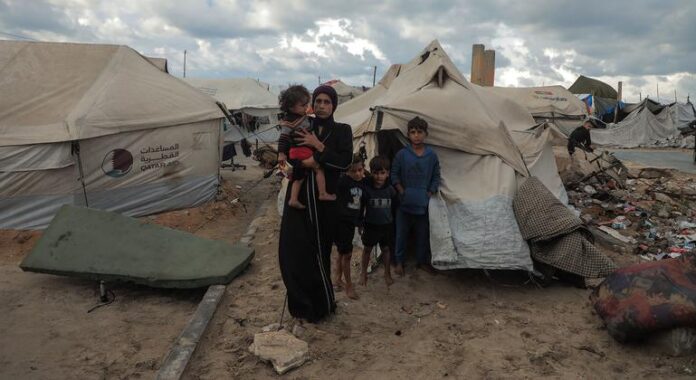
Following two years of war, most of Gaza’s roughly two million residents are living in makeshift shelters.

Humanitarians are working to deliver assistance to communities in flood-prone areas, including by scaling up distribution of winter clothes for children from 5,000 kits a day to 8,000.

UN partners leading winter preparedness efforts reported that some 200 families have left shoreline communities for a new site identified by municipal authorities in what remains of Hamad city, in eastern Khan Younis. 

Tents distributed, storm drains cleared

Meanwhile, distribution of tents, tarps, bedsheets and winter clothes to families in urgent need of assistance continues. Work is also ongoing to mitigate flooding by reinforcing high-risk areas with sandbags, emptying storm drains and clearing solid waste.   

In other developments, 65 classrooms that were previously used to shelter displaced people have now been cleaned and prepared so that learning activities can take place once again.

“However, partners warn that education materials remain blocked from entering Gaza, disrupting efforts to help children resume their studies,” OCHA said.

Additionally, 260,000 people have received regular food assistance so far this month. This aid, which consists of two food parcels and a 20-kilogram bag of flour, was delivered via 60 distribution sites across the Gaza Strip.

For the first time since August some 3,500 veterinary kits entered Gaza on Friday. The kits and animal fodder were distributed to over 100 herders and donkey owners, highlighting the importance of animals to food security.

OCHA said security incidents also continue, posing risks to the population and humanitarians.  On Tuesday, two bullets hit the ground floor of a health centre in Deir Al-Balah run by the UN agency that assists Palestine refugees, UNRWA.

Although no casualties were reported, OCHA noted that the facility is located near the “Yellow Line,” the separation zone near the border with Israel. 

UNICEF warns of deepening global crisis for children

Children caught in conflict, disasters, economic turmoil and other emergencies face unprecedented dangers as funding shortfalls force lifesaving projects to close.

The warning comes from UN Children’s Fund (UNICEF), which appealed on Wednesday for more than $7 billion to support 73 million vulnerable boys and girls in the coming year.

UNICEF noted that rising attacks on schools and hospitals, coupled with record levels of child displacement, have intensified pressure on frontline teams. 

“Across our operations, frontline teams are being forced into impossible decisions: focusing limited supplies and services on children in some places over others, decreasing the frequency of services children receive, or scaling back interventions that children depend on to survive,” said UNICEF chief Catherine Russell.

The agency also warned that more than 200 million children will need humanitarian assistance in 2026.

UNICEF urged governments, donors and private sector partners to increase investment in children, support national systems and protect aid access before the situation worsens.

$300 million pledged for UN emergency response fund

Donors have pledged just over $300 million to support a fund that serves as a first lifeline for millions affected by conflict and disasters, the UN announced on Wednesday.

The contributions to the Central Emergency Response Fund (CERF) were made during a pledging event at UN Headquarters in New York on Tuesday. 

UN Emergency Relief Coordinator Tom Fletcher thanked partners for their support, stressing that a fully funded CERF – at $1 billion each year – is not symbolic but a lifeline that is needed now. 

Drop in donations

At last year’s pledging event, donor announcements totalled some $351 million.  The drop since then reflects the increasingly dire financial outlook for humanitarians as they continue to grapple with the steepest funding cuts ever.

CERF was established 20 years ago to provide urgent humanitarian assistance during crises, with funding often arriving before other sources of support.

The fund has helped hundreds of millions of people with nearly $10 billion in more than 100 countries and territories.  

Some $435 million has been allocated this year alone to support millions of people across 30 countries and territories.

Source link

War in Sudan: aid teams say deal reached to reach stricken El Fasher

0

The essential elements for survival in the town invaded by paramilitary fighters in October were “completely erased”UN humanitarian workers warned on Friday.

“What little is known at this time about the current conditions in El Fasher is indeed beyond horrific,” said Ross Smith, director of emergency preparedness and response at the World Food Program (PAM). “We know that between 70 and 100,000 people could be stuck inside the city itself.”

Fighters from the paramilitary Rapid Support Forces, at war with the Sudanese army since April 2023, invaded El Fasher – the regional capital of North Darfur – in October, after a 500-day siege.

The ordeal was reducing people to eating peanut shells and animal food, the U.N. human rights office warned at the time, while satellite images showed bloodstains from massacres of civilians and executions based on ethnicity.

Access agreement

Guaranteeing access for humanitarian teams remains an urgent priority, humanitarian agencies insist, amid network outages that have largely cut off communication with those remaining in El Fasher.

Testimonies from survivors “describe the city as a crime scene with massacres, burned bodies, abandoned markets,” Smith said.

“We are asking and we continue to ask for unhindered access to El Fasher to urgently respond to those who remain stuck in the city,” stressed the WFP official.

“I understand from yesterday’s discussions that we have an agreement in principle with the Rapid Support Forces on a set of minimum conditions for entering the city; so we anticipate being able to do that very soon, to do some initial assessments and reconnaissance. After more than a year and a half of siege, the essential elements for survival have been completely wiped out.”

Desert town becomes ‘huge’ displaced persons camp

Mr Smith noted that those who managed to flee El Fasher risked their lives along roads “littered with mines” and unexploded ordnance.

Many have found refuge in Tawila – until recently a small desert town but now “a sprawling, massive displacement camp” for more than 650,000 people, equivalent to the size of Luxembourg. Others sought refuge in Ad Dabbah in the Northern State.

As humanitarian teams and UN partners continue to push for access to all those in need, WFP-supported convoys are “now on their way to Tawila, with enough room for 700,000 people for the next month”, Smith said.

“These are families who have endured many months of starvation and mass atrocities and are now living in overcrowded conditions with very limited support. There is not enough shelter for people, many are living in makeshift structures: structures made of grass, straw, etc. Cholera and epidemics are widespread.”

12 million people displaced

Sudan has the world’s largest displacement crisis, with more than 12 million people uprooted inside and outside the country.

Meanwhile, a worrying situation update from the United Nations refugee agency, UNHCRconfirmed on Friday that the security situation in neighboring Kordofan has further deteriorated since December 1.

After a week of heavy fighting, the RSF reportedly took control of a Sudanese armed forces base in Babanusa, West Kordofan.

In Southern Kordofan, “civilians remain trapped in besieged towns such as Kadugli and Dilling, and while women, children and the elderly find ways to escape, men and youth are often left behind due to the specific high risks they face along escape routes, such as detention by armed groups due to their suspected affiliation with parties to the conflict,” UNHCR said.

The latest data shows more than 40,000 people displaced from North Kordofan since November 18. “UNHCR, through its partners on the ground, is responding to the urgent needs of displaced people, but access remains difficult and resources are extremely low,” the statement said.

Originally published at Almouwatin.com
Circular economy: deal on new EU rules for the automotive sector | News

0
Circular economy: deal on new EU rules for the automotive sector | News

Improved vehicle design and use of recycled materials

According to the agreed draft, all new vehicles should be designed so as to allow the easy removal of as many parts and components as possible by authorised treatment facilities.

Co-legislators agreed that the plastic used in each new vehicle type should contain a minimum of 15% recycled plastic within six years of the rules’ entry into force and 25% within ten years. 20% of these targets would have to be achieved by including in the vehicle type concerned plastics recycled from end-of-life vehicles or from parts and components removed from vehicles during the use phase (“closed loop”).

They also agreed that the Commission should introduce targets for recycled steel and aluminium (two years after the entry into force of the regulation), following the completion of feasibility studies. The feasibility to introduce additional targets, for recycled critical raw materials, would also be evaluated.

Transfer of ownership of used vehicles within the EU

The deal includes a set of requirements to be met when transferring the ownership of used vehicles, without imposing unnecessary burden on citizens. The documentation required when an economic operator sells a vehicle to a natural or legal person would consist of either an assessment that the vehicle is not an ELV or a valid roadworthiness certificate. A natural person would need to provide this documentation only if the vehicle is declared a total economic loss or if the sale is concluded exclusively online.

Stricter rules for end-of-life management and better enforcement

Three years after the entry into force of the new rules, manufacturers would have extended producer responsibility, i.e., they would have to cover the cost of the collection and treatment of vehicles that have reached their end-of-life stage.

Specific requirements would apply to the mandatory removal of certain parts and components, as well as of liquids, fluids and hazardous substances, before shredding or compacting. National authorities would be required to establish inspection strategies aimed at detecting illegal activities during the collection, treatment and export of ELVs.

Strengthening export rules for used vehicles

To prevent the illegal treatment and export of ELVs and to address the issue of “missing vehicles”, negotiators agreed on an export ban for non-roadworthy vehicles (applicable five years after the entry into force of the regulation). The deal clarifies the criteria determining when a used vehicle qualifies as an ELV, as well as the necessary documentation for customs authorities.

Quote

Co-rapporteurs Jens Gieseke (EPP, DE), of the Environment committee, and Paulius Saudargas (EPP, LT), of the Internal Market committee, said: “We are taking important steps to boost the automotive sector’s transition to a circular economy. We are advancing resource security, protecting the environment, and ensuring sustainability. To avoid overburdening the industry, we secured realistic targets and ensured less red tape and fairer competition.”

Next steps

The provisional agreement needs to be approved by both Parliament and Council before the new rules can enter into force.

Background

On 13 July 2023, the Commission proposed a new regulation on circularity requirements for vehicle design and improved management of end-of-life vehicles, in line with the objectives of the European Green Deal and the circular economy action plan.

In 2023, 14.8 million motor vehicles were manufactured in the EU, while 12.4 million vehicles were registered. There are 285.6 million motor vehicles on EU roads and every year around 6.5 million vehicles come to the end of their lives.

Source link

Circular economy: deal on new EU rules for the automotive sector | News

0
Circular economy: deal on new EU rules for the automotive sector | News

Improved vehicle design and use of recycled materials

According to the agreed draft, all new vehicles should be designed so as to allow the easy removal of as many parts and components as possible by authorised treatment facilities.

Co-legislators agreed that the plastic used in each new vehicle type should contain a minimum of 15% recycled plastic within six years of the rules’ entry into force and 25% within ten years. 20% of these targets would have to be achieved by including in the vehicle type concerned plastics recycled from end-of-life vehicles or from parts and components removed from vehicles during the use phase (“closed loop”).

They also agreed that the Commission should introduce targets for recycled steel and aluminium (two years after the entry into force of the regulation), following the completion of feasibility studies. The feasibility to introduce additional targets, for recycled critical raw materials, would also be evaluated.

Transfer of ownership of used vehicles within the EU

The deal includes a set of requirements to be met when transferring the ownership of used vehicles, without imposing unnecessary burden on citizens. The documentation required when an economic operator sells a vehicle to a natural or legal person would consist of either an assessment that the vehicle is not an ELV or a valid roadworthiness certificate. A natural person would need to provide this documentation only if the vehicle is declared a total economic loss or if the sale is concluded exclusively online.

Stricter rules for end-of-life management and better enforcement

Three years after the entry into force of the new rules, manufacturers would have extended producer responsibility, i.e., they would have to cover the cost of the collection and treatment of vehicles that have reached their end-of-life stage.

Specific requirements would apply to the mandatory removal of certain parts and components, as well as of liquids, fluids and hazardous substances, before shredding or compacting. National authorities would be required to establish inspection strategies aimed at detecting illegal activities during the collection, treatment and export of ELVs.

Strengthening export rules for used vehicles

To prevent the illegal treatment and export of ELVs and to address the issue of “missing vehicles”, negotiators agreed on an export ban for non-roadworthy vehicles (applicable five years after the entry into force of the regulation). The deal clarifies the criteria determining when a used vehicle qualifies as an ELV, as well as the necessary documentation for customs authorities.

Quote

Co-rapporteurs Jens Gieseke (EPP, DE), of the Environment committee, and Paulius Saudargas (EPP, LT), of the Internal Market committee, said: “We are taking important steps to boost the automotive sector’s transition to a circular economy. We are advancing resource security, protecting the environment, and ensuring sustainability. To avoid overburdening the industry, we secured realistic targets and ensured less red tape and fairer competition.”

Next steps

The provisional agreement needs to be approved by both Parliament and Council before the new rules can enter into force.

Background

On 13 July 2023, the Commission proposed a new regulation on circularity requirements for vehicle design and improved management of end-of-life vehicles, in line with the objectives of the European Green Deal and the circular economy action plan.

In 2023, 14.8 million motor vehicles were manufactured in the EU, while 12.4 million vehicles were registered. There are 285.6 million motor vehicles on EU roads and every year around 6.5 million vehicles come to the end of their lives.

Source link

Scientists create tiny versions of gut, liver and fat tissue to find treatments for disease affecting one in five

0
Scientists create tiny versions of gut, liver and fat tissue to find treatments for disease affecting one in five


Scientists are building a tiny, connected model of the gut, liver and fat tissues to unearth new treatments for a disease affecting one in five people in the UK.

Prof Jaswinder Sethi looking into microscope in University of Southampton labs. Image credit: University of Southampton

It is part of a new multimillion-pound project co-led by an expert in metabolic disease from the University of Southampton.

The initiative is aiming to fight Metabolic Dysfunction-Associated Steatotic Liver Disease, or MASLD, a form of fatty liver disease.

Co-lead Professor Jaswinder Sethi , from Southampton, said the condition is a rapidly growing health concern driven by increasing rates of obesity which could be affecting millions across the country.

She added: “Our work here at the University is crucial to understanding how body fat contributes to the progression of this disease. I am thrilled to work on this project and to contribute my expertise in adipose tissue biology and immunometabolism.”

The new project involving Prof Sethi, known as MIMIC, is jointly led by the universities of Nottingham, Southampton, Edinburgh and Harvard.

Using organ-on-chip technology, models of the gut, liver and fat tissue will be built to simulate the function of human organs.

Prof Sethi added: “These new human models may be used to screen new drug treatments to determine how effective they are for individual patients. By creating more accurate human models, the platform will significantly help to reduce the reliance on animal testing for metabolic diseases.”

The scientific team will use adult human stem cells generated from the blood of patients with MASLD, allowing them to recreate complex metabolic diseases in the lab.

Professor of Clinical Genetics Diana Eccles , Dean of Medicine at the University of Southampton, said: “We are delighted that Prof Sethi has been awarded funding as part of a larger consortium to develop a human liver disease model system that can be used to study the metabolic disease – one of the adverse medical consequences of obesity.”

The new MIMIC project is part of a £15.9million joint investment by the UKRI Medical Research Council (MRC) , Wellcome and UKRI Innovate UK .

The funding package will launch a co-ordinated network of five interdisciplinary teams will focus on the development of in vitro disease models – including liver, featuring Southampton, alongside the brain, cancer, pain, and blood vessels.

Read more at www.ukri.org .

Source: University of Southampton


Source link

Scientists create tiny versions of gut, liver and fat tissue to find treatments for disease affecting one in five

0

Scientists are building a tiny, connected model of the gut, liver and fat tissues to unearth new treatments for a disease affecting one in five people in the UK.

Prof Jaswinder Sethi looking into microscope in University of Southampton labs. Image credit: University of Southampton

It is part of a new multimillion-pound project co-led by an expert in metabolic disease from the University of Southampton.

The initiative is aiming to fight Metabolic Dysfunction-Associated Steatotic Liver Disease, or MASLD, a form of fatty liver disease.

Co-lead Professor Jaswinder Sethi , from Southampton, said the condition is a rapidly growing health concern driven by increasing rates of obesity which could be affecting millions across the country.

She added: “Our work here at the University is crucial to understanding how body fat contributes to the progression of this disease. I am thrilled to work on this project and to contribute my expertise in adipose tissue biology and immunometabolism.”

The new project involving Prof Sethi, known as MIMIC, is jointly led by the universities of Nottingham, Southampton, Edinburgh and Harvard.

Using organ-on-chip technology, models of the gut, liver and fat tissue will be built to simulate the function of human organs.

Prof Sethi added: “These new human models may be used to screen new drug treatments to determine how effective they are for individual patients. By creating more accurate human models, the platform will significantly help to reduce the reliance on animal testing for metabolic diseases.”

The scientific team will use adult human stem cells generated from the blood of patients with MASLD, allowing them to recreate complex metabolic diseases in the lab.

Professor of Clinical Genetics Diana Eccles , Dean of Medicine at the University of Southampton, said: “We are delighted that Prof Sethi has been awarded funding as part of a larger consortium to develop a human liver disease model system that can be used to study the metabolic disease – one of the adverse medical consequences of obesity.”

The new MIMIC project is part of a £15.9million joint investment by the UKRI Medical Research Council (MRC) , Wellcome and UKRI Innovate UK .

The funding package will launch a co-ordinated network of five interdisciplinary teams will focus on the development of in vitro disease models – including liver, featuring Southampton, alongside the brain, cancer, pain, and blood vessels.

Read more at www.ukri.org .

Source: University of Southampton

Source link

Server error!

0


Server error!

The server encountered an internal error and was
unable to complete your request. Either the server is
overloaded or there was an error in a CGI script.

If you think this is a server error, please contact
the webmaster.

Error 500

europeantimes.news
Apache

Source link