On 26 August, a glacier on the border between Nepal and the Tibet autonomous region of China collapsed, triggering floods that have now claimed more than 1,250 lives and left thousands missing, according to the UN’s office in Nepal.
The UN’s local humanitarian team estimate that 84,270 Nepalis – or 19,284 households – were affected by the floods.
Devastating toll
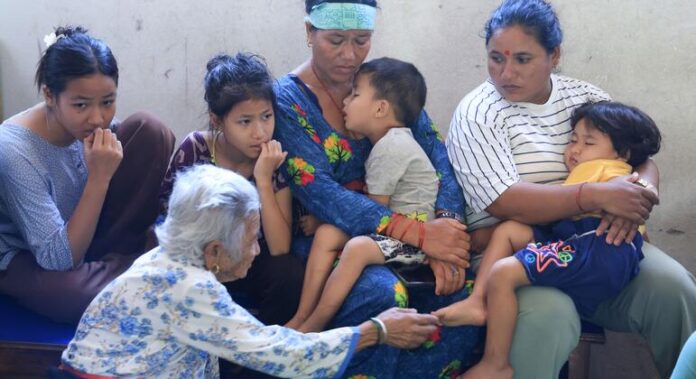
Across the Rasuwa, Nuwakot and Dhading regions of northern Nepal, critical infrastructure such as roads, schools, power grids and water systems have been damaged or destroyed, while many survivors have lost their homes and family members.
Working with Nepali emergency operations, the UN aims to help families buy essential goods, revitalise local economies, restore power, prevent disease outbreaks and help prepare residents for the upcoming winter.
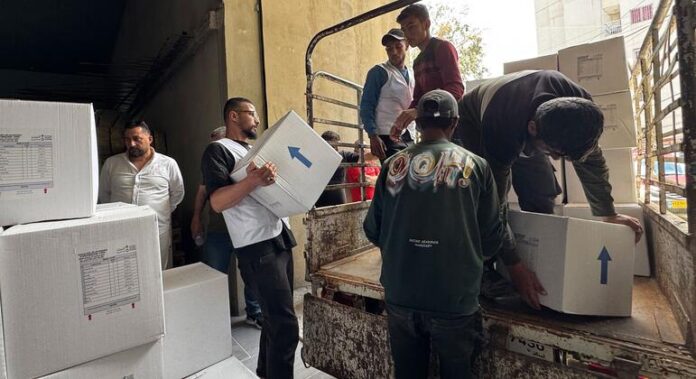
Humanitarian workers will deliver direct cash assistance, cold-weather shelter materials, portable solar power units, water purification systems and food aid, while emergency mobile clinics will provide medical treatment and nutritional support.
“Families have lost everything: their loved ones, their homes, their livelihoods, swept away in minutes,” said Lila Pieters Yahia, the UN’s Resident Coordinator in Nepal.
“Working under the Government’s leadership, this appeal will get cash, shelter, healthcare, clean water and protection to the hardest-to-reach communities before winter closes in.”
In a country where agriculture makes up 24 per cent of gross domestic product, half of which comes from livestock, according to the World Bank, aid teams will even help locals keep surviving animals alive and safe.
UNICEF aid influx
But the UN Children’s Fund (UNICEF) isn’t waiting, and neither are other UN agencies, as they support rescuers still racing to find survivors.
On Friday, a flight supported by UNICEF and the European Union carrying 84 metric tonnes of humanitarian supplies landed in the capital Kathmandu.
The children’s agency will distribute diarrhoea treatment kits, water tanks, hygiene kits, water treatment supplies, winter clothing and learning materials – which it says will support hundreds of thousands of people.
“This shipment will help us deliver urgently needed support and reach children and families with services that protect their health, wellbeing and future,” said Alice Akunga, UNICEF’s representative in Nepal.
Humanitarian partners have already mobilised and transported relief items to some of the hardest-hit areas, focusing largely on disease prevention and essential infrastructure repairs.
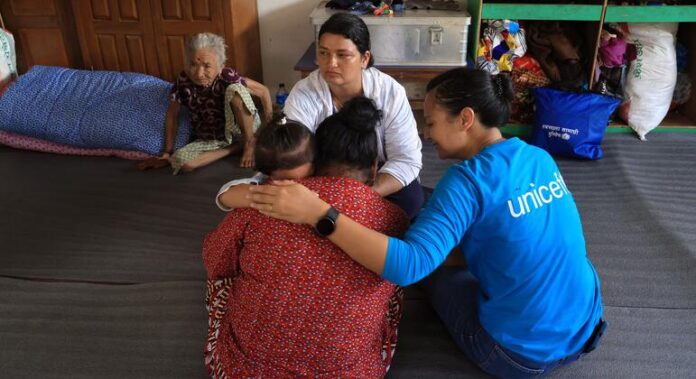
In the days since the flood, UNICEF has allocated emergency supplies and helped establish child-friendly spaces with recreational materials for children most affected by the disaster.
“Continued support is essential to help children recover, stay healthy, return to learning, and rebuild their lives in the weeks and months ahead,” Ms. Akunga said. “As the scale of the disaster is enormous, the needs remain significant and every day matters.”
Four German plants face years of uncertainty as Europe’s largest carmaker pursues deeper cost reductions Volkswagen has approved a sweeping restructuring p…
Four German plants face years of uncertainty as Europe’s largest carmaker pursues deeper cost reductions
Volkswagen has approved a sweeping restructuring programme that envisages approximately 50,000 fewer positions worldwide, a sharply reduced model range and an uncertain future for four German factories. The agreement avoids an immediate confrontation between management, shareholders and worker representatives, but leaves employees and industrial regions waiting for concrete guarantees.
The Volkswagen Group’s supervisory board unanimously approved the “Future Plan 2030” on Thursday evening. The company described the workforce reduction, which includes management roles, as an additional adjustment beyond programmes already under way.
The decision does not mean that 50,000 employees have received dismissal notices. Volkswagen has not published a detailed timetable, geographical breakdown or complete account of how the positions would disappear. Its approved restructuring framework says negotiations with employee representatives will begin where agreements are required.
Four plants without secured production
The most immediate uncertainty surrounds Emden, Zwickau, Hanover and Audi’s Neckarsulm plant. Volkswagen says it cannot currently secure competitive future production allocations for these sites as existing programmes end at different points between 2031 and 2034.
Alternative uses will be examined, while a broader plan for the group’s European production network is expected by the end of June 2027. Volkswagen estimates that its European factories presently have capacity to build more than 500,000 vehicles a year beyond expected demand.
That wording matters. The plants are exposed, but their closure has not been formally decided. IG Metall and Volkswagen’s works council said that no factory had been abandoned and that management remained responsible for developing viable proposals for every location. According to German public-service reporting on the agreement, a proposed separation of the core Volkswagen passenger-car business was also taken off the table.
The distinction offers employees some protection against premature conclusions, but it does not remove the underlying risk. A factory without a successor model or alternative industrial purpose can enter a prolonged period of falling investment, reduced recruitment and uncertainty for apprentices, suppliers and local authorities.
Fewer models and higher profit targets
Volkswagen plans to halve its model portfolio by 2035 and reduce the complexity of its vehicle offering by approximately 75%. It will also review its holdings and business activities, with the aim of reducing the investment portfolio by about one-third.
The group is planning around annual sales of nine million vehicles and wants to reach a 9% operating margin by 2030, equivalent to an operating result of roughly €31 billion. It has provisionally set €135 billion aside for capital expenditure and research and development between 2027 and 2031.
Management argues that concentrating investment on fewer vehicles and technologies will improve economies of scale. The pressure comes from weaker demand, changing expectations in China, costly software development and increasingly capable electric-vehicle competitors.
Yet financial targets alone do not establish whether the transformation will succeed. Volkswagen will still need competitive vehicles, functioning software, affordable batteries and sufficient demand. Closing capacity may reduce costs, but it cannot substitute for products that consumers choose to buy.
A European industrial question
Volkswagen’s decisions carry significance beyond Germany. The company sits at the centre of an extensive European network of component makers, engineering businesses, logistics companies and dealerships. Changes in Wolfsburg can therefore spread through employment and investment across several countries.
The restructuring also places renewed attention on the EU’s automotive industry action plan, which promised support for battery production, innovation and workers affected by industrial change. Training programmes and adjustment funds can help, but they are most effective when introduced before redundancies and designed around credible replacement employment.
Worker representation helped prevent an abrupt institutional rupture at Volkswagen. It has not resolved the harder question of how the burdens and opportunities of the transition will be distributed.
The company now has until June 2027 to give its European production strategy greater substance. For the communities attached to the four exposed plants, the relevant measure will not be the language of consensus in the supervisory board. It will be whether investment, new products and negotiated safeguards arrive before uncertainty becomes industrial decline.
Court order links an Arctic vessel to Naftogaz’s $4.22bn Crimea award as Moscow promises an appeal Norwegian authorities have placed a Russian state-owned…
Court order links an Arctic vessel to Naftogaz’s $4.22bn Crimea award as Moscow promises an appeal
Norwegian authorities have placed a Russian state-owned expedition vessel under judicial arrest in Svalbard, opening an unusually visible phase in Ukraine’s attempt to enforce compensation awarded for energy assets seized in Crimea. The ship must remain in Barentsburg while Russia challenges the decision, leaving a Norwegian court to navigate sovereign immunity, commercial property and the welfare of those aboard.
The Professor Molchanov was arrested on Wednesday following an order issued by the Nord-Troms and Senja District Court on 31 August. The vessel was docked at Barentsburg, the Russian mining settlement on Norway’s Arctic archipelago, when the Governor of Svalbard acted as enforcement officer.
According to the Governor of Svalbard’s official notice, the ship must remain at a location determined by the authorities until either the governor or the district court decides otherwise. Norwegian officials are working with the Russian state company Trust Arktikugol to look after the crew and passengers.
An arrest, not a transfer of ownership
The legal terminology matters. The court has authorised the arrest of the vessel as a measure securing enforcement of a debt. The decision does not mean that ownership has already passed to Ukraine, that the ship has been sold, or that its value has been deducted from the award.
Any later attempt to dispose of the vessel would require further proceedings and would be subject to Russia’s promised appeal. Questions concerning state ownership, commercial use and sovereign immunity are likely to receive close scrutiny.
That distinction also separates the case from the freezing of property under European sanctions. A sanctions freeze generally prevents an owner from moving or dealing with an asset without automatically transferring it. The European Times has previously explained why freezing, confiscation and judicial enforcement are different legal processes.
The Svalbard action instead arises from an arbitration award obtained by Naftogaz and other companies in its group. The dispute concerns oil and gas fields, pipelines and related property taken after Russia occupied and annexed Crimea in 2014, an annexation that is not recognised by Norway, the European Union or the wider international community.
From arbitration to enforcement
Naftogaz began arbitration proceedings in 2016 under the investment treaty then in force between Ukraine and Russia. A tribunal seated in the Netherlands found Russia responsible for expropriating the companies’ investments and issued its damages award in April 2023.
The Ukrainian group says the outstanding principal covered by the Norwegian enforcement action is approximately $4.22 billion, in addition to interest and legal costs. The award had already been recognised as enforceable in Norway before the vessel was arrested.
In its statement on the Norwegian proceedings, Naftogaz described the ship as property of the Russian Federation used for commercial expedition cruises. Commercial use is potentially significant because state property employed for business purposes may be treated differently from diplomatic or strictly sovereign assets, although the precise legal arguments in the Norwegian case have not been made fully public.
The arrest therefore represents progress for Naftogaz, but not recovery of the full award. Even if the order survives an appeal, the value of one expedition vessel would cover only a small part of the amount claimed.
International awards do not enforce themselves. When a state refuses payment, the successful party must ask courts in countries where that state holds property to recognise the award and identify assets that can lawfully be attached. Each jurisdiction applies its own procedural rules and principles of state immunity, making enforcement slow, fragmented and open to repeated challenge.
Moscow raises the political temperature
Russia has rejected the action and demanded the ship’s release. President Vladimir Putin characterised the arrest as state-backed terrorism, while the Russian Foreign Ministry described it as piracy and said there would be a response. Russia’s ambassador to Norway said the court ruling would be appealed.
Those claims should be assessed against the nature of the action. The vessel was not intercepted on the high seas by an unauthorised force. It was immobilised in a Norwegian port by the competent local authority acting under an order from a Norwegian court. Russia nevertheless remains entitled to challenge the court’s jurisdiction, the award’s enforceability and the attachment of the particular vessel through the available legal process.
The location gives the dispute additional sensitivity. Svalbard is under Norwegian sovereignty but governed by a treaty framework that grants nationals and companies from participating states rights of access and economic activity. Barentsburg has long been an important centre of Russia’s presence on the archipelago.
A single civil-enforcement measure does not alter that framework. Yet retaliation against Norwegian property, shipping or Arctic cooperation could transform a contained court dispute into a broader diplomatic confrontation. Restraint is especially important in a region where search and rescue, environmental protection and maritime safety still require practical cooperation despite the collapse in relations caused by Russia’s war against Ukraine.
Justice still depends on due process
For Ukraine, the case demonstrates that compensation awards can acquire practical weight when national courts are prepared to enforce them. It may also encourage other Ukrainian companies whose property was taken in occupied territory to intensify efforts to trace Russian commercial state assets abroad.
That prospect makes procedural discipline essential. Enforcement will be more durable when courts publish clear reasoning, allow meaningful appeals and distinguish attachable commercial property from assets protected by sovereign immunity. Passenger and crew welfare must remain separate from the financial dispute; those aboard should not bear hardship because two states and an energy company are contesting ownership and compensation.
The Professor Molchanov remains at the quay for now. Its arrest does not settle the immense financial consequences of Russia’s seizure of Ukrainian property, but it converts one international award from a document into a tangible constraint. Whether that constraint survives appeal will determine if the Svalbard action becomes an important enforcement precedent or only a dramatic pause in a much longer legal campaign.
Meanwhile, in Gaza, humanitarian teams collected hundreds of pallets of aid – including infant food and school bags – as the World Health Organization (WHO) revealed that more than 13,000 patients have now been evacuated from the enclave for urgent medical care.
Rising violence in Lebanon
UN peacekeepers with the UNIFIL mission say that while hostilities eased after the signing of a Framework Agreement in late June, the calm has proven fragile.
Violence rose sharply in August, with the mission recording 56 projectiles from the Israeli military on 1 September alone, a figure that climbed to 84 the following day.
No projectile launches by Hezbollah militants – who have continued to clash with Israeli forces in southern Lebanon despite a US-brokered ceasefire – have been detected since 21 June, Mr. Dujarric said.
Peacekeepers continue to record daily Israeli violations of Lebanese airspace, along with airstrikes, ground activity and naval operations.
Of particular concern, Mr. Dujarric said, is the “continued consolidation and fortification of Israeli positions” north of the Blue Line, including new infrastructure and engineering works.
Peacekeepers have also observed individuals who appear to be Israeli civilian personnel carrying out demolition work in support of military operations.
“There is extensive Israeli military presence north of the Blue Line, which constitutes a violation of Security Councilresolution 1701 and of Lebanon’s sovereignty and territorial integrity,” Mr. Dujarric said.
He reiterated the UN’s call “for the Israel Defense Forces to withdraw from all positions north of the Blue Line, and that will be in full accordance and respect with resolution 1701.”
Despite the tensions, UNIFIL continues its humanitarian coordination work, facilitating 20 humanitarian missions between Monday and Wednesday, 16 of them in the Mission’s western sector.
Gaza aid push continues
In Gaza, UN teams on Wednesday collected hundreds of pallets of supplies from the Kerem Shalom-Karem Abu Salem crossing, Mr. Dujarric said, including adult diapers, school bags and food for infants and young children.
Separately, WHO reported that it and its partners have supported the medical evacuation of more than 13,000 patients from Gaza since October 2023, including over 6,000 children.
WHO stressed, however, that thousands more still urgently need specialized treatment unavailable in the enclave, and called for the reopening of the West Bank referral pathway, including to hospitals in East Jerusalem.
The UN’s Special Coordinator and humanitarian chief in the Occupied Palestinian Territory, Dr. Ramiz Alakbarov, concluded a three-day visit to Gaza on Thursday, including a visit to the Emirati Field Hospital in Rafah.
Another bitter winter ahead
Throughout his visit, Mr. Alakbarov stressed that preparing for the rainy season and winter remains a top priority, requiring urgent donor support and the lifting of Israeli restrictions on equipment such as engine oil needed to run facilities including sewage treatment plants.
Ambulances and medical equipment remain among the items currently restricted from entering Gaza, Mr. Dujarric said, adding that these “must be urgently allowed in.”
€250 million EIB Global financing agreement with Banco do Brasil unlocks €500million in microcredit for women-led and women-owned microbusinesses in Brazil’s Legal Amazon region.
Financing is expected to provide access to finance to around 50,000women entrepreneurs, strengthening women’s economic empowerment and sustainable development in the Amazon.
The operation reinforces the EU-Brazil Green Deal, the EU’s strategic partnership with Brazil and Global Gateway priorities on sustainable development in the Amazon, gender equality and financial inclusion.
The European Investment Bank Group’s development arm, EIB Global, has signed a €250 million financing agreement with Banco do Brasil to support women entrepreneurs in the Amazon region. The EIB financing will help Banco do Brasil unlock a total of €500 million in microcredit for women-led and women-owned microbusinesses, supporting inclusive private sector development in one of Brazil’s most strategically important regions.
The project will support private sector development in the Brazilian Legal Amazon through microcredit for microenterprises owned or managed by women. The operation is expected to reach around 50,000women entrepreneurs, helping to strengthen women’s economic empowerment, promote job creation and broaden financial inclusion in underserved areas. In doing so, the partnership will foster more inclusive and sustainable local economic development. The financing will also help pass on the benefits of EU-supported long-term funding to final beneficiaries, including through improved access to finance and longer maturities.
“This operation is a powerful example of how the EU’s Global Gateway can deliver real impact on the ground,” said EIB Vice-President Ioannis Tsakiris. “Together with Banco do Brasil, we are helping unlock €500 million in microcredit for women-led and women-owned microbusinesses in the Amazon, with EIB Global contributing €250 million. By supporting around 50,000 women entrepreneurs, we are fostering inclusive economic growth and reinforcing the European Union’s strategic partnership with Brazil.”
“This partnership with the EIB reinforces Banco do Brasil’s position as a leading catalyst for sustainable development and international cooperation. More than a financing agreement, it creates a platform to mobilize capital toward projects that drive climate action, enhance competitiveness, foster innovation, and generate measurable environmental and social benefits. By combining global expertise with local execution capacity, we are helping accelerate Brazil’s sustainable transition while demonstrating that economic development, social inclusion, and environmental stewardship are mutually reinforcing objectives. Banco do Brasil remains committed to connecting financial solutions with real-world impact, generating value for clients, investors, communities, and future generations,” said Jose Ricardo Sasseron, Vice-President Government and Corporate Sustainability of Banco do Brasil.
The transaction reinforces the EU-Brazil Green Deal, the EU’s strategic partnership with Brazil and the Global Gateway Investment Agenda in the country. It shows how the EU’s Global Gateway strategy can be translated into concrete, high-impact operations on the ground, channelling long-term finance to projects that support women’s economic empowerment, financial inclusion and sustainable economic opportunities. The operation also contributes to the Global Gateway flagship priorities in Brazil, including Amazonia+, the Amazon Basin Team Europe Initiative and the promotion of sustainable livelihoods in the Amazon region.
Background information
EIB Group
The European Investment Bank (EIB) Group is the financing arm of the European Union, owned by the 27 Member States, and one of the largest multilateral development banks in the world. In 2025, the EIB Group signed €100billioninnew financing and advisory services for over 870high-impact projectsundereight core prioritiesthat support EUpolicy objectives: climate action and the environment, digitalisation and technological innovation, security and defence, territorial cohesion, agriculture and the bioeconomy, social infrastructure, strong global partnerships and the savings and investmentsunion. Beyond long-term loans for large infrastructure, the EIB Group crowdsin private investment for high-risk innovative projects and businesses, with a growing role in Europe’s markets for venture debt, venture capital, guarantees and securitisations.
The European Investment Fund (EIF) is the subsidiary of the EIBGroupspecialised in providing guarantees,securitisationand equity to improve access to finance for small and medium-sizedbusinesses and startups across Europe. Acting as an anchor investor, through its extensive network of partnering banks and investment funds, the EIF mobilises private investment and nurtures the ecosystem of venture capital funds to support innovative European entrepreneurs.
With the support of all 27 EU governments, the EIF has joined forces with institutional investors in a pan-European alliance to mobilise up to €80 billion for investment into innovative companies scaling up to become global leaders. The joint effort will expand the size and scope of the highly successful European Tech Champions Initiative, which has helped create 15 European mega-funds and scale 45 companies, including 12 unicorns, since being established three years ago.
Photos of the EIB Group’srepresentativesand headquarters, logo files and video B-roll for media use are availablehere.
EIB Global
EIB Globalis the EIB Group’s specialised arm devoted to increasing the impact of internationalwin-winpartnerships and development finance, and a key partner ofTeam EuropeandtheGlobal Gatewaystrategy. EIB Global brings the EIB Group closer to people,companiesand institutions throughitsoffices across the world.
EIB Global in Brazil
Brazil is the biggest beneficiary of EIB financing in Latin America. Since the EIB started working in Brazil in 1997, it has provided over €6.44billion to finance investments in the country which represents around 35% of the EIB’s portfolio in Latin America.EIB financing in Brazil supports the country’s efforts towards the Sustainable Development Goals and climate neutrality, with a focus on climate action, renewable energy, sustainable urban development, gender inclusion, and local private sector development.
About Banco do Brasil
Banco do Brasil is one of the largest financial institutions in Latin America and a global leader in corporate sustainability, with ESG principles embedded throughout its business strategy. The institution delivers financial solutions to diverse stakeholders, fostering the transition to a more sustainable, inclusive, and low-carbon economy through support for regional development, environmental conservation, sustainable agriculture, renewable energy, and financial innovation. Recognized by prominent international sustainability indices and rankings, Banco do Brasil is dedicated to generating shared value for society and advancing sustainable development in Brazil.
Water systems have been damaged across affected districts, while toilets and other sanitation facilities have been damaged or destroyed, raising the risk of waterborne and infectious diseases.
“Every parent in these districts is now making the same calculation several times a day,” said Alice Akunga, UNICEF Representative in Nepal. “Where can I get water, and is it safe to give to my child?”
Crowded living conditions
Affected families are now living with host communities or in holding centres— crowded spaces that make it difficult to maintain safe hygiene practices.
This week, the World Health Organization (WHO) highlighted how flooding, displacement, overcrowding and stagnant water can increase the risk of communicable diseases such as dengue and scrub typhus.
“The risk of waterborne disease increases rapidly in these conditions, but it is preventable,” Ms. Akunga insisted.
Supplies reach communities
UNICEF has dispatched water, sanitation and hygiene supplies for around 19,000 people in Rasuwa and Nuwakot, among the hardest hit areas.
These items include more than 3,800 hygiene kits, 3,300 collapsible 10-litre jerrycans, 3,500 buckets, 3,500 one-litre mugs, 4,000 bottles of water treatment solution and more than 1,000 tarpaulin sheets.
Staff are also working with government counterparts and partners on disease surveillance, hygiene promotion and outbreak prevention.
Critical infrastructure destroyed
The flooding was triggered by a glacier collapse on the Nepal-China border on 27 August. The death toll has surpassed 1,100, according to international media reports.
Infrastructure such as roads, bridges, telecommunications networks as well as water systems were damaged, complicating access to communities and delivery of aid.
UNICEF estimates that at least 19 schools have been damaged, including eight that were completely and eight partially destroyed, while more than 10,000 school-age children need immediate psychosocial support and access to safe learning spaces.
Young lives upended
“Before all this, I used to spend most of my time in school and hang out with friends when I was free,” Swostik Paudel, a 14-year-old from Nuwakot, recently told the agency. “Mostly we would play football.”
Swostik is now living in a shelter with his parents and sister where he tries to remain connected to his former life.
“Some children have brought a football here,” he said. “Even though it’s punctured, we’ve been passing it around. Some friends have also been playing matches.”
Building back better
As access improves, UNICEF will scale up emergency water supply, household water treatment, water-quality monitoring, temporary sanitation and handwashing facilities, and essential hygiene and menstrual hygiene supplies in communities and holding centres.
Ms. Akunga said restoring safe water and sanitation “is not a one-week job”. She stressed that damaged water systems, pipelines, pumps, toilets and other sanitation infrastructure need to be repaired and rebuilt to withstand future floods.
“We need to make communities safer and more resilient,” she said. “Otherwise, we will be having the same conversation again after the next disaster, and it will be children paying the price yet again.”
Sánchez rejects proof of Moroccan state direction as police findings raise questions about border warnings and accountability Spanish Prime Minister Pedro…
Sánchez rejects proof of Moroccan state direction as police findings raise questions about border warnings and accountability
Spanish Prime Minister Pedro Sánchez has told parliament there is no solid evidence that Morocco designed or ordered July’s mass crossing into Ceuta, despite a police report describing apparent coordination and active guidance by Moroccan security personnel. The dispute has exposed serious gaps in Spain’s warning system while threatening to overshadow the 141 people reported dead and the continuing protection needs of migrants in the city.
Sánchez appeared before the Congress of Deputies on Thursday, 3 September, to defend his government’s response to the events of 30 and 31 July, when approximately 72,000 people entered the Spanish enclave from Morocco.
He said Spain would respond with “total firmness” if reliable evidence established Moroccan state responsibility. For now, however, he maintained that neither the government nor any international institution had supplied proof that Rabat planned or executed the operation.
The prime minister also disclosed that Spain summoned Morocco’s ambassador on 21 August after two Moroccan ministers made statements concerning sovereignty over Ceuta and Melilla. Sánchez called the remarks unacceptable and insisted that the two autonomous cities would remain Spanish.
According to the broadcaster’s detailed account, investigators concluded that the movement was neither spontaneous nor incidental. They identified a rapid expansion of messages encouraging people to approach the border, including a reported 3,362 per cent increase in online activity immediately before the crossing.
The report also describes uniformed Moroccan personnel directing some people towards routes through the water and towards the beach. Investigators identified other, non-uniformed individuals who appeared to monitor crowds, issue instructions and guide movement towards the El Tarajal breakwater.
Those observations are significant, but they do not by themselves establish that Morocco’s government ordered the operation. Images of personnel facilitating or failing to prevent crossings may demonstrate conduct on the ground without identifying who authorised it or whether it formed part of an official state decision.
This distinction explains how police investigators could describe a highly organised process involving people linked to Moroccan security forces while Spain’s national police leadership and government continue to say that the report does not formally attribute the planning or execution to the Moroccan state.
Determining responsibility will require the judicial inquiry to examine command structures, communications, orders and the identities of the people seen directing the crowds. Political certainty should not run ahead of that evidence, but neither should diplomatic caution be used to prevent it from being gathered.
Spain’s warning chain faces scrutiny
The report has also created an internal accountability problem for Madrid. Police analysts reportedly issued an alert on 29 July referring to the risk of a mass entry. Sánchez told parliament that the information reaching political authorities amounted to routine warnings and did not anticipate either the probability or the scale of what followed.
The Interior Ministry has said that investigators were instructed by the judge not to share details of their work with superiors while the report was being prepared. That may explain why ministers did not see the full assessment earlier. It does not resolve whether the initial warning was evaluated properly, passed to the correct command level or matched by adequate contingency planning.
The government has promised to make the relevant reports public when judicial restrictions permit. That disclosure will be essential for separating three different questions: what frontline analysts detected, what senior officials received, and what decisions were taken in response.
Spain and Morocco have developed extensive cooperation on migration and border control. Sánchez said that relationship must now operate differently, with stronger coordination and additional guarantees. Rebuilding confidence will depend on whether both governments provide verifiable information rather than competing political narratives.
The people behind the diplomatic crisis
The scale of the institutional dispute must not erase the human consequences. Sánchez told parliament that 141 people died at sea and that Spanish officers allowed many arrivals to pass the breakwater rather than attempting a physical containment operation that could have caused an even greater loss of life.
Thousands of people subsequently remained in a city whose normal reception centre had only 500 to 600 places available when the emergency began. The Spanish government’s €309 million emergency package for Ceuta allocates €118 million to reception, €90 million to security, €21 million to essential services and €80 million to economic support.
Authorities have created more than 3,400 additional reception places and are preparing approximately 3,000 more. They must still identify arrivals, consider protection claims individually and provide appropriate care to children separated from their families.
As The European Times previously reported on Ceuta’s child-protection emergency, border control cannot replace guardianship, family tracing, legal assistance and child-sensitive procedures. Rapid returns conducted without reliable identification could expose children, trafficking survivors and people with valid asylum claims to further harm.
Transparency is now the minimum
The police findings justify an independent and careful investigation. They do not justify treating every allegation as proven, nor reducing tens of thousands of migrants to instruments in a dispute between Madrid and Rabat.
Spain must account for the warning failures, the conditions in which 141 people reportedly died and the treatment of those who remain in Ceuta. Morocco should explain the conduct of the personnel recorded near the border and cooperate with efforts to identify any officials involved.
Publishing the available evidence, preserving the independence of the judicial inquiry and maintaining individual protection safeguards would offer a more credible response than either premature accusation or diplomatic denial. The immediate border emergency may have passed, but the crisis of accountability has only begun.
KINGNEWSWIRE // PRESS RELEASE // BOLOGNA, Italy, 3 September 2026 — A travelling yellow tent operated by the Scientology Volunteer Ministers has opened in Bologna’s Piazza Lucio Dalla, bringing to the city an exhibition focused on practical methods for helping people confront difficulties in everyday life, alongside photographs and accounts documenting volunteer work carried out during emergencies in Italy and internationally.
The initiative was inaugurated on Sunday, 30 August, before around 100 people and is scheduled to remain in the square through 8 September. Inside the large yellow pavilion, information panels and videos present approaches to subjects including communication, interpersonal relationships, study, work, marriage, raising children and coping with environments that may be experienced as unsafe or difficult.
The opening took on a particularly local character through the participation of three guests who had encountered the Volunteer Ministers not through an exhibition, but during emergencies affecting their own communities: Luca Vecchiettini, Mayor of Pianoro; Fabrizio Lazzarini, a restaurateur from Pianoro; and Andrea Ferrarini, former president of the Radio Club Contea Nord civil protection group in Bondeno.
Their accounts connected the educational material displayed inside the tent with the less visible work that often follows floods, earthquakes and other emergencies: clearing mud, supporting relief operations, helping residents restore damaged premises and assisting communities as they begin returning to everyday life.
Pianoro: a relationship born after the 2024 floods
Mayor Vecchiettini recalled the relationship established between the Municipality of Pianoro and the Volunteer Ministers following the severe flooding that struck the Bologna metropolitan area in October 2024.
The emergency caused extensive disruption across Bologna and neighbouring municipalities, including Pianoro and the Val di Zena, areas that experienced repeated extreme weather events during 2023 and 2024. The Emilia-Romagna regional authorities documented the scale of the recovery work undertaken in Pianoro and surrounding localities.
Vecchiettini, whose responsibilities include civil protection and community affairs, described at the Bologna ceremony the friendship that developed between the local administration and the volunteers during the recovery effort. His institutional responsibilities are listed by the Municipality of Pianoro.
Fabrizio Lazzarini offered a more personal recollection. His restaurant was among the premises overwhelmed by mud following the October flooding. A group of Scientology volunteers assisted with the clean-up, and the restaurant subsequently became an informal base for people involved in relief activities arriving in Pianoro from different areas.
During the inauguration, Lazzarini recalled the difficult days following the flooding and expressed his appreciation for the assistance received by his business and the surrounding community.
The third account reached further back into Emilia-Romagna’s recent history. Andrea Ferrarini spoke about the aftermath of the 2012 earthquake and the assistance provided in communities including Bondeno and Medolla.
The earthquake triggered extensive civil-protection and volunteer mobilisation across the region. The Italian Scientology-associated civil-protection organisation PROCIVICOS records formal acknowledgements received for volunteer assistance provided after emergencies, including recognition connected with the response in Medolla following the 2012 earthquake.
The three testimonies formed the central human element of the Bologna opening, illustrating how relationships established during emergencies can continue long after the immediate crisis has passed.
From emergency response to everyday difficulties
Following the ribbon-cutting, visitors entered the tent to see a photographic exhibition of Volunteer Ministers activities and material explaining the programme’s broader purpose.
Although their yellow shirts have become particularly associated with emergency response, the Volunteer Ministers programme was not conceived solely for disaster situations.
The programme was established in 1976 by L. Ron Hubbard, founder of Scientology, as a religious social-service initiative intended to provide practical assistance to people confronting difficulties in their lives.
The programme is supported internationally by the Church of Scientology, and its training materials address such subjects as communication, study, relationships, marriage, parenting, workplace difficulties, stress and the achievement of personal goals.
Over the decades, an international Volunteer Ministers disaster-response network has developed alongside these community activities, with volunteers participating in relief operations following earthquakes, floods, fires and other emergencies.
That combination — preparedness for exceptional circumstances and attention to ordinary human problems — is central to the Bologna exhibition.
Rather than concentrating exclusively on images of disaster response, the displays also present methods intended to help individuals communicate more effectively, resolve difficulties and approach challenging situations in a more organised and constructive manner.
The approach reflects the broader purpose of the Scientology Volunteer Ministers programme: providing practical assistance in circumstances ranging from individual personal difficulties to large-scale emergencies.
Ivan Arjona, representative of the Church of Scientology to the European Union, OSCE, Council of Europe and United Nations, said:
“European communities depend not only on public institutions, but also on citizens who are prepared to help when another person or an entire neighbourhood faces difficulty. What has been remembered in Bologna — from the floods in Pianoro to the earthquake response in Emilia-Romagna — is a practical expression of solidarity. Helping people recover their ability to communicate, organise and move forward is closely connected with human dignity, civic responsibility and the values on which peaceful and resilient communities are built.”
The Bologna event also illustrates how a programme developed within a religious community can interact with municipal authorities, civil-protection organisations, businesses and individual citizens around practical forms of community assistance.
For the people who spoke at the inauguration, that relationship was based less on theory than on direct encounters during moments when additional help was needed.
Their presence in Piazza Lucio Dalla gave the exhibition a distinctly regional dimension, connecting the international history of the Volunteer Ministers programme with events experienced directly by communities in Emilia-Romagna.
The inauguration and the presence of the travelling tent in Bologna were also reported by BolognaToday.
A travelling programme across Italy
The Bologna installation forms part of a travelling initiative that has brought similar Volunteer Ministers exhibitions to cities across Italy.
Inside the tent, visitors can view photographic panels documenting humanitarian and community activities while learning about practical methods developed within Scientology for addressing everyday interpersonal and organisational problems.
The exhibition therefore presents two dimensions of the same programme: large-scale assistance during emergencies and practical support intended for everyday circumstances.
This distinction is significant because much of the Volunteer Ministers programme takes place outside disaster zones. Its methods were developed to address situations involving communication difficulties, conflict, study, work, relationships and other aspects of daily life.
In emergency settings, those same principles are applied in environments where organisation, cooperation and practical assistance can become especially important.
The Bologna tent remains in Piazza Lucio Dalla through 8 September, with the exhibition open daily from 10:00 to 23:00.
The Church of Scientology was founded on the religious philosophy developed by author and humanitarian L. Ron Hubbard. The Volunteer Ministers programme was created by Mr. Hubbard in 1976 as a practical social-service initiative through which Scientologists and other trained volunteers can assist individuals and communities.
Volunteer Ministers have participated in humanitarian and disaster-response activities in many countries, while also providing educational materials addressing communication, relationships, study, work and other challenges encountered in daily life.
Churches of Scientology, missions, groups and members are present throughout the European continent. The Church’s recognition as a charitable and bona fide religion continues to grow across European jurisdictions, alongside activities undertaken by Scientologists in the fields of education, prevention, human rights, humanitarian assistance and community betterment.