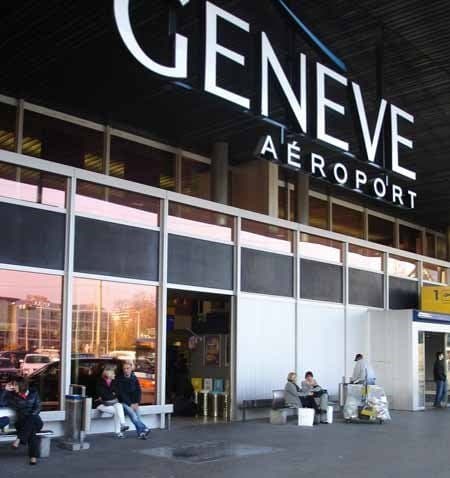
Flights to and from Geneva Airport were suspended yesterday after a large fire broke out just behind the fence. Some incoming flights were diverted to Lyon and Basel. Initially, black smoke could be seen coming from a construction site intended for a future asylum center.
“Due to a fire at the end of the runway, landings and takeoffs have been suspended since 5:35 pm (15:35 GMT),” the airport said on Twitter. “The reopening of the runway, initially for take-offs, is scheduled for around 19:00 (17:00 GMT).” In the evening, airport spokesman Ignas Janerat told AFP that the fire was “under control”, but officials must “secure the area and remove the rubble”. The fire is “outside the perimeter of the airport” and “creates a lot of smoke”.
Geneva is the second busiest airport in Switzerland after Zurich. Located on the edge of Swiss territory, the track is near the border with France.
In 2021, the airport welcomed more than 5.9 million passengers, which is less than the level before the pandemic – nearly 18 million in 2019.
Monkeypox outbreak – The World Health Organization (WHO) is working closely with countries where cases of the rare viral disease monkeypox have been reported, the UN agency said on Friday. The UN agency said in a statement that there were around 80 cases confirmed so far, across 11 countries, with a further 50 cases pending investigation. Monkeypox occurs primarily in tropical rainforest areas of Central and West Africa, but outbreaks have emerged in other parts of the world in recent days. Symptoms include fever, rash, and swollen lymph nodes.
WHO said it was “working with the affected countries and others to expand disease surveillance to find and support people who may be affected, and to provide guidance on how to manage the disease.”
The UN health agency stressed that monkeypox spreads differently from COVID-19, encouraging all people “to stay informed from reliable sources, such as national health authorities” on the extent of any outbreak in their own communities.
WHO said in an earlier news release at least eight countries are affected in Europe – Belgium, France, Germany, Italy, Portugal, Spain, Sweden, and the United Kingdom.
Hans Kluge, Europe Regional Director for the UN agency, said the cases are atypical, citing three reasons.
All but one, are not linked to travel to endemic countries. Many were detected through sexual health services and are among men who have sex with men. Furthermore, it is suspected that transmission may have been ongoing for some time, as the cases are geographically dispersed across Europe and beyond.
Most of the cases are so far mild, he added.
“monkeypox is usually a self-limiting illness, and most of those infected will recover within a few weeks without treatment,” said Dr. Kluge. “However, the disease can be more severe, especially in young children, pregnant women, and individuals who are immunocompromised.”
Working to limit transmission
WHO is working with the concerned countries, including to determine the likely source of infection, how the virus is spreading, and how to limit further transmission.
Countries are also receiving guidance and support on surveillance, testing, infection prevention and control, clinical management, risk communication and community engagement.
Concern over summer uptick
monkeypox virus is mostly transmitted to humans from wild animals such as rodents and primates. It is also spread between humans during close contact – through infected skin lesions, exhaled droplets or body fluids, including sexual contact – or through contact with contaminated materials such as bedding.
People suspected of having the disease should be checked and isolated.
“As we enter the summer season in the European Region, with mass gatherings, festivals and parties, I am concerned that transmission could accelerate, as the cases currently being detected are among those engaging in sexual activity, and the symptoms are unfamiliar to many,” said Dr. Kluge.
He added that handwashing, as well as other measures implemented during the COVID-19 pandemic, are also critical to reduce transmission in healthcare settings.
Cases in other regions
Australia, Canada, and the United States are also among non-endemic countries that have reported cases of monkeypox.
The US detected its first case for the year after a man in the northeastern state of Massachusetts tested positive on Tuesday following recent travel to Canada.
Health authorities in New York City, home to UN Headquarters, are also investigating a possible case after a patient at a hospital tested positive on Thursday.
The US recorded two monkeypox cases in 2021, both related to travel from Nigeria.
Another European country refused to let tourists on its beaches without evidence of “covid-safety”, in fact, going against the general trend to cancel the pandemic, thereby ruining the rest of thousands of tourists, destroying their hopes. We are talking about Spain – the country suddenly extended the vaccine qualification for at least a month – until June 15th. This spoiled the holiday for thousands of tourists – primarily Europeans and the British, who expected to spend their holidays at the beginning of summer on the beaches of the kingdom without any covid barriers.
The reason is that the Spanish authorities have become concerned about the level of infection with the coronavirus. Spain has recorded 66,000 new cases of Covid in the last 7 days, according to the World Health Organization, compared to the UK, whose tourists rush to Spanish beaches, the number is higher – almost 77,000 in a week.
And they are afraid to let infected tourists into the country. Evidence of vaccination or other covid-safety is still required for entry. At the same time, tourists from third countries clearly require a confirmation of vaccination or a certificate of recovery recognized by the European Union. Adolescents from 12 to 18 years old are allowed to enter by PCR test. For travelers from the EU or EEA, a vaccination certificate, a certificate of recovery or a negative test result is required 72-48 hours prior to arrival in Spain.
Experts note that in this way, Spain may once again lose in the competition – while other countries give up and remove the anti-covid rules. Of the European resort countries, Greece and Cyprus have already done this – letting tourists in without any pandemic requirements.
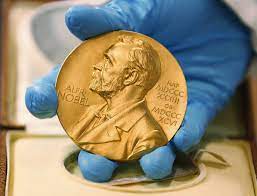
Each year, the Nobel Prize is awarded to people who have made outstanding contributions in several fields. This is the world’s greatest recognition. The awards are given according to the will of the famous Swedish industrialist Alfred Nobel. The first Nobel Prize was awarded on December 10, 1901, five years after Nobel’s death. Since 1902, all awards, with the exception of the Peace Prize, have been presented in Stockholm by the King of Sweden. The Nobel Peace Prize is awarded in Oslo.
Why did Nobel create the awards? Alfred Nobel began working in his father’s factory, which produced naval mines and military equipment, and later explosives. His greatest scientific achievement was the invention of dynamite. Nobel believes that “when people discover that in an instant entire armies can be completely destroyed, they will certainly observe a golden peace.” Unfortunately, this is not the case. Nobel is aware of the damage to his own invention. Legend has it that when his brother died, his obituary was mistakenly printed in the newspaper, nicknamed the “Death Merchant”. Terrified by this, he decided to bequeath part of his vast fortune to fund annual awards to people who, unlike him, have made remarkable achievements for the benefit of mankind.
In which areas is the Nobel Prize awarded? The award is given in 6 areas: physics, chemistry, medicine, physiologists, literature, peace. Do you notice in which field the Nobel Prize is not awarded? In the field of mathematics. Why isn’t the Nobel Prize awarded in mathematics? There is a lot of speculation and suggestions about this. Here are the most popular among them: 1. The reason is too personal. The most talked about theory is that Nobel had a fiancée who abandoned him because of the famous Swedish mathematician Gosta Mitag-Lefler. There is no historical evidence for this assumption. The fact is that Nobel is not getting married. He later had a girlfriend, a Viennese florist, whom she called “Mrs. Sophie Nobel.”
1. The reason is too personal. The most talked about theory is that Nobel had a fiancée who abandoned him because of the famous Swedish mathematician Gosta Mitag-Lefler. There is no historical evidence for this assumption. The fact is that Nobel is not getting married. He later had a girlfriend, a Viennese florist, whom she called “Mrs. Sophie Nobel.”
2. There was a math prize.
In his time, the Scandinavian Prize was awarded to mathematicians by King Oscar II of Sweden and Norway, who was a mathematician. Maybe Nobel thought that would double the prize.
3. Mathematics is too theoretical. The Nobel Prize is awarded for “practical” inventions or discoveries for the benefit of mankind, and inventor and industrialist Alfred Nobel considers mathematics to be too theoretical a science without application.
4. Mathematics is not interesting. Nobel’s inventions and work are in the field of physics and chemistry. He was also interested in literature as well as medicine. The Peace Prize is included to clear the image of a “death dealer” for inventing dynamite. Mathematics was not among the sciences he found interesting.
5. Rivalry This reason is again related to the Guest Mitag-Lefler, the alleged lover of his fiancée. Lefler founded leading mathematical journals, and it was he who persuaded King Oscar II to present an award in mathematics. That is why Nobel does not want to award a prize and money to a person he does not like.
How much is the fund of the Nobel laureates? In 1901, for the first winners of the Nobel Prize, the fund was 150,782 Swedish kronor, which is about 8.1 million Swedish kronor today. For 2020, the prize fund is 10 million Swedish kronor, which is about 885 thousand British pounds.
Education and Prevention – A Protection Against Drug Use
Drug Use: The Director of the European Monitoring Center on Drug and Drug Addiction (EMCDDA) in the presentation of the 2021 Drug Report (*), stated: “Today, drugs have become a much more pervasive problem, one that impacts in some way across all major policy areas. We also see diversification, both in the products available and the people who use them”. Around 83 million (or 28.9 %) of adults (aged 15-64) in the European Union are estimated to have used illicit drugs in their lifetime, and this should be regarded as a minimum estimate.
According to the experiences on the ground in some twenty European countries by the teams of volunteers of the hundred Say No To Drugs (SNTD) associations and groups, the contacts were established with youth and parents either through lectures in schools and associations or individually at their booths held on places and markets, they noticed a great ignorance regarding the harming effects of the most commonly used psychoactive drugs including alcohol and cannabis.
Even if many governmental publications, statistics and temporary actions are issued, they do not effectively reach the general public level and in particular, the teenagers who are the most vulnerable. Too often the SNTD teams are also witnessing the disenchantment of many teachers and educators complaining of a lack of time and materials to preventively and properly educate the pupils and young students on the adverse -not to say health destructive- effects of illicit drug use and the consequences for their development and life.
Facing the drug problem, the national, regional and local authorities have the responsibility to provide their people and youth with the safe and effective health protection and care they deserve. This is embodied in the United Nations International Drug Control Conventions (1961, 1971, 1988), the European Union Charter and also specifically in the Convention on the Rights of the Child (art.33). Despite this, in the last decades, broad and smart publicities for alcohol and cannabis are flourishing, based on vested interests not only for drug dealers and their powerful networks but also for the producing companies and on the Dark Web/online for other powerful drugs.
Regarding the illicit drugs, from a health viewpoint and impact on the economy, it is time for the governing bodies and concerned government agencies to get serious to prevent their costly harming effects on the society at large. Indeed, only considering the profits made but neglecting the subsequent costs for treatments and support of the addicts, the false aids as the “harm reduction”, the misdemeanours and repression, and the loss of productivity, is a short term evaluation instead of taking into account the economic, health and life burdens on the long term. This wise concern had already been formulated in the 13th century: “It is better and more useful to meet a problem in time than to seek a remedy after the damage is done”. Unfortunately, yielding to tendentious pressures this is not the orientation that predominates. And the whole is leading to the progressive disintegration not only of the family unit but also of the societal and economic stuff.
What is the missing protective element and what can be done?
During their drug prevention campaigns on the ground, the SNTD volunteers noticed the youth and even parents had a blatant lack of factual relevant data on the subject, making them easy prey for the “dealers”.
Education on the drug subject is currently the main weak point when undeniably it should be the key point: “Education is a progressive discovery of our own ignorance” said the historian and philosopher William J. Durant (1885-1981). And the knowledge matters when dealing with the use of any illicit harmful drugs and substances.
As a matter of fact, the first step for an efficient protection is to empower the youth and any person with the right data on what drugs are and what they do to raise their awareness on the subject, and give them the possibility to make an informed decision to stay drug-free and to have the appropriate answers to any proposal from any dealers.
Another point to take into account is the legal, social and cultural environment in which the child develops. Indeed, the youth are submitted to numerous influences acting as risk or preventive factors. They include family, school, peers, neighbourhood, leisure, social networks, etc. These latter are all also involved in the education of the youth. Among these influences, authors (Hill et al. 2018; Trujillo et al. 2019) have evidenced that the behaviour and practices of parents have a strong impact on the youth’s probability of opposing or succumbing to drug use and are also determinant in the early prevention of the drug problems.
Alongside or in support of the EU Drugs Strategy and of the governmental agencies for drug protection are on-the-ground actions of the civil society through its associations. In this frame, the Foundation for a Drug-Free Europe (FDFE) and its European SNTDs as part of their prevention program The Truth About Drugs is making available educative materials (booklets, DVDs, Manuals)** and videos online for teachers and educators and are delivering lectures on simple requests.
The basic principle “Prevention is better than cure” coined by the philosopher D. Erasmus (circa the year 1500) is more than ever true in our current society when considering the world of drugs. In his works of the 1960ies, the humanist and author L. Ron Hubbard (1911-1980) was stating: “Research has demonstrated that the single most destructive element present in our current culture is drugs.” So, a fact-based education on drugs will help the youth and population to make healthier lifestyle choices and to enjoy a safer and saner life because human misery is also in the wake of drug use. Thus, only the knowledge will protect and will allow the goals and dreams to come true.
So, keeping in mind that drug prevention begins with education, let’s use this to build a better society!
Many men may have difficulty when it comes to showing their emotions. However, the tendency to keep all emotions inside is dangerous, psychologist Lauren Soeiro said and revealed the true reason why men outwardly keep their cool.
According to the expert, the inability to express one’s feelings can lead to relationship strain and can also be construed as arrogance. Many men appear to be “rational thinkers”, separating their emotions from their decisions. In psychology, this is called alexithymia.
Reference: alexithymia is a condition in which a person is not able to describe and understand his feelings and emotions. The word itself is Greek and refers to the lack of words for emotions. The problem leads not only to difficulties in interpersonal relationships, but can also cause psychosomatic illnesses. There are both congenital and acquired forms.
The congenital form is associated with physical causes – these are minor malformations, the consequences of hypoxia during pregnancy or childbirth, diseases suffered in infancy. This form is difficult to treat. Acquired appears as a result of nervous disorders.
As the doctor noted, the term describes the gap between thought and emotion – which means that although a person may feel one thing, he will struggle to clearly identify them.
“It’s not a mental disorder per se, but rather a trait that can create various psychological problems,” she explained for Psychology Today.
Other common indicators of this condition include the following:
1. social media discomfort
2. inability to express emotions
3. exaggerated interest in autonomy
4. fear of intimacy
5. chronic negative mood
6. emotional distancing
These signs can often be confused with autism spectrum disorder, the specialist added. In addition to causing a person to “tighten up” in a relationship, not being able to express how they feel can also have dangerous physical side effects. These include palpitations, chronic pain, and difficulty breathing.
According to experts, this condition is more common in men due to gender stereotypes that are imposed on men from an early age. This may include sayings like “you’re the man” or the notion that men shouldn’t cry, be strong and protective in their family units.
However, in adulthood, these attitudes will definitely manifest themselves. Humans have evolved to have emotions for many good reasons, says the doctor.
“Including interpersonal communication, intergroup communication and danger detection; in general, it is not difficult to understand that emotions have always been important for our survival. Cultural or familial tendencies that devalue the experience or expression of male emotions place an unnecessary and harmful burden on many men,” she added.
How can men overcome this condition?
You can learn to live with alexithymia and even reverse it. Psychotherapy is a great place to start, as it is a way to start understanding yourself and expressing your emotions. However, at home, you can also learn some things that help weaken this personality trait.
For example, you should start keeping a diary describing the feelings of the day, listening to music, or even trying to empathize with the characters in films and novels. This will help develop greater emotional awareness. However, you should not count on a quick solution, because. Years of suppression of emotions are not easy to change. Therefore, it may take some time to bring them to the surface.
! This content, including tips, contains general information only. This is in no way a substitute for a qualified medical opinion. Always consult a specialist or your doctor for more information. We wish you good health
According to experts, the country will suffer its worst recession since the early 1990s
Capital controls and rising interest rates have solidified the Russian ruble, but it is too early to say whether the country’s economy will recover after the global economy.
Russia is a country with rising inflation and a sharp contraction in the economy, mainly due to tough sanctions imposed by Western countries. Moscow has been facing heavy sanctions from the West since 2014, when it illegally seized the Ukrainian peninsula of Crimea. This time, however, it seems better prepared to deal with the initial economic collapse than it did 8 years ago.
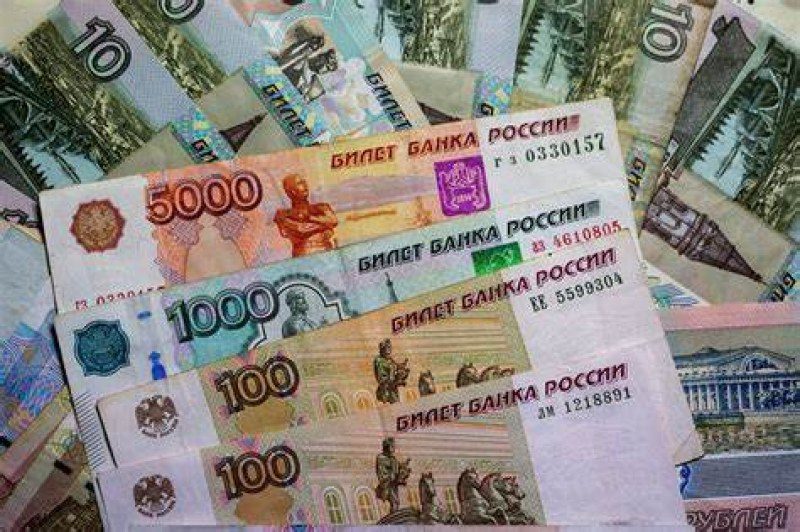
In fact, the ruble surprised the world after recovering from initial Western sanctions, which plunged it to its lowest level of $ 150 in early March. By mid-May, its value had risen to around 61.25 – the highest level in 28 months.
According to some experts, this recovery is a sign of economic sustainability, but more and more economists are warning that things are not exactly as they seem. “We can’t talk about a sustainable Russian economy. The initial financial panic has really subsided, but this is not a guarantee that its economy is moving well,” Sergei Guriev, a Russian exiled economist and professor at Sciences Po in Paris, told the Daily Sabah.
In another exclusive interview with the Anatolian News Agency, Guriev said that the forecasts for the Russian economy are not promising at all and noted that the Russian Central Bank predicts that in 2022 the economy will experience a recession from 8% to 10%.
According to the professor, instead of the pre-war forecasts for an increase of 3%, the latest expectations of the Russian government are focused on a 12% drop in GDP in 2022. “This is the biggest recession in 30 years,” added the former rector of the New School of Economics. in Moscow, quoted by expert.bg.
The collapse has already begun
According to Guriev, the near future for the Russian economy is not prosperous, given that international organizations predict a contraction of 8% to 11%. According to the expert, this collapse has already begun: for example, all car factories have ceased operations, and the sector does not produce cars because no parts are imported.
According to Guriev, although imports from China may ease the situation, the Russian automotive sector will face difficult times. “The same goes for airplanes, as well as for the production of modern industrial goods that use semiconductors. There are some stocks that will immediately shock revenues. This will happen in the second quarter, when stocks run out,” said the economist.
However, there is no doubt that Russia will suffer its worst recession since the early 1990s.
As for how the ruble reached its pre-war levels, Guriev claims that the formula is very simple. According to him, because Russian industries are cut off from the global economy and can not import anything from the West except pharmaceuticals, Russia does not need dollars. For this reason, there is a huge surplus and therefore the ruble is becoming more expensive. He added that this was a natural economic result of sanctions against important foreign goods.
“And this is not a sign of the strength of the economy. This is a sign of weakness,” Guriev said. “Under normal circumstances, a stronger ruble would mean strength in the competitiveness of the economy.” According to him, the circumstances that led to the strong ruble are a side effect of the sanctions imposed on raw materials, the same ones that cause the great economic recession.
Drawing on Guriev’s views, Barry Eichengreen, an economist at the University of California, Berkeley, said it was important to distinguish between exchange rate stability and economic stability.
The expert noted that the International Monetary Fund expects the Russian economy to shrink by more than 8% in 2022, far more than the pre-war forecast of 3% and added that this will be a very serious recession. Eichengreen argues that the Central Bank can maintain the exchange rate by using dollars and euros derived from energy exports. Hence its recovery against the dollar and the euro. “However, this is not a sign of economic sustainability,” he said, adding that inflation was projected to reach 20% and living standards to deteriorate significantly.
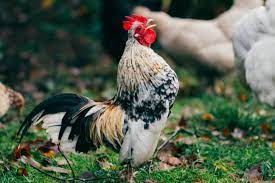
We are used to associating the crowing of roosters with the dawn and perceiving them as a natural alarm clock for people in the past. In reality, however, roosters are not crowing just to announce the morning and wake you up. Then why do roosters crow? You will probably be interested to know what scientists have recently discovered on this subject.
Why do roosters crow?
Contrary to popular belief that roosters crowing mostly in the morning at dawn, it turns out that these birds are very vocal and the reasons for crowing are different. They respond to stimuli associated with noise and light. Car headlights, lantern light or noise of any kind can stimulate the rooster to crow. That is, the theory that roosters react to light in the morning is not totally wrong, but the familiar corn can be heard when a lamp is lit or for a number of other reasons. However, ornithologists prove that roosters know when morning comes and croak because of it. Researchers from the University of Nagoya in Japan study the behavior of roosters, dividing them into two groups – one lives in conditions where the darkness of night naturally changes with the light of morning, and the other spends his time in 24-hour darkness. Scientists have proven that both groups of roosters crowing shortly before dawn.
That is, roosters in the morning do not just react to dawn and light, and their crowing is associated with a biological clock, which tells them that the morning is approaching, even if they live in complete darkness for days. The experiment continues with a third group of roosters, which suddenly ignited a light source – a lamp. When the light came on, no matter what time it was and whether morning was approaching or midnight, the roosters reacted and crowed. This proves that they also react to light. However, the experiment also proves something else that helps us answer why the roosters crow, namely – at dawn when the lamp lights up, the reaction of the roosters was the strongest. That is, roosters crowing both because of the dawn and because of the presence of a light source, one of which does not displace the other and does not necessarily overlap, and the presence of the brightest and strongest crowing at dawn and less when scientists trying to deceive birds with a light source, proves that the biological clock of roosters is stronger than other factors. Yet dawn is far from the only reason for crowing, as the old people thought.
Obviously, the answer to the question why roosters crow is not clear, the reasons may be: noise, light, presence of people or animals, guarding the territory, claiming supremacy, “marking” the territory, communicating with peers, after mating, during or after a meal, due to the approach of morning.
In 2019, a Swiss court sentenced a rooster not to crow at night
A resident of the canton of Zurich has filed a lawsuit over a rooster crowing at night, the Neue Zurich Zeitung reports. The owner of the rooster is obliged to ensure the “silence” of the bird from 22.00 to 8.00 in the morning on weekdays and Saturdays, and on Sunday – from 22.00 to 9.00. At the specified time the rooster is forbidden to leave the henhouse and he will sit there in complete darkness. The court also ordered to improve the sound insulation of the chicken coop.
Before filing the lawsuit against his neighbor, who set up a chicken coop in the garage next to his house, the plaintiff registered how many times the rooster crowed. He found that the bird and day and night corn on average between 14-44 times per hour. The sound it emits is heard at a distance of 15 meters and reaches 84 decibels. The court questioned the accuracy of this data, measured using a mobile phone. He accepted the evidence as “conditionally acceptable”. The applicant also complained about the smell. The applicant initially requested the complete demolition of the chicken coop, but the cantonal court rejected this request. Its decision stipulates that every citizen can pursue his hobby at home.
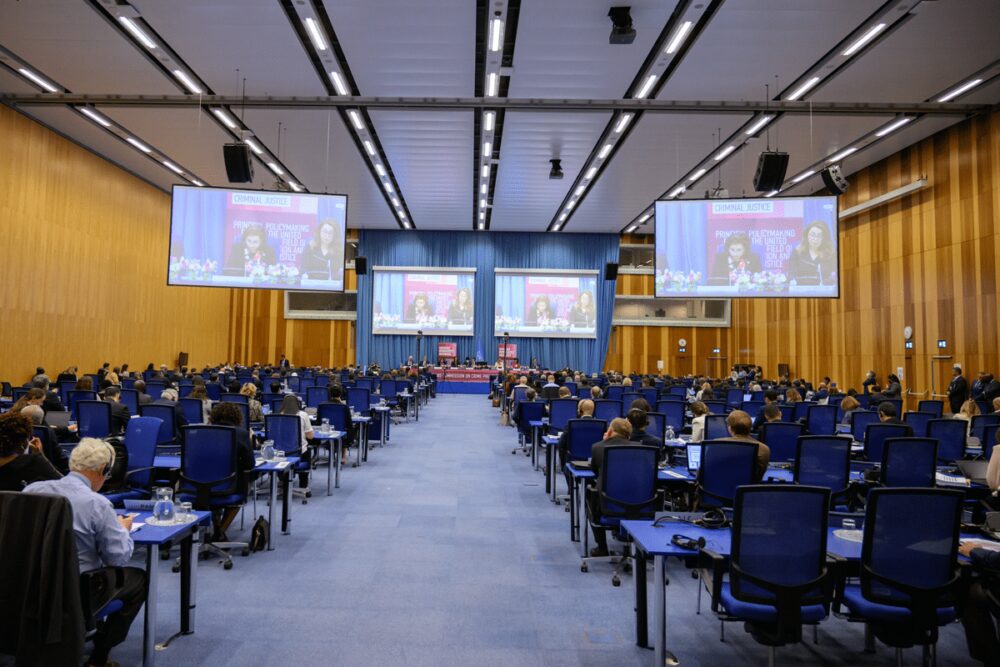
Vienna (Austria), 20 May 2022 – Today brought the thirty-first session of the Commission of Crime Prevention and Criminal Justice (CCPCJ) to a close, following five days of discussions that helped to shape multi-stakeholder crime prevention and criminal justice responses and strengthen cooperation.
In her opening remarks to the session, Executive Director of the United Nations Office on Drugs and Crime (UNODC) Ghada Waly highlighted the Commission’s work as the world continues its recovery from the COVID-19 pandemic and absorbs the repercussions of conflict around the world on the international criminal justice system.
“This thirty-first session of the CCPCJ, once again taking place in a complex global context, can send a message that Member States will not abandon international efforts to deter crime and support its victims,” she said.
H.E. Ambassador Takeshi Hikihara, who chaired the session, commented: “We have confirmed our steady implementation of the Kyoto Declaration and our common will to further strengthen cooperation in crime prevention and criminal justice. Multilateralism works here.”
The work of the commission in its thirty-first session
On 7 March 2021, the United Nations Congress on Crime Prevention and Criminal Justice adopted by consensus the Kyoto Declaration. Member States recommitted to a multilateral approach in preventing and combating crimes, and promoting the rule of law. UNODC was reaffirmed as the leading United Nations entity supporting Member States in this regard.
As such, 2022’s thirty-first session of the CCPCJ included a thematic discussion on a topic that affects criminal justice responses at local, regional, international and global levels. The discussion placed special focus on the use of digital evidence in criminal justice and countering cybercrime, including the abuse and exploitation of minors in illegal activities via the internet.
The session adopted three resolutions covering illicit trafficking in wildlife, reducing reoffending through rehabilitation and reintegration, and protecting children from sexual exploitation and abuse. In addition, a resolution following up on the Kyoto Declaration and preparing for the Fifteenth United Nations Congress on Crime Prevention and Criminal Justice was also adopted.
CCPCJ side events
In the margins of the thirty-first session of the CCPCJ, over 80 side events were held online on topics including, but not limited to: implementation of the Kyoto Declaration; crimes that affect the environment; access to justice for women; human trafficking and migrant smuggling; and racial discrimination in the criminal justice system.
Moreover, the institutes of the United Nations Crime Prevention and Criminal Justice Network (PNI) organized an interactive workshop where participants exchanged good practices and innovative approaches on improving criminal justice responses to internet-related crimes against children. Six presentations showcased research that explores different ways in which online child sexual abuse is being addressed.
** *** **
Around 1290 participants from 130 Member States, 11 intergovernmental organizations, 55 non-governmental organizations and several UN entities came together both online and in-person for this year’s CCPCJ, which convenes every year and is the UN’s foremost policymaking body on crime prevention and criminal justice issues. It plays a key role in advancing international efforts against national and transnational crime, while recommending measures to strengthen fair and effective criminal justice institutions.
NETHERLANDS, May 19 – News item | 19-05-2022 | 15:17 – This year we celebrate 30 years of diplomatic relations with Slovenia. To mark this, on 20 May – World Bee Day – the Netherlands will give Slovenia a bee house as a present. Dutch ambassador Johan Verboom talks about bee culture in Slovenia. ‘Bees are almost sacred here,’ he says. Many schools in Slovenia have a bee house, so from an early age children learn about the importance of bees. Besides producing honey, bees also pollinate many of the crops we eat. ‘We’re giving a bee house to a school in Duplek, which is two hours’ drive from the capital, Ljubljana,’ says Johan. ‘We’ve invited Belgium and Luxembourg to join us, so the presentation will be a Benelux event.’
After conferring with the Slovenian embassy in The Hague, it was decided to celebrate this anniversary in both countries. The Slovenian embassy will therefore plant 30 rose bushes in Westbroek park in The Hague, because roses also depend on bees for pollination.
Slovenia didn’t become an independent nation until 1991. Up to then, it was part of the former Yugoslavia. In 2004 it became the first country in the region to accede to the European Union.
As Johan points out, Slovenia and the Netherlands have been close partners since that time. They seek each other’s support within the EU and NATO and as Schengen countries. ‘We work closely together in many areas, and our bilateral relations are excellent,’ he says. ‘Trade between our countries totals €1.7 billion a year, and it’s still growing. All the flowers I see here come from the Netherlands, and there’s considerable interest in our innovative solutions for a circular economy. In our turn, we import pharmaceutical and agricultural products and machinery from Slovenia.’
The Netherlands is popular among Slovenians. ‘Dutch is taught at the University of Ljubljana and we now have 400 alumni in our database,’ says Johan. ‘Dutch books are being translated into Slovenian, and Dutch artists hold exhibitions here. This month, for instance, there is a photo exhibition and an exhibition on biodesign.’
World Bee Day
Bees are almost sacred in Slovenia, which has more beekeepers than any other country in the world – four Slovenians in every thousand keep bees. Everywhere ambassador Johan Verboom goes, he sees apiaries. ‘The fronts of the bee houses are painted in various bright colours and patterns,’ he says. ‘The main purpose is to help beekeepers keep the various bee families apart, but the houses are also works of art that brighten up the landscape.’
Because bees are so important to Slovenians, they lobbied the United Nations successfully for a World Bee Day. Starting in 2018, people all over the world celebrate the role of bees and other pollinators on 20 May. This is the date on which Anton Janša, a pioneer of modern beekeeping, was born. ‘Namesake of the Slovenian prime minister Janez Janša!’
‘Slovenians are experts in beekeeping,’ Johan continues. ‘Every year the country produces 25 tonnes of honey. There are around 170,000 bee colonies here, and 500 species of bees.’ Johan is particularly impressed that the honey is both produced and sold locally. ‘Beekeeping is the national sport.’
Protecting bees in the Netherlands and elsewhere
Bees don’t only produce honey, they also pollinate many food crops, especially fruit and vegetables. Without bees, we would lose these foods and our food security would be threatened.
In the Netherlands wild bees are threatened by urbanisation and intensive farming. The Netherlands has therefore drawn up an action plan to protect bees and other pollinators that are essential for our food supply.
At international level, the Netherlands has taken the initiative for countries to work more closely together to promote bees and other pollinators These countries form the Coalition of the Willing on Pollinators.