This is what Shyama Kuruvilla, director of WHOIt is World Center for Traditional Medicinecreated in 2022 to harness the potential of these systems for health and well-being.
“With half the world’s population lacking access to essential health services, traditional medicine is often the closest or only care available for many people,” Kuruvilla said during a virtual press conference on Wednesday, ahead of this month’s WHO Global Summit on Traditional Medicine.
“For many others, it is a preferred choice because it is personalized and holistic. It is biocultural and promotes general well-being rather than only treating specific disease symptoms,” she continued.
According to the WHO, traditional medicine includes practices and knowledge from various historical and cultural contexts, predating biomedicine and traditional medical practices.
Traditional medicine emphasizes natural remedies and holistic, personalized approaches to restoring balance to the mind, body and environment.
Ms Kuruvilla said the global demand for traditional medicine is increasing due to chronic illnesses, mental health needs, stress management and meaningful care-seeking.
However, despite widespread use and demand, less than 1 percent of global health research funding currently supports it, she added.
“The World Summit aims to foster the conditions and collaborations necessary for traditional medicine to contribute on a large scale to the development of all people and our planet,” concluded Ms. Kuruvilla.
Simultaneously, WHO is launching a Global Library of Traditional Medicine – the first digital platform of its kind with more than 1.6 million scientific documents on the subject, a data network on traditional medicine and a framework on indigenous knowledge, biodiversity and health, among other initiatives.
“The Security Council resolution is very clear about not calling anything a border or anything else, it is about a territory that needs to be respected in its entirety,” he said, referencing a resolution adopted by the Council on 17 November in support of a comprehensive plan to end the conflict.
“We call on all parties to respect the ceasefire and to ensure that we can indeed move to the next phase [of the peace plan],” the High Commissioner told journalists in Geneva. Gaza “remains a place of unimaginable suffering, loss and fear. While the bloodshed has reduced, it has not stopped,” he insisted.
Resolution 2803 (2025) received 13 votes in favour and none against, with permanent members China and Russia abstaining.
The text welcomed the Comprehensive Plan announced by President Trump on 29 September. The first phase of the 20-point plan led to the ceasefire between Hamas and Israel days later.
Most of the violence in the past week has been reported near the “Yellow Line” whose large painted concrete blocks have shifted in the past week, prompting “new waves” of displacement, according to the UN agency for Palestine refugees, UNRWA.
In a scheduled update, the agency cited data from the Gazan health authorities indicating that 360 Palestinians have been killed and 922 injured since the fragile ceasefire agreement came into effect in late October. An additional 617 bodies have been retrieved from under the rubble since then, too.
Echoing those concerns, Mr. Türk said that his Office had documented more than 350 attacks since the ceasefire began. The dead included seven women and 13 children.
“Attacks by Israel continue, including on individuals approaching the so-called Yellow Line, residential buildings and [internally displaced persons] IDP tents and shelters, as well as other civilian objects,” he told reporters.
In addition to the humanitarian emergency still unfolding in Gaza, the High Commissioner stressed how generalized psychological trauma affecting the enclave’s people is “the most serious mental health crisis that one can imagine…Basically everyone is traumatised and especially children.”
Meanwhile, at a press conference marking Human Rights Day, Mr. Türk also expressed deep concern at “unprecedented levels of attack by Israeli forces and settlers against Palestinians” and their land in the occupied West Bank.
“This is a time to intensify pressure and advocacy – not to sink into complacency”, he insisted.
A world of trouble
Turning to the long-running emergency in eastern Democratic Republic of the Congo (DRC), the High Commissioner expressed deep concern at overnight reports of thousands fleeing the South Kivu city of Uvira, amid clashes between M23 rebel fighters and DRC armed forces, backed by Wazalendo militia.
“This comes just days after the DRC and Rwanda reaffirmed their commitment to implement the June 2025 Washington Peace Agreement,” Mr. Türk said, warning that the risk of a broader regional confrontation was increasing.
The High Commissioner also issued a stark warning that war crimes and potential crimes against humanity may be happening in Sudan, where the war shows no signs of letting up.
The emergency erupted in April 2023 when a transition to civilian rule broke down and today the Sudanese Armed Forces continues to clash with paramilitary Rapid Support Forces. Recently, the RSF overran the city of El Fasher after laying siege to it for 18 months, leading to widespread reports of grave rights abuses.
“From Darfur and the Kordofans to Khartoum and Omdurman and beyond, no Sudanese civilian has been left untouched by the cruel and senseless violence,” Mr. Türk said. “We are talking about thousands of people that have been killed. There were summary executions, there were people who were trying to leave us for sure, who were killed when they tried to leave…There were witness statements about rape and gang rape, including in front of family members…So yes, we are talking about very serious atrocity crimes. War crimes for sure. Potentially also crimes against humanity.”
Ukraine appeal
In Ukraine, the High Commissioner noted that civilian harm has risen sharply. Civilian casualties so far this year are 24 per cent higher than the same period last year, he said, largely owing to Russia’s increased use of powerful long-range weapons in large numbers and its continuing efforts “to capture further Ukrainian territory by armed force”.
Urgent steps need to be taken to alleviate suffering, Mr. Türk continued “including the return of transferred children [allegedly taken to Russia], the exchange of all prisoners of war, and the unconditional release of civilian detainees held by Russian authorities”.
War on drugs
Asked to comment on deadly strikes by the US military on alleged drug-smuggler boats in the Caribbean, the High Commissioner reiterated his position that these represented a violation of international law and human rights law and required “prompt, independent investigations”.
Reports indicate that more than 80 people have been killed in more than 20 attacks since September. On 2 September, two survivors of an initial strike were allegedly killed in a second attack.
Mr. Türk noted that as US lawmakers continue to call for further information about these strikes, “I hope that they will lead to a prompt, serious investigation that is independent so that we can get to the bottom of what has happened there.”
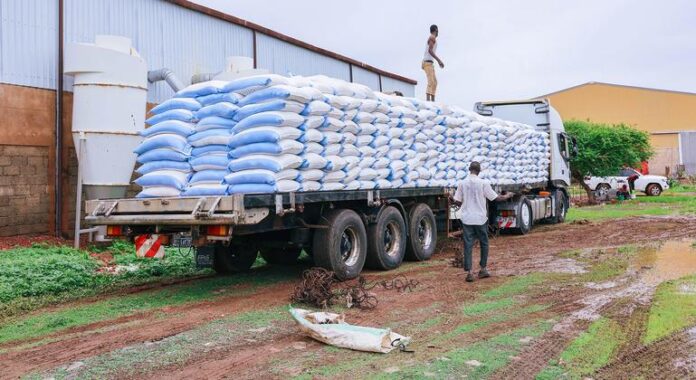
FAO aims to support more than 100 million people in 54 countries by the end of 2026, with a funding goal of $2.5 billion.
The agency is pushing for a more targeted and responsive approach, prioritising what matters most, sequencing interventions effectively, and centring efforts on the practical solutions farmers are calling for, in line with Members’ priorities.
Around 80 per cent of people facing acute food insecurity live in rural areas, relying on farming, herding, fishing or forestry.
Yet only five per cent of humanitarian food-sector funding supports agricultural livelihoods, a persistent imbalance that traps families in a cycle of crisis and dependence, the agency said.
With an emphasis on anticipatory action and rapid emergency agricultural assistance, FAO is seeking: • $1.5 billion for life-saving emergency support to 60 million people, including seeds, tools, livestock health, livelihood recovery and cash assistance. • $1 billion for resilience programmes reaching 43 million people, focusing on climate-smart agrifood solutions, water systems, markets and ecosystem restoration. • $70 million for global services to strengthen data, early warning, anticipatory action and coordination across the humanitarian–development–peace nexus.
UN scales up life-saving aid for 120,000 displaced in Mozambique
The UN has increased life-saving assistance for 120,000 people displaced by escalating violence in Mozambique’s Nampula province.
Under the direction of Emergency Relief Coordinator Tom Fletcher, $6 million has been allocated from the Central Emergency Response Fund (CERF) to support the response.
Violence that began in 2017 in Cabo Delgado has already displaced more than 1.3 million people. “The situation has sharply worsened since mid-November as conflict spreads,” said UN Spokesperson Stéphane Dujarric.
Overcrowded and vulnerable
More than two-thirds of the 100,000 people who have fled in the past two weeks are sheltering in overcrowded schools, makeshift structures, open spaces or with already vulnerable host families, according to the Office for the Coordination of Humanitarian Affairs (OCHA).
People lack adequate shelter and have limited access to safe water, healthcare, protection and sanitation services, while a cholera outbreak continues to spread, Mr. Dujarric added.
CERF funding will prioritise water, sanitation and hygiene services for people in the Erati and Memba districts, along with essential household items, shelter, protection and livelihood support.
Uganda’s upcoming elections marked by arrests and repression
At least 550 people, including members of Uganda’s main opposition party, have been arrested or detained ahead of January’s elections, the UN human rights office (OHCHR) reported on Wednesday.
OHCHR said heavily armed security forces have been deployed to areas where rallies of the National Unity Platform (NUP) are planned. Last week, officers reportedly used live ammunition in the eastern town of Iganga, killing at least one person and injuring at least three others.
“It is deeply regrettable that election campaigns have once again been marked by widespread arbitrary arrests, detentions and the use of unnecessary or disproportionate force against the opposition, as well as undue restriction of press freedom,” said UN human rights chief Volker Türk.
Opposition held in isolation
Reports of enforced disappearance and torture of NUP supporters have increased over the past year, OHCHR warned.
Security forces are accused of using unmarked minibuses known as “drones” to take people to unofficial detention sites or “safe houses”, where they are allegedly held incommunicado.
Earlier this year, the head of the military posted on X that he was holding the bodyguard of the NUP leader in his “basement”.
Following a public outcry, the bodyguard was later presented in court, visibly shaking and showing other signs of physical abuse.
Mr. Türk urged the authorities to investigate all allegations of ill-treatment fully and impartially.
OHCHR added that at least 32 journalists and media workers were assaulted or had their equipment confiscated by security personnel during a parliamentary by-election in March.
The United Nations Office for the Coordination of Humanitarian Affairs (OCHA) said The situation in South Kivu province has deteriorated sharply since December 2 due to heavy fighting in several territories, including Uvira, Walungu, Mwenga, Shabunda, Kabare, Fizi and Kalehe.
According to media reports, members of the M23 armed group entered the key town of Uvira on Wednesday and residents described a feeling of fear and uncertainty.
Radio Okapi, managed by the UN peacekeeping mission MONUSCOreported that more than 74 civilians have been killed and at least 83 injured in clashes between Congolese forces and armed groups since early December. The station said thousands more people fled across the borders into Burundi and Rwanda.
Most displaced people in South Kivu are sheltering in overcrowded sites, facing increased protection risks, poor sanitation and the growing threat of epidemics. Displaced women and girls face increased risks of gender-based violence in overcrowded shelters.
Humanitarian aid programs, including food aid and health care, have been affected by the insecurity.
The United Nations World Food Program (PAM) suspended operations across South Kivu, depriving 25,000 people of vital food aid, according to to UN deputy spokesperson Farhan Haq.
“Host families, already facing emergency levels of food insecurity, are sharing the rest of their food with displaced people,” he told reporters in New York.
At least 32 WFP-supported schools in Uvira have halted classes to shelter displaced families, depriving more than 12,000 children of what is often their only daily hot meal. Aid agencies have warned that the region’s food stocks could run out within weeks if access and funding are not restored.
Cross-border fears grow
“The humanitarian impact of the crisis now extends beyond borders,” Haq said, noting that nearly 25,000 people crossed into Burundi between December 5 and 8, with other arrivals also reported in Rwanda.
In both countries, humanitarian partners and national authorities are stepping up their emergency assistance, including hot meals, clean water and health services.
This escalation comes despite diplomatic efforts to reduce regional tensions. Last week, the DRC and Rwanda signed a US-backed peace deal, welcomed by the United Nations as a “crucial step” towards restoring confidence.
Funding problems worsen the crisis
Funding gaps add to the emergency.
The DRC Humanitarian Response Plan is only 22 percent funded, leaving a shortfall of nearly $2 billion, Haq warned. In Burundi, less than $33 million has been mobilized against a need of nearly $77 million to support new arrivals.
“We call on all parties to the conflict to immediately cease hostilities, respect international humanitarian law, protect civilians and civilian infrastructure, and ensure safe, rapid and unhindered humanitarian access,” he said.
After two years of war, most of Gaza’s approximately two million residents live in makeshift shelters.
Humanitarians are working to provide assistance to communities in flood-prone areas, including increasing the distribution of winter clothing for children from 5,000 kits per day to 8,000.
UN partners leading winter preparedness efforts reported that some 200 families have left riverside communities for a new site identified by municipal authorities in what remains of the town of Hamad in eastern Khan Younis.
Meanwhile, the distribution of tents, tarpaulins, sheets and winter clothing to families in urgent need of assistance continues. Work is also underway to mitigate flooding by reinforcing high-risk areas with sandbags, emptying storm drains and removing solid waste.
In other developments, 65 classrooms that were previously used to house displaced people have now been cleaned and prepared so that learning activities can take place again.
“However, partners warn that the entry of educational materials into Gaza remains blocked, disrupting efforts to help children return to school” OCHA said.
Additionally, 260,000 people have received regular food assistance so far this month. This aid, consisting of two food parcels and a 20-kilogram bag of flour, was delivered via 60 distribution sites across the Gaza Strip.
For the first time since August, some 3,500 veterinary kits entered Gaza on Friday. The animal kits and fodder were distributed to more than 100 donkey breeders and owners, highlighting the importance of animals for food security.
OCHA said security incidents also continue, posing risks to the population and humanitarians. On Tuesday, two bullets hit the ground floor of a health center in Deir Al-Balah run by the United Nations agency that helps Palestinian refugees, UNRWA.
Although no casualties were reported, OCHA noted that the facility is located near the “Yellow Line,” the separation zone near the border with Israel.
UNICEF warns of worsening global crisis for children
Children caught in conflict, disasters, economic turmoil and other emergencies face unprecedented dangers as lack of funding forces the closure of vital projects.
The warning comes from the United Nations Children’s Fund (UNICEF), which on Wednesday launched an appeal for more than $7 billion to support 73 million vulnerable boys and girls over the coming year.
UNICEF noted that increased attacks on schools and hospitals, coupled with record levels of child displacement, have intensified pressure on frontline teams.
“Across our operations, frontline teams are being forced to make impossible decisions: focus limited supplies and services on children in some places rather than others, decrease the frequency of services children receive, or reduce interventions children depend on to survive,” said UNICEF Executive Director Catherine Russell.
The agency also warned that more than 200 million children will need humanitarian assistance in 2026.
UNICEF urged governments, donors and private sector partners to increase investments in children, support national systems and protect access to aid before the situation worsens.
$300 million pledged for UN emergency response fund
Donors have pledged just over $300 million to support a fund that serves as a first lifeline for millions of people affected by conflict and disasters, the United Nations said Wednesday.
UN Emergency Relief Coordinator Tom Fletcher thanked partners for their support, emphasizing that a fully funded CERF – to the tune of $1 billion each year – is not symbolic but a necessary lifeline now.
Drop in donations
At last year’s pledging ceremony, donor pledges totaled some $351 million. The decline since then reflects the increasingly dire financial outlook for humanitarians, as they continue to face the most drastic funding cuts ever seen.
CERF was established 20 years ago to provide emergency humanitarian assistance in times of crisis, with funding often arriving before other sources of support.
The fund has helped hundreds of millions of people with nearly $10 billion in more than 100 countries and territories.
Some $435 million has been allocated this year alone to support millions of people in 30 countries and territories.
“Human Rights and Peace – Better Together” Conference Puts Education and Cooperation at the Heart of Lasting Peace
KINGNEWSWIRE // PRESS RELEASE // Conference at the Palais des Nations, promoted by Organizzazione per i Diritti Umani e la Tolleranza, explores the inseparable link between human rights and peace
GENEVA, Switzerland – The Palais des Nations in Geneva has hosted the international conference “Human Rights and Peace – Better Together”, promoted by Organizzazione per i Diritti Umani e la Tolleranza, a non-governmental organization holding consultative status with the UN Economic and Social Council (ECOSOC) since 2017, partnering with Dr Mary Shuttleworth of United for Human Rights, and with Fundacion para la Mejora de la Vida la Cultura y la Socieded. The event brought together experts, academics, institutional representatives, educators and civil-society organizations to highlight the indivisible connection between human rights protection and the construction of sustainable peace.
Held at the heart of the UN human-rights system, the conference underscored that peace is not merely the absence of conflict, but the presence of justice, equity, inclusion and mutual respect. Throughout the day, participants examined how integrating human rights into education, public policy and community life is essential to preventing violence, fostering social cohesion and consolidating trust in democratic institutions.
From human-rights violations to inclusive policies
The discussions opened with a broad overview of current human-rights challenges, including persistent discrimination, social exclusion and abuses that continue to affect some of the most vulnerable communities. Speakers drew attention to the situation of migrants and refugees, minorities, young people at risk and those facing barriers to participation in social, cultural or economic life.
Contributors stressed that these issues cannot be addressed in isolation. They called for policies that tackle the root causes of inequality, promote equal access to opportunities, and ensure that institutions remain accountable to the people they serve. The conference pointed to international and regional human-rights instruments, including the Universal Declaration of Human Rights, as practical frameworks for guiding policy choices at national and local levels.
Morning session: education as a foundation for peace
The morning session was opened by Fiorella Cerchiara, President of Organizzazione per i Diritti Umani e la Tolleranza, together with representatives from the scientific, academic and educational sectors. In their introductory remarks, they underlined the transformative power of human rights education in shaping more just and resilient societies.
The session focused on the dissemination of human rights through training programmes implemented in schools, universities and non-formal learning environments around the world. Speakers shared examples of curricula, teacher-training initiatives and youth projects that help students understand their own rights and responsibilities, recognise discrimination, and stand up for the rights of others.
Participants agreed that education is not an “add-on” but a central pillar of peacebuilding: when young people learn to connect rights with everyday situations – from online behaviour to local decision-making – they become key actors in preventing violence and fostering dialogue.
“Thinking Freely”: protecting freedom of thought and belief
A dedicated panel, “Thinking Freely”, examined contemporary challenges related to freedom of thought, conscience and belief. It was chaired by Ivan Arjona-Pelado, President of the European Office of the Church of Scientology for Public Affairs and Human Rights. Panelists analyzed how social polarization, stereotypes, hate speech, and misinformation can undermine fundamental freedoms and erode trust between different communities. Among the speakers of this panel were Prof. Cristiana Cianitto – Research Center on Religious and Belief Minorities in Contemporary Legal Systems, University of Milan, ATLAS Project; Dott. Perparim Uxhi – Fondazione Fscire, ATLAS Project and Dr. Amjad Saleem, Manager for Strategic Engagement on Youth and Peace at the International Federation of Red Cross and Red Crescent Societies (IFRC).
The discussion highlighted the need for effective legal protections and for practical tools to defend these freedoms in daily life. Participants emphasised the importance of cooperation between institutions, independent authorities, educational actors and civil society to promote a culture in which individuals can think, believe, question and express themselves without fear of discrimination or reprisals.
The panel also pointed to good practices where dialogue platforms and local mediation initiatives have helped to defuse tensions, encourage mutual understanding and ensure that the rights of all beliefs – religious and non-religious – are respected.
“Bridges of Cooperation”: local testimonies, global impact
In the afternoon, the conference turned to the role of organizations engaged in the promotion of the Universal Declaration of Human Rights and to the creation of alliances that reinforce social resilience. The panel “Bridges of Cooperation” focused on how multidisciplinary partnerships can translate principles into concrete improvements in people’s lives.
Cultural mediators, community leaders and representatives of non-governmental organizations shared testimonies from different regions, showing how local projects – from intercultural dialogue forums to community-based human rights workshops – can contribute tangibly to peace, solidarity and social inclusion.
These contributions illustrated that cooperation across sectors is essential: when schools, municipalities, NGOs, international agencies, and community groups work together, human-rights standards become living instruments, adapted to specific cultural and social contexts.
The conference concluded with a networking session, consolidating the exchanges initiated during the panels and opening new avenues for collaboration between participants at local, national and international level.
European perspective: a shared responsibility
Reflecting on the outcomes of the conference, Ivan Arjona, representative of the Church of Scientology to the European Union, OSCE, Council of Europe and United Nations, stated:
A meeting like this, inside the Palais des Nations, is a reminder that human rights and peace are not abstract concepts but shared responsibilities. When educators, civil-society organizations and public institutions work together, they give real substance to the European commitment to human dignity, freedom of conscience and equality before the law. For many belief and non-belief communities across Europe, contributing to human rights education is a concrete way to support social cohesion and a more peaceful future for all.
His remarks echoed the broader European consensus that effective human-rights protection is closely linked to inclusive policies, active citizenship and respect for diversity, both within and beyond the continent’s borders.
Background: human-rights education and the Church of Scientology
Over the years, members of the Church of Scientology have developed human-rights education projects in cooperation with schools, municipalities, associations, businesses, churches, and a wide range of partners. In some contexts, this has included cooperation with faith and belief communities that share a commitment to human-rights education and to the values enshrined in the Universal Declaration of Human Rights.
Among these actors, the Church of Scientology has supported numerous human-rights awareness campaigns and educational initiatives in Europe and worldwide. This engagement is rooted in the outlook of its founder, L. Ron Hubbard, who emphasized that human rights should be made a practical reality for every individual, rather than remain a distant ideal.
The Geneva conference, conceived and led by Organizzazione per i Diritti Umani e la Tolleranza, forms part of a broader ecosystem in which secular and faith-based stakeholders, including Scientologists, work in parallel and sometimes together to advance knowledge of human rights and to foster dialogue across cultures and beliefs.
About the Church of Scientology in Europe
The Church of Scientology, founded in the early 1950s by author and philosopher L. Ron Hubbard, is present with over 11000 churches, missions, and groups worldwide, and with a strong presence throughout the European continent, counting more than 140 churches and missions in at least 27 European nations, together with tons of communities of Scientologists and social-betterment groups. Across Europe, its members support initiatives in the fields of human-rights education, drug-prevention, moral education and volunteer work, often in cooperation with public bodies and civil-society partners.
Recognition of Scientology as a charitable and bona fide religion has grown steadily over recent decades, with churches and missions obtaining various forms of legal recognition and religious or public-benefit status in a number of European states. The Church of Scientology, its missions, groups, and members continue to contribute to education, prevention, and community-betterment efforts, working alongside others to uphold fundamental rights, dignity, and the rule of law.
UN News asked Astrid Van Genderen Stort, OHCHR head of external engagement and partnerships, about his.
“My daily essentials are my family, a sense of belonging, knowledge, security and the freedom to speak, do and live as I wish,” she replied.
With the help of artificial intelligence, UN Newsanalyzed the most popular themes based on answers submitted by people around the world, from the freedom to “enjoy nature” to “live in peace”.
Ms Van Genderen Stort spoke with UN News about the campaign and what the responses say about the world today.
This interview has been edited for length and clarity.
UN News: What responses to the campaign struck you the most?
Astrid Van Genderen Stort: Each answer shows exactly how essential human rights are to our daily lives. As a human rights defender, I was particularly touched by the responses: “being humane towards all beings”, the “right to live my culture” and “speak and live without fear”.
These statements speak to the problems that so many people are still facing in the world and the times in which we find ourselves. They make me even more determined and committed to my work.
UN News: What do the answers say about the world we live in today?
Astrid Van Genderen Stort: Many people are suffering and living in very difficult circumstances. Yet what stands out to me from all the responses is that people around the world, whether in Afghanistan, the United States, Mexico and many other places, want and value the same thing: their basic human rights, their daily essentials – a safe place to live, access to education, to be recognized as equal human beings, the freedom to explore and enjoy.
This is the essence of our campaign: human rights are not something far-fetched, which we cannot influence; they constitute the basis of our existence and everyone has a role to play in ensuring their respect.
UN News: Many speakers mentioned family, nature and clean water. What can be done for people who do not benefit from these rights?
Astrid Van Genderen Stort: In these times of intense conflict, it is imperative for us to continue to monitor, report and defend those whose rights are violated. We did this through the voice of High Commissioner for Human Rights Volker Türk and our colleagues in communications and media. Through statements, reports, stories and social media, we document and encourage accountability.
UN News: What rights in the Universal Declaration of Human Rights (UDHR) have seen the most progress since the document was written in 1948, and which have seen the least?
Astrid Van Genderen Stort: Overall, we have seen progress on many of the rights represented in the UDHR. Article 26 – the right to education – saw the greatest improvement. From 1950 to 2023, the percentage of literate adults increased from 56 percent to 87 percent globally. In other words, in 1950, when the UDHR was adopted, only one in two adults in the world could read or write. By 2023, this figure had increased to nine in ten adults worldwide.
The article which has seen the least progress is article 15, on the right to nationality. At the time of the 75th anniversary of the declaration, one in four children in the world, or 166 million, did not exist on paper.
UN News: Why did OHCHR decide to choose the theme “Human Rights, Our Everyday Essentials” for this year’s Human Rights Day campaign?
Astrid Van Genderen Stort: The UN human rights office has been one of the bulwarks against growing cynicism about human rights, marked by misinformation, insecurity and a shift towards more authoritarian policies. It is in this period of turbulence and unpredictability that we felt the need not only to reaffirm the values of human rights, but also to show that they remain a winning proposition for everyone, everywhere and every day. Human rights are found in so many small actions and things that we take for granted. They are in the air we breathe, in the food we eat, in the books we read. Like atoms, human rights are fundamental; they make up everything.
UN News: What is the purpose of the international day and why should people be aware of their rights?
Astrid Van Genderen Stort: United Nations international days serve as reminders, commemorations and celebrations. They are an opportunity to highlight particular issues or to remind us of events or movements that have helped to shape us. International Human Rights Day reminds us that the rights we enjoy are ours, inalienable and attainable. They can be violated if we do nothing to defend them. Everyone must know their rights in order to be able to claim them and ultimately defend them.
Briefing of Security CouncilGeorgette Gagnon, deputy special representative of the secretary-general for Afghanistan, and Tom Fletcher, UN emergency relief coordinator, said almost half the population will need protection and humanitarian assistance in 2026.
Women and girls remain “systematically excluded” from almost all aspects of public life, » said Ms. Gagnon, as the ban on secondary and higher education for girls is now in its fourth year, depriving the country of future doctors, teachers and leaders.
“Media freedom is increasingly restricted. Journalists face intimidation, detention and censorship, reducing space for public debate and public participation.» she added.
Afghans – women and men – also face daily intrusions under the de facto authorities’ law on “propagation of virtue and prevention of vice”, she added, describing a trend of systematic interference in privacy.
At the same time, humanitarian needs are increasing. Mr Fletcher said almost 22 million people will need aid next year, with Afghanistan now one of the world’s largest humanitarian crises.
“For the first time in four years, the number of people facing hunger has increased,” He warned. Some 17.4 million Afghans are now food insecure, while massive funding cuts have left the response “stretched to the breaking point”.
More than 300 nutrition distribution points have closed, leaving 1.1 million children without life-saving nutrition, while 1.7 million of them face death without treatment. The health system is also collapsing: 422 health facilities were closed in 2025, depriving three million people of vital care.
The year 2025 saw a marked increase in the number of refugees returning to Afghanistan. Pictured here is a scene at the Islam Qala border crossing between Afghanistan and Iran.
Refugees return to poverty
To make matters worse, Afghanistan has seen record refugee returns, with more than 2.6 million Afghans returning in 2025 alone, bringing the two-year total to more than four million. Most arrive with few possessions and are absorbed into already poor communities.
“Women and children accounted for 60 percent of all returns this year,” Mr. Fletcher noted – returning to a country where women do not have access to education, work and, in some cases, health care.
Economic pressures are mounting despite modest growth. While GDP is expected to increase by 4.5 percent, per capita income will decline by about 4 percent due to population growth, according to World Bank figures cited by Ms. Gagnon.
Rural livelihoods have also been devastated by the third year of banning opium cultivation. Although praised internationally, UN agencies report a 48 percent drop in rural incomes, with additional support needed for alternative livelihoods.
Aid delivery paralyzed
While security conditions appear calmer than in previous decades, tensions with Pakistan are increasing amid cross-border exchanges linked to militant activities. At the same time, the closure of major border crossings for two months harmed trade and civilian life on both sides.
Meanwhile, women’s participation in humanitarian work remains under direct attack. Since September, female UN national staff have been barred from UN premises across the country, a restriction Mr Fletcher called “unacceptable” and warned was crippling aid delivery.
“There cannot be an effective humanitarian response without women,” he said. “Afghanistan needs it.»
A family crosses a dusty street in Herat, Afghanistan.
Rights increasingly out of reach
The United Nations Assistance Mission in Afghanistan (MANUA) also warned that rights in the country remain “out of reach for too many,” particularly women and girls. Involuntary returns also put journalists, former officials and civil society figures at increased risk of reprisals.
“Human rights are not optional. These are the essential elements of everyday life that support life,” Ms. Gagnon said in a separate UNAMA statement statement. “Ensuring that women and girls can learn, work and participate fully is critical to Afghanistan’s recovery. »
Call for international support
Despite serious constraints, the UN continues to provide aid. More than $40 million in emergency funds have been released in recent months to respond to earthquakes, drought and mass returns.
But Mr Fletcher warned that underfunding is now costing lives.
“By 2026, we risk seeing a further contraction in life-saving assistance at a time when food insecurity, health needs are straining basic services and protection risks are increasing.» he said.
He stressed that without urgent attention and support from the international community, the crisis would only worsen.
These five extraordinary leaders, working on issues ranging from climate justice to sustainable cooling and forest protection, show that bold action can lead to real change for people and the planet.
“As the global impacts of the climate crisis intensify, innovation and leadership across all sectors of society have never been more essential. » said Inger Andersen, Executive Director of UNEP.
“From young students demanding climate justice, to subnational governments and architects at the forefront of sustainable cooling and smart building design, to research institutions slowing deforestation – and passionate individuals working to reduce methane emissions – this year’s Champions of the Earth are demonstrating the kind of leadership that will inspire the world to tackle the challenge of climate change.
This year’s winners tackle some of the most pressing challenges of our time: climate justice, methane emissions, sustainable cooling, resilient buildings and the forest conversation, according to the United Nations environment agency.
When Cynthia Houniuhi addressed the International Court of Justice in The Hague a year ago, she spoke clearly: climate change is devastating Pacific island nations like her home country, the Solomon Islands.
Thanks to his youth-led NGO, which secured a historic International Court of Justice (ICJ) affirming the legal obligation of states to prevent climate damage and defend human rights, it helps reshape global climate law and hold vulnerable nations accountable.
Champions of the Earth Award winner Cynthia Houniuhi, Solomon Islands climate justice advocate, co-founded and led Pacific Island Students Fighting Climate Change.
Supriya Sahu, Additional Chief Secretary, Government of Tamil Nadu –Inspiration and action
Indian environmentalist Ms Sahu is redefining how communities adapt to extreme heat – restoring nature to cool cities, redesigning schools to make them safer, and promoting climate-smart infrastructure.
Its sustainable cooling and restoration initiatives have created 2.5 million green jobs, expanded forest cover and improved the resilience of 12 million people.
Champions of the Earth Award winner Supriya Sahu is recognized for her innovative leadership in subnational climate action, ecosystem restoration and scaling sustainable cooling innovations across Tamil Nadu.
Mariam Issoufou, Director and Founder, Mariam Issoufou Architects, Niger/France–Entrepreneurial vision
By basing her architecture on local materials and cultural heritage, Ms. Issoufou is redefining sustainable and climate-resilient buildings across the Sahel and inspiring a new generation of designers who are shaping Africa’s built environment.
Through projects like the Hikma community complex in Niger, it is pioneering passive cooling techniques that keep buildings up to 10°C cooler without air conditioning.
Mariam Issoufou, winner of the Champions of the Earth Prize, is a Nigerian architect whose work redefines the relationship between contemporary design and cultural heritage.
Imazon has developed AI deforestation prediction models that inform policy and help law enforcement protect the Amazon rainforest, while promoting sustainable economic growth.
By combining science and AI-powered geospatial tools to curb deforestation, Imazon’s nonprofit research institute has strengthened forest governance, supported thousands of lawsuits, and revealed the scale of illegal deforestation, driving systemic change in the Amazon basin.
Champions of the Earth Award winner Cynthia Houniuhi is recognized for her pioneering forest monitoring systems that combine cutting-edge geospatial science and AI to prevent deforestation in the Amazon.
Mr. Caltagirone has dedicated his career to one of the most pressing challenges of our time. Guided by his vision of open, reliable and actionable data, he has led efforts to transform knowledge into climate action.
As former director of UNEP’s International Methane Emissions Observatory, he advanced transparency and science-based policies on methane emissions, helping to shape the EU’s first methane emissions regulation and shaping global energy policy.
Manfredi Caltagirone, posthumously honored with the Lifetime Achievement Award for his visionary leadership in establishing the International Methane Emissions Observatory and promoting global action on methane.
After months of anticipation and debate over the government’s controversial decision, under-16s found themselves excluded from popular platforms such as TikTok, Instagram and YouTube, according to media reports.
The ban aims to protect young people from online abuse such as cyberbullying, exploitation and exposure to harmful content, all of which harm their mental health and wellbeing.
As other governments consider similar measures, the United Nations Children’s Fund (UNICEF) warns that age restrictions alone will not keep children safe.
“While UNICEF welcomes the growing commitment to child safety online, Social media bans carry their own risks, and they can even backfire on you“, the agency said in a declaration.
For many children, especially those who are isolated or marginalized, social media is a lifeline for learning, connection, play and self-expression, UNICEF said.
Additionally, many will continue to access social media – for example through workarounds, shared devices or using less regulated platforms – which will only make it more difficult to protect them.
Protection and respect for human rights
“Age restrictions must be part of a broader approach that protects children from harm, respects their rights to privacy and participation, and avoids pushing them into unregulated and less safe spaces,” the statement said.
“Regulation should not be a substitute for platforms investing in child safety. Laws introducing age restrictions are not an alternative to companies improving platform design and content moderation.”
“We know how difficult it is for companies to tackle the question of how to keep children safe online,” Volker Türk said in response to a journalist’s question.
“Social media platforms were launched a few years ago, but I don’t think at the time of their launch, an assessment of their impact on human rights was actually carried out. »
Make the Internet Secure
UNICEF urges governments, regulators and technology companies to work with children and families to create a digital space that is safe, inclusive and respectful of children’s rights.
Authorities must ensure that age-related laws and regulations do not replace companies’ obligation to invest in designing safer platforms. and effective content moderation.
Additionally, social media products need to be redesigned, putting the safety and wellbeing of children at the centre, while regulators need to put in place systemic measures to effectively prevent and mitigate online harm.
Parent support
Other recommendations include helping parents and guardians improve their digital literacy.
“They have a crucial role, but they are currently being asked to do the impossible to protect their children online: monitoring platforms they did not design, controlling algorithms they cannot see, and managing dozens of apps around the clock,” UNICEF said.
The UN human rights chief noted that countries were trying to keep pace with technological developments and Australia was not alone in responding. The US state of California has a similar law to protect minors online, while the European Union is debating a bill.
“It is very important to continue to monitor what is workingwhich doesn’t work,” Mr. Türk said.
“But it is also very clear from a human rights perspective that the best interests of the child must be considered in all of this, including the protection and safety concerns that children face. »