Thursday, March 26, 2026
Home Blog Page 925

New UN campaign aims to bring more young voices to halls of power

0
New UN campaign aims to bring more young voices to halls of power
To support young people’s political participation and amplify their voices in public life, the UN launched a campaign on Wednesday in collaboration with the Youth Envoy.
“The intergenerational gap in power, influence and trust constitutes one of the biggest challenges of our time”, said UN Youth Envoy Jayathma Wickramanayake.

The Be Seen, Be Heard campaign, which partners with The Body Shop International, seeks to create long-term structural changes that foster the inclusion of youth in decision-making.

“With the climate crisis, global conflict and generational inequalities running rampant, the inputs, perspectives and representation of youth are needed more than ever”, the press release reads.

The campaign seeks to raise the voice of millions of young people in over 75 countries across six continents.

Leaders ‘messed things up’ for the planet

To understand preconceptions and structural barriers preventing young people from participating in public life, the Be Seen Be Heard: Understanding young people’s political participation report, also released on Wednesday, not only presents a snapshot but makes recommendations to address these challenges.

The report supports the fact that there is a chronic lack of faith in political systems but a clear appetite for more youth representation from all age groups.

It details that 82 per cent of people around the world think the political system needs drastic reform to be fit for the future, and nearly 70 per cent feel that young people should have more say.

Three quarters of those under age 30 feel that politicians and business leaders have ‘messed things up’ for people and the planet and are ready for change.

Moreover, two in three people also disagree with the age balance in politics and 8 in 10 uphold that the ideal first-time voting age should be 16 to 18 – even though most countries restrict it to 18 or over.

Recent data shows that although almost half the world’s population is under 30, they make up only 2.62 per cent of global parliamentarians and that the average age of a world leader is 62.

Youth participation is key

Ms. Wickramanayake underlined the importance of including youth in the decision-making to fight the mistrust towards political institutions and alienation from elected leaders.

© UNICEF/Sebastian x Gil

With the climate crisis, global conflict and generational inequalities running rampant, the inputs, perspectives and representation of youth are needed more than ever. Here pictured are environmental activists and founders of Youth for Climate Argentina.

“As young people have made abundantly clear through their activism on the streets, in civil society and on social media, they care deeply about the transformational change needed to create more equal, just and sustainable societies,” she said.

The campaign is an opportunity to change and move towards policies that “reflect the priorities of youth, mirror their concerns, and speak their language”.

Optimism for a better future

According to the survey – which covered 26 countries with 27,043 respondents in total, over half of whom were under age 30 – 67 per cent believe in a better future, with 15 to 17-year-olds most optimistic.

And more than two-thirds agree that political systems would be better if there were more opportunities for younger people to have a say in policy development and change.

This campaign recognizes at its core that young people have a vital role to play in the decisions that affect us all.

“As escalating global conflict, the ongoing climate crisis and worsening socio-economic issues continue to plague our world, we increasingly need fresh perspectives to guide transformative political decision-making the breaks beyond the status quo”, the press release adds.

Be Seen Be Heard Promoting youth participation and amplifying young voices in public life. Be Seen Be Heard Campaign

Be Seen Be Heard Promoting youth participation and amplifying young voices in public life.

Transformational change

According to the Youth Envoy, young people’s participation in public decision-making could be improved long-term by lowering voting ages; increasing formal youth representation through youth councils, parliaments, or committees; removing barriers for young people to participate in public decision-making; simplifying first-time voter registration; and improving young people’s leadership skills.

The collaboration between the Youth Envoy’s office and The Body Shop means that young people and others will have many routes to participate in the campaign, which will run until mid-2025 in 2,600 stores.

Local campaign activities will also include partnerships with youth-led or youth-focused non-governmental organizations (NGOs), petition opportunities and other actions. 

APC prepares for 2023 CEC General Assembly

0
APC prepares for 2023 CEC General Assembly

Preparations for the 2023 General Assembly of the Conference of European Churches (CEC) mature as the assembly aims to bring European churches together in Tallinn, Estonia, from 14 – 20 June 2023, focusing the theme “Under God’s blessing – shaping the future”.

To prepare for the event, the Assembly Planning Committee (APC), chaired by Rev. Anders Gadegaard from the Evangelical Lutheran Church in Denmark, met from 9 to 10 May in Tallinn.

The committee members, together with CEC General Secretary Dr Jørgen Skov Sørensen, discussed further steps in preparations for the event. The CEC Assembly is hosted by CEC Member Churches in Estonia, such as the Estonian Evangelical Lutheran Church and the Orthodox Church of Estonia.

The committee also visited local churches and venue for the Assembly, Kultuurikatel Centre.

The CEC Assembly will be a significant moment of prayer, fellowship and reflection for the life and witness of the churches in Europe. The theme will bind the assembly participants together in an ecumenical spirit to offer churches’ contributions toward Europe’s future. Together, they will highlight the voice of Christian faith in European societies in addressing the policymakers.

Every five years, the General Assembly meets to make decisions for CEC’s future. The Assembly brings together participants representing CEC Member Churches, Organisations in Partnership and European National Councils of Churches from across Europe. The Assembly will also elect the new board members who will steer CEC’s work for the next five years.

Learn more about 2023 CEC General Assembly

UN launches joint appeal for Syria: ‘Apathy is not an option’

0
UN launches joint appeal for Syria: ‘Apathy is not an option’

More than 90 per cent of Syrians live in poverty, gender-based violence and risks to children are on the rise, and potential exposure to explosive ordnance remains high.

Moreover, food insecurity has soared to new records as 12 million Syrians go hungry every day and nearly one-in-two children are missing school – leaving them vulnerable to child labour, forced marriage, trafficking, and armed recruitment.

“Over the past 11 years, we have witnessed suffering and abuses on an immense scale; terrible violent conflict that went beyond all norms; [and] a humanitarian catastrophe that has devastated the lives of well over half the population,” UN Special Envoy for Syria Geir O. Pedersen told the Brussels VI Conference: “Supporting the future of Syria and the region”.

© WFP/Hussam Al Saleh

Calling for international diplomacy

Syria remains a highly internationalized crisis in which key issues require constructive international diplomacy, according to Mr. Pedersen.

“It is not secret…that recent international developments, the war in Ukraine, have made that even more difficult than it was before,” he acknowledged.

“But as the UN envoy, I will continue to engage all key actors, Syrian and international, on the importance of contributing not only to alleviating suffering but to confidence-building and a political path out of this crisis”.

Stay focussed

Against the backdrop of a conflict, corruption, mismanagement, COVID, sanctions, and now the Ukraine war with its knock-on effects in the region and beyond, Mr. Pedersen drew attention to the Syrians who are struggling to meet their basic needs – noting that raw statistics never truly convey “the brutal reality that afflicts so many of them”.

At the same time, he described displacement “on a scale with few comparisons; a crisis of detention and abduction; an economic disaster that has impoverished millions and fragmented the country; and the continued threat of terrorism”.

He urged the participants to stay focussed on Syria.

Political solution still out of reach

Despite continuous calls for a nationwide ceasefire and a comprehensive Syrian-led and owned political solution that respects sovereignty and territorial integrity – while meeting the legitimate aspirations of the country’s people – Mr. Pedersen said frankly: “We are far from that political solution”.

Notwithstanding the current strategic stalemate on the ground, Syria continues to require attention, resources, and a comprehensive political solution, despite having dropped from news headlines.

“Your contributions are once again urgently needed,” he underscored. 

Seeking a breathing path  

UN Emergency Relief Coordinator Martin Griffiths spoke at length of the “unprecedented levels” of needs driven by a decade of conflict, long-term protracted humanitarian crisis, rapidly worsening economic circumstances, climate shocks and gender-based violence.

“We have got chronic electricity, fuel and water shortages undermining the functionality of essential services, livelihoods and delivery of assistance,” he said.

The “highest importance for all humanitarian workers and humanitarian agencies,” is a comprehensive political resolution to the conflict, said Mr. Griffiths, who also heads the UN humanitarian office, OCHA.

“While we try to address the humanitarian needs of the Syrian people, we need a path to allow…[them] to breathe again and be away from the conflict”.

Lives behind numbers

To survive this year, 14.6 million Syrians need humanitarian assistance and another 12 million Syrian refugees and those hosting them across the region also require support. 

“No surprise that $10.5 billion, an astonishing and eye-watering amount of money, is needed to fully support Syrians in need. $4.4 billion of that is for the response inside Syria, and another $6.1 billion for the refugees and host communities in the region,” Mr. Griffiths explained.

Acknowledging it as “the largest appeal ever” for Syria, he added his fervent hope, that it will be “the last appeal of this scale”.

“Syrian women, men and children should not be allowed to fall off our attention span and should be given a future…better than the one they faced this year,” concluded the Emergency Relief Coordinator.    

Syria ‘deadly’ for children

Catherine Russell, the head of the UN Children’s Fund (UNICEF), warned that “an entire generation is struggling to survive”.

She painted a grim picture of commonplace attacks on civilian infrastructure, families struggling to put food on the table, and nearly one-third of the country’s youth “chronically malnourished”.

“These are dangerous, even deadly, times to be a child in Syria,” maintained the UNICEF chief. “Since the war began, we can verify that nearly 13,000 children have been killed or injured – but we know the toll is much higher”. 

Psychological trauma

The war has not only scarred Syria’s children physically but also caused “invisible wounds that can last a lifetime,” Ms. Russell flagged.

Roughly 2.8 million Syrian youth are now living in Jordan, Lebanon, Iraq, Egypt, and Turkey – riddled with loss, risk, and uncertainty. 

“I don’t know what the word home means,” an 11-year-old girl told a UNICEF staff member.

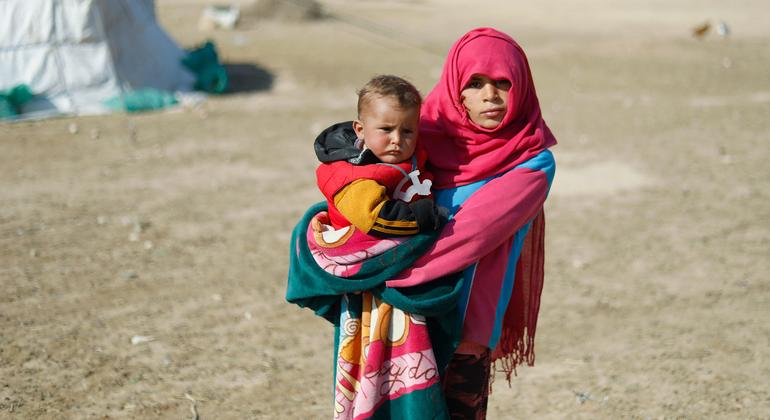
The informal Salhabiya settlement, in rural Raqqa, northeastern Syria is home to many displaced families. © UNICEF/DelilSouleiman

The informal Salhabiya settlement, in rural Raqqa, northeastern Syria is home to many displaced families.

Flexible support needed

And 11 years of war, disruption, and displacement have also threatened the education of an entire generation. 

“More than three million Syrian children are still out of school,” the UNICEF official informed the conference, adding that these children need “sustained flexible support”. 

She said that although UNICEF requires $312 million for its Syrian response along with an additional $20 million for its work in northwest, to date, less than half has been received. 

“We are counting on you to provide that support. More important, Syria’s children are counting on all of us,” Ms. Russell appealed.

Impoverished refugees

Due to the interlinked factors of COVID’s socio-economic shockwaves and a food, energy, and finance crisis, precipitated by the war in Ukraine, “we are seeing soaring poverty rates and hunger; deepening inequalities; and increased tensions across the region,” said Achim Steiner, head of the UN Development Programme (UNDP).

He cited that nine out of 10 Syrian refugees in Lebanon are now living in extreme poverty as are some 81 per cent of Lebanese people – a figure that has nearly doubled since 2019 – and around 1.8 million Syrians in Turkey.

“Our collective efforts are perhaps more vital than ever before,” attested the top UNDP official.

Inside Syria

He said that the 14.6 million people inside Syria who need assistance represent “an enormous increase of 1.2 million”.

“Saving lives through humanitarian responses will remain of paramount importance, but we should remember that early recovery and resilience activities save not only livelihoods – they also save lives,” Mr. Steiner upheld.

He noted that scaling-up early recovery assistance does not mean shifting away from humanitarian aid but is based on “an assessment of real-world needs on the ground”.

The ask

For early recovery and resilience, $1.2 billion is needed, representing25 per cent of this year’s Humanitarian Response Plan (HRP). 

Within this, the UNDP-led Early Recovery and Livelihoods section is asking for $247.6 million in 2022 to help lift one million people out of poverty and allow 150,000 people to find work.

“Apathy is not an option,” concluded the UNDP chief.

Guterres expresses solidarity as Moldova grapples with fallout of Russia’s war in Ukraine

0
Guterres expresses solidarity as Moldova grapples with fallout of Russia’s war in Ukraine
Moldova, the most fragile of war-torn Ukraine’s neighbors, needs and deserves massive support to match its generosity as a recipient of nearly half a million refugees, and to preserve its own stability, UN Secretary-General António Guterres said on Monday.

Speaking at a press conference alongside Prime Minister Natalia Gavrilița in the Moldovan capital of Chisinau, the UN chief said: “Moldova is not just another country receiving refugees … I am deeply concerned about the continuation and possible spread of the war Russia is waging in Ukraine, and by the impact it is having not only in the region but around the world.”  

“The United Nations is committed to supporting not only the people of Ukraine, but also the people of Moldova during these difficult times,” said Mr. Guterres, adding: Your sovereignty, independence and territorial integrity, and the solid progress you have made over the past three decades, must not be threatened or undermined.”    UN Photo/Mark Garten

Secretary-General António Guterres meets with Prime Minister Natalia Gavrilița of Moldova.

‘Refugees live with the families of Moldovans’ 

The United Nations started a large-scale operation meant to render assistance to residents of Ukraine, including those on the territory of Moldova: at the border crossing in Palanca refugees are greeted by UN staff who help them find their bearings and to decide what to do next, render material and legal support and provide them with basic necessities. 

“But obviously, that is not enough. We need to do much more,” stressed the Secretary-General at the start of his two-day visit to the country. 

“It was not easy for the UN to readapt to a humanitarian crisis in Europe. Here, we don’t have the traditional forms of humanitarian support in crisis areas of the developing world, in fragile States,” continued Mr. Guterres, adding that in Moldova, there are no refugee camps: Moldovans are opening their homes to Ukrainians. 

The UN has rearranged its ways of working to meet these realities and is currently scaling up its most effective programmes, including for providing cash-assistance. The UN chief said people should be trusted to know what their needs are.  

The UN plans to provide such assistance to 90,000 refugees and 55,000 of the families that that take them in. 

War’s impact ripples through region’s fragile economies  

Moldova is a small European country with “fragile economy”. It is landlocked, and the Odessa port, through which it ships its merchandise to the world market, is closed due to the war.  

Furthermore, Moldova is not just the country that opened its doors to displaced persons, like many of its neighbors: in ratio to the size of its population, it has taken in the highest number of Ukrainian refugees since the start of the Russian invasion.  

While calling for “massive support” to match Moldova’s generosity, the Secretary-General stressed that other neighbouring countries like Moldova are already struggling with the socio-economic ramifications of this war coming on top of the COVID-19 pandemic and the uneven global recovery.    

In light of these and other pressing concerns, the UN chief urged Kyiv and Moscow to “step up diplomatic efforts through dialogue to urgently achieve a negotiated settlement, in line with international law and the UN Charter”, and he called on regional and international partners to support this process “in the interests of global stability.”  

“The impact of the war in Ukraine across the region and the world is profound and far-reaching. The consequences of escalation are too frightening to contemplate,” he stated, stressing: “The Russian invasion of Ukraine must stop. The guns must be silenced.” 

Bedrock of peace and security  

“On 9 May, on this very day, we must remember that dialogue and cooperation based on mutual respect are the bedrock of peace and security in Europe and around the world,” Mr. Guterres said, referring to what is known as ‘Victory Day’, which marks the anniversary of the Soviet Union’s defeat of Nazi Germany in World War II in 1945. 

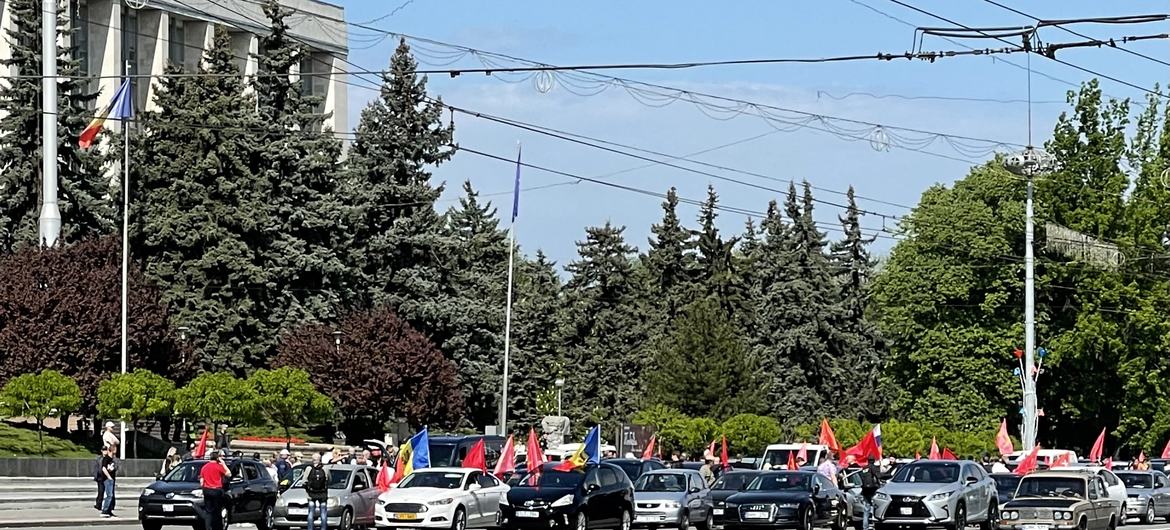
This year, against the backdrop of the war in Ukraine, the anniversary of the victory over fascism was met with some apprehension in Chisinau, with media outlets in the region reporting possible mass actions and even the threat of clashes between supporters of different approaches in assessing those historical events.  

“The fact that I am here on the 9th of May is a pure coincidence. This visit is programmed in association with the meeting of the [United Nations] Chief Executives Board in Vienna, and so, it was convenient, both for the Government of Moldova and for me”, said Mr. Guterres, responding to a question from a journalist. 

The Secretary General congratulated Moldova on the 30th anniversary of joining the United Nations. In 1992, after the collapse of the Soviet Union and the acquisition of independence. In this context, he highly appreciated Moldova’s contribution to peacebuilding, promotion of sustainable development and gender equality, as well as to the fight against climate change.  

Victory Day in Chisinau, Moldova
UN News – Victory Day in Chisinau, Moldova

Funding for humanitarian aid 

The UN has appealed for $2.5 billion for humanitarian aid in Ukraine, and $1.85 billion for support for Ukrainian refugees in other countries.  

“I urge all countries to give generously. In global terms, these are minuscule sums,” said the Secretary-General, also calling on all countries to consider strengthening their economic cooperation with Moldova. 

While the current flow of refugees to Moldova is not comparable to the first weeks of the war, according to UN officials who have met with Ukrainians fleeing the war at the border, on some days, the number of arrivals increases sharply, usually due to an escalation in hostilities. According to UN estimates, by the end of the year, the number of refugees in Moldova may increase to one million people, with some 250,000 of them possibly remaining in the country. 

Among his other activities today, the Secretary-General met with the Chairman of the Parliament of the Republic of Moldova, Igor Grosu, and on Tuesday he will meet with the President of Moldova, Maia Sandu. 

Tomorrow, the UN chief is also expected to visit the MoldExpo exhibition center, where UN staff and civil society groups are working tirelessly to assist refugees from Ukraine. In addition, Mr. Guterres is also expected to visit one of the Chisinau families that has sheltered Ukrainians.

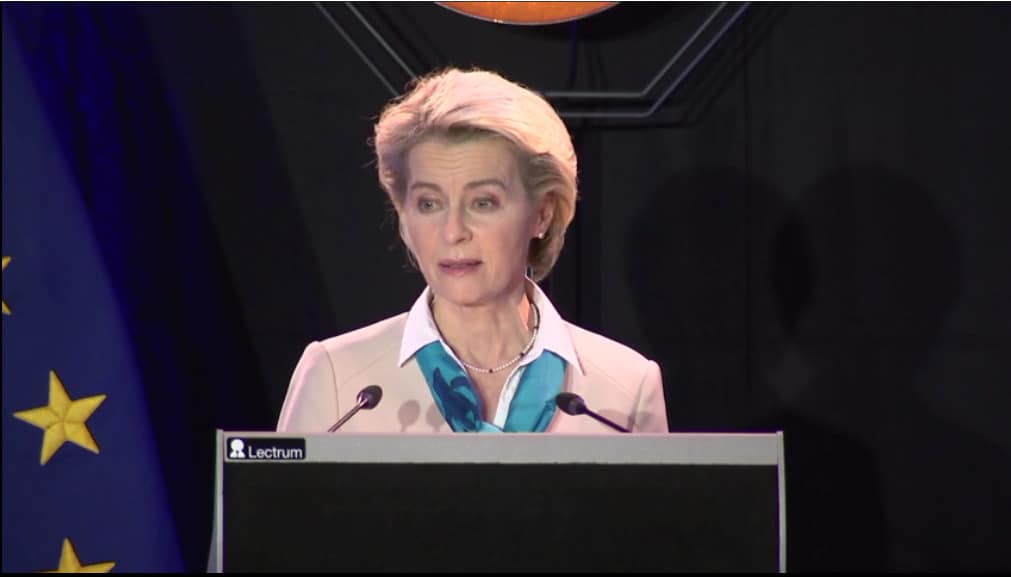
Speech by President von der Leyen at the closing event of the Conference on the Future of Europe

0
Von der Leyen Energy

“We must think and plan a united Europe as if it were possible to create it immediately every day, rejecting the weariness of those who always put it off until tomorrow. The possible, if it is really possible, we can start to make it happen today.”

« Nous devons penser et planifier une Europe unie comme si chaque jour il était possible de la créer immédiatement, rejetant la lassitude de ceux qui la renvoient toujours à demain. Le possible, s’il est vraiment possible, nous pouvons commencer à le réaliser aujourd’hui. »

President Metsola, dear Roberta,

Président Macron, cher Emmanuel,

Prime Minister Costa, querido António,

Dear Dubravka Šuica,

Dear Guy Verhofstadt,

Cher ministre, Clément Beaune,

Excellences,

Honourable Members,

But most and foremost, my dear and fellow Europeans,

On this very special day of Europe, I could not think of a more fitting way to start than by using these words of Ursula Hirschmann. For those who do not know her story, Ursula Hirschmann was an architect and builder of today’s free and united Europe. She resisted the rise of Nazism in Berlin in the early 1930s – she shaped the future of Europe on the island of Ventotene in the 1940s – she pioneered women’s rights all across Europe.

The courage of her actions and of her convictions helped to make Europe what it is today. I start with this picture because, for Europe, the memory of our past has always framed our future. And that is all the more important at a time when the unthinkable has returned to our continent. Russia’s flagrant attempts to redraw maps and to rewrite even the most tragic parts of our history have reminded us of the dangers of losing our grip on both our past and our future. Of living in a perpetual present and thinking that things can never be different. That there cannot be better ways of doing things. And even worse: That things will always stay the same if only we do not change. That is so wrong! Standing still is falling back.

But this Conference has shown us that Europeans are determined not to make this mistake. You have told us that you want to build a better future by living up to the most enduring promises of the past. Promises of peace and prosperity, fairness and progress; of a Europe that is social and sustainable, that is caring and daring. Just like Ursula Hirschmann and all those who went before us.

Ladies and Gentlemen,

This Conference has spoken clearly. And I am delighted to see so many of you here today. Through your 49 proposals and more than 300 measures, you have weaved and crafted a vision of a Europe that delivers on what matters most, that helps to make everyday life better, that is not confined to one place but is at your side when you need it. On every day priorities – such as the air we breathe and the food we eat, the education that we give our children and the houses that we bring them up in.

It is a vision of a Europe that pools its strengths and capacities and diversity to tackle the biggest challenges – from climate change or nature loss, to pandemics or security in our region. A Europe that has a stronger capacity to activate and uphold its values and the rule of law. A Europe that is able to provide for itself in vital areas, from energy to food, from materials to medicines, from digital chips to green technologies. A Europe that delivers unique social protections and benefits all the way through these major transitions.

Ladies and Gentlemen,

I want to address every single one of you who took part in this Conference: Your message has been well received. And now, it is time to deliver. That is what I promised when I stood for election in this very House, two and a half years ago. And together, we have proven that we can do just that with the powers that already exist – even amidst the pandemic or a war. Whether procuring billions of vaccines for citizens across Europe and our neighbourhood, or kick-starting the economy after the pandemic through NextGenerationEU. Whether setting an ambitious and legally binding path to climate neutrality, or setting the rules of the game in the digital world, or supporting small businesses to retain their staff during the pandemic.

None of this – none – would have been explicitly foreseen in the Treaties, but it was possible. And we did it together – because Europeans expected their Union to step up. Next month already, we will set out what is needed to bring your proposals to life and respond the best we can. In some areas, your proposals give us a push to speed up work already ongoing – for example on the European Green Deal or on making society fairer. So that means accelerating negotiations on the Fit for 55 Package so that we can boost renewable energies, that we can save energy and finally wean ourselves off fossil fuels. It has to be like this. And it means ensuring that our proposal on minimum wages becomes law so that work pays for all.

In other areas, we have already started the work you have asked for. The Health Working Group, for example, proposed creating a European Health Data Space, which would facilitate the exchange of health data across borders. My Commission delivered on this last week with a proposal. And in the next weeks and months, we will bring out proposals, you have been asking for. For example, restoring our nature, or cutting down waste coming from packaging, or banning products made by forced labour from entering our European market. On all of these upcoming ideas, we will look closely at your proposals so that we can best cater for what you have been asking for.

The point is, there is already a lot we can do without delay. And that also goes for those recommendations which will need us to take new action. So to make sure that we follow up swiftly, I will announce the first new proposals responding to your report in my State of the Union Address in September already. But, my fellow Europeans, even beyond this, there is a need to go further. For example, I have always argued that unanimity voting in some key areas simply no longer makes sense if we want to be able to move faster. Or that Europe should play a greater role – for example, in health or defence, after the experience of the last two years. And we need to improve the way our democracy works on a permanent basis. I want to be clear that I will always be on the side of those who want to reform the European Union to make it work better.

The point is, you have told us where you want this Europe to go. And it is now up to us to take the most direct way there, either by using the full limits of what we can do within the Treaties, or, yes, by changing the Treaties if need be.

Ladies and Gentlemen,

Dear fellow Europeans,

‘Democracy has not gone out of fashion, but it must update itself in order to keep improving people’s lives.’ Those are the words of David Sassoli – a great European, who stood here a year ago, together with you, dear António Costa, to launch this Conference. We all miss him dearly and I have a very special place for him in my heart today.

And I feel pride that citizens from every corner of Europe have brought to life his vision of a vibrant and modern European democracy. We saw it in the National Citizens’ Panels, such as those held right across France. And we saw it in the European Citizens’ Panels – from Dublin to Natolin, from Florence to Maastricht. It connected men and women who have never engaged with Europe before. Different stories, different languages, different identities; but one shared future to build on.

You have proven that this form of democracy works. And I believe, we should give it more room, it should become part of the way we make policy. This is why I will propose that, in the future, we give Citizens’ Panels the time and resources to make recommendations before we present key legislative proposals. Because I am convinced that democracy does not end with elections, conferences or conventions. It needs to be worked on, nurtured and improved every day. We saw it in the grassroots events held right across Europe. Whether debating biodiversity in Varna, gender-based violence in Lisbon, or democracy and subsidiarity in Budapest. And we saw it, indeed, in the image of Linda, the young mother – we saw her earlier this day – speaking about the future in this very hemicycle while holding her baby born, halfway through the Conference.

Ladies and Gentlemen,

This is the image I want us to celebrate on 9 May. An image far more powerful than any military parade going up and down the streets of Moscow as we speak. And I want this image to remind us to never ever take for granted what Europe is and what it means. Europe is a dream. A dream that always was. A dream born from tragedy.

But today, that dream shines brightest not only here in this historic place. It shines brightest in the hearts and the minds of the people of Kyiv and Kharkiv, of Odessa and Mariupol. It shines brightest in the courage of those families and young people bunkered down in subways and basements. It shines brightest in the courage of those mourning the senseless, mindless atrocities in Bucha, and in Irpin, and in every Ukrainian village and town struck by war. And it shines brightest in the eyes of all those young Ukrainians who have found a refuge in Europe – a home away from home. Those people, my fellow Europeans, – young and old – are willing to fight and to die for their future and for that dream of Europe. That dream that always was. That dream that must always be.

So I want to finish with a message. This morning, I had a videoconference with President Zelenskyy. And he wanted to virtually hand me over his answers to the questionnaire of the Commission for the accession process he has applied to. It is more than 5,000 pages he handed over to me. And therefore, I want to give a very special message to our Ukrainian friends and family. The future of Europe is also your future. The future of our democracy is also the future of your democracy. 72 years ago, war in Europe was replaced with something different, something new. First a Community, today a Union. It was the day when the future began. It is a future that we have been writing together ever since – as architects and builders of Europe. And the next page, dear Ukrainian friends, is now being written by you. By us. By all of us together.

Slava Ukraini. Long live Europe.

Europe Day statement by President Charles Michel in Odesa, Ukraine

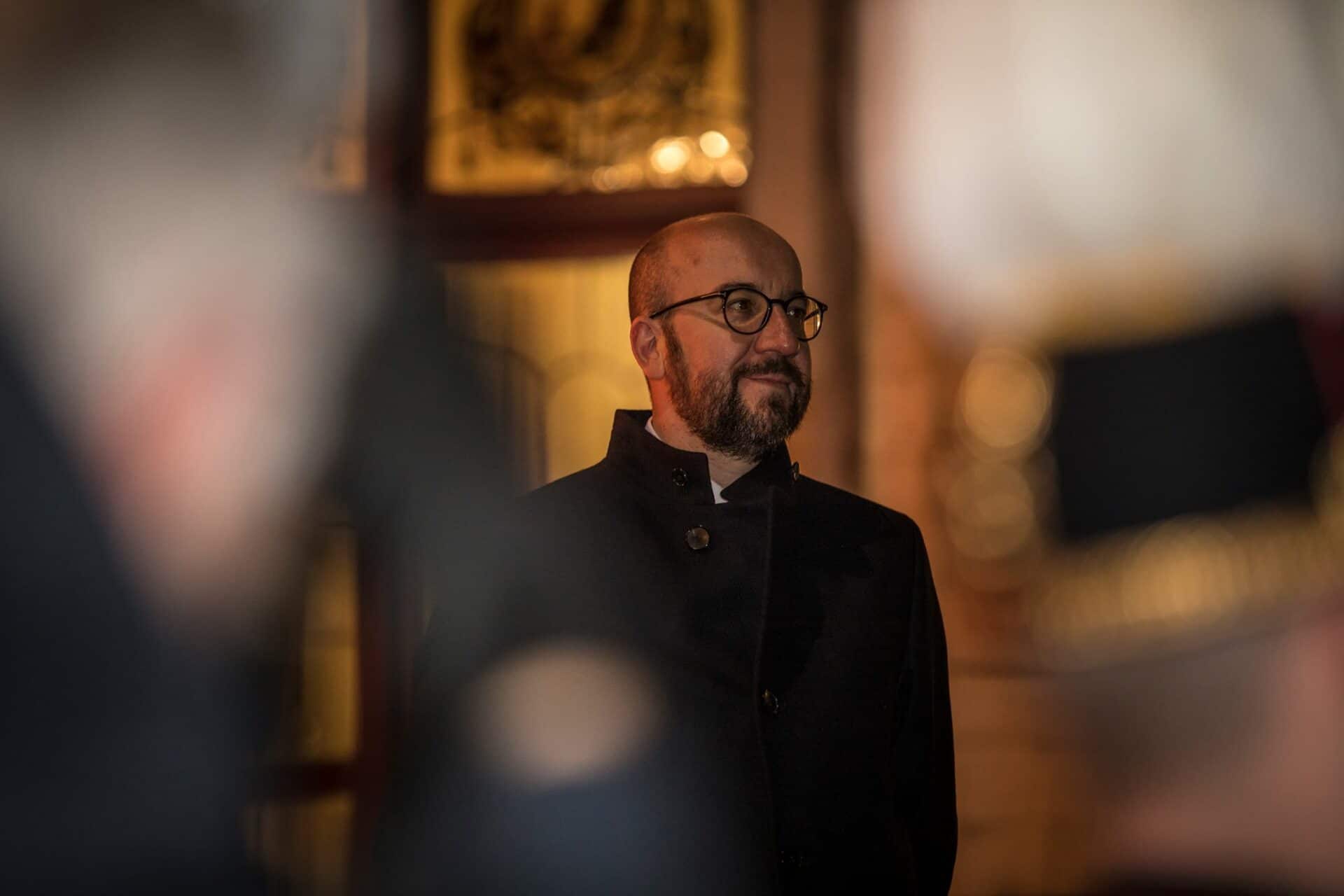
Charles Michel at night
Photo from https://www.facebook.com/CharlesMichel

Today Europe Day is celebrated in Brussels, in Strasbourg and across the European Union. It marks the anniversary of the historic Schuman Declaration, in 1950, that set out a vision for a new cooperation in Europe. And today I came to celebrate Europe Day in a melting pot of European culture and history: Odesa, the city where Pushkin said that “you can feel Europe”. Right here, where the people of Odesa shield their monuments from the bullets and rockets, just like Ukrainians are shielding their freedom from the Russian aggression.

On May 9th 1950, five years after the end of World War Two, Robert Schuman famously said, ‘Europe was not made, we had the war.’ So to ensure peace, Schuman and a handful of visionaries set about building the European Union. And since then, peace has reigned where nations had fought each other for centuries.

As we speak, war rages again in Europe. War from another century, a hegemonic war where one state, Russia, has invaded a neighbouring sovereign state, Ukraine. Where your schools, hospitals and cities are bombed. Where your people are tortured, raped and executed in cold blood. But also where your people are resisting with courage, like this little boy I met a couple of weeks ago in Borodyanka. He told me how he went through the atrocities he witnessed when their city was occupied by the Russian army.

The Kremlin wants to “execute” your spirit of freedom and democracy. But I’m totally convinced they will never succeed. I have come to Odesa on Europe Day with one simple message: You are not alone. We stand with you. We will not let you down. We will be with you for as long as it takes.

And we will help you to build a modern, democratic country. A forward-looking country, ready to embrace with confidence your European future, our common European future, your place in our common European family. I also have a message for my fellow citizens across the European Union: Our peace, our prosperity, the future of our children – they are also at stake here in Odessa. Here in Ukraine.

Slava Ukraini.

Long live Europe.

Metsola, time to answer Europe’s call

0

Europe’s call : In her speech, President Metsola spoke about the reality of a gap which exists between what people expect and what Europe is able to deliver at the moment, particularly in the areas of health, energy and security. She also said that the future of Europe is tied to future of Ukraine.

President Metsola’s speech can be found below.

President Von der Leyen,

President Macron,

Prime Minister Costa,

Dear Europeans,

I am so proud to be here today as we come to this milestone in this unique exercise in active citizenship. In Europe building. In future proofing our foundations.

Among the many speeches we hear today, I think there is one message that we can take away today: Europe’s future is yet unwritten and our story depends on you, on all of us.

This debate took on a new reality on February 24th – when President Putin ordered his army to invade Ukraine. An act of medieval aggression that has changed the world.

The post-February 24th world is a very different one. A more dangerous one. Europe’s role has changed with it. We cannot afford to lose any more time.

How we have responded to the invasion and how we must continue to respond is the litmus test of our values. The unity and resolve of our response has confounded critics and made us proud to be European. That must be the blueprint going forward.

But as we speak here, Ukraine is still being invaded. Bombs are still killing indiscriminately. Women are still being raped. Millions have fled and will continue to do so. People are still trapped in the tunnels under Mariupol.

Ukrainians look to Europe for support. Because they know what millions of Europeans who were forced to spend half a century behind the yoke of the iron curtain will tell you: There is no alternative to Europe.

The future of Europe is tied to the future of Ukraine. The threat we face is real. And the cost of failure is momentous.

And I ask: how will history judge our actions? Will future generations read about the triumph of multilateralism over isolationism? The cementing of an inter-dependent relationship between nations and people who are proud of their differences as Laura said earlier, but who understand that in this new world, the future can only be together?

That is all up to us. That is our responsibility. And let me tell you here today that the European Parliament will fight for a stronger Europe and all of what Europe means. That means freedom, democracy, the rule of law, justice, solidarity, equality of opportunity.

That means that we must listen more than we speak. This exercise must be about you. About our project working for people in villages and towns and regions across Europe.

Europe has a proud history. We have created the common market, ensured enlargement to successive States, embraced universal suffrage, eliminated internal borders, created a common currency and enshrined fundamental rights into our treaties. Our European project has been a success story. It may not be perfect but we represent a bastion of liberal democracy, of personal freedoms, of liberty of thought, of safety and security. That inspires millions in Europe and around the world.

However, this Conference also proves that there exists a gap between what people expect, and what Europe is able to deliver at the moment. That is why we need a convention as the next step. And that is what the European Parliament will insist on. There are issues that simply cannot wait.

That is true for defence. We need a new security and defence policy because we know that we need each other, that alone we are vulnerable. And here we do not have to reinvent the wheel. We can complement rather than compete with existing alliances.

It is true for energy. We are still too reliant on autocrats. Where Energy islands still exist. Where we must support each other as we disentangle ourselves from the Kremlin and invest in alternative energy sources. Where we understand that renewable energy is as much about security as it is about the environment. But we can only do that together.

This is also true for climate change. The challenge of a generation that Europe has proudly led the global charge on.

It is true for health, where we must heed the lessons of the pandemic and make our health systems interconnected, share information and pool resources. When the next virus hits us, we cannot let it shut down our lives. Our first instinct cannot be to re-create the borders of the past.

It is true for our economic model, where we must ensure enough flexibility without tying the hands for generations to come. Where we are able to create the jobs we need to thrive.

It is true for migration, as we heard in the videos and testimonies, where we still need a system that is fair with those in need of protection, that is firm with those who are not, but that is strong against those who abuse the most vulnerable people on the planet.

It is true for equality and solidarity. Our Europe must remain a place where you can be who you wish to be, where your potential is not impacted by your birthplace, your gender, or sexual orientation. A Europe that stands up for our rights – for women, for minorities, for us all. A Europe that leaves nobody behind.

In all these areas and more, I want Europe to lead. Because if not us, it will simply be someone else.

Dear Europeans,

This Conference on the Future of Europe involved hundreds of thousands of people across Europe. This has been an intense experience in the power of participatory democracy after months of discussions and powerful debate. I want to thank you for believing in the promise of Europe.

And I want to specifically thank Guy Verhofstadt and Dubravka Šuica and the different Presidencies of the Council – Prime Minister Costa, Minister Clement Beaune here today – thank you for leading this process. I also want to thank our late President David Sassoli who would be so proud. He would be so proud today. And of course none of this could have been done without all the staff, and I ask you please to applaud the staff of the European Parliament and the institutions who really worked for this to happen. I thank you all, for believing in this exercise, for fighting for Europe, for facing down the cynics.

It is easier to be cynical, to be populist, to look inwards but we should expose populism, cynicism and, nationalism for what they are: false hope sold by those with no answers. Those who are afraid to forge the hard and long road of progress.

Europe has never been afraid. Now it is time to step up and not step back.

We are once again at a defining moment of European integration and no suggestion for change should be off-limits. Whatever process is required in order for us to get there should be embraced.

As a student, I got involved in politics because I believed my generation’s place was Europe. I believe still. We see no old and no new Europe. We see no big and small States. We understand that ideas are bigger than geography.

That feeling, 18 years ago, when 10 countries including my own, joined the EU is a moment that will remain with me forever. We counted the seconds to midnight on May Day and you could feel the joy, the hope, the passion with which people believed. People today in Ukraine, in Georgia, in Moldova and still in the Western Balkans are looking to us with the same sense of purpose. Of course, every country must follow its own path, but we should not be afraid to unleash the power of Europe to change people’s lives for the better, as it did for my country.

Finally, we are gathered here on Europe Day, during the year dedicated to youth, in the seat of the European Parliament, in Strasbourg. There is nowhere more symbolic of the power of democracy, of the power of Europe to take the next step, together.

This is the moment to answer Europe’s call. This is our time.

Thank you.

The flamingo returned to the Turkish lake Tuz after the drought of 2021

0

About 34% of bird’s  population of Europe is in Turkey

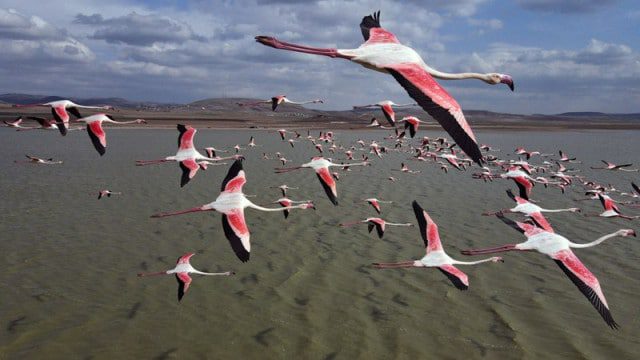
The flamingo population in Turkey makes up about 34% of the total population in Europe. The country is among the main destinations and habitats of birds, along with France and Spain.

Up to 71,000 flamingos spend the winter in Turkey each year. They are “semi-migratory” and some prefer to migrate to other Mediterranean countries, while others spend the whole year in Turkey. Flamingos usually remain in the Aegean, central Turkey and the country’s Mediterranean coasts. Some birds prefer the Black Sea and Marmara regions. Lake Tuz and the Gediz Delta in western Turkey are among the most important breeding grounds for flamingos.

The mass deaths of flamingos last year in the parched parts of Lake Tuz in central Turkey have raised concerns about the condition of birds already threatened by climate change. But bird counts and forecasts this year show flamingos are making a peaceful return to Turkey’s second-largest lake.

The census shows that 1,877 flamingos were born in Lake Tuz in 2021. Officials from the Ministry of Environment, Urban Planning and Climate Change say the flamingo population in the lake could increase with expected rainfall.

Flamingos are animals included in the program of the Ministry of Conservation of Endangered Species. Lake Tuz, one of the most important wetlands for the hatching of this bird, has been identified as a nature reserve and a place to protect the species inhabiting the place.

The lake is also home to many other birds. Mass deaths of newly hatched birds last summer due to the unusual drought scared ornithologists. Lake Ace is a haven for most newborn flamingos who learn to fly over the wetland before heading south in the fall.

Climate change is the main cause of the drought, which is affecting animals relying on massive water resources, which are now threatened with drought. Although the past winter season of precipitation and snowfall has proved favorable and revived the parched parts of the lakes, the danger still exists, according to experts, who warn that future droughts are still possible.

2000-year-old Roman bath welcomes tourists with healing 50-degree water

0

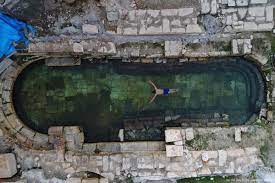
Following a major restoration, the ancient Roman bath of the Basilica of the Thermae, known as the “daughter of the king”, near the city of Kayseri, central Turkey, was open to tourists.

After the ban on paganism during the reign of Emperor Theodosius, the Basilica of the Therma became an episcopal center thanks to the church built next to the Roman Bath. During this period, a marble baptismal font with a cross was placed in the middle of the large thermal pool. The pagans were baptized in the basin of the Basilica of the Thermae. This place was sacred to Christians.

The Basilica of the Thermae (Aqua Sarvenae) was used as a thermal medical center during the Roman Empire. It was also a place of rest and recovery for Roman soldiers going and returning from campaigns and battles.

The figure “snake with the tongue removed”, which is rarely seen in works from this period, is located in the Roman bath Sarkaya. This figure is also considered a symbol of medicine and health.

The relief of Asclepius, the god of health, proves that this structure was used not only for bathing but also for healing.

It is believed that the daughter of the Roman ruler, who lived in Kayseri and had an incurable disease, recovered in the pools of the ancient bath.

After the Byzantine period, the Turkish people continued to benefit from this healing water. People who want to find healing can still take a dip in the hot pool today.

The ruins of the ancient building were discovered during construction activities in the area in 2014. Restoration activities were initiated by the municipality of Sarikaya and the Provincial Directorate of Culture and Tourism.

After several years of cleaning, excavation and restoration work near the Sarkaya baths was continued by the Yozgat Museum Directorate. The unique structure attracts the attention of visitors with its architecture and healing water, which flows at 50 degrees for 2000 years.

In a conversation with the Anatolian State Agency (AA), provincial director of culture and tourism Hussein Shiftchi said the Roman bath was known as one of the world’s first centers of thermal medicine.

He explained that the excavations began in 2014 and continued until 2018. “The Roman bath is included in the preliminary list of UNESCO World Heritage Sites in 2018,” said Shiftchi.

A Turk in space, a mission to the moon, a kebab in the stratosphere – the Turkish space program inspires

0

Turkey continues to pursue its ambitious plans to become a space power and plans to send its first astronaut into space next year. Meanwhile, her ambitions seem to inspire even ordinary people – on the occasion of the International Day of Aviation and Astronautics on April 12, a chef from Adana sent a portion of kebab into the stratosphere with a helium balloon. Although many looked with scorn at his experience, which ended with the bursting of the balloon at a height of 35-40 km above the earth’s surface, the master kebab maker is determined to continue his “space” experiments.

However, it is not a joke that Turkey is rapidly moving towards achieving its goals in its ten-year space program, presented in February last year. The program outlines the country’s vision, goals and projects in space policies over the next ten years. It includes missions to the moon, sending Turkish astronauts on a space mission, and developing satellite systems.

The Minister of Industry and Technology Mustafa Varank announced these days that the requirements for the selection of candidates for space flight will be announced soon. Applicants will undergo a series of medical examinations and will have to meet a number of conditions, including not to use alcohol and cigarettes and not to have undergone major surgery in the past, CNN-Turk reported.

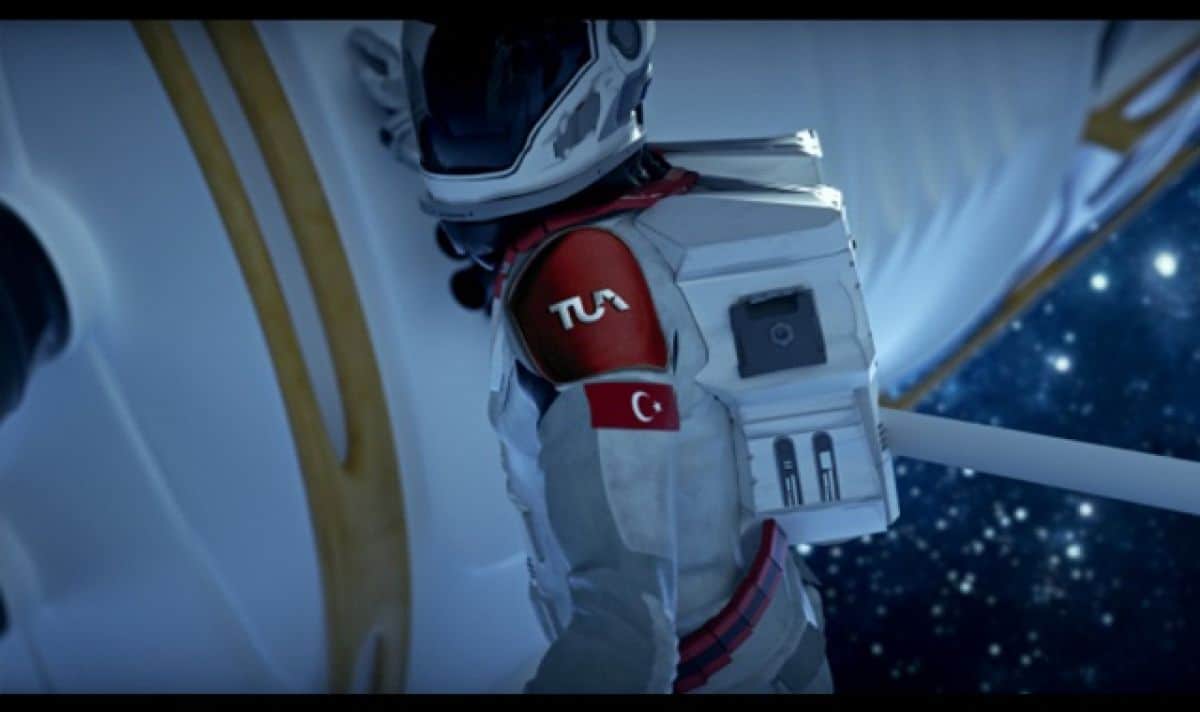
The head of the Turkish Space Agency (TUA) Serdar Hussein Yildirim told the Anatolian Agency that the first Turkish astronaut will be prepared by the end of this year and will be sent into space in the first half of 2023. The selection of candidates will continue around 2- 3 months and the training process between 4 and 6 months, Yıldırım said. The Turkish astronaut will leave on a scientific mission – he will be sent to the International Space Station, where he will stay for ten days, conduct scientific experiments and return.

Last year, Turkish President Recep Tayyip Erdogan called on citizens and linguists to come up with a Turkish word to replace foreigners such as astronauts, astronauts or tycoons, and among the most popular ideas are “turnaunaut”, “gokturk” ) and “Gokmen”, local media reported.

“The National Space Program will elevate Turkey to a higher league in the global space competition,” Erdogan said at the presentation of the ten-year program in February last year. “We will bring the success we have achieved in the defense industry to space,” he added.

However, sending a person on a space trip is by no means the only goal in Turkey’s space program. The country also plans to send a self-propelled vehicle to the moon in the coming years. The initial project has already been completed and the final one will be ready in June, Yildirim said. The device will be 70 percent locally produced and if there is no problem with the supply of parts from abroad, it is expected to be ready in late 2023 or early 2024, he added. The head of TUA predicts that Turkey’s first mission to the moon will take place in 2024.

Initially, Turkey planned to send a rocket to make a “hard landing” on the moon next year, on the centenary of the founding of the republic. However, as Yıldırım said, there will probably be some delay due to obstacles related to the pandemic and now the war in Ukraine. Sending a spacecraft to the moon will make Turkey one of only 5-6 countries in the world to achieve this, he said. The second stage of Turkey’s lunar mission is planned for 2028, when it is planned to make a soft landing on the moon with its own Turkish rockets.

Separately, in December, Turkey launched a new communications satellite with the SpaceX 9 Falcon 9 rocket, bringing the country’s number of satellites to eight. In January last year, the country sent another satellite – Turkksat 5A, and in the first months of 2023 will send into orbit the first fully produced in Turkey communications satellite – Turksat 6A. The project makes Turkey one of a dozen countries in the world that can produce its own satellite, Transport and Infrastructure Minister Adil Karaismailoglu said some time ago.

Moreover, the first observer satellite made entirely in Turkey – IMECE – is ready, Hussein Yıldırım, TUA’s director, said last week in an interview with IHA. This satellite is planned to be launched on January 15 next year.

The country is also planning to build a spaceport in co-operation with other countries, and is already working on the venture, which it intends to pursue with “fraternal, friendly and allied” countries, the TUA chief said.

“Not a luxury, but a necessity” – this is how the head of TUA described Turkey’s space plans, comparing the country’s space program with its successes in defense.

On the agency’s website we read the motto: “The place where the future begins”. It remains to be seen whether Turkey will really become such a place.

Photo: TUA