This week, the European Parliament’s plenary adopted a report, which, after many years, could have taken a strong action in defence of freedom of religion of minorities suffering persecution. “Instead, the ideological ‘pressure’ of the radicalising European left has undermined the original intention of the report. It has prevented the document from effectively condemning religious persecution in line with its initial aim and undermined the report from drawing attention to religious persecution in general but also to the plight of Christians who are the most persecuted for their faith”, underlined the Christian Democrat MEP Gyorgy Hölvényi on the vote of the report.
The MEP said, “There is a great need for EU action against religious persecution, and this is why the report has been put to the agenda. I myself have been involved in the work with 18 amendments to underline the need of the fight against Christian and religious persecution and to recognise the undeniable role of faith-based organisations in humanitarian work in the text”.
“However, the original intention of the report has been reversed, and instead of protecting religious minorities who are suffering from persecution, they are the ones who are blamed for abusing religious freedom and being against normality. The political left in the European Parliament has used the document to blame religious leaders for violating human rights and misusing the religion to impose discriminatory policies to undermine the rights of LGBTIQ people, the rights of women and girls, and to restrict their access to education and sexual and reproductive health and rights,” stressed MEP Gyorgy Hölvényi in a press released issued by his office.
The Christian Democrat MEP emphasized, “It is outrages that this radicalism has gone so far as to undermine freedom of thought, conscience and religion, and to open the door to discrimination against religious communities and religious leaders. These false ideologies make it impossible to protect the victims of religious persecution, leaving women and girls belonging to religious minorities in an even more vulnerable situation”. This approach ignores the importance of religious actors in the protection of human rights and human dignity.
“The left is putting pressure on the European Parliament to degrade religious freedom. This is discrimination against fundamental human rights, a serious violation of freedom of speech regardless of belief or non-belief. We are witnessing a restriction of freedom of expression unprecedented even in Communist times, which cannot be supported under any circumstances. It is an unfortunate fact that during the vote, keeping in mind the original goal of the report, many did not notice the leftist trap against freedom of religion and freedom of speech,” the MEP added.
When Christians in Belarus take responsibility to stand up for justice as individuals as their churches remain silent, they take on consequences for their own lives, says the Orthodox moderator of an ecumenical group.
Natallia Vasilevich, Orthodox theologian and human rights lawyer, and moderator of the ecumenical group Christian Vision in Belarus told the World Council of Churches.
She said Christians in Belarus, Russia’s ally in its war on Ukraine, do not fear to be messengers of justice and peace
Vasilevich prefers to speak of the role of Christians rather than the role of churches in Belarusian society.
“Many Christians are more motivated, and are taking responsibility—and also take consequences for their lives—when they join the democratic movement…the movement for fair elections, for human rights, for justice and peace,” said Vasilevich in an interview.
She prefers to speak about the role of Christians because, in the current Belarusian context, she said institutional churches often fail to stand up for human rights while individual Christians at the grassroots are bringing a prophetic voice with seeds of hope.
Vasilevich serves as moderator of the ecumenical group Christian Vision, which unites Belarusian theologians, clerics and active laity of Orthodox, Roman Catholic, Greek Catholic, Anglican and Evangelical churches.
The group promotes respect to human dignity and rights, rule of law, justice, peace, and Christian witness in social and political life.
Given the high level of oppression by the Belarusian government, even so-called small voices make a big impact, Vasilevich.
“People can go to prison just for saying a few words,” she said, adding that Christians engaged in the human rights movement in Belarus “bear a lot of burden on themselves and they are ready to sacrifice.”
From a small picture on Facebook to laying flowers at a rail station, from displaying a sticker on a vehicle to simply gathering in prayer—these are all manifestations of the voices of Christian human rights advocates.
“That’s why they are probably not always visible as Christians but I think it’s very important to give them this vocality because the small signs should be promoted,” said Vasilevich.
She shines a light on the example of Orthodox priest Mikhail Marugo from Minsk who, after standing with flowers at a railway station in one of days when the Russia’s war with Ukraine started, was imprisoned for 13 days.
IMPRISONED FOR FACEBOOK PHOTOS
Vasilevich lifts up priests who were imprisoned for posting profile pictures on Facebook with the Ukrainian flag, such as Catholic priest Aliaksandr Baran.
She lifts up Greek-Catholic priest Vasil Yahorau who had a sticker on his car that read “Forgive us, Ukraine”—and was imprisoned for it.
“In this shrunken public space, it’s very difficult to witness for churches,” said Vasilevich.
“Orthodox women, mothers came to pray together, to the Mother of God before her Minsk icon in the Orthodox cathedral, and while entering the cathedral they were filmed. Four women, after the service, were taken to the police station and asked why they were praying to the Mother of God against the war.”
Even if the message of institutional churches is unable to be strong, the message of the individual Christians is shining, insists Vasilevich.
“It shows Christians have this moral motivation inspired by the gospel,” she said. “They do not fear. They try to be messengers of justice and peace in Belarusian society.”
Parliament backs giving more powers to Europol, but with supervision
On Wednesday, the European Parliament plenary gave its final green light to granting new powers to Europol.
With 480 in favour, 143 against, and 20 abstaining, MEPs endorsed the deal reached in February by Parliament and Council negotiators on strengthening the mandate of Europol, the EU’s police agency, which supports police investigations carried out by the member states.
Under the new rules, Europol will be able to pursue research and innovation projects, process large datasets, and help national authorities screen foreign direct investment in security-related cases. When dealing with terrorist content or child sexual abuse material, Europol will be able to receive data from private companies, for example communication services.
New Fundamental Rights Officer and ensuring respect of EU data protection rules
To balance the police agency’s new powers with appropriate supervision, the co-legislators agreed that the agency will create a new post for a Fundamental Rights Officer. In addition, the European Data Protection Supervisor (EDPS) will oversee Europol’s personal data processing operations, and work together with the agency’s Data Protection Officer. Citizens will be able to consult personal data related to them by contacting authorities in member states, or Europol directly.
Quote
After the vote, rapporteur Javier Zarzalejos (EPP, ES) said: “This Regulation, and the new mandate for Europol, mark a substantial leap forward in the capabilities of the Agency, in its ability to support member states, in its governance framework and, last but certainly not least, in the enhanced system of safeguards we have put in place.”
Next steps
The legal text now needs to be formally adopted by the Council, before it is published in the EU’s official journal and enters into force.
Humanitarian needs continue to rise in war-torn Ukraine where an estimated now 7.7 million people displaced inside Ukraine, UN emergency relief chief Martin Griffiths said on Thursday.
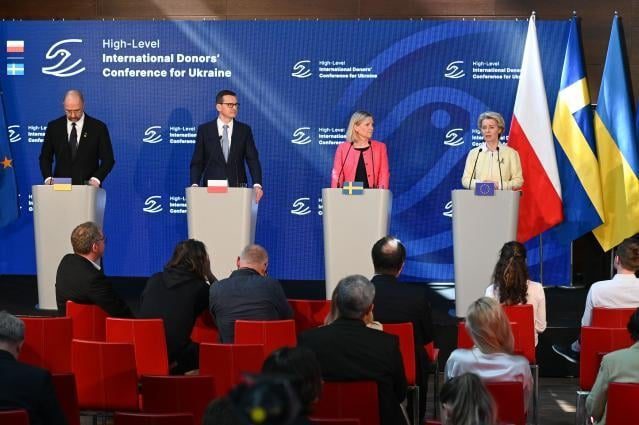
Mr. Griffiths was addressing the International Donor Conference for Ukraine in Warsaw. Co-hosted by Poland and Sweden, in cooperation with the Presidents of the European Commission and the European Council.
According to the UN refugee agency, UNHCR, more than 5.7 million people have now fled across Ukraine’s borders seeking shelter, in the two and a half months since the Russian invasion on 24 February.
In a tweet, UN High Commissioner for Refugees, Filippo Grandi, said that in his briefing to the conference, he had stressed priorities for the millions of refugees and internally diplaced, the importance of cash programmes, shelter and accommodation, and protection of the vulnerable.
He also made clear that planning needs to begin now, for their eventual return home, and solutions to make that a reality.
World Food Programme (WFP) chief David Beasley, also addressed the conference, following the announcement yesterday by the UN emergency food relief agency that it had signed a Memorandum of Understanding (MoU) with the Ministry of Social Policy of Ukraine, to scale up cash transfers to half a million people across Ukraine.
The agreement with the Government will support people displaced by the war, and expand the assistance already provided to 170,000 people through cash assistance.
“This partnership will expand our efforts to support the Social Protection system that is already in place in Ukraine,” said Samir Wanmali, WFP Deputy Emergency Coordinator.
Since the beginning of April, WFP has transferred nearly $11 million in local currency, to more than 170,000 people In Vinnytsia, Ivano-Frankivsk, Kharkiv and other cities. Those eligible are receiving between $75 and $225 per month, depending on family size.
Cash allows people to buy the items and services that they consider most important. It is extremely useful to families with a variety of needs in a volatile environment, when they may be moving locations.
Every dollar spent by a family in Ukraine is directly injected into the local economy, said WFP.
Millions traumatized, needing help: UN rights experts
UN independent human rights experts together with the Coordinator of the international non-governmental group known as the Global Protection Cluster, issued a statement on Thursday, highlighting the “appalling” humanitarian situation facing millions in Ukraine
“Multiple forms of gender-based violence are being reported such as sexual exploitation and abuse and sexual violence, including conflict-related sexual violence. Women and girls on the move – at border crossing points or transit and collective centres and in bomb shelters – experience particularly high insecurity and risk of violence, including trafficking in persons”, they said.
“Numerous families have been separated during displacement, and unaccompanied and separated children are particularly vulnerable to the risks of trafficking, violence, abuse and exploitation.”
The also expressed deep concern over the plight of older people and those with disabilities in the war zone.
“Many of them are still in conflict zones because of mobility limitations or reliance on others for care, and face challenges in accessing bomb shelters or safe areas. We are especially concerned about those persons with disabilities, including children, living in institutions for persons with disabilities who face barriers to access humanitarian assistance and evacuation on an equal basis with others.”
Support to save lives
The independent experts called on the international community and donors to provide sustained and increased support for the response to internal displacement and the Ukraine Flash Appeal, and other critical efforts to protect the human rights of all civilians who remain in Ukraine.
“We urge the parties to the conflict to respect international humanitarian law and international human rights law to protect civilians, the statement said.
“We reiterate our call for accountability for the horrific crimes already documented and our support for the initiatives established to investigate these allegations.”
UN Special Rapporteurs are independent experts, appointed by the Human Rights Council. They work on a voluntary basis, are not UN staff, and are not paid for their work.
Journalists are targeted in Ukraine and continue to face unprecedented dangers carrying out their work in the wake of the Russian invasion, top independent rights experts said on Wednesday.
The alert from UN-appointed independent rights experts, including the UN Special Rapporteur on freedom of expression, cited “numerous reports” that journalists have been “targeted, tortured, kidnapped, attacked and killed, or refused safe passage” from cities and regions under siege”.Latest UN data indicates that seven journalists have been confirmed killed in Ukraine since the Russian invasion on 24 February; the last time so many media professionals lost their lives in Ukraine, was in 2014, when Russia annexed Crimea.
Russia’s war against Ukraine has been made easier by the “silencing of critical voices…over a prolonged period of time”, the rights experts maintained, while pointing to the blocking of social media platforms and news websites in Russia, and the disruption of foreign media services.
Equally concerning was Moscow’s “massive labelling” of independent media as “foreign agents”, the experts said, before denouncing new Russian legislation that threatens 15-year jail terms to journalists “for spreading ‘fake’ information about the war in Ukraine”, questioning the so-called special military operation in Ukraine, “or even mentioning the word ‘war’”.
They added: “We deplore the systematic crackdown on political opponents, independent journalists and the media, human rights activists, protesters and many others opposing the Russian government’s actions. All these measures amount to the creation of a state monopoly on information in blatant violation of Russia’s international obligations.”
After condemning Russia’s alleged use of “propaganda for war” against Ukraine, the rights experts maintained that disinformation was also being spread about Ukraine in Russian State-owned media.
‘Disproportionate’ EU sanctions
But they rejected the European Union’s recent decision to ban two Russian media companies as “disproportionate”, adding that this move had been used “as a pretext…for (the) additional closure of independent media outlets” in Russia.
“Promoting access to diverse and verifiable information, including ensuring access to free, independent and pluralistic media, is a more effective response to disinformation,” they said.
“We call on the Russian government to fully implement its international human rights obligations, including by respecting, promoting and protecting the freedom to seek, receive and impart information regardless of frontiers, and by ensuring a safe working environment for independent media, journalists and civil society actors.”
Cyberattack concerns
Within Ukraine, the rights experts also warned that the possibility of cyberattacks against Ukrainian media and internet infrastructure by Russian forces was deeply worrying, in a joint statement with the African Commission of Human Rights, the Inter-American Commission for Human Rights and the Organization for Security and Co-operation (OSCE) in Europe.
During armed conflict, journalists must be treated as civilians and any attempt on their lives constitutes a war crime, the rights experts insisted, adding that that States have a “duty and obligation” respect international humanitarian law.
Special Procedures is the general name of the Council’s independent fact-finding and monitoring mechanisms that address specific country situations or thematic issues in all parts of the world.
Experts work on a voluntary basis as Independent Experts or Special Rapporteurs; they are not UN staff and do not receive a salary for their work.
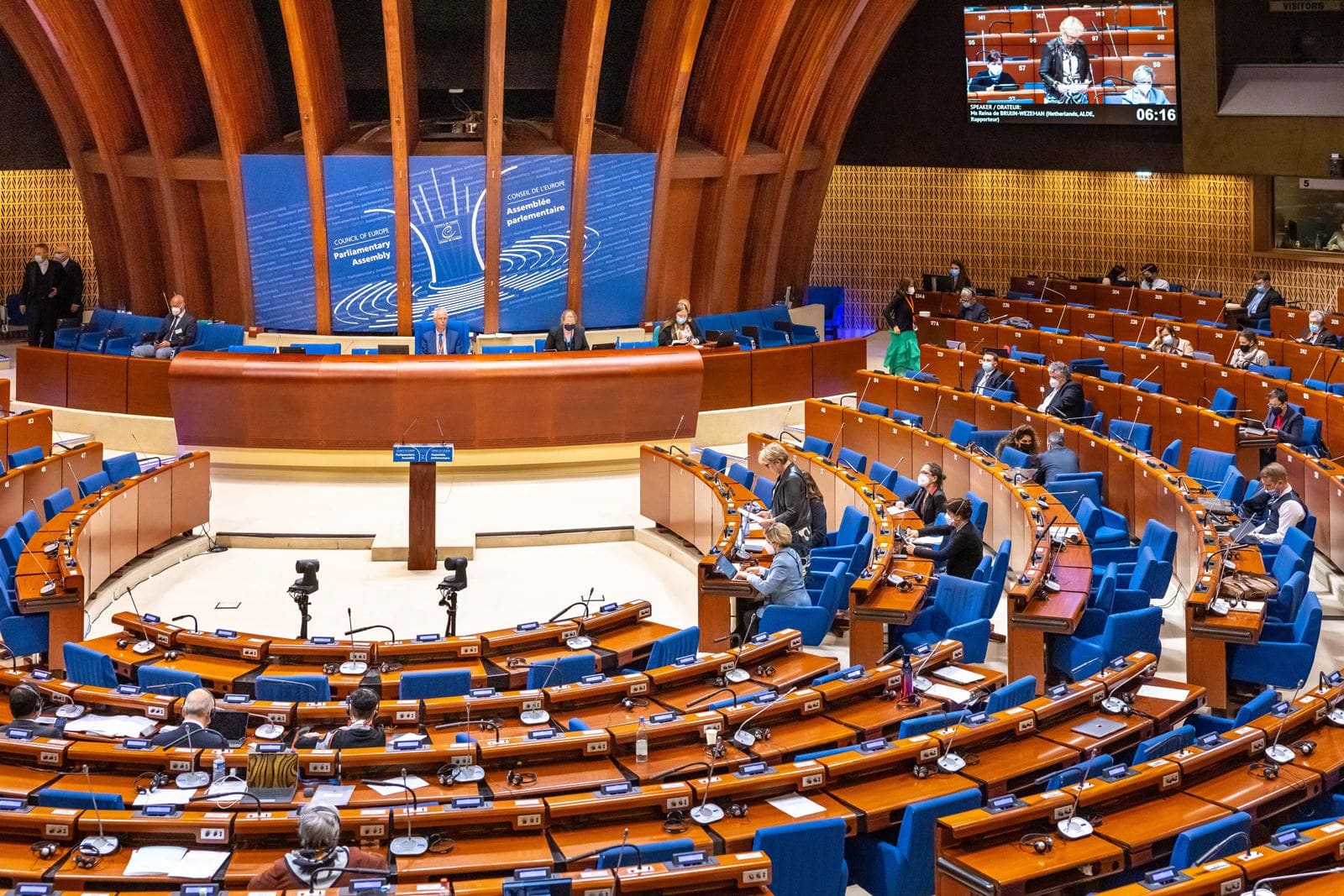
The Parliamentary Assembly of the Council of Europe adopted a Recommendation and a Resolution on the deinstitutionalisation of persons with disabilities. Both of these provide important guidelines in the process of implementing human rights in this field for the years to come.
Both the Recommendation and the Resolution were approved with a very large majority vote during the Assembly’s Spring session at the end of April. Every political group as did all speakers during the debate supported the report and its recommendations thus solidly confirming the rights of persons with disability as part of the European agenda.
Ms Reina de Bruijn-Wezeman, from the Assembly’s Social Affairs, Health and Sustainable Development Committee had led the Assembly’s investigation in to the issue lasting nearly two years. She now presented her findings and recommendations to the plenary Assembly, following a unanimous approval in the committee.
She told the Assembly, that “Persons with disabilities have the same human rights as you and me. They have the right to live independently and receive appropriate community-based services. This applies no matter how intensive support is needed.”
She added that “Deinstitutionalisation, in my opinion, is a key stepping stone to ending coercion in mental health. The right of persons with disabilities to equality and inclusion are now recognized at the international level in particularly thanks to the UN Convention of the Rights of Persons with Disabilities, the CRPD, adopted in 2006.”
Ms Reina de Bruijn-Wezeman, as a last point in her presentation stated “I call on Parliament to take the necessary steps to progressively repeal legislation authorizing institutionalisation of persons with disabilities, as well as mental health legislation allowing treatment without consent and not to support or endorse draft legal texts which would make successful and meaningful deinstitutionalisation more difficult and which go against the spirit of the letter of the CRPD.”
Committee Opinion
As part of the regular procedures of the Parliamentary Assembly a so-called Opinion on the report from another Parliamentary Committee was presented. Ms Liliana Tanguy from the Committee on Equality and Non-Discrimination presented the Committee’s Opinion. She noted, that “the assembly has repeatedly confirmed its support for the full respect of the rights of persons with disabilities.” She congratulated Ms. Bruijn-Wezeman on her report, which she stated clearly highlights why deinstitutionalisation of people with disabilities must be an integral part of this approach.
She added that she as well “want to congratulate the rapporteur because her report goes beyond mere policy positions. It draws attention to the concrete measures that States can and should take in order to ensure a relevant, effective and sustainable deinstitutionalisation process, fully respecting the rights of people with disabilities as well as the sources of funding to achieve this.”
Placed in an institution is placed at risk
Ms Reina de Bruijn-Wezeman presenting her report to the Assembly (Photo: THIX photo)
Ms Reina de Bruijn-Wezeman in the presentation of her report had pointed out that “placement on institutions affects the lives of more than a million European citizens and is a pervasive violation of the rights as laid down in Article 19 of the CRPD, which calls to a firm commitment to deinstitutionalisation.”
This has to be seen in the view that persons with disabilities are some of the most vulnerable individuals in our society. And that being placed in institutions “puts them at risk of systemic and individual human rights violations, and many experience physical, mental and sexual violence,” she told the Assembly.
That it isn’t empty words was firmly confirmed when Mr Thomas Pringle from Ireland, who spoke on behalf of the Unified European Left Group, chose to give some examples from Ireland and even his own constituency, were sexual abuse of residents of a centre had come to light. He told the parliamentarians from all of Europe that there has been a long history of abuses in Ireland being exposed over the last ten years or more, with the government having to apologize to citizens on a regular basis.
“It was only a matter of time before apologies will have to be made to people with disabilities for the neglect and abuse that they have received while being accommodated by the state,” Mr Thomas Pringle added.
Ms Beatrice Fresko-Rolfo, speaking on behalf of the Alliance of Liberals and Democrats for Europe (ALDE) group noted that people with disabilities and their families often experience a confusion in the institutional system at the expense of their most basic rights. “Most of the time, they are placed in institutions when they could very well flourish outside them,” she pointed out.
She told the Assembly that she personally “share all the arguments about the benefits that would result from deinstitutionalisation, both for the state, for the people concerned and for our societal models.” She added that “In short, a new health policy that would rely on an increase in human and financial resources for care in the city.”
The most vulnerable and challenged citizens
Mr Joseph O’Reilly speaking on behalf of the Group of the European People’s Party and Christian Democrats stressed, that “The true measure of a civilized society is how it responds to its most vulnerable and challenged citizens.” And he spelled it out, when he said, “For too long, our response to persons with disability has been institutionalisation, a throwing away of the keys and grossly inadequate care, if not abuse. We must deinstitutionalise persons with psychiatric disorders. Psychiatric treatment is and has been the Cinderella of medicine.”
Mr Constantinos Efstathiou from Cyprus further commented on the need to take care of the vulnerable, “For years Institutionalisation proved to be the excuse for not assuming our responsibility, a special responsibility and duty to care for the vulnerable.” He added, that “The practice of confining and forgetting is no longer acceptable. Our co-citizens who happen to be vulnerable must be supported and free to exercise their human rights as a matter of principle, no matter the cost or effort.”
Ms Heike Engelhardt from Germany noted, that “Our society as a whole is called upon to provide inclusive forms of housing in which the old and the young live together, in which people without handicaps and people with assistance needs live together as neighbours. Such forms of living bring us closer to this goal.”
“It is important and right that mental health has its place here in the Council of Europe,” she added. “We must make sure that our recommendations respect the UN Disability Rights Convention of 2006. The Convention understands that human rights apply to everyone. They are not divisible. People with disabilities must be able to make their own decisions as active members of society. We are here today to move a little closer to this goal.”
Deinstitutionalisation required
Debate in the Assembly (Photo: THIX Photo)
Ms Margreet de Boer, from the Netherlands noted, “The move towards deinstitutionalisation of persons with disabilities is both strongly needed and required by states human rights obligations where placement in institutions should be abandoned. It’s still being used far too often in all sorts of care, both for people with physical disabilities and people with psychiatric problems.”
“The ultimate goal of deinstitutionalisation is to enable people with disabilities to live ordinary lives in ordinary places, to live independently in their community on an equal basis with others,” Ms Fiona O’Loughlin from Ireland noted.
She then raised the rhetoric question “What do we need to do to achieve that?” Which she answered with the statement: “We need a comprehensive rollout of disability awareness training in line with the human rights model of disability. Only then can we begin to confront unconscious bias and view and value people with disabilities for who they are as citizens of society, capable of contributing to society and living independently.”
And awareness raising is needed. Mr Antón Gómez-Reino from Spain expressed the belief, that “we are living in a difficult time for equality, there are many dark forces also in our democracies, they put prejudices discourses on the table. And that is precisely why we also have to strengthen our commitment to those people with disabilities.”
In alignment with other speakers, he expressed, “It is not acceptable that the response to our citizens with disabilities is confinement without alternative, its oblivion, and it’s the violation and absence of rights.” He pointed out that, “We must go beyond simple, pathologizing and segregating visions that some still defend, and those models that solve only and exclusively with deprivation of liberty. These situations require greater sensitivity and, above all, greater commitment from legislators and the public.”
Long-term strategy
Ms Reina de Bruijn-Wezeman in her presentation had made it clear that a key challenge is to ensure that the process of institutionalisation itself is carried out in a way that is human rights compliant.
The process of deinstitutionalisation, she explained, “requires a long-term strategy that ensures that good quality care is available in community settings. As institutionalised persons are being reintegrated into society, there is a need for a comprehensive social service and individualised support in the deinstitutionalisation process in order to support these persons and in many cases their families or other carers. Such support must be accompanied by specific access to services outside institutions enabling people to obtain care, work, social assistance, housing, etc.”
She warned that “if the process of deinstitutionalisation is not managed properly and without due consideration to special needs of each person concerned, this can have unfortunate consequences.”
Mr Pavlo Sushko from Ukraine confirmed this would be necessary, based on experience from his country. He noted, that “A lot of European countries have deinstitutionalisation strategies or have at least adopted measures in a broader disability strategy.” But also, that these have to be done based on the existing conditions of that particular country.
He said that “Each country has its own tempo and progress in this reform.” A viewpoint that was shared by other speakers.
Sharing experiences
Several speakers mentioned the scene of their countries both the good and the bad. Standing out was the good examples from Sweden mentioned by Ms Ann-Britt Åsebol. She pointed out that people with disabilities have the right to their own housing in Sweden and to the support needed to be able to live an independent life. Other examples were mentioned from Azerbaijan and even Mexico.
Ms Reina de Bruijn-Wezeman told The European Times that she was happy with the sharing of national experiences as part of the deinstitutionalisation process in different countries that had been indicated by Assembly speakers.
In concluding the debate Ms Reina de Bruijn-Wezeman gave a comment related to a financial concern of some policymakers in regards to persons with complex disabilities. She said, that “Institutionalised care is paying a lot of money for a poorer outcome in terms of quality of life.” She however also confirmed that it’s true that deinstitutionalisation is costly during the transition period when the institutions are still running and community care is starting out. But this is only during this transition time which she estimated to be 5 to 10 years.
Ms Reina de Bruijn-Wezeman in reflecting on the debate told The European Times that she appreciated the broad support of her report and the Resolution and Recommendation. She however also did note that there were some “buts”. She referred among others to the statement of Mr Pierre-Alain Fridez from Switzerland, who while fully supporting the objectives of the report had expressed a “but”. He believed that for some cases, institutionalisation unfortunately is the only solution for many reasons. He pointed to such instances as a very high level of drug dependence and the exhaustion of family caregivers.
The right to choose and to dignity
In a concluding speech the Chair of the Social Affairs, Health and Sustainable Development Committee, Ms Selin Sayek Böke, reiterated that “each and every individual has the right to choose how they wish to live, with whom they live, where they live, and how they conduct their daily experiences. Each and every individual has the right to dignity. And as such, all our policies actually have to seek that we protect and guarantee that dignity, the right to a dignified life. And this is the guiding principle in the paradigm shift that the UN has put forward with the Convention on the Rights of Persons with Disabilities.”
She pointed to the fact that Article 19 of the convention clearly states our duty to recognize the equal rights of people with disabilities and to ensure full inclusion and participation in the community by: One, ensuring free choice of living conditions; Two, ensuring access to that choice, which means we need the financial and economic resources to do so. Three, by ensuring a comprehensive and holistic framework of provision of public services through those financial means, ranging from access to health, education, employment in short, access to life not only for the disabled, but for their families as well, so that we truly build up a community-based service.
She added “We need to make sure we build that community-based system through a systemic strategy, through well-placed economic policy, through a holistic framework, through monitoring where we make sure it’s actually happens.”
Mr Éctor Jaime Ramírez Barba, an observer to the Council of Europe Parliamentary Assemble for the Mexican Pan party stated that “in Mexico, I believe that we should follow the recommendation given in this report, which I hope this Assembly will approve.”
This World Hand Hygiene Day, we interviewed Ana Paola Coutinho Rehse, Technical Officer for Infectious Disease Prevention and Control at WHO/Europe, to find out about the importance of hand hygiene and what the campaign hopes to achieve.
In our daily lives, we do so much with our hands. They are tools for creativity and for expressing ourselves, and a means for providing care and doing good. But hands can also be centres for germs and can easily spread infectious diseases to others – including vulnerable patients being treated in health facilities.
Hand hygiene is a key protective measure against infectious diseases and helps prevent further transmission. As we have seen recently, hand cleaning is at the heart of our emergency responses to many infectious diseases, such as COVID-19 and hepatitis, and it continues to be a vital tool for infection prevention and control (IPC) everywhere.
Even now, during the Ukraine war, good hygiene, including hand hygiene, is proving vital for the safe care of refugees and the treatment of those that have been injured in the war. Maintaining good hand hygiene therefore needs to be part of all our routines, at all times.
2. Can you tell us about the theme for this year’s World Hand Hygiene Day?
WHO has been promoting World Hand Hygiene Day since 2009. This year, the theme is “Unite for safety: clean your hands”, and it encourages health-care facilities to develop quality and safety climates or cultures that value hand hygiene and IPC. It recognizes that people at all levels in these organizations have a role to play in working together to influence this culture, through spreading knowledge, leading by example and supporting clean hand behaviours.
3. Who can take part in this year’s World Hand Hygiene Day campaign?
Anyone is welcome to get involved in the campaign. It is primarily aimed at health workers, but embraces all those who can influence hand hygiene improvement through a culture of safety and quality, such as sector leaders, managers, senior clinical staff, patient organizations, quality and safety managers, IPC practitioners, etc.
4. Why is hand hygiene in health-care facilities so important?
Every year, hundreds of millions of patients are affected by health care-associated infections, leading to the death of 1 in 10 infected patients. Hand hygiene is one of the most critical and proven measures to reduce this avoidable harm. The key message from World Hand Hygiene Day is that people at all levels need to believe in the importance of hand hygiene and IPC to prevent these infections from happening and to save lives.
5. What does a “quality and safety climate that values hand hygiene” look like?
This can mean many different things, but can generally be outlined as efforts that prioritize high compliance with best practices in hand hygiene.
At the institutional level, this should include the allocation of resources for hand hygiene training programmes, supplies and infrastructure; clear messages of support for hand hygiene from leaders within the institution; hand hygiene benchmarks or targets; and hand hygiene champions.
At the individual level, the aim is to ensure that health workers identify hand hygiene as a priority that reflects their commitment to safeguarding the health of their patients. It can also be demonstrated by partnering with patients and patient organizations to co-develop improvement initiatives, and through leading by example as role models. And, of course, hand hygiene should be seen as a core measure that everyone takes for their health protection.
6. How can health facilities demonstrate that they are on track or have achieved such a climate/culture?
Monitoring and then sharing data on hand hygiene compliance with health workers, leaders and the public demonstrates to the whole community that the service is accountable and committed to creating a clean, safe environment that provides quality care. Additionally, health workers should feel assured that they are free to speak out about hand hygiene standards without fear of recrimination, and should also feel actively encouraged to contribute to solutions. A culture of sharing and learning is key to all of this.
7. What are some things that those working in health care can be doing?
Everybody can contribute to a climate of safety and quality:
Facility managers can ensure adequate facilities are in place to clean hands.
Health workers can lead by example and encourage others to clean their hands.
Those in charge of quality and safety in health care can work with IPC focal points to support improvement efforts.
IPC practitioners can engage health workers to be part of new initiatives.
Policy-makers can prioritize resources, trainings and programmes on hand hygiene as part of IPC.
All people who use health care can get involved in local hand hygiene campaigns and activities.
8. How can I find out more about World Hand Hygiene Day?
To find out more, visit the World Hand Hygiene Day webpage below. It includes downloadable posters in different languages for a range of key health-care audiences, as well as videos and other resources that you can use and share. Over 7000 hospitals from across the WHO European Region have registered to take part in this year’s campaign, so you are also very welcome to join us to spread the message of “Unite for safety: clean your hands”.
As part of the “long journey” to recover from the ravages of COVID-19, UN General Assembly President Abdulla Shahid highlighted on Wednesday the need to build a more sustainable, resilient, and responsible global tourism sector. The COVID-19 pandemic ground the entire tourism sector to a halt, dealing a “devastating blow to the global economy,” he told the first-ever High-Level Thematic Debate on Sustainable Tourism.
“In 2019, prior to the pandemic, tourism contributed $3.5 trillion to global GDP. The precipitous drop during the pandemic is estimated to have cost up to 120 million jobs”.
Though easy to sum up the devastation in numbers, capturing the overall toll on people, communities and services, is much harder, particularly for many small island States and least developed countries, which remain heavily reliant on tourism to fuel public spending.
Looking beyond the numbers, tourism plays a deeply human role: “Travel and tourism connect and unite us…builds bridges and facilitates inter-cultural exchanges…[and] fosters peace and solidarity across continents and borders,” said Mr. Shahid.
Creative tourism
From “travel bubbles” to digital tours, vaccine passports and “resilient corridors”, imaginative efforts were made to help tourism weather two years of COVID.
“As the pandemic wanes, the tourism sector is rebounding”, he said, speaking to “the human need to connect, to explore, to experience”.
“However, as it rebounds, it is important that we reflect on its future direction”.
Challenges ahead
While acknowledging the economic importance of tourism, the Assembly president warned that we must also contend with the harm it inflicts on the planet, such as carbon emissions; oceans brimming with plastics; and the human toll on ecosystems and wildlife.
“We know that many of the communities and historic sites around the world that are beloved by tourists are climate and disaster prone and need support to build resilience,” he added.
According to the UN Environment Programme’s Green Economy Report, a ‘business-as-usual’ scenario predicts that by 2050, tourism will generate an increase of 154 per cent in energy consumption, for the sector, 131 per cent in greenhouse gas emissions, 152 per cent in water consumption, and 251 per cent in solid waste disposal.
“We cannot allow this to continue. We must not reboot global tourism in a business-as-usual manner, we must be more ambitious than that, more responsible than that,” underscored Mr. Shahid.
‘Time for bold action’
Throughout the discussions, the UN official encouraged participants to address their commitments under the Sustainable Development Goals (SDGs) and Paris Agreement on Climate Change, and enhance the inclusion and empowerment of women, youth, indigenous and other marginalized communities
“Today, I call on all stakeholders to seize every opportunity to transform the tourism sector, and to target a more sustainable, inclusive and responsible approach,” he said.
“Now is the time for bold action and all ideas are welcome”. UN News/Elizabeth Scaffidi
Via rickshaw, tourists explore the historical Chandni Chowk market in Delhi, India.
Invest in tourism
World Tourism Organization (WTO) chief Zurab Pololikashvili noted that the current energy crisis contributes to the vulnerability of the tourism sector, while maintaining that investments in tourism are also investments in peace.
He said tourism was particularly important to the livelihoods of women, youth and rural communities, and championed the need for a fresh, sustainable balance between the short-term demands of tourists and the longer-term needs of communities.
The WTO official stressed that tourism can drive positive change, and lauded the diverse sectors that have participated in the “landmark” conversation about sustainability.
Supporting the sector
The Director of the World Bank’s Urban, Disaster Risk Management, Resilience and Land Global Practice, Sameh Wahba, spoke of inclusive, resilient sustainable cities and communities.
He said that as tourism employs 10 per cent of the global workforce, it offers important opportunities for women, rural communities and small businesses.
Mr. Wahba advocated support for nations to promote sustainable tourism to benefit poor communities and preserve culture, heritage and the environment.
Assisting the SDGs
Deputy UN chief Amina Mohammed observed that “tourism is in turmoil,” largely from the COVID pandemic, but also from conflict settings, including Ukraine.
Insisting that sustainability remain at the core of tourism, she advocated for the sector to be transformed into a positive force in implementing the SDGs.
Commission announces new aid worth €200 million for displaced people
Today, the Commission is announcing a new aid package of €200 million to support displaced people in Ukraine, in the context of the International Donor’s Conference convened jointly by Poland and Sweden.
President Ursula von der Leyen said: “Today we came together with a clear purpose: to support the brave people of Ukraine, who fight the aggressor and stand up for their freedom. We are now in the 10th week of Russia’s brutal invasion. 10 weeks during which the European Union stood firmly by Ukraine. Today, the European Union answered the call, once more, to support Ukraine. On behalf of the European Commission, I pledged 200 million euros for Ukraine. And last month, during a pledging event, raised 9.1 billion euros for Ukrainians inside and outside Ukraine. We know that more will be needed. And we will continue to stand up for Ukraine.”
Background
Close to 8 million people, two-third of whom are children, have been internally displaced since the beginning of Putin’s war in Ukraine. More than 5.3 million have left Ukraine to seek shelter in the EU and neighbouring countries.
The European Union has been supporting the Ukrainian people from the very beginning of Russia’s brutal invasion.
We are mobilising the EU’s economic power, with series of sanctions designed to drain the resources used by Putin to finance his war.
On the other hand, we have already channelled around €4 billion in macro-financial assistance, humanitarian aid and support to Member States welcoming refugees from Ukraine.
Last month, the European Commission convened with Canada a global pledging event, which raised €9.1 billion in support for people fleeing the bombs inside and outside Ukraine.
Now, the European Commission stands ready to help rebuild the country after the war. Yesterday, President von der Leyenproposed to start working on an ambitious recovery package. It should bring the massive investment needed to rebuild, implement reforms and make Ukraine an attractive place for investments
The war in Ukraine is having a disproportionate impact on women and minorities, who are facing immense hardship when it comes to health, safety, and access to food, according to a UN-backed report focused on the changing gender dynamics of the conflict.
The study by UN Women and the international humanitarian organization CARE, is based on surveys and interviews with people in 19 regions in Ukraine, conducted between 2 and 6 April.
After more than two months of war in #Ukraine, women & minorities are facing immense hardship when it comes to health, safety & access to food due to the crisis.
New @unwomenukraine & @CAREGlobal report highlights the disproportionate impact of the war on women & minorities.
— UN Women Europe & CIS (@unwomeneca) May 4, 2022
Women are increasingly becoming heads of households and leaders in their communities as men are conscripted into the fighting, now in its third month.
However, women remain largely excluded from formal decision-making processes related to humanitarian efforts, peace-making, and other areas that directly impact their lives.
“It’s critical that the humanitarian response in Ukraine takes into account and addresses the different needs of women and girls, men and boys, including those that are furthest left behind,” said Sima Bahous, Executive Director at UN Women.
The Rapid Gender Analysis found the war’s impacts are particularly disproportionate for internally displaced people and marginalized groups, such as female-headed households, the Roma community, people with disabilities, and persons who are lesbian, gay, bisexual, trans, queer, intersex or asexual (LGBTQIA+).
Many Roma reported experiencing severe discrimination, both in their daily struggle and in access to humanitarian aid.
Unpaid care burden
Gender roles are also changing. While many men have become unemployed or have been called up to serve in the armed forces, women have taken on new roles and multiple jobs to make up for lost household income.
Women’s unpaid care burden has increased significantly, due to the Russian invasion, with schools closed, as well as high demand for volunteer work, and the absence of men at the front.
Women and girls also highlighted poor access to healthcare services, especially for survivors of gender-based violence (GBV), and pregnant, expecting, and new mothers. They also spoke of rising fears of GBV, and lack of food, especially for those in heavy conflict areas.
Many respondents mentioned challenges and barriers they face in accessing humanitarian aid and services, and around 50 per cent of both women and men indicated that mental health was a main area of life impacted by the war.
Make room for women
The report contains several recommendations for governments, the international community, and others, such as prioritizing women and young people in leadership roles, and share decision-making responsibilities equally.
Priority also should be given to sexual and reproductive health, and to maternal, newborn, and child healthcare, including the clinical care of sexual assault survivors.
‘Decimation’ marks tragic end to school year
The UN Children’s Fund (UNICEF) continues to highlight how the war is having a dramatic impact on the lives and futures of Ukraine’s children.
“The start of the academic year in Ukraine was one of hope and promise for children following COVID-19 disruptions,” said Murat Sahin, the agency’s Representative to Ukraine.
“Instead, hundreds of children have been killed, and the school year ends amid the closure of classrooms due to war and the decimation of educational facilities.”
Education under fire
Since Russia’s invasion, hundreds of schools across the country are reported to have been hit due to use of heavy artillery, airstrikes, and other explosive weapons. Others are being used as information centres, shelters, supply hubs, or for military purposes.
At least one in six UNICEF-supported schools in the east of the country have been damaged or destroyed, including the only “Safe School” in Mariupol.
The “Safe Schools” programme was established with the education ministry, primarily in response to attacks on kindergartens and schools in the Donbas region, where armed conflict has simmered since Russian-backed separatists took charge in some areas in 2014.
A nine-year-old Ukrainian girl holds a drawing of her family as she sits in a learning hub with her mother and cat (in blue basket) in Romania.
A safe space for children
UNICEF said being in classrooms was critical for children affected by crisis, as it provides a safe space and a semblance of normality, and also ensures that they do not miss out on learning.
“Ensuring access to education can be the difference between a sense of hope or despair for millions of children,” Mr. Sahin added. “This is crucial for their future and that of all Ukraine.”
Amid the conflict, UNICEF and partners are working to provide as many children as possible with safe and appropriate learning opportunities.
An online education programme for grades 5-11, developed during the COVID-19 pandemic, continues to reach more than 80,000 students displaced in Ukraine.
In the northeastern city of Kharkiv, children have been forced to seek shelter and safety in metro stations. UNICEF-supported volunteers have set up spaces in these locations where teachers, psychologists and sports instructors play and engage children on a regular basis.
Other initiatives include an ongoing digital campaign to educate children about explosive ordnance risk, which has reached eight million users online, while a new online kindergarten platform regularly receives hundreds of thousands of views.
Millions of youngsters have also fled Ukraine for other countries. UNICEF is supporting governments and municipalities to include these children in their national school systems, along with alternative education pathways such as digital learning.