Wednesday, March 25, 2026
Home Blog Page 938

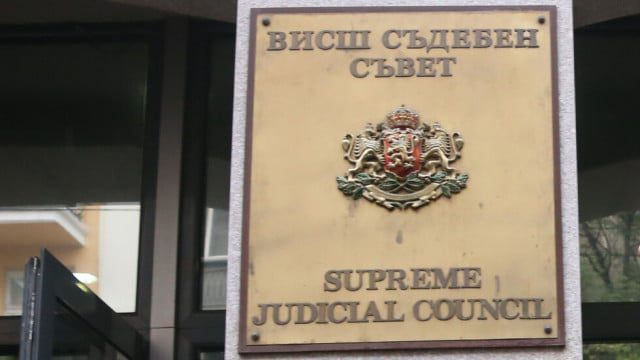
Bulgarian Supreme Judicial Council refuses to investigate crimes in Ukraine

0

The Supreme Judicial Council (SJC) has refused to nominate representatives of the Bulgarian judiciary to participate in the International Commission for Documenting and Establishing Russian Crimes in Ukraine.

This was announced by the Minister of Justice Nadezhda Yordanova in her Facebook account.

An international investigation into war crimes in Ukraine began in March after 41 countries appealed to the International Criminal Court. Germany has launched its own investigation, and Poland is investigating aggression. On March 4, the UN Human Rights Council voted to establish an international commission of inquiry to document war crimes and human rights abuses.

In early April, Bulgaria received an invitation from Poland to include Bulgarian experts in the international commission.

The commission will include doctors, forensic specialists, pathologists, lawyers, prosecutors, police officers, forensic scientists and other experts. The Commission will work on the territory of Ukraine, in cooperation with its authorities. She is expected to prepare a report, which will be made public.

The Minister of Justice Nadezhda Yordanova points out that the ministry has sent a letter to the SJC with a call, in the opinion of the magistrates, to consider the possibility of including representatives of the Bulgarian judiciary in the commission.

The SJC considered two options today. One provides for the invitation to be taken into account, as it is considered inappropriate to appoint representatives of the judiciary to the International Commission. The second envisages the SJC agreeing in principle to participate in the commission by sending the information to the chairman of the Supreme Court of Cassation and the chief prosecutor with a request to appoint judges and prosecutors to join the panel.

Without debate and unanimity, the SJC decided to accept the summons and would not send representatives of the judiciary to the commission of inquiry.

“Empathy and justice must be defended through concrete action. The challenge of Russian military aggression in Ukraine obliges, in every aspect, the Bulgarian state to be at the height required by the principles of the rule of law and solidarity of the actions of the international community. The SJC was not at that height, “Yordanova commented on the decision.
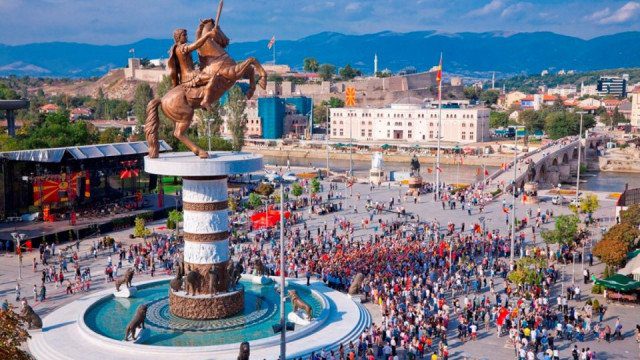

A sharp jump of N. Macedonians with Bulgarian passports after a new census in Skopje

0

The largest number of the population in the Republic of Northern Macedonia who have dual citizenship are those with N. Macedonian and Bulgarian citizenship – 19,645, according to new data published by the State Statistical Office from last year’s census. The enumerators also registered 165 citizens who have only Bulgarian citizenship, BTA reported.

There are 10,909 citizens of the Republic of Northern Macedonia with Macedonian and Serbian citizenship, 3,819 with Croatian citizenship and 2,164 with Albanian citizenship. 2393 people are registered with a passport from Kosovo.

Of the total permanent population living in the country, 1,778,725 are citizens of the Republic of Northern Macedonia, 53,201 are citizens of the Republic of Northern Macedonia and another country, 4,203 are citizens of another country only, and 584 are stateless.

According to the data, there are more men with dual citizenship – 30,003, and women with dual citizenship – 23,198.

By age groups, the majority of the permanent population in the Republic of Northern Macedonia with dual citizenship is between 35 and 39 years old. Half of the people with dual citizenship are young people aged 20 to 34 – 11,768 people, and the active population aged 35 to 49 – 15,171 citizens.

How does Skopje (not) count Macedonians with Bulgarian passports?

Another census in the Republic of Northern Macedonia raises questions again. After earlier Skopje announced a surprisingly small number of Bulgarians – only 3,504 people who declared their ethnicity in the census, now there are just over 19,000 who have dual citizenship – Bulgarian and N. Macedonian. At the same time, the data in our country show that for the last 15 years 86,566 Macedonians have received Bulgarian passports, as in 2020 alone there were 9,000 people, and in 2021 it was 7,692.

Russia saves the ruble with gold

0

Russia is considering linking the ruble’s value to gold or other commodities. This was announced by Kremlin spokesman Dmitry Peskov, quoted by TASS, quoted by Investor.

“This issue is currently being discussed,” Peskov told reporters on Friday. He recalled that earlier the topic was proposed by the Secretary of the Security Council of Russia Nikolai Patrushev.

An interview with Patrushev was published in Rossiyskaya Gazeta on Tuesday, where he said experts were considering a proposal by the scientific community to create an alternative monetary and financial system. It is proposed to set the value of the ruble to be backed by both gold and other raw materials in order to bring its exchange rate in line with real purchasing power parity.

According to him, in order for any national financial system to have sovereignty, its means of payment must have intrinsic value and price stability, and not be pegged to the dollar.

Contrary to the Kremlin’s position, the governor of Russia’s central bank, Elvira Nabiulina, rejected the idea of ​​pegging the ruble to gold.

“It has not been discussed in any way,” she told reporters after it became clear that the institution was reducing the base interest rate by 300 basis points. The ruble must continue to have a floating exchange rate, she said. However, Nabiulina added that the volatility of the currency will be increased due to capital controls imposed after the start of the war in Ukraine.

Continuing its long-standing efforts to reduce its exposure to the US dollar, the Russian central bank reduced the share of the currency in its reserves to 10.9% as of January 1 from 21.2% a year earlier. Gold also fell slightly to 21.5%.

Sanctions against the Russian central bank over the invasion of Ukraine have deprived it of access to nearly half of its holdings, with virtually only gold and yuan at its disposal. Prior to the war, President Vladimir Putin had repeatedly said that Russia should end its dependence on the US dollar as an international reserve currency.

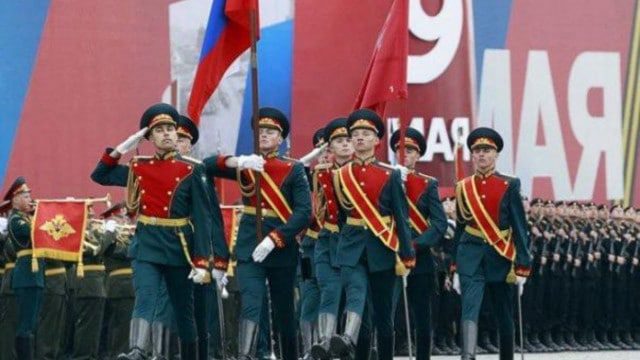
Russia did not invite foreign leaders to the May 9 parade

0

There will be no foreign leaders in Europe at this year’s parade in Moscow on the occasion of the end of World War II. The reason is that the Kremlin has decided not to invite anyone, spokesman Dmitry Peskov said at a regular briefing. Asked if at least Alexander Lukashenko would be in Red Square, he replied: “As far as I know, it is not planned.”

Thus, Vladimir Putin will be the only state leader to be joined by nearly 11,000 Yunarmiya soldiers, cadets and youths, more than 130 “modern weapons and equipment” units and 77 planes and helicopters, including models currently used in Ukraine. .

Peskov’s explanation is that “this is not a jubilee date. This is our holiday. This is a sacred holiday for all of Russia, for all Russians. But we have not invited foreign leaders.”

The capitulation of Nazi Germany was signed on May 8, 1945 before the allies of the anti-Hitler coalition, but the Soviet dictator Joseph Stalin was not satisfied and demanded a repeat only for his army and elsewhere a day later. To this day, this day is celebrated on different dates in Europe and Russia.

Curiously, last April Peskov gave exactly the same explanation: “The year is not a jubilee, so no invitations to foreign participants are planned.” Then the excuse was the pandemic, but the so-called procession of the “Immortal Regiment”. There was a full parade on June 24.

Reports alleging harassing behaviour of some male MPs is shocking. And it needs men to be calling it out.

0
Reports alleging harassing behaviour of some male MPs is shocking. And it needs men to be calling it out.
Following reports on 28 April 2022, that a male Conservative MP was watching porn in the House of Commons, Anthea Sully, the Chief Executive of White Ribbon UK, made the following statement, ‘viewing porn in public has long been used to harass women. That this should have happened in the House of Commons is shocking and shows how normalised this sort of abuse can be. Such behaviour causes personal harm to the women who experience it and is a block to women’s equality. All too often it has fallen on women to report. But men will often know that their peers are behaving unacceptably. To change such toxic cultures, we need men to call this behaviour out. White Ribbon UK calls on all men to learn to become allies to women, to listen to their experience and to never excuse or remain silent about violence and abuse. Members of Parliament should be setting a lead for ending sexism – all men in Westminster need to be stepping up and taking responsibility to create a culture of equality and respect.’

Press release distributed by Pressat on behalf of White Ribbon UK, on Friday 29 April, 2022. For more information subscribe and follow https://pressat.co.uk/

European Parliament EPP Group: Poland must stop blocking EU minimum corporate tax rate

0
Poland must stop blocking EU minimum corporate tax rate, says EPP Group

“The time has come to effectively end aggressive tax planning across the globe to make sure the big companies pay their fair share of taxes. We ask the most reluctant states, such as Poland, to stop blocking the decision at EU level and pave the way to implement the OECD agreement in the EU on minimum taxation of multinationals. Thanks to the EPP Group, the European Parliament is taking its responsibility and providing strong support for the implementation of the global agreement in the EU. The ball is now firmly in the court of EU Member States”, said Luděk Niedermayer MEP, EPP Group negotiator of this file, before today’s vote in the Economic and Monetary Affairs Committee of the European Parliament.

The new international framework proposed by the OECD and supported by more than 100 countries across the globe aims to force multinationals to pay tax where they operate – and not just where they have their headquarters – and impose a minimum corporate rate of 15%.

“Having in place a hard floor for corporate taxation should limit the worst excesses of beggar-thy-neighbour tax competition. With the new rule, we will get rid of unfair tax competition while largely retaining Member States’ prerogatives to design tax policies as they see fit. The new regime is effectively a backstop to catch the worst offenders. It will hit those countries that have made it their business model to undermine their neighbours’ tax base”, said Markus Ferber MEP, EPP Group Spokesman on Economic Affairs.

“We need a swift, but diligent implementation that respects the OECD agreement and does not penalise European companies. We have deliberately pushed for a swift procedure to have the new rules enter into force as soon as possible. Yet, we could have been even faster if the other political groups in the European Parliament would understand that this is not a place for proposing material changes to the OECD/G20-based proposal, which would not only undermine the very valuable global agreement, but could also put EU firms and the economy into a competitive disadvantage”, concluded Niedermayer and Ferber.

(Source EPP Group )

Bosnia and Herzegovina at high risk of becoming a failed state

0
Bosnia and Herzegovina at high risk of becoming a failed state
Photo by Defne Kucukmustafa

A delegation from the ECR Group visited the city of Mostar in Bosnia and Herzegovina from the 21st to 23rd April 2022 to gain a closer insight into the causes of the worsening political situation in Bosnia and Herzegovina, which may deteriorate further with the forthcoming elections planned for October of 2022.

The delegation consisted of five MEPs Ladislav Ilčić (Hrvatski suverenisti – Croatia), Hermann Tertsch (Vox – Spain), Ryszard Czarnecki (Prawo i Sprawiedliwość – Poland), Carlo Fidanza (Fratelli d’Italia – Italy) and Bogdan Rzońca (Prawo i Sprawiedliwość – Poland).

The conservative lawmakers met with political representatives from different communities of Mostar and the surrounding region as well as with members of the Croatian National Assembly, local politicians, intellectuals, representatives of NGOs and members of the clergy.

A key moment was the panel discussion held with citizens, civil society and the media about the current political crisis in the country, the geopolitical challenges the EU and Bosnia and Herzegovina are facing in the context of the Russian aggression in Ukraine, and EU perspectives on Bosnia and Herzegovina.

Based on these discussions, the ECR delegation concluded that Bosnia and Herzegovina is a country at high risk of becoming a failed state and the October elections, which will be held under the current discriminatory electoral law, could further escalate the situation. The ECR Members pointed out the urgent need to reform Bosnia and Herzegovina’s electoral law. The concept of equal rights for the country’s constituent nations must be respected in all agreements with the EU, they said. The separatist aspirations coming from both Republika Srpska and the Unitarian concept promoted by Bosniak politicians are destabilizing the country. The ECR delegation stressed that their Group supports the country’s aspirations concerning the EU, but that stronger efforts to fight corruption, depoliticise the civil service and reduce bureaucracy are needed. In addition, the human rights of all national minorities and constituent nations should be respected. Bosnia and Herzegovina needs to prove its stability if it wants to continue on the path to join the EU.

(Source ECR Group )

Coming up: Ukraine, artificial intelligence and toxic chemicals in waste

0
Coming up: Ukraine, artificial intelligence and toxic chemicals in waste | News | European Parliament
Parliament will assess how the war in Ukraine is affecting the EU and discuss how to protect women fleeing the country during the plenary session on 2-5 May.

Also on the agenda: artificial intelligence, new rules for the European elections and harmful chemicals.

War in Ukraine

Parliament will hold a series of debates around the war in Ukraine and its impact. According to the UNHCR, 90% of the people who have fled Ukraine since the Russian invasion are women and children. Parliament will adopt a resolution on Thursday on how to protect them from violence and sexual exploitation.

MEPs will consider the social and economic impact of the war on the EU on Wednesday. They are set to call for more sanctions against Russia. On Tuesday, they will look at the EU’s preparedness against cyber-attacks and the impact of the war on transport and demand the country return airplanes leased from foreign companies that were re-registered with the Russian aircraft register, in clear breach of international civil aviation rules.

New rules for the European elections

On Tuesday, MEPs will vote on a proposal on common rules around the European elections, including transnational lists of candidates, and a fixed day for the election in all countries, namely on 9 May.

Artificial intelligence

On Tuesday, Parliament is set to adopt the final report from its special committee on artificial intelligence in the digital age. It identifies measures that could unlock AI’s potential in fields such as health, agriculture, public governance and climate change, while helping to create jobs and boost sustainable growth.

The EU has fallen behind in AI development, research and investment and should take the lead on setting global standards before non-democratic actors do so, the report says.

Common charger

The EU is one step closer to a common charger. Parliament is expected to announce it is ready to start negotiations with the Council on new rules that would mean consumers no longer need a new charger and cable every time they purchase a new mobile phone, tablet, videogame console or other electronic device.

Harmful chemicals in waste

Persistent organic pollutants are chemicals with toxic properties that become increasingly concentrated in recycled products and remain in the environment for a very long time, posing a risk for human health and the environment.

In order to create a toxic-free circular economy in the EU, MEPs are set to back a proposal by the Commission to reduce the amount of these chemicals allowed in products and remove materials with high levels from the recycling chain in a vote on Tuesday.

Future of Europe: revision of EU treaties

In order to carry through the recommendations from the Conference on the Future of Europe and make the EU more democratic, Parliament is set to call on the EU to start the procedure to change the EU treaties on Wednesday.

Europol reform

On Wednesday, MEPs are set to confirm the agreement to extend the powers of Europol, the EU’s police agency that supports police investigations carried out by EU countries. The agency will be able to carry on research and innovation projects, help national authorities screen foreign direct investment in security-related cases and receive data from private companies in cases related to terrorist content or child sexual abuse.

Subsidies

Parliament will adopt its position regarding new tools to counter market-distorting foreign subsidies granted to companies operating in the EU in a vote on Thursday.

Also on the agenda

  • Italian Prime Minister Mario Draghi will take part in a debate on Tuesday
  • Extension of the EU Digital Covid certificate
  • Debate on threats faced by journalists marking press freedom day
  • Rule of law in Poland and Hungry
  • 2020 budget discharge

Mastercard launches next-generation identity technology with Microsoft to help more consumers shop online safely

0
Mastercard launches next-generation identity technology with Microsoft to help more consumers shop online safely

PURCHASE, N.Y., and REDMOND, Wash. Mastercard on Monday announced the launch of an enhanced identity solution designed to improve the online shopping experience and tackle digital fraud in a new collaboration with Microsoft Corp.

Now more than ever, delivering a frictionless shopping experience is critical as retailers look to shift window shopping and price comparison visits to confirmed sales. And, while consumers enjoy the convenience of shopping online, fraudsters also seek to develop new methods to use these same channels for ill-gotten gains. One of the growing types of digital fraud is first-party fraud, where a legitimate purchase is made online but later disputed. First-party fraud is estimated to be a $50 billion global issue.

Mastercard has directly addressed these needs by enhancing its Digital Transaction Insights solution with next-generation authentication and real-time decisioning intelligence capabilities. The solution pairs Mastercard’s network insights with the merchant’s own data to confirm the consumer is who they claim to be, providing financial institutions with the additional intelligence needed to optimize their authorization decisions and approve more genuine transactions. Digital Transaction Insights is used across a wide range of online checkout instances, from click-to-pay functionality and wearables to digital wallets and in-app purchases.

“Shopping online should be simple, quick and secure. But that isn’t always the case. We’re committed to developing advanced identity and fraud technology to help enhance the real-time intelligence we provide to financial institutions around the globe. This builds on our longstanding commitment of working across the industry to provide advanced technologies that enable trust, and help build a safe and thriving digital ecosystem for all.”

Ajay Bhalla, president, Cyber and Intelligence at Mastercard, said, “Shopping online should be simple, quick and secure. But that isn’t always the case. We’re committed to developing advanced identity and fraud technology to help enhance the real-time intelligence we provide to financial institutions around the globe. This builds on our longstanding commitment of working across the industry to provide advanced technologies that enable trust, and help build a safe and thriving digital ecosystem for all.”

Microsoft will be the first partner to share its insights and integrate with the new Digital Transaction Insights solution across several lines of business. Building on a long history of cross-collaboration, Microsoft’s Dynamics 365 Fraud Protection’s proprietary risk assessment, which leverages adaptive AI to assist in real-time fraud detection by identifying risky behaviors across purchase, account and in-store activities, has been integrated with Mastercard’s Digital Transaction Insights to better enable real-time intelligence sharing in an easily consumable and actionable format. This will enable issuers to enhance their decision-making processes for authorizations, chargebacks and refunds. Moreover, organizations can improve transaction acceptance rates with insights that help them balance profitability and revenue opportunities against fraud loss and checkout friction.

“We are excited to partner with Mastercard to leverage our cloud-native, cutting-edge fraud assessment tools to empower issuers and merchants to prevent more fraud and approve more genuine users. This partnership lays the foundation for the future of global fraud prevention where data silos are no longer a barrier to security.”

Charles Lamanna, corporate vice president of Business Applications and Platforms at Microsoft, said, “We are excited to partner with Mastercard to leverage our cloud-native, cutting-edge fraud assessment tools to empower issuers and merchants to prevent more fraud and approve more genuine users. This partnership lays the foundation for the future of global fraud prevention where data silos are no longer a barrier to security.”

Digital Transaction Insights is enabled by EMV 3-D Secure and Mastercard Identity Check, a global authentication solution built on the enhanced industry standard. Both elements support GDPR requirements and other related regulations. In 2021 alone, Mastercard Identity Check delivered a 14% uplift in transaction approval rates across billions of transactions.

(source: Microsoft)

5th European Laudato Si’ Reflection Day to be held on 17 May 2022

0
5th European Laudato Si’ Reflection Day to be held on 17 May 2022
The European Laudato Si’ Alliance (ELSiA) is pleased to invite you to the 5th Laudato Si’ Reflection Day to be held online on Tuesday 17 May 2022 from 9:30 to 12:30 and from 14:00 to 18:00. The theme of this year’s gathering is “Two Generations, One Journey”. Register here

The event will be an occasion to have an intergenerational dialogue around environmental movements of yesterday and today and to comment on some critical passages from Laudato Si’. Furthermore, participants will also explore issues of sustainable food production vs fast food, sustainable fashion vs fast fashion, and protection of Creation and biodiversity, while listening and interacting with experts and young people leading the change.

Finally, participants will explore if and how anyone can make bold choices to protect Creation and contribute to create sustainable living conditions for future generations.

Confirmed speakers include:

  • H. Em. Cardinal Jean-Claude Hollerich SJ, President of COMECE and Honorary President of ELSiA;
  • Monika Skadborg, European Climate Pact Ambassador in Denmark;
  • Prof. Dr Ernst Ulrich von Weizsäcker, former Chairman of the Bundestag and Honorary President of the Club of Rome;
  • Anne Tran, Parliamentary intern of the CBCEW;
  • Marta Messa, Director of Slow Food Europe;
  • Pascalis Loucaides, UK manager of Too Good to Go;
  • Angelo Salsi, Head of Unit CINEA.D.D2 LIFE Environment (Nature & Circular Economy);
  • Amy Woolam Echeverria, International Coordinator for Justice, Peace, and Integrity of Creation and Co-Coordinator Ecology Taskforce, Vatican Covid-19 Commission;
  • Ciaran Foulds, theologian and activist.

The meeting will take place via Zoom, on Tuesday May 17, 2022 from 9:30 to 12:15 and from 14:00 to 18.00 (CEST). The language of the meeting will be English. This is a free event and you can register here.

Schermata 2022 04 29 alle 16.48.41 400x284 1 5th European Laudato Si’ Reflection Day to be held on 17 May 2022About ELSiA
ELSiA is a network of Catholic organizations committed to joining forces to adapt the comprehensive approach of Pope Francis’ Encyclical Letter Laudato Si’ and related Church teachings to a European context with a special focus on the institutions of the European Union. The alliance is composed by COMECECIDSEDon Bosco International, JESCJustice and Peace Europe, Caritas Europa, and the Laudato Si’ Movement.