Monday, June 22, 2026
Home Blog Page 94

World News in Brief: Conflict deepens hunger crisis in South Sudan, restrictions hinder aid delivery in Gaza, UN child rights envoy concludes first visit to Syria

0
World News in Brief: Conflict deepens hunger crisis in South Sudan, restrictions hinder aid delivery in Gaza, UN child rights envoy concludes first visit to Syria

About 60 per cent of the population – some 1.2 million people – is already acutely food insecure, according to WFP.

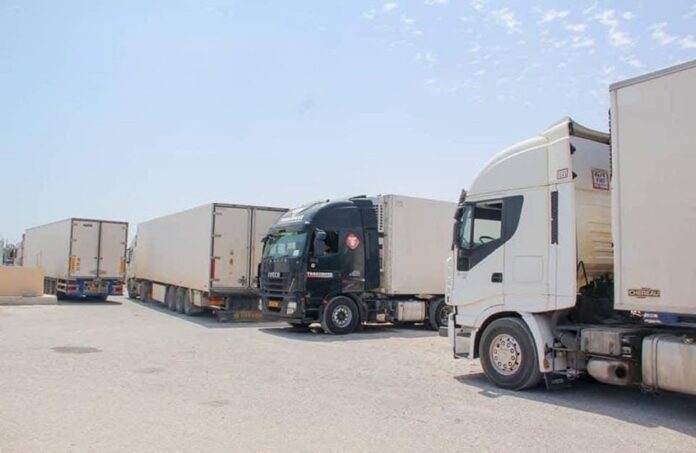
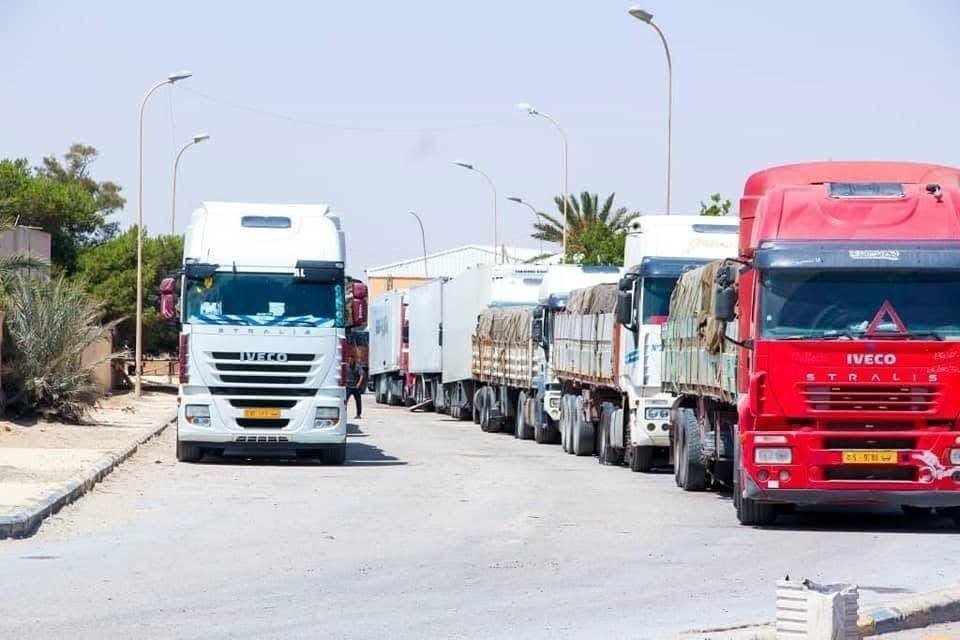
Food assistance is being transported along river routes, but rising insecurity is hampering humanitarian operations and threatening to drive hunger to unprecedented levels.

WFP teams are registering newly displaced families in Canal Pigi and other northern areas of Jonglei to receive urgently needed aid, in some cases for the first time since fighting began.

The agency aims to reach more than half a million people facing catastrophic food insecurity. However, it urgently requires $341 million to support 4.2 million people across South Sudan this year.

Adham Effendi, WFP’s acting country director, described the operation as a crucial step in assisting communities “caught in the crossfire,” noting that many had already lost homes and livelihoods to flooding before being forced to flee again.

In New York, UN Spokesman Stéphane Dujarric highlighted the dangerous conditions faced by aid workers in South Sudan.

He reported that a private contractor working with WFP on humanitarian airdrop coordination was killed earlier this week by an unknown gunman in Upper Nile state. The incident is under investigation.

Mr. Dujarric expressed condolences to the victim’s family and colleagues and stressed that humanitarian workers must never be targeted.

The United Nations continues to “call on all parties to de-escalate violence, ensure safe, rapid, and unimpeded access to all people in need and resolve all issues through dialogue.”

Relief arrives in Gaza, yet restrictions keep assistance far below needs

As of Monday, humanitarians have reached some 670,000 people in Gaza with the monthly general food assistance for February. 

Nonetheless, the ration size remains reduced at 50 per cent, as the current stocks in the Gaza Strip are insufficient to sustain larger rations for the rest of the month.

“Humanitarian partners report that impediments persist, and in recent weeks, the entry of humanitarian supplies from Egypt has remained critically low due to high rejection rates by Israeli authorities,” said UN Spokesman Stéphane Dujarric. 

Impediments must be lifted 

As of mid-February, more than 20 UN partners produced and distributed over 1.7 million meals every day through 180 kitchens, accounting for around half a million meals in the north and 1.3 million in the south. 

“UN partners are aligning the timing of cooked meal preparations, and distributions, with Ramadan fasting hours. They have also added additional fresh produce and protein products,” he said. 

UN agencies are on the ground providing tents, tarpaulins, sealing off kits, clothes, and other essential items to over 11,500 households in North Gaza, Deir al Balah and Khan Younis governorates. 

Mr. Dujarric said the UN and partners “reiterate that impediments must be urgently lifted so that we can do more to meet the massive humanitarian needs in Gaza”.

UN child rights envoy concludes first official visit to Syria 

The UN Special Representative for Children and Armed Conflict, Vanessa Frazier, ended a three-day visit to Syria on Thursday – her first official mission to the country since being appointed in October.

Ms. Frazier with Government representatives, UN partners, diplomats, as well as parents and children who have grown up throughout conflict spanning over a decade. 

She aimed to discuss new opportunities for collaboration with the new Government of Syria to strengthen the protection of children and engage in areas in which the UN may offer further support.

She also praised the government’s determination to turn the page and build a new Syria with children at its heart. 

Challenges remain

Challenges persist, especially concerning children — or their parents — who are allegedly linked to armed groups, particularly in the country’s northeast, the USG noted. 

She recalled that children should not be detained but be treated as victims and handed over to child protection actors. 

On top of that, the Ms. Frazier warned that unexploded ordnance and mines remained an immense challenge for Syria – hindering safe access to schools, hospitals and playgrounds for children  

“The children of Syria have suffered enough from the consequences of armed conflict,” she said.

“They deserve a future shaped by peace, stability, and opportunity — a future where classrooms replace conflict, dreams replace fear, and their voices help rebuild a nation rich in history and resilience.” 

Listen to an interview with Vanessa Frazier, the Special Representative of the Secretary-General for Children and Armed Conflict. 

Source link

Sudan: Rights chief alarmed after at least 57 people killed in drone attacks in two days

0

Sudan: Rights chief alarmed after at least 57 people killed in drone attacks in two daysVolker Türk was alarmed by reports that at least 15 children were among the victims. “These latest killings are yet another reminder of the devastating consequences on civilians of the growing use of drone warfare in Sudan,” he said. said. The attacks took place between the 15th and […]

Originally published at Almouwatin.com

Fears of ethnic cleansing in Gaza and West Bank: UN rights report

0

Fears of ethnic cleansing in Gaza and West Bank: UN rights reportThe report covers the period from November 1, 2024 to October 31, 2025 and draws on monitoring by OHCHR and information from government sources, other United Nations entities and non-governmental organizations. “The intensification of attacks, the methodical destruction of entire neighborhoods and the refusal of humanitarian aid seem to be aimed […]

Originally published at Almouwatin.com

Advancing Life Sciences: The Role of High-Fidelity 3D Visualization in Modern Research

0


 (The picture of medical specialists researching the molecular structure with the usage of a frame from the VOKA.io

Source link

Rumors of Lagarde’s departure spark race for succession at ECB

0

Speculation that Christine Lagarde could leave the European Central Bank before the end of her mandate have triggered a new round of political negotiations in Brussels, with euro zone capitals positioning their candidates and trying to avoid a bitter fight for one of Europe’s most influential economic posts.

A Brussels rumor with consequences for the euro zone

THURSDAY February 19, 2026a wave of articles in the European media suggested that Lagarde might not complete her mandate at the ECB, which runs until October 2027. THE Financial Times described a rapidly escalating “bargaining” dynamic between governments and decision-makers at EU level, while The World reported that the ECB said Lagarde remained focused on her work and had not made any decisions regarding an early departure.

The mere possibility of an early departure is important, because the ECB presidency is not only a monetary policy role, it is also a symbol of the credibility of the euro. A contested succession could add political noise at a time when euro zone governments are juggling budgetary pressures, debates over industrial competitiveness and resuming security spending.

Who appoints the ECB president — and why Brussels cares

Formally, the choice belongs to European Councilruling by reinforced qualified majority, after recommendation of the Council and consultation of the European Parliament and of ECB Governing Council. The EU institutions themselves set out this procedure in their explanatory note on nominations and appointmentsas defined inArticle 283 of the TFEU.

In practice, Brussels becomes the theater where national capitals test their support, negotiate their priorities in different files and look for a candidate capable of winning the trust of governments and markets. This balancing act is made more difficult by the ever-present question of geographic and political “fairness” within the EU: which countries already occupy the top positions and which feel under-represented?

Candidates, capitals and first maneuvers

Several names are already circulating. The articles mention figures such as former Spanish central bank governor Pablo Hernández de Cos and Dutchman Klaas Knot, as well as German candidates cited in the same article. The pressure exerted by Spain, in particular, was described by the Financial Times of unusually explicit early maneuvering in a competition that often takes place through discreet diplomacy.

For Brussels-based officials, the key question is not so much who will “win” the job, but rather how the process will be managed: whether it will be orderly, whether it will protect the ECB’s independence, and whether it will avoid spilling over into broader institutional negotiations that could give the impression of a politicization of the central bank.

What will happen next?

At this point, there is no official vacancy. But political tension has risen, as succession planning in the EU rarely begins the moment a position becomes vacant. If speculation continues, eurozone governments could step up their behind-the-scenes contacts, while the European Parliament, whose role is consultative, could further influence the tone of public debate through hearings and resolutions.

In Brussels, this episode also reminds us that institutional stability does not depend only on legal rules: it also depends on restraint, clear communication and credible continuity. For a city that already handles high-stakes regional political and governance debates, the prospect of a transition to the ECB adds an extra layer to an already busy European calendar. (Related: Brussels region forms new government after long deadlock.)

Originally published at Almouwatin.com

Lagarde exit talks spark ECB succession rush

0

Lagarde exit talks spark ECB succession rushSpeculation that Christine Lagarde could leave the European Central Bank before the end of her term is sparking a new round of political negotiations in Brussels, as euro zone capitals position their candidates and try to avoid a bruising fight for one of Europe’s most influential economic posts. […]

Originally published at Almouwatin.com

Lagarde exit talks spark ECB succession rush

0

Lagarde exit talks spark ECB succession rushSpeculation that Christine Lagarde could leave the European Central Bank before the end of her term is sparking a new round of political negotiations in Brussels, as euro zone capitals position their candidates and try to avoid a bruising fight for one of Europe’s most influential economic posts. […]

Originally published at Almouwatin.com

Lagarde Exit Talk Triggers ECB Succession Scramble

0
Lagarde Exit Talk Triggers ECB Succession Scramble

Speculation that Christine Lagarde could step down from the European Central Bank before her term ends is driving a fresh round of political bargaining in Brussels, as euro-area capitals position candidates and try to avoid a bruising fight over one of Europe’s most influential economic posts.

A Brussels rumour with euro-area consequences

On Thursday 19 February 2026, a wave of reporting in European media suggested that Lagarde may not serve out her full ECB mandate, which runs until October 2027. The Financial Times described a rapidly intensifying “horse-trading” dynamic among governments and EU-level power brokers, while Le Monde reported that the ECB said Lagarde remained focused on her work and had taken no decision on leaving early.

The mere possibility of an early departure matters because the ECB presidency is not only a monetary-policy role; it is also a symbol of the euro’s credibility. A contested succession could add political noise at a time when euro-area governments are juggling fiscal pressures, industrial competitiveness debates, and renewed security spending.

Who appoints the ECB president — and why Brussels cares

Formally, the choice belongs to the European Council, acting by a reinforced qualified majority, after a recommendation by the Council and consultations with the European Parliament and the ECB Governing Council. The EU institutions themselves lay out that procedure in their explainer on nominations and appointments, as set out in Article 283 TFEU.

In practice, Brussels becomes the arena where national capitals test support, trade priorities across dossiers, and seek a candidate who can command confidence from both governments and markets. That balancing act is made harder by the EU’s ever-present question of geographic and political “fairness”: which countries already hold top posts, and which feel underrepresented.

Candidates, capitals, and the early jockeying

Several names are already circulating. Reporting referenced figures such as Spain’s former central bank governor Pablo Hernández de Cos and the Netherlands’ Klaas Knot, alongside German candidates mentioned in the same coverage. Spain’s push, in particular, was framed by the Financial Times as an unusually explicit early move in a contest that is often conducted through discreet diplomacy.

For Brussels-based officials, the key question is less who “wins” the job and more how the process is managed: whether it is orderly, whether it protects the ECB’s independence, and whether it avoids spilling into wider institutional bargaining that can leave the impression of politicised central banking.

What happens next

There is, at this stage, no formal vacancy. But the political temperature has risen because succession planning in the EU rarely starts at the moment a post becomes open. If speculation continues, euro-area governments may intensify behind-the-scenes contacts, while the European Parliament—whose role is consultative—could still shape the public tone of the debate through hearings and resolutions.

In Brussels, the episode is also a reminder of how institutional stability depends on more than legal rules: it depends on restraint, clear communication, and credible continuity. For a city already managing high-stakes regional politics and governance debates, the prospect of an ECB transition adds another layer to a busy European calendar. (Related: Brussels Region forms a new government after prolonged deadlock.)

Source link

Scientology launches youth guide to promote EU VALUES

0

KINGNEWSWIRE / PRESS RELEASE / BRUSSELS, Belgium — February 19, 2026 — The Church of Scientology European Office for Public Affairs and Human Rights launched “European Values, Your Rights” (Europe’s Values, Your Rights), a new online educational guide aimed at young adults and written in simple language. This initiative brings together the fundamental values ​​of the European Union as set out in theArticle 2 of the Treaty on European Unionin the Charter of Fundamental Rights of the European Union and in the European Convention on Human Rights (ECHR)with links to official EU and Council of Europe documents.

The guide is structured around a practical civic education objective: to help readers understand not only whatis a right, but also Or this right is located in the European institutional architecture and what organization is competent in different situations. A recurring source of confusion among the public, namely the difference betweenEuropean Union and the Council of Europeis addressed from the start, with a simplified map of who does what and when the Charter applies versus when the Convention and Strasbourg case law become relevant.

At the heart of “European values, your rights” is an explanation of the six EU values ​​– human dignity, freedom, democracy, equality, the rule of law and respect for human rights – presented using succinct examples designed to help young adults recognize how these values ​​manifest themselves in everyday life: at work, in education, online and in civic participation. The site anchors these explanations in primary texts, directing users to official documents rather than comments.

An important section presents the Charter of Fundamental Rights of the European Union as a legally binding text, with a practical explanation of how it binds EU institutions and Member States when implementing EU law. The guide refers readers to authoritative clarifications, such as the European Union Agency for Fundamental Rights (FRA)’s presentation of the scope of the Charter, and provides a structured journey through the Charter’s themes – dignity, freedoms, equality, solidarity, citizens’ rights and justice – aimed at non-specialist readers.

At the same time, the guide describes the objective and scope of the European Convention on Human Rightspresenting it as a Council of Europe treaty supervised by the European Court of Human Rights in Strasbourg. It recalls, in general terms, the principle according to which applicants must normally exhaust domestic remedies before referring the matter to the Strasbourg Court, in accordance with its official guidelines. The site emphasizes that it is an educational resource and not from legal adviceand refers readers to official instructions and qualified assistance where available.

Designed to adapt to mobile reading habits, this initiative includes a brief educational part: a six-question self-assessment quiz which tests basic skills and applicability (e.g. when the Charter is binding), and a ‘civic toolbox’ which links to established European participation channels and public information mechanisms such as theEuropean citizens’ initiativeTHE European Parliament petitions portal and consultations Have Your Say » of the Commission, as well as programs for youth, in particular Erasmus+ and the European Solidarity Corps.

Brussels, capital of the EU: a long-standing human rights presence

The European Office notes that it is present at Brusselscapital of the European Union, since 1990, in different forms over time. According to the Office, this work has served as a focal point for programs aimed at informing the public about the Universal Declaration of Human Rights and how its principles can support a humane and peaceful society based on respect for each individual.

This institutional orientation is also described in the statutes of the Office. In the language provided in its internal governance documents, the organization defines itself as a religious association operating within the European legal and human rights framework. The statutes, approved and registered in the Registry of Religious Entities of the Ministry of Presidency and Justice of Spain, EU member state, stipulate:

“Article 1.- An entity of an organizational nature is constituted […] as a religious association respecting Article 16 of the Constitution, Organic Law 7/1980 of July 5 on Religious Freedom, Article 2.2.(c) of Royal Decree 594/2015 of July 3, the Universal Declaration of Human Rights and the European Convention for the Protection of Human Rights and Fundamental Freedoms, under the name EUROPEAN OFFICE OF THE CHURCH OF SCIENTOLOGY FOR PUBLIC AFFAIRS AND HUMAN RIGHTS, endowed with legal personality and full legal capacity, which will be governed by the aforementioned regulations, the provisions set forth herein and other applicable laws. Its scope of action is national and European, and it will act as a reference entity for the entire European territory. It will function as a purely religious non-profit organization, which will be responsible for carrying out its own activities and acting as a representative of the different Churches in Europe to national and supranational public and private institutions, promoting what is set out in Article 17 of the Treaty on the Functioning of the European Union and in accordance with Article 2.2 of the Organic Law on Religious Freedom, adhering to the European values of human dignity, freedom, democracy, equality/equity, rule of law and human rights […] “.

This same statutory framework links the work of the Office to the structured dialogue provided for in theArticle 17 of the Treaty on the Functioning of the Union European Union, which provides for open, transparent and regular dialogue between EU institutions and churches, religious associations and philosophical and non-denominational organizations.

How the initiative frames Scientology’s continued contribution to European values

A specific section of the guide (“How Scientology Communities Contribute”) places the launch within the broader framework of Scientology-related community programs across Europe, which are presented as practical, everyday support of the same principles set out inarticle 2 of the TEU. In the guide’s approach, “values” are seen less as abstract statements and more as measurable civic habits—education, prevention, and volunteerism—that can strengthen human dignity, freedom, equality, the rule of law, and human rights in local communities.

Within this framework, the guide refers to areas of action described as active throughout Europe, including human rights education, drug prevention education and community assistance through Volunteer Ministers, as well as other social improvement and reintegration initiatives mentioned by Scientology Europe. The guide links these different aspects to a civic principle: the protection of rights is stronger when people understand them and communities invest in prevention and accountability, thereby reducing conditions conducive to exploitation, discrimination and social exclusion.

Scientology and its founder, L. Ron Hubbardare cited in the initiative as the origin and inspiration of this long-standing humanitarian approach, in which educational and social programs are presented as complementary efforts at the community level, alongside institutional protections. The structure of the guide reflects this positioning: it begins by presenting the legal frameworks and institutional roles in Europe, then situates community action (education, prevention and volunteering) in this broader European context.

Ivan Arjona, representative of the Church of Scientology to the EU, OSCE, Council of Europe and UN, said: “European values ​​become real when they are understood and put into practice in everyday life. If young adults can clearly distinguish what the EU Charter does, what the European Convention does and which institution is competent, they are better equipped to act responsibly, resolve conflicts legally and protect dignity and freedom, both for themselves and others. »

Facilities promoting dialogue and community initiatives

The European Office also highlights that it has developed facilities in many European cities, citing Madrid and Brussels, as well as other capitals, in order to plan and coordinate initiatives intended to benefit communities in Europe and beyond. In this context, the Office indicates that its conference and meeting rooms are made available for seminars, roundtables and related events organized by human rights and community improvement organizations, in line with the Office’s emphasis on dialogue and education.

The Brussels office is described as being open to the public, consistent with the general practice of Scientology churches and related facilities, with information and educational materials available to visitors during posted business hours.

The Church of Scientology, its churches, missions, groups and members are present throughout the European continent. Scientology Europe has a continent-wide presence with more than 140 churches, missions and affiliated groups in at least 27 European countries, as well as thousands of community-based social improvement and reform initiatives focused on education, prevention and neighborhood-level support, inspired by the work of Scientology founder L. Ron Hubbard.

Within the various European national frameworks on religion, recognition of the Church continues to expand, with administrative and judicial authorities in Spain, Portugal, Sweden, the Netherlands, Italy, Germany, Slovakia and other countries, as well as the European Court of Human Rights, having addressed and recognized Scientology communities as protected by national and international provisions relating to freedom of religion or belief.

Originally published at Almouwatin.com

Indonesian churches welcome landmark environmental decision

0
Indonesian churches welcome landmark environmental decision

On 20 January, two months after a rare tropical cyclone left more than 1,000  people dead and over 175,000 houses destroyed, Indonesian President Prabowo Subianto declared that the giant pulp company Toba Pulp Lestari, along with other logging, mining and hydropower companies, would no longer be allowed to operate in the country. HKBP and other churches have been leading protests in recent months, calling for an end to the activities which have been affecting local people and their environment for decades. 

“In the early 1990s, after Toba Pulp began its activities, there was strong opposition from our community,” Sinaga recalled. “During that first period, some of our pastors were even arrested and put in prison during the protests. More than 35 years later, a few of them are still serving in the church and they are so happy to see this historic decision,” he said. Over the past year, HKPB, supported by other Christians and other faith groups, had stepped up their demands, intensifying pressure on the government to take action.

Monoculture planting of eucalyptus trees

“The majority of people affected by the pulp company around Lake Toba are HKBP members,” noted Sinaga. “There has been a lot of research into the environmental impact, but one of the most visible and devastating effects has been the monoculture planting of hundreds of thousands of hectares of eucalyptus trees, degrading the soil and causing damage to the land for a long time to come,” he explained.

Sinaga pointed to other disasters, including flash flooding and landslides around Lake Toba in late 2023 which left a dozen people dead. “Trees and plants can no longer take root because of the soil erosion, so mud and rocks the size of cars came down the mountainside into the lake destroying houses and killing people in their path,” he said. “When we visited the families affected, they were broken by the tragedy, but the company denied that it had anything to do with them,” he added.

Source link

Source link