Modern Europeans owe their blue eyes to hunter-gatherers, their height to Asian nomads and their blond hair to Anatolian Neolithic farmers, Maylonline reported.
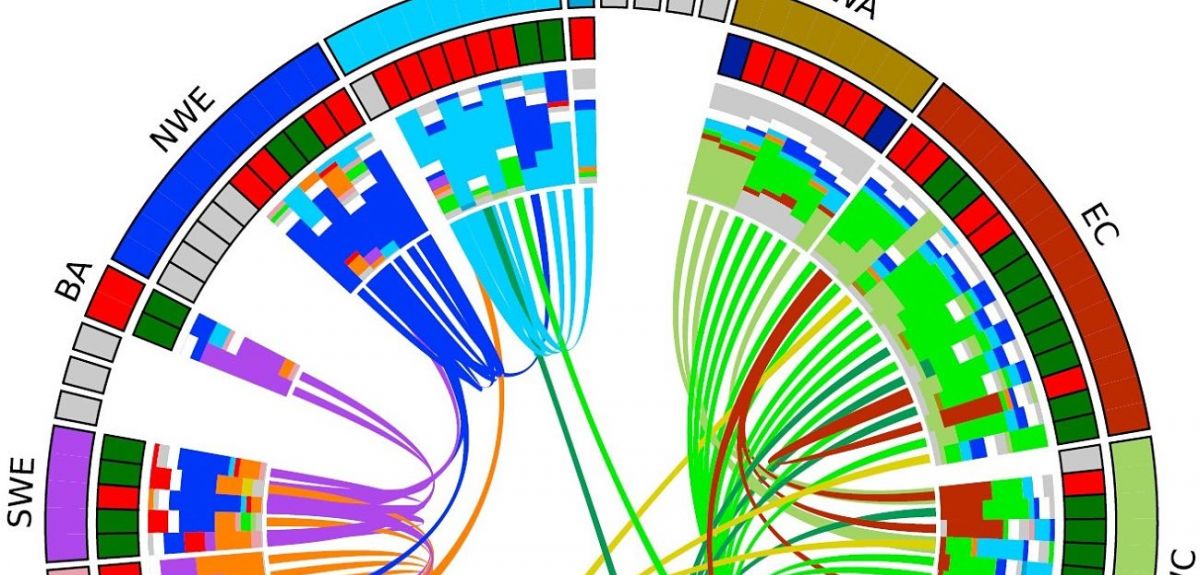
Estonian and Italian researchers have looked at how ancient human crossbreeding has helped shape our bodies today, including which historical groups have contributed to higher or lower heart rate, cholesterol and body mass index.
Most of Europe’s modern genetic makeup has been shaped by movements over the past 10,000 years, when local hunter-gatherers mingled with arriving Anatolian farmers from present-day Turkey and Asian nomads or Pontic steppe shepherds. The latter originate from some lands of modern Bulgaria, Romania, Moldova, Ukraine, Russia and Kazakhstan.
European hunter-gatherers, Anatolian farmers, steppe shepherds and ancient Siberian populations have been divided for thousands of years and evolving in different directions. But when they finally got together, their genome came in contact, and the genetic variants that characterize each of them mingled. This found a study led by scientists from the University of Tartu, Estonia and the Universities of Turin and Padua.
Black hair color comes from Siberians and steppe herders, chestnut – from European hunter-gatherers. The Russians were the Anatolian farmers.
Blue eyes are a legacy of European hunter-gatherers and Anatolian farmers, green from Siberians. The steppe herdsmen were tall.
The more frequent heartbeat is from European hunter-gatherers and Siberian populations, and the calmer – from Anatolian farmers.
High cholesterol comes from steppe pastoralists and low cholesterol from European hunter-gatherers.
The higher body mass index is inherited from European hunter-gatherers, and the lower – from Anatolian farmers.
The researchers worked with data from more than 50,000 samples from the Estonian Biobank.
Europe was formed by the original hunter-gatherers, Anatolian farmers and a third major population – steppe pastoralists. These nomads seem to have invaded Central Europe during the Early Bronze Age, about 4,500 years ago. They introduced domesticated horses and bicycles. They originate from the pit culture of the Russian-Ukrainian steppes north of the Black Sea, the genomic study revealed. About 75 percent of the genome in Central Europe 4,500 years ago is from steppe pastoralists. It is from them that a healthy physique originates, with a tall stature and a larger hip and waist.
A study published in the journal Nature in 2015 found that large-scale migration of people from the lands north of the Black Sea to Eastern, Central and Western Europe began around 2800 BC.
The focus on Estonia is solely due to the availability of data there and their relative lack elsewhere.
The leader of the USSR keeps his life a secret, and this gives rise to many legends about him
Yosif Dzhugashvili uses more than two dozen nicknames and names
On December 21, 1879 (actually December 18, 1878, but for some reason he later changed his date of birth, removing one year), Joseph Stalin was born. He has been in power for almost 30 years and there is hardly a figure in Russian history more mythologized than him. It is generally accepted that Stalin, as a young man, chose a biting last name and began to use it as a revolutionary pseudonym. But in fact he became Stalin at the age of 35. And before that he used over two dozen nicknames and names. There are many legends around his figures that are still popular today. Some appear in life, and others – in the post-Soviet period.
Ascetic / rich man
There are two opposing legends about Stalin’s finances. According to the first, Stalin was the greatest poor and ascetic of all rulers in history and had nothing but a tattered overcoat and pipe. According to another, Stalin is an Epicurean who organizes grand feasts, and the total value of the property he has is estimated at billions by today’s standards. As Secretary General, Stalin earned (by 1952) not much money – only 10 thousand rubles. And that’s all we know for sure about his finances.
It is true that his articles and books have been published in millions of copies in many languages around the world, from which he receives significant royalties. However, he has nothing to spend on them. Since 1917 it has been entirely state-supported.
Of course, Stalin was the richest man in the USSR. Even high-ranking nomenklatura figures, with the exception of members of the Politburo, are legally allowed to have no more than one dacha. Stalin has at least 12, not counting office apartments. In addition, each is equipped with the latest technology: refrigerators, swimming pools, cinemas and more, plus a huge staff of security guards and servants.
Stalin’s garage was full of luxury vehicles.
Stalin does not have a personal car, but he has a garage full of luxury models from abroad. For a long time his favorite was the elite Rolls-Royce Phantom II. In the late 1930s, he switched to the armored Packard Twelve. In recent years, Stalin has traveled in a custom-made armored ZIS-115. At the same time, he is extremely indifferent to the external attributes of prosperity – expensive clothes, jewelry.
Secret spy
There is a widespread legend that Stalin was recruited by the Security Department before the revolution and collaborated with him as a secret informant. In fact, the Bolsheviks regularly suspect each other of “provocation,” but there are no facts in favor of Stalin’s work for the security department.
After the death of the Secretary General, this legend was circulated by Orlov-Feldbin, a former high-ranking NKVD officer who fled to America in the late 1930s. In one of the articles, Orlov wrote that Stalin organized repression against a number of old Bolsheviks, who learned about his sins as a young man, trying to use this fact in the struggle for power. However, almost all researchers and biographers of Stalin consider this a lie.
Great religiosity
After the collapse of the USSR, the legends of Stalin’s secret religiosity became extremely popular. According to rumors, during the war the Secretary General ordered a special plane to fly around Moscow with the Tikhvin Icon of the Mother of God on board, and that Stalin personally went to the prophetess Matron of Moscow (later canonized) to ask her for advice.
Both legends appeared in the early 1990s and have no reliable evidence, let alone the fact that such actions are not entirely in the spirit of Stalin. The official church also denies these legends, despite their widespread popularity. Stalin himself publicly stated that it was the seminary that made him a staunch revolutionary. In his time, not under Lenin’s, most churches were closed, and the ringing of bells was legally banned in cities on the pretext that it hindered workers.
Princely origin
During his lifetime, the legend of Stalin’s princely origins was extremely popular in Georgia. It is said that the real father of the Secretary General is not the drunken shoemaker Visarion Dzhugashvili, but Prince Yakov Egnatashvili, whom his relatives call Koba. As if in honor of him, Stalin took him as his underground pseudonym.
Unlike most Stalinist legends, this one cannot be unequivocally refuted. True, Egnatashvili is not a prince, but only a rich merchant and owner of vineyards. Stalin’s mother Catherine worked for some time as a laundress in his house and they have a very close relationship. For example, Koba is the godfather of Stalin’s two older brothers, who died in infancy. Later, when Joseph left his family and went wandering, Egnatashvili helped Ekaterina with money, and thanks to his help, she paid for Stalin’s education.
In many sources one can read claims that Stalin had six toes on one foot. This legend is so widespread that it is found even in some serious research. However, none of those who know him and observe him in everyday life mentions this feature. And most importantly, the doctors who performed the autopsy on Stalin’s body after his death also did not reflect this fact in a very detailed forensic report.
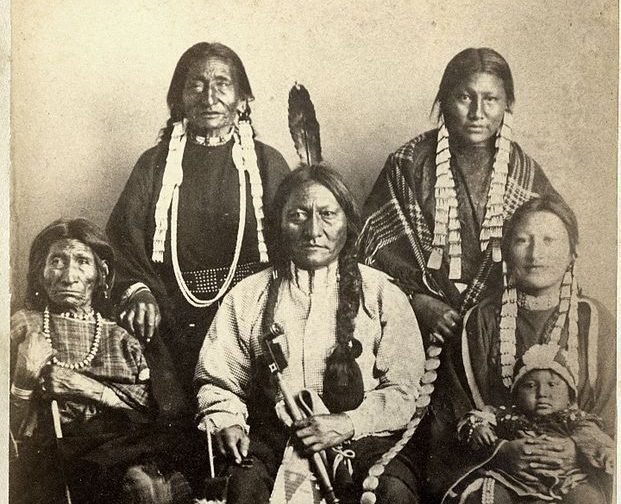
Scientists at the University of Cambridge used scraps of DNA from the scalp of a chieftain named Sitting Bull and found his living great-grandson.
US citizen Ernie Lappoint was the great-grandson of the Sitting Bull chief – he became one of the most famous Indians and was a key figure in the history of the indigenous resistance to the US military. He became one of the leaders of the tribal union in the early 1860s. The Sioux tribes have won several battles against the US regular army and volunteer troops.
It is known that the funeral of the leader was held in secret; only an undertaker and a military doctor were present at the ceremony, since he was killed by a lieutenant and a police sergeant. Relatives later exhumed the alleged remains and reburied the body closer to their homeland. As a result, the exact location of the grave could not be found.
To learn more about the personality of the leader and his descendants, scientists launched a project to extract DNA from his scalp. As a result, paleogenetics were able to restore only 0.8% of the genome, but this was enough to clarify its relationship with living people.
“We isolated a fairly large amount of DNA from the Sitting Bull’s hair and compared it with modern Sioux genomes. The results show that Ernie Lapointe is indeed Sitting Bull’s great-great-grandson and is his closest living relative.” (Eske Villerslev, professor at the University of Cambridge)
As a result, it was revealed that Lappoint and his four sisters are the closest modern descendants of Sitting Bull.
The authors hope that their work will help find the exact location of the Sitting Bull’s grave and resolve the serious controversy that still persists in American history.
Researchers at Johns Hopkins University have found a link between low levels of vitamin D in the body and the risk of stroke, reports the Express edition.
According to the researchers, vitamin D affects the health of the heart and blood vessels: a lack of it doubles the risk of an acute disturbance of the blood supply to the brain. Vitamin D is also associated with immunity, metabolism, and the functioning of other key systems in the human body.
This component appears in the epidermis of the skin due to exposure to ultraviolet rays, therefore its deficiency is often found in residents of those countries where there is little sunlight. Doctors said that during the winter months vitamin D can also be obtained from food: fatty fish, beef liver, eggs and yogurt.
Previously, scientists said that the introduction of intravenous vitamin C has a positive effect on the body’s fight against coronavirus. The experts concluded that vitamin C increased the rate of recovery from coronavirus by 70 percent compared to a placebo.
Physiognomy is the area of knowledge about the relationship between a person’s appearance and his character, health and lifestyle. Reading by faces is a necessary skill in the professional activities of creative professions, psychologists, politicians, salespeople, etc. The ability to read the character and emotions in appearance facilitates interpersonal communication and helps to understand the mood, and motives of the interlocutor and lies.
By studying physiognomy, you will learn to form an idea of a person even before he begins to speak. And imperceptible to the object of study. Researchers recommend paying attention only to natural (innate) facial features:
• face shape (oval, circle, square, etc.);
• face size;
• symmetry and arrangement of features;
• skin tone (pink, pale, etc.);
• relief;
• wrinkles.
Facial zones and proportions of Physiognomy
The proportions of the face zones give an idea of what a person is guided by in making decisions: reason, feelings or instincts.
It is customary to distinguish three areas of the face (from top to bottom):
• intellectual;
• emotional;
• vital.
According to the study of physiognomy, the vital zone is the lower part of the face that starts from the line of the nostrils. It consists of lips, and chin and gives an idea of the energy of a person.
Intelligent Zone
The forehead, eyes and eyebrows of a person speak of his intelligence. For example, a high forehead is a sign of intelligence, and a low forehead in combination with massive brow ridges indicates a narrow gaze of a person. The direction and depth of wrinkles in this area indicate a tendency to reflection, concentration and the ability to cognize the world.
Eyes are a source of information. What matters is the shape and fit of the eyes, the structure of the upper and lower eyelids, the location of the eyes relative to the bridge of the nose, etc. Each movement of the eyes, squinting, rolling, looking to the right or to the left speaks of the person’s thoughts at that moment.
Emotional Zone
Sensual and spiritual areas are reflected, according to studies of physiognomy, in the middle zone of the face: cheekbones, cheeks, nose, and lips. A person instantly reacts to what is happening by contracting the facial muscles. The nose wrinkles with disgust, and the wings of the nose swell with an overabundance of emotions. The lips either stretch into a smile, purse, or bite.
Dimples on the cheeks indicate that you have an extraordinary personality in front of you.
Vital zone
The lower area of the face is responsible for gratifying instincts. The chin of a strong-willed person is well-defined and pushed forward. A weakly pronounced chin speaks of indulging instincts and desires. In difficult periods of life, a person’s jaw contracts, and the chin becomes heavier.
Reflection of age
A person’s life leaves an imprint on his face. If in youth we can talk about the natural potential of a person, then the wrinkles that appear on the face speak of the true character, always according to studies of physiognomy:
• wrinkles of the mind lie horizontally in the forehead, they signal frequent headaches;
• wisdom forms a horizontal wrinkle above the eyebrows;
• surprise – frequent horizontal wrinkles on the forehead closer to the temples;
• stubbornness – wrinkles on the bridge of the nose and neck;
• horizontal wrinkle across the nasal bridge – loneliness or thyroid problems;
• wrinkles in the corners of the eyes indicate a person’s gaiety, if they resemble the sun’s rays, or scrupulousness, pettiness, if they are more like furrows;
• wrinkled nose tip – conservatism, unwillingness to accept new;
• a deep and well-defined groove above the upper lip indicates good health;
• radial folds around the mouth – shyness, suspiciousness, stomach problems, smoking;
• nasolabial folds are formed in pessimists or as a result of deep disappointment with life;
• vertical wrinkles on the side of the lips – self-doubt;
• indifference paves paths on the cheeks, like traces of tears;
• fear wrinkles the chin.
Reading by faces is a useful skill. However, one should not make unambiguous conclusions about a person only by his facial features.
Bibliography:
1. Volov V.V. The phenomenon of facial expression in psychology. \\ Bulletin of Tomsk State University. 2014. No. 388. S. 211-218.
2. Pogontseva DV The structure of an attractive external appearance: analysis of modern research // Scientific and methodological electronic journal “Concept”. – 2017. – No. 9 (September).
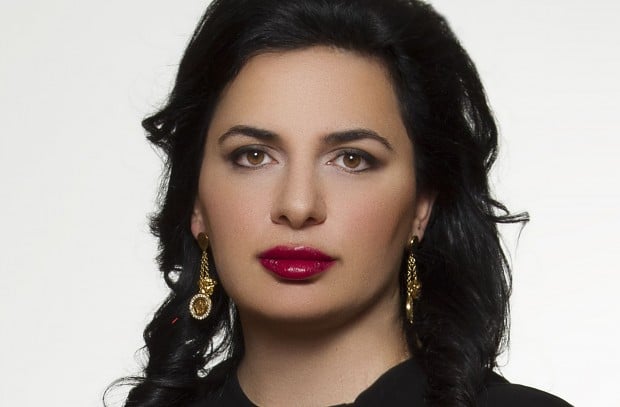
The poor men followed her, loaded like donkeys, barely holding their breath, each carrying 20 bags. This is how Ruzha Ignatova describes the return of a former porter of the building in the elite London district of Kensington from a tour of expensive boutiques and her Bulgarian bodyguards to her luxury apartment. With this incident in 2016, the BBC launched another investigation into the missing “crypto queen” Dr. Rouge, who found that through a company on the offshore zone on the island of Guernsey, the Bulgarian cryptoqeen owns a home for almost 13.5 million pounds in the British capital. .
The publication of the podcast “The Missing Cryptoqueen” this time is also part of the revelations in the “Pandora” Dossiers – a huge array of data on who is behind companies registered in offshore areas with hidden owners. The authors of the podcast promise more series in 2022.
The fraud of Ruzha Ignatova, who sold something non-existent – the cryptocurrency OneCoin – amounts to 4 billion euros and in Europe cases are already underway in several countries. A trial against her German lawyer, Martin Breidenbach, began on September 17 in Munster on charges of money laundering and transferring 20m euros to London to buy the luxury property.
Two others are facing charges of embezzling millions of euros in the scheme, which, according to the BBC, has cost more than 100 million pounds in the UK alone. There are also cases of major fraud against Ignatova in the United States, and her brother Konstantin has been arrested and is in prison. The authors describe that it was from Briedenbach’s case that the four-bedroom apartment with a movable roof pool in the building known as the Abbots House was found out.
According to an eyewitness account, the 650-square-meter apartment was full not only of purchases from luxury brands, but also of paintings by Andy Warhol and Michael Möbius. A photo shows a porcelain plate with the image of Ignatova herself. Later, it became clear from which London gallery works were bought for hundreds of thousands of pounds, raising the question of whether Ignatova deliberately did not invest money in jewelry, valuables and paintings that can be easily and quickly exported, so as not to be confiscated.
The key is the revelation that Ruzha Ignatova owned a property on British territory with the help of the offshore services company Aquitaine Group. The British investigation against the Bulgarian woman was terminated in September 2019, explaining that “no assets of OneCoin have been identified in the United Kingdom.” Two months later, in another case, the name of the company Abbots House Penthouse Limited appeared on the island of Guernsey. The American law firm Locke Lord with an office in London noticed something wrong with the source of the translation of 20 million euros.
The investigation leads to her former employee Mark Scott, against whom a lawsuit for money laundering is initiated in the USA and it is understood that Ruzha Ignatova’s companies gave the money for the purchase of the luxury property in Kensington, the BBC reports. She has rarely appeared in the apartment since 2016, a time when she seems to be looking to establish a lasting presence in London, as she opened an office in an expensive building near Hyde Park in an area where the elite caves of Mayfair, Knightsbridge and Victoria. A lavish celebration was organized for her 36th birthday at the Victoria and Albert Museum.
On October 25, 2017, Ruzha boarded a Ryanair plane from Sofia to Athens and disappeared without a trace. But in July 2018, her brother Constantine, who headed the fraud scheme after her, posted a selfie taken in the same apartment in Kensington. The investigation established that there was another smaller one-bedroom apartment for 1.9 million pounds in the building, in which their security guard lived.
Ruzha Ignatova’s name is again missing from the property registers in Great Britain, because the buyer is the offshore company from Guernsey. Constantine was arrested on March 6, 2019 at Los Angeles International Airport and charged with conspiracy to defraud. Frank Schneider, a former head of an intelligence agency in Luxembourg, arrested in France at the request of US authorities in April 2021 and awaiting a decision in November to extradite him, also appeared at the London address.
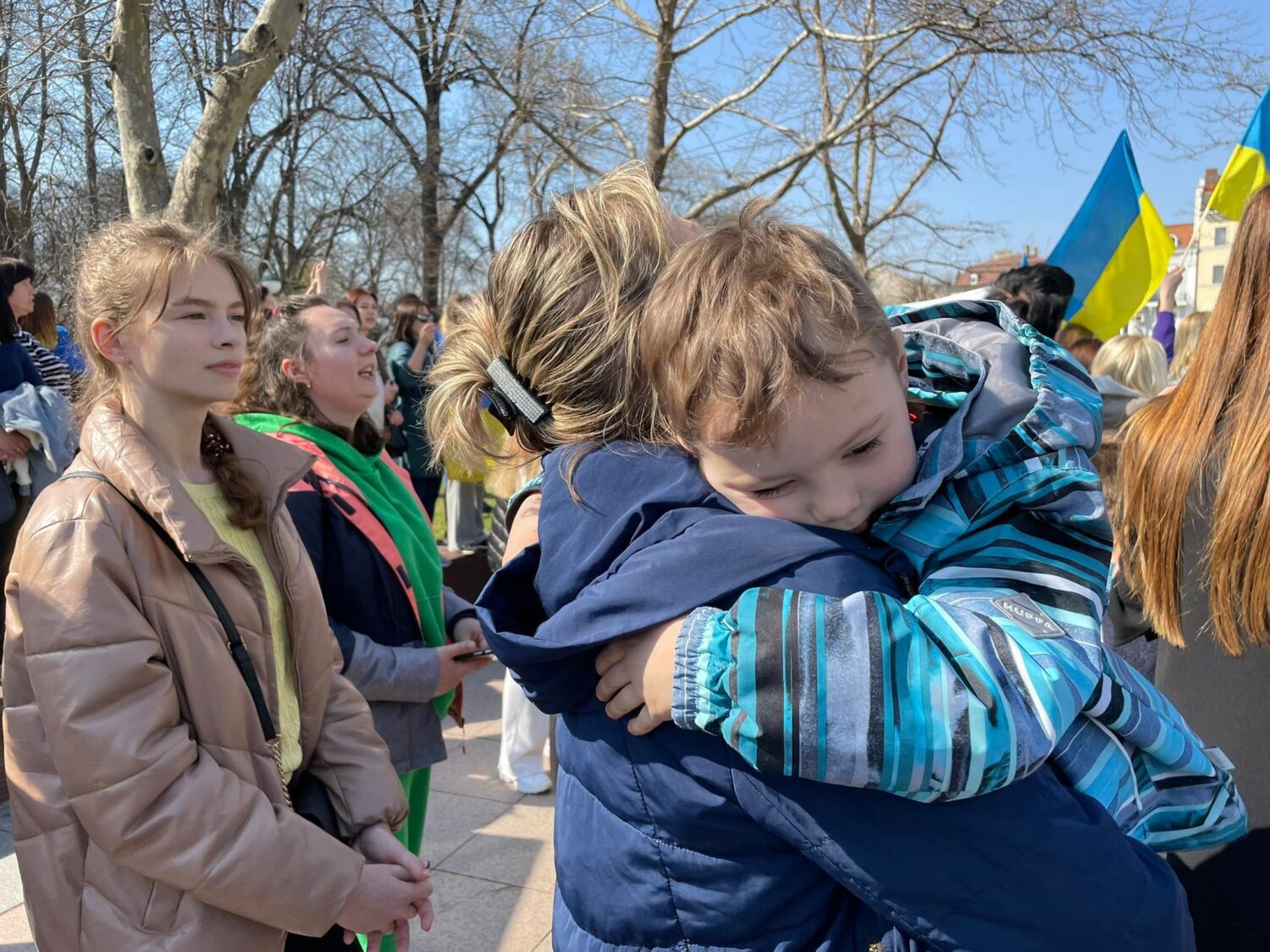
MEPs call for safe passage for children fleeing war in Ukraine, as well as help for IDPs and those unable to leave the surrounding areas
With 509 votes in favor, 3 against and 47 abstentions, the European Parliament adopted a resolution on Thursday recalling various measures needed to protect children and young people fleeing violence and to facilitate of their integration into the communities of the host countries.
“Every child has the right to be protected from violence, exploitation and abuse,” (7) MEPs said, calling on EU countries to protect children from trafficking, illegal adoption and other forms of abuse.
They recommend that child protection officers be present at the borders so that they can quickly and accurately identify vulnerable children and register their nationality as well as their specific needs. National child protection systems should offer services such as psychosocial support, maternal health support, protection against gender-based violence, family search and family reunification support, as well as full access to all basic services and appropriate care.
Unaccompanied and separated children and children placed in institutional institutions should be assigned a guardian. The child protection services in the host country should monitor their well-being and whereabouts upon arrival in the EU, the resolution said.
Host countries should provide them with the same access to education and health care on an equal footing with other children in host countries, MEPs insist. They also advocate for relocation mechanisms that give priority to family reunification and the relocation of vulnerable children, such as the Solidarity Mechanism for EU-wide medical transfers to children and young people in need of immediate life-saving treatment and therapy.
MEPs call on EU countries to make the best use of available EU funds to support the socio-economic integration of refugees and protect them from discrimination and social exclusion. If necessary, additional resources should be provided, the text adds.
Since Russia’s invasion of Ukraine, more than four million people have fled their homes and sought refuge, mostly in the EU’s neighboring countries, namely Poland, Romania, Hungary, Slovakia and the Czech Republic, as well as the Republic of Moldova. According to UNICEF, almost half of the fugitives are minors and in need of increased protection, as there is a greater risk of being trafficked and exploited.
At the same time, MEPs have decided that EU countries that have sheltered people fleeing the Russian invasion of Ukraine will receive 3.4 billion euros immediately.
After Parliament gave the green light during the last plenary session to redirect EU funds for regional development and asylum to EU countries sheltering people fleeing the Russian invasion of Ukraine, MEPs adopted additional urgent measures to support them.
With 549 votes in favor, 1 against and 8 abstentions, Parliament agreed to immediately allocate around € 3.4 billion (out of the available € 10 billion) from the REACT-EU funds and to speed up EU governments’ access to infrastructure, housing, equipment, employment, education, social inclusion, health and childcare for refugees.
The new rules will increase the initial pre-financing of REACT-EU funds from 11% to 15% for all EU countries. EU countries bordering Ukraine (Hungary, Poland, Romania and Slovakia) and those that have received a significant number of refugees from Ukraine, equal to more than 1% of their population (Austria, Bulgaria, the Czech Republic and Estonia), can receive 45% (instead of 11%) of the refund immediately, without the need to present invoices at this time.
“There is clear and drinking water, yellow water, black and stagnant – heavy water, there is mineral water. But the birds know it best. There may be thousands of waters, but they will choose and bathe in a certain place. I watched , I’ve been watching for hours – the chickens are diving, shaking, drinking … and every day there are birds in the same place. These are waters that do not dry up and flow less in the land. How do these innocent creatures understand What is good? We do not yet know the mysteries of the earth. They are hidden from us – what water speaks and what heals. Every water has secrets, but we can not find them. The human eye has seven curtains and its vision is limited. the animal can smell it. ” – An interview of Anita Cholakova with “The One Talking to the Water” for actualno.com.
This is a very short excerpt from the book “Water Speaks” by Maria Bebelekova. The main character in it is the famous Zamfir Manchev – Bai Mancho from Smolyan (the Rhodopes mountains in Bulgaria). In the work of the Rhodope woman he is the One who speaks with water. So far, he has built over 300 fountains, built dozens of bridges, one of which he has maintained for 40 years.
About 5 years ago, Bai (uncle) Mancho built a “land-land fountain” * in Smolyan – the driest fountain in the region. He laid six kilometers of water supply between Raykovo and Dunevo in a dry area, where there is no water for people or animals.
As a child, he grazed sheep and heard from old people that in Turkish times the water flowed for three days, but then got lost. He began to dream when he turned 80.
“I dreamed that I drank water from the heap and when I went with the baguettes (brass rods, twisted at right angles), I found water 70 meters away. Now the same water has been taken 6.3 km away, “says Bai Mancho. He added that he called the fountain “Zem-zem” because such clean water is only available at God’s tomb.” And it is clean because it has not flowed for centuries. It appeared to me in a dream. I went and dug it up, “added the master.
We asked him for an interview to reveal some of his secrets in the “Keeper of Traditions” section.
Bai Mancho, how did you make friends with water and when?
Since I was a child. I always walked with a sack of clay on my back, so wherever I found a spring, I grabbed it, clay it. From the trees I made a spout – people and animals to drink. I’ve always been drawn to the water. I played with water regularly. Old people told me how they found water with baguettes. And when I started playing – with willow sticks, little by little, I caught the craft. Childhood was in the beginning.
What qualities do you need to deal with water, to speak to you, to discover it?
You have to be punctual, honest, good, to do everyone’s work, not to be proud that you have learned a trade. There is nothing better than kindness and honesty. I was recently taken to Raykovo, to the high school. They gathered the children to tell them how I walked on straight paths and how far I had come. There were children who wanted me to show them how to do it, so that they too could suffer. Some have biocurrents. They can learn this craft. However, it should not only be biocurrents, but also help you from within.
What is “inside”?
The blood itself, the body itself, draws you to the water. This is rare. Many people have biocurrents, but they can’t find water everywhere. My whole body helps me to detect.
What types of water have you discovered so far?
A lot. There is clear and drinkable water, yellow water, black and stagnant, heavy water. There is mineral water. There is living and dead water. The dead can’t run away, just hide. Anyone who is a master of seeing water on the street can tell you if it is from a fountain, if it is from a spring, where it comes from. Water is known for its purity. It is difficult to find and catch. Digging is very important, because while digging, you can lose the “mother”. You need a master. Now a boy from Raykovo – Nikola Badev, works in Sofia, but in two weeks he comes to me to teach him a craft. I’m old and it’s nice to give it to someone who can take it. He is also a young man. I teach him how to shrink baguettes, how to hold them, what to do. He will learn, although he cannot find everywhere, the catch to learn, the source how to flow – enough again.
Do you recognize which water can heal, which can quench thirst?
Yes, I recognize them. I have a water in the village of Peshtera, on the way to Turyan. People make her sell it for eye treatment.
Is there one that can hurt?
There is. In order not to harm, it must be clean and kept clean. Especially children and the elderly – they get sick the most from water. It must be very clean for them.
When you work with her, does she resist you and how do you tame her?
He obeys me. One day my daughter sent a son-in-law to help me. I dig for water. A snake came out and she did not let him to the water because he drank brandy. Water has a flair, it protects you if you are a literate person.
Is it true that water has a memory?
True, and a great memory. I went to God’s tomb last year in Israel. I also went to the Jordan River. When I went to the river, the machines clicked, they took pictures. And when the water began to boil and gurgle, it was cold. And it comes all the way to my face. He recognized me! She has both flair and memory. Look where I came from, I’ve traveled so far by plane, but this water recognized me, too. There I was told to take a helicopter and find the “mother” of the Jordan River, but there was no place for the helicopter to land. They asked me if I could judge from the air. And it can’t. I have to be on the ground, to see what the turns are, how it flows, it only happens up close.
They offered you to find out from the air exactly where the Jordan River came from, didn’t they?
Yes, but it is in the mountains, in a military zone, there is nowhere to land. We couldn’t go because we were just going to take pictures, but we can’t see how it comes from the ground, exactly where. They told me that it springs from three places.
You say that water is one in the whole world, and whatever happens at one end of it, water knows at the other end of the earth. Is it possible?
This is a holy work, a work of the Lord. The earth speaks, the trees are alive. And they talk, they are like us, the people.
Can a person believe in water or is it a need without which there is no life, and faith is something else – in God or Allah?
You respect water and it will respect you. When it flows, it speaks, when it drips, it speaks, but one cannot understand everything. When the weather starts to deteriorate, the water roars. She tells you everything, but we can’t understand everything.
How many waters have you taken out so far, do you count them?
I counted up to 300, then the Almighty counted them. One should not be proud of having mastered a craft.
Is it possible that water is our connection with the cosmos and with the Lord?
How could it not be possible – every bar, every height speaks to the sky.
How have you spent the winter and the pandemic so far?
I am fine. Journalists from Sofia help me, they transfer money for the wood, and from Smolyan they bring it to me. I have everything.
Have you closed these months because you are a person for whom not a day goes by without getting wet and wet?
Ahh, should I shut up !? I’m out all day, I’m freezing, but I can’t stay inside. I’m worried when I’m inside. I can’t wait for it to stop raining, because while it’s raining, you can’t look for water. It is best searched in land to be accurate, to be sure the source.
What do you think this coronavirus that befell us teaches us?
This is an oath. This is a slap in the face for us because we do not believe. In my simple mind, old man, if we had started giving sacrifices and praying, he might have stopped by now.
How do you think people are changing in this ordeal – for better or for worse?
We are with the Devil. He lies to us everywhere. We only need to know God.
Now is the time for Christians and Muslims to fast and pray. For both religions, the most purifying holidays are coming – Easter and Ramadan. How do you accept them?
It’s good to be able to get together, more people together. And at least 40 people need to get together. If 40 people come together with one good man, all their sins are forgiven. We must believe, we must taste the food of the benevolent man. Bread is the strongest.
Do you go to church, to a mosque in these strange, coronavirus times?
I also go to church, I also go to the mosque. I do not make a difference. God is one. I get up in the morning and pray in the sun. People laugh at me. And I’ve been praying like this since I was a child.
What are you praying for?
I pray to the sun, it is God, God – always shining, shining to everyone, no difference between people and animals.
Since you are so often involved in water, what do you dream about at night?
I dream of more water. Sometimes she tells me where to find her. Recently, a girl from Levochevo dreamed of water on Ilinden, where a sacrifice is made. They came and took me to see, but when I look with my knowledge and baguettes, the dream is reversed. There is no water there, there must be a fountain. Water must be brought to it. Many dreams, not everyone can interpret them. Many people want to make some water. I also build bridges, one of which I have been maintaining for 40 years.
How many bridges have you built and where is the one you have maintained for so many years?
They are not like the fountains, but the one I maintain is very big – from Raykovo it comes to the hospital and branches off to the White Stone. There are people who try their axes to see if they are sharp. They stop on the bridge and play there. They spend. We do not have such stable people now. Young people should be educated the most by their mothers and fathers. They are waiting for the teacher. At school he is told what is good and bad, but even then he forgets. Parents have to guide him around the clock to do all the good things.
What happened to your “land-land” fountain between Raykovo and Ustovo, is it running?
It runs, but it spoils a lot. They walk drunk. I put a pitcher, and they throw it, crush it. There are more unbelievers. They destroy more than they build. It pulls us back, it brings us diseases and everything. We cannot be tolerated, God knows how God tolerates us.
You are very sensitive, and when you talk to a person, do you feel what he is like?
Ah, they’re making fun of me – they’re yelling, “He’s not well.” Everyone is waiting for the Council (the municipality – b.r.) and the state to do it. And we are the state. We must all strive to preserve and repair, not destroy.
With the many open waters and bridges, people will remember you, but also with a lot of wisdom, where does it come from?
By itself. A boy from the villages of Devin once recognized me on the sidewalk, put me in the car and drove me home. He shouts at me: “Bai Mancho, you speak like that because you are in the Balkans. If you are not in the Balkans, you will not have this speech, this mind.” We feel healthy here. By the way, I could hardly wait for a journalist to call me, to come and write that I have already fixed my eyes and now I work everywhere. Sometimes we talk badly about doctors. I don’t have to, they helped me – both eyes operated on me at the Smolyan Hospital, I’m very happy. I want to thank the doctors, but I don’t know their names. If you can, thank them for me!
* The Zem-Zem spring is located on the Arabian Peninsula, in the city of Mecca. The water from it in the Islamic world is considered to be the cleanest on Earth. This is one of the most valuable gifts that pilgrims bring after returning from worship.
Meteorites are known to fall all over the world, but the environment and unique processes in Antarctica make them somewhat easier to find in the pristine, snowy landscape. However, collecting meteorites in Antarctica is physically exhausting and dangerous.
But what if we had a “treasure map” that showed the most likely places to find meteorites in Antarctica, directing researchers to where to look?
Researchers at the Delft University of Technology in the Netherlands are using artificial intelligence to create a kind of treasure map to identify areas where meteorites are likely to be found.
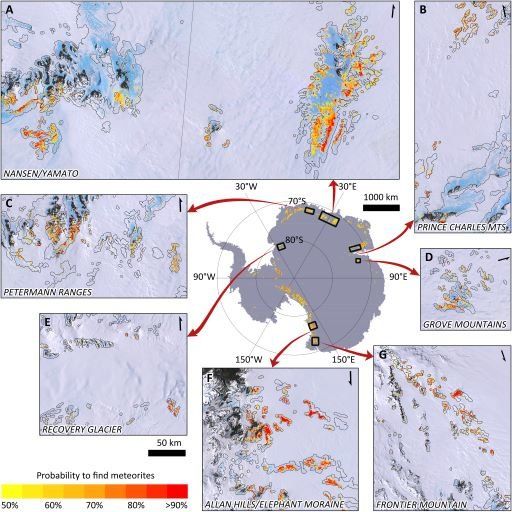
“We learned from our analysis that satellite observations of temperature, ice speed, snow cover and geometry are good indicators of the location of meteorite-rich areas,” said Veronica Tollenaar, who led the study, published in Science Advances. . “We expect the treasure map to be eighty percent accurate.”
Based on the study, scientists estimate that more than 300,000 meteorites are somewhere in the Antarctic landscape and are waiting to be discovered. This represents a huge scientific potential.
“We found several never-before-visited meteorite-rich areas that are relatively close to research stations,” said Stef Lhermitte, a study participant at Delft University of Technology.
Rocks from space have been accumulating in Antarctica for millennia, preserved in the cold, desert climate of the continent. Meteorites fall and build up in the ice sheet in the interior of the continent. Glaciers flow slowly and carry meteorites with them. If a glacier collides with a large obstacle, in places like the Trans-Antarctic Mountains, the ice rises and meteorites rise to the surface.
In addition, dry Antarctic winds are gradually eating away at the ice, exposing meteorites. The ice rises to the surface and the process is repeated. With enough time, a significant amount of meteorites accumulate.
Meteorites are too small to be detected separately from space, but with indirect satellite measurements such as temperature, ice flow velocity, surface slope and the way ice reflects radar signals, processing all this data and using machine learning, the researchers found that they can predict where meteorites are concentrated on the surface.
One of the areas known to contain meteorites is in the areas of blue ice on the continent. Contrasting blue ice makes it easier to detect and collect meteorites during Antarctic field missions.
Photo: Map of Antarctic meteorite hotspots with positively classified observations. In the central overview map, the size of the positively classified observations is exaggerated by visual contrast, while in the sub-maps (A to G) the positively classified observations are scaled. The extended areas of blue ice (BIA) on which the classification is performed are outlined in black. The “probability of finding meteorites” in a place corresponds to the a posteriori (after the experiment) probability. Credit: Tollenaar et al.
Source: Simulation Predicts Where to Find 300,000 Meteorites Hidden in Antarctica, Universe Today
Reference: Unexplored Antarctic meteorite collection sites revealed through machine learning
Veronica Tollenaa, Harry Zekollari, Steff Lhermitte, David M.J. Tax, Vinciane Debaillesteven Goderis, Philippe Clayes and Frank Pattyn; Science Advances • 26 Jan 2022 • Vol 8, Issue 4 • DOI: 10.1126 / sciadv.abj8138
The American Psychiatric Association has officially announced that taking selfies is a mental illness. In fact, science has confirmed what has been talked about for a long time – that constant self-portrait betrays self-esteem problems and an inability to control feelings of loneliness.
At the same time, even people who take selfies without posting them on social networks are affected.
The name the association gave the disease is selfitis. The disease has three phases:
Border Selfie: This is a condition in which a person takes at least three selfies a day but does not publish them;
Acute selfies: It affects people who take pictures of themselves three or more times a day and publish the pictures;
Chronic selfitis: The most serious phase of the disease is characterized by uncontrolled selfies at any time of the day, more than six times a day and their publication.