Monday, March 23, 2026
Home Blog Page 972

Interview: Slave trade reparations ‘essential’

0
UN Photo/Mark Garten - Shackles used to bind slaves on display at the Transatlantic Slave Trade exhibition at UN Headquarters in New York. (file)

Interview: Slave trade reparations ‘essential’, 1619 Project founder tells UN News

New York Times writer Nikole Hannah-Jones, best known for the 1619 Project, which frames slavery as one of the core elements of the history of the United States, addressed the UN General Assembly during a commemoration of the transatlantic slave trade on Tuesday. She explained to UN News how the Project came about.

Nikole Hannah-Jones The 1619 Project is a book that commemorates the 400th anniversary of the first ship that brought the first Africans to the British colony of Virginia. We mark that as the real beginning slave trade in America in the original 13 colonies that would form the United States.

And what the project tries to do, through a series of essays, is to enter slavery as a foundational American institution and to place the contributions of black Americans really at the center of the American story.

But more than that, to also show the way that the 250-year legacy of slavery in the United States still shapes so much of our society today. It’s not just about the past, but it’s about what has happened right now. 

But slavery is critical. You cannot understand the United States, you cannot understand the Atlantic world, you cannot understand what has happened on the continent of Africa, and you certainly can’t understand the great wealth of the Western colonial powers if you don’t understand slavery and its legacy.
Interview: Slave trade reparations ‘essential’
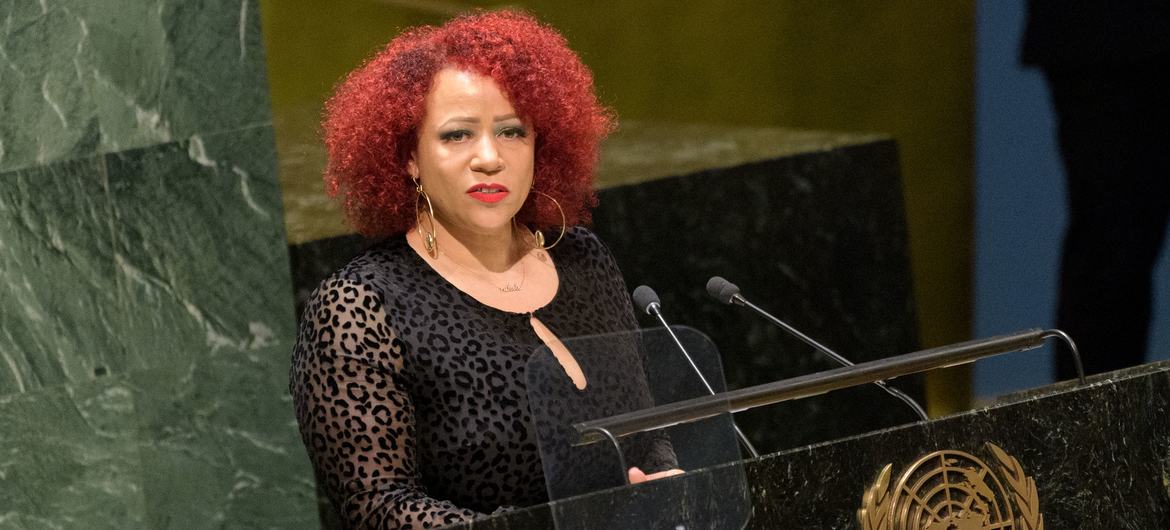
UN Photo/Manuel Elías – Nikole Hannah-Jones, Pulitzer Prize-winning reporter for The New York Times Magazine and creator of the 1619 Project, addresses the UN General Assembly commemorative meeting marking the International Day of Remembrance of the Victims of Slavery and the Transatlantic Slave Trade.

UN News What would you tell those who say “I didn’t participate in slavery, why should you still be telling me about slavery”?

Nikole Hannah-Jones The first thing I would say is that, it is illogical to believe that a system that lasted for 400 years, that reshaped the complexion of the world, that enriched the European colonial powers, that laid the foundation for the economic prosperity of the United States, somehow does not shape the society that we live in any longer.

For instance, in the United States, we’ve had slavery longer than we had freedom, and African descended people remain at the bottom of all indicators of well-being and all of the former slave societies.  

If people read the 1619 project, they will see that every single essay is not about something that happened a long time ago. It’s about the way what happened a long time ago still shapes and corrupts so much of society today. 

None of us were alive when the Constitution was written. And yet we understand that that is our legacy. You cannot only claim the parts of your history that you think makes you look good or that you think are uplifting. 

UN News Were you surprised by the pushback in some political circles?

Nikole Hannah-Jones I’m not surprised. 

The United States in particular has been in a great denial about the institution of slavery and its legacy. We are a nation founded on ideals of God-given liberty.  We believe we are the freest, most exceptional nation in the world. And slavery and its legacy gives lie to that right.

Slavery is a glaring hypocrisy in a nation that wants to believe that it is the pinnacle of freedom for the world. 

But I would be lying if I didn’t say the way the project has been weaponized and politicized, three years after its initial publication, has been actually quite astounding.

And what that tells you is that history in many ways is about power. It is about who gets to shape our collective understanding, who gets to shape our collective memory. And that power does not want us to understand the history that delegitimizes that power. 

And that’s what the 1619 does. It takes the people who have been treated as marginal, it takes the global crime against humanity that was slavery, and says that was just as important to the United States and to the Atlantic world as these ideals of liberty. And that is something that’s very, very scary for certain powerful people.
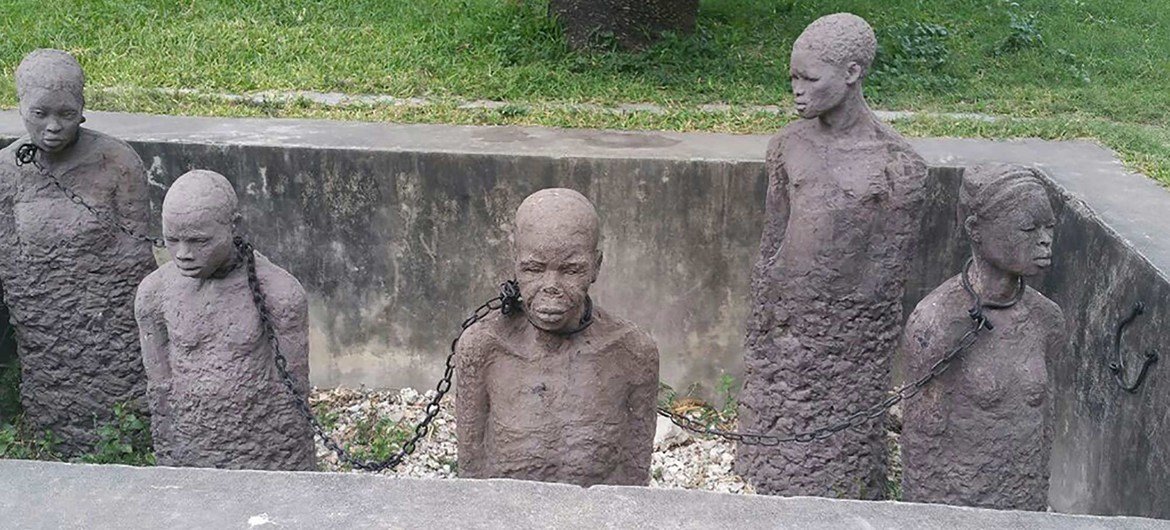
Interview: Slave trade reparations ‘essential’
Israa Hamad – Slavery memorial in Stone Town, Zanzibar, United Republic of Tanzania.

UN News What is your response to those who say that you are exposing a wound, rather than healing it?

Nikole Hannah-Jones Well, clearly, the wound is still festering. Whether we want to take the bandage off and figure out why or not.

Just two years ago, we had the largest protest for black lives in the history of the world because a black man, George Floyd, was killed by a white police officer, who compressed the oxygen out of this man for eight minutes. 

Those who say that if we talk about this, we make it worse, are clearly not the people who are living and suffering under the conditions of this history. I personally believe that light is the best disinfectant that we have, to acknowledge and tell the truth about our history. And then we can begin to repair it.

UN News What would you like Africans to take away from the 1619 Project?

Nikole Hannah-Jones That’s a profound and complicated question because we know that African peoples, particularly in western and Central Africa, also engaged in the slave trade. I think that an acknowledgement of what happened is also necessary on the African continent to move towards reconciliation. 

Nothing can be done to change the history. But what we can do is acknowledge what happened and then try to build relationships together.

I think Black Americans would love to be able to have citizenship on the continent and to be able to build these relationships across that that bridge. I think that that reconciliation can be so powerful for all of us.
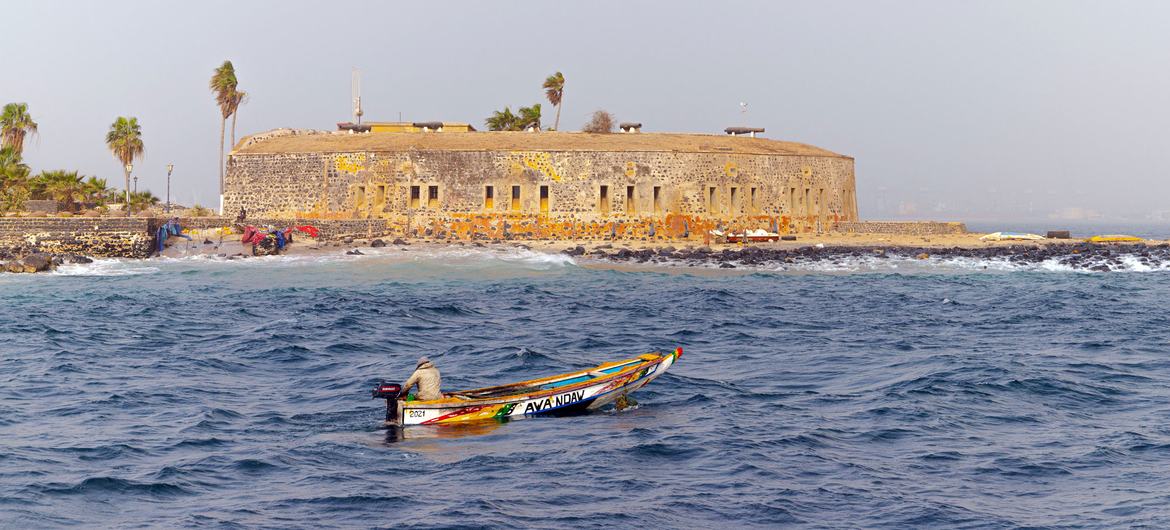
Interview: Slave trade reparations ‘essential’
Unsplash – Fort of Goree Island, Senegal, was the site of one of the earliest European settlements in Western Africa.

UN News During your address to the General Assembly, you highlighted slave resistance and reparations. Why are these pillars critical to moving forward in a constructive way from the legacy of slavery?

Nikole Hannah-Jones I am so grateful that the United Nations is focusing this year on resistance, because the way that we are commonly taught this history is that somehow Black people, African people submitted to their enslavement, and this it is used as a justification for slavery.

It also, to me, takes away our humanity, because it is not natural to not fight against slavery. Even the story of abolition is centred around white people in a way that robs us of our agency.

It is not the case that, one day, Britain, which was the greatest slave trading nation in the world, simply decided “we don’t want to do this anymore because it’s wrong.”  It is the mutinies and the revolt of enslaved people that made it untenable for the British Empire to continue importing Africans into its colonies. 

And then when it decided that it couldn’t do it anymore, it also clearly didn’t want other countries to do it, because they would have a competitive advantage. That is how we got to the bans on the international slave trade.  

UN News You suggested in your address that this resistance continued well into the Twentieth Century.

Nikole Hannah-Jones We think of the United States as a magnet for oppressed people in other places who come to the United States. What we don’t talk about is how Black people in this country were denied democracy, were denied the same rights that White Europeans could immediately get when they came.

There was another migration, not just of immigrants coming to the US, but of Black people in the South.
Six million, the largest migration in the history of the United States, left the South, often under the cover of darkness because they were forced to labour down there, and the white people who were exploiting their labour did not want them to leave.

They decided that they were going to be refugees in their own land, and move to the north to search for a better life and better opportunities. 

I feel that, if more people across the globe understood the story of the Great Migration, they would see themselves, their own immigrant story in the story of Black Americans, as opposed to wanting to say, “Why are you not doing better in this country, a great bounty? Why are you not using your opportunity?” 

Regarding reparations, I don’t think we can have conversations about one of the greatest crimes against humanity, and not talk about reparations.

I notice that, at the General Assembly, the spokesperson for the Western European countries seemed to prefer to talk about modern day slavery, which, of course, is a great scourge, and that all of us should be fighting. 

It is easier to talk about slavery elsewhere than to deal with that original crime. We must have reparations, and I believe in financial reparations across the Atlantic world. And there’s a separate conversation about reparations for colonialism as well. 

Black people in America, for instance, have one tenth of the wealth of White Americans. A black person with a child has one hundredth of the wealth of white Americans.

And it is not because somehow Black Americans are lazy, don’t want an education, don’t want quality housing, don’t want to work. We know that that is not true. In fact, I don’t understand how the people who were forced to labour for other people can be considered lazy.

Look at Haiti, a place that was forced to pay reparations to White enslavers because they liberated themselves.
And in the United States, the only group of people who ever received reparations for slavery were white enslavers in Washington, D.C.

UN News What should the UN be doing to support the 1619 Project?

Nikole Hannah-Jones I commend the UN as a body for putting out reports on racism in the United States and being willing to challenge the hypocrisy of the country in ways that you don’t often see.

But there certainly has to be more forceful work on the issue of reparations. 

There is also an issue regarding representation in the General Assembly. We can look at many of the nations in the Atlantic world that were former slave-holding nations, and we do not see the African diaspora reflected in who gets to be in spaces like this. 

I think there is much to do. But I do also believe that the UN has led in some very important areas.

It has been a surreal experience to be here and to be able to address the General Assembly.

I told the story of my grandmother, who had a fourth grade education, who was born on a cotton plantation, who worked as a janitor until she retired, and she could never have imagined that all of her sacrifice would allow me to speak on behalf of our people in our ancestors in this way.

I’m leaving today feeling very grateful, and very honoured, and I feel the presence of our ancestors around us.

World churches’ head expresses abhorrence at brutality recorded in Bucha, Ukraine; Pope condemns ‘sacrilegious war’

0
World churches' head expresses abhorrence at brutality recorded in Bucha, Ukraine; Pope condemns 'sacrilegious war'

After television footage showed mutilated bodies of people in civilian clothes some with their hands bound behind their backs in Bucha, Ukraine, the World Council of Churches head said the reports give stronger indications of grave violations of international law as global outrage grew.

World Council of Churches acting general secretary Rev. Ioan Sauca, expressed abhorrence at the reported atrocities shown on global television channels and that were reported by the Associated Press and Reuters, calling for full investigation.

Pope Francis had the day before condemned the “sacrilegious war” in Ukraine at an open-air mass in Malta, ahead of a visit to a migrant centre preparing to take refugees fleeing Russia’s invasion, AFP reported.

He spoke amid international outrage over the killing of civilians near the Ukrainian capital of Kyiv, after officials in Bucha said nearly 300 bodies had been found in mass graves after Russian forces withdrew.

Ukraine’s foreign minister Dmytro Kuleba said the horrors seen Bucha, which sits 20 miles (32 kilometers) northwest of Kyiv, were “just the tip of the iceberg” during a news conference in Warsaw with Britian’s Foreign Secretary Liz Truss on April 4.

He said: “Ukraine won the battle for Kyiv, but the war goes on. We are preparing for the new large-scale offensive by Russia in eastern Ukraine,” Sky News reported.

“They will try to capture more territories in Donetsk and Luhansk region regions.

“They will try to entrench and root themselves in the Kherson region, they will try to capture bleeding Mariupol.

‘TIP OF THE ICEBERG’

“What you’ve seen, the horrors that we’ve seen in Bucha, are just a tip of the iceberg of all the crimes that have been committed by the Russian army in Ukraine so far.

“And I can tell you that without exaggeration and with great sorrow that the situation in Mariupol is much worse compared to what we’ve seen in Bucha and other cities, and towns and villages nearby Kyiv.”

A Ukrainian official described it as a “scene from a horror movie,” after the reported massacre in Bucha, Global News reported.

World Council of Churches’ Sauca said, “War is a context inherently conducive to such brutality, which underlines the need for systems of legal accountability to prosecute perpetrators, in order to curb the worst in humanity.

“Moreover, it underscores the urgent necessity of bringing this terrible conflict to an immediate end, for the sake of preventing yet more death, injury and destruction of communities.”

Sauca added: “We appeal to those responsible for conceiving, pursuing and supporting this war, to stop the bloodshed and destruction, and to save the lives of all the children, women and men in the way of their ambition.”

Russia’s defense ministry said on April 3 that its forces did not kill civilians in Bucha after it was retaken by Ukrainian soldiers from Moscow’s troops.

“During the time this settlement was under the control of Russian armed forces, not a single local resident suffered from any violent actions,” the ministry said in a statement, saying Russia’s military delivered 452 tons of humanitarian aid to civilians there.

With This Light: the story of the ‘Mother Teresa’ of Honduras

0
With This Light: the story of the 'Mother Teresa' of Honduras - Vatican News

By Deborah Castellano Lubov

A documentary film bringing to life the story of the ‘Mother Teresa’ of Honduras, Sister Maria Rosa Leggol, who helped nearly 90,000 Honduran children escape from poverty and abuse, was shown to Vatican officials and the diplomatic corps to the Holy See in the Vatican on Monday.

Her legacy lives on in modern-day Honduras. Initially, Sister Maria Rosa opened a first orphanage in 1964, and founded the non-profit organization Sociedad Amigos de los Niños (SAN) in 1966. As time went on, she would build over 500 homes across Latin America.

Sister Leggol applied a holistic approach, impacting the lives of these children by creating jobs for their relatives and communities through a variety of visionary entrepreneurial and educational programs, as well as bringing healthcare to them through clinics and medical brigades.

She did not let dictatorships, military coups, nor natural disasters disrupt her plans.

Sister Leggol passed away at age 93 in October 2020 after contracting COVID-19.

A private screening of the documentary was organized by the Embassy of Honduras and L’Osservatore Romano’s Spanish edition and was followed by a panel discussion including Jessica Sorowitz, the executive producer of the documentary, and the film’s co-directors, Ms. Nicole Bernardi-Reis and Ms. Laura Bermúdez.

At the end of today’s screening, Cardinal Óscar Andrés Rodríguez Maradiaga of Tegucigalpa, Honduras, addressed those watching in the Vatican with a video-message where he said the archdiocese is gathering testimonies in the hopes that they can proceed with Sister Maria Rosa Leggol’s cause for beatification. He encouraged all with testimonies to come forward.

During the film, there was a moment where the cardinal, during Sr. Leggol’s funeral Mass, recalled all she had done and appealed to those mourning her to ask themselves: “How can I collaborate so that all she has done will not finish?”

Ms. Bernardi-Reis sat down with Vatican Radio to reflect on the life and mission of the religious sister whose faith moved mountains.

Ms. Bernardi-Reis, could you tell us about Sister Maria Rosa Leggol?

Sr. Maria Rosa Leggol was a 93-year-old Franciscan sister who, during the course of her life, created countless programs that helped over 87,000 children in Central America get out of poverty.

What were some of these projects that Sister Maria Rosa brought to life?

She had so many over 70 years of service that we’ve actually been trying to get a complete list and we can’t! She began with homes for children. She herself was an orphan at the age of six and knew that she wanted to provide homes for children like the ones she didn’t have herself. She had this really holistic approach. She felt people needed not only be taken care of, but needed to have dignity. She created jobs programs for them.

I get a little overwhelmed with how many things she did [smiling]. She worked with medical brigades opening over 150 clinics in the area. At one point in time, she had a hospice for children with AIDS. She created, in 2001, a girls’ school, a really innovative girls’ school for some of Honduras’ poorest women, which taught also about gender studies, women’s equality, as well as health and academics. In 2019, when she was 91, she was still creating jobs. She was constantly thinking about what people’s needs were and providing for them.

What inspired you to get involved in co-directing this film?

Jessica Sorowitz, our executive producer, called me because I had directed another film about nuns and said, “I have this amazing nun” in Honduras, and I think she’s really worthy of a film. So, I went down and met Sr. Maria Rosa and was really blown away by her and her service and her dedication to the people of Honduras, and her vocation which she received at the age of six. I really fell in love with her and the people of Honduras. We really involved and got to know the people of Honduras, who were instrumental in making this film.

How did Maria Rosa discover her vocation at age six?

She lived in a poor town and she noticed some German nuns who arrived on a beach in their long black robes. At the time, she said they looked a little bit like “little red apples,” because of course they were very hot. Maria Rosa’s parish priest told her that they were there to help orphans and she said, “oh, I’m an orphan.” And so she thought, they therefore have come to help me and others like me. “God wants me to become a nun.” She actually told the sisters that she wanted to become a nun, and one basically said, “oh that’s nice little girl.” They said, “If you really want to do that, come see us on Sunday.” I don’t think they thought she was going to, but she did. She jumped on a train and travelled quite a distance to reach them, basically saying, “Sisters, here I am.” This was what sort of began her vocation journey.

What message do you hope to share?

I hope it conveys that with faith, you can do anything.

What can we learn from her faith in your opinion?

In my opinion, what we can learn from Sor, is that with faith, you can do anything. She just knew she had to do something, and it would get done. Mountains would move. She constantly was getting these little miracles in her work. Once she went to the jail. In Honduras, at the time, they had children living in the jails with their parents. Those were the first kids that she took out of out of the jail to her first homes. And her board has said, “we don’t have enough room.” She took the children anyway, and then right behind her, came a truck with 40 beds that were being donated.  And then right behind that truck was food. There was enough to accommodate and feed these children. You can’t really beat that.

Could you share with us about this private screening in the Vatican, and its significance for you and those who have helped bring this work to fruition?

We just finished the film and we are still waiting to have a real premier. This is an extra special event for us because it’s an intimate screening. When we started this project, we never would have imagined that we would be here, but it feels providential. This is the seat of the Catholic faith. It’s just so amazing to be here and bring her story to the world.

side events to the 49th session of the UN Human Rights Council : freedom of conscience and physical integrity

0

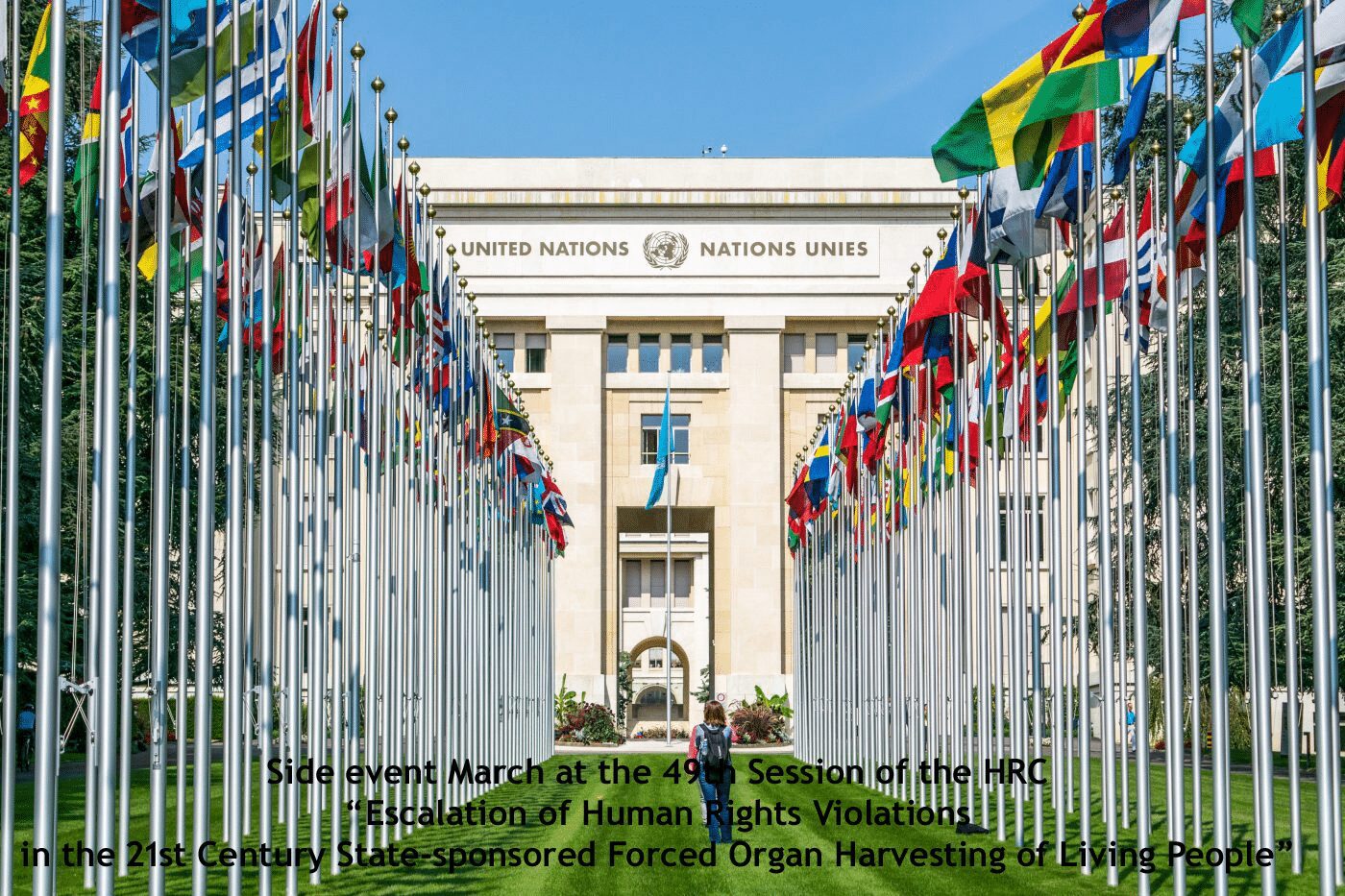
Geneva, April 1, 2022 — The two NGOs, CAP Liberté de Conscience and Doctors Against Forced Organ Harvesting, co-organized a series of two side events to the 49th session of the UN Human Rights Council on March 22 and March 23, 2022. The themes of the series addressed central topics of society and humankind: freedom of conscience and physical integrity.

At the first side event, twelve experts from the medical, legal and political field elaborated on state-organized forced organ harvesting from living prisoners of conscience. The panel delivered an exceptionally rich content and conclusions on the topic. From the first speech, it became obvious that the silence that this inconvenient topic met in the news media is not a mature way to handle this crime against humanity. The psychological and physical cruelty that comes along this practice is unimaginable and should mandate actions by the UN. The call upon the UN to denounce the practice of harvesting organs from living Falun Gong practitioners in China was made. This practice needs to be seen as a big disappointment as China is historically known for great thought leaders like Lao Tse or Confucius. But it goes beyond disappointment, as it has been described as a criminal practice and genocide, suggesting that international condemnation is overdue.

Potential solutions and options to respond have been presented during the events. The legal framework of a criminal law has been presented with the hope that parliaments would adopt such law to combat and prevent forced organ harvesting. Aside from criminal legislation, the United Nations have also been called into responsibility. If the UN does take responsibility on the opportunity to intervene and call China to accountability for forced organ harvesting, then the lost opportunity might also question the UN’s role. Other measures called for sanctions against China, as a crime against humanity of this scale, demands actions by national and international parliaments. The UN and national parliaments should implement conventions that require from China to be transparent on its transplant numbers. Last but not least, the creation of a task force on forced organ harvesting and the creation of a special rapporteur on this particular topic were proposed.

The second day of the series was based on an open exchange of ideas to find solutions and next steps. The expert panel highlighted that the media must not be silent on the primary victim of this crime against humanity. Falun Gong practitioners have been subjected to a two-decade lasting persecution that reached the peak of its anti-humankind brutality in the form of forced organ harvesting. Although it appears that only a spiritual group is targeted, in reality it is the physical integrity of each human being that is been jeopardized. If the freedom of conscience can lead to a persecution of genocidal proportions, then humankind stands before a jury: what have I done to break through the silence and cover-up?

Solutions included:

1) Adopting a criminal law against forced organ harvesting on a national and international level;

2) Adopting conventions that hold China and other member countries of the United Nations responsible for transplant practices and that would require transparent reporting of national transplant numbers by hospital and year;

3) Implementation of a UN task force to investigate state-organized forced organ harvesting from prisoners of conscience

4) Implementation of a UN Special Rapporteur on forced organ harvesting;

5) Endorsing and promoting the Universal Declaration on Combating and Preventing Forced Organ Harvesting.

Speeches of the 12 speeches are accessible at https://dafoh.org/side-event-to-the-49th-session-of-the-un-human-rights-council-presentations/

The Universal Declaration on Combating and Preventing Forced Organ Harvesting: https://universaldeclarationcpfoh.net

UN rights experts raise alarm over Russia’s ‘choking’ media clampdown at home

0
UN rights experts raise alarm over Russia’s ‘choking’ media clampdown at home
The recent adoption by Russia of a punitive “fake war news” law is an alarming move by the Government to gag and blindfold an entire population, independent UN human rights experts said on Friday.
The same law introduces penalties for “discrediting” and “calling for obstruction” of the use of the Russian armed forces. The maximum penalty is five years in prison.

Denying the invasion

“While the Government claims that the purpose of the new legislation is to protect the ‘truth’ about what it euphemistically calls a ‘special military operation’ in Ukraine, in reality the law places Russia under a total information blackout on the war and in so doing gives an official seal of approval to disinformation and misinformation,” said the independent experts appointed by the Human Rights Council, in a press release published by UN human rights office, OHCHR.

This law is yet another drastic step in a long string of measures over the years, restricting freedom of expression and media freedom and further shrinking the civic space in the Russian Federation, they said.

The law has had a chilling effect, forcing some media outlets to self-censor their reporting on the war in Ukraine.

In less than a week, several national media outlets have closed down or suspended their activities, due to the increased restrictions on reporting.

International media response

Fearing for the safety of their staff, several international media outlets also announced their intention when the law was introduced, to suspend reporting from Moscow.

Last week, according to the press release, the Russian authorities blocked or limited access to various news websites including the BBC, Deutsche Welle and RFE, as well as Facebook and Twitter, by users in the country.

By restricting reporting and blocking access to information online the authorities are not only choking the last vestiges of independent, pluralistic media in Russia, but they are also depriving the population of their right to access diverse news and views at this critical time when millions of Russians legitimately want to know more about the situation in Ukraine,” the independent experts said.

These restrictions on media and access to information online, take place against the backdrop of a crackdown on thousands of anti-war protesters and human rights defenders, the press release notes.

Mass arrests

The widespread allegations of the indiscriminate use of force and mass arrests of protesters by the authorities is deeply alarming. The primary responsibility of authorities when policing assemblies is to protect peaceful protesters and to facilitate the exercise of the right to freedom of peaceful assembly,” the experts added.

The experts also expressed their grave concern at the Russian military’s targeting of media workers and media installations in Ukraine which has endangered the safety of journalists, led to various attacks against media workers and damaged broadcasting infrastructure.

Investigation call

They called on the independent international commission of inquiry, recently established by the UN Human Rights Council, to fully investigate and ensure accountability for violations and abuses of the right to information and freedom of expression, and all attacks and threats to the safety of journalists in Ukraine.

Special Rapporteurs and independent experts are appointed by the Geneva-based UN Human Rights Council to examine and report back on a specific human rights theme or a country situation. The positions are honorary and the experts are not paid for their work.

Canada: About the Liberals/New Democratic Party deal

0
deal with shaking hands
Photo by tungnguyen0905

On March 23, the Liberal Party of Canada and the New Democratic Party signed a confidence-and-supply deal that will offer “stability” to Canadians until June 2025, as Canadian Prime Minister Justin Trudeau said.

The deal was already publicly known the day before, on March 22, but both party leaders confirmed the deal just the day after.

Trudeau, Prime Minister and leader of the Liberal Party said that “it was not an easy decision”, yet “Canadians needed stability”. 

Jagmeet Singh, the leader of the New Democratic Party, a political party considered to be on the left of the Liberals, reiterated that “this is not a coalition”, as New Democrats will not get any seats at the cabinet table. “We will continue to fight to ensure that people get the help they need”, said Singh, who declared that this deal is “not a destination, but a starting point”.

The deal covers “confidence and budgetary measures” as well as other key policies and is stated in a 7 point agreement between the two major left-wing parties in Canada. The deal, entitled “Delivering for Canadians Now, A Supply and Confidence Agreement”, encompasses: national dental care for low-income Canadians; the Canada Pharmacare Act; affordable housing; and a commitment to tackle climate change. This deal also means that the NDP won’t initiate a non-confidence agreement against the Liberal government until the next parliament.

Candice Bergen, the Interine Opposition Leader from the Conservative Party, said that “this deal disrespects parliament, and disrespects every single Canadian voter”. Other Conservative officials said that the deal was a “cynical power grab”. 

Maxwell Cameron, from the University of Columbia, told Global News:

“They [the NDP] could lose their identity. The problem for the smaller party, when you get into one of these arrangements, is that it is fairly easy for voters to forget that you were there to provide that support.”

It’s not a novelty that coalitions, even informal ones, are extremely uncommon in the Anglosphere. There are, however, other examples of informal left-wing coalitions in Spain and Portugal, for example. A recurring theme in these coalitions (again, even in the informal ones) is, as Cameron said, “that it is fairly easy for voters to forget that you were there”. This happened with the Portuguese Communist Party and the Left Bloc in Portugal, as many of their proposals were just appropriated by the Socialist Party. This ended up with the tumble of these two smaller left-wing parties in the last Portuguese elections.

However, another thing that the Portuguese left-wing informal coalition can teach Canadians, is to never underestimate a confidence and supply agreement. The Portuguese “Geringonça” lasted for 6 years, against the expectations of everyone.

Ukraine, climate change, security: EU/ACP Joint Parliamentary Assembly concludes

0
African Caribean European Parliamentariasn
ACP-EU JPA.jpg © European Parliament

MEPs and African, Caribbean and Pacific region parliamentarians discussed the impact of war in Ukraine, food security, pandemic and climate change.

The 41st session of the Joint Parliamentary Assembly (JPA) took place from 1-3 April in Strasbourg, attended by MEPs and their counterparts from 78 African, Caribbean and Pacific (ACP) countries.

Among the issues discussed during the JPA, parliamentarians debated the Russian invasion of Ukraine and its global impact. They underlined the many consequences of the invasion beyond Ukraine, including rising food prices that pose a serious threat to food security.

With regard to the new post-Cotonou agreement between the EU and ACP countries – which now includes three regional assemblies: Africa/EU, Caribbean/EU, and Pacific/EU parliamentary assemblies – MEPs said they were in favour of signing it without delay.

Participants in the JPA said ACP and EU countries have clearly spoken out in favour of EU-ACP collaboration on issues including economic recovery and investment, securing universal health coverage, and access for all to COVID-19 vaccines. The Assembly adopted a resolution on the need to support small island states in the face of climate change and natural disasters.

MEPs and national parliamentarians also debated the security threat to stability and peace in West Africa and the Sahel, which has created governance challenges and increasing poverty. In this context, they also considered the impact of the COVID-19 crisis, climate change, and land scarcity – all of which are jeopardizing peace and security in certain regions of the Sahel and in West Africa.


Quote

Carlos Zorrinho MEP, Chair of the EP’s Delegation to the ACP-EU JPA and JPA co-president, said: “We are living in time of global tensions, with war in Ukraine, Yemen and in several African regions, and with food insecurity spreading and the threat of climate change. The 41st Joint Parliamentary Assembly of the EU and ACP countries showed great maturity in affirming a multilateral approach to these challenges, based on a response to peoples’ practical problems and on our shared values. We all expressed the urgency of finalising the post-Cotonou agreement, and it coming into force as a partnership of equals.”


Peter Kenilorea Jr., President of the Organisation of African, Caribbean and Pacific States (OACPS) Parliamentary Assembly and JPA co-president, added: “This JPA session showed the importance of strengthening our dialogue in view of achieving the 2030 Agenda and the Paris Agreement.”

Watts Group Ltd announces charity partnership with The Sick Children’s Trust for 2022/2023

0
Watts Group Ltd announces charity partnership with The Sick Children’s Trust for 2022/2023

Following an internal voting process, The Sick Children’s Trust has been named the Watts Group Ltd charity partner from April 2022 through to April 2023. The seven regional offices across Watts are getting ready to support The Sick Children’s Trust through a series of challenging and physical fundraising events that aim to raise a minimum of £5,500.

This year, The Sick Children’s Trust celebrates 40 years of keeping families together when their child suddenly becomes ill. They provide families with somewhere to stay just minutes from their child’s bedside, as well as someone to talk to during these difficult times. The charity’s services are vital in lessening the plight of families who are affected by childhood illness. To date, over 73,000 families have been supported since the charity started in 1982, with their ten ‘Homes from Home’ giving families a welcoming place to stay when they have really needed it, free of charge.

Corrina Ralph, Managing Director for Watts Group Ltd, says “We are honoured to be partnering with such an amazing charity. The services they provide are crucial to the physical and emotional wellbeing of children and their families devasted by childhood illness. Our Watts regional teams are raring to go to raise awareness and much needed funds over the next year so that The Sick Children’s Trust can keep doing what they do best – bringing hope and support.”

The first challenge that the Watts regional teams will undertake is ‘Move in May’ where each individual participant will cover 55km in whichever mode of movement they choose including running, walking, cycling, swimming, skipping, or even roller skating; it’s completely up to them – they just need to cover 55km. Across the office locations in Glasgow, Belfast, Manchester, Leeds, Bristol, Cardiff, and London, each regional office will aim to raise at least £1100 as a minimum target fundraised through the Watts Just Giving pages.

The Watts London team has just confirmed its place in the London to Brighton bike ride and Watts Manchester is confirmed for the Great North Run.

It will be an exciting year ahead for Watts Group Ltd and The Sick Children’s Trust as a timetable of future events is drawn up and grueling training schedules begin. With The Sick Children’s Trust merchandise in abundance, the Watts team will raise much-needed awareness about the valuable work they do whilst raising as much money as possible for this worthy cause.

-Ends-

Press release distributed by Pressat on behalf of Watts Group Limited, on Monday 4 April, 2022. For more information subscribe and follow https://pressat.co.uk/

Ukraine: UN Secretary-General calls for probe into Bucha killings

0
Ukraine: Secretary-General calls for probe into Bucha killings
UN Secretary-General António Guterres on Sunday called for an independent investigation into the killing of civilians in the Ukrainian town of Bucha, a suburb of the capital, Kyiv.
Images have emerged of bodies found in streets and in yards in the wake of Russian withdrawal from the area following weeks of intense fighting, according to international media reports.

“I am deeply shocked by the images of civilians killed in Bucha, Ukraine,” said Mr. Guterres in a tersely worded statement , which was also posted on his official Twitter account.

“It is essential that an independent investigation leads to effective accountability.”

Osnat Lubrani, UN Humanitarian Coordinator for Ukraine, shared the statement on Twitter.

“Ukrainians are enduring a living hell for more than a month, thousands of civilians have died,” she wrote.  “This horrific war needs to stop.”

Casualties likely higher

The UN continues to press for an end to the war in Ukraine, which the Secretary-General has described as “unwinnable”.

Conflict began on 24 February, when Russia invaded the country.  Since then, 3,455 civilian casualties have been recorded, according to the latest update from the UN human rights office, OHCHR, published on Sunday.

Of that number, 1,417 persons were killed, and 2,038 injured, though real figures are believed to be considerably higher. 

Most casualties were caused by the use of explosive weapons with a wide impact area, including shelling from heavy artillery and multiple launch rocket systems, and missile and air strikes.

Humanitarian access critical

Posting on Twitter on Friday, Mr. Guterres said the UN “is doing everything in its power to support people whose lives have been overturned by the war in Ukraine.”

Humanitarians have reached more than 1.4 million people, mainly in the east, “but this is not enough” he said. “We need safe, unimpeded access to all areas.”

The fighting has displaced more than 10 million people, both within the country and outside its borders as refugees.

“The speed of the displacement, coupled with the huge numbers of people affected, is unprecedented in Europe in recent memory,” said Filippo Grandi, UN High Commissioner for Refugees, on concluding a visit to Ukraine last week.

To respond to the rising humanitarian needs, the UN and partners launched a $1.7 billion emergency appeal last month to support people in Ukraine and those who have fled abroad.

More than 4.1 million have found shelter in neighbouring countries such as Poland, Slovakia, Hungary, Romania and Moldova, and beyond.

The UN Security Council is scheduled to hold its latest meeting on Ukraine on Tuesday.
 

Sweeteners may be linked to increased cancer risk – new research

0
medication pills
The sweetener aspartame is found is many common foods and drinks, such as diet sodas.

Sweeteners have long been suggested to be bad for our health. Studies have linked consuming too many sweeteners with conditions such as obesity, type 2 diabetes and cardiovascular disease. But links with cancer risk have been less certain.

An artificial sweetener, called cyclamate, that was sold in the US in the 1970s was shown to increase bladder cancer in rats. However, human physiology is very different from rats, and observational studies failed to find a link between the sweetener and cancer risk in humans. Despite this, the media continued to report a link between sweeteners and cancer.

But now, a study published in PLOS Medicine which looked at over 100,000 people, has shown that those who consume high levels of some sweeteners have a small increase in their risk of developing certain types of cancer.

To assess their intake of artificial sweeteners, the researchers asked the participants to keep a food diary. Around half of the participants were followed for more than eight years.

The study reported that aspartame and acesulfame K, in particular, were associated with increased cancer risk – especially breast and obesity-related cancers, such as colorectal, stomach and prostate cancers. This suggests that removing some types of sweeteners from your diet may reduce the risk of cancer.

Cancer risk

Many common foods contain sweeteners. These food additives mimic the effect of sugar on our taste receptors, providing intense sweetness with no or very few calories. Some sweeteners occur naturally (such as stevia or yacon syrup). Others, such as aspartame, are artificial.

Although they have few or no calories, sweeteners still have an effect on our health. For example, aspartame turns into formaldehyde (a known carcinogen) when the body digests it. This could potentially see it accumulate in cells and cause them to become cancerous.

Our cells are hard-wired to self-destruct when they become cancerous. But aspartame has been shown to “switch off” the genes that tell cancer cells to do this. Other sweeteners, including sucralose and saccharin, have also been shown to damage DNA, which can lead to cancer. But this has only been shown in cells in a dish rather than in a living organism.

person holding white ceramic mug
Aspartame can affect our cells and gut microbiome.

Sweeteners can also have a profound effect on the bacteria that live in our gut. Changing the bacteria in the gut can impair the immune system, which could mean they no longer identify and remove cancerous cells.

But it’s still unclear from these animal and cell-based experiments precisely how sweeteners initiate or support cancerous changes to cells. Many of these experiments would also be difficult to apply to humans because the amount of sweetener was given at much higher doses than a human would ever consume.

The results from previous research studies are limited, largely because most studies on this subject have only observed the effect of consuming sweeteners without comparing against a group that hasn’t consumed any sweeteners. A recent systematic review of almost 600,000 participants even concluded there was limited evidence to suggest heavy consumption of artificial sweeteners may increase the risk of certain cancers. A review in the BMJ came to a similar conclusion.

Although the findings of this recent study certainly warrant further research, it’s important to acknowledge the study’s limitations. First, food diaries can be unreliable because people aren’t always honest about what they eat or they may forget what they have consumed. Although this study collected food diaries every six months, there’s still a risk people weren’t always accurately recording what they were eating and drinking. Though the researchers partially mitigated this risk by having participants take photos of the food they ate, people still might not have included all the foods they ate.

Based on current evidence, it’s generally agreed that using artificial sweeteners is associated with increased body weight – though researchers aren’t quite certain whether sweeteners directly cause this to happen. Although this recent study took people’s body mass index into account, it’s possible that changes in body fat may have contributed to the development of many of these types of cancers – not necessarily the sweeteners themselves.

Finally, the risk of developing cancer in those who consumed the highest levels of artificial sweeteners compared with those who consumed the lowest amounts was modest – with only at 13% higher relative risk of developing cancer in the study period. So although people who consumed the highest amounts of sweetener had an increased risk of developing cancer, this was still only slightly higher than those with the lowest intake.

Article published in The Conversation