NETHERLANDS, April 1 – News item | 01-04-2022 | 17:22
India is a major player on the world stage and in the Pacific, and on many issues it adopts a neutral stance vis-à-vis other major powers like Russia, China and the US. President Kovind’s coming state visit to the Netherlands is a sign of the good relations that India and the Netherlands have enjoyed for the past 75 years.
India is not just a country; it is a veritable subcontinent. With its 1.4 billion people – a sixth of the world’s population – it’s an Asian giant and the world’s largest democracy. In economic terms, it’s also a force to be reckoned with: by 2030 India is expected to have the third-biggest economy in the world. In political terms, India is also playing an increasingly significant role on the world stage.
This week (starting April 4th) Indian President Ram Nath Kovind will visit the Netherlands, his first state visit since the global COVID-19 pandemic, which has also had a severe impact on India over the past two years. The visit is a sign of the good ties between India and the Netherlands. Our countries work together on a variety of issues, including water management and flood protection, agriculture, healthcare and sustainable energy.
India and the Netherlands have worked together for some time on matters of water scarcity, water security and water quality. In the Indian state of Kerala, the Netherlands has served in an advisory capacity regarding the construction and maintenance of drainage infrastructure for the enormous amount of rainwater that falls during monsoon season. In addition, heavily polluted water in the Ganges basin in Uttar Pradesh is purified with the help of Dutch expertise.
This state visit by President Kovind also marks the start of the celebrations of 75 years of diplomatic relations between the two countries. A few weeks before India became independent on 15 August 1947, the Dutch ambassador, A. Lamping, arrived in New Delhi. He got there just in time to hand over his letters of credence to the British viceroy, Lord Mountbatten. As a result, the Netherlands was able to establish diplomatic ties with the newly independent India, becoming only the third country to do so, after the US and China.
Quad
India is pursuing an increasingly active role on the world stage. It has provided troops to 49 UN missions, and for years it has been campaigning for a permanent seat on the UN Security Council. Since 2007, together with the US, Australia and Japan, it has formed part of the Quadrilateral Security Dialogue (Quad), a forum in which these four countries are in regular contact and hold joint military exercises.
Despite its growing international role, India’s main focus continues to be on domestic issues. The COVID-19 crisis has exacerbated the country’s social and religious differences and negatively impacted human rights.
This is an issue that India mainly regards as a domestic matter, however. At times, it can be very difficult for non-governmental organisations in the field of human rights to do their work in India. Two years ago, Amnesty International closed its offices in the country after the Indian government froze its bank accounts. Prior to that, Amnesty had published critical articles on human rights violations being committed against various groups in the country, including Muslims.
Human rights dialogue
That said, Europa and India are engaged in a human rights dialogue. At the dialogue held in April 2021 in New Delhi, the EU and India agreed to meet and hold discussions on an annual basis.
In many international issues – the war in Ukraine being a recent example – India adopts a neutral position. It has been one of the few countries not to condemn Russia’s invasion of Ukraine, and it maintains good relations with both countries. That opens up opportunities for mediation. India seeks to follow the middle way in this regard.
Climate
In recent years, the European Union has actively sought to collaborate with India on various issues. Major international issues, such as climate change, cannot be addressed without India’s involvement. At last November’s climate summit in Glasgow, major polluters China and India both voted against phasing out coal.
At the same time, India is taking steps to expand its use of sustainable energy and deal with climate change. The country has one of the fastest-growing proportions of sustainable energy usage in the world. What’s more, the first fully electric car made in India recently rolled off the production line; and a great deal is also being done in terms of innovation. In that connection, the European Union is working closely with India on innovation and knowledge-sharing in relation to sustainable energy. India recognises that sustainable energy and technology are not only the way of the future but also that they can yield substantial economic gains.
On the eve of Pope Francis’s 36th Apostolic Journey abroad, he went as is his custom to the Roman Basilica of Saint Mary Major to entrust his visit to Our Lady, according to a statement from the Holy See Press Office.
Pope Francis will depart Rome on Saturday morning, arriving in Malta around 10:00 AM local time.
Luminous land
On Wednesday, during the General Audience, he called Malta a “luminous land”, and his destination as a “pilgrim in the footsteps of the Apostle Paul.”
It was on Malta that Paul was “welcomed with great humanity after being shipwrecked at sea on his way to Rome,” the Pope remarked during the General Audience.
It is on Malta that the Pope hopes to touch first hand the “wellsprings of the proclamation of the Gospel…to know at first hand a Christian community with a lively history stretching back thousands of years, and to meet the inhabitants of a country that lies at the center of the Mediterranean and in the south of the European continent, which today is increasingly engaged in welcoming so many brothers and sisters seeking refuge.”
One of two bronze statues with green verdigris patina signed by Frederick William MacMonnies (American, 1863-1937), this one titled Pioneer Mother, 15 inches tall ($27,060).
Monumental oil on canvas landscape by George Hetzel (French/American, 1826-1899), titled Scalp Level Landscape, Pennsylvania, 1887, 30 inches by 50 inches (canvas) ($22,140).
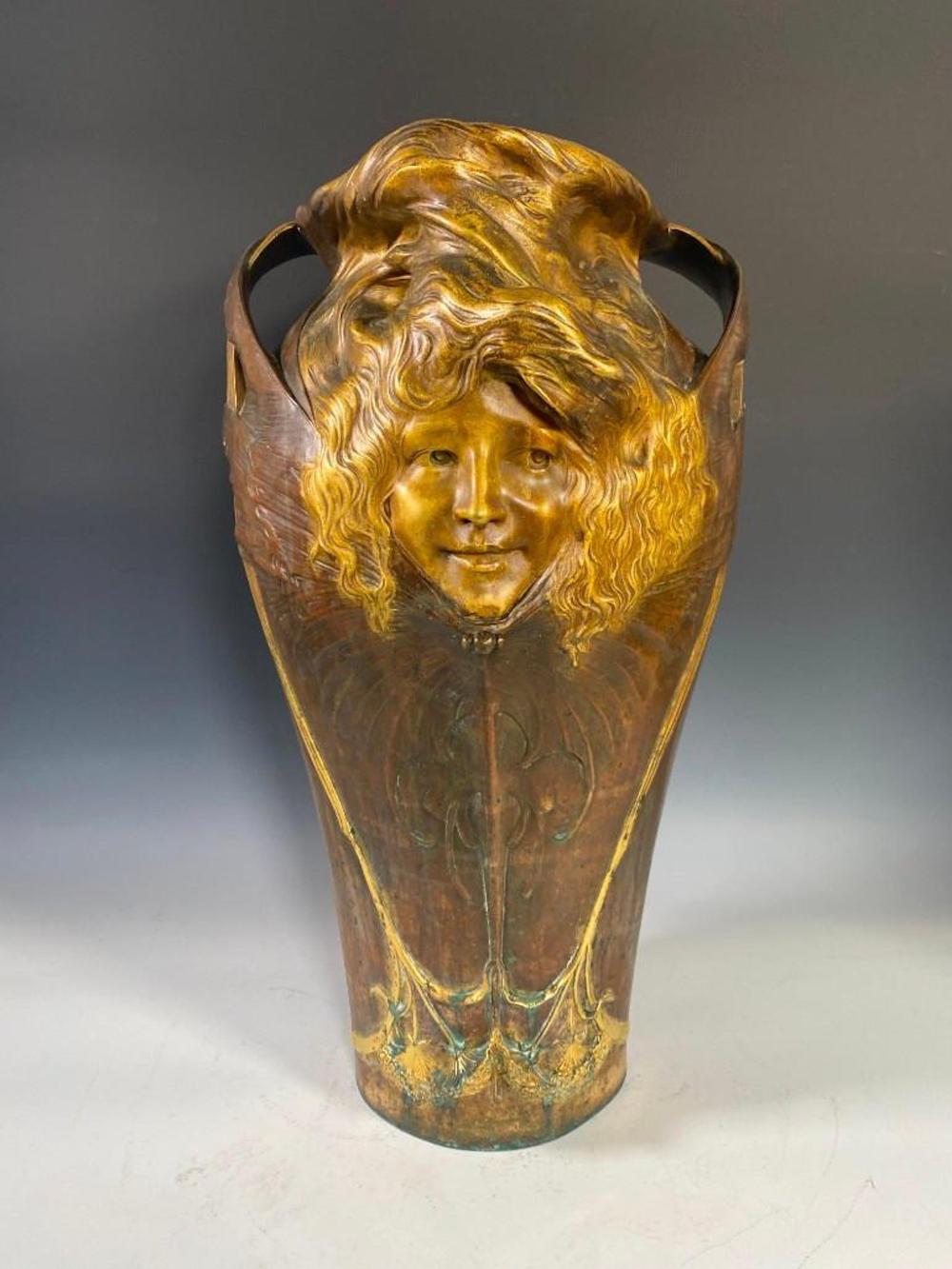
Baluster form Art Nouveau vase by Paul Francois Berthoud (French, 1870-1939), titled Femme Libellule (circa 1900), rare, 25 inches tall, cast with the face of a woman ($13,530).
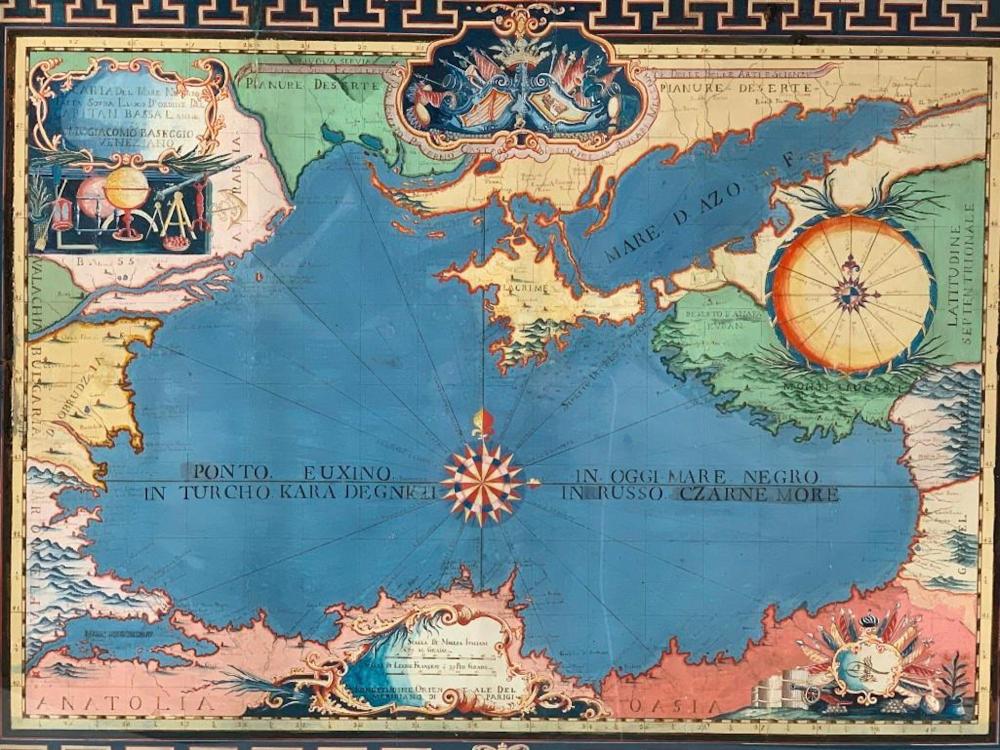
Gouache on paper titled Map of the Black Sea (1779), by the Italian cartographer Giacomo Baseggio and nicely housed in a 24 inch by 31 ½ inch frame ($5,228).
19th century English Regency (or Victorian) oak jockey scale, incorporating a leather upholstered seat with a tufted back over upholstered arms and seat ($9,840).
The auction, with nearly 300 premier lots, had an emphasis on English antiques, fine art and Chinese Export, pulled from private estates and collections.
BEACHWOOD, OH, UNITED STATES, April 1, 2022 /EINPresswire.com/ — Two bronze figural statues by American sculptor Frederick William MacMonnies (1863-1937) sold for a combined $39,360, a monumental landscape painting by George Hetzel (French/American, 1826-1899) rose to $22,140, and a massive baluster form vase cast with the face of a woman by Paul Francois Berthoud (French, 1870-1939) brought $13,530 in Neue Auctions’ English & Chinese Export Art & Antiques auction held March 26th.The online-only affair contained nearly 300 lots, with an emphasis on English antiques, fine art and Chinese Export, consigned from private estates and collections. Featured were items from many periods, including English Regency, George III, William & Mary, William IV and Louis XV. Consignments came in from various upscale towns and with provenances ranging from James London Antiques (New London, Conn.) to Wayne Pratt and Israel Sack American Antiques (New York City).
The MacMonnies bronzes were signed by the sculptor, exhibited a nice green verdigris patina and carried the foundry mark for Jaboeuf & Rouard of Paris. The top lot, a very rare cast titled Pioneer Mother, measured 15 inches tall. It was originally designed and cast in monumental form for the Pioneer Monument in Denver, Colorado, erected in 1911 ($27,060). The other, the classic MacMonnies beauty Diana, dated 1890, stood 31 inches tall ($12,300). It was the sale’s third top lot.
The oil on canvas painting by George Hetzel, titled Scalp Level Landscape, Pennsylvania, 1887, was monumental at 30 inches by 50 inches. Artist signed and dated, it depicted a river landscape in the noted Scalp Level area of Pennsylvania, home to the artists of the Scalp Level School in the 1860s.
The baluster form Art Nouveau vase by Paul Francois Berthoud, titled Femme Libellule (circa 1900), was rare and large, at 25 inches tall. It was cast with the face of a woman with flowing hair supported by dragonfly wings and feathers and the base was cast with Queen Anne’s Lace flowers.
Following are additional highlights from the auction. Internet bidding was facilitated by LiveAuctioneers.com, Invaluable.com and Bidsquare.com. Prices include a 23 percent buyer’s premium.
Two of the more visually arresting lots were a gouache on paper Map of the Black Sea, executed in 1779 by the Italian cartographer Giacomo Baseggio and nicely housed in a 24 inch by 31 ½ inch frame ($5,228); and a William and Mary quillwork picture signed and dated (1693) to the back of the panel by Elizabeth Drake, depicting a pair of urns issuing floral arrangements centering an oval quillwork, in a 12 inch by 15 inch frame ($4,612).
A 19th century English Regency oak jockey scale, incorporating a leather upholstered seat with a tufted back over upholstered arms and seat, with nail head trim, the scale labeled ‘To Weigh 24 Stone,’ went for $9,840; while an English Regency table-top letterbox by Halstaff & Hannaford (London), octagonal pillar form, set with a domed glass enclosing an enamel dial compass, with enameled letter flap over a hinged locking door, hit $2,214.
A vibrant pair of sports-themed 20th century paintings by American artist L. Vinci, found new owners. One, titled Dime Sport (1941), depicted two boxers slugging it out in the ring ($1,722). It measured 29 inches by 21 inches (canvas, less frame). The other was titled Sports Movers (1943) and depicted sprinters leaping over hurdles ($3,998). It was 24 inches by 17 inches (canvas). Both paintings were artist signed, inscribed and dated.
China Trade, Chinese Export and Chinese School lots were plentiful and included a 19th century oil on canvas China Trade painting titled The Bund at Shanghai (circa 1850-1855), unsigned and framed, 17 ¼ inches by 23 inches (canvas) ($3,075); and a pair China Trade gouache works on paper – Figures Inside and Expansive Walled Garden and Walled Garden with Pavilion, Canals, Figures and Bridges – both were signed in Chinese, matted and framed ($3,198).
Gorgeous figural oil paintings included a 19th century American (or Continental School) portrait titled Boy with Bird and Basket of Fruit, unsigned by an unknown artist ($2,952); an oil on canvas by Ernest Gustave Girardot (French, 1840-1911), titled A Declaration of Love (1864), signed and dated ($1,968); and an oil on canvas by Henry John Yeend-King (British, 1855-1924) titled By the Riverside (circa 1890), artist signed lower left ($1,599).
Equestrian-themed paintings also came up for bid. These included an oil on canvas by John McAuliffe (Irish/American, 1830-1900), titled Equine Portrait (1875), sign and dated and in a 23 inch by 27 inch frame ($2,706); and an oil on canvas by 18th century British painter William Pearce, titled Showing Off the Hack, signed center and bearing a Frost and Reed label on verso, measuring 20 inches by 23 inches (less frame) ($1,476).
Beautiful furniture pieces were plentiful and included the following lots:
• A Regency inlaid satinwood and mahogany dressing cabinet, circa 1815, the serpentine top inlaid with an oval cartouche and fan design, with four graduated long drawers, the top drawer with a fitted interior incorporating a mirror ($9,840). • An Irish Georgian mahogany settee, 18th century, the squared upholstered back over outscrolled mahogany arms with carved rocaille terminals, over an upholstered seat with nail head trim, on heavily carved cabriole legs ($3,998). • A set of four Georgian mahogany hall chairs, circa 1785, with arched crests over mahogany backs, each monogrammed with the letter ‘B’ beneath a hand painted oval tablet armorial, purportedly for the Third Baron Boston of England ($3,444).
Decorative accessories featured a 19th century English Regency giltwood convex mirror in a circular mirror frame with gilt sphere pendants and ebonized reeded border, 28 inches tall by 18 inches wide ($2,706); and a 19th century R.Gardiner (N.Y.) crystal and bronze argand lamp, electrified, foliate cast bronze and molded glass base with bronze arms supporting two lights, with original acid etched glass hurricane shades ($2,583).
Neue Auctions has a full slate of auctions planned for spring and early summer, beginning with a Fine Interiors auction on Saturday, April 30th; followed by a May Modern Sale on Saturday, May 28th; then an auction featuring the superb Asian & Antiques Collection of Dr. Marvin Drucker on Saturday, June 25th. All three will be online-only auctions and will start at 10 am Eastern time.
To learn more about Neue Auctions, please visit www.neueauctions.com. Updates are posted often. Company officers Cynthia Maciejewksi and Bridget McWilliams can be reached by phone at 216-245-6707; or via email at cynthia@neueauctions.com or bridget@neueauctions.com.
# #
<
p class=”contact c6″ dir=”auto”>Cynthia Maciejewski Neue Auctions +1 216-245-6707 email us here
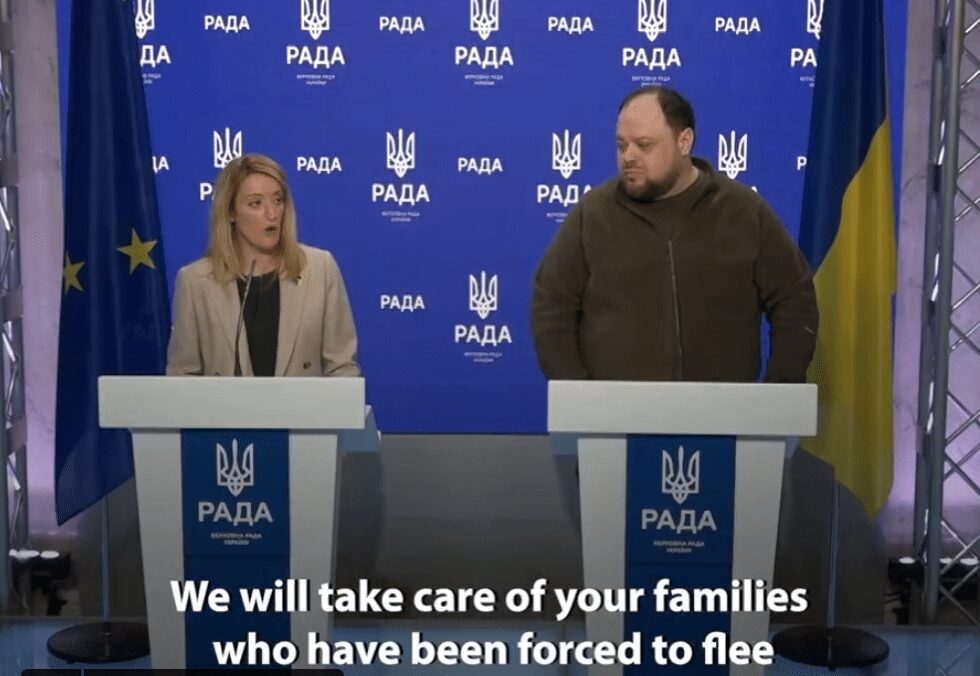
A brave Roberta Metsola, in Kyiv, told all Ukrainians “We will continue to take care of your families who have been forced to flee, until they can safely return.”
Dear Ukrainian friends,
Soon we will help you rebuild your cities and towns.
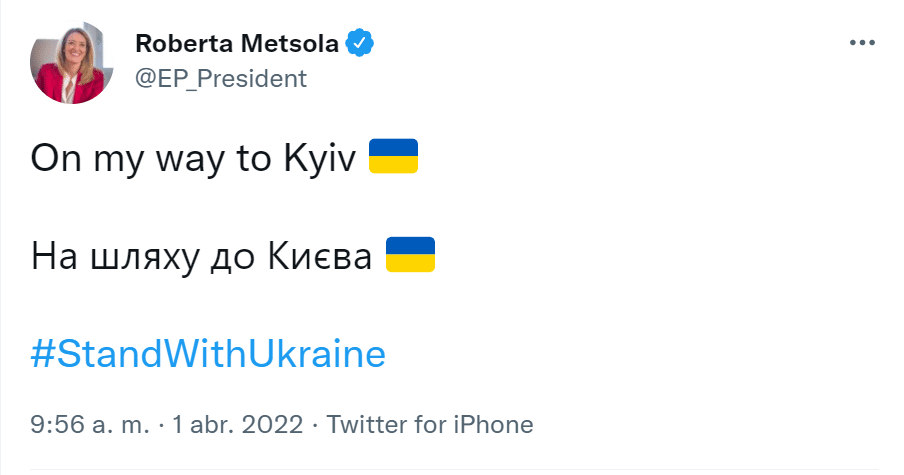
“On my way to Kyiv,” tweeted Metsola this morning.
Two days ago she was honouring David Maria Sassoli by unveiling, together with his wife, his picture in a prominent place of the European Parliament.
With a very busy schedule, Metsola forces on her agenda a trip to the most talked about place in the world right now and “will pass a message of support and hope on behalf of the European Parliament.” Metsola’s spokesperson Jüri Laas told Politico.
Metsola’s way of handling issues is making history, now being the first president of an EU institution brave enough to visit the Ukrainian capital since Russia launched its war on February 24.
“I invite all friends of Ukraine to visit Kyiv,” Zelenskyy said in a video posted on social media, before adding: “It can be dangerous here. Because our sky is not yet closed to Russian missiles and planes.”
WHO
Infectious disease specialist Olha at a health-care facility in central Ukraine
“We have not lost hope, we do not give up, we support each other.”
The war in Ukraine has forced Ukrainian health workers to adopt new roles and ways of working and to draw on their ingenuity and dedication to protect and treat their patients.
Infectious disease specialist Olha has returned from treating patients in COVID-19 disease hot spots to a health-care facility in central Ukraine.
It was the plight of a young man caught in blast shockwaves that convinced her to give up her private practice and dedicate herself to those who need her the most. “He lay in the woods for about 3 days. After he was brought in, he didn’t speak for another 3, hiding in his hospital bed with a blanket over his head. We carried out an electrocardiogram, which showed the young man had had a heart attack. The cardiologists couldn’t believe the diagnosis, repeating ‘How is this possible? He is only 22 years old’”.
When Olha advertised her services as an infectious disease specialist on social media, she started receiving up to 150 messages a day for diagnosis and treatment advice for a range of diseases. Some of those contacting her have already fled their homes and moved to central Ukraine, but others are still based in places badly affected by hostilities and cut off from health-care services. She helps them, in person and remotely, interviewing them on the phone and referring them on to other specialists where possible.
“We have many displaced people coming to the hospital, who have fled from places such as Mariupol, Kharkiv and Chernihiv. I am trying as hard as I can to help them, whatever their condition. The most common cases I see are young children. In bomb shelters, people breathe in fungal spores and if they have chronic illnesses these often get worse. Sometimes, they arrive with protracted illnesses, such as pneumonia, kidney infections and severe allergic reactions. I accept everyone.”
Lidiya is the chief operating officer of a Kyiv hospital. In peacetime, the hospital ran 18 external clinics, but since the hostilities began, all resources have been concentrated in the hospital. Although many staff based in heavily bombarded areas around Kyiv had to evacuate, a core workforce stayed.
“Mostly we’re treating people who are sick with regular illnesses, strokes and heart attacks and those needing acute surgery. They are stabilized here, and then evacuated elsewhere for intensive care and further scheduled operations. Adults and children have also been taken abroad by volunteer organizations for rehabilitation in Italy.”
The switch to emergency work means that some hospitals no longer offer routine services, and those that do have seen a fall in demand.
“People now try as much as possible to go to shelters immediately when the air raid siren goes off, so attending routine consultations is extremely rare, although we have had cases over the last 2 weeks of people coming to us with children for planned vaccinations, because they are worried about their future health.”
To provide continued medical services for those with chronic conditions or new acute symptoms, a website has been created through which patients can connect to a doctor for advice. A chat group, including many long-term patients who have since relocated to other parts of Ukraine has also been set up and currently has over 35 000 members.
Despite the many challenges, staff and volunteers in the hospital are working together and providing moral support to one another. “The staff continue to hold the defence and to work on. Even some of the staff who left want to return and get back to work,” says Lidiya.
Another hospital in Kyiv has been treating adults and children with cardiovascular diseases and despite the Russian military offensive, the whole team has stayed to continue to provide round the clock care. They have switched from conducting planned operations to providing 1 or 2 emergency operations a day.
“All of us, as a team, have gone into emergency mode to be able to provide assistance when needed,” says Andriy, an anaesthetist/resuscitator. “Because movement in the city is difficult, we decided to be here when needed — we almost live here now. At the moment we have around 80% of the number of staff we used to have and are getting by thanks to the assistance of so many organizations and volunteers.”
WHO support to doctors in Ukraine
WHO is working closely with Ukraine’s Ministry of Health and authorities to identify gaps and needs in the country’s health system and is swiftly responding to them. WHO has opened an operations hub in Poland, developed a pipeline of trauma supplies to many Ukrainian cities, and sent more than 100 metric tonnes of medical equipment over the border, to health facilities across the country. To support beleaguered health workers in Ukraine, WHO is also working with partners to organize emergency medical teams and trauma management support.
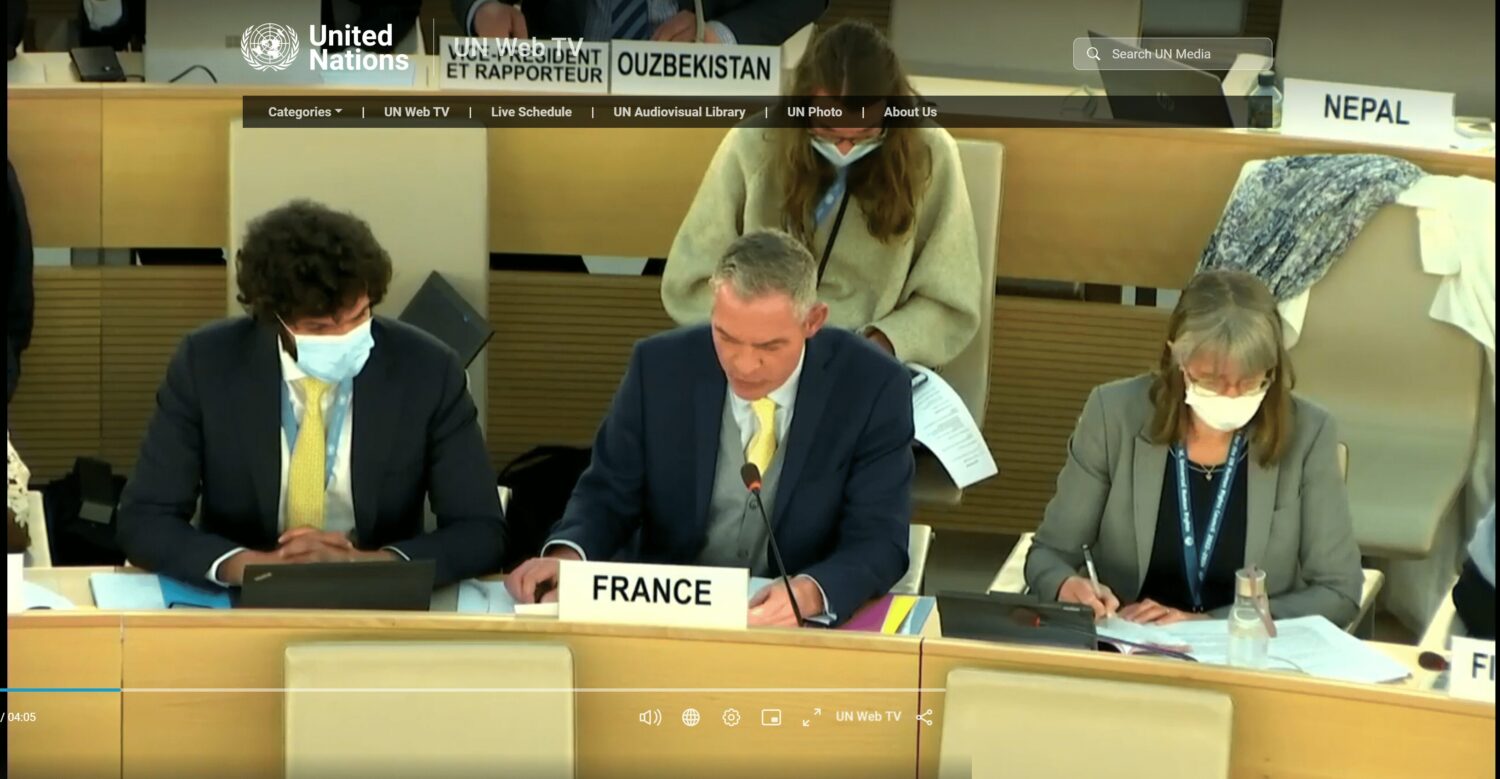
France presents project A/HRC/49/L.2 on Freedom of Religion or Belief, on behalf of the EU, and gets adopted by the HRC
France on the name of the European Union presented the Project to extend the mandate of the Special Rapporteur on Freedom of Religion or Belief and the HRC adopted the project.
Programme Planning and Budget Division issues Oral Statement about the Resolution A/HRC/49/L.2 on Freedom of Religion or Belief.
This statement is made in accordance with rule 153 of the Rules of procedure of the General Assembly.
Under the terms of operative paragraphs 15, 17 and 18 of draft resolution A/HRC/49/L.2, the Human Rights Council would:
(a) Decide to extend the mandate of the Special Rapporteur on freedom of religion or belief for a further period of three years, and invite the Special Rapporteur to discharge the mandate in accordance with paragraph 18 of Human Rights Council resolution 6/37 of 14 December 2007 (para15);
(b) Request the Secretary-General and the United Nations High Commissioner for Human Rights to provide the Special Rapporteur with all the human, technical and financial assistance necessary for the effective fulfilment of the mandate;
(c) Request the Special Rapporteur to report annually to the Human Rights Council and to the General Assembly in accordance with their respective programmes of work. (para 18)
3. In order to implement the mandate contained in paragraphs 15, 17 and 18 of the draft resolution, the following activities and resources would be required. Owing to the perennial nature of the mandate, the activities and resources are presented on an annual basis, and would be applicable to 2022 through 2025:
(a) Annual travel of the Special Rapporteur: three trips to Geneva of five working days each (to report to the Council, to hold an annual consultation with States, OHCHR and relevant stakeholders and to attend the annual meeting of special rapporteurs/representatives, independent experts and chairpersons of working groups of the special procedures of the Council); one trip of five working days to New York to report to the General Assembly; and two country visits of 10 working days each
(b) Travel of one staff to accompany the mandate holder during the two country visits per year of 10 working days each;
(c) Local transportation, security, communications and other miscellaneous expenses during field missions; and
(d) Conference services for the translation of Annual reports and government replies to communications and interpretation during field missions.
4. The activities referred to above relate to section 2, General Assembly and Economic and Social Council affairs and conference management, and section 24, Human rights, of the programme budget for the years 2022 – 2025.
5. The adoption of draft resolution A/HRC/48/L.2 would give rise to total annual requirements of $297,100, and a total of $891,300 during the three-year mandate period, as follows:
(United States dollars)
Requirements
Annual
Total for the mandate period
Section 2, General Assembly and Economic and Social Council affairs and conference management
Simultaneous interpretation
74 100
222 300
Documentation
143 200
429 600
Subtotal, section 2
217 300
651 900
Section 24, Human Rights
Travel of Representatives
51 900
155 700
Travel of staff
11 900
35 700
General Operating Expenditures
16 000
48 000
Subtotal, section 24
79 800
239 400
Total
297 100
891 300
6. As reflected in the table above, annual requirements would arise as follows:
a) $297 100 for 2022, which have already been included in the approved programme budget for 2022 owing to the perennial nature of the mandate;
b) $297 100 for 2023, which would be included in the proposed programme budget for 2023, to be considered by the General Assembly, at its 77th session
c) 297 100 for 2024 and 2025 which would continue to be included in respective proposed programme budgets.
7. With regard to operative paragraph 17, the attention of the Human Rights Council is drawn to the provisions of section VI of General Assembly resolution 45/248B of 21 December 1990, and subsequent resolutions, the most recent of which is resolution 76/245 of 24 December 2021, in which the Assembly reaffirmed that the Fifth Committee is the appropriate Main Committee of the Assembly entrusted with the responsibilities for administrative and budgetary matters, and reaffirmed the role of the Advisory Committee on Administrative and Budgetary Questions.
Recalling General Assembly resolution 36/55 of 25 November 1981, in which the Assembly proclaimed the Declaration on the Elimination of All Forms of Intolerance and of Discrimination Based on Religion or Belief,
Recalling also article 18 of the International Covenant on Civil and Political Rights, article 18 of the Universal Declaration of Human Rights and other relevant human rights provisions,
Recalling further Human Rights Council resolution 46/6 of 23 March 2021, and other resolutions adopted by the Council, the General Assembly and the Commission on Human Rights on the freedom of religion or belief or the elimination of all forms of intolerance and of discrimination based on religion or belief,
Recalling Human Rights Council resolutions 5/1 and 5/2 of 18 June 2007,
Noting with appreciation the conclusions and recommendations of the expert workshops organized by the Office of the United Nations High Commissioner for Human Rights and contained in the Rabat Plan of Action on the prohibition of advocacy of national, racial and religious hatred that constitutes incitement to discrimination, hostility or violence, adopted in Rabat on 5 October 2012,
Reaffirming that all human rights are universal, indivisible, interdependent and interrelated,
Recalling that States have the primary responsibility to promote and protect human rights, including the human rights of persons belonging to religious minorities, including their right to exercise their religion or belief freely,
Deeply concerned at continuing acts of intolerance and violence based on religion or belief against individuals, including persons belonging to religious communities and religious minorities around the world,
Underlining the importance of education in the promotion of tolerance, which involves the acceptance by the public of and its respect for diversity, including with regard to religious expression, and underlining also the fact that education, in particular at school, should contribute in a meaningful way to promoting tolerance and the elimination of discrimination based on religion or belief,
Stresses that everyone has the right to freedom of thought, conscience and religion or belief, which includes the freedom to have or not to have, or to adopt, a religion or belief of one’s choice, and the freedom, either alone or in community with others and in public or private, to manifest one’s religion or belief in teaching, practice, worship and observance, including the right to change one’s religion or belief;
Emphasizes that freedom of religion or belief and freedom of expression are interdependent, interrelated and mutually reinforcing, and stresses the role that these rights can play in the fight against all forms of intolerance and discrimination based on religion or belief;
Expresses deep concern at emerging obstacles to the enjoyment of the right to freedom of religion or belief, and at instances of religious intolerance, discrimination and violence, inter alia:
The increasing number of acts of violence directed against individuals, including persons belonging to religious minorities in various parts of the world;
The rise of religious extremism in various parts of the world that affects the rights of individuals, including persons belonging to religious minorities;
Incidents of religious hatred, discrimination, intolerance and violence, which may be manifested by derogatory stereotyping, negative profiling and the stigmatization of individuals on the basis of their religion or belief;
Instances that, both in law and in practice, constitute violations of the fundamental right to freedom of religion or belief, including of the individual right to publicly express one’s spiritual and religious beliefs, taking into account the relevant articles of the International Covenant on Civil and Political Rights and other international instruments;
Constitutional and legislative systems that fail to provide adequate and effective guarantees of freedom of thought, conscience, religion and belief to all, without distinction;
Attacks on religious places, sites and shrines and vandalism of cemeteries, in violation of international law, in particular international human rights law and international humanitarian law;
Condemns all forms of violence, intolerance and discrimination based on or in the name of religion or belief and violations of the freedom of thought, conscience, religion or belief, and any advocacy of religious hatred that constitutes incitement to discrimination, hostility or violence, whether it involves the use of print, audiovisual or electronic media or any other means;
Also condemns violence and acts of terrorism, which are increasing in number and targeting individuals, including persons belonging to religious minorities across the world;
Emphasizes that no religion should be equated with terrorism, as this may have adverse consequences for the enjoyment of the right to freedom of religion or belief of all members of the religious community concerned;
Also emphasizes that States should exercise due diligence to prevent, investígate and punish acts of violence against persons belonging to religious minorities, regardless of the perpetrator, and that failure to do so may constitute a human rights violation;
Strongly encourages government representatives and leaders in all sectors of society and respective communities to speak out against acts of intolerance and violence based on religion or belief;
Urges States to step up their efforts to promote and protect freedom of thought, conscience and religion or belief, and to this end:
To ensure that their constitutional and legislative systems provide adequate and effective guarantees of freedom of thought, conscience and religion or belief to all, without distinction, by, inter alia, the provision of access to justice and effective remedies in cases where the right to freedom of thought, conscience and religion or belief, or the right to freely practise one’s religión, including the right to change one’s religion or belief, is violated;
To implement all accepted universal periodic review recommendations relating to the promotion and protection of freedom of religion or belief;
To ensure that no one within their jurisdiction is deprived of the right to life, liberty or security of person because of religion or belief, and that no one is subjected to torture or other cruel, inhuman or degrading treatment or punishment, or arbitrary arrest or detention on that account, and to bring to justice all perpetrators of violations of these rights;
To end violations of the human rights of women, and to devote particular attention to abolishing practices and legislation that discriminate against women, including in the exercise of their right to freedom of thought, conscience and religion or belief;
To ensure that no one is discriminated against on the basis of his or her religion or belief in their access to, inter alia, education, medical care, employment, humanitarian assistance or social benefits, and to ensure that everyone has the right and the opportunity to have access, on general terms of equality, to public services in their country, without any discrimination on the basis of religion or belief;
To review, whenever relevant, existing registration practices in order to ensure that such practices do not limit the right of all individuals to manifest their religion or belief, either alone or in community with others and in public or private;
To ensure that no official documents are withheld from the individual on the grounds of religion or belief, and that everyone has the right to refrain from disclosing information concerning their religious affiliation in such documents against their will;
To ensure in particular the right of all individuals to worship, assemble or teach in connection with a religion or belief and their right to establish and maintain places for these purposes, and the right of all individuals to seek, receive and impart information and ideas in these areas;
To ensure that, in accordance with appropriate national legislation and in conformity with international human rights law, the freedom of all individuals, including persons belonging to religious minorities, to establish and maintain religious, charitable or humanitarian institutions is fully respected and protected;
To ensure that all public officials and civil servants, including members of law enforcement bodies, and personnel of detention facilities, the military and educators, in the course of fulfilling their official duties respect freedom of religion or belief and do not discriminate for reasons based on religion or belief, and that all necessary and appropriate awareness-raising, education or training is provided;
To take all necessary and appropriate action, in conformity with international human rights obligations, to combat hatred, discrimination, intolerance and acts of violence, intimidation and coercion motivated by intolerance based on religion or belief, and any advocacy of religious hatred that constitutes incitement to discrimination, hostility and violence, with particular regard to persons belonging to religious minorities in all parts of the world;
To promote, through the educational system and other means, mutual understanding, tolerance, non-discrimination and respect in all matters relating to freedom of religion or belief by encouraging, in society at large, a wider knowledge of different religions and beliefs and of the history, traditions, languages and cultures of the various religious minorities existing within their jurisdiction;
To prevent any distinction, exclusion, restriction or preference based on religion or belief that impairs the recognition, enjoyment or exercise of human rights and fundamental freedoms on an equal basis, and to detect signs of intolerance that may lead to discrimination based on religion or belief;
Stresses the importance of a continued and strengthened dialogue in all its forms, including among individuals of and within different religions and beliefs, and with broader participation, including of women, to promote greater tolerance, respect and mutual understanding, and takes note with appreciation of different initiatives in this regard, including the Alliance of Civilizations and the programmes led by the United Nations Educational, Scientific and Cultural Organization;
Welcomes and encourages the continuing efforts of all actors in society, including civil society organizations, religious communities, national human rights institutions, the media and other actors to promote the implementation of the Declaration on the Elimination of All Forms of Intolerance and of Discrimination Based on Religion or Belief, and also encourages their work in promoting freedom of religion or belief and in highlighting cases of religious intolerance, discrimination and persecution;
Calis upon States to make use of the potential of education to eradicate prejudice against and stereotypes of individuals on the basis of their religion or belief;
Takes note of the thematic report presented by the Special Rapporteur on freedom of religion or belief on the rights of persons belonging to religious or belief minorities in situations of conflict or insecurity;1
Also takes note of the work of the Special Rapporteur, and concludes that there is a need for the continued contribution of the Special Rapporteur to the promotion, protection and universal implementation of the right to freedom of religion or belief;
Decides to extend the mandate of the Special Rapporteur on freedom of religion or belief for a further period of three years, and invites the Special Rapporteur to discharge the mandate in accordance with paragraph 18 of Human Rights Council resolution 6/37 of 14 December 2007;
Urges all Governments to cooperate fully with the Special Rapporteur and to respond favourably to the requests of the mandate holder to visit their countries, and to provide the mandate holder with all the information necessary to enable him or her to fulfil the mandate even more effectively;
Requests the Secretary-General and the United Nations High Commissioner for Human Rights to provide the Special Rapporteur with all the human, technical and financial assistance necessary for the effective fulfilment of the mandate;
Requests the Special Rapporteur to report annually to the Human Rights Council and to the General Assembly in accordance with their respective programmes of work;
Decides to remain seized of this question under the same agenda item and to continue its consideration of measures to implement the Declaration on the Elimination of All Forms of Intolerance and of Discrimination Based on Religion or Belief.
Across Europe, people are making their voices heard and sharing their ideas on how to make the EU a better place. Find out how in our video.
The Conference on the Future of Europe is an ambitious project to get the ideas of Europeans heard and taken into account by the EU’s top decision makers. So far, more than 450,000 people have taken part and shared their ideas.
Discover how people of all ages and backgrounds have been taking part in this new step for EU democracy.
Why and how should the EU build crypto-regulation to foster innovation and protect users?
The use of crypto-assets and the technology behind them has provdn to be both immensely promising and problematic. The EU wants to help boost the development of these technologies and their use in the EU, while protecting users.
Part of the attraction of crypto-assets is avoiding the need for a central register and institution, enabling safe and simple transactions between two parties without an intermediary. However, this, together with a lack of regulation- (crypto-assets are currently out of the scope of EU legislation – creates substantial risks.
Risks for consumers, companies and markets
When dealing with crypto-assets, people are not covered by EU consumer protection rules and are often not well informed about the risks, which could mean they lose money. The widespread use of crypto-assets without regulation could drive financial instability, market manipulation and financial crime. As transactions are largely anonymous, cryptocurrencies are widely used for criminal activities. In the wake of the Ukraine war, EU countries limited trade with crypto-assets for use in Russia or with a Russian entity.
Environmental impact
The technology uses huge quantities of electricity, resulting in a high environmental footprint. According to estimates, the energy consumption of bitcoin equals that of a small country.
The EU is working on new rules to boost the potential of crypto-assets and curb the threats: Markets in Crypto-Assets (MiCA). MEPs have reviewed and amended the European Commission’s proposal and in March 2022 decided to begin negotiations on the final shape of these rules with EU countries in the Council.
In order to encourage the development and use of these technologies, the new rules aim to provide legal certainty, support innovation, protect consumers and investors and ensure financial stability.
The rules cover transparency, disclosure, authorisation and supervision of transactions. MEPs want the issuing of some of the tokens to be supervised by the European Securities and Markets Authority and the European Banking Authority. Businesses dealing with crypto-assets will have to better inform consumers about risks, costs and charges. By regulating public offers of crypto-assets, the rules would ensure financial stability, while other measures tackle market manipulation, money laundering, terrorist financing and other criminal activities.
To reduce the high carbon footprint of crypto-currencies, MEPs are asking the Commission to prepare new rules to include any crypto-asset mining activities that contribute substantially to climate change in the classification system for sustainable activities.
After the MEPs negotiate the final shape of the bill with EU governments, it must be adopted by the Parliament as a whole as well as by EU countries.
The new rules are part of a wider Digital Finance Package that supports the EU’s digital transition by encouraging innovation while ensuring protection. The package includes new rules to support testing of the distributed ledger technology in market infrastructures, adopted by the Parliament in March 2022.
What are crypto-assets, cryptocurrencies, tokens and stablecoins?
Crypto-assets
Crypto-assets are digital assets that can be used as a means of exchange or for investments. Unlike traditional banking, there is no need for a central register – they are based on distributed ledger technology that enables transactions to be recorded securely by a network of computers. They are private; not issued or guaranteed by a central bank or public authority. “Crypto” in their name hints at security – they are secured with cryptography.
Cryptocurrencies
The first crypto-assets were bitcoins, introduced in 2008 as a cryptocurrency – a payment method alternative to central bank-issued currencies. By 2020, there were 5,600 different cryptocurrencies with an estimated global value of €250 billion (still a relatively small share of the value of all money). This generation of crypto-assets is generally not backed with assets that hold intrinsic value and their value is often quite volatile, which limits their practical use, turning them into a form of risky investment rather than a useful currency.
Tokens and stablecoins
Tokens are newer crypto-assets; they are a digital representation of interests or rights to certain assets. They are typically issued to raise capital for new entrepreneurial projects or start-ups.
The introduction of new products such as stablecoins that could be a more stable payment method as their value is backed by real assets brings new possibilities for innovation and use on a larger scale. With that, larger threats appear.
Next steps
More on what the EU does to take advantage of digital opportunities
Since Russia’s invasion of Ukraine, more than four million people have been displaced or sought refuge in the nearest EU countries – half of whom are minors. They are more at risk of being trafficked and exploited and MEPs will discuss on Tuesday how to better protect them and provide support including education and vote on a resolution on Thursday.
The war will be under discussion again on Wednesday, when MEPs assess the outcome of the EU summit on 24-25 March, which looked at the Russian invasion of Ukraine and resulting sanctions, as well as the impact on the EU economy, particularly on energy prices, with the presidents of the European Council and European Commission.
Energy and climate
On Tuesday, MEPs are set to back updated rules on funding for trans-Europeanenergy infrastructure projects. Projects should enable better interconnection between national markets, more competition, security of supply and promote renewables, in line with the Green Deal objectives.
Defence
In a question and answer session on Tuesday, MEPs will question the EU’s foreign policy chief Josep Borrell on the Strategic Compass- the EU’s plan to increase European security and protect EU citizens and values over the next decade. It was approved by the Council last week.
Right to repair
Ahead of a new European Commission proposal on the right to repair, MEPs will set out their demands for longer lasting products that can be repaired, clearer labelling and longer guarantees, as well as an end to planned obsolescence,
Women in Afghanistan
In the wake of the deterioration of women’s rights in Afghanistan, including the continued ban on girls over the age of 12 attending school and the Taliban regime’s ban on women flying without a male companion, MEPs will discuss the situation with EU’s foreign policy chief Josep Borrell on Tuesday, followed by a vote on a resolution on Wednesday.
Data governance
On Wednesday, MEPs will vote on new rules to help step up data sharing and release the potential of artificial intelligence. The Data Governance Act sets down rules on the neutrality of data marketplaces, makes it easier to reuse certain data from the public sector – health, agricultural or environmental – and creates common European Data spaces in strategic areas, including mobility, finance, and manufacturing.
Gender pay gap
MEPs will vote on their position on new rules aimed at reducing the gender pay gap through pay transparency, on Tuesday. A draft negotiating mandate calls for all EU companies with more than 50 employees to make it easier for staff to compare pay and so uncover any discrepancies.
EU’s 2023 budget
On Tuesday, MEPs will set out their priorities for the EU’s 2023 budget, which include economic recovery, health, young people, climate and the consequences of the war in Ukraine.
LITHUANIA, March 30 – The Government has approved the concept underpinning the development of the State Progress Strategy ‘Lithuania 2050’ (hereinafter ‘the Strategy ‘Lithuania 2050’).
The draft strategy will be tuned to the National Security Strategy, which has gained particular relevance these days. The Strategy ‘Lithuania 2050’ will set out the vision for the state progress, state development guidelines, and the desired impact indicators reflecting changes in the social, economic and environmental state of play.
The Strategy ‘Lithuania 2050’ will follow the Law on Strategic Management as well as the methodology for strategic management, which require reference to the latest forecasting methods and the principle of future assessment. The planned duration of the Strategy is more than twenty years (from 2024 to 2050).
The development of the Strategy ‘Lithuania 2050’ has been also prompted by the fast digital transformation trends in business, governance, education and other areas of life at the time of the COVID-19 pandemic, also by global geopolitical challenges, inadequate attention to climate change, priorities and long-term commitments by 2050 set forth by international organisations such as the United Nations, OECD, the European Union, etc.
These reasons make us to rethink and re-evaluate the global changes affecting Lithuania, to build on knowledge, information and research to anticipate the diversity of Lithuania’s future and opportunities that its citizens could create.
The drafting stages include: a preparatory stage, an environmental analysis, public consultations with experts, stakeholders and the people, development of future scenarios and action plans, and a strategy plan. The draft strategy is expected to be tabled to the Seimas by 10 March 2023.
The Strategy will be worked out by the Office of the Government in cooperation with the Seimas Committee for the Future, the Government Strategic Analysis Centre (STRATA) and Vilnius University.