

Inside Japan’s Large Helical Device (LHD) stellarator, built to test plasma fusion confinement. Credit: Justin Ruckman
New insights into understanding turbulence in fusion plasmas.
In order to achieve fusion in a power plant, it is necessary to stably confine a plasma of more thn 100 million degrees Celsius in a magnetic field and maintain it for a long time.
A research group led by Assistant Professor Naoki Kenmochi, Professor Katsumi Ida, and Associate Professor Tokihiko Tokuzawa of the National Institute for Fusion Science (NIFS), National Institutes of Natural Sciences (NINS), Japan, using measuring instruments developed independently and with the cooperation of Professor Daniel J. den Hartog of the University of Wisconsin, USA, discovered for the first time in the world that turbulence moves faster than heat when heat escapes in plasmas in the Large Helical Device (LHD). One characteristic of this turbulence makes it possible to predict changes in plasma temperature, and it is expected that observation of turbulence will lead to the development of a method for real-time control of plasma temperature in the future.
In high-temperature plasma confined by the magnetic field, “turbulence,” which is a flow with vortexes of various sizes, is generated. This turbulence causes the plasma to be disturbed, and the heat from the confined plasma flows outward, resulting in a drop in plasma temperature. To solve this problem, it is necessary to understand the characteristics of heat and turbulence in plasma. However, the turbulence in plasmas is so complex that we have not yet achieved a full understanding of it. In particular, how the generated turbulence moves in the plasma is not well understood, because it requires instruments that can measure the time evolution of minute turbulence with high sensitivity and extremely high spatiotemporal resolution.
A “barrier” can form in the plasma, which acts to block the transport of heat from the center outward. The barrier makes a strong pressure gradient in the plasma and generates turbulence. Assistant Professor Kenmochi and his research group have developed a method to break this barrier by devising a magnetic field structure. This method allows us to focus on the heat and turbulence that flow vigorously as the barriers break, and to study their relationship in detail. Then, using electromagnetic waves of various wavelengths, we measured the changing temperature and heat flow of electrons and millimeter-sized fine turbulence with the world’s highest level of accuracy. Previously, heat and turbulence had been known to move almost simultaneously at a speed of 5,000 kilometers per hour (3,100 miles per hour), about the speed of an airplane, but this experiment led to the world’s first discovery of turbulence moving ahead of heat at a speed of 40,000 kilometers per hour (25,000 miles per hour). The speed of this turbulence is close to that of a rocket.
Assistant Professor Naoki Kenmochi said, “This research has dramatically advanced our understanding of turbulence in fusion plasmas. The new characteristic of turbulence, that it moves much faster than heat in a plasma, indicates that we may be able to predict plasma temperature changes by observing predictive turbulence. In the future, based on this, we expect to develop methods to control plasma temperatures in real-time.”
Reference: “Preceding propagation of turbulence pulses at avalanche events in a magnetically confined plasma” by N. Kenmochi, K. Ida, T. Tokuzawa, R. Yasuhara, H. Funaba, H. Uehara, D. J. Den Hartog, I. Yamada, M. Yoshinuma, Y. Takemura and H. Igami, 16 May 2022, Scientific Reports. DOI: 10.1038/s41598-022-10499-z
Visual of two variations of the catalyst, with a segment of the shell removed to show the interior. The white sphere represents the silica shell, the holes are the pores. The bright green spheres represent the catalytic sites, the ones on the left are much smaller than the ones on the right. The longer red strings represent the polymer chains, and the shorter strings are products after catalysis. All shorter strings are similar in size, representing the consistent selectivity across catalyst variations. Additionally, there are more smaller chains produced by the smaller catalyst sites because the reaction occurs more quickly. Credit: Image courtesy of Argonne National Laboratory, U.S. Department of Energy
Plastic upcycling technologies are being advanced by a recently developed catalyst for breaking down plastics. A team of scientists lead by Ames Laboratory scientists discovered the first processive inorganic catalyst in 2020 to deconstruct polyolefin plastics into molecules that can be used to create more valuable products. The team has now developed and validated a strategy to speed up the transformation without sacrificing desirable products.
The catalyst was originally designed by Wenyu Huang, a scientist at Ames Laboratory. It consists of platinum particles supported on a solid silica core and surrounded by a silica shell with uniform pores that provide access to catalytic sites. The total amount of platinum needed is quite small, which is important because of platinum’s high cost and limited supply. During deconstruction experiments, the long polymer chains thread into the pores and contact the catalytic sites, and then the chains are broken into smaller-sized pieces that are no longer plastic material (see image above for more details).
According to Aaron Sadow, a scientist at Ames Lab and director of the Institute for Cooperative Upcycling of Plastics (iCOUP), the team crafted three variations of the catalyst. Each variation had identically sized cores and porous shells, but varying diameters of platinum particles, from 1.7 to 2.9 to 5.0 nm.
The researchers hypothesized that the differences in platinum particle size would affect the lengths of the product chains, so large platinum particles would make longer chains and small ones would make shorter chains. However, the team discovered that the lengths of the product chains were the same size for all three catalysts.
“In the literature, the selectivity for carbon-carbon bond cleavage reactions usually varies with the size of the platinum nanoparticles. By placing platinum at the bottom of the pores, we saw something quite unique,” said Sadow.
Instead, the rate at which the chains were broken into smaller molecules was different for the three catalysts. The larger platinum particles reacted with the long polymer chain more slowly while the smaller ones reacted more quickly. This increased rate could result from the higher percentage of edge and corner platinum sites on the surfaces of the smaller nanoparticles. These sites are more active in cleaving the polymer chain than the platinum located in the faces of the particles.
According to Sadow, the results are important because they show that activity can be adjusted independently from the selectivity in these reactions. “Now, we are confident that we can make a more active catalyst that would chew up the polymer even faster, while using catalyst structural parameters to dial in specific product chain lengths,” he said.
Huang explained that this type of larger molecule reactivity in porous catalysts in general are not widely studied. So, the research is important for understanding the fundamental science as well as how it performs for upcycling plastics.
“We really need to further understand the system because we’re still learning new things every day. We are exploring other parameters that we can tune to further increase the production rate and shift the product distribution,” said Huang. “So there are a lot of new things in our list waiting for us to discover.”
Reference: “Size-Controlled Nanoparticles Embedded in a Mesoporous Architecture Leading to Efficient and Selective Hydrogenolysis of Polyolefins” by Xun Wu, Akalanka Tennakoon, Ryan Yappert, Michaela Esveld, Magali S. Ferrandon, Ryan A. Hackler, Anne M. LaPointe, Andreas Heyden, Massimiliano Delferro, Baron Peters, Aaron D. Sadow and Wenyu Huang, 23 February 2022, Journal of the American Chemical Society. DOI: 10.1021/jacs.1c11694
The research was conducted by the Institute for Cooperative Upcycling of Plastics (iCOUP), led by Ames Laboratory. iCOUP is an Energy Frontier Research Center consisting of scientists from Ames Laboratory, Argonne National Laboratory, UC Santa Barbara, University of South Carolina, Cornell University, Northwestern University, and the University of Illinois Urbana-Champaign.
Professor Haberal during the ceremony at which he handed over the presidency of the Turkish Transplantation Society.
Credit: Personal archive of Prof. Haberal
The Severe Hypothermia Treatment Centre in Krakow, Poland, and Professor Mehmet Haberal of Başkent University in Ankara, Turkey, have today been presented with WHO-supported awards recognizing their long-term and outstanding contribution to global public health.
Professor Haberal received the Ihsan Doğramacı Family Health Foundation Prize, while the Severe Hypothermia Treatment Centre received the Dr Lee Jong-wook Memorial Prize for Public Health, jointly with Dr Prakit Vathesatogkit from Thailand for his work in tobacco control.
Pioneering surgery
Professor Haberal has provided innovative work in the fields of general surgery, organ transplantation and burn treatment in his native Turkey and other countries around the world. His distinguished career has included his leadership of a team that performed Turkey’s first kidney transplant.
WHO Regional Director for Europe, Dr Hans Henri P. Kluge, commended Professor Haberal, adding that WHO “looks forward to pursuing its successful collaboration with pioneers like you, especially with a view to strengthening national capacities in organ transplantation and burn treatment ”.
The Ihsan Doğramacı Family Health Foundation Prize is presented following consultation between WHO and the Foundation. The Foundation, established in 1980 to promote and raise the standard of family health, is named in honour of Professor Doğramacı, a paediatrician and child health specialist who was among the signatories of the WHO Constitution at the International Health Conference held in New York in 1946.
Treating hypothermia
The Dr Lee Jong-wook Memorial Prize is awarded to individuals, institutions, or governmental or nongovernmental organizations who have made an outstanding contribution to public health.
Named in honour of the late Dr Lee, a former WHO Director-General, the award is decided by a panel based on nominees presented by WHO Member States.
The Severe Hypothermia Treatment Centre has adopted a holistic approach to the treatment of severe hypothermia, which has contributed to understanding and treatment world-wide. In addition, the work of the Centre has increased social awareness about the risk of hypothermia – especially for people living in situations of homelessness or poverty.
On a recent visit to Poland, Dr Kluge spoke with personnel at the Severe Hypothermia Treatment Centre and recounted the extraordinary story of a 2-year-old child who, thanks to the Centre’s breakthrough techniques, was saved following a case of severe hypothermia after being exposed to subfreezing temperatures.
Dr Kluge thanked the staff of the Centre for their work, adding: “Friends, this is a true miracle – blending medicine, science and technology with compassion and care.
“Quite possibly, this institution, created less than a decade ago, is the only one of its kind worldwide. By dedicating its services to an issue that is far too often neglected globally, the Severe Hypothermia Treatment Centre has proven itself worthy of Dr Lee’s – and WHO’s – vision of health for all.”
With delegates from Member States, non-governmental organizations, and universities attending, as well as entrepreneurs looking for ways to sustainably develop the “Blue Economy”, there are hopes that this event, taking place in the Portuguese city of Lisbon between 27 June and 1 July, will mark a new era for the Ocean.
1. It’s time to focus on solutions
The first Conference, in 2017, was seen as a game changer in alerting the world to the Ocean’s problems. According to Peter Thomson, the UN Secretary-General’s Special Envoy for the Ocean, Lisbon “is going to be about providing solutions to those problems”.
The event is designed to provide a space for the international community to push for the adoption of innovative, science-based solutions for the sustainable management of the oceans, including combating water acidification, pollution, illegal fishing and loss of habitats and biodiversity.
This year’s conference will also determine the level of ambition for the United Nations Decade of Ocean Science for Sustainable Development (2021-2030). The Decade will be a major theme in the conference, and will be the subject of several important events, laying out the vision of a healthier, more sustainable Ocean.
The UN has set 10 ocean-related targets to be achieved over this decade, as part of the 2030 Agenda for Sustainable Development, the Organisation’s blueprint for a fairer future for people and the planet. They include action to prevent and reducing pollution and acidification, protecting ecosystems, regulating fisheries, and increasing scientific knowledge. At the conference, interactive dialogues will focus on how to address many of these issues.
The role of youth will be at the fore in Lisbon, with young entrepreneurs, working on innovative, science-based solutions to critical problems, an important part of the dialogue.
From 24 through 26 June, they will participate in the Youth and Innovation Forum, a platform aimed at helping young entrepreneurs and innovators to scale up their initiatives, projects and ideas, by providing professional training, and matchmaking with mentors, investors, the private sector, and government officials.
The forum will also include an “Innovathon,” where teams of five participants will work together to create and propose new ocean solutions.
2. The stakes are high
The Ocean provides us all with oxygen, food, and livelihoods. It nurtures unimaginable biodiversity, and directly supports human well-being, through food and energy resources.
Besides being a life source, the ocean stabilizes the climate and stores carbon, acting as a giant sink for greenhouse gases.
According to UN data, around 680 million people live in low-lying coastal zones, rising to around one billion by 2050.
Plus, latest analysis estimates that 40 million people will be employed by ocean-based industries by the end of this decade.
3. Spotlight on Kenya and Portugal
Although the Conference is taking place in Portugal, it is being co-hosted by Kenya, where 65 per cent of the coastal population lives in rural areas, engaging primarily in fisheries, agriculture, and mining for their livelihoods.
For Bernadette Loloju, a resident of Samburu County, Kenya, the ocean is important for her country’s people because it allows them to get many of the goods they need. “The ocean contains many living organisms including fish. It also gives us food. When we go to Mombasa city, we enjoy the beach and swim, adding to our happiness”.
Nzambi Matee, UN Environment Programme (UNEP) Young Champion of the Earth winner, shares the same vision. Nzambi lives in Nairobi, Kenya, and is the founder of Gjenge Makers, which produces sustainable low-cost construction materials made of recycled plastic waste.
Ms. Matee takes plastic waste from the ocean, fished by fishermen, and converts it into paving bricks – “my work of recycling plastic waste from the ocean has enabled me to employ over 113 youth and women, whom together have produced 300,000 bricks. I get my livelihood from the ocean, and therefore the ocean is life to me”, she said.
The passion for the ocean is shared with Portugal, the largest coastal European Union Member State with some four million kilometers of continuous coastline, and as such, a country that plays a central role in the Atlantic basin.
“Our expectations for the UN Oceans Conference are that it will be a conference about action and not just about commitment”, says Catarina Grilo, Director of Conservation and Policy at Associação Natureza Portugal (ANP), a non-governmental organization working in line with the World Wildlife Fund (WWF). ANP runs several projects in the areas of marine protection, sustainable fisheries, and ocean conservancy.
“The previous conference in New York was a really good moment to raise awareness about the role of the oceans for humanity’s well-being. At the time we had a lot of voluntary commitments from Member States and non-state organizations, but now it’s time to move from words to actions”.
4. The ocean and the global climate are intrinsically linked
The ocean and global climate heavily influence one another in many ways. As the climate crisis continues to pose an existential threat, there are some key metrics scientists are watching closely.
The ocean absorbs around 23 per cent of CO2 generated by human activity, and when it does, chemical reactions take place, acidifying the seawater. That puts marine environments at risk and, the more acidic the water becomes, the less CO2 it is able to absorb.
Samuel Collins, a project manager at the Oceano Azul Foundation, in Lisbon, believes that the conference will serve as a bridge to COP27, due to take place in Sharm El-Sheikh, Egypt this November.
“The ocean is fundamentally integral to climate. It houses 94 per cent of the living space on the planet. I could reel off statistics that shock us all.”, says the 27-year-old Scot.
“The reason why the products that we buy in the shop are so cheap is because shipping transports 90 per cent of the goods in our homes, so there are many reasons why we are connected to the ocean, whether you’re a landlocked country or not. There’s no living organism on earth that is unaffected by the Ocean”.
We asked some experts – including Catarina Grilo and biologist Nuno Barros at ANP, as well as Sam Collins at Oceano Azul Foundation – what citizens can do to promote a sustainable blue economy, while waiting for decision-makers and world leaders to move into action. Here are some ideas that you can incorporate to your daily lives:
If you eat fish, diversify your diet in terms of seafood consumption, do not always eat the same species. Also avoid consuming top predators and make sure what you eat is coming from responsible sources.
Prevent plastic pollution: with 80 per cent of marine pollution being originated on land, do your part to stop pollution reaching the sea. You can help by using reusable products, avoid consuming disposable products, and also making sure that you are placing your waste in the appropriate bins.
UN News/Teresa Salema – Beach clean-up at Praia da Poça, a popular little beach at the start of the Estoril – Cascais coast, in Portugal.
Pick up trash from the beach, and do not litter. But also think that any step you can take to reduce your environmental footprint will help the ocean in an indirect way.
Continue to advocate for solutions, whether that’s on the streets, writing letters to decision-makers, signing petitions, or supporting campaigns that aim to influence decision makers, at the national level or at a global level.
UN News will be in Lisbon to cover the Ocean Conference, so you can expect news stories, interviews, and features with experts, youth, and UN voices.
Look out for the latest updates on our page, and also onTwitter.
In a remote area, a mix of geophysical methods identifies magma transfer below the seafloor as the cause.
Even off the coast of Antarctica, volcanoes can be found. A sequence of more than 85,000 earthquakes was recorded in 2020 at the Orca submarine volcano, which has been inactive for a long time, a swarm quake that reached proportions not previously observed for this region. The fact that such events can be studied and described in remarkable detail even in such remote, and therefore poorly instrumented areas, is now shown by the study of an international team published in the journal Communications Earth and Environment.
Researchers from Germany, Italy, Poland, and the United States were involved in the study, which was led by Simone Cesca of the German Research Centre for Geosciences (GFZ) Potsdam. They were able to combine seismological, geodetic, and remote sensing techniques to determine how the rapid transfer of magma from the Earth’s mantle near the crust-mantle boundary to almost the surface caused the swarm quake.
The Orca volcano between the tip of South America and Antarctica
Swarm quakes mainly occur in volcanically active regions. The movement of fluids in the Earth’s crust is therefore suspected as the cause. Orca seamount is a large submarine shield volcano with a height of about 900 meters above the seafloor and a base diameter of about 11 kilometers. It is located in the Bransfield Strait, an ocean channel between the Antarctic Peninsula and the South Shetland Islands, southwest of the southern tip of Argentina.
Illustration of the seismically active zone off Antactica. Credit: Cesca et al. 2022; nature Commun Earth Environ 3, 89 (2022); doi.org/10.1038/s43247-022-00418-5 (CC BY 4.0)
“In the past, seismicity in this region was moderate. However, in August 2020, an intense seismic swarm began there, with more than 85,000 earthquakes within half a year. It represents the largest seismic unrest ever recorded there,” reports Simone Cesca, a scientist in GFZ’s Section 2.1 Earthquake and Volcano Physics and lead author of the now published study. At the same time as the swarm, a lateral ground displacement of more than ten centimeters and a small uplift of about one centimeter was recorded on neighboring King George Island.
Challenges of research in a remote area
Cesca studied these events with colleagues from the National Institute of Oceanography and Applied Geophysics — OGS and the University of Bologna (Italy), the Polish Academy of Sciences, Leibniz University Hannover, the German Aerospace Centre (DLR) and the University of Potsdam. The challenge was that there are few conventional seismological instruments in the remote area, namely only two seismic and two GNSS stations (ground stations of the Global Navigation Satellite System which measure ground displacement). In order to reconstruct the chronology and development of the unrest and to determine its cause, the team therefore additionally analyzed data from farther seismic stations and data from InSAR satellites, which use radar interferometry to measure ground displacements. An important step was the modeling of the events with a number of geophysical methods in order to interpret the data correctly.
Reconstructing the seismic events
The researchers backdated the start of the unrest to 10 August 2020 and extend the original global seismic catalog, containing only 128 earthquakes, to more than 85,000 events. The swarm peaked with two large earthquakes on 2 October (Mw 5.9) and 6 November (Mw 6.0) 2020 before subsiding. By February 2021, seismic activity had decreased significantly.
The scientists identify a magma intrusion, the migration of a larger volume of magma, as the main cause of the swarm quake, because seismic processes alone cannot explain the observed strong surface deformation on King George Island. The presence of a volumetric magma intrusion can be confirmed independently on the basis of geodetic data.
Starting from its origin, seismicity first migrated upward and then laterally: deeper, clustered earthquakes are interpreted as the response to vertical magma propagation from a reservoir in the upper mantle or at the crust-mantle boundary, while shallower, crustal earthquakes extend NE-SW triggered on top of the laterally growing magma dike, which reaches a length of about 20 kilometers.
The seismicity decreased abruptly by mid-November, after about three months of sustained activity, in correspondence to the occurrence of the largest earthquakes of the series, with a magnitude Mw 6.0. The end of the swarm can be explained by the loss of pressure in the magma dike, accompanying the slip of a large fault, and could mark the timing of a seafloor eruption which, however, could not yet be confirmed by other data.
By modeling GNSS and InSAR data, the scientists estimated that the volume of the Bransfield magmatic intrusion is in the range 0.26-0.56 km³. That makes this episode also the largest magmatic unrest ever geophysically monitored in Antarctica.
Conclusion
Simone Cesca concludes: “Our study represents a new successful investigation of a seismo-volcanic unrest at a remote location on Earth, where the combined application of seismology, geodesy, and remote sensing techniques are used to understand earthquake processes and magma transport in poorly instrumented areas. This is one of the few cases where we can use geophysical tools to observe intrusion of magma from the upper mantle or crust-mantle boundary into the shallow crust — a rapid transfer of magma from the mantle to almost the surface that takes only a few days.”
Reference: “Massive earthquake swarm driven by magmatic intrusion at the Bransfield Strait, Antarctica” by Simone Cesca, Monica Sugan, Łukasz Rudzinski, Sanaz Vajedian, Peter Niemz, Simon Plank, Gesa Petersen, Zhiguo Deng, Eleonora Rivalta, Alessandro Vuan, Milton Percy Plasencia Linares, Sebastian Heimann and Torsten Dahm, 11 April 2022, Communications Earth & Environment. DOI: 10.1038/s43247-022-00418-5
Neonatal abstinence syndrome: UNODC and experts discuss support for mothers and infants exposed prenatally to synthetic drugs
Vienna (Austria), 27 May 2022 – The reach of the opioid crisis has extended to the youngest and most vulnerable, affecting pregnant women and their infants who are prenatally exposed to synthetic drugs.
Some international guidance exists for managing substance use disorders in pregnant women. However, to ensure the best outcomes for children exposed in utero to synthetic drugs, we need comprehensive guidance for immediate, short and long term multi-disciplinary responses and care.
To explore the impact on infant children of prenatal exposure to synthetic drugs, in particular synthetic opioids, the United Nations Office on Drugs and Crime (UNODC) held a technical consultation online with 43 clinicians and academic experts from 14 countries and six specialized UN agencies.
Held on 1-3 February 2022, the consultation discussed the health, social, educational and legal needs of infants born with neonatal exposure to synthetic opioids. Participants identified gaps in the guidance available to health professionals for addressing the needs of infants with neonatal abstinence syndrome and recommended multi-disciplinary actions to address these gaps.
Addressing the meeting, Mr. Alexandre Bilodeau, Deputy Permanent Representative of Canada to the International Organizations in Vienna, said: “Infants experiencing withdrawal from opioid exposure can surely be counted among the most vulnerable members of our society. Canada fully recognizes the critical importance of addressing this issue and its multiple public health consequences. Canada is very proud to support the UNODC Synthetic Drug Strategy and UNODC’s work on neonatal abstinence syndrome,” he added.
A further awareness-raising gathering on this issue was held at a side-event to the 65th Session of the Commission on Narcotic Drugs on 17 March 2022. The event included a powerful address from one panellist, Ms. Lauren Dicair, a psychotherapist and clinical social worker working with the adult children of people who have used drugs.
Ms. Dicair brought to the table her own lived experience of being born with neonatal abstinence syndrome. She explained how, as an adult, she is still suffering from the consequences: “decades of complex trauma and grief” as well as a “bizarre array of physical symptoms” resulting from her early drug exposure. She called for funding for large-scale research on the lifelong psychological and physical effects of neonatal abstinence syndrome, as well as for public education to help reduce stigma.
The keynote speaker, Ms. Carol Anne Chenard, Director of Health Canada’s Office of Controlled Substances, stressed the need for comprehensive international guidance and multidisciplinary responses to respond to this issue.
Religious leaders highlight moral education as foundation for peace
HAIFA, Israel — The 12th Annual Conference of the Council of Religious Leaders in Israel was hosted recently at the Bahá’í World Centre, bringing together some 115 participants, including leaders of diverse faith communities, the Minister of the Interior, the Mayor of Haifa, other government officials, and journalists.
Discussions at the gathering highlighted the important role of education in promoting social harmony, nurturing moral principles, and developing the ability to engage in constructive dialogue.
The President of Israel, Isaac Herzog, addressed the gathering in a video message, highlighting shared values among religions and emphasizing the importance of unity in diversity. “Unity is not uniformity and it is not meant to blur the differences between us, on the contrary, differences of tradition and culture are what make us so special.
The President of Israel, Isaac Herzog addressed the gathering in a video message
In her opening remarks, Ariane Sabet, Deputy Secretary-General of the Bahá’í International Community in Haifa, stated: “Religion’s unique power in affirming humanity’s nobility, refining its character, providing meaning and motivation for creating a sustainable and prosperous civilization, cannot be overstated.”
She added: “May this conference serve as an invitation to all of us, as representatives of faiths and leaders in society, to discharge the responsibility for humankind to unite as members of one single human family.”
Religious leaders and government officials gathered to discuss collective efforts toward fostering peace, amity, and concord.
Haifa Mayor, Einat Kalisch-Rotem, spoke about efforts in the city of Haifa to promote social harmony. “Here in Haifa, we do not believe in merely coexisting, but rather living together as one community, all of us.”
Ayelet Shaked, Interior Minister, expressed her appreciation for the gathering, stating: “The conference is an excellent opportunity for respect and reciprocity, especially for joint action to combat violence.”
Another attendee, Sheikh Nader Heib, Chairman of the Association of Muslim clerics, stated: “We must learn how to reconnect…with warmth and [establish] a new view toward the future.
There was consensus among the religious leaders that further collaboration among them at schools and other social spaces would demonstrate their unity and dedication to peace, especially to young people.
Rabbi Simha Weiss, member of the Council of the Israeli Chief rabbinate, echoed this sentiment, saying that the diversity of the staff serving at the Bahá’í World Centre offers a glimpse of a hopeful future. “[They] show us that living together is possible.”
He added: “We are all one family… and this is what we have to teach the young people of today.”
ABU DHABI, 26th May, 2022 (WAM) — The 31st Abu Dhabi International Book Fair (ADIBF 2022) hosted the latest meeting of book fair directors from across the Arab world.
The 19th Meeting of Arab Book Fair Directors discussed issues regarding the development and advancement of these fairs, the enhancement of their role in supporting the publishing sector and its workers, as well as ways to promote their position as platforms to spread knowledge among various members of the community.
Representatives of the General Secretariat of the Gulf Cooperation Council (GCC) attended the meeting, along with directors and officials from book fairs.
Attendees discussed the challenges facing book fairs and how to turn them into promising opportunities, in addition to exploring the current state of affairs in the Arab publishing industry and the challenges publishers face. Several additional issues also were on the table, including the role that book fairs play in spreading culture and civilised communication, as well as the impact they have in promoting books and other content to readers.
ADIBF will be heading the Meeting of Arab Book Fair Directors as the presidency of the meeting is transferred from Saudi Arabia to the UAE. For the upcoming year, ADIBF will supervise and coordinate with the General-Secretariat to track progress made on development plans, in addition to working to advance and promote Arab book fairs.
Saeed Hamdan Al Tunaiji, Acting Executive Director of the ALC and Director of ADIBF, said, “Through innovation and collaboration between the organisers of Arab books fairs, we have effectively supported the region’s publishing industry its growth. We have great faith in these fairs and the pivotal role they play in the development of communities. Arab book fairs will undoubtedly play a constructive role in enriching the cultural movement in general. We look forward to the meeting’s recommendations, which aim to bring all efforts to enable book fairs to continue to enlighten Arab minds, promote awareness and advance thought.”
Saad Al Zughaibi, Director of the Department of Culture, Tourism and Antiquities in the General-Secretariat of the GCC, welcomed the UAE’s efforts – represented by the ADIBF management – to organise and host the 19th Meeting of Arab Book Fair Directors.
“These annual meetings are in compliance with the decisions of Their Highnesses and Excellencies, the Ministers of Culture in the GCC region, to promote further collaboration in the cultural sector in the region. A wide range of topics was addressed during this meeting in order to enhance the level of organisation in GCC book fairs; pitch and coordinate new accompanying cultural events; discuss topics that support book fairs; and raise recommendations to the Committee of Ministers of Culture, which promotes joint action and advances the cultural movement,” he added.
The 19th Meeting of Arab Book Fair Directors also reviewed the progress made towards implementing the recommendations of the 18th meeting, in addition to exploring several topics proposed by member states, including the tentative dates for book fairs in GCC countries from 2026 to 2030, as well as the activities accompanying these events. Attendees also discussed the Gulf Cultural Strategy 2020-2030 and the requirements of the next meeting.
Abu Dhabi International Book Fair is organised by the Abu Dhabi Arabic Language Centre (ALC), part of the Department of Culture and Tourism – Abu Dhabi (DCT Abu Dhabi).
Council adopts new rules allowing Eurojust agency to preserve evidence of war crimes
To help ensure accountability for crimes committed in Ukraine, the Council today adopted new rules allowing Eurojust to preserve, analyse and store evidence relating to core international crimes, including war crimes, crimes against humanity and genocide. The text is due to be signed by the European Parliament and the Council on 30 May and promptly published in the Official Journal. It will enter into force on the day following its publication.
The new rules will allow Eurojust to:
store and preserve evidence of war crimes, including satellite images, photographs, videos, audio recordings, DNA profiles and fingerprints
process and analyse this evidence, in close cooperation with Europol, and share the information with the relevant national and international judicial authorities, including the International Criminal Court
Since the start of Russia’s war of aggression against Ukraine, numerous reports from Ukraine have sadly indicated that crimes against humanity and war crimes have been and are being committed in Ukraine.
At the beginning of March, all EU member states, together with other partner states, decided to collectively refer the situation in Ukraine to the International Criminal Court. At the Justice and Home Affairs Council meeting on 4 March, ministers encouraged Eurojust to fully exercise its coordinating role and to make itself available as required to the Prosecutor of the International Criminal Court.
In addition to the investigation by the ICC prosecutor, the Prosecutor General of Ukraine has opened an investigation, as have the authorities of several member states. A joint investigation team has also been established by the judicial authorities of Lithuania, Poland and Ukraine, with the support of Eurojust and the participation of the Office of the Prosecutor of the ICC and shortly of the judicial authorities of Slovakia, Latvia and Estonia.
Coordination and exchange of evidence between the different competent authorities is important to ensure the effectiveness of these investigations. In addition, owing to the ongoing hostilities there is a risk that evidence relating to war crimes or crimes against humanity cannot be safely stored on the territory of Ukraine and therefore it is appropriate to establish central storage in a safe location.
African countries are at the vanguard of a vital transformation of food systems to simultaneously address food security, nutrition, social and environmental protection – all while boosting resilience – said the UN chief on Thursday.
António Guterres was addressing the start of a high-level policy dialogue at UN Headquarters in New York, part of the Africa Dialogue Series 2022, convened to strengthen resilience in food supplies across the continent, at a time when “decades of progress on hunger are being reversed.”
Deep connections
He said for too long, nutrition, food security, conflicts, climate change, ecosystems and health have been treated as separate concerns, “but these global challenges are deeply interconnected. Conflict creates hunger. The climate crisis amplifies conflict”, and systemic problems are just getting worse.
He noted that after more than a decade of improvements, one in five Africans were undernourished in 2020, while 61 million African children are affected by stunting. Women and girls bear the brunt, and when food is scarce, “they are often the last to eat; and the first to be taken out of school and forced into work or marriage.”
Mr. Guterres said that UN humanitarians and partners were doing their utmost to meet Africa’s needs amidst crisis, but aid “cannot compete with the systemic drivers of hunger.”
Other “external shocks” were exacerbating the situation, such as an uneven recovery from the pandemic and the war in Ukraine, with African countries among the most heavily impacted by grain shortages and rising debt.
UN Women/Ryan Brown
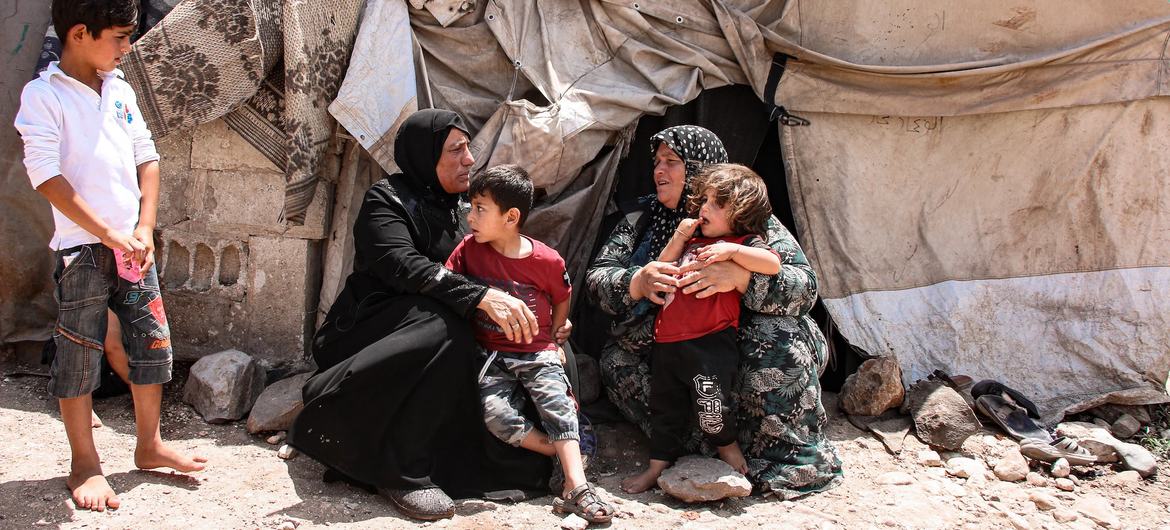
A Central African Republic refugee living in Cameroon prepares food for her customers.
Climate crisis frontline
Building resilience also requires addressing the climate crisis.
“African farmers are on the frontlines of our warming planet, from rising temperatures to droughts and floods,” he said.
“Africa needs a massive boost in technical and financial support to adapt to the impact of the climate emergency and provide renewable electricity across the continent.”
He added that developed countries must deliver on their $100 billion climate finance commitment to developing countries, with the help of international financial institutions, so African countries, in particular, can invest in a strong recovery from the COVID-19 pandemic, on the tide of renewable energy.
Food systems, said the Secretary-General, “connect all these challenges”, as highlighted at last September’s UN Food Systems Summit.
“Many African Member States led the call for fundamental change, through inclusive transformation pathways, which aim to address – simultaneously – food security, nutrition, social protection, environmental conservation and resilience to shocks.”
He welcomed the African Union (AU) decision to designate 2022 as the Year of Nutrition – a pledge to act on the strong commitments made at the Summit.
Collective expertise
“Through national, regional and global cooperation, we must build on lessons learned and harness collective expertise. Together, we must deliver on these pathways”, Mr. Guterres added.
“The international community must rise to the occasion”, he declared, adding that scaling back support when demand is at an all-time high, was “not an option.”
Official Development Assistance, or ODA, based on a percentage of available public funds, is more necessary than ever, he said.
“I urge all countries to demonstrate solidarity, invest in resilience, and prevent the current crisis from escalating further.”
The UN chief said that during his recent visit to Senegal, Niger, and Nigeria, he had been inspired by the resilience and determination of the people he met.
“Women and young people in particular were committed to lasting, sustainable solutions that enable them to live in peace with their neighbours and with nature.”
“If we work together, if we put people and planet before profit, we can transform food systems, deliver on the Sustainable Development Goals (SDGs) and leave no one behind.”
The ambitious goals, he concluded, of ending hunger and malnutrition by the fast-approaching 2030 deadline, were realistic, and achievable.
“The United Nations stands by your side, every step of the way.”