Monday, September 21, 2026
Home Blog Page 976

EU Digital Markets Act and Digital Services Act explained

0

Parliament adopted two major pieces of legislation that will change the digital landscape: find out about the Digital Markets Act and Digital Services Act.

The landmark digital rules, adopted on 5 July 2022, will create a safer, fairer and more transparent online environment.


The power of digital platforms

Over the last two decades, digital platforms have become an integral part of our lives – it’s hard to imagine doing anything online without Amazon, Google or Facebook.

While the benefits of this transformation are evident, the dominant position gained by some of these platforms gives them significant advantages over competitors, but also undue influence over democracy, fundamental rights, societies and the economy. They often determine future innovations or consumer choice and serve as so-called gatekeepers between businesses and internet users.

To address this imbalance, the EU is upgrading the current rules governing digital services by introducing the Digital Markets Act (DMA) and the Digital Services Act (DSA), which will create a single set of rules applicable across the EU.> 10,000 Number of online platforms operating in the EU. More than 90% of these are small and medium-sized enterprises

Find out what the EU is doing to shape the digital transformation.


Regulating big tech practices: Digital Markets Act

The purpose of the Digital Markets Act is to ensure a level playing field for all digital companies, regardless of their size. The regulation will lay down clear rules for big platforms – a list of “dos” and “don’ts” – which aim to stop them from imposing unfair conditions on businesses and consumers. Such practices include ranking services and products offered by the gatekeeper itself higher than similar services or products offered by third parties on the gatekeeper’s platform or not giving users the possibility of uninstalling any preinstalled software or app.

Interoperability between messaging platforms will improve – users of small or big platforms will be able to exchange messages, send files or make video calls across messaging apps.

The rules should boost innovation, growth and competitiveness and will help smaller companies and start-ups compete with very large players. The purpose of the digital single market is that Europe gets the best companies and not just the biggest. This is why we need to focus on the legislation’s implementation. We need proper supervision to make sure that the regulatory dialogue works. Andreas Schwab (EPP, Germany)Leading MEP on the Digital Markets Act

The Digital Markets Act will also set out the criteria for identifying large online platforms as gatekeepers and will give the European Commission the power to carry out market investigations, allowing for updating the obligations for gatekeepers when necessary and sanctioning bad behaviour.

Safer digital space: Digital Services Act

The Digital Services Act will give people more control over what they see online: users will have better information over why specific content is recommended to them and will be able to choose an option that does not include profiling. Targeted advertising will be banned for minors and the use of sensitive data, such as sexual orientation, religion or ethnicity, won’t be allowed.

The new rules will also help protect users from harmful and illegal content. They will significantly improve the removal of illegal content, making sure it is done as fast as possible. It will also help tackle harmful content, which, like political or health-related disinformation, doesn’t have to be illegal, and introduce better rules for the protection of freedom of speech.

The Digital Services Act will also contain rules making sure that products sold online are safe and follow the highest standards set in the EU. Users will have better knowledge of the real sellers of products that they buy online. For too long tech giants have benefited from an absence of rules. The digital world has developed into a Wild West, with the biggest and strongest setting the rules. But there is a new sheriff in town – the DSA. Now rules and rights will be strengthened. Christel Schaldemose (S&D, Denmark)Leading MEP on the Digital Services Act

The owner of a small company of online shopping is pictured next to a pile of parcels.
 

Next steps

The Council is expected to approve the Digital Markets Act in July and the Digital Services Act in September. For details on when the regulations will start to apply, please check out the press release in the links section below.

Check out more on how the EU shapes the digital world

“The EU works closely with all actors to promote FoRB”, said Gilmore, EU SR for Human Rights

0

Message from Eamon Gilmore as EU Special Representative for Human Rights when attending on 5th july 2022 to the International Ministerial on Freedom of Religion or Belief hosted by the Foreign and Commonwealth and Development Office of the United Kingdom.

Gilmore in his Twitter account summarized saying that:

The global environment for freedom of religion or belief remains challenging. The EU works closely with all actors to promote Forb. All human rights have equal worth.

Watch the full video below

Full message (original transcript by The European Times):

Excellencies, ladies and gentlemen, I wish to thank the United Kingdom for hosting this ministerial conference today, which I am honored to address on behalf of the European Union.

We have all seen the work of both faith based and non faith based actors to build peace and to combat poverty in their communities and their countries. However, we have also seen that freedom of religion or belief has become something of a barometer for how governments perceive human rights in general and for how they protect those rights.

We all have the right to live and act according to our conscience, whether we are religious or not. The Universal Declaration of Human Rights affirms everyone’s right to freedom of thought, conscience and religion.

No one should be persecuted or privileged because of their religion or belief. No one should be forced to live by another’s belief. And of course, freedom of religion or belief, should never undermine other rights, such as the right to education, women’s rights, LGBT rights, nor used as a justification for discrimination, bigotry or violence.

The global environment for freedom of religion or belief is challenging, and that is why promoting it remains a central part of the European Union’s work on human rights and a strong feature of my mandate as the EU’s Special Representative for Human Rights.

The main guide for our work is the EU Action Plan on Human Rights and Democracy 2020 to 2024. And over the last few years, we have intensified action to prevent and combat all forms of discrimination, intolerance, violence and persecution against people based on the exercise of the freedom of thought, conscience and religion or belief.

We take a public stance through statements, and we also raise our concerns directly with governments through our human rights dialogs.

We call on all countries to protect the right for everyone to have or not to have a religion or belief to manifest or to change their religion or belief. And we firmly condemn the criminalization of apostasy and the abuse of blasphemy laws.

Building inclusive and resilient societies is a strong focus of our multilateral work and also guides many EU initiatives. At the March session of the Human Rights Council, the EU resolution on freedom of religion or belief renewed the mandate of the UN Special Rapporteur on freedom of religion or belief.

We are also engaging actively with other international organizations, in particular with the Organization of Islamic Cooperation, and we continue to work with others in the Istanbul process. We have continued to implement the Global Exchange on Religion and Society project.

This aims to connect civil society actors from all around the world who are working on faith and social inclusion. Civil society and human rights defenders are critical partners in all of our works. This is a challenging moment, but much is being done and it is important not to be overwhelmed by the challenges and difficulties we face.

The European Union will continue to work closely with all actors to promote freedom of religion or belief. We will do so with the strong conviction that all human rights have equal worth. If religion is used to undermine another right, all other rights can be weakened.

Freedom is all encompassing, and this must always be our guide in promoting freedom of religion or belief. Thank you.

Role of the EU Special Representative for Human Rights:

The tasks of the Special Representative for Human Rights are to enhance the effectiveness and visibility of EU human rights policy. The Special Representative has a broad, flexible mandate, which provides the possibility of adapting to evolving geopolitical circumstances. The Special Representative will work closely with the European External Action Service, which will provide full support to his work.

As former Deputy Prime Minister and Minister of Foreign Affairs of Ireland, Eamon Gilmore had government responsibility for the implementation of the Good Friday Agreement, including its core human rights provisions. Since October 2015, he has been the High Representative’s Special Envoy for the Colombian Peace Process. His work and contribution to the peace process were greatly appreciated by all sides.

EU Special Representatives promote the EU’s policies and interests in certain regions and countries as well as issues of particular concern or interest for the EU. They play an active role in efforts to consolidate peace, stability and the rule of law. The first EU Special Representatives were appointed in 1996. Currently, eight EUSRs support the work of the High Representative of the Union for Foreign Affairs and Security Policy, Federica Mogherini.

Sick of Lyme unduly locked up in psychiatric hospital in Spain

0
Salvemos a Carla - lets save carla

Unduly locked up in psychiatric hospital: “I don’t want to be here, I can’t move and it feels like I’m in a prison”, that’s what Carla told her sister when she managed to visit her.

Carla is 24 years old and has a rare disease called chronic lyme. Her symptoms have been changing over time and now she is at a critical point. She has been unable to move from her bed for months, with acute malnutrition, ulcers in her intestine and feet and thrombi in her arteries among other serious symptoms. According to Sandra, her sister, at the end of March Carla was admitted to the University Hospital of Burgos (Spain) for aggravation.

However, a few days ago the hospital decided to transfer her to psychiatry unit without her consent nor the consent of the family, and without having any psychiatric diagnosis or disability to justify it. An expert on mental health rights that was consulted by The European Times said that “it seems like some psychiatrist is using force to obtain new ‘clients’ against the person’s will and needs”.

Carla’s family put a petion in change.org, to gain attention to the case and impinge on the hospital to place Carla on the proper care unit, and stop stigmatizing and mistreating Carla [ Change.org/SalvemosACarla ]

“What is happening to my sister is not treated in psychiatry” said Sandra. The ward where she is has very strict rules, “but those imposed on my sister are even stricter” continued Sandra, “she cannot talk to her lawyer, we can only see her for half an hour a day and with an assistant in front of her, she has no right to a cell phone…” But in addition, experts say, this place is not even adequate to treat Carla’s symptoms.

“We are very concerned about how all of this may affect their health both physically and mentally. Having chronic lyme is very hard and for me it is not easy to assume that my sister is dying, but on top of that, when you start the mourning you see that they are violating her rights and giving an undignified treatment to a person so sick and whom you love so much is beyond you at all levels” said Sandra about the human rights violations that her sister is suffering.

El Mundo reported that Rocío Muñoz is “very disgusted”. She is also astonished, but above all, she is concerned about the condition of her daughter Carla, admitted without prior notice to the Psychiatric Department of the University Hospital of Burgos (HUBU) after being on the ward since the end of March. Since her transfer on June 10, the family has denounced an “accumulation of nonsense” without answers to satisfy their doubts in this regard. For this reason, a hundred people gathered in the Plaza del Cid, in front of the Teatro Principal, to support this 24-year-old woman with chronic Lyme disease, to denounce the “illegal retention” to which she is being subjected and demand her immediate release from the Psychiatric Unit, and be brough to a proper hospital where she can be treated of her physical conditions.

“We know that my sister is in a very serious physical condition, but we are not going to allow her to be locked up, isolated and unable to exercise her rights as any other citizen. Even a criminal has more rights than her” said Sandra in the petition thatthe family has posted in Change.org.

Sandra continued saying that “It is unbelievable how with her they are skipping all the basic principles by which healthcare should be governed. I don’t know when her last day may be, if it will come soon or in a long time but what is clear to me is that we are going to fight to the end for my sister to be treated with the dignity she deserves. For her and for all people with Lyme disease”.

It is clear that anyone in Carla’s place would want to be treated properly, to be listened to and to be able to be with her family as long as possible, but the “hospital managers either dont think the same or someone is giving them a wrong and criminal advice” said a consulted expert.

Burgos connecta, a local newsroom from the city of the victim, reported that Carla’s mother, then filed a legal complaint at the Burgos Duty Court after making several complaints through the hospital’s Patient Care Services, due to her daughter being unduly transferred to the psychiatric unit, where Carla seems to have lost all her rights, instead of transferring her to an intensive care unit or any other more appropriate unit, whee her rights will be respected and can be given the appropriate treatments.

“The judicial resolution has not been notified to Carla or her family, Carla has not signed anything,” her mother explained. “Carla has a very great immunosuppression and the family is told that the only place where she can be cured is in psychiatry, because it is the most aseptic area of the hospital, which I do not understand,” continues Rocío. “If she is so serious, which is true, it is normal for her to be in the ICU, but in the ICU they tell us not because she is at risk of contracting nosocomial diseases, but it does not seem to me that she should have restrictions on her fundamental rights. If they leave her in psychiatry because they consider it the safest place (from the viewpoint of infections), fine, but they should not restrict her rights,” she said.

The hospital uses the excuse of “data protection” to hide “details of the patient’s situation” while hindering more important rights.

One of the posts on the instagram account that Sandra has created to denounce the violations being suffered by her sister in the psychiatric unit, reads:

“Today dear sister,
I went to the meeting like every day with the doctors to know about you, since I can’t see you ?. I have asked them things like your hemoglobin since you have needed blood transfusions or for your high heart rate which they tell us is because of your pains but in internal medicine with those same pains were in normal values, I am worried because you have a pericardial effusion and I am worried about those frequencies. They have attacked me. They have managed to make me cry?, feel guilty for wanting to hear from you and worry about you. Their incredible HUMANITY has not allowed them to say “calm down let’s all calm down”. they didn’t care. They also told me that even though I am a nurse, I cannot understand such technicalities, such basic things as hemoglobin, or insulin pattern, as if we nurses were stupid. WELL, NO, DOCTORS, WE KNOW ABOUT HEMOGLOBIN, INSULIN, PAIN CONTROL AND PHARMACOKINETICS OF DRUGS AND MANY OTHER THINGS. I will keep fighting for you Carla?, because that’s what you ask me every time I see you. May we get you out.❤””

MEPs welcomed the decision to open the EU’s doors to Ukraine and Moldova

0
MEPs welcomed the decision to open the EU’s doors to Ukraine and Moldova

MEPs welcomed the decision to open the EU’s doors to Ukraine and Moldova, but asked leaders to strengthen the EU, and tackle the latest crisis.

MEPs discussed the conclusions of 23-24 June European Council summit with President Charles Michel and Commission Vice-President Maroš Šefčovič. Almost all speakers welcomed the decision to commence the accession process for Ukraine and Moldova, as Parliament had already asked. Many MEPs underlined that the road to accession is going to be long and will require many reforms for Ukraine and Moldova. They stresses that the EU should find other ways to support the countries in the meantime, including with military equipment, some argued.

Numerous speakers referred to the need to treat Western Balkan countries fairly and unblock their accession, as Parliament has already repeatedly asked in the past. Regarding the Conference on the Future of Europe and Parliament’s call for a Convention to revise the EU Treaties, many MEPs criticised the lack of ambition shown by the Council in this regard, highlighting that the need to reform the EU and the way it works is urgent. Citizens must not be let down and their expectations must be fulfilled, they insisted.

Many MEPs pointed to the need for more coordinated action to tackle the interconnected problems of skyrocketing energy prices, gas shortages caused by the Russian war against Ukraine, rising inflation, and the impact of this on households – with several across political groups asking for a cap on gas prices. Other topics raised were the need to reform the EU’s migration and asylum system, accession of more EU countries to the Schengen area, and Turkey’s aggression towards its EU neighbours.

You can watch extracts from the debate here, the first round of MEPs’ interventions here, and the full debate here.

Tackling hate speech at nexus of tech, government, and civil society

0
Tackling hate speech at nexus of tech, government, and civil society | BWNS

BIC GENEVA — To address the challenge of increasing hate speech online, there needs to be much closer collaboration between the tech sector, government, and civil society organizations, says the Bahá’í International Community (BIC). This was the theme of a recent panel discussion hosted by the Geneva Office of the BIC as part of the RightsCon summit, an annual international forum on human rights in the digital age.

The BIC forum brought together the United Nations Special Rapporteur on freedom of religion or belief, Ahmed Shaheed, a trustee on Meta’s Oversight Board, Kristina Arriaga, and a researcher from Human Rights Watch, Tara Sepehri Far, to explore the challenges of tackling online hate speech in the context of the campaign of disinformation against the Bahá’ís of Iran.

“Hate speech ultimately creates a culture of hate, where groups are not considered to be full members of society, where social cohesion is eroded, and division is allowed to take root, impacting every aspect of relationships between individuals, communities, and governing institutions,” said Simin Fahadej, a representative of the Geneva Office.

Slideshow
3 images
A BIC forum at the RightsCon summit explored the collaboration that is needed across the tech sector, government, and civil society to address online hate speech

Ms. Arriaga, a member of the Oversight Board for technology company Meta—which operates Facebook, Instagram and WhatsApp—explained that while social media is an important instrument for human rights workers, it can also be used to spread hate propaganda, as in the case of the Bahá’ís of Iran.

Meta’s response, Ms. Arriaga said, has been to establish an Oversight Board which monitors content and sets policies for how material is moderated. This board has also begun to work with targeted groups and communities so that hate speech can be flagged and monitored.

Despite these efforts, participants noted that content moderation—whether manual or algorithmic—is extremely difficult. “It’s not easy to know where to draw the line on hate speech,” said Ms. Sepehri Far.

She added: “Online platforms need to invest more in resources to understand not only [non-English] language content, but also societal context.”

Ms. Arriaga agreed, saying that “the scale of the problem… makes it a necessity for the human rights community to invest [time] in the tech community to learn how to… work with algorithms and how to inject knowledge of human rights into the tech sector.”

Panelists noted that although hate speech seeks to create division among populations, creating forums such as the one created by the BIC elevate discussions to the level of principle and can lead to stronger collaboration between different sectors to tackle the problems.

Discussions also highlighted the idea that despite the important role that online platforms and media entities must play in addressing hate speech, the problem cannot be addressed solely through technical solutions.

“[There is a] whole range of norms, ways of behaving, means of engaging, and communication, including mutual respect, that creates the kind of environment in which people can thrive,” said Dr. Shaheed.

Slideshow
3 images
“We can have all the right algorithms, and the right laws… but ultimately, how we end up behaving as human beings has to do with the lived reality of our culture.” -Kristina Arriaga, Member of Meta Oversight Board

Ms. Arriaga added: “We can have all the right algorithms, and the right laws… but ultimately, how we end up behaving as human beings has to do with the lived reality of our culture.”

She added: “That’s why what Bahá’ís are doing to elevate [conversations] and engage others is so important. Ultimately, what happens online is a reflection of what’s happening in real life. And we can only fix it if we’re… changing our culture.”

Reflecting on the event, Ms. Fahandej states: “The forum represented an important moment in fostering a shared vision among social actors concerned with technology and the betterment of society. The BIC plans on holding future events on this theme in order to further enhance multi-sector relationships.”

Cardinal Parolin at Mass in Juba: ‘War and corruption cannot bring peace’

0
Cardinal Parolin at Mass in Juba: ‘War and corruption cannot bring peace’ - Vatican News

By Salvatore Cernuzio – Juba, South Sudan

The people of South Sudan must disarm evil with forgiveness, defuse violence with love, and resist oppression with meekness, because evil cannot be overcome by this world’s weapons and peace cannot be achieved through war.

The Vatican’s Secretary of State made that appeal in Juba on Thursday as he celebrated Mass in the John Garang Mausoleum Park.

As rain fell, Cardinal Parolin invoked God’s blessings upon South Sudan, calling it a land “rich in resources and possibilities” but one which is also “overshadowed by violence.”

“Never again violence. Never again fratricidal conflicts. Never again war.”

President in attendance

The President of South Sudan, Salva Kiir, sat in the front row at the celebration, in the grandstand set up under a tent. First Vice President Riek Machar was seated beside him. On the penultimate day of his visit to the African nation, Cardinal Parolin told the roughly 15,000 people gathered for the Mass that they are a people “burdened by the yoke of oppression, poverty, and labor”, repeating the words of the prophet Isaiah, “but who desire to rejoice in freedom.”


Cardinal Parolin during the Mass in Juba

Solemn atmosphere

The Mass was held in John Garang Mausoleum Park, the memorial dedicated to the late leaders of the Sudan People’s Liberation Movement/Army and Sudan’s first vice president after the Peace Accords. The venue was the same as where Pope Francis was scheduled to celebrate Mass, before treatment for severe knee pain forced him to postpone his Apostolic Journey.

The colors of South Sudan’s flag surrounded the altar: white, red, green, and yellow. Rain, lightning, and wind did not dampen the spirits of the young people who sang and danced barefoot, wearing white T-shirts and tribal skirts and pants.

All the bishops of South Sudan were present, concelebrating with the Cardinal. The front row was also filled with Anglican, Pentecostal, Evangelical, and other Christian leaders who are members of the Council of Churches, and who met privately with the Cardinal before the Mass.

Booklets with the photograph of “His Eminence Cardinal Pietro Parolin” were distributed, and the atmosphere was more reserved than that of the jubilation heard at Mass on Wednesday in the IDP camp in the northern town of Bentiu.

The Pope’s blessing

Yet, as in Bentiu, Cardinal Parolin began his homily by offering “the greeting and blessing of the Holy Father Pope Francis, who was very much desired to be here today for an ecumenical pilgrimage for peace and reconciliation in this young country, so full of opportunities and so gravely afflicted.”


Booklet distributed during Cardinal Parolin’s celebration

Do not return evil for evil

The Cardinal reflected on both the present of the South Sudanese people—their difficulties and challenges—while looking to their future. He pointed the path forward, which he said is that of the Gospel which offers a “different” message, namely to “refuse to respond to evil with evil.”

“Renounce revenge… Always love and forgive,” the Cardinal told South Sudanese, who have endured years of civil war. “The flesh impels us to respond to evil in certain ways,” but Jesus invites us to open ourselves “to the courage of love.” Jesus invites us to a love that “is not imprisoned in the mentality of ‘an eye for an eye, a tooth for a tooth’ and does not respond to evil with vengeance, nor resolve conflicts with violence.”

However, the Cardinal stressed, “this does not mean becoming passive victims, or being weak, docile and resigned in the face of violence. On the contrary, it means disarming evil, defusing violence, and resisting oppression.”


Entrance procession

Only path forward: living as brothers

“The evil of the world cannot be won with the weapons of the world,” Cardinal Parolin remarked, interrupted by applause. “If you want peace, you cannot get it with war. If you want justice, you cannot get it with unjust and corrupt methods. If you want reconciliation, you cannot use revenge. If you want to serve your brothers and sisters, you cannot treat them as slaves. If we want to build a peaceful future, then there is only one way to go: to love one another and live as brothers and sisters.”

“When we leave too much room for resentment and bitterness of heart, when we poison our memories with hatred, when we cultivate anger and intolerance, we destroy ourselves.”

Concrete actions for the peace process

“Now,” Parolin says, “is the time when God, who always hears the cry of His oppressed people, asks us to be artisans of a new future. Now is the time for responsibility and concrete action, the time to break down the walls of hatred, to break the yoke of all injustice, to wash in forgiveness and reconciliation the robes soaked in blood and violence.”

He also prayed that “the Lord may touch the hearts of all, and especially those in positions of authority and great responsibility, so that there may be an end to the suffering caused by violence and instability and that the process of peace and reconciliation may move forward quickly with concrete and effective actions.”

At the end of the Mass, there was also an impromptu greeting from President Salva Kiir, who reiterated his hope that the Pope could come to South Sudan soon and his desire for peace in the country: “People do not want wars again.”


Meeting with the speaker of the Transitional National Legislature

Meeting with the national legislature

The desire for peace was also reiterated during Thursday morning’s meeting with members of the Revitalized Transitional National Legislative Assembly, the Transitional National Legislature.

Cardinal Parolin received the invitation to visit the assembly on Wednesday afternoon.

“I accepted immediately because I am aware of your importance for democracy,” the Cardinal said, as he met in the Blue Room with a group of the approximately 500 parliamentarians, of whom, the speaker stressed, more than 20 percent are women.

“You represent the people and their interests,” the Cardinal remarked, and for the people the demands of “justice, freedom and prosperity” imprinted on the Legislature’s coat of arms must be realized.

As in his private conversation with Salva Kiir, the Cardinal repeated to the parliamentarians the Pope’s words at the 2019 Vatican retreat with South Sudanese leaders: “We know there will be difficulties but please move forward. Do not get stuck in difficulties. You must strive ahead for the good and for the security of the people.”


Parolin and representatives of the Council of Churches

Dialogue with ecumenical leaders

Ahead of the Mass, Cardinal Parolin also met with representatives of the Council of Churches, offering them three invitations.

The first: “Announce Christ who is the answer to all the expectations, desires, and dreams of people.”

Then, “unity” despite “differences.”

Finally, he urged them to “meet the people’s demands for justice, peace, freedom, and prosperity.”

“It is hard work” but it must be done and done together, said Cardinal Parolin, who spoke of his personal emotion during Wednesday’s visit to the camp of internally-displaced persons in Bentiu.

“I was really shaken by the experience. Here are people living in minimal conditions. Many children… They give us hope for the future. We have to work together and unite religious and political forces to give justice to these people.”

Urgent temporary measures for Ukrainian driver documents

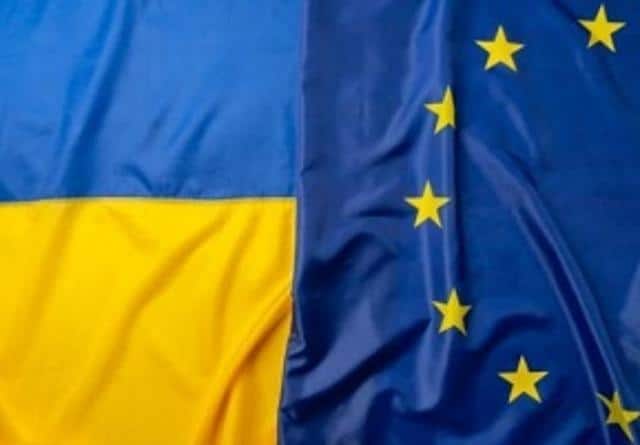
Ukranian and European flag
Commission proposes temporary protection for people fleeing war in Ukraine

The Council and the Parliament launch urgent temporary measures for Ukrainian driver documents

In response to Russia’s unprovoked and unjustified military aggression against Ukraine, the Council and the European Parliament agreed on introducing through urgent procedure specific and temporary measures concerning Ukrainian driver documents.

The legislative proposal is linked to the reception of Ukrainian refugees and aims at reducing the administrative requirements normally applying to third country drivers when driving within the EU. This innovative measure alleviates the administrative burden on Ukrainian refugees as regards driving documents and, at the same time, provides a harmonised approach for the duration of temporary protection.

We want to unify and simplify the recognition of the driving documents in the member states for Ukrainian refugees. Hopefully, this will make their daily lives a little bit easier until this unacceptable war is finally over.”

Jaroslav Zajicek, Czech Deputy Permanent Representative

The recognition and exchange of third country driving licences is not governed by EU rules. The Commission has put forward this proposal recognising that the problem, due to its scale and effects as a consequence of the war, needs a harmonised regulatory framework. It will be strictly linked to the temporary protection to refugees from Ukraine granted initially by a Council Decision on 4 March. The aim is twofold: on the one hand, to contribute to the social and economic integration of Ukrainian refugees in the Member State of reception; on the other hand, to maintain a high level of road safety in the Union.

The regulation provides the conditions for the recognition of driving licences and driver qualification cards issued by Ukraine, the extension of the validity of expired driver documents issued by Ukraine, verification procedures in case of lost or stolen driving licences issued by Ukraine, the prevention of fraud or forgery, as well as the monitoring of its implementation by the Commission.

Next steps

Following today’s vote by the European Parliament of amendments that the Council could also support, the Council will proceed to an adoption of its position in the legislative procedure as quickly as possible. Due to the urgency of the matter, the regulation shall enter into force on the fifth day following that of its publication in the Official Journal of the European Union.

Background

In the first ten weeks of the Russian invasion of Ukraine that started on 24 February 2022, more than five million people have left Ukraine, fleeing the armed conflict and seeking shelter in neighbouring countries, mostly in the European Union. As early as 4 March 2022, the EU established the existence of a mass influx of displaced persons from Ukraine and offered temporary protection to the displaced people. Council Implementing Decision (EU) 2022/382 of 4 March 2022 sets out the categories of persons entitled to temporary protection or adequate protection under national law. Temporary protection entails the right to be issued a residence permit for the entire duration of the protection and to have access, among others, to accommodation, schools, health care, and jobs. A residence permit issued by one Member State brings with it the right to travel within the Union for 90 days within a 180-day period.

A driving licence enhances the mobility of its holder and facilitates everyday life as it allows for driving power-driven vehicles on public roads. In the given context, it promotes the participation of persons enjoying temporary protection or adequate protection under national law in economic and social activities in their new environment.

The rules and procedures related to the recognition and exchange of third country driving licences differ from one Member State to another, depending among others on the specific provisions of their national legislation or in the existing bilateral agreements between the Member States and the third country in question. In the case of persons enjoying temporary protection or adequate protection under national law with a valid driving licence issued by Ukraine, it is appropriate to provide for a harmonised framework for the recognition of driving licences within the territory of the Union, for as long as the period of temporary protection lasts.

As a general rule, persons enjoying temporary protection or adequate protection under national law who hold a valid driving licence issued by Ukraine should be able to use their driving licence on EU territory for as long as the temporary protection lasts. In view of the temporary nature of the protection, there should be no need to exchange a Ukrainian driving licence for one issued by a Member State. This considerably eases the burden on the competent authorities of the Member States, as they would otherwise potentially have to exchange millions of Ukrainian driving licences. At the same time, persons enjoying temporary protection or adequate protection under national law will not have to immediately pass another theoretical and/or practical driving licence test – often in a foreign language to them – and/or undergo medical examinations in the Member State of their temporary residence.

As outlined in the EU-Ukraine Solidarity Lanes action plan, access of professional drivers from Ukraine to employment in the European Union should be facilitated, by defining specific rules concerning the issuance of certificates of professional competence to Ukrainian professional drivers. In the context of the overall growing shortage of truck drivers, EU-Ukraine alternative logistical links and Ukraine’s continued access to its export markets ought to be strengthened in the aftermath of the current blockage of its Black Sea ports. Driving licences and certificates of professional competence are usually subject to a limited period of validity. As long as the war rages in Ukraine, however, Ukraine may likely not be able to ensure the administrative support necessary to individually renew these documents. In this extraordinary situation, the Ukrainian government could decide to extend the validity of these documents. In that case, the Union and the Member States should be adequately informed by Ukraine of such extensions. Member States should recognise an extended validity of Ukrainian driving licences going beyond their administrative period of validity, at least until the end of the period of temporary protection.

The circumstances of fleeing war often entail the loss or theft of important documents, such as driving licences or certificates of professional competence, or their leaving behind in the war zone without an immediate possibility of recovering them. In such cases, subject to verification, for instance, in the national electronic driving licence register of Ukraine, Member States should be in a position to issue temporary licences that replace the original ones for the duration of the temporary protection. Access to the Ukrainian driving licence register by the competent authorities of the Member States would facilitate such a step. Without the possibility of verifying the authenticity of the information provided by the displaced persons, Member States should refuse to issue such temporary driver documents.

Finally, the provisions of this regulation address exceptional circumstances and lay down exemptions which should not be replicated under normal circumstances. It is therefore especially important that the enforcement of this regulation is not conducive to putting road users and pedestrians at risk, by allowing people unfit to drive to do so on the EU roads. In that context, adequate measures should be implemented by the competent authorities of the Member States for the purpose of combatting fraud and forgery.

Ukraine struggling now, but winters in Ukraine are very harsh: UNHCR chief

0
Ukraine struggling now, but winter will be even worse: UNHCR chief
While the Russian military advance in eastern Ukraine continues to escalate, the UN refugee agency, UNCHR, on Thursday warned that the winters in Ukraine will be very harsh for the millions of people affected by the war.

Since the Russian invasion on 24 February, more than 11.5 million people have had to flee their homes in Ukraine, and some 6.3 million are internally displaced.

Speaking from bomb-shattered ruins in Irpin and Bucha near the capital Kyiv, UNHCR High Commissioner, Filippo Grandi warned that winter was only around the corner: “And winters in Ukraine are very harsh and severe, extremely cold. So, we must do everything possible to prevent the cold of winter from becoming the next challenge for people that already have to face so much in their lives.”

Homes broken, families split

The UN refugee agency warned that people are struggling to rebuild their damaged homes, reunite with their families and recover from the trauma of more than four months of war.

They are also in urgent need of financial assistance, having lost their jobs and incomes, while the price of essentials continues to rise, along with fuel shortages.

While acknowledging the major challenges facing the people inside Ukraine, Mr. Grandi also highlighted the anxiety of separation felt by so many, “of being in exile, either in the country itself and …as refugees abroad”.

Reslience and aid for millions

But after meeting and talking to some of those affected by the war, the High Commissioner also insisted that he had seen “lots of strength, resilience and determination to carry on, to recover, to rebuild here in this very building that appears so damaged, people are already working to fix it, to make it habitable again.”

According to the UN humanitarian coordination office in Ukraine, OCHA, 15.7 million people have been affected by the war and need support now, and two-thirds of them have been reached so far.

Ongoing fighting and “impediments” imposed by the warring parties have continued to seriously hamper or make impossible the delivery of assistance to the hardest-hit areas, particularly in government and non-government-controlled areas of Luhansk oblast, or region.

The insecurity has also made it extremely dangerous for civilians trying to evacuate from areas where there is active fighting.

Electricity still cut

Critical locations of concern include Kherson, Sievierodonetsk among others, while people in Mariupol have received very limited support from local actors operating in areas outside Government control in the Donetsk region.

“Access to water and healthcare there remains worryingly limited”, noted OCHA’s assessment. “Lack of access to electricity remains at an alarming level: more than 625,000 users, including families, businesses and public institutions in Luhansk and Donetsk oblasts, have not had electricity for weeks on end.”

OCHA’s latest update on the war indicated that 60 per cent of people forced to leave their homes have been displaced from the east, 15 per cent from the north, 11 per cent from the south and another 11 per cent from the capital.

The oblasts of Dnipropetrovsk, Kharkivsk, Kyiv, Poltava and the city of Kyiv continue to host most displaced people.

Read more

Guterres expresses solidarity as Moldova grapples with fallout of Russia’s war in Ukraine

Pope confident Vatican financial reforms will prevent new scandals

0
Pope confident that financial reforms will prevent further scandals - Vatican News

In the fourth part of his interview with Phil Pullella of Reuters news agency, Pope Francis discusses the reforms put in place regarding the Vatican’s financial issues.

By Vatican News

Responding to a question, Pope Francis said he believes Vatican financial reforms will avoid future scandals, such as those that have hit the headlines in recent years.

He mentioned, in particular, the scandal regarding the purchase and sale of the Sloane Avenue building in London, now under scrutiny in an ongoing trial conducted by the Vatican court*.

Speaking about the building in London, the Reuters journalist asked the Pope, “do you believe that enough controls are now in place so that similar scandals could not take place again?”

“I believe so,” replied the Pope, immediately listing all the steps that have been taken. Amongst these, he mentioned “the creation of the Secretariat for the Economy with expert, technical people, who don’t fall into the hands of ‘benefactors or friends’, who can make you slip up. I believe that this new dicastery, let’s say, which has all the financing in its hands, is a real security in the administration, because before the administration was very messy’.

The Pope then gave the example of a section chief in the Secretariat of State who had to administer finances, but since he was not qualified in financial matters, the priest, in good faith, asked friends to give him a hand. 

“But sometimes the friends were not The Blessed Imelda,” Pope Francis commented, referring to a 14th century 11-year-old Italian girl who is an example of purity. “And so what happened happened,” he added.

The Pope reiterated that the fault fell to “the irresponsibility of the structure” for past financial scandals, saying the administration of money “was not mature”.

Pope Francis concluded by recalling that “this idea for the Secretariat for the Economy came from Cardinal Pell. He was the genius”.

*This property, acquired by the Secretariat of State in 2014, is at the heart of a financial scandal for which ten people, including a cardinal, Angelo Becciu, are currently being prosecuted. The Administration of the Patrimony of the Apostolic See (APSA) has sold the now-famous building at 60 Sloane Avenue in London for 186 million pounds sterling (or 214 million euros) to the American company Bain Capital, the Press Office announced on July 1, 2022. 

Convergence of conflicts, COVID and climate crises, jeopardize global goals

0
Convergence of conflicts, COVID and climate crises, jeopardize global goals   

Intersecting global crises are threatening the 17 Sustainable Development Goals (SDGs) and impacting food supplies, health, education, and security across countries worldwide, according to a new UN report released on Thursday.

The Sustainable Development Goals Report 2022 reveals that the convergence of increased fighting, the continuing COVID-19 pandemic, and the long-term climate crisis, could push an additional 75 to 95 million people into extreme poverty this year – compared with pre-pandemic projections – and jeopardize the SDG blueprint for more resilient, peaceful and equal societies.   

“The road map laid out in the Sustainable Development Goals is clear,” stated Liu Zhenmin, UN Economic and Social Affairs chief (DESA), adding that “just as the impact of crises is compounded when they are linked, so are solutions”.

COVID-19

The pandemic has undermined countries’ effort to reach the ambitious global goals – and its impact far from over.

Deaths directly and indirectly attributable to the coronavirus, reached 15 million by the end of last year, said the report, wiping out over four years of progress in alleviating poverty as well as severely disrupting essential health services and derailing hard-won progress on SDG 3.

Moreover, since 2020, some 147 million students have missed over half of their in-person instruction.

Climate emergency

Meanwhile, the world is on the verge of a climate catastrophe where billions are already suffering the consequences of global warming and increasingly extreme weather.

Energy-related CO2 emissions rose by six per cent last year, reaching their highest level ever, completely wiping out pandemic-related declines.

To avoid the worst effects of climate change, global greenhouse gas emissions must peak before 2025 and then decline by 43 per cent by 2030, falling to net zero by 2050.

Instead, under current voluntary national commitments (NDCs) to climate action, greenhouse gas emissions are set to rise nearly 14 per cent over the next decade.

And this year, an estimated 17 million metric tons of plastic entered the ocean – a number that is expected to double or triple by 2040.

Ukraine repercussions

Meanwhile, the Ukraine war is creating one of the largest refugee crises of modern time, according to the report.

As of May, over 100 million people have been forcibly displaced from their homes; some 11.5 million in Ukraine alone.

And the crisis has caused food, fuel and fertilizer prices to skyrocket, further disrupted supply chains and global trade, roiled financial markets, and threatened global food security and aid flows.

The most vulnerable

At the same time, the most vulnerable countries and populations are disproportionately impacted – including women who have lost their jobs, and been burdened with more work at home.

And the pandemic has triggered increased violence against women and girls.

Least developed countries are struggling with weak economic growth, rising inflation, major supply-chain disruptions, and unsustainable debt, leaving in its wake, fewer job opportunities for young people, and increases in both child labour and child marriages.

In low income countries, the report reveals that the total public – and publicly guaranteed – debt service to export ratio, rose from an average of 3.1 per cent in 2011 to 8.8 per cent in 2020.

WFP/Sayed Asif Mahmud

Millions of people in Bangladesh have been impacted by climate shocks like flooding.

Follow the roadmap

The world must now decide to deliver on its commitments to assist the most vulnerable and rescue the SDGs for meaningful progress by 2030, the report says.

It calls on countries to emerge stronger from the crisis, and better prepared for unknown challenges ahead, which must include funding data and information infrastructure as a priority for both national governments and the international community.

“When we take action to strengthen social protection systems, improve public services and invest in clean energy, for example, we address the root causes of increasing inequality, environmental degradation and climate change,” reminded Mr. Liu.