Sunday, March 22, 2026
Home Blog Page 978

Moving away from coal ‘will not be easy’ but it is essential for our common future, UN deputy chief says

0
Moving away from coal ‘will not be easy’ but it is essential for our common future, UN deputy chief says

The United Nations Deputy Secretary-General on Monday called on countries in Asia and the Pacific to speed up the shift from fossil fuels to new, low-carbon development models, in a just and inclusive way. “Moving away from coal and fossil fuels in a region that accounts for 75 per cent of global coal-fired generation capacity will not be easy. But it is essential for our common future, and it is financially and technologically possible,” Amina Mohammed said.

She also highlighted the need for greater investments in adaptation, and urgent action to build the capacity of developing countries to adapt and build resilience to the impacts of climate change.

“The latest IPCC [Intergovernmental Panel on Climate Change] report laid out an atlas of human suffering – particularly across the Asia-Pacific region, where the very existence of entire nations is threatened by rising sea-levels and where we will see vulnerabilities grow with increased flooding, heat waves, drought and extreme weather events,” Ms. Mohammed added.

The deputy UN chief was addressing the ninth Asia-Pacific Forum on Sustainable Development (APFSD), in Bangkok, where governments and key stakeholders from the private sector, youth and civil society representatives from across the region, met in person and online, against the backdrop of faltering progress towards the Sustainable Development Goals (SDGs). The Forum runs through 31 March.

Over the next four days, Forum participants will undertake an in-depth review of the region’s progress on Sustainable Development Goals 4 (Quality education), 5 (Gender equality), 14 (Life below water), 15 (Life on land) and 17 (Partnerships for the Goals). The outcome of the regional Forum will feed into the global High-Level Political Forum in July.

Asia-Pacific ‘fast losing ground’ on sustainable development

Estimates suggest that regional GDP growth could slow down and inflation could rise, primarily due to soaring oil and commodity prices, supply-chain disruptions, and fiscal constraints. Debt burden is also feared to rise for emerging and developing countries.

We must drive #SDG progress with urgency, ambition and scale -resounding call from countries & key stakeholders as the #APFSD opened today. I trust this week’s Forum & @UNESCAP will continue to serve as the most inclusive platform to promote dialogue, foster joint regional action pic.twitter.com/lu2GPG0Zx3

— Armida Alisjahbana (@UN_Armida) March 28, 2022

According to the UN Economic and Social Commission for Asia and the Pacific (ESCAP), the convener of APFSD, the region is “fast losing ground” on its ability to achieve the development goals by 2030 on the black of the COVID-19 pandemic and complex crisis.

Asia-Pacific’s progress on quality education, gender equality, life below water, life on land, and partnerships, the five SDGs under review at the meeting, “has been limited or even stagnated in some cases”, said Armida Salsiah Alisjahbana, Executive Secretary of ESCAP.

“Regrettably, region has even regressed on others, including those on sustainable consumption and production, and climate action,” she added, calling on governments to put policies into action by aligning national recovery strategies with the 2030 Agenda for Sustainable Development.

The head of ESCAP also called for strengthening public and private finance for inclusive and sustainable development, and putting people and planet at the centre.

Karl Kendrick Chua, Secretary of National Economic and Development Authority (NEDA), who was elected as Chair of the ninth APFSD, added that the unique experiences of countries in Asia and the Pacific, “as well as our shared struggles to rise above the challenges posed by the pandemic, are replete with lessons and best practices we can all draw from as we strive to shape a better region in the face of a new reality.”

Seventy-fifth anniversary of ESCAP

Monday also marked the seventy-fifth anniversary of ESCAP, the UN’s development arm in Asia and the Pacific.

The Economic Commission for Asia and the Far East, as ESCAP was then called, was established in 1947 in Shanghai, China, as a forum for regional collaboration to help countries focus on economic development and reconstruction in the aftermath of World War II.

In 1976, the Commission changed its name to ESCAP, reflecting its expanded membership and scope of work and moved to its current headquarters in Bangkok. Since its establishment, ESCAP has formed institutions key to the continued growth of the region, including the Asian Development Bank, the Asian Highway Network, and the Trans Asian Railway Network, which for instance covers over 117,500 kilometres of railway lines and over two dozen countries.

Marking the occasion, Ms. Alisjahbana highlighted that ESCAP has been the most inclusive platform to promote dialogue and foster joint regional action in Asia and the Pacific.

“Let us recommit to this mission. I count on your continued commitment, support and leadership,” she said.
Putin recruits ‘Muslims’ for his war in Ukraine

0
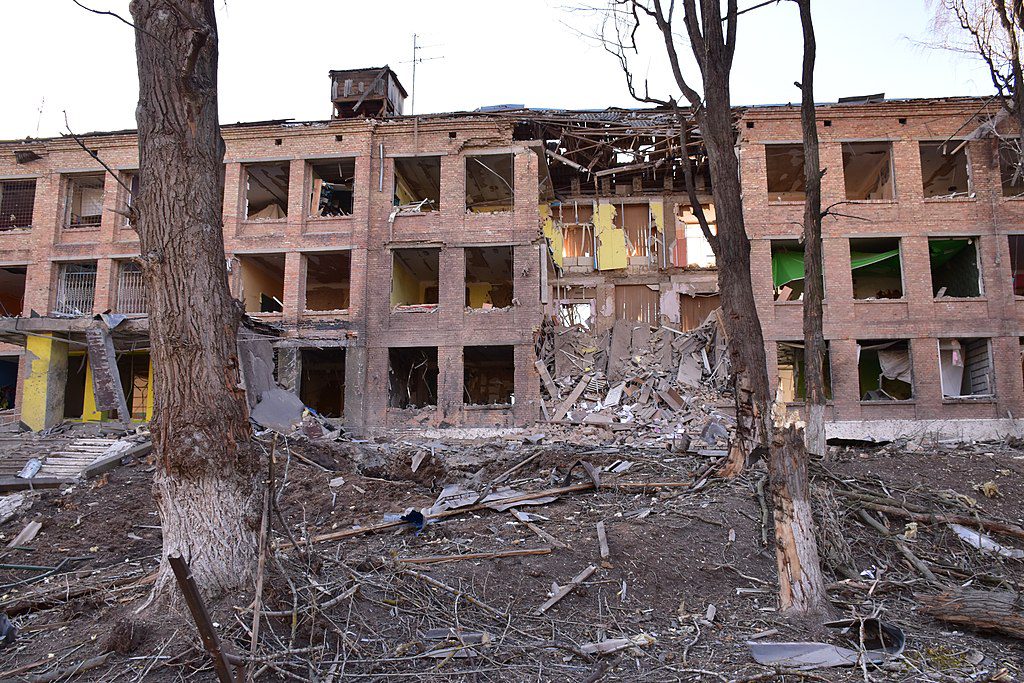
Destroyed_Vasylkiv_Professional_Lyceum_
[[User:Vasyatka1|Vasyatka1]], CC BY-SA 4.0 , via Wikimedia Commons

In the name of the alleged defence of the “Russian World” and the Russian-speaking inhabitants of Ukraine (against their will), President Vladimir Putin has recently involved Muslims in his “special military operation in Ukraine”: Chechen fighters who have gained a reputation as fierce warriors in two wars against Russia, the first from 1994 to 1996 and the second from 1999 to 2014 and mercenaries from Syria.

According to the Middle East Monitor, the Russian Presidency had announced on 18 March that it had “opened the doors for volunteering to fight alongside Russia against Ukraine.” And Defence Minister Sergei Shoigu said Moscow had received a large number of applications from various countries, noting that most of the applications were from the Middle East. Over 1000 in a few days, according to the Middle East Monitor which also said that President Bashar Al-Assad’s regime had promised to pay the Syrian fighters generously.

A number of Muslim organizations in the “Russian world” are taking sides with President Putin in his war against Ukraine.

The Muftiate of the “Luhansk People’s Republic” (LPR) is joining the foes of Ukraine

The Muftiate of the so-called Luhansk People’s Republic (LPR) has just decided to leave the Spiritual Administration of Muslims of Ukraine and to join the Spiritual Assembly of Muslims of Russia (SAMR).

As explained to the Russian Orthodox press agency Interfax on 22 March, “the Muslims of the Luhansk People’s Republic disagree with the radical statements of the head of the Ukrainian Mufti’s Office, Said Ismagilov, who accused Russian Muslims of killing civilians in Ukraine.”

The petition for admission to the Russian Muftiate was signed by ten imams of the “LPR” led by the head of the Spiritual Administration of Muslims of the “Republic” Eldar Gambarov.

The appeal will be considered by the muftis on 29 March at the next meeting of the Mejlis of the Spiritual Assembly of Muslims of Russia. “Muslims living in the territory of the LPR adhere to a similar legal school in Islam. Most Muslims by nationality are Tatars, Bashkirs, Caucasians, children and grandchildren of Donbass miners. In this sense, the request of Muslims for canonical unity with the Spiritual Assembly of Muslims of Russia is completely logical,” the press service of the Spiritual Assembly noted.

Noteworthy is that the heads of three Russian Muslim organizations have quickly backed the rhetoric of Vladimir Putin about the invasion of and the war in Ukraine:

  • Talgat Tajuddin, the head of the Central Spiritual Muslim Board of Russia 
  • Ismail Berdiyev, the head of the Coordination Center of Muslims of the North Caucasus
  • Albir Krganov, the head of the Spiritual Assembly of Muslims of Russia 

Human Rights Without Frontiers has put those names on its blacklist of religious leaders and institutions which the EU, the US and the UK should include in their sanctions, according to the NGO.

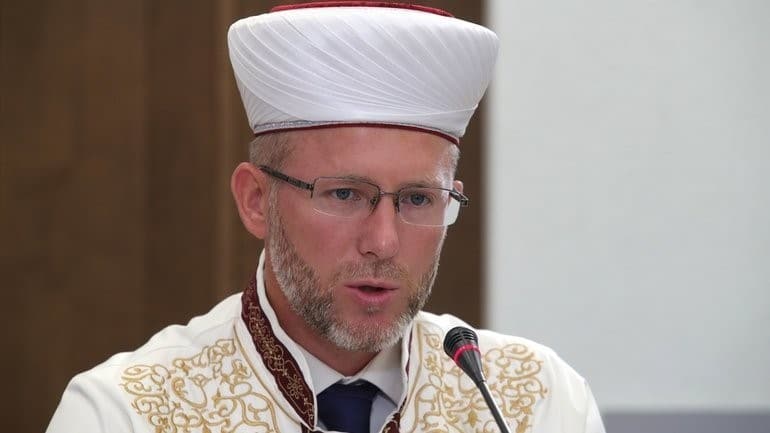
Mufti Said Ismagilov of Ukraine urges Muslims NOT to become mercenaries in Russia’s war against Ukraine

Mufti Saif Ismagilov Ukraine Putin recruits 'Muslims' for his war in Ukraine
Mufti Said Ismagilov of Ukraine urges Muslims NOT to become mercenaries in Russia’s war against Ukraine

In a video message, Mufti Said Ismagilov of the Spiritual Administration of Muslims of Ukraine called on all Muslims of the world not to participate in Putin’s plan to destroy Ukraine.

We have learned that the criminal Russian regime of Putin wants to recruit mercenaries from different countries to use them in the war against Ukraine. I call on Muslims around the world not to take sides with the criminal, aggressor or with Russia, which attacked and is killing us. It attacked our free and independent Ukraine, where Muslims lived happily and freely professed Islam. We are rightful citizens of our country and are now suffering from Russian aggression,” the Mufti stressed.

I call on all the Muslims of the world to take the side of Ukraine. Help us with prayers, donations and support because this is very important for us. I call on all mercenaries from the Middle East and other countries who have volunteered to be on the side of the Russian occupation not to do so. This will bring you neither happiness nor profit, but it will be a great crime,” Mufti Ismagilov urged Muslims.

He assured that the Muslims of Ukraine have already come to the defense of their lands: “We are defending our state and will continue to defend it. I ask Allah to keep all mercenaries, especially Muslims, and all people from making such a big mistake. Be people of peace, justice and kindness.”

Chechen Muslims after President Zelensky, of Jewish faith, and antisemitism of Kadyrov

On 2 March, the Washington Post titled a paper of Timothy Bella “Assassination plot against Zelenski foiled and unit sent to kill him destroyed, Ukraine says.”

A recent alleged assassination plot against Ukrainian President Volodymyr Zelensky was foiled over the weekend and the Chechen servicemen sent from Russia were destroyed, a Ukrainian security leader said Tuesday.

Oleksiy Danilov, the secretary of Ukraine’s National Security and Defense Council, said during a broadcast marathon airing on Ukrainian TV channels that officials were recently tipped off that a unit of Kadyrovites, elite Chechen special forces, was on its way to kill Zelensky. After Ukrainian officials were informed by Russia’s Federal Security Service (FSB), the Chechen special forces were killed Saturday on the outskirts of Kyiv, Danilov said.

In August 2019, OC Media reported that Ramzan Kadyrov caused anger among Israel’s Russian community after making an anti-Semitic statement while addressing Chechens from Jordan, who had been invited by his Government on a cultural visit to the Chechen capital, Grozny.

In his hour-and-a-half speech on 13 August, Kadyrov said that ‘the prophet Muhammad killed the Jews, most of all’. He also called Jewish people ‘the main enemies of Islam’. The meeting was broadcast on Chechen state television. OC Media also reported other similar incidents.

If Chechen Muslims fighting with Putin’s army managed to capture or kill President Zelensky, who happens to be a Jew, this could be a major incident with unpredictable reverberation in the US, Europe and the Middle East.

The silence of Patriarch Kirill of the Russian Orthodox Church

Patriarch Kirill’s blessing of Putin’s war on Ukraine has caused a huge outcry of protest in the world as well as in the international religious community, and also divisions inside the Russian Orthodox Church.

Before the present-day war, the Ukrainian Orthodox Church (UOC) led by Metropolitan Onufriy in communion with Patriarch Kirill claimed 12,000 parishes, which is about a third of all the parishes of the Moscow Patriarchate. The independent Orthodox Church of Ukraine (OCU) led by Metropolitan Epiphanius claimed over 7000 with about 58% of the Orthodox population. It was created in December 2018 and granted autocephaly in January 2019 by the Ecumenical Patriarchate of Constantinople which has 260 million Orthodox worldwide.

Blessing a war the objectives of which are purely political with the hope of getting back a substantial amount of parishes and their rich assets is nonsense as Patriarch Kirill will lose the souls of the Ukrainian Orthodox.

Consolidating the grip of the Russian Orthodox Church in Ukraine, silently accepting the internal displacement of over 10 million Ukrainians and the “cleansing” of religious diversity in Ukraine as in Russia at the price of the involvement of foreign Muslims to do this dirty job is beyond any moral norm.

Although the war in Ukraine is not a religious war, Patriarch Kirill has opened a Pandora box of religious evil geniuses which might escape and lead to a lot of destruction inside and outside. The Patriarch should better listen to his heavenly God than to the voice of Putin.

Moreover, Zelensky recently revealed on CNN that his grandfather and his grandfather’s brothers all enlisted in the Soviet Red Army, and only his grandfather survived. In addition, the parents of his grandfather died when the Nazis burned their village.

Delegations of Canada’s indigenous peoples: ‘Pope Francis listened to our pain’

0
Canada’s indigenous delegations: ‘Pope Francis listened to our pain’ - Vatican News

By Salvatore Cernuzio – “Truth, justice, healing, reconciliation.” – Those words express the goals which delegations from several of Canada’s indigenous peoples came to share with Pope Francis this week, in an effort to heal the pain caused by residential schools.

Two delegations met with the Pope on Monday in successive audiences—one from the Métis Nation and another from the Inuit People. They were accompanied by several Bishops from the Canadian Catholic Bishops’ Conference, with each delegation meeting with the Pope for roughly an hour.

The Director of the Holy See Press Office, Matteo Bruni, said in a statement that the audiences were focused on giving the Pope the opportunity to “listen and to offer space for the painful stories shared by the survivors.”

Path of reconciliation

In his Angelus address on 6 June 2020, Pope Francis shared with the world his dismay at the dramatic news which had come a few weeks earlier, of the discovery in Canada of a mass grave in the Kamloops Indian Residential School, with more than 200 bodies of indigenous people.

On Monday morning Pope Francis met with two delegations of Canada’s indigenous peoples, the first of a series of encounters that will continue over the coming days

The discovery marked a symbol of a cruel past, which sought, from 1880 to the final decades of the 20th century saw government-funded institutions run by Christian organizations, to educate and convert indigenous youth and assimilate them into mainstream Canadian society, through systematic abuse.

The discovery in June 2020 led Canada’s Bishops to make an apology and set up a series of projects to support survivors. The importance of the process of reconciliation is shown by the Pope’s willingness to receive the delegations in the Vatican on Monday and on 31 March, in view of a future papal visit in Canada, which has been announced by not yet officially confirmed.

On 1 April, the Pope will hold an audience in the Vatican’s Clementine Hall with the various delegations and with the representatives of the Canadian Bishops’ Conference.

“Never too late to do the right thing”

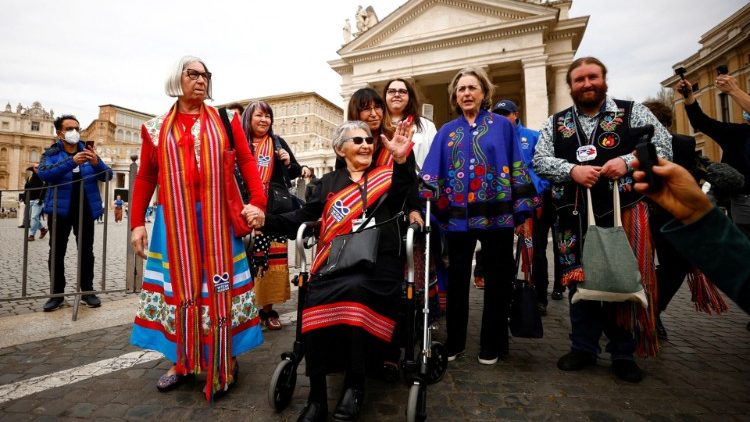
The Pope met first on Monday with members of the Métis Nation. The meeting was filled with words, stories, and memories, as well as many gestures, both on the part of the Pope and of the indigenous representatives who found themselves walking a common path of “truth, justice, healing, and reconciliation.”

The group left the Apostolic Palace accompanied by the sound of two violins—a symbol of the group’s culture and identity.

They then met the international press in St. Peter’s Square to share the details of their morning.

Cassidy Caron, the president of the Métis National Council, read a statement to speak of the “untold numbers [who] have now left us without ever having their truth heard and their pain acknowledged, without ever receiving the very basic humanity and healing they so rightfully deserved.”

“And while the time for acknowledgement, apology and atonement is long overdue,” she said, “it is never too late to do the right thing.”

Pope Francis’ sorrow

The Métis Nation has done its part, said Ms. Caron, to prepare for the papal audience by carrying out the “difficult but essential work” of listening to and understanding the victims and their families.

The results of that work were presented to Pope Francis on Monday: “Pope Francis sat and he listened, and he nodded along when our survivors told their stories,” said Ms. Caron. “Our survivors did an incredible job in that meeting of standing up and telling their truths. They were so brave and so courageous.”

“We have done the difficult work of preparing for our journey, for our conversation with the Pope,” she said. “We have done the work of translating our words to those that he would understand.”

Ms. Caron then expressed her hopes that the Pope and the universal Church will also proceed with the work of translating those words into “real action for truth, for justice, for healing, and for reconciliation.”

“When we invited Pope Francis to join us in a journey for truth, reconciliation, justice and healing, the only words that he spoke back to us in English, much of it was in his language, he repeated truth, justice and healing – and I take that as a personal commitment.”

Several times the president of the Métis National Council repeated the word “pride”.

“We’re celebrating being here together, being here together as one nation and in partnership with our Inuit and First Nations delegates from Canada as well,” said Ms. Caron. “We are still here and we are proud to be Métis, and we invite Canadians to learn alongside us who we are and what our history is in Canada.”

Ms. Caron said she has submitted a request for access to documents held in the Vatican regarding residential schools.

“We did, we are, and we will be continuing to advocate for much of what the Métis Nation needs to be sure to understand our full truth,” she said. “We will be speaking more with the Pope on this at the general audience on Friday.”

Angie Crerar, 85 ans, survivante des pensionnats autochtones.
Angie Crerar

Angie’s testimony

Another person in the group in St. Peter’s Square was Angie Crerar, 85.

With short hair, dark glasses, and a multicolored sash over a black dress, she arrived in a wheelchair but stood up when she shared parts of her story, the same one she told the Pope.

Over the course of 10 years that she and her two little sisters spent in a residential school in the Northwest Territories in 1947, “we lost everything, everything; everything except our language.”

“When we left, it took me more than 45 years to get back what I lost.”

Angie, however, says she doesn’t want to be crushed by past memories, but rather looks to the present.

“We’re stronger now,” she said. “They did not break us. We’re still here and we intend to live here forever. And they are going to help us work with us which for us is awesome. For me it’s a victory, victory for our people for that many years that they lost.”

Regarding her audience with Pope Francis, Ms. Crerar said she arrived feeling nervous, but that she found herself with “the gentlest, kindest person”.

The Pope even hugged her, she said, erasing decades of suffering. “I was standing right beside him, they had to keep me away… It was so wonderful. And he was so kind. And I was nervous, but after he spoke to me, and his language, I didn’t understand him when he was speaking, but his smile and his reaction, his body language, I just felt, man I just love this man.”

Watch a clip from Angie Crerar’s interview

Pope Francis’ peace prayer for Ukraine recalls prophecy 105 years ago about Russia

0
Pope Francis' peace prayer for Ukraine recalls prophecy 105 years ago about Russia

Pope Francis prayed for peace in Ukraine at a ceremony that looked to a prophecy about peace and Russia that stems back more than a century to purported visions of the Virgin Mary to three peasant children in Fatima, Portugal, in 1917.

The significance of the prayers needed some explaining to those unfamiliar with Catholic history.

The Pope on March 25 consecrated Russia and Ukraine to the Immaculate Heart of Mary with a prayer asking for peace in the world, Catholic News Agency reported.

At the end of a penitential service in St. Peter’s Basilica, Francis carried out the act, saying: “Mother of God and our Mother, to your Immaculate Heart we solemnly entrust and consecrate ourselves, the Church and all humanity, especially Russia and Ukraine.

“Accept this act that we carry out with confidence and love. Grant that war may end and peace spread throughout the world.”

Francis invited bishops, priests and ordinary faithful around the world to join him in the consecration prayer, which opened with the pontiff entering St. Peter’s Basilica before an estimated 3,500 people, The Associated Press reported.

‘FREE US FROM WAR’

“Free us from war, protect our world from the menace of nuclear weapons,” the Pope prayed.

It ended with Francis sitting alone before a statue of the Madonna.

There, he solemnly asked forgiveness that humanity had “forgotten the lessons learned from the tragedies of the last century, the sacrifice of the millions who fell in two World Wars.”

In his homily, Francis said that the consecration “is no magic formula but a spiritual act.”

“It is an act of complete trust on the part of children who, amid the tribulation of this cruel and senseless war that threatens our world, turn to their Mother, reposing all their fears and pain in her heart and abandoning themselves to her,” he said.

Since Russia invaded its neighbor on Feb. 24 in what it calls a “special military operation”, the Pope has implicitly criticised Moscow, Reuters reported.

He has strongly condemning what he has called an “unjustified aggression” and denouncing “atrocities,” but he had not mentioned Russia by name.

He used the words Russia and Russians on March 25, although as part of a prayer and a homily.

FORGOTTEN LESSONS

“We have forgotten the lesson learned from the tragedies of the last century, the sacrifice of the millions who fell in two world wars … we have closed ourselves in nationalist interests,” Francis said in the prayer, whose formal title was “An Act of Consecration to the Immaculate Heart of Mary.”

Archbishop Visvaldas Kulbokas, the Vatican envoy who has remained in Ukraine since Russia launched the invasion last month, said before the service, he would read the prayer from an improvised altar in a kitchen in a safe room in the embassy in the capital Kyiv.

In the Portuguese town of Fatima, papal ambassador Cardinal Konrad Krajewski, a close aide of the Pope, read the same prayer near the spot where Mary is said to have appeared repeatedly in 1917 to three shepherd children.

The Fatima story dates to 1917, when according to tradition, siblings Francisco and Jacinta Marto and cousin Lucia said the Virgin Mary appeared to them six times and confided three secrets, AP’s Nicole Winfield reported.

The first two described an apocalyptic image of hell, foretold the end of World War I and the start of World War II, and the rise and fall of Soviet communism

The link with Fatima is essential to understanding the religious and political significance of Friday’s consecration Reuters reported.

The Church says that in the apparition of July 13, 1917, Mary asked that Russia be consecrated to her, otherwise it would “spread her errors throughout the world, causing wars and persecutions of the Church” and that “various nations will be annihilated”.

After the 1917 Russian revolution and during the Cold War between the West and the Soviet Union, the “Message of Fatima” became a rallying point for anti-communism in Christianity.

Similar acts of consecration of the world were performed by past popes in 1942, 1952, 1964, 1981, 1982 and 1984.

On March 27 Pope Francis said the “cruel and senseless” war in Ukraine, now into its second month, represents a defeat for all humanity, in his weekly Angelus address, Vatican News reported.

The Pope launched another powerful appeal for an end to the “barbaric and sacrilegious” act of war, warning that “war does not devastate only the present, but the future of a society as well.”

Hee pointed to statistics that show half of all Ukrainian children are now displaced, the Pope said this is what it means to destroy the future, “causing dramatic trauma in the lives of the smallest and most innocent among us.”

Glasgow’s museum of religion has been saved from closure – here’s why it’s important for multicultural Britain

0
Glasgow’s museum of religion has been saved from closure – here’s why it’s important for multicultural Britain

Glasgow’s St Mungo Museum of Religious Life and Art is unique within the British Isles. It is the only museum dedicated to the dialogue between art and religion, housing religious artefacts from different traditions and eras.

From its opening in 1993, the museum was involved with different religious communities, turning it into a space of spiritual experience and genuine interfaith dialogue. It is not simply a museum that houses artefacts, but a living symbol of religious diversity and multicultural Britain.

In March 2020 the museum, like many others, closed due to COVID-19. But, as restrictions lifted and places started to reopen, St Mungo was threatened with permanent closure following funding cuts and a significant loss of income. Good news came on March 4, in the form of promised funding from Glasgow City Council. It was a response, in part, to a powerful petition.

Museums enrich the cultural life of a place and concerted efforts have been made following the the pandemic to reflect on their value, and the deprivation caused by their closure. But St Mungo is more than a museum, and its uniqueness prompts reflection.

Fight back against disinformation. Get your news here, direct from experts

Get newsletter

It contains religious artefacts from different religious traditions and periods in displays that provide contextual understanding of religion. The artefacts function educationally but are also interpreted ritually/devotionally by those within the respective faith communities.

This means they open up a space for spiritual engagement and worship. This came about partly because of the active involvement of faith communities in the creation of the museum, in particular the six world religions that are practised in Scotland: Buddhism, Christianity, Hinduism, Islam, Judaism and Sikhism.

From the outset, the purpose entailed more than the compilation of artefacts to create a dynamic space of lived religion. The installation of partitions, plinths and other similar devices enabled appropriate viewing spaces and fostered spiritual engagement.

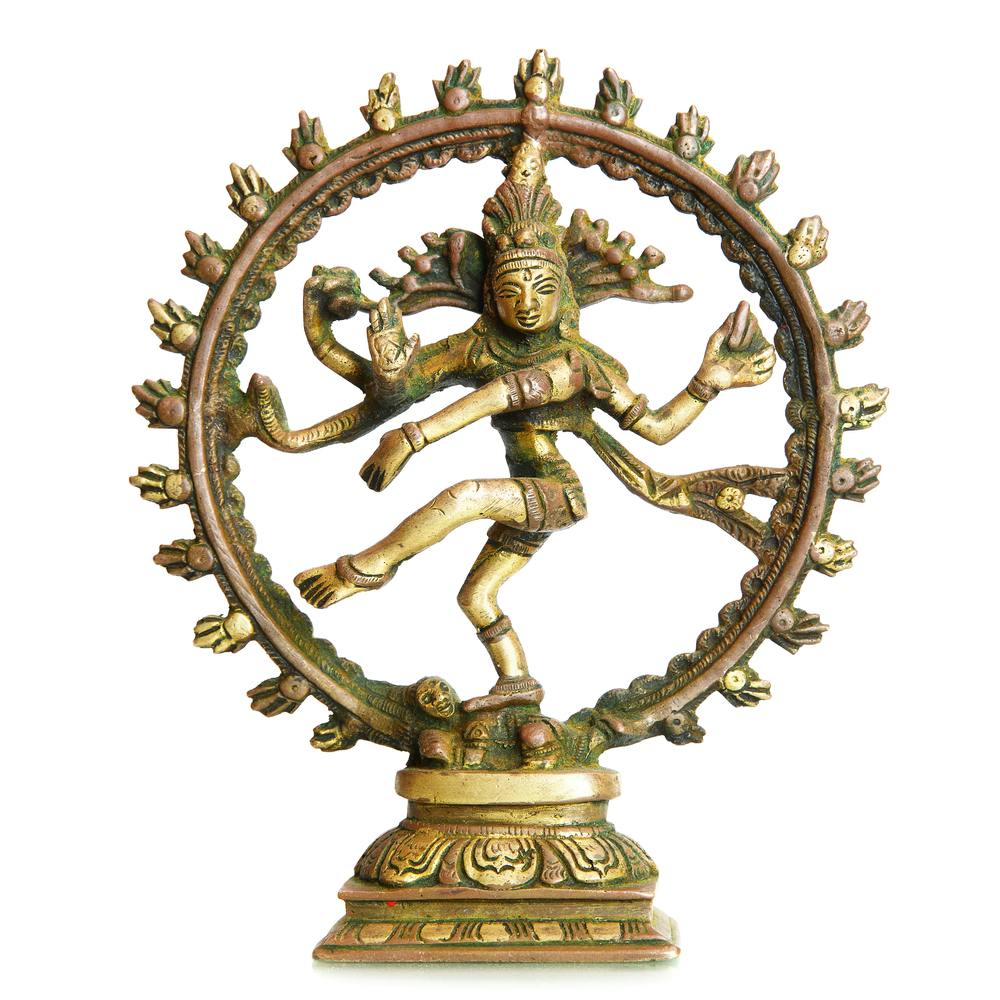
A small golden statue of Hindu god Lord Shiva of Nataraja.
Lord Shiva. Roman Sigaev/Shutterstock

The raising of the bronze statue of Lord Shiva of Nataraja off the floor on to a plinth is a valuable case in point. As a sacred Hindu artefact and object of devotion, it had to be treated with reverence. Recommended by the Hindu community, it conveyed the importance of statues of deities being elevated from the floor.

This raises the question of the boundaries between the aesthetic and the sacred, pointing to the multifaceted nature of exhibits. Members of the Jewish community helped acquire the painting The Sabbath Candles by Dora Holzhandler. The painting brings together the different threads of the symbolic and spiritual act of the lighting of Sabbath candles with the gathering together of family in worship.

The museum is quintessentially important as a symbol of interfaith dialogue. From its inception, individual faith communities and educational advisors were consulted throughout various processes, including the acquisition of artefacts that represent their faiths or practices, the reach of which was global.

While religion was widely explored historically and geographically, the museum also centred on the experience of religions active within Scottish life. Creative decisions were made about featuring religions that opposed figurative or iconographic representation. One such example was the painting The Attributes of Divine Perception, by the Islamic artist Ahmed Moustafa, which unifies the great Islamic traditions of calligraphy and geometry to evoke the greatness of God.

An abstract painting showing a cube cut away in steps.
The Attributes of Divine Perception by Ahnmed Moustafa. St Mungo Museum of Religious LIfe and Art

A living museum of religion

Religion will always be a contentious subject. St Mungo’s status as a living museum of religion has made it subject to attack, with dissension over questions about representation. Criticism of the exclusion of particular faiths, such as Baha’i, or their lack of representation in a museum of religion is inevitable, but has been addressed in proposals for temporary exhibitions.

So too is the exploration of the more negative aspects of religion including its role in war and the oppression of minority groups. One of the most fraught instances of this involved the overturning of the museum’s Shiva statue by a Christian evangelical, armed with bible in hand – his “weapon” of choice.

The global engagement of religion in museum collections is not new, but what is truly unique about St Mungo is the dynamic and consultative way in which the local faith communities were integral to the shaping of what the museum has come to stand for conceptually. This is denoted by the second part of its title: Religious Life and Art – that is, the objects used by individuals in their daily worship.

The museum approached each community in turn to discuss the acquisition of works from their faith, how they should be displayed, and other pertinent issues. This was seen to be more authentic in that it respected the fact that each religion had different needs and concerns, and did not impose a one-size-fits-all strategy.

This stand-out approach should be observed by those working to decolonise the museum space. It remains a model for other museums of this kind in the challenges it set itself and the questions it sought to answer.

And in keeping with its mission of reflecting religion as it is lived in ordinary everyday lives, it will continue to evolve, its efforts ongoing to foster understanding, tolerance and common ground.

Rina Arya Professor of Visual Culture and Theory, University of Huddersfield

Disclosure statement

Rina Arya does not work for, consult, own shares in or receive funding from any company or organisation that would benefit from this article, and has disclosed no relevant affiliations beyond their academic appointment.

University of Huddersfield provides funding as a member of The Conversation UK.

First Person: I know what it’s like to go hungry as a child

0
First Person: I know what it’s like to go hungry as a child

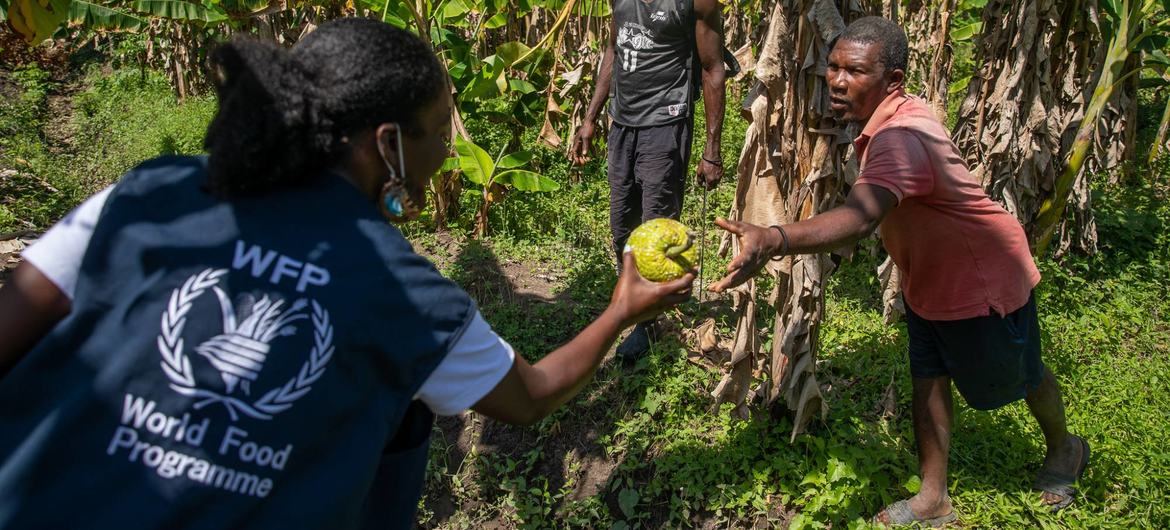
An agronomist working for the World Food Programme (WFP) in Haiti tells UN News that, like the people she helps today, she remembers what it’s like to go hungry as a child.

As a child, Rose Senoviala Desir lived in the northern Haitian city of Cap Haitien and received hot meals as part of the WFP‘s school feeding programme, but went hungry at the weekends when there was no school. She says feeding young Haitians in this way influenced her decision to one day work with WFP.

“My mother was a teacher and had to travel a long way to her work, so she was unable to cook for me and three brothers until very late in the day. I was fortunate as I attended a school where the WFP provided free hot meals to children. I received these meals from the age of five or six to 12 years old.

My brother, who is five years younger than me, did not get school meals, so I went to the kitchen after all the children has eaten and asked to take some food home for him. On the weekend, we did not receive those hot meals, so we sometimes didn’t eat, so I know like what it’s like to be hungry. And I understood how much more difficult it was to study on an empty stomach. My mother spent all the money she had on sending her children to school.  It made me realize how important WFP was for my family and for my country.

I was always interested in plants, animals, and farming. In the school holidays, I would always go to my grandparents’ house which was outside the city and help on their small plot of land. I learned how to raise goats, as well as chickens, ducks and turkeys and I went to the fish farm with my grandfather to choose fish that we would buy for sale or to eat ourselves.WFP's Rose Senoviala Desir meets farmers in the north of Haiti.WFP Haiti/Theresa PiorrWFP’s Rose Senoviala Desir meets farmers in the north of Haiti.
I was also taught how to grow and harvest breadfruit, which is a delicious fruit that my grandmother sold at the market. I would help to sort through beans my grandparents had grown; the white beans got the best price followed by the red ones and then black, so my job was to sort them out for sale.

I learned such a lot helping my grandparents and enjoyed it so much that building on that knowledge, by studying agronomy at university, was an obvious choice for me. I worked as a housekeeper to a doctor so I could afford to pay the fees, and I graduated in 2014.

I have always been keen to learn, but also to share my knowledge, and have trained a lot of women on agricultural issues. I realized that what I wanted most from life was to help vulnerable people, even to save lives, so my values really aligned with the values of WFP.

My work now is focused on building resilience amongst rural populations, helping them to adapt to the changing climate and supporting their efforts to protect their land and livelihoods by building structures which will prevent erosion and help irrigation. Most of this work was completed in the last year and already we are seeing an improvement in terms of crops standing up to adverse weather conditions as well as increasing yields.”

First published by UN

Tibetan activists protest against visiting Chinese FM Wang Yi in New Delhi

0
Tibetan activists protest against visiting Chinese FM Wang Yi in New Delhi

By  — Shyamal Sinha

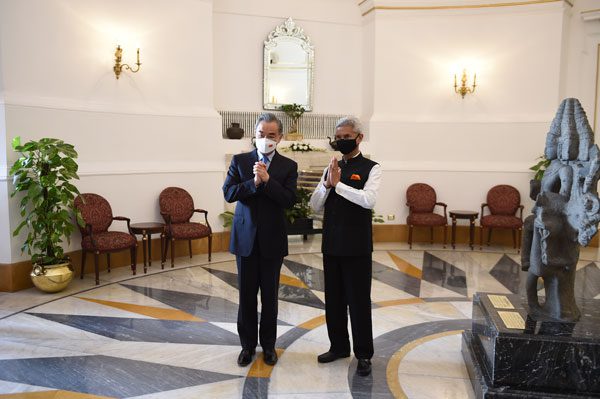
Seven Tibetan protestors were detained for shouting slogans outside the Hyderabad House in New Delhi during the Chinese Foreign Minister Wang Yi’s official meet with Indian minister of External Affairs Dr. S Jaishankar on Friday. Hours later, all activists who were held at Mandir Marg Police station were released around 6pm as soon as the Chinese minister Wang Yi left the Indian capital.

The visit took place under an unusual cover of secrecy. The Ministry of External Affairs’ standard protocol for high-level visits is to make a prior announcement in coordination with the visitor’s foreign office.

There was no public announcement about the visit – either by India or China. Even after Wang Yi landed in Delhi and photos were published all over the media, there was no acknowledgment from the Indian or Chinese governments.

When asked why this happened, Jaishankar told the media that typically, such announcements were made at mutual convenience. “For whatever reason, the Chinese did not want this set of visits which Mr. Wang Yi did, to be announced earlier. So since we did not have a mutual agreement, we did not make our announcement,” he said.

There was no comment from the Chinese side on Jaishankar’s assertion that Wang Yi’s visit was kept deliberately below the radar.

With Wang Yi having attended the Organisation of Islamic Cooperation summit in Islamabad, cross-border from Pakistan was also on India’s list of discussion points. “It did come up, in terms of my sharing with him, what is the Indian view of the concerns that we have in respect of Pakistan and, of course, what were some of the positions taken during the OIC meeting”.

On Wednesday, India had reacted strongly to Wang Yi’s reported endorsement of OIC’s views on Kashmir.

“I explained to him why we found that statement objectionable. So, it was a subject discussed at some length. There was a larger context as well. You know, I conveyed that we hoped that China would follow an independent policy in respect of India, and not allow its policies to be influenced by other countries and other relationships,” said Jaishankar.

“There was no contact with them since their arrest three hours ago. However, both the activists from SFT and others from Tibetan Youth Congress have now been released,” activist Tenzin Phakdon from SFT-India told Phayul. The Chinese foreign minister and state councillor landed in New Delhi on Thursday, marking the first high ranking Chinese leader to visit India since the standoff along the Line of Actual Control (LAC), and the clash between the two sides at the Galwan Valley in June 2020.

The activists had previously demonstrated at the airport with placards reading “Wang Yi, you are not welcome!”. Tenzin Lekdhen from SFT wrote, “Wang Yi has no right to talk on the Indo-Tibet border; Tibet’s independence is India’s security.” Tibetan parliamentarian Choedak Gyatso told ANI, “It’s important that the Tibetan issue is raised by both sides. Such a visit by the Chinese foreign minister is a good sign. It’s essential for the two giant Asian countries to maintain positive ties.”

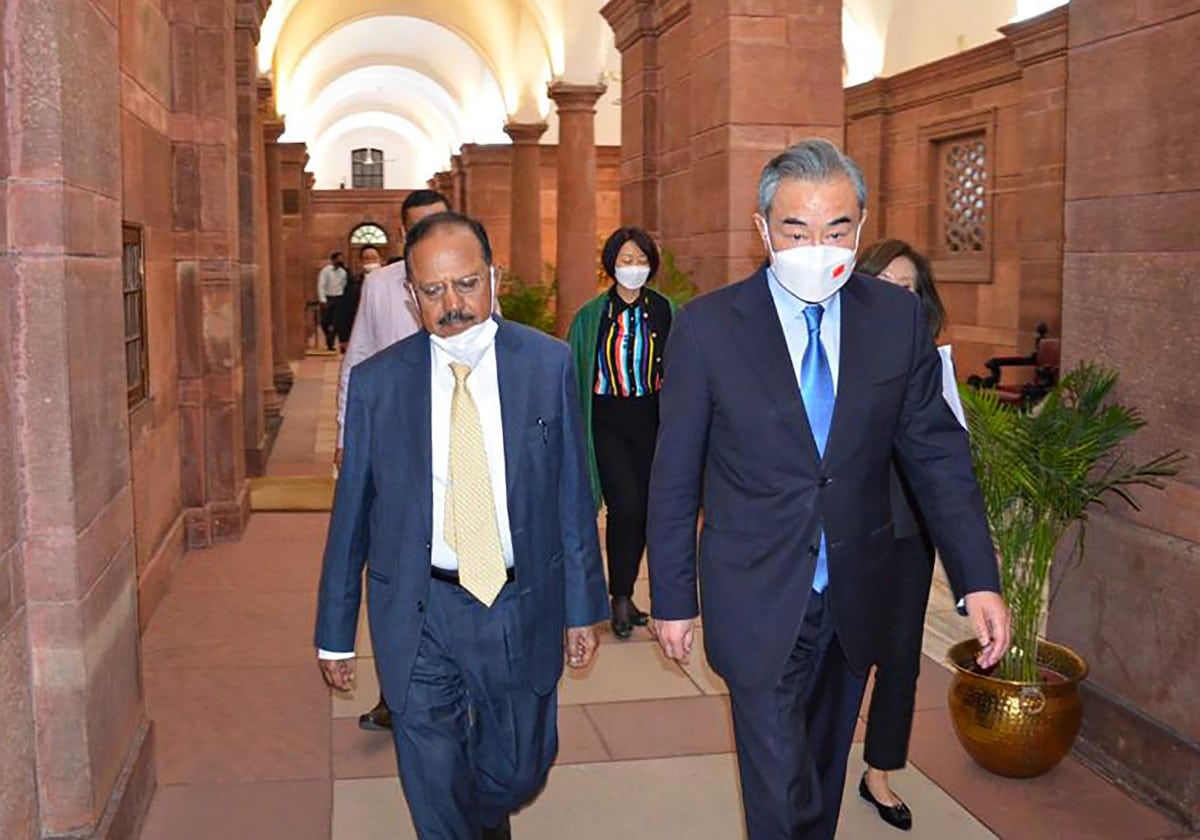
Despite the protest and the subsequent arrests, diplomats from both sides seems to have brushed aside the Tibetan issue. The news reports today suggested that during the meeting with Chinese foreign minister, national security adviser Ajit Doval stressed the need for “complete disengagement” on Line of Actual Control (LAC) to allow the bilateral relationship to take its natural course, according to sources.

2022 3img25 Mar 2022 PTI03 25 2022 000047B Tibetan activists protest against visiting Chinese FM Wang Yi in New Delhi

China’s foreign minister Wang Yi meets with national security adviser Ajit Doval, at the South Block, in New Delhi, Friday, March 25, 2022. Photo: PTI

Government sources stated that China invited Doval for the next round of meeting of Special Representatives. NSA responded that he was ready to visit China “after immediate issues are resolved successfully”.

Food security: Commission steps up support for global action to transform food systems via eight Global Coalitions

0
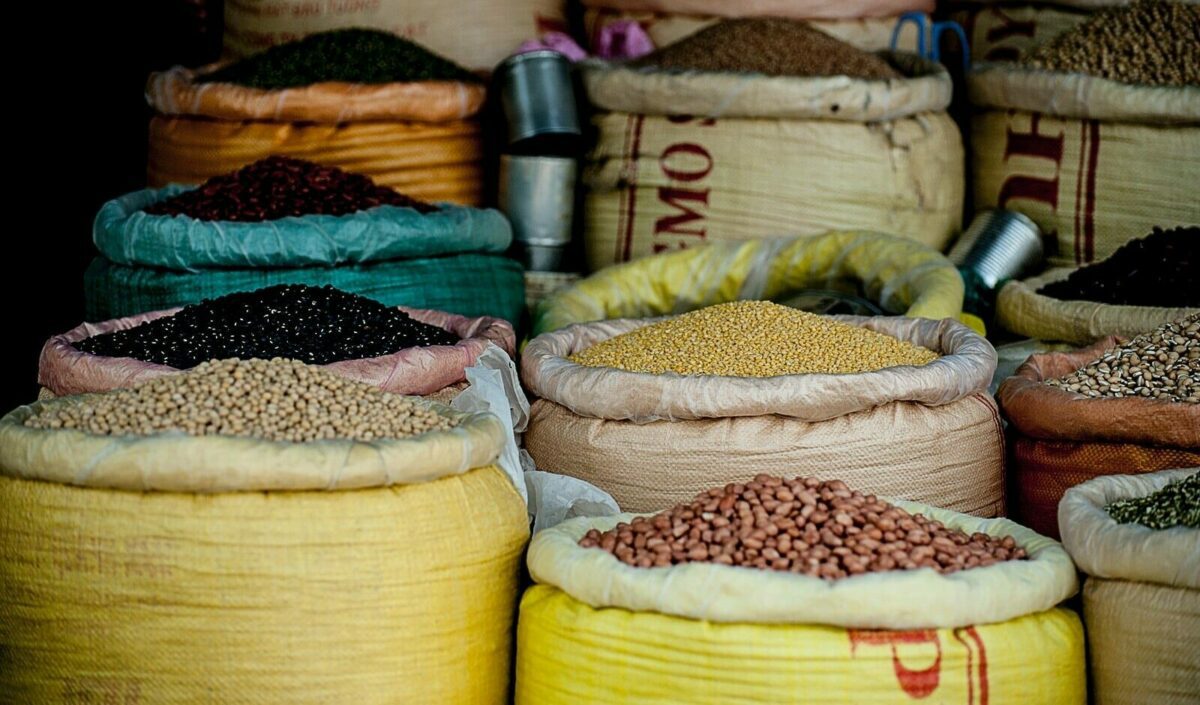
assorted food in socks

In light of the dire food security situation and high food prices, after two years of COVID-19 pandemic and the consequences of the Russian invasion of Ukraine, the Commission is today stepping up its support to the transformation of food systems by actively engaging in eight global Coalitions for Action. These will assist partner countries in their efforts to transform food systems and help to advance the Farm to Fork Strategy agenda internationally. The decision to actively engage in these eight voluntary alliances for collective action is a follow-up to the Food Systems Summit held on 23-24 September 2021 in New York. The alliances gather national representatives, civil society organisations, researchers and international organisations to achieve transformation action in the field of food security. The Commission will be a major partner in eight coalitions:

  • Food is never waste will support countries in developing a suite of context specific interventions, ranging from policies and regulations to voluntary initiatives, to halve food waste by 2030 and reduce food losses by at least 25%.
  • Healthy Diets from Sustainable Food Systems for Children & all will address three issues: malnutrition in all its forms; unsafe food; and the environmental impact of food production. For instance, it will promote healthy diets with a higher plant-based contribution.
  • School Meals Coalition will focus on improving the quality and expanding the scale of school meals programmes globally as a platform to reach communities. The Coalition intends to link school meals with provision of healthy food by local farmers and sees school feeding as part of social protection schemes. School feeding can have a positive effect on enhancing school enrolment and attendance.
  • Aquatic and Blue Foods aims to realise the full potential of sustainable aquatic, foods – such as fish, shellfish, aquatic plants and algae, captured or cultivated in freshwater or marine ecosystems – to help end malnutrition and build nature-positive, equitable and resilient food systems.
  • Agro-ecology aims at scaling up agro-ecological practices and value chains, which hold the potential for more inclusive and sustainable food systems. The focus is on supporting innovation, making use of local and scientific knowledge.
  • Zero Hunger will advocate for hunger reduction and better align existing public and private sector resources for hunger reduction. The Coalition will back investments that have proven positive effects on small farm livelihoods, such as participation in farmers’ organisations, extension services for women farmers, vocational programmes for rural youths, storage and cold chains.
  • Fighting food crises along the Humanitarian-Development-Peace nexus aims to create the conditions and enabling structures for an approach to food systems resilience in fragile contexts, such as anticipatory action and development of shock-responsive social protection schemes.
  • Sustainable Productivity Growth focuses on technology and innovations for agricultural productivity growth while addressing climate change challenges. It will provide a platform for sharing best practices, identifying knowledge gaps and research opportunities.

The Commission will work closely with Member States, UN agencies, civil society and other partners in the selected coalitions to enhance collective action in favour of a sustainable transformation of food systems.

Members of the College said:

Commissioner for International Partnerships, Jutta Urpilainen, said: “The Russian invasion of Ukraine is having food security effects throughout the world. The war will further deteriorate an already dramatic situation in many parts of the world. Existing food crises are expected to be exacerbated, with the impact most felt by those most vulnerable. Today more than ever, we must invest in resilient and sustainable food systems, through a resolute multilateral approach to support partner countries. This is why we have decided to engage in eight Coalitions for Action, which will contribute to protect and reinforce food security. I am especially moved to join the School Meals Coalition because of the critical role of school nutrition in education and child development.

Commissioner for Crisis Management, Janez Lenarčič, said: “With each day of Russian aggression against Ukraine, the number of Ukrainians that are left without food is rising. Moreover, with global ramifications of this unjustified aggression, including on rising food prices, it is imperative we do our utmost not to forget other crises in the world and the most vulnerable people who are already facing critical food insecurity. The EU will do its part, including by strengthening our partnerships and applying all possible synergies as to prevent what could turn into the worst humanitarian food security crises of this century. I am particularly glad to support the Zero Hunger and the Fighting Food Crises in a nexus approach coalitions, which could further amplify our efforts as a Team Europe to address the current food and nutrition crises and prevent future ones.”

Commissioner for Agriculture, Janusz Wojciechowski,added: “The Russian aggression in Ukraine is not only a violation of international law, but is also a threat to international food security. As the future of our food security relies upon resilient and sustainable farming systems, we must work together to advance systems that are productive for society, profitable for farmers, and protective of our environment. I therefore welcome the Commission’s active engagement in these global coalitions, in particular those for “Sustainable Productivity and “Agro-ecology”. We will use EU research and innovation to harness new knowledge, technologies, and nature-based solutions to help secure the future of our food and farming.

Commissioner for Health, Stella Kyriakides, said: “This Russian invasion of Ukraine is affecting the health of thousands of civilians and brings a profoundly negative impact on food security at global level. The climate and biodiversity crises, COVID-19 and the war in Ukraine require that we accelerate the transition to resilient and sustainable food systems. These eight coalitions are a tangible action to deliver this transition, covering the whole food chain from primary production to food transformation and consumption. I support fully the goals of the coalitions aiming at ensuring that healthy and nutritious food from sustainable food systems is accessible for all and at reducing food loss and waste. Working and acting together on these topics is the solution to overcome insecurity and put our planet on the path to sustainability.”

Commissioner for Environment, Oceans and Fisheries, Virginijus Sinkevičius,added: “Food production is a necessity as it sustains our life, and so does nature. We have to be mindful of the environmental impact of our food and promote producing and eating habits that are healthy and lead to resilience and sustainability, which is a straight way to a secure food for billions of people across the globe. Fisheries and aquaculture also have a key role to play in providing food security and nutrition. With our policies at home and our engagement in the “Aquatic and Blue Foods” coalition, we are making sure that we support healthy and sustainable choice of aquatic foods globally.”

Commissioner for Innovation, Research, Culture, Education and Youth,Mariya Gabriel,said: “The scientific contribution and engagement by the Commission have been pivotal in the preparation of the Coalitions. Engaged directly with the Summit’s Scientific Group, the JRC has put its expertise, knowledge, data, and analysis to the service of the Coalitions buildingFurthermoreas an EU contribution to the UNFSS process, DG Research and Innovation established a high-level expert group to explore the needs and options to strengthen the international science policy interface for improved food systems governance; whose recommendations will be finalised by May 2022.”

Background

After two years of COVID-19 pandemic, and most recently the Russian invasion of Ukraine and subsequent war, aggravate an already very dire food security situation, with very high food prices and increasing numbers of food insecure and malnourished people. In September 2021, more than 161 million people in 42 countries were acutely food insecure. Nearly one in three people in the world does not have access to adequate food and for about 3 billion people the costs of a healthy diet was out of reach.

The EU is a major humanitarian and development actor in food and nutrition security, providing substantial financial and political support. In terms of development cooperation, in the 2014-2020 period, the EU devoted over €10 billion to improve food security for the poorest and most vulnerable, to help eradicate hunger, and better address malnutrition. In the 2021-27 international cooperation programme (NDICI-Global Europe), food systems are a priority area in about 70 partner countries.

The engagement by the Commission in eight coalitions is a follow-up of the United Nations Food Systems Summit that took place on 23-24 September 2021. The Summit put the need of transforming food systems and making them more sustainable, while delivering healthy, nutritious and affordable food, high on the global agenda. The EU will continue to be active in this multilateral context and pursue the Farm to Fork agenda globally. The-Farm to Fork Strategy is at the heart of the European Green Deal with aims at making food systems fair, healthy and environmentally friendly. Solid scientific evidence is also key to the Commission´s support to the Coalitions for action, which are one of the event’s main outcomes.

Portuguese Catholic Church investigates Sexual Abuse against Children

0
Portugues Catholic Church investigates Sexual Abuse of Children

Give voice to silence – Independent Commission for the Study of Sexual Abuse against Children in the Portuguese Catholic Church

On November 2021, the Portuguese Episcopal Conference decided to conduct a study about sexual abuse cases against children from 0 to 18 years old inside the Portuguese Catholic Church. 

This commission will examine cases from 1950 to 2022 to find testimonies of child sexual abuse in the Portuguese Catholic Church. The Commission recognizes the “wave of indignation” in Portugal and several other countries, calling for not only an investigation into these crimes but also for greater support for the people affected by the misconduct of several clergymen. In the Commission letter of intent, Pedro Strecht a psychiatrist who is the coordinator of the project, says:

“(…) driven by the search for historical truth, about what could have happened to countless minors in the field of sexual abuse in different contexts of society, especially within the Catholic Church itself, in a vision that its own top representative, His Holiness Pope Francis, has successively asked to be the object of unequivocal clarification, in an attitude of absolute recognition of the existence of these crimes (…)”

Any person that has suffered abuse can contact the Commission and give their testimony, “counting from the outset on the team’s professional secrecy and the guarantee of their anonymity”. The testimony can be made through an online questionnaire or via phone call.

The Commission is totally independent and autonomous from “any external force”, but  thanks “the Portuguese Catholic Church, namely D. José Ornelas, President of the Episcopal Conference, who, following the guidelines dictated by His Holiness Pope Francis, has placed complete trust in the constitution of this team, as well as the availability to provide the necessary means for the work with impartiality and independence, which is why we all accept to be part of the risk of this tremendous challenge.”

The project will last a year. It started in January 2022, and it will cease its investigation in December 2022. The Commission aims to prepare and present a report that will be “a broad contribution to the future consolidation of the promotion and protection of all minors, as described in the Universal Convention on the Rights of the Child”.

The Commission announced in February that it received 214 valid testimonies during its first month of activity.

For more information:

darvozaosilencio.org

Wang Yi’s visit to India: New Delhi should tread carefully as friendship with China can wait

0
State Councilor and Foreign Minister Wang Yi held talks with Indian External Affairs Minister Subrahmanyam

The Chinese Foreign Minister’s visit should be seen in the context of the Ukraine war, which has created differences in the top party leadership. Further, the economy of the Middle Kingdom is not doing well.

In recent months, several observers have compared the present political situation, including the crisis in Ukraine, to a new Cold War. This assumption seems wrong; the present state of world affairs is far more complicated than that.

Some of the most powerful nations of the planet may still use Cold War phraseology, like John Foster Dulles did in the 1950s: “If you are not with us, you are against”. But today, many nations, including India, have a more measured reaction, particularly after the unacceptable Russian invasion of Ukraine.

Many call India’s stance ‘neutral’; for example, noted commentator R Prasannan observed in The Week that Prime Minister Narendra Modi “stayed neutral in Russia’s war on Ukraine, aware that it is not at all ‘immoral’ to stay neutral when you are asked to choose between scoundrels. Rather, it is virtuous to be neutral.”

In this polarised context, it is interesting to watch China’s position, especially when Wang Yi, the Chinese Foreign Minister has just landed in Delhi with a ‘message’.

From the start, the West has been panicky about a new alliance between China and Russia. But so far, nothing is definite.

Early February, Vladimir Putin was the first Head of State received by Xi Jinping in two years. The Russian President ostensibly went to attend the opening of the Winter Olympics in Beijing. The encounter resulted in the 4 February Joint Statement which mentioned a ‘no limits’ partnership between China and Russia. That was, of course, before Putin sent his armies into Ukraine.

A flimsy marriage of convenience?

Since then, Beijing, through the declarations of its Foreign Minister Wang Yi, seems to have put ‘limits’ on its friendship with Moscow; it is certainly not an unconditioned friendship anymore.

War on the Rock, a platform for analysis and commentary on foreign policy and national security issues rightly calls China’s strategic assessment of Russia, ‘More Complicated Than You Think’.

Contributor Yun Sun mentioned the ‘seemingly enthusiastic joint statement’ issued after President Putin met his Chinese counterpart Xi Jinping in Beijing: “One could assume China would be supportive of Russia’s assault on Ukraine. The truth, however, is quite different.”

The author explained that the nature of the Sino-Russian relationship is not easy to define: “Is it as sturdy as an alliance? Or as flimsy as a marriage of convenience? The truth is the relationship is neither and both.”

Without giving a definitive answer to the question, the point remains that China’s position has been evolving fast during the past few weeks.

The Xi-Biden Summit

To have a clearer idea of what could happen with Wang Yi’s visit to Delhi, it is necessary to look at the two-hour virtual summit between US President Joe Biden and his Chinese counterpart Xi Jinping.

In his introduction, Xi noted that the international landscape has experienced major new developments and the prevailing trend of peace and development is facing serious challenges. He added: “The Ukraine crisis is not something we want to see.”

Xi argued that countries “should not come to the point of meeting on the battlefield. Conflict and confrontation are not in anyone’s interest, and peace and security are what the international community should treasure the most.”

A position far away from the ‘no limits’ friendship with Russia.

One commentator rightly wrote: “I think it’s quite clear that China has picked a side: China.”

So did India earlier, to the great displeasure of Western powers.

However, Xi used two Chinese sayings to put some blame on the West and defend Russia: “Let he who tied the bell on the tiger take it off” — which referred to the intransigence of the US (and Ukraine before the War) — and “It takes two hands to clap.”

The White House agreed that the video call between the two Presidents was constructive: “They directed their teams to promptly follow up and take concrete actions to put China-US relations back on the track of steady development, and make respective efforts for the proper settlement of the Ukraine crisis.”

This may take time, in the meantime, India has to find its place between extreme positions and while condemning the Russian armies’ entry into territory of Ukraine, Delhi needs to keep its own interests in view. Incidentally, the Russians are faring very poorly on the battlefield, something which has implications/lessons in case Beijing plans any misadventure in Taiwan.

Meetings after Meetings

In the meantime, Delhi witnesses a flurry of VIP visits, mostly to exhort the Modi Sarkar to side with Ukraine. The first was Japan’s newly appointed Prime Minister Fumio Kishida. At the invitation of Prime Minister Modi, Kishida spent two days in Delhi for the 14th India-Japan Annual Summit.

Then, a virtual meeting between Modi and Prime Minister of Australia Scott Morrison followed the first Virtual Summit of June 4, 2020 when the relationship was elevated to a Comprehensive Strategic Partnership.

That is not all, two important US officials — Victoria Nuland, under-secretary, and Donald Lu, assistant secretary — will be in Delhi for consultations ahead of the 2+2 dialogue in April (when the Israeli Prime Minister will pay his maiden visit to the capital).

One should not forget UK Foreign Secretary Liz Truss, expected to be in Delhi later this month.

Wang Yi’s Visit

In this context, it is interesting to watch the Chinese Foreign Minister’s visit to Delhi. It is crucial for the simple reason that India has an ongoing military confrontation with China (which has been ignored by the West).

On 11 March, the 15th round China-India Corps Commander Level Meeting was held at Chushul-Moldo border meeting point. According to a joint statement: “The two sides carried forward their discussions from the previous round held on 12th January 2022 for the resolution of the relevant issues along the LAC in the Western Sector. They had a detailed exchange of views in this regard, in keeping with the guidance provided by the State Leaders to work for the resolution of the remaining issues at the earliest.”

Both sides agreed to maintain the security and stability on the ground in the Western Sector in the interim and dialogue via military and diplomatic channels “to reach a mutually acceptable resolution of the remaining issues at the earliest.” This does not solve the issue.

Wang’s visit is also important for different reasons. Rumours have it that the Chinese Foreign Minister could bring a ‘gift’ to India. Remember, during the Spring of 2017, when the Chinese ambassador in India promised some ‘early harvest’ on the boundary, it was followed by the Doklam episode a couple of months later. Always beware of Chinese ‘gifts’!

On the boundary issue, there could be a disengagement offer at Depsang, Demchok and Hot Springs (though Beijing has already announced that it has withdrawn its troops from the latter place). In any case, it shouldn’t be called a ‘gift’ as it was the PLA that changed the status quo in the first place in May 2020.

More importantly, one has to realise that the Ukraine war has destabilised China and created differences in the top Party leadership. The Nikkei in Tokyo, wrote: “It is safe to assume that a diversity of opinion remains among China’s top leaders over Ukraine. It is even likely that some standing committee members are questioning whether it is wise to stick to the current position of siding with Putin.” It added: “Chinese netizens were vocal. One said what Russia is doing in Ukraine is equivalent to what Japan did in the northeastern part of China (in 1932 Japan created the puppet state of Manchukuo). Russia’s invasion is hardly a development Chinese people can support.”

Further, the economy of the Middle Kingdom is not doing well. Li Keqiang, the Premier, has been seen fire-fighting during the Twin Meetings earlier this month; Xi seems to have abandoned for the time some of his grandiose projects.

Finally, the 20th Congress is looming on the horizon; great changes will take place in the Central leadership. Xi has to watch his steps; he is reminded every day that China has very few friends. It is in these circumstances that Wang Yi will land in Delhi.

For India, there is only one thing to do — to keep its own interests in sight and design accordingly its own foreign policy. Friendship with China can wait.

The writer is a noted author, journalist, historian, Tibetologist and China expert. The views expressed are personal.