The Legal Stop is a well established online business trading since 2010 under the website www.thelegalstop.co.uk, providing high quality, easily accessible and affordable document templates and fixed fee legal services. In 2016 The Legal Stop updated its branding and launched a new website in 2017 www.legalstop.co.uk.
The Legal Stop has grown dramatically since its inception in 2010 and as such is now considered by many start-ups, entrepreneurs, and SMEs to be the ‘go-to’ place for expert affordable pay as you go fixed fee legal services. Our ethos is focused on providing more for less, we are known for our fresh approach without the stuffiness of traditional law firms.
Part of the company founder and director, Debora Daffara’s, vision when setting up The Legal Stop was to offer a unique service which enables clients’ legal matters to be managed from start to finish for an affordable fixed cost. To deliver on this vision, The Legal Stop provides complete legal packages which include legal advice, document drafting and follow-up guidance – all of which is delivered by regulated, qualified and insured specialist lawyers adding immediate value to clients.
When asked about what makes the company such a valuable resource for start-ups and SMEs, Debora stated, “Large corporations can access City lawyers who are specialists in their legal field and charge by the hour thanks to large budgets. We bridge the gap, providing access to expert lawyers at affordable fixed fees so that our clients receive value for money immediately”.
The Legal Stop is now offering the following new legal services, undertaken by specialist solicitors and barristers, all for a fixed fee:
Law Support – Packaged Legal Services. We devise personalized legal packages based on a client’s needs; clients pay only for what they need, when they need it.
Free ask a lawyer a question – as a complimentary service, people are able to ask legal questions and get them answered by experienced, fully-qualified lawyers free of charge.
Bespoke Document Drafting– an expert lawyer will draft contracts and documents tailored to client’s specific requirements and provide related legal advice.
Contract Review – documents and contracts are reviewed by a qualified lawyer who will provide legal advice on the areas of concern in plain English.
Employment Health Check– this offers an opportunity for organisations to have their compliance and employment documents reviewed and updated.
Free Request a Template Service – people can request us to draft a document template that is not featured on our large portfolio of online documents at no extra cost and no-obligation.
When asked about plans for the future, Debora was keen to emphasise that The Legal Stop will continue to grow, offering additional services as more lawyers join the team.
“We already started expanding internationally; over the next few years we will provide our clients with access to international lawyers to assist them with cross-jurisdictional legal matters”.
Beware of unrelated website
We have reports from clients and members of the public of a website with a name and branding similar to our but providing legal aid services, which is causing some level of confusion as The Legal Stop does not provide legal aid.
JHB LAW LTD, the company trading as Lawstop, was only incorporated in 2017 and until 31 March 2018 was a dormant company according to documents filed at Companies House. Lawstop.co.uk was only registered in 2018 according to records held with Whois.
“It is astounding that a law firm providing legal aid decided to trade under a business name so similar to ours, an already existing and well established company. We have started taking formal steps towards a resolution of this matter, we are sorry for any inconvenience caused to our clients”.
If you have any queries about this issue, or have a similar experience please let us know using our web contact form.
Press release distributed by Pressat on behalf of The Legal Stop , on Tuesday 22 March, 2022. For more information subscribe and follow https://pressat.co.uk/
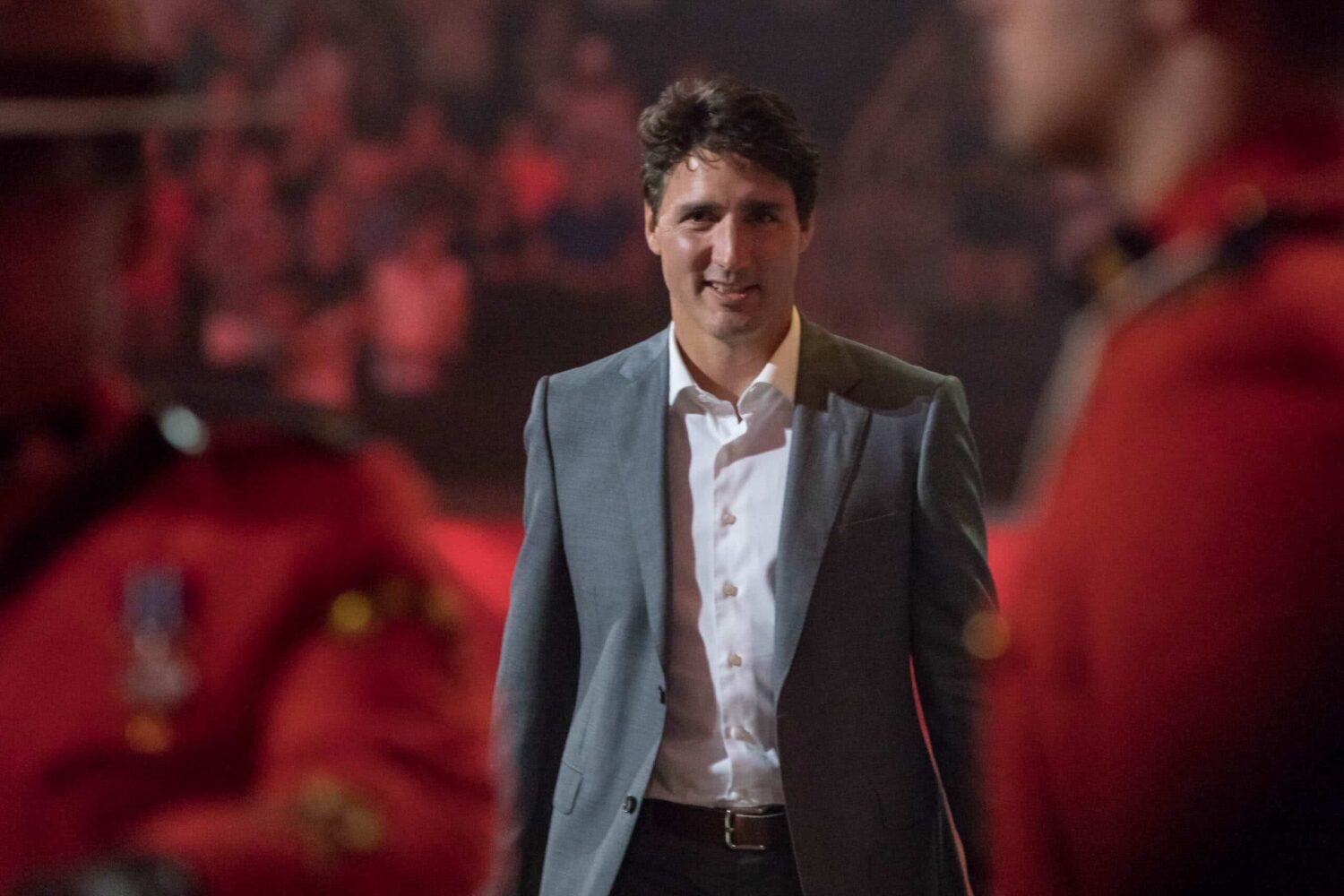
2017 Canada Summer Games, CC BY 2.0 , via Wikimedia Commons
CANADA, March 21 – The Canadian Prime Minister, Justin Trudeau, will travel to Brussels, Belgium, from March 23 to 25, 2022, to engage with European Union, NATO and G7 leaders to build on our coordinated response to Russia’s illegal and unjustifiable invasion of Ukraine.
On March 23, the Prime Minister will address the European Parliament where he will speak on peace and security, defending democracy, and transatlantic cooperation for the benefit of people in Canada and the European Union. This will be the Prime Minister’s second address to the European Parliament on the close Canada-European Union partnership.
On March 24, the Prime Minister will meet with leaders from Allied countries at the NATO Summit to further coordinate support for Ukraine, and discuss further strengthening NATO’s deterrence and defence measures.
The Prime Minister will then attend the G7 Heads of State and Government Meeting where leaders will discuss the current situation in Ukraine and its wider global impacts, including food security and energy supply.
While in Belgium, Prime Minister Trudeau will meet with the President of the European Commission, Ursula von der Leyen.
Prime Minister Trudeau travelled to the United Kingdom, Latvia, Germany, and Poland earlier this month to continue building key partnerships to respond to Russia’s invasion of Ukraine. While in Europe, the Prime Minister announced more support for Ukraine including new sanctions against Russia, additional humanitarian aid, and the provision of more military equipment to Ukraine.
The Prime Minister continues to engage with world leaders on a regular basis to support Ukraine as it defends its people, its sovereignty, and its territorial integrity from this illegal and unjustifiable invasion.
Quote
“Russia’s illegal and unjustifiable invasion of Ukraine is an attack on democracy, international law, human rights, and freedom. Canada is working in close collaboration with our allies and partners in defending democracy against authoritarianism and standing with the Ukrainian people.”The Rt. Hon. Justin Trudeau, Prime Minister of Canada
International Day for the Elimination of Racial Discrimination, 21 March 2022: Declaration by the High Representative on behalf of the EU
In a Europe shaken by the Russian Federation’s unprovoked and unjustified military aggression against Ukraine and its population, the EU confirms, on the International Day for the Elimination of Racial Discrimination, the firm commitment to act against all human rights violations and to combat racism, racial discrimination, xenophobia and related intolerance worldwide.
This same day, dedicated to the memory of the Sharpeville massacre, we convene member states, partner countries, international organizations and civil society to the second EU Anti-racism Summit, to delve deeper into the fight against racism and persistent structural inequities and to take stock of what has been achieved since the adoption of the EU anti-racism action plan.
2022 is the European Year of Youth, and the Summit will pay special attention to the critical role young people play in combating racism and discrimination and will look at critical areas for action such as law enforcement, environmental racism, and racism in education and in culture.
The EU anti-racism action plan calls for a better enforcement of EU law, fair policing, protection of minority groups and stronger national measures defined in national action plans. This is an opportunity to review our policies and activities under a non-discrimination and equal opportunities perspective and to launch new initiatives in sectors such as education, health and social inclusion.
Racist hate speech and hate crime must be stopped. To this end, we are strengthening the implementation of the laws already in place and extending the criminal law response at EU level to face new challenges.
Cooperation with our partners is central to EU strategies and policies against racial discrimination. This translates into multiple actions, ranging from promoting the ratification and the implementation of the International Convention on the Elimination of All Forms of Racial Discrimination to strengthening support to civil society organisations’ engagement against xenophobic attitudes towards migrants.
As reaffirmed by the European Council in its recent Recommendation on Roma equality and Conclusions on racism and antisemitism, the EU is fully committed to eliminating racism in all its forms. We will join efforts with the relevant institutions, organizations and individuals to ensure that every human being can enjoy the same dignity and rights.
Billions of humans, animals and plants rely on a healthy ocean, but rising carbon emissions are making it more acidic, weakening its ability to sustain life underwater and on land.
Plastic waste is also choking our waters, and more than half of the world’s marine species may stand on the brink of extinction by 2100.
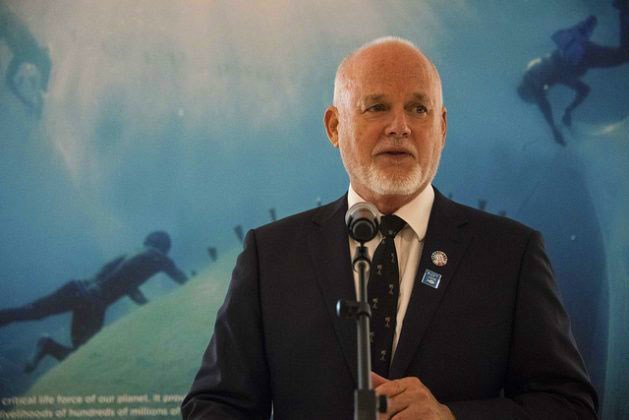
But it is not all bad news. According to the UN Secretary-General’s Special Envoy for the Ocean Peter Thomson, momentum for positive change is building around the world, with people, especially youth, mobilizing to do their part to reverse the decline in ocean health.
The UN Ocean Conference which will take place from 25 June to 1 July, in Lisbon, Portugal will provide a critical opportunity to mobilize partnerships and increase investment in science-driven approaches.
It will also be the time for governments, industries, and civil society to join forces and take action.
With 100 days to go until the event, UN News spoke with Mr. Thomson about the event, and the current situation of our oceans.
UN News: What are UN Ocean Conferences for? What exactly happens in there?
Special Envoy Peter Thomson: When SDG 14 (to conserve and sustainably manage the resources of the ocean) was created back in 2015, along with the other 17 Sustainable Development Goals, it didn’t really have a home. It wasn’t like the health SDG, which had the World Health Organization or the agriculture one, which had The Food and Agriculture Organization (FAO), and so on.
So, the advocates for SDG 14, particularly the Small Island Developing States and some of the coastal States and other allies, said that we needed some kind of discipline to ensure that the implementation of SDG 14 was on track and, if it wasn’t, a way how to bring it on track.
So that’s how the first UN Ocean Conference came into existence in 2017, mandated by the UN General Assembly. Now we have the second UN Ocean Conference, which is, as you said, happening in Lisbon this year. So, this is the process that keeps SDG 14 honest. And that honesty, of course, is extremely important because, as the mantra goes, there is no healthy planet without a healthy ocean.
UN News: How much have we advanced in ocean conservation since the last Ocean Conference?
Peter Thomson: Definitely not enough. There was a target for 2020 to have 10 per cent of the ocean covered in Marine Protected Areas (MPAs), and we have only reached eight per cent in 2022. This highlights the fact that we need to do a lot more work on this, because Marine Protected Areas are an essential part of saving the health of the ocean.
For the UN Biodiversity Conference in Kunming, China, this year, there is a proposal, which some 84 countries are supporting, for a “30 by 30” target. In other words, 30 per cent of the planet protected by 2030, which of course includes parts of the ocean. So that’s a lot more ambitious than what we currently have in our SDG 14.5 Target, which is the one that sets out that 10 per cent. I believe this is achievable and we are moving in that direction.
UN News: Climate change is a matter of survival for all of us, but especially for Small Island Developing States. As a Fijian yourself, what would you say to make people relate to the devastating situation that millions of pacific islanders are facing?
Peter Thomson: The news is not good; you’ve seen the latest IPCC report. I’m a grandfather, and what I care about, and what my friends in Fiji care about, is the security of our grandchildren.
We understand that it’s not just Small Island Developing States, it’s people living in river deltas – think of Bangladesh or the Mekong – and it’s people living in cities that are built on low alluvial foundations. Security does not look good for them, in a world that is two to three degrees warmer, which is where we’re currently heading.
So that’s why you’ll find that Small Island Developing States, Fiji amongst them, are at the forefront of the battle to transform our consumption and production patterns so that we don’t go to that much warmer world. “1.5 to stay alive”, as the saying goes. That’s still our ambition. It’s diminishing every day, but we’re calling for that ambition to be high.
It’s a matter of survival, not just for our grandchildren, but also for our cultures, that have existed for thousands of years in those locations.
UN News: What’s the way forward? What concrete actions can be taken?
Peter Thomson: Well, look at the COP26 UN climate conference. See what came out of that, and where we’re heading for the next conference, COP 27 in Sharma Sheikh this November.
It’s about cutting down the use of fossil fuels and coal burning activities. Every belch that comes out of every one of those chimneys is another nail in the coffin of those countries, of those environments I’ve just spoke about. So that’s the big call to transform.
And let’s be honest with ourselves: it’s on every one of us. As we come out of this COVID-19 pandemic, are we going to just go back to what we were doing before? or are we going to try and eat more sustainably, travel more sustainably, shop more sustainably. Has the pandemic taught us a lesson? Hopefully it has. And we’ll be building back not just better, but we’ll be building back greener and bluer.
UN News: What do you think is hindering the progress towards ocean conservation right now?
Peter Thomson: Well, progress for me in terms of ocean protection is all about implementing SDG 14. This has quite a few targets: It’s about pollution; It’s about overfishing; It’s about the effects of greenhouse and gas emissions; It’s about getting marine tech in place, and so on.
I think it’s very doable. I don’t lose sleep on whether we’re going to achieve this or not. We are going to achieve this by 2030.
I also think of targets like SDG 14.6: ridding the world of harmful fisheries subsidies that lead to overfishing, and lead to illegal fishing and so on. That is a very doable act, and the time to do it is at the World Trade Organization Ministerial conference in June this year.
And who’s going to do it? The member States of this world. And if they fail, they fail all of us. Now, are they going to do it? I’m sure they will, because they’ve looked at Nairobi and saw that member States there grasped that nettle of consensus and said, ‘Let’s do the right thing by people on planet. Let’s get this treaty to ban and control plastic pollution. Let’s bring it into reality’.
As a result, they’ve an intergovernmental negotiating committee to get that treaty up and running, and they will finish their work on that by the end of 2024.
I’m so excited about it, because when you talk about marine pollution, which is SDG Target 14.1, 80 per cent of that pollution is plastics. So, by getting this treaty in place, an internationally binding treaty to combat plastic pollution, we’re going to hit that target, no problem.
UN News: Can you give us some examples of ‘ocean solutions’?
Peter Thomson: Look, there are 1000 solutions, and a fleet of them will be launched at the UN Ocean conference in Lisbon. Rather than going into individual ones, I would say be prepared for that fleet.
But one that I particularly like talking about is nutrition. We all know that the sea provides very healthy nutrition compared with some of the other things that are produced on land.
We don’t eat what our grandparents ate. We have a totally different diet, which is, in fact, why obesity is such a problem around the world. But our grandchildren will be eating very differently from the way we eat.
They won’t be eating big fish, for example. They will still be eating fish, but there’ll be small fish which are grown in sustainable aquaculture conditions. They’ll be eating a lot more algae. And that may not sound appetizing to you, but you’re already eating it in your sushi with the nori that’s around your sushi. That’s seaweed, right? That’s algae.
The biggest source of food in the world really is unexploited by anybody other than whales, phytoplankton. We will be eating some kind of marine tofu which is made from phytoplankton. We’ll be farmers of the sea rather than hunter-gatherers, which is what we still are. It’s the only place we still are, which is out on the ocean. So those sorts of transformations are underway, but we have to invest in the transformations, and we have to start doing that now.
Peter Thomson: I think you have to think first about source to sea, which is very important. You see people throwing cigarette butts into the gutter. They don’t think about the fact that the filter of that cigarette is microplastic and it’s heading in one direction, which is down the drain into the sea eventually, and that’s more microplastics going into the ocean.
Microplastics, of course, are coming back to them when they’re eating their fish and chips because they are being absorbed into life in the ocean. That cycle is going on, whether people realize it or not.
So, I think ‘source to sea’ really important, but that relates to our industries, to agriculture, to the chemicals that are coming down the same drains and rivers out into the sea and poisoning the lagoons that we rely on for healthy marine ecosystems.
So, what can we do? We can just adopt better behaviour as human beings in terms of pollution. Look at your plastic use and say, Do I really need all this plastic in my life? I’m old enough to remember a life with no plastic, it was very nice.
You can make your own decisions about your nutrition. I remember my wife and I, when we were living here in New York, we looked at the latest report about what beef was doing to the Amazon, and we looked at a photo of our grandchildren and said, what do we love more? our hamburgers or our grandchildren? And we decided then and there – it was about five years ago – to give up beef.
Do you need to own a car? A lot of people do need to own cars, but my wife and I, we’ve been living in cities now for quite a while and we haven’t had a car for decades. You rely on public transport and walking, which, of course, is the best way to get around.
Individuals have to make the right choices that make this world a sustainable place.
UN News:What do you hope to accomplish in the upcoming Ocean Conference?
Peter Thomson: In Lisbon, we want to generate, outside of the formal process, the excitement of new ideas, of innovation, and that will take place in the side events.
I’m very confident that there’s going to be this innovation, which is going to be visible in that carnival type atmosphere that you develop around the central core of the conference.
Of course, science-based innovative partnerships is the other big thing, public and private and north and south and east and west. This is a universal moment. A UN conference is always a universal moment.
The first ocean conference in 2017 was a game changer in terms of waking the world up to the Ocean’s problems. I think this conference in Lisbon in June is going to be about providing the solutions to the problems that we’ve alerted the world to. And I’m very confident that those solutions emerge when we get there.
This interview has been edited for length and clarity
Taxes on sweetened drinks: WHO explains how to make them an effective health measure
Taxes on sugar-sweetened beverages (SSBs) can help countries fight noncommunicable diseases and make people healthier – but this measure can be more effective if taxes are developed in collaboration between health and finance authorities.
This is one of the findings from the new WHO report “Sugar-sweetened beverage taxes in the WHO European Region”, which examines the experience of the 10 Member States who were first in the Region to introduce the measure.
“Taxation is a cost-effective policy that can improve health at national level. By introducing taxes on sugary drinks, countries can reduce consumption levels of these beverages and lower the associated risks of overweight and obesity, diabetes and other associated diseases,” said Dr Kremlin Wickramasinghe, Acting Head of the WHO European Office for the Prevention and Control of Noncommunicable Diseases and one of the authors of the new report.
“However, today SSB taxation is underused in the WHO European Region – only 19% of countries have adopted the measure.”
The WHO report focuses on the experiences of Belgium, Finland, France, Hungary, Ireland, Latvia, Monaco, Norway, Portugal and the United Kingdom. Only those 10 of 53 countries of the WHO European Region have implemented SSB taxes on a national level.
Flexible tool for countries’ needs
The report’s findings are aligned with a recent WHO study published in the European Journal of Public Health and highlight the flexibility of SSB taxation practices and the opportunities they give to decision-makers.
The reviewed practices show that SSB taxes were always levied on industry and not on consumers. But the design and specifics of the tax instrument differed by country.
Some Member States chose to focus on the economic effects of the SSB taxes, others explained the adoption explicitly as a health measure.
The design of taxes was also diverse. Hungary, Latvia and the United Kingdom, for example, introduced differential excise rates with thresholds based on the sugar content of beverages.
How to introduce effective taxes: WHO findings
There are many different patterns of SSB tax used across the Region and the WHO report highlights some tips that can help decision-makers to turn taxes into an effective health measure:
The tax base needs to reflect the health burden of consumption, as well as cultural patterns of the country.
Design and implementation of SSB taxes would be more successful if finance and health policy-makers developed these measures together, in constructive collaboration.
After first implementing SSB taxes, authorities can continue to improve them to align with new evidence and experiences of SSB taxation in other countries.
Introducing any form of SSB taxes faces active opposition from the food and beverage industry. But with high government interest in adopting such policies, and with limits set on industry involvement in the SSB taxes discussion, the impact of the opposition of producers could be minimized;
Support from nongovernmental organizations, academics and other social actors is an important asset in countering industry opposition and fostering SSB tax adoption.
“The aim of the WHO study was to inform decision-makers and support the effective implementation of SSB taxation across our Region,” added Dr Wickramasinghe. “WHO-recommended policy actions lead to longer lives and better well-being in every country of the WHO European Region.”
The WHO European Programme of Work 2020–2025 aims to reduce health inequities, empowering countries to introduce effective measures to improve the health of people across the Region.
Vienna (Austria), 21 March 2022 — In 1960, police in Sharpeville, South Africa killed 69 people at a peaceful demonstration against apartheid ‘pass laws’. This event led to the launch and annual observance of the International Day for the Elimination of Racial Discrimination every 21 March. In 1979, the United Nations (UN) General Assembly decided that from each 21 March, a week would be dedicated to demonstrating solidarity with all peoples experiencing racial discrimination and those fighting it.
This year’s theme is ‘voices for action against racism’. In a statement commemorating the international day, the UN Secretary-General António Guterres said: “Racism continues to poison institutions, social structures, and everyday life in every society. It continues to be a driver of persistent inequality. We must listen to those experiencing injustice and ensure their concerns and demands are at the centre of efforts to dismantle discriminatory structures,” he added.
The UN Office on Drugs and Crime (UNODC) is working hard to amplify these voices, taking the lead for the criminal justice pillar of the UN Network on Racial Discrimination and Protection of Minorities, which involves more than 20 UN departments, agencies, programmes and funds.
This year the network released a statement commemorating both the international day and the thirtieth anniversary of the 1992 Minorities Declaration, and outlining how the network can better make heard the voices of those confronted with racism and other forms of discrimination. This, along with the growing number of ratifications of the International Convention on the Elimination of All Forms of Racial Discrimination, shows increasing global commitment to ending racial discrimination.
“For many years, voices have spoken of racial discrimination in the hands of law enforcement and criminal justice institutions around the world. Data and the global outcry that followed the tragic murder of George Floyd have amplified those voices,” said the network’s criminal justice pillar lead, Anna Giudice of UNODC.
In the criminal justice system, UNODC is working to ensure that people who experience racial discrimination as victims of hate crime and xenophobia have equal access to justice. UNODC also strives to grant equal access, for those accused or suspected of committing crime, to a justice system free from discrimination on racial grounds.
Equal access to justice for all webinar
UNODC organised a webinar at the start of 2022 for UN staff on combating racial discrimination and enhancing protection of minorities in criminal justice systems. In the webinar, Dominique Day, the Chair of the Working Group of Experts on People of African Descent and Rita Izsák-Ndiaye, member of the Committee on the Elimination on Racial Discrimination spoke of the need for diversity and representation of minorities within the criminal justice system, for more disaggregated data, and for displaying tenacity and rigour to address racial discrimination and ensure access to justice for all.
The Office of the High Commissioner for Human Rights (OHCHR) also outlined its four-point agenda towards transformative change for racial justice and equality. Additionally, the United Nations Children’s Fund (UNICEF) presented its work to augment the voices and experiences of children from Afro-descent, indigenous and minority groups in justice systems through its Reimagine Justice for Children agenda.
UNODC outlined several of its programmes to ensure access to justice for all during the event. One partnership with institutions in Mexico trains groups of organized indigenous women, public service personnel, law enforcement and social workers to detect possible cases of human trafficking. In Brazil, UNODC is developing a guide to promote racial equality in the fields of electronic monitoring services, alternatives to imprisonment, and psychosocial assistance to people in custody. UNODC continues to step up its work in assuring equal access to justice for all and combating hate crime through policy, tool development and joint programming.
“They act as natural filters, providing clean air and water, and they are havens of biological diversity…[and] help to regulate our climate by influencing rainfall patterns, cooling urban areas and absorbing one-third of greenhouse gas emissions,” explained Secretary-General António Guterres.
Commemorated annually on 21 March, the international day reminds everyone that the sustainable management of forests and their resources, are key to combating climate change, and to contributing to the prosperity and well-being of current and future generations.
“They provide many communities and indigenous peoples with livelihoods, medicines, sustenance and refuge,” said the UN chief.
Relentless deforestation
Even though these priceless ecological, economic, social and health benefits, global deforestation continues at an alarming rate.
While commitments to halt the wanton destruction of trees have rung out “loud and clear”, and slowing has been registered in some regions, “each year we still degrade and destroy some 10 million hectares of forest,” he said.
“It is essential that the world implements the recent Glasgow Leaders’ Declaration on Forests and Land Use and other instruments designed to protect our forests,” underscored the Secretary-General.
Recommit to healthy forests
He said now was the time for “tangible and credible action on the ground.”
This means ending the unsustainable consumption and production patterns that jeopardize forests and providing support to sustainably manage forests in the countries and peoples who need it.
“On this International Day of Forests, let us recommit to healthy forests for healthier livelihoods,” he concluded.
Background on the day
The General Assembly proclaimed 21 March the International Day of Forests in 2012 to celebrate and raise awareness of the importance of all types of forests.
At all levels, countries are encouraged to organize activities involving forests and trees, such as tree planting campaigns.
UN Syria investigators fear an air of déjà vu and a replication of Syrian terror in Ukraine and call on world leaders to do everything in their power to prevent Ukraine from suffering a similar fate to Syria.
“Some of you may be wondering what lessons can be learned from the Syrian crisis – in particular the role of Russia – when we look at what is happening in Ukraine today,” questioned the Chairman of the UN International Independent Investigation Commission, Paulo Sergio Pinheiro.
“We see similar practices in the conflict that we see now in another country” than Syria, said the UN investigator to the press, while noting that Russia is only assisting the authorities in Syria, unlike its offensive in Ukraine.
According to the Commission of Inquiry, the failure to respect human rights and international humanitarian law in Syria has eroded respect for fundamental norms. This has exposed “the deadly cynicism of armed actors, where force makes right and denial and obfuscation are used to deflect blame or criticism and undermine accountability.”
Commenting on current events from the Syrian perspective, Pinheiro recalled the attempts of the warring parties to resolve the Syrian conflict militarily over the past decade. A situation that has allowed “the violation of almost all fundamental human rights, the commission of almost all crimes against humanity listed in the Rome Statute and almost all war crimes”.
“We can only hope that world leaders are doing everything in their power to prevent a similar fate for Ukraine,” the Brazilian lawyer said. “We have not seen any change in the Russian presence” in Syria at the moment, said another member of the Commission, Hanny Megally. He said he was “very worried” that the same violations seen in Syria would be found in Ukraine.
In the meantime, the war in Ukraine should not make us forget the daily life of Syrian civilians, with a conflict that has killed “hundreds of thousands of people”. For the UN investigators, ten years of “devastating” conflict have also resulted in the displacement of half the pre-war population. More than 100,000 people are also missing.
More broadly, the “plight of the Syrian people” is not just a warning for other conflicts, as is often presented in the media. “But it is a situation that still requires concerted diplomatic attention, humanitarian action and compassion for all Syrians, whether they are in Syria, refugees or asylum seekers abroad,” insisted Paulo Sergio Pinheiro.
Violence continues, although some areas are spared active fighting
In addition, while parts of Syria are no longer actively fighting, violence against civilians continues throughout the country. These include “bombings in the northwest, north and northeast, targeted killings, illegal detentions and torture,” said the president of the Commission.
On the ground, the reporting period (July 1-December 31, 2021) was marked primarily by intensified shelling in the northwest and skirmishes between the Turkish-backed Syrian National Army (SNA) and the Syrian Democratic Forces in the northeast.
The Commission documented serious violations of basic human rights and international humanitarian law by parties to the conflict, including war crimes and ongoing patterns of crimes against humanity.
In Idlib and western Aleppo, in the northwest, residential areas were indiscriminately shelled from the ground by pro-government forces. “Among the many incidents we investigated, a bride was killed at her wedding with four young sisters and children were bombed on their way to school,” said Hanny Megally.
UN investigators call for review of international sanctions
Civilians are generally attacked with sophisticated, high-precision weapons systems and air strikes – including strikes where Russian aircraft have been identified flying over the targeted areas.
More broadly, in the face of a “devastating humanitarian crisis,” and a collapsing war economy compounded by the Covid-19 pandemic, the UN investigators called for a review of international sanctions that affect some of the most vulnerable of a Syrian civilian population that has endured more than ten years of conflict.
[…] “When sanctions are not adequately reviewed, they can lead to further shortages and hamper humanitarian assistance, for the most vulnerable populations, with a devastating impact on all but the political and economic elite,” warned the chairman of the Commission of Inquiry, Paulo Pinheiro.
Between inflation and fears about the “negative consequences” of the Ukrainian crisis
With more than half of the pre-war population displaced and more than 90% of the population living in poverty, Syrians face a new abyss as violence escalates, from military skirmishes and bombings to kidnappings and killings outside of conflict zones. Beyond the active front lines, the daily lives of Syrian women, men and children are increasingly difficult and dangerous.
Twelve million people are food insecure, and an unprecedented 14.6 million people are in need of humanitarian assistance. In addition, Syria is now facing its worst drought in decades.
In addition, the Commission of Inquiry was concerned about the “negative consequences” of the Ukrainian crisis, which would only contribute to further pressure on the prices of foodstuffs such as wheat. Inflation is already skyrocketing and was already close to 140% at the beginning of the year.
Under these conditions, the Syrian government has begun to ration basic necessities, including fuel.
“Import prices have skyrocketed and we must remember that most of Syria’s wheat imports come from Ukraine or Russia,” Pinheiro argued, noting that this risks pushing more Syrians into poverty. “These are the abysses facing the Syrian people, caught between the warring parties and everywhere repressed and exploited by the armed actors.”
The UN is not aware of any biological weapons programme being conducted in Ukraine, the Organization’s disarmament chief told the Security Council once more on Friday, responding to fresh allegations by the Russian Federation, that it had evidence to the contrary.
Izumi Nakamitsu, High Representative for Disarmament Affairs, spoke at an emergency meeting called by Moscow in the midst of its continuing invasion of neighbouring Ukraine, following that delegation’s circulation of new documents it says back up its claims.
The Council last discussed the issue of alleged biological materials in Ukraine in a meeting on 11 March.
Russian Ambassador Vassily Nebenzia, told the Council that his delegation is in possession of new evidence of a United States-Ukrainian agreement to conduct biological weapons research on Ukrainian territory, dating back as far as 2005.
He has circulated proof of that agreement to the Council, he said, including signed evidence of direct US funding to Ukraine, amounting to $32 million.
While the US continues to assert that the country does not operate in any biological laboratories in Ukraine, “the facts show otherwise”, he said, claiming that Ukrainian authorities in fact gave the US permission to carry out dangerous experiments in return for free travel to international conferences.
Today’s evidence points to studies conducted on Crimean-Congo Fever, leptospirosis and other dangerous pathogens, he said.
He also cited proof of studies into how such illnesses could pass from bats into humans, adding that use of biological weapons could be “easily dressed up as naturally occurring.”
‘Bizarre conspiracy theories’
Responding to those allegations, US Ambassador, Linda Thomas-Greenfield, recalled that the Council already heard a “tirade of bizarre conspiracy theories” on biological weapons at its meeting a week ago.
“There are no such labs, not near Russia’s border, not anywhere,” she said.
Instead, Ukraine hosts several public health facilities, proudly supported by the United States, the World Health Organization (WHO) and other Governments and international institutions.
She voiced deep concern that Friday’s meeting could represent a “potential false flag effort in action,” warning of the possibility that Moscow is planning to use chemical or biological agents against Ukrainians.
Describing the new allegations as a sign of desperation, she declared: “This meeting is a result of [Russia’s] isolation on this Council, and on the world stage.”
Reiterating her response to similar allegations raised on 11 March, High Representative Nakamitsu, emphasized that the UN has neither the mandate not the capacity to investigate such claims, which fall under the auspices of 1972 Biological Weapons Convention.
The treaty – to which both Ukraine and the Russian Federation are party – effectively prohibits the development, production, acquisition, transfer, stockpiling and use of biological and toxin weapons.
Against the backdrop of the latest allegations, she outlined several possible courses of action for resolving inter-State conflicts under that Convention, which include the possible convening of a consultative meeting.
“The UN Office for Disarmament Affairs stands ready to support any procedures under the Biological Weapons Convention that States Parties may decide to use,” she said.
Update on nuclear plants
Turning to the issue of the safety and security of Ukraine’s nuclear power facilities, the disarmament chief said the International Atomic Energy Agency (IAEA) reported that according to the Ukrainian authorities, all safety systems at the Zaporizhzhya nuclear power plant remained fully functional as of 17 March.
While officials from the Russian Federation’s State nuclear power company were present at the facilities in southern Ukraine, Ukrainian staff continue to operate the plant.
Meanwhile, the Chornobyl plant remains connected to the national electricity grid, following reconnection on 14 March.
However, Ms. Nakamitsu raised concerns that Ukrainian operators and guards have not been able to rotate for three weeks, and IAEA is still not receiving remote data transmission from its monitoring systems installed at the Chornobyl.
As much of the world’s attention is turned toward the COVID-19 pandemic and the crisis in Ukraine, the conflict that has engulfed Syria for 11 years has been largely forgotten, says the Vatican’s representative in Syria.
Cardinal Mario Zenari said in an interview with Vatican News that it was “sad to see, repeated in Ukraine, the same harrowing images of pain seen in Syria”.
He cited: “homes destroyed, deaths, millions of refugees, the use of unconventional weapons such as cluster bombs, the bombing of hospitals and schools. Seeing the exact same descent into hell as seen in Syria.”
In Geneva on March 18, the head of the UN commission said that Syrians will confront additional hardship due to the Ukraine crisis.
Paulo Pinheiro, who chairs the International Independent International Commission of Inquiry on the Syrian Arab Republic, presented a report to the 49th UN Human Rights Council session being held until April 1 in Geneva, as Syria entered the 11th year of its conflict.
He said the country faces the fight against coronavirus with “very weak medical facilities to face a pandemic.”
He said more than 90 percent of the remaining population in Syria is living in poverty, with 12 million food insecure and an unprecedented 14.6 million in need of humanitarian access.
Meanwhile, in an interview with Vatican News published March 16, Cardinal Zenari said the 11th anniversary of the war was “a sad anniversary, first of all, because the war is not over yet and also because for a couple of years now, Syria seems to have disappeared from the media radar.
“First the Lebanese crisis, then COVID-19, and now the war in Ukraine have taken its place.”
11 YEARS OF WAR
The war in Syria – a conflict that has led to half a million deaths – began 11 years ago, on March 15, 2011.
“Don’t let hope die,” said Zenari, the Apostolic Nuncio to Syria, as he continued to denounce violence, poverty and neglect.
According to a March 15 report by the UK-based Syrian Observatory for Human Rights, an estimated 610,000 people have died in the conflict.
More than 2.1 million people have been injured and an estimated 13 million have either fled or have been displaced within the country.
Cardinal Zenari said hope was “gone from the hearts of so many people,” especially young people, “who see no future in their country.”
“A nation without young people, and without qualified ones at that, is a nation without a future,” he said. “The Syrian catastrophe is still the most serious man-made humanitarian disaster since the end of the Second World War.”
The Italian cardinal said the protracted nature of the conflict, coupled with current events in other parts of the world, have not only “turned the attention of the international community elsewhere,” but also the attention of the media.
“Until a couple of years ago, I used to receive phone calls from various parts of the world for interviews and information on the Syrian conflict,” he said. “Now the phone is no longer ringing. This is another great misfortune that has happened to Syria: falling into obscurity. This obscurity is hurting people a lot.”