Bulgaria will receive Azerbaijani gas through the IGB interconnector under construction, connected to the Trans-Adriatic Pipeline (TAP). This was announced by the Minister of Foreign Affairs of Azerbaijan Ceyhun Bayramov, tv8.md reports at the end of the week.
According to local media, the deliveries have been agreed for a period of 25 years. The launch of the IGB is scheduled for July.
Earlier, Bulgarian Prime Minister Kirill Petkov said that Sofia expects to start receiving Azerbaijani gas in full from July 1.
In April, the Russian concern Gazprom completely suspended gas supplies to Bulgaria and Poland due to a refusal to pay for supplies in rubles. In response, Sofia said it would reconsider all contracts with Gazprom, including the transit of Russian gas to Serbia and Hungary.
“Gazprom has completely suspended gas supplies to Bulgargaz (Bulgaria) and PGNiG (Poland) due to non-payment in rubles,” the statement said.
The press service noted that as of the end of the working day on April 26, Gazprom Export had not received payments for gas supplies in April from Polish and Bulgarian companies in rubles, as required by the Russian presidential decree of March 31.
They pointed out that the counterparties were informed in a timely manner about the need to pay for the supplied gas in rubles.
Gazprom also warned that in the event of unauthorized withdrawal of Russian gas from transit volumes to third countries, transit supplies would be reduced by that amount. They promised to resume gas transit there at the time of the new payment.
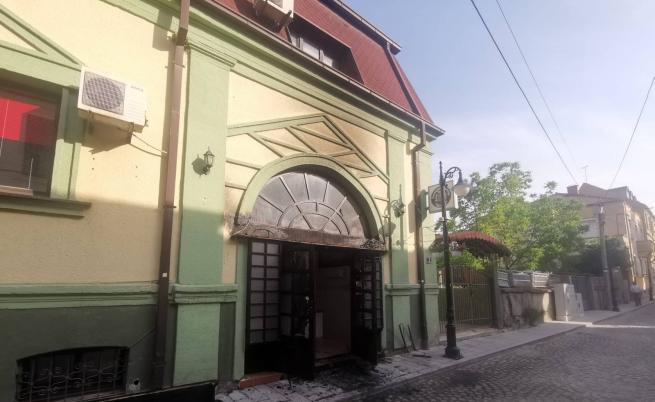
The front door of the center is burnt out and unusable
During the night or early this morning, June 4, 2022, the Cultural Club “Ivan Mihailov” in Bitola was set on fire. The front door of the center is burnt out and unusable. A police inspection was carried out on the spot, and the representatives of the Ivan Mihailov Cultural Club in Bitola expect the culprits to be found and held accountable, BTA reported.
The Bulgarian Minister of Foreign Affairs is traveling to Bitola
Teodora Genchovska and the Ambassador of our country to Northern Macedonia Angel Angelov.
The Ministry of Foreign Affairs of the Republic of Northern Macedonia strongly condemns the act of deliberate arson at the entrance of the Ivan Mihailov Association in Bitola.
“This vandal attack is another proof that there are many participants who are against the progress in the relations between Northern Macedonia and Bulgaria and our common European future.
This crime was not committed by chance on the day when the two sides will establish a dialogue
to overcome open issues on the path to European integration of Northern Macedonia. The competent authorities of the state are making efforts to find the perpetrator of this act of vandalism, “the Ministry of Foreign Affairs of Northern Macedonia said in a statement.
The official opening of the club “Ivan Mihailov” in Bitola was on April 16 this year
in the presence of Vice President Iliana Yotova, Prime Minister Kiril Petkov and many politicians.
Source: BTA
Photo: The Ivan Mihailov Cultural Center in Bitola (BGNES)
Houseplants decorate our homes, help relieve stress and give rest to the eyes. They help clean the indoor air of toxic impurities, saturate the atmosphere at home with oxygen, absorb carbon dioxide, humidify the air and capture dust. It is known that dry indoor air (especially in winter) can cause dry cough and dry skin. Many plants release plant antibiotics (phytoncides) and essential oils, destroying harmful microorganisms. A healthy large plant can clear up to 9 square meters. The most useful houseplants for air purification
Tradescantia (“female gossip”) The leaves of the plant are green, purple and striped (this species is called zebra). It looks very beautiful on pergolas or in hanging pots. The plant is able to neutralize electromagnetic radiation from various electrical appliances in the house and perfectly humidifies the air, improving the condition of patients with bronchitis.
Chlorophytum crested (spider plant, or “flying Dutchman”) purifies the air of tobacco smoke, formaldehyde and gas combustion products, and also releases bactericidal substances. Very suitable for landscaping the kitchen.
Aloe (agave) cleans the air of formaldehyde and releases large amounts of oxygen at night.
Sansiviera or sansivieria (“pike tail”, “snake skin”, “mother tongue”) perfectly cleans the indoor air from the products of decomposition of harmful chemicals (formaldehyde, ammonia, etc.), and is also able to enrich the atmosphere with oxygen at night.
Hamedorea (bamboo palm) humidifies the air, destroys pathogens and cleans from formaldehyde.
Citrus fruits destroy pathogenic bacteria by releasing essential oils. Help cope with depression, increase efficiency.
Spathiphyllum (“female happiness”) reduces the concentration of ammonia, formaldehyde, xylene in the air.
Indoor chrysanthemum or gerbera purifies indoor air from ammonia, formaldehyde, benzene and other harmful substances.
Ficus – captures dust particles and helps clean the air from the decay products of various plastics. Pelargonium (room geranium) purifies the air of pathogens, reduces stress, stabilizes blood pressure and can improve sleep. Excellent for the prevention of seasonal colds and viral diseases. Relieves headaches. Beware, the plant can cause allergies.
Begonia absorbs electromagnetic radiation, captures dust, saturates the air with oxygen and destroys pathogenic microflora. Dracaena cleans the air from the car’s exhaust gases, it is indispensable if the windows overlook a busy highway or parking lot.
Dieffenbachia destroys pathogens, protects against respiratory diseases. Neutralizes harmful substances released by various varnishes and paints.
Aglaonema purifies the air of formaldehyde, destroys pathogens (eg streptococci).
Laurel purifies the air of dust and pathogenic microorganisms (even the causative agent of tuberculosis – Koch’s bacillus). Very suitable for the kitchen.
Rosemary is needed to purify the air in lung diseases, helps prevent colds.
Epipremnum, hamedorea, anthurium reduce the concentration of benzene, xylene, formaldehyde and so on in the air.
Remember that healthy and well-maintained plants can purify the air. Water them and feed them on time, take care of the cleanliness of the leaves. Crushed activated carbon tablets can be added to soil and irrigation water. Plants will get rid of negativity and will maintain joy in the house.
Mexican archaeologists begin exploring the underground labyrinths of the Zapotec city.
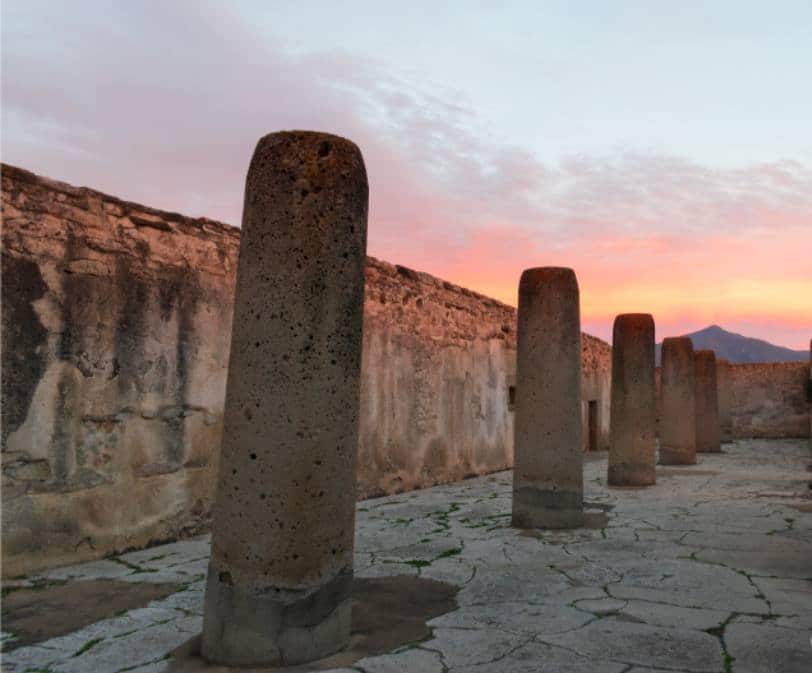
Representatives of the National Institute of Anthropology and History of Mexico (INAH) reported that the Llobaa project will begin its work in the near future. Its participants plan to use modern technical means to explore the underground part of Mitla, an ancient city located in the east of the Mexican state
Judging by the finds, a settlement on this site existed as early as 500 BC, but the surviving buildings date back to the period from 200 AD. Historians believe that Mitla was one of the main centers of the Zapotec culture of Mesoamerica. But also in the city there are traces of the Mixtec culture, with whom the Zapotec sometimes lived peacefully, but mostly still fought. The origin of the culture and writing of the Zapotecs is usually associated with the Olmecs who lived to the south.
As the grandiose Monte Alban was being built (we said that the known area of this city is larger than the known area of \u200b\u200bBabylon), the inhabitants of Mitla gradually moved there. However, the residence of the high priest (and according to some ideas, it was also the ruler of the Zapotecs) remained in Mitla. The city became a complex of buildings of sacred significance.
Ancient and colonial sources speak of a vast underground labyrinth, accessed through one of the main palaces of Mitla and communicating with a deep natural cave. The Zapotecs believed that this was the real entrance to the underworld. In addition, priests and rulers were buried there.
The toponym Llobaa (the pre-Spanish name for the surrounding areas) is translated from the Zapotec language as “Place of the Underworld”, and the name Mitla – from Nahuatl – as “Place of the Dead”.
According to the 17th-century chronicler Francisco de Burgoa, all entrances to the underground labyrinth were sealed by the first Catholic priests and missionaries sent to the region. Attempts to find the lost labyrinth, undertaken in the 19th and early 20th centuries, led to the discovery of at least two monumental tombs under one of the courtyards. However, a full-fledged study of the underground part of the city has not yet been implemented, we will talk about the reasons below.
The Llobaa project is the result of a collaboration between the Federal Ministry of Culture, the National Autonomous University of Mexico and the ARX Project Association. According to INAH archaeologist Denisse Argote Espino, it will use the most modern, superficial and non-destructive technologies to explore the bowels of the ancient city.
She explained that researchers are interested not only in the archeology of the site, its history, but also in the issue of preserving these monuments. Given the high seismicity of the Oaxaca area, it is necessary to have technical data that will help map the subsurface and identify problems that could affect archaeological sites, historical buildings and the population living near the archaeological zone.
Under the altar of the Catholic Church, according to the chronicler of the XVII century, there is an entrance to the underworld of the dead.
The scientists plan to use ground penetrating radar, subsurface tomography, which takes into account the electrical resistance of the soil, and tomography based on the refractive indices of seismic waves.
“These are complementary technologies that will allow the creation of highly accurate 3D maps without the need for excavation or damage to any monument,” explained Argote Espino.
Work will begin in the premises known as the “Church Group” and “Column Group”. For experts, these two groups, dating back to the Postclassic period (AD 900-1521), are of particular interest: the “Column Group” will be used as a model for identifying the tombs, since it was here that the Mexican archaeologist Alfonso Casa at the beginning of the 20th century found the first of them.
So far, no one has ever dug up the “church group”, since a Catholic church of the colonial period is located there – the Spaniards in general often built their churches on sacred and significant places for the indigenous population. Meanwhile, Francisco de Burgoa spoke of entering the underworld under the altar of the church. It can be a small cavity, a tomb, or a larger network – it is necessary to check this, and such a check can only be carried out in non-destructive ways (it is clear that no one will demolish a Catholic church).
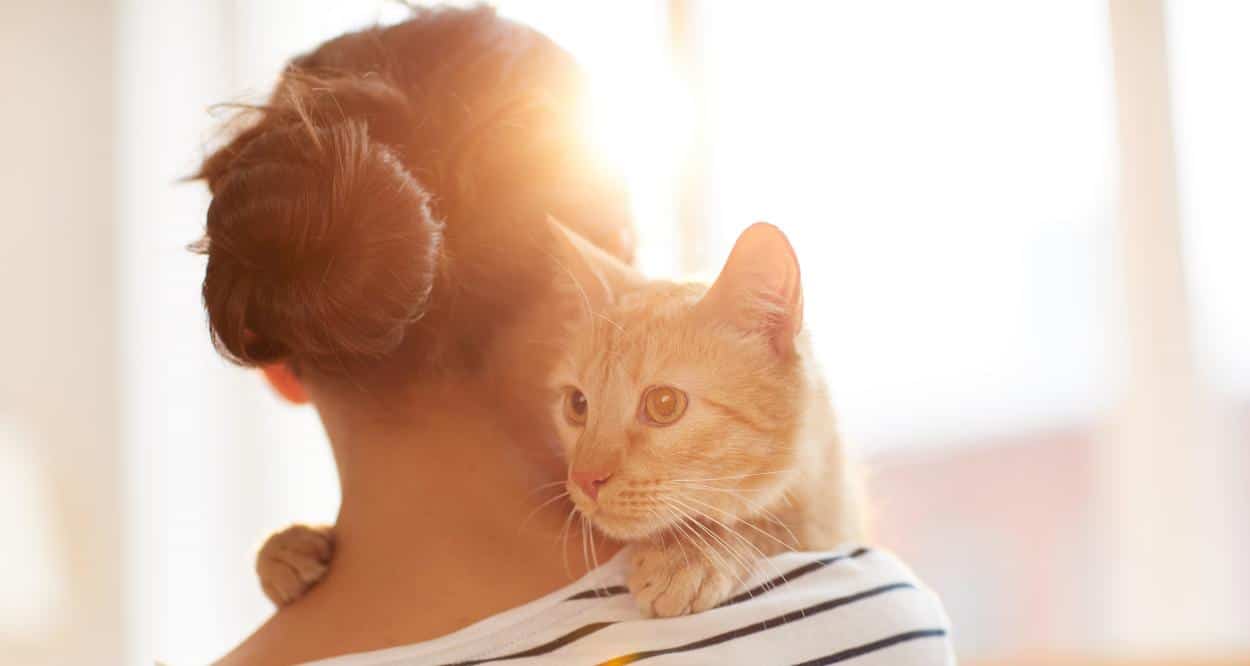
In most cases, cats are kept aloof and independent: the animal comes to the owner for affection only when it wants to.
However, some pets behave completely differently: they literally chase their owner.
This behavior is much more like dog loyalty.
Why do cats get too attached to humans?
You saved her
If you want an animal to truly love and appreciate you, then you should save it from the street. Such cats show tender affection for their owner.
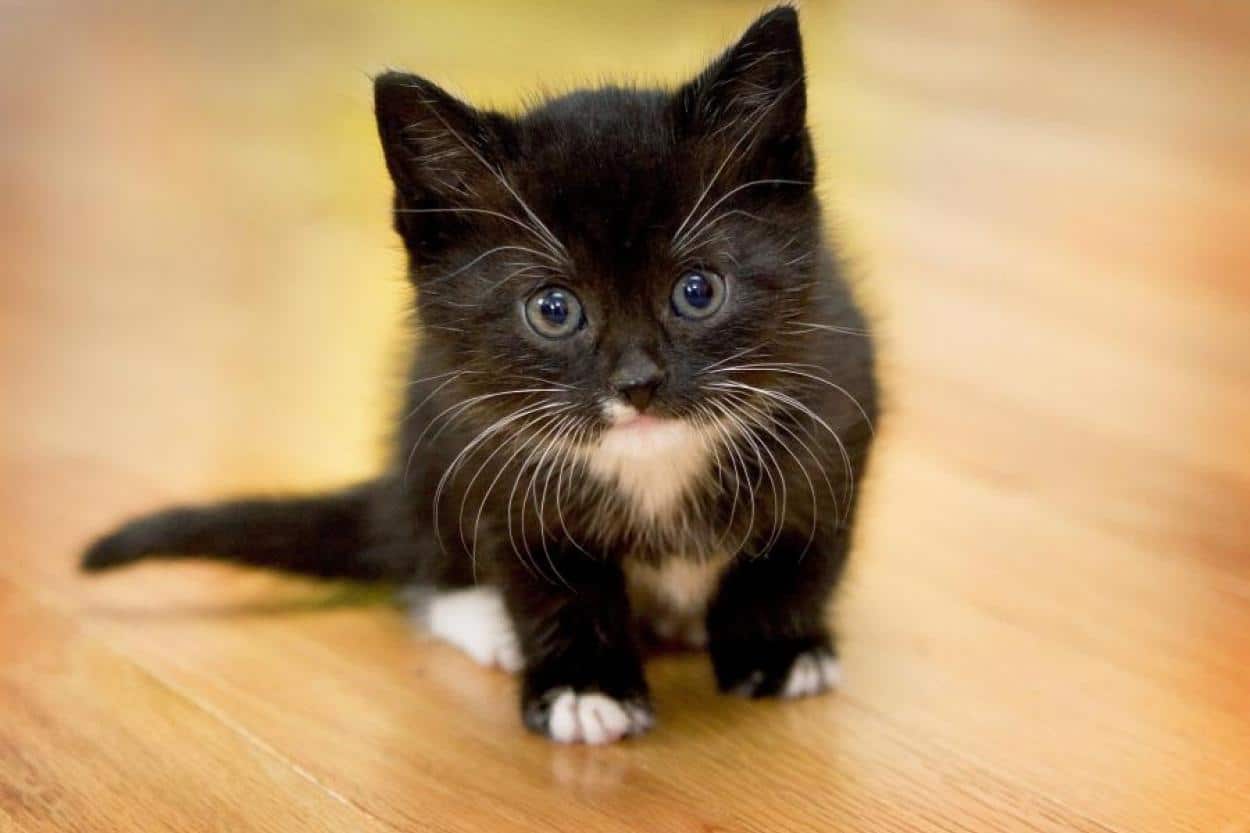
As a rule, a pet picked up from the street at an early age becomes incredibly loyal.
Raised from an early age
Cats have a good memory, so it will not be difficult for them to match that you raised them. If you take a very small kitten and spend a lot of time with him, then he will become very fond of his owner.
Experts believe that the owner becomes practically a mother for the cat.
Reasons not related to love
Sometimes a cat has no trust in a person, so she decided to literally keep an eye on her “neighbor”. In this case, you just need more time to build relationships.
Sometimes a pet simply has nothing to do, so it becomes a kind of entertainment for him to pursue the owner.
Also, a sudden interest from the cat suggests that you need to check her bowl – it is quite possible that the pet is simply hungry.
Humans share an incredible 98.8% of the same DNA that chimpanzees have. In addition, we share almost the same sets of genes as mice and 80% of the same DNA in cows.
We can safely say that humans share a large percentage of our DNA with many different animals. From this we can assume that the percentage at which we resemble cats is also high, right? To the delight of cat lovers, humans and pet animals, we share about 90% of their DNA!
Cats share a surprising amount of DNA with us
Pets are thought to be closest to humans in terms of DNA other than chimpanzees. However, we obviously don’t have much in common with cats about the way we live our lives. They are carnivores, while we are omnivores and in these needs we are more like dogs. On the other hand, they don’t use the bathroom the way we do, they don’t watch TV, they don’t go to work (which we envy, even though they work for their food in nature). Typical of all animals, we would say that they are more primitive than us. However, why do we share so much DNA?
Our shared DNA is just a marker of genetic makeup and defects. This does not make us act in the same ways or have the same way of life, which should be obvious if we look at differences only in humans.
How shared DNA can benefit humans and cats
Sharing so much DNA with these purring friends means we can learn more about each species and how we deal with stress, disease, childbirth, and anything that interests us. This would help us better understand why purring friends develop certain problems and how we can help them.
Conversely, we can probably learn more about how diseases develop by focusing on how they occur in cats. Unfortunately, there is no known human research that can help humans and cats learn from each other based on their similarities or at least not at this stage.
Therefore, we can be glad that we have so many similarities, but at the moment we cannot use them for anything that is of great benefit to us and our lives.
It is important to note that research should never be done that could harm a human or cat (physically or mentally) in the name of science. There are many ways to study both types when it comes to learning more about our shared DNA and how it affects our lives. A number of organizations and countries are fighting (and successfully) against these research methods.
In conclusion, we can say that cats and humans can share a large amount of DNA, but we are very different species.
Just because we share so much DNA doesn’t mean we should live more like cats or that cats should live longer than we do. It’s just that our bodies and molecules are made up of many of the same types of information.
24-year-old resident of the Indian state of Gujarat Kshama Bindu will marry herself. The girl made this decision because she “never wanted to get married,” but she dreamed of becoming a bride. TASS writes about this with reference to The Times of India on June 2, 2022.
The wedding will take place on June 11 and will be the first case of a sologamous marriage in the country. According to the girl, this process will be a manifestation of “fidelity to yourself and unconditional love.” “People marry someone they love. I love myself and therefore I will marry myself, ”Kshama notes. She adds that her parents have already given their blessing.
The wedding will take place in one of the temples of the city of Gotri, after which the girl will go on a two-week honeymoon on the coast of Goa.
What else is known:
The current legislation of India does not provide for the possibility of marriage with oneself. However, for some citizens of the country, wedding rituals are more important than marriage.
India’s Supreme Court recognizes prostitution as a profession recently.
In India, prostitution is officially recognized as a profession. Thus, the country’s Supreme Court ruled that sex workers have all the rights guaranteed by the constitution, including the right to legal protection. This was reported by TASS with reference to the Asian Age newspaper on May 27, 2022.
The court decision obliges police officers to refrain from brutality and violence against sex workers and their children. The document also requires the media to ensure the confidentiality of these people and not disclose their personal data.
According to the Supreme Court, sex workers experience “the full brunt of the social injustice associated with their work, are removed to the margins of society, deprived of their right to a decent life and the opportunity to provide the same right to their children.”
What is important to know:
At the moment, prostitution in India is legalized. According to experts, about two million women work in this area.
A significant part of the scientific community denies the very existence of the Aztatlan culture.
In the Mexican city of Mazatlán, repairmen accidentally discovered ancient human remains. The found burial is very different from the traditional burials of Mazatlán.
The work was immediately stopped so that the employees of the National Institute of Anthropology and History of Mexico (INAH) carried out archaeological excavations.
According to archaeologist Víctor Joel Santos Ramírez, rescue coordinator, the area is a natural high hill near the mouth of the El Quelite River. In pre-Hispanic times, people settled there in order, on the one hand, to live near the river and use its resources, and on the other, to avoid seasonal flooding.
Part of the surface of the hill was covered with crushed shells. But under this impromptu “floor” was a human burial. It is definitely unusual.
Let’s start with the fact that archaeologists have found the remains of only one person – that is, this is not a cemetery, not a place of regular burials. At the same time, three fragmented ceramic vessels of rather fine workmanship and a smoking pipe were found in the burial. The preservation of human remains is very poor, due to local climatic conditions.
Mazatlán was founded by the Spaniards in 1531, ten years after the fall of Tenochtitlan. But not too regular excavations within the city show that this area was inhabited even before the Europeans. A number of burials found indicate that the indigenous inhabitants of those places adhered to the same ritual: they buried the dead in large vessels. It is not entirely clear why Mexican archaeologists attributed this find to the Aztatlán culture: similar pottery is found in many places in Mesoamerica up to the territory of modern Costa Rica.
The found burial, therefore, strongly stands out from the local burial tradition. Mexican archaeologists have suggested that they have found the tomb of Aztatlán, a man from Aztlán, the mythical homeland of the Aztecs.
In general, today there is no evidence that Aztlán ever existed anywhere other than myths. In the scientific community, it is perceived as something between Atlantis and Camelot, but they are looking for it with undying persistence, including for political reasons.
Scholars agree that the Aztecs roamed North America for a long time before founding Tenochtitlan in 1325. And around the same time, the emergence of the legend of Aztlan is attributed. The myths do not contain exact indications of where he was. It is only clear that north of Tenochtitlan.
The description is also rather poor: a small island in a lake inhabited by herons. Based on these, frankly, poor signs, at the end of the 19th century, Mexican historians announced that Aztlán was located on Mescaltitan, a small island in mangrove swamps. Local residents (now there are less than two thousand people) found a certain amount of pre-Columbian ceramics, but no one conducted serious archaeological excavations there. Accordingly, this assumption has not received scientific approval.
A century later, the question of the location of the ancestral home of the Aztecs suddenly became relevant again. This was due to the growing number of Mexican migrants in the US. It is not entirely clear who first came up with the idea to look for the roots of the Aztec culture in the United States. But whoever seeks will find.
Petroglyphs found in Shogo Canyon in the US state of Utah. They are divided into three groups and attributed to three different Indian cultures. The images of one group were considered by some researchers to be similar to the images carved on the Stone of the Sun – a basalt disk on which the Aztec cosmogony is schematically displayed.
And on Antelope Island, in the middle of the Great Salt Lake in the same state, seven caves were discovered. And this coincides with another (probably earlier) legend about the ancestral home of the Aztecs – about Chicomostok, which consists of just seven caves.
Of course, none of this proves in any way that Aztlán was in Utah. Although the Aztecs themselves in their nomadic years could be there and even live for some time. But scientific evidence rarely matters in an ideological struggle. And with her, the situation is such that those who yesterday were illegal migrants without documents, today identify themselves as the indigenous population of Utah. And claims put forward appropriate.
Although it is not yet clear on what basis Mexican archaeologists attributed the found burial to the Aztatlán culture, it is still of great interest. It remains to be hoped that facts, not legends, will become the basis for the final conclusions of scientists.
Greek beach surprised tourists by introducing an unexpected ban.
The Marikes beach in the Rafina area of Attica, in the southern part of the country, which is particularly popular, has banned smoking. This was announced by the electronic edition of the Greek newspaper Ethnos. According to Mayor Evangelos Burnus, there will still be a designated smoking area on the beach, but it will be small.
The beginning of the introduction of a ban on smoking on beaches in Greece began in 2020, recalls “Ethnos”. According to Cigaret Cycle, 30 billion butts are thrown away every year. The non-profit organization is conducting a recycling campaign in 15 municipalities in the country.
The sludge is collected in special waste bins and exported abroad, where it is processed. The extracted toxic substances and the composted paper residues and residual tobacco are used for the production of fertilizers and products such as pallets and pots.
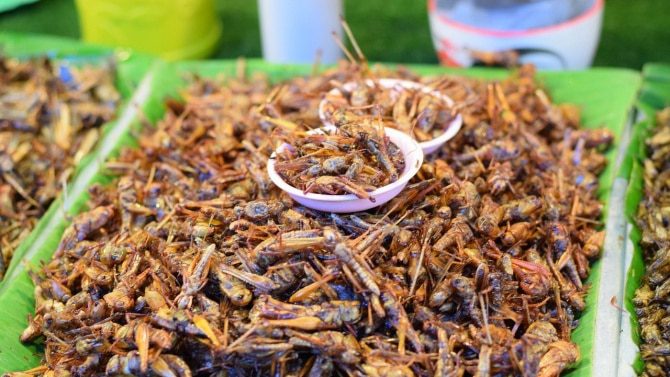
Insects can now be bought from stores and eaten for breakfast
The European Commission has approved the sale of domestic crickets (Acheta domesticus) as a novel food in the EU.
The house cricket becomes the third insect allowed for consumption in the European Union. From July 2021 we can “enjoy” the taste of yellow-mealworm, and from November last year we can try a migrating grasshopper.
The European Commission has indicated that domestic crickets will be available on the EU market in all forms: frozen, dried or powdered. They are intended for consumption as a snack or food supplement.
The decision was approved by the Member States on 8 December 2021 following a rigorous assessment by the European Food Safety Authority, which concluded that the consumption of this insect was safe in accordance with the methods of use provided by the manufacturer. In Brussels, the Food and Agriculture Organization cited insects as a nutritious and healthy source of food high in fat, protein, vitamins, fiber and minerals. In her statement, she added that insects already make up a significant part of the daily diet of hundreds of millions of people around the world and can be identified as an alternative source of protein that would facilitate the transition to a more sustainable diet in Europe.
The EU Novel Food Regulation has existed since 1997, with the supranational body defining the term as “newly developed, innovative food, food produced using new technologies and production processes, and food traditionally consumed outside the EU”.
Although insect consumption is not widespread in Europe, it is far from uncommon in many parts of the world. Roasted locusts are eaten in Mexico and some other parts of Central America, often as a snack or with alcohol. Seasoned with salt, hot peppers and lime juice, they are known as chapulins, writes The Washington Post.
Crickets are also eaten regularly in Thailand and some other parts of Asia. The European Commission acknowledges that insects are already on the menu in some parts of Europe, as whole insects are not subject to the same approval restrictions. According to a UN estimate, about 2 billion people already include insects in their diet.
In recent years, there has been pressure to increase insect consumption, with advocates arguing that they can be just as nutritious as meat and better for the environment because they do not require large amounts of land to grow and do not emit greenhouse gases such as methane on a significant scale.