Simulating Supernova Remnants and Star Formation With a High-Power Laser in Earthbound Lab
High-power laser and foam ball show how blast waves from supernova remnant might trigger star formation in a molecular cloud.
Molecular clouds are collections of gas and dust in space. When left alone, the clouds remain in their state of peaceful equilibrium.
But when triggered by some external agent, like supernova remnants, shockwaves can propagate through the gas and dust to create pockets of dense material. At a certain limit, that dense gas and dust collapses and begins to form new stars.
Astronomical observations lack the spatial resolution required to observe these processes, and numerical simulations are incapable of handling the complexities of the interaction between clouds and supernova remnants. As a result, the triggering and formation of new stars in this manner remains mostly shrouded in mystery.
In the journal Matter and Radiation at Extremes, by AIP Publishing in partnership with China Academy of Engineering Physics, researchers from the Polytechnic Institute of Paris, the Free University of Berlin, the Joint Institute for High Temperatures of the Russian Academy of Sciences, the Moscow Engineering Physics Institute, the French Alternative Energies and Atomic Energy Commission, the
Illustration of the evolution of a massive cloud which indicates the importance of SNR propagation in forming new stars. Credit: Albertazzi et al.
“We are really looking at the beginning of the interaction,” said author Bruno Albertazzi. “In this way, you can see if the average density of the foam increases and if you will begin to form stars more easily.”
The mechanisms for triggering star formation are interesting on a number of scales. They can impact the star formation rate and evolution of a galaxy, help explain the formation of the most massive stars, and have consequences in our own solar system.
“Our primitive molecular cloud, where the sun was formed, was probably triggered by supernova remnants,” said author Albertazzi. “This experiment opens a new and promising path for laboratory astrophysics to understand all these major points.”
While some of the foam compressed, some of it also stretched out. This changed the average density of the material, so in the future, the authors will need to account for the stretched mass to truly measure the compressed material and the shockwave’s impact on star formation. They plan to explore the influence of radiation, magnetic field, and turbulence.
“This first paper was really to demonstrate the possibilities of this new platform opening a new topic that could be investigated using high-power lasers,” said Albertazzi.
Reference: “Triggering star formation: Experimental compression of a foam ball induced by Taylor–Sedov blast waves” by B. Albertazzi, P. Mabey, Th. Michel, G. Rigon, J. R. Marquès, S. Pikuz, S. Ryazantsev, E. Falize, L. Van Box Som, J. Meinecke, N. Ozaki, G. Gregori and M. Koenig, 12 April 2022, Matter and Radiation at Extremes. DOI: 10.1063/5.0068689
During the month and a half of the war, many Ukrainians lost their homes. It has been destroyed by bombing and rocket attacks. Moreover, many of the destroyed apartments were purchased on credit, and the owners have not even paid the mortgage for them yet. Now the owners of the destroyed houses are worried that they will have to return the money to the bank for housing that is no longer there. And this is actually true: a mortgage loan is repayable, like all other loans. Moreover, it will have to be returned in any case, explains Lyubov Marchenko for Today.ua.
This was told to Ukrainians by lawyers specializing in legal relations in the field of real estate.
During the war, Ukrainian banks provided their clients with credit holidays. In fact, customers will not be liable for late payments, and no penalties can be applied to them. However, credit holidays mean only the possibility of deferring credit payments. Borrowers will still have to return debts to banks, including mortgages.
Even if the apartment is destroyed, the payment of the loan for it continues
To stop paying the debt, you need to register the destroyed housing in a special state register. Then the owner of the destroyed apartment will have the right to pay insurance for it. And, having received money from the insurance company, he will be able to pay off the bank.
As lawyer Tatyana Kozachenko notes, as a rule, insurance companies work with banks. Therefore, they often return money for destroyed housing not to the client, but immediately directly to the bank.
“The obligation of a person to return a loan to a bank does not disappear anywhere. If an insurance company must compensate money directly to the bank for the destruction of property, then it’s understandable. Then in this part the money will be returned directly to the bank,” says Kozachenko.
After the war everything will be different
However, these mechanisms for compensating money for lost housing were created and adapted to peacetime, when insured events were isolated. Now, in connection with the war, there are a lot of such cases in the country. And, obviously, here the payment mechanism will be different. A new mechanism for the return of mortgage loans for destroyed houses will have to be developed and adopted at the level of law.
The National Bank promises to solve this problem after the war. The head of the NBU, Kirill Shevchenko, believes that borrowers who have lost their homes should not be forced to pay off loans according to the generally accepted scheme. And you can not leave them alone with their problems.
The Association of Estonian Travel Companies has named the Soomaa nature tourism entrepreneur Aivar Ruukel as Tourism Person of the Year, on whose initiative the Soomaa single-log punt Haabjas was included in the UNESCO World Heritage List. The title of Tourist Site of the Year was given to Fat Margaret – Estonian Maritime Museum.
According to Merike Hallik, Secretary General of the Association of Estonian Travel Companies, Ruukel was awarded the title of tourism figure of the year due to his many years of outstanding work, which resulted in the inclusion of the unique Soomaa single-log haabjas punt in the UNESCO World Heritage List.
“Soomaa Park is famous as a nature tourism area not only in Estonia, but also worldwide. Aivar Ruukel has been organizing haabyas boat making workshops, workshops and camps for decades, and including such a historically important activity for the community on the cultural heritage list will add to its popularity among younger generations, too,” Hallik said.
The title of the tourist site of the year was awarded to Fat Margaret, the Estonian Maritime Museum, whose updated expositions can serve as an example for many museums in both Estonia and Europe. According to Hallick, the exhibition on offer at Fat Margarita is truly impressive, engaging, interactive and suitable for a wide range of age groups.
“Last year, the new exhibition at the Maritime Museum, thanks to the quality of the exhibition and interesting stories, was among the top three contenders for the Luigi Micheletti Prize of the European Academy of Museums. This is a very important recognition of its importance, as the nominees for the award included dozens of museums from all over Europe,” said Hallick. “In addition, the Maritime Museum has become a real hit among museum visitors in general.”
In addition to the traditional awards for tourism figure of the year and tourist site of the year, the Estonian Tourism Association presented for the first time the Lifetime Achievement Award to Daisy Järva, who is one of the brightest figures who has been supporting the development of entrepreneurs and companies in the field of tourism for many years. .
Daisy can be considered the founder of the modern tourism sector in Estonia, as well as the godmother of the oldest tourism fair in the Baltic States, Tourest. Daisy is a board member of the umbrella organization of the European Association of Travel Agencies and Tour Operators (ECTAA) and she has participated in a huge number of internationally held meetings and events in the tourism industry, and has always spoken with purpose on the most important topics for Estonian tourism, among other things, she has written dozens of articles and opinion articles.
“Daisy is affectionately referred to in tourism circles as the first lady of Estonian tourism, and thanks to her inexhaustible energy and deep respect for Estonian culture, she has been able to attract generations to tourism,” said Hallik. “In addition to presenting the Old Town of Tallinn and other Estonian tourism heritage, Daisy actively promoted the collection of art and design objects by holding annual exhibitions of her collections or works.”
Daizi Järva started working as a guide in 1967, she worked in the system of the Estonian Republican Council for Tourism and Excursions as a tourism instructor, guide and head of the service department in 1969-1984, and in 1984 she joined the director of the cultural trip organization Tallintuur , one of the owners and executive director of which she is today.
When the Union of Estonian Travel Companies (ETFE) was established in 1990, Daisy immediately became its leading spokesperson. She has served as president, vice president, board member, and commissioner over the years of the union, and Daisy is still active in the union today. From November 1 to November 3, 1991, the first international tourism fair Tourest ’91 was held in Tallinn on the initiative of STFE and together with the Department of Tourism. On November 1, 1991, at the initiative of the STFE, Estonia, Latvia and Lithuania signed an agreement on cooperation between travel associations, under which the three countries continue to cooperate today.
Daisy Järv’s great hobby is researching and collecting the heritage of the Burman dynasty. Her collection includes drawings, sketches, catalogues, invitations to exhibitions, postcards.
There is not a single Burman house in Estonia that Daisy has not photographed or whose history she does not know. All this knowledge and history is constantly passed on to the numerous groups of tourists visiting Tallinn, who are attracted to Estonia by architecture and art.
During the years of activity, which resulted in many works and events, Daisy has been a member of the Cultural Commission and the Legal Commission of the Tallinn City Council, a member of the Advisory Council advising the Minister of Foreign Affairs on accession to the European Union, and a board member of the Estonian Chamber of Culture.
Daisy Järva is a founding member of the Tallinn club of the international charity organization Zonta, and she has served as president of the Tallinn club and head of the organization’s regional office in Estonia.
In 1993, Daisy Järva became the first woman of the year awarded by the Entrepreneurial Women’s Association of Estonia.
Buonce analyzed 50 European cities and ranked the best weekend travel destinations. The Estonian capital also made it to the top ten.
During the study, experts assessed factors such as entertainment opportunities, the availability of parks and recreation areas, the number of restaurants, bars and clubs, the average annual temperature and the likelihood of rainfall.
All three top places were taken by Spanish cities: Palma de Mallorca, Seville and Valencia. As Buonce service specialists found out, there is the most entertainment here, excellent restaurants, incendiary clubs and, of course, gorgeous weather.
Tallinn took 10th place in the ranking, surpassing even Rome (13th place) and Vienna (15th place). Riga – 25th place, Stockholm – 37th, Helsinki – 43rd. Vilnius is not included in the ranking at all.
A new hotel is about to open in Tallinn: chic rooms, Japanese-Peruvian cuisine and a cozy spa center await visitors
On May 1, the Estonian company HMP Hotels OÜ will open the first Radisson Collection hotel in the Baltic States in Tallinn. A distinctive feature of the hotel will be rooms designed by the best Estonian designers, a spa complex, a 1000 square meter conference center and two new top restaurants – MEKK and ISSEI.
Located on Rävala boulevard and formerly known as the Radisson Blu Sky, the hotel has undergone a thorough renovation over the past year, earning it a 5-star rating.
According to the chairman of the board of Radisson Collection Tallinn, Ain Käpa, the opening of the hotel on Rävala boulevard is a big compliment to Estonia and Tallinn. “The fact that one of the world’s largest hotel chains has given permission to open its best brand in Estonia after a pandemic that has affected the entire tourism world is a great recognition,” said Koepp.
“One of the principles of the Radisson hotel chain is to remain true to the place where the hotel is located as much as possible. That is, when opening a new hotel, we introduce the local culture and design language. The entire hotel is designed in a typical Estonian style,” Koepp explained.
The hotel features 287 rooms, including 19 suites, including the Presidential Suite, Premium Suite and 3 unique suites with fitness equipment. All rooms offer a beautiful view of Tallinn. On the fourth floor of the hotel there is a spacious gym and SPA center with 3 saunas (Finnish sauna, steam bath and sanarium), Japanese bath and swimming pool.
On the 24th floor is the restaurant and bar ISSEI with a panoramic view. The restaurant serves Japanese-Peruvian cuisine. You can get acquainted with the local food culture in the famous Estonian restaurant MEKK on the first floor of the hotel, where chef Rene Uusmees will offer guests the best of modern Estonian cuisine.
The Radisson Collection brand includes 28 hotels located around the world. Now one of them will be waiting for guests in Tallinn.
The Investigative Committee of the Russian Federation has instituted five lawsuits for the crime of desecrating monuments to Soviet soldiers in Estonia, Lithuania and Bulgaria, TASS reported, citing a press release from the Investigative Committee.
The cases were initiated under Article 243.4, part two of the Criminal Code of the Russian Federation, concerning damage and desecration of monuments perpetuating the memory of fallen soldiers in defense of the Fatherland, the agency said.
Regarding Bulgaria, TASS reports that the desecrated monument is in Dobrich, where on April 6 vandals flooded it with red paint and painted offensive anti-Russian inscriptions.
One of the inscriptions is “Katyn 1940”, which recalls the Polish officers killed in the Katyn Forest by order of Stalin. Another inscription – “Bucha 2022”, refers to the murders in the Ukrainian city days ago, which the Russian side denies being committed by Russian soldiers.
The letter Z is written – a symbol of the Russian military units in Ukraine, which many compare to the Hitlerite swastika. There is also an inscription “82 years of blood on the hands”.
A monument to the Soviet Army, known to Dobrich citizens as Alyosha or the White Soldier, was erected in the city park in the late 1950s in gratitude to the Red Army for its decisive role in defeating Nazi Germany in World War II. The monument is a 14-meter pyramid-shaped pylon, and next to it rises a white figure of a warrior with more impressive dimensions of 7 meters. At the base of the monument are buried the bones and remains of Soviet soldiers and officers.
Photo: On April 6, the monument to the Soviet Army in the Bulgarian city of Dobrich dawned with inscriptions, swastikas and other signs
In the event that Russia withdraws from the ISS project after 2024, foreign partners can buy maintenance services for the station in rubles, Roscosmos CEO Dmitry Rogozin told RIA Novosti. “They can resolve with us on a commercial basis the issues that we have previously resolved through our personal contribution to the operation of the station. That is, roughly speaking, to move to trade relations, to buy our services. To save the station from an uncontrolled fall to Earth, I think we could meet halfway, “Rogozin said.” Of course, for rubles, “he said when asked about the currency of payment for such services. Rogozin said that if Russia decides to close its ISS activities and deploy a Russian orbital service station, it will notify its partners in accordance with pre-established procedures. “If they do not agree and try to keep the station without Russia’s involvement, then compensate for our absence with technical means that they do not yet have. They may appear in time, but they will have to spend both money and time to replace Russia, “Rogozin said. According to him, it is “practically impossible” to create such technical means that Russia uses to maintain the operation of the station. In addition, after 2024, the ISS would become “say, an aging, quietly dying station, because without Russia there will never be a full-fledged work on the ISS,” said the head of Roscosmos. Earlier, Rogozin sent written requests to NASA, the European and Canadian Space Agencies to lift sanctions from the state corporation Roscosmos: sanctions, and without that normal relations cannot be built, Rogozin notes: “Either the donkey will die or the ISS will die a natural death”: Rogozin received an answer to the sanctions According to him, Roscosmos has already reported to the government of the ISS cooperation, a report to President Vladimir Putin is expected in the near future. According to previously concluded agreements, the ISS will operate until 2024. Until recently, the possibility of extending the operation of the station until 2028 or even until 2030 was also actively discussed.
Roscosmos is considering separating the Russian segment from the International Space Station (ISS) to fly over regions where passions abound, Russian state corporation chief Dmitry Rogozin was quoted as saying by TASS.
According to him, the first option for the development of Russian manned spaceflight is the creation of a Russian orbital service station in an orbit with an inclination of 97-98 degrees, which will allow an overview of the Earth and fly over the Arctic in 1.5 hours. However, the crew will not be able to work on it for a long time. The ISS may fall on your head, said the head of Roscosmos regarding the sanctions against Russia. module [“Mooring”]. If we talk about the applied meaning, [slope] 51.6 also gives an interesting view. Yes, Russia is not visible (it will fly to 2.5% of it), but the whole region, crowded and seething with passions – we pass right over them. “We arrive, we establish something new, we take off, then the station stabilizes and conducts purposeful work,” Rogozin said in a new episode of the General Line program, published on his Telegram channel. Last summer, the Roscosmos Scientific and Technical Council considered two options for configuring a new orbital station. According to Rogozin, the first option is to form the Russian National Station by further building the Russian segment of the ISS, followed by separating and maintaining the same orbit with a slope of 51.6 degrees. The second option is to create an orbital service station. Based on the results of the Scientific and Technical Council, it is recommended to include the work on the creation of a technical project for a new orbital station in the Federal Space Program 2025.
Earlier, Rogozin said he had sent letters to NASA, European and Canadian space agencies regarding the lifting of sanctions against Roscosmos companies. He reminded where the ISS could fall and issued an ultimatum that he would wait for an answer until March 31, after which he would decide on the terms of the station’s operation. “Madmen”: Rogozin demanded lifting of sanctions, reminding where the ISS could fall On Saturday, the head of Roscosmos said that the decision to cooperate with foreign partners in the ISS will not be an independent decision of the state corporation, proposals for further operation of the ISS will be sent to the Russian government and Russian President Vladimir Putin. Dissatisfied with the response of NASA and the space agencies of Europe and Canada, at the same time in his Telegram channel Rogozin noted that in the near future he will give the Kremlin a proposal on the timing of completion of cooperation within the ISS: “Or the donkey will die , or the ISS will die a natural death “: Rogozin receives response to sanctions.
Photo: The Russian segment of the ISS from November 26, 2021. The modules “Science” and “Mooring” can be seen below. (NASA / Public Domain)
The discovery of 45,000-year-old human remains in Bulgaria’s Bacho Kiro Cave has forced scientists to reconsider the existing theory that the first representatives of Homo Sapiens came to Eurasia from Africa. The remains of the Bacho Kiro are the oldest hominin bones from the Upper Paleolithic ever found in Europe. Researchers at the universities of Bologna and Padua studied them for seven years before publishing a new theory about the settlement of modern humans on the planet. The findings are published in the journal Genome Biology and Evolution. Analysis of the bone fragments found found that the people to whom they belonged were genetically more closely related to the people of East Asia from that period than to the inhabitants of the African continent. This means that the migration routes of the first modern people in Eurasia were more complex than previously thought. Earlier, experts from the Max Planck Institute for Evolutionary Anthropology found that hominins, whose remains were found in Bulgaria, not only arrived earlier than Africa in Eurasia from the officially accepted date, but also managed to pass on their genes. of the inhabitants of East Asia, as well as to cross with Neanderthals.
This could only have happened if the migration of people from Africa was constant, but then for some reason it stopped abruptly. “About 45,000 years ago, a new wave of expansion came from Africa and conquered a wide area from Europe to East Asia and Oceania. These people left us methods for creating instruments known from the early Upper Paleolithic, “said molecular anthropologist Leonardo Valini of the University of Padua. According to scientists, the colonization of Eurasia of our species occurred as a result of several waves of active expansion, which ended in partial extinction. The spread of all waves, according to scientists, was carried out by one center – the ancestor of all Eurasian people. It was formed after Homo Sapiens first left Africa about 60-70 thousand years ago. According to anthropologists, the exact location of this center is still unknown, but they believe that it should be sought in the Middle East and the Arabian Peninsula.
The first expansion took place more than 45,000 years ago and ended in failure. The remains of the only representative (more precisely the only representative) of this migration wave were found in the Czech town of Zlati Kun. Genetic analysis of the skulls of women’s remains has shown no links with modern Europeans or modern Asians. That is, the woman belonged to the European population of Homo Sapiens, which disappeared without a trace. According to researchers, the fate of the second wave turned out to be different: Apparently, those who went to Asia prospered. The genes of these people can still be traced to our contemporaries. However, something has happened in Europe that has stopped migration to these territories. There is almost nothing left of the European part of this migration wave except individual finds – the remains of Bacho Kiro in Bulgaria, of Peshtera-ku-Oase in Romania and some others. Scientists note that the last Neanderthals disappeared at about the same time. “It is interesting to note that the last Neanderthals also disappeared in Europe at about the same time,” said Julia Marciani, an archaeologist at the University of Bologna. “Finally, the last expansion took place about 38,000 years ago. These settlers have re-colonized Europe from the same center, the location of which remains to be determined, “added Luca Pagani, co-author of the study from the University of Padua. Anthropologists believe that in Europe there were only rare, accidental interactions between the new settlers and the surviving descendants of the second wave of colonizers. Extensive and mass mixing between representatives of the two waves occurred only in Siberia and led to the creation of a special genotype known as the Ancient North Eurasian. These settlers later became the ancestors of the Native Americans. Scientists have linked the third wave of colonization to cultural finds from the Upper (Late) Paleolithic. The researchers note that they differ significantly from the Early Upper Paleolithic finds from the second wave. “It is remarkable that from a cultural point of view, the new stone tools from the Upper Paleolithic are often presented as an independent development and not as a development of already existing technology in Europe. It’s nice to see that a complex scenario combines genetic and cultural data, “said Telmo Pievani of the University of Padua. Scientists plan to continue their work to determine where the center was located – a single ancestor of the Eurasian. Researchers also want to know what caused each of the waves of displacement.
Photo: Scheme of the settlement of Eurasia. Orange – the first wave (more than 45 thousand years ago), red – the second wave (about 45 thousand years ago), blue – the third wave (about 38 thousand years ago). Leonardo Vallini, Giulia Marciani
Britain has already imposed sanctions on luxury goods from Moscow, as well as vodka
Britain has stepped up trade sanctions against Moscow on luxury goods by banning imports and raising higher tariffs on Russian caviar, silver and diamonds in a bid to punish the Kremlin for invading Ukraine. This was announced by Reuters, citing a statement by the British International Trade Agency.
The latest sanctions will include bans on imports of silver, timber and luxury goods originating in Russia, including caviar, the British institution said.
Customs tariffs will increase by 35 percentage points for some products from Russia and Belarus, including diamonds and rubber.
Earlier, on March 15, London banned the import of some luxury goods from Russia and imposed additional duties on a number of goods from the country, including vodka, metals, fertilizers and other products.
Babies who are breastfed for the first six months of life have fewer blood pressure challenges in the future, researchers at the University of North Carolina have found.
The study involved 56,000 Americans, some of whom were breastfed and others fed with a substitute. The peculiarities of life, nutrition, physical activity and others are taken into account.
It turns out that in the next 14 years of life, blood pressure problems decreased by 25% in those who were breastfed in the first 3-4 months of life. Women who did not breastfeed their children increased their chances of getting sick by 22%.
But breastfeeding in the first months of life reduces the risk of developing such as diabetes, heart disease and high cholesterol, experts say.
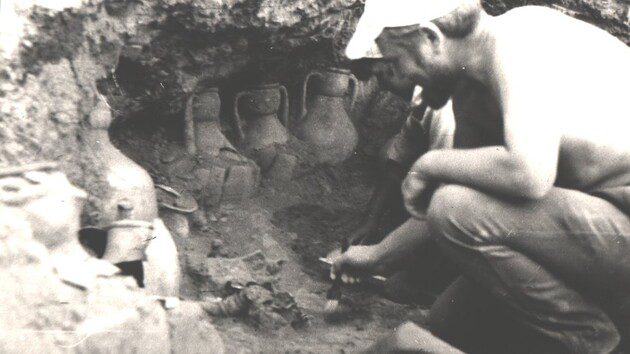
The remains of a Roman-era mercenary and his decapitated victim have been discovered at an archaeological site in the Welsh Vale of Glamorgan.
Mark Collard, an archaeologist and head of the Rubicon Heritage excavation project, told Live Science that the mercenary had a “highly unusual” burial.
He added: “It is in the middle of a field near a Roman villa overlooking the valley and the sea. It’s a great place to be buried.”
The man, who is 5ft 9in and about 20 years old, appeared to be suffering from a middle ear infection that could have spread to his skull and could have caused his death.
He was buried face down in a nailed wooden coffin, which also contained boots made of hammered nails, a long iron sword, and a silver crossbow brooch.
The last two artifacts link the man to the Roman military forces of the late fourth and early fifth centuries AD.
During this period of time, as Roman control in Britain began to wane, the empire hired mercenaries to fight the invaders.
Based on his brooch, which bears a resemblance to those found in mainland Europe, the team believes the man was recruited in this way, although he could also have been an invader. The team hopes that genetic analysis will clarify the situation.
The apparent victim of this man was also about 20 years old, and he was buried with a severed head placed at his feet in a coffin or on a wooden board with a shroud draped over it.
Beheadings were not uncommon in the Roman period—accounting for two to three percent of all burials—and are believed to be associated with executions.
Perhaps, Mr. Collard said, beheading was thought to separate the soul from the body or prevent the resurrection of the deceased.