The world is full of amazing places for which tourists are ready to travel thousands of kilometers just to see them with their own eyes.
Natural wonders, ancient monuments, isolated islands and historical mysteries attract seekers of the extraordinary in different parts of the planet.
However, many of these places remain inaccessible. Some of them would suffer from the crowds of visitors, others keep centuries-old secrets, others are dangerous to health.
Sometimes one has to come to terms with the fact that there are places where one cannot set foot. However, nothing prevents him from being curious, reading their story and searching for the truth among the dozens of conspiracies.
Take a walk through some of the scariest, most amazing and fascinating places forbidden to tourists in the world:
Lascaux Cave in France
Lasko Cave became world famous for its amazing Paleolithic cave paintings, which are believed to be about 20,000 years old. The images on its walls are unusually realistic (cats, deer, bulls), and is part of the UNESCO World Heritage List.
The cave was discovered in 1940 by several boys walking with their dog in the woods. Suddenly, their dog falls into a hole, and the echo of it shows that this is not a simple crack in the rock. After its discovery, the cave has been open for visitors for several years, but the weather has led to a rapid deterioration in the quality of paintings, so since 1963 it is officially banned. Next to it is a copy of the original with a museum attached to it, where you can see replicas of the drawings and experience the excitement of the discovery.
Snake Island in Brazil
About 150 km off the coast of Sao Paulo in Brazil there is an island that not only you can not, but would not want to step on. Its name – Snake Island, is enough to straighten the hair of those who do not like reptiles.
According to scientists, here live between one and five snakes per square meter. The dominant species is the so-called golden snake, known for its venom so powerful that it literally eats the flesh around the bitten spot.
North Sentinel Island in India
North Sentinel is an island in the Andaman Archipelago, located in the Bay of Bengal near India. It is covered with forests, surrounded by coral reefs and in theory sounds like a place that has the potential to become a tropical paradise destination.
However, there is one small detail – the island is home to a local tribe that has refused to communicate with the outside world for centuries. Any attempt to moor a ship or land a helicopter on the North Sentinel was met with a torrent of arrows. In 1956, the Indian government issued a special law banning the approach of more than 5 nautical miles off the coast of the island. No one knows exactly how many people live on the island, and even official figures are only speculations (for between 15 and 400 people).
Ise Shrine in Japan
Shintoists in Japan have built more than 80,000 shrines across the country, but there is one that is not only the most expensive and exquisite, but also the most inaccessible.
Ise’s shrine is torn down and rebuilt every 20 years as a symbol of the Shinto philosophy of the death and rebirth of nature. The last time the building was erected was in 2013, and its price is said to have exceeded one million dollars. Only members of the Japanese imperial family have the right to enter.
Povelia Island in Italy
Given how close it is to Venice, it is unusual that the island of Povelia is off-limits. However, when you dig through its history, you will probably lose the desire to go through the complicated procedure for issuing an access permit.
In the 18th century, the island was turned into a quarantine zone for those infected with bubonic plague. At the beginning of the 20th century, the mentally ill from the area began to be sent to Povelya, and according to urban legends, they were cared for by a doctor who conducted sinister experiments. Today the island is abandoned – unless you count the rumors about the hundreds of ghosts that roam it.
The Apostolic Archives of the Vatican
Known as the Vatican’s Secret Archives, this set of documents is one of the most closely guarded secrets of centuries. The collection keeps government documents, letters, accounting documents and … few are chosen who know what else. According to conspiracy theories, there is evidence of aliens, the Vatican’s contribution to fascism and evidence of demons.
Today, only the highest-ranking scientists have access to some of the documents, after a thorough examination. Those who just want to peek out of pure curiosity have no right of access.
The tomb of Qin Shihuang in China
There is hardly a person who has not heard of the amazing terracotta army – thousands of incredibly realistic figures with unique facial features that fill the underground halls of the burial complex of the first Chinese emperor – Qing Shuhuang.
However, the emperor’s tomb itself is sealed and will probably remain so for a long time to come. It was discovered only in 1974 and a large amount of mercury was detected in it, which would be deadly for anyone who entered without precautions.
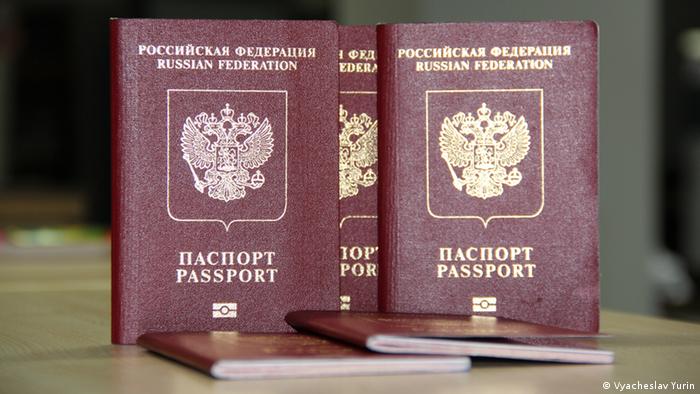
The United States has condemned Russia’s decision to introduce a simplified procedure for issuing Russian passports to Russian-controlled residents of southern Ukraine. Washington described it as an attempt to subjugate the population, AFP reported. The plan is “Russia’s tactic of subjugating the Ukrainian people – to impose its will by force,” said State Department spokesman Ned Price, adding that the United States “strongly rejects” such plans.
Russian President Vladimir Putin today signed a decree facilitating the granting of Russian citizenship and obtaining Russian passports from residents of Ukraine’s Kherson and Zaporizhia regions occupied by Russia. This is another step towards “Russification” of the two regions, DPA notes. By bringing these two Ukrainian regions under its control, Moscow has established a land link between the pro-Russian separatist republics in eastern Ukraine and the Crimean peninsula, which it annexed in 2014.
At the same time, Ukraine is considering the introduction of visas for Russian citizens. President Volodymyr Zelensky “supported the need to tighten the control regime for the entry of citizens of the Russian Federation into Ukraine” and instructed the Prime Minister to develop the issue of introducing visas for Russians. This is stated in the response of the head of state to a petition of citizens who signed online, BGNES reports. “Against the background of full-scale Russian aggression, this issue is important and urgent, so I support the need to tighten the control regime for the entry of Russian citizens into Ukraine. In view of the above, a corresponding letter was sent to the Prime Minister of Ukraine D. Shmihal with a request to work on this issue, “said the President.
The petition was registered on February 11 by Mazura Nikita Viktorovich. The document speaks of the need to “introduce a visa regime for Russian citizens trying to enter the territory of Ukraine.” After the Russian invasion of Ukraine, Kyiv cut off diplomatic relations with Russia.
Russia has a special program to take compatriots abroad
Recall that in 2016 a record number of Ukrainians asked for Russian passports.
Ukrainians are visibly easier to obtain Russian citizenship than other CIS citizens, according to information from the press service of the Russian Interior Ministry, quoted by RT. At the same time, they are moving not only from the war-torn Donbass, but also from the central parts of Ukraine – Kyiv, Vinnytsia and Kharkiv region.
In Russia, this is a state policy, where a state program has been adopted to assist in the voluntary resettlement in Russia of compatriots living abroad.
According to statistics, in 2016 more than 100 thousand Ukrainians acquired a Russian passport, which is almost 50% more than in 2015.
In second place is Kazakhstan with 38 thousand people. There, a quarter of the population is ethnic Russian, and Russian is the official language in business. Graduates of Russian universities remain in Russia.
In 2016, 23,000 Uzbeks and 22,000 Armenians became Russian citizens.
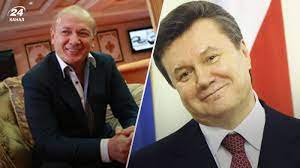
The Swiss government has confiscated assets worth more than 100 million Swiss francs (82 million British pounds) from an aide to former Ukrainian President Viktor Yanukovych – Yuri Ivanyushchenko. The seizure affects assets of Ivanyushchenko and his family frozen after Ukraine’s 2014 revolution. The move has nothing to do with Berne’s sanctions against Russians following Russia’s invasion of Ukraine.
Yanukovych was ousted in 2014, in events known as the “Maidan Revolution”, which moved Ukraine to a more pro-Western path and far from Russia’s sphere of influence. Many experts say the ouster of Yanukovych was key to Russia’s annexation of Crimea and ultimately led to the invasion.
Nairobi (Kenya), 30 May 2022 – By 2030, demographers project that the number of people using drugs will rise by 11 per cent around the world, and as much as 40 per cent in Africa alone. As further evidence of the sheer scale of the growing problem on the continent, about 60 million of the 269 million (22 per cent) of the people estimated in 2018 to have used a drug the previous year were in Africa.
The challenge is compounded by population growth, as Africa is forecast to have the largest rise in population of any region between 2018-2030, which could result in an increase of 38 per cent in the number of people who use drugs on the continent. Moreover, increased development and urbanization is another potential driver for elevated drug use in the region.
The ramifications of such a ballooning use of drugs in the region could be dire: “Drugs cost lives,” declared Ms. Ghada Waly, Executive Director of the United Nations Office on Drugs and Crime (UNODC) in the preface to the 2021 World Drug Report, adding that drug use killed almost half a million people in 2019. “The illicit drug trade also continues to hold back economic and social development, while disproportionately impacting the most vulnerable and marginalized, and it constitutes a fundamental threat to security and stability in some parts of the world.”
But how do all these drugs reach Africa? Part of this surge in drugs reaching the continent comes from the production and trafficking of opiates in Afghanistan, which accounts for the majority of global heroin production. Opiates produced by Afghanistan then travel – by sea and by air – the ‘Southern Route’, a diverse network of trafficking circuits leading to consumer markets in Africa, South and South-East Asia and the Middle East. Traffickers also use African countries as transit points to bring Afghan-manufactured heroin to India and Europe.
To better understand the threat posed by opiate trafficking in Africa, UNODC held a two-day Expert Working Group Meeting on Opiate Trafficking along the Southern Route in Nairobi, Kenya, on 16-17 May 2022.
The meeting gathered representatives from Kenya, Tanzania, Zambia, Mozambique, Seychelles, and Nigeria. Experts from the multinational Combined Maritime Forces, the United States’ Drug Enforcement Administration, the United Kingdom’s National Crime Agency and the UNODC’s Global Maritime Crime Programme, Container Control Programme, and Airport Communication Project also attended. Participants discussed current trends and challenges related to opiate trafficking to, within, and from Africa.
The event, made possible with financial support from the United States, was organized by UNODC’s Afghan Opiate Trade Project (AOTP) in cooperation with UNODC’s Regional Office for Eastern Africa and Global Programme against Money Laundering, Proceeds of Crime and the financing of Terrorism (GPML).
Key outcomes from the meeting included calls from African participants for more frequent Expert Working Groups, and the suggestion of an Early Warning Centre to monitor drug trafficking and drug use trends in Africa. The findings from the event will be incorporated into a research report on opiate trafficking to Africa.
To explain to the inhabitant of ancient Vindolanda Sekundin what a bad person he is, someone spared no time for stone carving.
Employees of the British archaeological foundation Vindolanda Charitable Trust reported a unique find: project volunteer Dylan Herbert found in a pile of garbage (this often happens) a stone with an image of a phallus carved on it and some letters.
After the archaeologists had already taken up the find and cleaned the stone of dirt, it became clear: this is not an architectural element of something that is related to the phallic cult. On a stone measuring 40 by 15 centimeters, in addition to the picture, there was an inscription: SECVNDINVS CACOR.
Experts in Roman epigraphy (those who study inscriptions carved in hard materials) came to the conclusion that the first word – Secundinus – is a name, and the second is a distortion of the word “cacator”, which is translated into Russian as “asshole” and in the Roman tradition was serious insult. And the image next to these words enhances the power of the written insult.
Dr. Andrew Birley, director of excavation and general manager of the foundation, commented: “Finding an inscription, a direct message from the past, is always a big deal at Roman excavations, but this inscription really surprised us. When we deciphered the message, we realized that its author clearly had big problems with Sekundin and was confident enough in himself to publicly state his thoughts on stone. I have no doubt that Secundin would not have been very pleased to see this when he roamed here over 1700 years ago.”
The Roman phallus is often regarded as a good luck charm or a symbol of fertility, in other words, a completely positive sign.
In general, the largest number of ancient Roman images (reliefs and sculptures) of phalluses have already been found in Vindolanda – more than in any other Roman settlement near Hadrian’s Wall. Most likely, this is due to the fact that excavations have been going on there for more than a hundred years.
However, in this case, the author of the drawing of the phallus took advantage of the literal meaning and altered it for his own purposes. Each letter is carved very carefully: that is, a person spent a lot of time on the inscription and drawing. Apparently, Sekundin greatly annoyed the author of the inscription with something, since he showed such perseverance and depth of feelings.
Cutting a stone, of course, is not easy, but such an insult cannot be erased or painted over – like an inscription on the wall of a modern entrance. Centuries before the advent of print newspapers or social media, this was one of the best ways to get a lot of people to see your point of view.
Vindolanda was founded by the Romans in the north of modern Northumberland in 85 AD – then it was a very small fort. He was part of a system of forts located behind Hadrian’s Wall and designed to repel the attacks of the Picts from the north.
Usually, the Romans, occupying any area, immediately rebuilt it for themselves: they laid roads, built baths, arenas, and other public places. On the northern border, all this was, of course, not in such quantity and quality as, for example, in Londinium. But still, the settlement gradually increased at the expense of local residents, who also did not like the raids and who wanted to live in peace under the protection of the legions.
Even after the Romans left Britain, Vindolanda was inhabited: the Picts had not gone away, and it was more convenient to defend against them in a fortress. The settlement was empty only at the beginning of the 10th century.
Vindolanda, with its fort and settlement, is a treasure trove of information about daily life during the Roman Empire. For example, they found a handwritten invitation in which a woman politely asks her “dear sister” to join her to celebrate her birthday. As we can see, the person whom Sekundin annoyed with something decided not to exchange for manuscripts (otherwise they would still burn) – and immediately immortalized his dislike in stone.
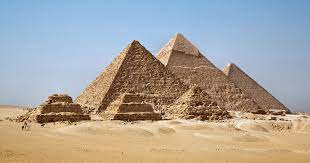
From mid-July, tourists wishing to start their journey in Egypt from the Great Pyramids of Giza will be facilitated by flying to them. Right next to the Pyramids of Giza, Egypt’s new Sphinx International Airport (SPX) is scheduled to start operating in mid-July 2022, according to local media. The air harbor will operate at full capacity by the high season.
Sphinx International Airport will serve both domestic and international flights, offering incoming tourists a significant advantage: it is located just a short drive from the Pyramids and the Great Egyptian Museum, much closer than Cairo International Airport. Also, domestic flights are planned from the airport, including to the resorts of the Red Sea.
Civil Aviation Minister Mohammed Manar said during a cabinet meeting that the airport is now 90% complete and will start operating in accordance with Egypt’s summer schedule. Manar added that the new airport will also provide one-day travel programs. It should be noted that the first attempt to open the airport took place in 2018, since then the total area of the Sphinx International Airport has increased to 24 thousand square meters. It is expected that he will be able to take up to 900 passengers per hour.
There has been a sharp decline in the lark population in Western Europe
Authorities in the southwestern German city of Waldorf have ordered some cat owners to keep their pets at home until the end of August to protect hooded larks during their breeding season, the Associated Press reported.
The ordinance aims to help save rare birds that shrink their nests on the ground, so they can easily become prey for cats. In recent decades, the population of birds of this species in Western Europe has declined sharply.
Authorities in Waldorf say that “among other things, the survival of the species depends on each rescued chick.”
The order, which applies to all cats in the southern part of the city and will be renewed over the next three years, has caused sadness among pet owners.
The regional daily Rhine-Neckar Zeitung reported that the head of the local animal protection association plans to take legal steps to challenge the order.
“Please keep calm. I can assure you that we will do everything possible to stop this disproportionate measure, “he said.
The 300,000-inhabitants’ archipelago has been hit by two powerful cyclones and a devastating drought in the last decade.
The Vanuatu archipelago in the Pacific has declared a climate emergency and a $ 1.2 billion plan to mitigate the effects of climate change on the island nation, AFP reported.
In a speech to parliament, Prime Minister Bob Loughman acknowledged that the Pacific region is already affected by the phenomenon of rising water levels and extreme weather events. The 300,000-inhabitants archipelago has been hit by two powerful cyclones and a devastating drought in the last decade. “The country is already too hot and a little secure,” he told lawmakers, stressing that Vanuatu was now in danger.
A similar declaration was adopted by a dozen other countries around the world, including Fiji, Canada and the United Kingdom, recalls AFP.
The $ 1.2 billion plan will come from donor countries. Earlier this week, during a trip to Fiji, Australia’s new Foreign Minister Penny Wong promised that her country would soon set more ambitious targets for reducing greenhouse gas emissions and would be a candidate to host a meeting with the Pacific Islands. on top of the climate.
This publication is a continuation and an attempt to look back at the issues raised about ten years ago in a report entitled “Globalization of the World and the Universality of the Church” (Challenges to the Local Church), presented at an Orthodox consultation at the Faculty of Theology at the University “St. John of Damascus ”of the Patriarchate of Antioch, organized by CINDESMOS, Balamand, Lebanon, July 10-16, 1997 and published in the collection:“ Contemporary Theological Problems ”, Veliko Tarnovo, 2001 and second edition – ed. Omofor, Sofia, 2004
One of his lectures, “The Role of Religion in a Changing Europe”, to economics students in London, Ecumenical Patriarch Bartholomew, after mentioning various ancient definitions of man as politikon zōon, according to Aristotle, logikon zōon, according to the Stoics and modern definitions of him , above all in materialist and economic terminology (as a consumer), refers to the original biblical Revelation of man as the image of God (Gen. 1:26), which therefore, in its essence, remains transcendent; this is the reason why man always, whether he realizes it or not, is aware (which may not be rationally meaningful) of his divinity. Right here patr. Bartholomew sees the clear perspective of man as a counterpoint to all that has been said before and expressed in the words of St. Gregory the Theologian, that man is zōon theoumenon, ie “an animal that has been deified” and that has a task to become a participant in the “divine nature” in order to avoid the “worldly decay of lusts” (2 Peter 1: 4).
Herein lies the heart of God’s revelation: to love God with all our soul, heart, and mind (Matt. 22:27), to draw near to Him and become perfect (Matt. 5:48). These are increasingly well-known and frequently repeated topics in Orthodox theology. The church has been preaching to them for two thousand years. The question arises: why does the world not accept God’s call, why does it happen that the modern world rejects God? Where are the reasons? Are they outside man, or is he at the root of this development? How, as Orthodox Christians, should we treat world processes? Today there is talk of a clash of civilizations. A global virtual field is being created that can quickly upset the fragile balance – e.g. with recent cases of massively provoked unrest over Muhammad’s caricatures and papal statements on Islam. All this raises eschatological expectations and apocalyptic sentiments. An attempt will be made here to briefly consider some of the main phenomena associated with these processes. They concern such developments as secularization, globalism, desecularization and the response of Orthodox theology.
Secularism and secularization
As correctly noted in one place Fr. Alexander Mann, man, throughout his history, does nothing but constantly repeat the first sin, strive to live without God, to feel self-sufficient and autonomous, and the ultimate goal is to deify himself – “you will be like gods” (Gen. 3: 5). Apparently, this desire for self-deification in a negative way suggests the original divinity of man – the image of God embedded in him. However, the sweetness of sin makes man try to achieve this deification in the easy way, without effort and above all without God, without accepting God’s will, without the desire to be God’s co-worker, to be with Him the creator of the created world. Rejecting God, man falls under the power of a force contrary to Him – the devil. Without his skillful “guidance,” man would surely return to God much more easily and quickly. But despite the efforts of demonic power, man, because the image of God is embedded in him, recognizes the truth, and despite difficulties, seeks God — even when he sins, he usually thinks he is doing good or imposing some justice. This unadulterated, sincere pursuit does not leave God indifferent to man. That is why God, through His inexpressible love, gives His Only Begotten Son for the salvation of man (John 3:16).
Jesus Christ came to correct the mistake made by Adam. But He also came because man was seeking God, though in most cases in the wrong direction. Because of the spiritual eye darkened by sin, humanity as a whole cannot orient itself to the truth. That is why God chooses individuals, creates a separate nation through which to bring this truth to the world. Jesus Christ, as Man, fulfills all that was previously offered to Adam. In Him humanity has accomplished what it – humanity, in the person of the ancestor – had to fulfill. That is why the Church teaches about Jesus Christ as the second Adam. Despite this obedience and fulfillment of God’s will, each person must deserve his salvation. The salvation that Jesus Christ offers is achieved by each one individually, but only through His Church, in communion with all its members. He has redeemed all, but salvation is achieved through efforts similar to those made by Jesus Christ Himself as Man. Salvation is not mechanical, it cannot be applied by force. It is the ultimate aspiration of man to achieve possible freedom. In its very essence, it is not an end in itself, but a consequence of the aspiration of the human will to something higher – the love of God. This is the highest goal set for man as a new commandment (Matt. 22: 37-39; John 13:35). After loving God and one’s neighbor as oneself, salvation is a consequence.
Because of sin and the action of demonic forces in the world, not everyone can clearly hear the voice of Jesus Christ and be ready to follow Him. Revelation remains closed to one who does not believe correctly, according to tradition, but invents his own interpretation. The correct biblical dimension is lost – the word of God is equated with ordinary literature. Critical analysis remains superficial. He rejects the truths of Revelation, and this leads to a secular interpretation. Thus, for example. In a popular translation of the Bible, published by the authoritative publishing house Zahariy Stoyanov, the author, apparently a representative of extremely liberal Protestant theology, writes about the interpretation and understanding of the Bible: “But how can we actually use it? In the first place – critical. We need to perceive and be aware of both the different sound and the different accents that different readers give it. We need to learn to distinguish between all these diverse opinions and interpretations in order to exercise our own moral judgment. Second – we need to read in good faith. By this I mean that we need to allow the creative, liberal, constructive sound of the Bible to shape our understanding of the text… ”[3]. In the words of the author, the lack of a church approach is quite clear. This is due to the post-Reformation understanding that the Church is based on the Bible. Man’s faith is reduced and reduced only to the analysis of the text (the text, according to the Orthodox understanding is not the Revelation itself), ie it is placed exclusively on a rational basis. By studying the text, everyone must be critical and build their faith according to their understanding. Thus, Revelation remains hidden behind the text, because it has a complete character, it affects man as a whole, not just rationally. The lack of objective criteria that are outside man, of gracious enlightenment through the influence of the Holy Spirit, leads to the finding in the text of many “revelations”, which in turn is the reason for the emergence of many “churches” to secularize the attitude to the word of God, for nihilism, agnosticism and even atheism [4].
Man’s freedom allows him to choose which path to take: the narrow or the wide (Matt. 7: 13-14). Unfortunately, today we see that despite the Savior’s example, man’s freedom leads him in directions other than Him. Many people are seduced by external things. They take this world for granted. Then it follows that they do not need Jesus Christ. He promises a kingdom of heaven, a Kingdom of which He testified before Pilate that He was not of this world. But modern man does not believe in such a kingdom, he believes in his own, earthly kingdom, which he wants to beautify in such a way that he does not remember at all the Kingdom that Jesus Christ promised him. An expression of this development is the secularization of the world. What can be the main consequences of secularization [5]: first, to distance oneself from Jesus Christ, and thus from God; second, to the acceptance of the belief that man is self-sufficient, that is, that he can save himself; third, to self-deification.
The ideas of secularism have so conquered the world today that they are accepted as the norm, as the dogmatic inviolability of the liberal world. They creep unnoticed even into church life. The church institution is increasingly adopting secular characteristics. Instead of dealing with the spiritual condition of the flock, she deals with clerical issues, with issues of an economic and material nature. Therefore, it is not recognized by society as spiritual, but as national – it saved the people during Turkish slavery, as a supporter of the people’s spirit and traditions. Not that this is not true and important. But it is not in the first place. It is a consequence, not an end. It is a consequence primarily of spiritual activity at a certain historical moment. But the Church is not a museum, it is a living reality, a society of living people who live in the present and have spiritual needs here and now. If the spiritual goal of the church institution is neglected or replaced with similar goals, it will become an instrument of national, socio-political or economic interests. This means that it has emptied itself of content and become a semi-secular, semi-church institution – a past without a present. This is also reflected in the field of Eucharistic, parish life. The lack of regular communion leads to individualism in the parish. Often people from one parish do not even know each other. Relationships between them are not built on spiritual relationships, but above all on psychological dependencies (friendship, social or professional interests). What a Eucharistic unity we can talk about then!
It turns out that the temptations of the outside world, of worldly things, are much stronger than what parish life offers. In societies where there is no interruption of the spiritual tradition, where the Church has a normal spiritual life, the temptations of secularism are an internal symptom of the parish. There is a weakening of faith. Life in the parish takes on a more social character, and faith falls into crisis. Well-organized economic and social societies lead to distortions in the faith – the so-called social temptation arises. People’s aspirations are not towards God, but towards material success. Faith in God requires renunciation of unnecessary external goods, satisfaction with the necessary and willingness to share with others, requires asceticism, and the modern age despises asceticism and honors wealth. As he wrote in the early twentieth century. Sergei Bulgakov: “Our age loves wealth – not money, but wealth – believes in wealth, believes in it more than in the human person. It’s not just mammonism (it has always existed, it still is today), no, it’s economism. Life is above all economic – this is the axiom of this modern economy… “[6]. It turns out that the external, not the spiritual life is more tempting than the church life. It legitimizes sin and “frees” man from moral responsibility. Man does not accept the gospel principle that sin is slavery. Man replaces true freedom with this bondage, which he accepts as freedom. Sin seeks justification for its existence. He replaces the truth and creates his “truth.” That is why the secular world creates a new, non-Christian value system, even its own quasi-spirituality, different from the church’s, and often opposite. He is on the path of the slightest resistance. And as Fr. Prof. Theodore Stilianopoulos, the crisis of faith is not “a personal crisis, but a crisis in the minds of people who have grown up in a conscious Christian life and have come to question it as such. Rather, it is a cultural crisis, ie there is a certain sociological loss of Christian commitment in a secularized society, where the Christian faith is one of many opportunities, individual and personal choices that are often not taken seriously.
This state of society is a sign of the lost sense of the metaphysical foundations of the world. The world is amazed at the phenomena, the spectacular manifestations of technical progress. The heart is attracted more by the luxury store, by the glittering objects in it, and not by the mysticism of the temple, by the mystery of God, by the mystery of the world and man. If you go to the temple, it is more of a habit, a habit. Social temptation detaches man from the vertical dimensions, from the call of the spirit, and places him in the horizontal dimensions of the material world, of consumer interests. Man more or less becomes a prisoner of consumer passion. He produces in order to consume more, and in order to consume more he must produce more. This closes the circle and makes the human consciousness extroverted, and the man himself a prisoner of this closed circle. That is why, not because of lack of time, there is no room for prayer. Prayer requires inner focus and renunciation of external temptations, focusing the mind on the heart where God dwells. The escape from prayer is the escape from God. In the Church it is evident from the formalism of participation in worship, from the coldness of relations between Christians in the parish, from the primitive squabbles and struggles for privileges or power.
In modern Bulgarian society, things are developing in an even more complicated environment. Forced secularization during the atheist system destroyed the parish, church life. The parish and spirituality must be rebuilt. But how to do it? How can a secularized person be a member of the church? Even before the new parish was born, the secular temptations of consumer society made it meaningless. Man is becoming more and more dependent on external, global factors. In the completely determined world, man constantly loses his not only internal but also external freedom. It is threatened by everything: oil prices, financial crises, political changes (eg if a regime changes in a patrol country or uncertainty occurs, then there is an energy crisis, and hence a crisis in all parts of the world). This condition creates constant tension in the world, which is transmitted to everyone through the media and rising prices. Thus, not only the individual, but entire societies live in a state of tension and stress. All these dependencies give rise to contradictions, and in their diversity it is very difficult to keep them in balance. In order for this to happen, a new world order is needed, a new global system of government that requires centralization to be effective. This brings us to the moment of globalization with all its challenges.
Globalism and globalization
In this line of thought, one could assume that the ultimate form of secularization is globalization. Here, its basic parameters, derived primarily on economic and social grounds, will not be affected. Here we will talk about globalism as an idea and globalization as realization. The separation of the world from the Church, and this from God, according to Christian teaching, leads to the relativity of the value system, and hence of social relations. The church is no longer the center and source of authority and moral values for society and the individual. Therefore, God is not the absolute authority around whom the world gravitates.
This creates relativity in all dimensions of life. Suddenly it turns out that there is no single and strong support in the world to support him and give him meaning. Conditions are created for the occurrence of entropy, of decay. The lack of centrifugal forces makes humanity seek support in different directions. The world, becoming self-sufficient, is trying to find its center – within itself. However, this sought-after center is not based on ontological security, but on utilitarian, external interests – political, economic and social security, external order and prosperity (1 Thess. 5: 3). They, in turn, are built on the organization of civilization. The ontological mystery and depth of the world do not interest civilization. Life is perceived as a manifestation of random natural relationships. It is understood as destiny, as predestination and is not understood as a secret. The source of life remains hidden because it is rationally unattainable. Because, as Fr. Sergei Bulgakov: “Life is incomprehensible to the mind. It is only an experienced mystery of the existence of the world, this primordial light, from which consciousness and the ability to distinguish are born ”[8]. Civilization has detached itself from the organic integrity of the culture that is born in the cult. Thus it becomes the means by which the spirit is enslaved. Civilization makes an attempt to completely rationalize the world, but this is not possible, because the world always in its depth remains irrational for man (Nikolai Berdyaev), and when it relates to God – super rational.
We will not talk here about the positive aspects of globalization. There may be some, but they are relative. And this is not due to the fact that globalization [9] must be rejected, but due to the fact that it is a necessary consequence, the end of a whole process – another degree of distance from God. It is an external organization – the organization of the world’s elements and an attempt to control them. Despite this experience, however, it remains something superficial because it brings people together mechanically. Globalization is directly related to technology, to technical progress. All this creates in man a sense of some external power and security. He began to worship this reality, to accept slavery as freedom. The illusion of freedom is created, but in reality it determines human relations, really binds man in this world, detaching him from the spiritual dimensions. Dostoevsky’s genius felt this as early as the 19th century during a trip to London in 1873. In his Winter Notes on Summer Impressions, he wrote: “You feel the terrible power that unites all these people who have come from all over the world. , you are aware of the gigantic thought, you feel that something has been achieved here, that here is the victory, the triumph… This is like a biblical picture, something like Babylon, some constant prophecy of the Apocalypse. You feel that constant resistance and negation is needed in order not to give in to the impression, not to worship the fact and not to deify Baal, i.e. not to accept the existing as your ideal. How proud is the mighty spirit that created this colossal decoration”[10]. What Dostoevsky said so many years ago sounds even more powerful today. It is a premonition of the spirit of cosmopolitanism and globalism, a sense of the arrogance of external power.
However, in order to justify this development, a common ground is needed, an authority on which to stand. That is why an attempt is being made to create a global value system that must impose new rules to satisfy all citizens of the planet. Globalism as thinking and as an ideology does not rely on ontological, but on empirical, utilitarian foundations. In any case, the various religious systems must be included in the creation of this new, global value system. Here, however, perhaps the main question will arise – to what extent can they compromise with their teaching and whether it is possible at all. Is it possible to create such a global ethic that does not require compromise between individual religions. This question concerns Christians today, and especially the Orthodox, because by its nature such an ethic will serve purely secular purposes. The temptation of such a secularized ethic is that Christianity, the Christian faith and ideas without Christ will be used. The secular world is turning Christianity into an ideology. Thus arises the danger of the newly created global ethics – a compilation of Christian, non-Christian and various other secular ideas – in its essence to replace the true Christian teaching, to turn it into a surrogate, because it will be a deviation from the truths of Revelation and salvation. This will be an ethic that promises the kingdom of God on earth, not heaven. It will be an attempt to achieve voluntarily what the communist system has tried to do by force. Such an ethic would have an antichrist origin.
Desecularization and globalization
The main center of secularization is Europe, and today it continues to play a leading role. However, desecularization has been talked about in the world in general and in Europe in particular. Despite the fact that today there is a growing interest in religion, secularism as the basis of the liberal model remains unshakable. For reasons that will not be formulated here, the religious factor today is increasingly defining social, political and international relations. Whether acknowledged or not, the demands placed on modern world politicians are largely determined by religious reasons. The rise of various fundamentalisms, not only on an Islamic basis, points to the emergence of a large “ozone hole” in the religious field. Enlightened religiosity banished from secularization is returning more primitive, ready to avenge its desecration. A new religiosity is being created that takes material from the crumbling building of secularization. However, this religiosity does not have the necessary literacy, elevation and spirituality. She formalizes, literalizes, without making an effort to understand the deep layers of individual doctrines. The lack of ecclesiastical authority leads to the fact that the sacred texts are interpreted in a very naive way, which in turn is an abuse of them. The liberal reading of the Christian values enshrined in Svesht. Scripture breeds uncertainty, doubt, and retreat. In it, Revelation disappears and man takes the place of God. It is no longer the Bible that speaks to man, but man determines what the Bible should say. As one modern Western biblical scholar writes, “The text is like a dead man, he has no rights,” [11] that is, anyone can treat him as he sees fit. It is understandable that this new religiosity is easily manipulated. It becomes a threat both to societies as a whole and to the usually temperate environment from which it originates.
The lost church and biblical consciousness gives food to false ideas, to empty hopes. The greatest and most destructive is that without God the earth can regain the lost paradise. The attempts of science and technology to do, to repeat what Jesus Christ came for, are an empty illusion. Jesus Christ came and did what no man could and did not think to do – conquer death. He promised all believers in Him a new, transformed life in the new transformed earth and transformed heaven. Because after the fall, the earth became a common tomb instead of a place to live (Isa. 45:18). Going down to the tomb, Jesus Christ emptied it once and for all. Through the resurrection of all people, the true purpose of the earth will be fulfilled – to be a place to live. However, this new earth can never be built by men without or against God. This can only happen through His Church, in which He is actually present, according to the words of the apostle (Col. 1: 16-18). It is His real presence in the Church that is the last and true hope for man. It is also a response to secularization and globalization.
But how can this presence be a counterbalance to secularization and globalization, to the determinisms in which modern man is entangled? The answer is in the catholicity of the Church. At the beginning it was said that the church institution was also affected by secularization. However, there will always be something left in the Church that cannot be affected by it. Just as the deity of Jesus Christ does not suffer in His earthly trials, so this divine side in the Church can never suffer from any external phenomena. This is exactly the secret – the divine in man is united with the divine in the Church, through its sacraments. Through the action of the Holy Spirit, holiness constantly creates its abode in various faithful to the Church and spiritually uplifted people – the saints. Thus a certain spiritual space is created, in which God’s grace is constantly present. This spiritual space unites all believers in a mystical way. It forms precisely this catholicity of the Church. The catholicity is above all a mysterious, mystical character, but at the same time it becomes visible through the church institution. In cataclysms and problems, the external, visible, human side suffers in it, but the divine side is unchangeable – the solid, ontological basis on which faith is based.
A good example of the power of catholicity is the teaching of hesychasm. It exposes the truths about the all-pervading influence of God’s energies through the light of Tabor. It enlightens all the dark sides of man and makes visible the divinity of himself and the world. This visibility arouses the will to act and the pursuit of God. Thus the doctrine of hesychasm focuses on theory and practice, it is a synthesis of everything in the teachings of the Church and leads to true deification (theosis), which is completely different from the secular pursuit of human self-deification. In hesychasm, man is deified through the light of Jesus Christ, and in the secular, ungodly pursuit of deification, man deifies through the “light” of demonic forces, the seducer, the devil. This is the answer to globalization. For the believing church consciousness, it remains an external, mechanical way of uniting the world, and catholicity – internal, spiritual, centered in Jesus Christ and leading to God unification. In conclusion, it can be said that the existence and extremity of human life will always be a guarantee for the indestructibility of the pursuit of God, whether he is conscious or not.
However, one more thing needs to be noted. Despite the external, visible power of these processes, which have an antichrist origin because they try to resolve things without or against God, they can even be useful to Christians through their external usability, as a means to be used without it depends on him. A good example in this regard is the modern media. Although they are tools of these processes, when they reduce external information, they can serve to preach the word of God, to acquaint at the same time a huge number of people with the teachings of the Church. Because the power of God is inexhaustible and He makes good out of evil – even sin, conscious and repentant, can help save man. The strength of Christ’s faith is not in negation, but in the positive beginning – in following its Founder.
From what has been said so far, albeit briefly, it can be concluded that one of the main characteristics of the modern age is the weakening of faith, extroversion of human consciousness and falling into the power of lower natural principles – a new kind of natural determinism as a consequence of the outside world – above all science and technology. The end product of this determinism is globalization, the mechanical, external unification of the world. A state is reached in which the way back is impossible. The enslaved consciousness of external objects reduces the ability of the heart to be a source of understanding and connection with God; the attempt to attain God by external, rational means fails. One does not believe in order to understand, but one tries to understand in order to believe. It is here that the power of reason is overestimated and in case of failure there is a renunciation of faith. This is what the modern secular, globalizing world is built on. The only way out is given by the Church, because it stands on an ontological basis and is unshakable, because Jesus Christ promised that the gates of hell will not prevail against it (Matt. 16:18).
Notes:
________________________________________
[1] Speech of His All Holiness Ecumenical Patriarch Bartholomew at the London School of Economics (LSE) for the London Hellenic Society “The Role of Religion in a Changing Europe” (3 November 2005)
[2] Biblical anthropology, expressed through the teachings of the Church, views Adam not only as an ancestor, as an individual and a person, but also as a bearer, as a container of human origin. Adam expresses above all the generic sign, not the sexual one, ie the masculine or feminine principle (of which the biblical text speaks eloquently – Gen. 1-26-27). The first created man includes in himself the masculine and the feminine at the same time, ie he contains in himself the whole humanity. That is why the sin committed subsequently weighs on all mankind, on all descendants of the first human couple.
[3] John Richis, The Bible, Sofia, 2005, p. 192. I think it is necessary to note that this book may be useful for readers who want to understand to some extent the views of Western liberal biblical studies. It can be a good illustration of the Bible’s approach to liberal biblical studies in a non-Orthodox context. However, it differs greatly from the understanding of Orthodox biblical studies. At the same time, it should be noted that the translation was extremely unsuccessful. The biblical and theological terminology is not known, there are incorrectly translated terms, kalki, etc. For the reader unprepared in the field of biblical studies this would be a real delusion. The translator’s notes are particularly incompetent. Another important point is that it was written in a different context and for a different reading environment.
[4] The Orthodox view on this issue is exactly the opposite. The Bible, as the word of God, is a record of Revelation. There is a divine and a human side to it. The divine is infallible, the human is infallible. That is why the Church is the one who determines the Bible, who determines the canonicity of the books in the Bible and thus of the word of God. The interpretation of the word of God for this reason is entirely ecclesiological in nature. It unites both the church mind as a whole and the personal attitude and understanding of each believer. Only through real, active life in the Church, ie participation in its sacraments, does the word of God become comprehensible. Thus the personal principle is built into the conciliar mind of the Church, where it is enlightened by the Holy Spirit in order to understand the Candle. Scripture.
[5] It is important to note that secularism as a view is born in a period of rationalist optimism, when it is believed that man through his mind, technical and technological progress, through science will be able to achieve the ultimate foundations of existence – to solve problems of the kind of this – the origin of the world, the origin of man, the question of immortality, and so on.
[6] Sergiy Bulgakov, Philosophy of Economy. New York, 1982, pp. 2.
[7] Teodore G. Stylianopoulos. The Way of Christ. Brookline, Massachusetts, 2002, p. 56.
[8] Sergiy Bulgakov, pos. cf., p. 11.
[9] Globalization as a phenomenon and globalism as an ideology should not be understood simply – only as a product of social relations. Their roots are deep and they go down to the deepest depths of man – to his heart. They are an expression of objective development, of ideological and social laws, generated by the pursuit of autonomy.
[10] Cit. by: Prof. II Lapshin, How the legend of the Grand Inquisitor. In: On Dostoevsky, Paris, 1986, pp. 140.
[11] Cit. by: John Richis, pos. cf., p. 254
* This text with author prof. Dimitar Popmarinov was published in Bulgarian for the first time in the magazine SVET, issue. 1, 2022 (Ed. Note).
Because Stalin knew the value of photographs both in historical archives and in their use as a medium, his “enemies” often disappeared from the footage.
Stalin did not have Photoshop, but that did not stop him from erasing the traces of his enemies from history textbooks.
Using tools that seem incredibly primitive today, Soviet proto-photoshoppers make “once celebrities disappear” and create photographs depicting Stalin as Lenin’s only true friend, comrade and heir, leader of the Bolshevik revolution and founder of the USSR. “, writes offnews.bg.
One day a politician may have been honored, and the next he may face execution – as an enemy of the people. In the Soviet Union, people were literally erased from history textbooks using photo manipulation techniques.
After coming to power in 1929, Stalin declared war on Soviet citizens, whom he considered “tainted” by their ties to political movements before his own.
Since 1934, he has been destroying a constantly changing group of political “enemies.” About 750,000 people died during the Great Purge, as it is known today, and more than one million people were expelled to remote areas to work hard in the Gulag.
During the purge, many of Stalin’s enemies simply disappeared from their homes. Others were executed in public – after show trials. And because Stalin knew the value of photographs both in historical archives and in their use as a medium, his “enemies” often disappeared from the footage.
This clumsy craft work, one of the more enjoyable tasks for the art departments of the publishing houses at the time, required serious dexterity with the scalpel, glue, paint and airbrush. In this way, Stalin ordered that those comrades whom he ultimately considered disloyal (and who were usually executed) be “removed” from history.
Photo: This historical photo shows young socialists in 1897, before some of them rose to power. You will recognize the young Vladimir Lenin (in the middle) – of course, he retains his place. Alexander Malchenko (standing, left) was unlucky: in 1930 he was accused of being a spy, executed and replaced with a white spot.