Sunday, September 20, 2026
Home Blog Page 1030

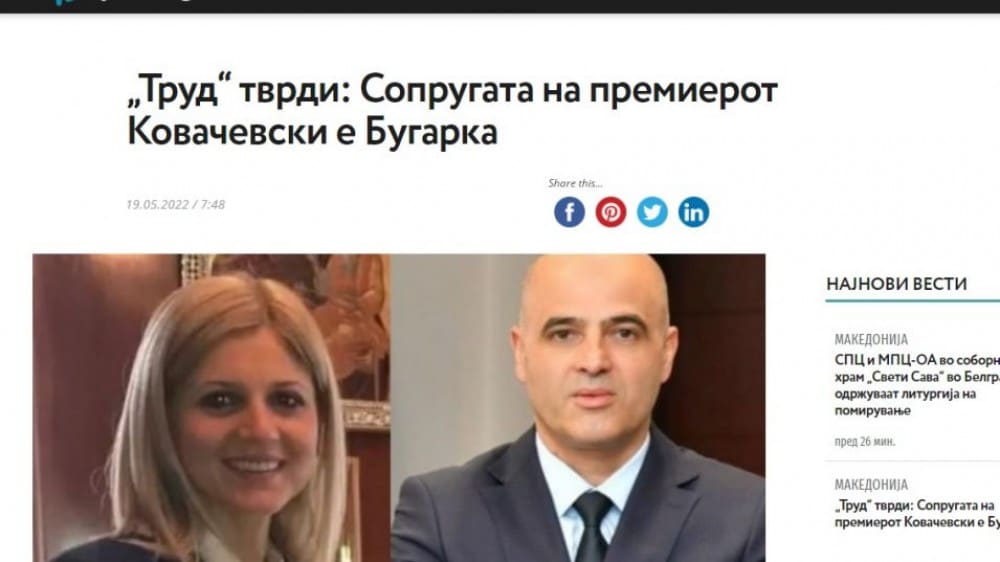
Kovachevski denied that his wife was Bulgarian

0

Elena Kovachevska has a certificate of Bulgarian origin

“I don’t know why my wife’s background is so interesting. But since it is so important, her father was born in Kumanovo, my wife’s grandfather is from Kriva Palanka, my wife was born in Kriva Palanka, and I was born in Kumanovo. ” This was stated by the Prime Minister of RN Macedonia Dimitar Kovachevski on Thursday on the occasion of widespread information in Bulgarian and Macedonian media that his wife is of Bulgarian origin.

In support of the statement is a copy of a certificate of Bulgarian origin issued by the Agency for Bulgarians Abroad in the name of Elena Mitko Kovachevska, born in 1978 in the town of Kumanovo, BGNES reported.

“Our children were born in Skopje and we all have personal documents of the Republic of Northern Macedonia,” Kovachevski said when asked by a journalist whether the information that his wife was Bulgarian was true.

The Prime Minister clarified that he could not comment on details about the ancestors of the family, as “talking about great-grandparents has never been a topic of our conversations.”

According to the contents of the certificate of Bulgarian origin, Elena Kovachevska’s grandfather, Stanojko Stanojkovski, is a Bulgarian from Bosilegrad, and a document issued by the Serbian authorities at the time states that his parents were Bulgarians.

The Prime Minister of the Republic of Northern Macedonia, Dimitar Kovachevski, told the media that his wife was of Bulgarian origin, that she, her father and grandfather were born in Macedonia, and could not speak or comment on what her great-grandparents were. Macedonian media reported.

“I don’t know why the origin of my wife’s relatives would be interesting, but if such a question arises – my wife’s father was born in Kumanovo, she was born in Kriva Palanka, I was born in Kumanovo. Our children were born in Skopje and all we have personal documents of the Republic of Northern Macedonia “, said Kovachevski in response to a question whether the information that his wife is Bulgarian is true. Speaking about his wife’s ancestors, Kovachevski said he could not comment, as this has never been a topic of conversation.

Mickoski: If the government agrees to Bulgaria’s demands, it is a capitulation

The leader of VMRO-DPMNE in the Republic of Northern Macedonia, Hristian Mickoski, described the hypothesis that the government of the country would agree to include in the negotiating framework the commitments made by the Republic of Northern Macedonia regarding Bulgaria and legally binding guarantees. was part of talks between Bulgarian President Rumen Radev and his French counterpart, Emmanuel Macron.

“Let’s be more precise. Radev insists that everything that Sofia wants on the basis of the declaration of the Bulgarian Parliament from November 2019 to be included in the negotiating framework, most likely in Chapter 35. This is what Radev wants and says. “Demands have not been met, he will not allow the first intergovernmental conference to take place, ie he cannot allow negotiations to begin. That is the essence,” Mickoski said. He added that if such a request entered the negotiating framework, it would mean a complete surrender.

“Either assimilation and a European future, or we will never have a European future,” Mickoski said.

This is the choice, we do not have a third option. Inclusion (under these conditions) in the negotiating framework means, I repeat, assimilation and Bulgarianization. Now that it is clear through the Ohrid Archbishopric that we have a centuries-old difference with the Bulgarian and other Balkan nations. there is a vote in parliament and a two-thirds majority is needed, we at VMRO-DPMNE will not even consider adopting it, “Mickoski said.

He also commented on Emmanuel Macron’s proposal for a political European community, saying the Republic of Northern Macedonia’s place was not in the “second league” because, as a candidate, it has done things no one else has done.

“Unfortunately, our place at the negotiating table was hampered first by our southern neighbor, with this stupid name request and we’ve been stuck in one place for decades. Now we have an even stupider request from our eastern neighbor,” Mickoski said. Recalling that the Association Agreement was signed in 2000 and that the children born at that time are now adults, voting and all the time “just listening for a European future”.

“I think that Europe must remain principled in its promises and, at least for (Northern Republic), not apply double standards. It must immediately, with serious pressure on Sofia (Northern Republic) Macedonia, start negotiations without any concessions, without any concessions. “That is what I expect, and so do my students and the people of this peaceful, pro-European country in the heart of the Balkans,” Mickoski said during a visit to Skopje’s Aerodrom municipality.

Yesterday, French President Emmanuel Macron held telephone talks with the Prime Minister of the Republic of Northern Macedonia, Dimitar Kovachevski, and with Bulgarian President Rumen Radev. According to the press release of Rumen Radev, in this conversation he pointed out that Bulgaria and the Republic of Northern Macedonia have agreed to prepare a roadmap outlining short-term and long-term goals, the implementation of which will advance the process of European integration for our southwestern Bulgaria. neighbor, but there are still no results in this direction, and also that our country expects legally binding guarantees to be included in the negotiating framework for the Republic of Northern Macedonia, and thus to ensure the implementation of the commitments made by the Republic of Northern Macedonia.

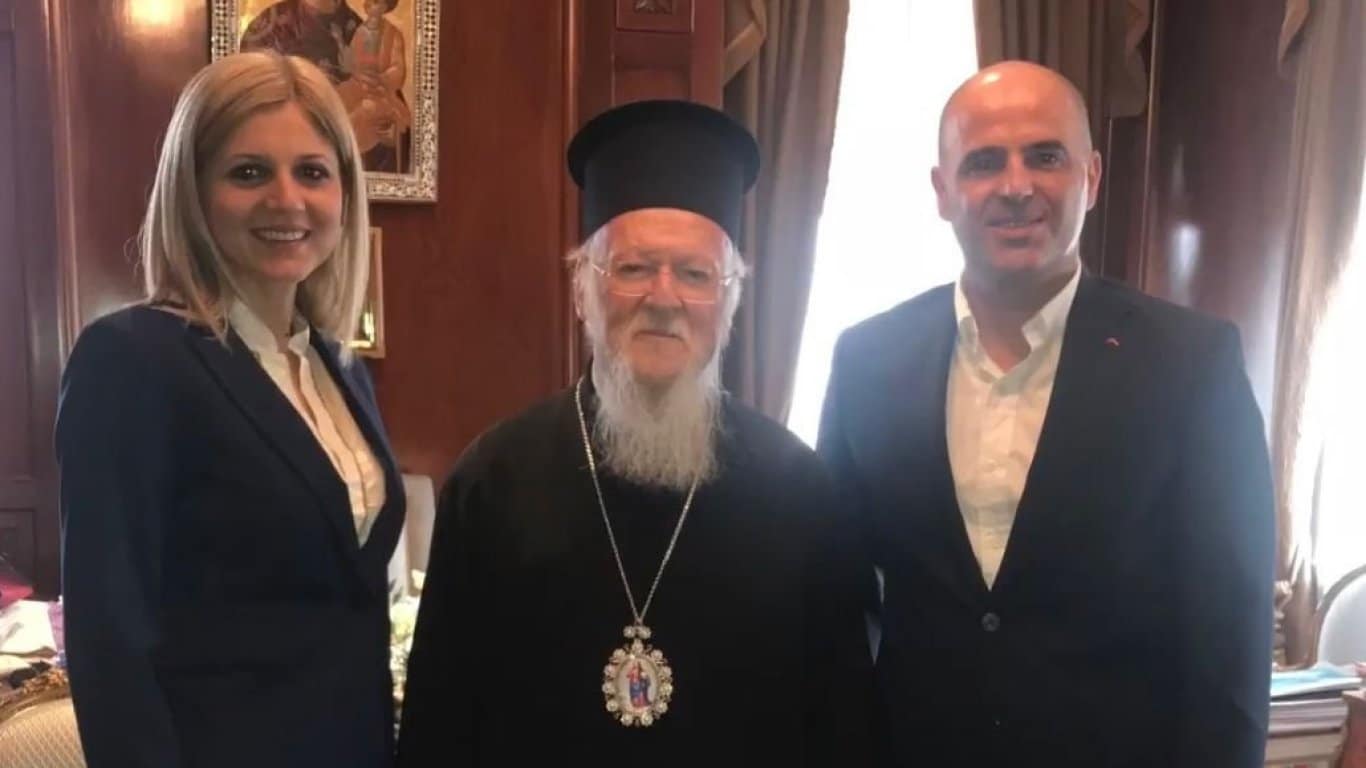
Photo: Fam. Kovachevski with His All Holiness the Ecumenical Patriarch Bartholomew I, Constantinople.

Putting Women at the Forefront to Combat Crime and Protect Rights  

0
Putting Women at the Forefront to Combat Crime and Protect Rights  

Vienna (Austria), 19 May 2022 – Human trafficking and migrant smuggling are global crimes that can affect all genders and ages. 

However, women and girls consistently account for the majority of detected trafficking victims, primarily for sexual exploitation, and females who are smuggled over borders are more exposed to sexual violence and rape than male migrants.  

But despite the gender implications, the authorities that deal with these crimes, including immigration services, law enforcement and the justice sector remain heavily dominated by men.  

“Women are too often left out of criminal justice responses, and as a result, women victims may not receive the support they need,” said the Executive Director of the United Nations Office on Drugs and Crime (UNODC), Ghada Waly. 

Ms Waly was speaking at an event on the “Role and Voice of Women in Countering Human Trafficking and Migrant Smuggling in Asia and the Middle East”, organized by UNODC’s Global Action against Trafficking in Persons and the Smuggling of Migrants (GLO.ACT) during this week’s Commission on Crime Prevention and Criminal Justice (CCPCJ). 

“Advancing women’s representation and promoting gender-responsive criminal justice are priorities across the work of UNODC, to improve women’s access to justice and support to victims, and to strengthen the quality of justice for all,” said Ghada Waly. 

During the online event the panellists discussed the importance of including women in efforts to counter human trafficking and migrant smuggling and actions taken in their countries to address this. 

Justice Ayesha Malik, the first female ever to be elevated to the Supreme court in Pakistan, said “this is a system made by men for men”.  

She added: “Women Judges have a role to play in rethinking the system, the processes, and the policies to make them gender responsive.”  

During her judicial career, Justice Malik has developed courses on gender sensitization of court proceedings, training sessions on gender-based violence cases, and initiated the first Punjab Women Judges Conference. 

“Women Judges can help build a new narrative, one that does not discriminate, does not slot women into roles and is sensitive to the gender perspective,” explained Justice Malik.  

“In cases of gender-based violence, it is imperative that judges understand and are sensitive to the gender perspective. The tendency to focus on the victim and not the accused, to focus on what she was doing and not on what he did has to change.” 

Diane Schmitt, the European Union’s Anti-Trafficking Coordinator said EU data shows that human trafficking “disproportionately affects women”.

“Over the past ten years, 75 percent all victims registered in the European Union were women and girls. In some Member States, the percentage reached 92.” 

“Trafficking in human beings, especially for the purpose of sexual exploitation, is rooted in gender inequalities. In order to win our fight against trafficking, it is fundamental to address its gender-related root causes and the gender dimension of this crime,” said Ms. Schmitt. 

“Women have and should have a key role to play at the policy and operational level, and it is also crucial to have more women first responders, as they play a vital role in identifying, protecting and supporting victims,” she added.  

In 2020, to address the gender imbalance within institutions that respond to the crimes of human trafficking and migrant smuggling, GLO.ACT launched The Women’s Network of Gender Champions to overcome barriers that prevent the inclusion of women in leading roles. 

The Network, which comprises of male and female gender champions from Pakistan, Islamic Republic of Iran, Iraq and Afghanistan, strengthens the skills of female professionals who deal with cases of human trafficking and migrant smuggling through specialized training, mentoring and coaching activities. 

Ibtisam Aziz, the Director General of the Protocol Department of the Prime Minister of Iraq and the current Chair of the GLO.ACT Women’s Network said the Network is becoming a “vehicle of change”. 

“We cannot underestimate the importance of male allies. The presence and contribution of influential male supporters strengthen the Network and those it seeks to benefit,” added  Dr. Ibtisam. 

In Iraq, the Network helped to ensure the inclusion of female judges in the drafting of a guidance note on victim protection and trained a first cohort of female investigators in the Kurdistan Region with a focus on human trafficking and migrant smuggling.

In Pakistan, where women currently account for less than two percent of the police service, 25 female investigators are being coached. Improvements in the quality of investigations and victim assistance have already been recorded. 

Guest speakers at the event, which attracted an online audience of over 120, included Elham Aziznasiri, from the International Affairs Office at the Vice Presidency for Women and Family Affairs of the Islamic Republic of Iran. Nadia Murad, UNODC Goodwill Ambassador for the Dignity of Survivors of Human Trafficking, shared a video address.

Further information

The Global Action against Trafficking in Persons and the Smuggling of Migrants (GLO.ACT) is a joint initiative by the European Union (EU) and UNODC being implemented in partnership with the International Organization for Migration (IOM) in four countries: Islamic Republic of Afghanistan, Islamic Republic of Iran, Republic of Iraq and Islamic Republic of Pakistan. This project is funded by the European Union.

Prominent Mexican archaeologist receives Princess of Asturias award

0

Eduardo Matos Moktesuma led the excavations of the Great Aztec Temple in Mexico City – a remarkable event in the world of archeology

Renowned Mexican archaeologist Eduardo Matos Moktesuma, who led the excavations of the Great Aztec Temple in Mexico City, is the winner of this year’s Princess of Asturias award in the social sciences, the Associated Press reported.

“Eduardo Matos Moktesuma and his work are an inspiration for future generations of social scientists and citizens” states the Foundation for prestigious awards

Excavations at the 16th-century sanctuary, which was discovered by chance in 1978, below the city’s main square, are a landmark event in the world of archeology. For more than 20 years, scientists have continued their search and attracted huge public interest.

These excavations, as well as other studies, are “examples of the development of archeology and fruitful dialogue with the past, between cultures and between human and social sciences,” said a statement from the foundation named after the heiress to the Spanish throne, Princess Leonor. .

The foundation also points to the “exceptional intellectual precision” of the 81-year-old Moktesuma, who is the author of several books as well as more than 500 articles, catalogs and manuals.

“Because of his intelligence, ability to communicate and his social commitment, Eduardo Matos Moktesuma and his work are an inspiration to future generations of social scientists and citizens,” the foundation said in a statement.

The annual “Princess of Asturias” award, with a cash prize of 50,000 euros, is presented in eight categories, including art and sports.

The prize is among the most prestigious in the Spanish world.

The award ceremony is usually held in October in the northern Spanish city of Oviedo.

Recall that in the summer of 2021, Mexico regained 34 archaeological artifacts from Germany

Among the artifacts are objects from different time periods and cultures – anthropomorphic clay figures, a stone mask of the Olmec civilization from the period 1200-600 BC, a three-legged clay vessel of the Maya from 1000-1520.

Mexico has received 34 archeological artifacts from the pre-Columbian era, which were returned voluntarily by private collectors in Germany, the DPA reported, citing the country’s foreign ministry.

“Two German citizens contacted our embassy in Berlin to express their desire to return archeological objects owned by their families,” said Alejandro Celorio, the foreign minister’s legal adviser.

Some of the artifacts were displayed at a virtual ceremony at the Mexican embassy in Berlin with the participation of Foreign Minister Marcelo Ebrard and Minister of Culture Alejandra Frausto, who took part remotely from the Mexican capital.

Among the artifacts are objects from different time periods and cultures – anthropomorphic clay figures, a stone mask of the Olmec civilization from the period 1200-600 BC, a three-legged clay vessel of the Maya from 1000-1520.

The director of the Mexican National Institute of Anthropology and History, Diego Prieto, stressed the “growing sensitivity” of the international community for the need to respect cultural heritage and return artifacts.

The items were handed over to embassy staff in May. Of these, 28 have so far been in Monheim in western Germany, the other six – in Recklinghausen.

And at the end of December last year, the Mexican Embassy in Paris exhibited restituted artifacts from the national heritage

“Cultural heritage is not for sale. These are very valuable artifacts for Mexican culture and identity,” said Ingrid Ariaga of the Cultural Institute of Mexico in France.

Among them are three clay figures from the classical Mesoamerican period (100-700) and eight clay vessels.

Most of the artifacts – 16 were returned by a family of collectors on December 6. Two others were left at the embassy anonymously on November 15.

For two years now, Mexico has been working to return items from its historical heritage that are in private collections around the world.

“Cultural heritage is not for sale. These are very valuable artifacts for Mexican culture and identity,” said Ingrid Ariaga of the Cultural Institute of Mexico in France.

In its attempts to bring back historical artifacts, Mexico is facing legal problems. Under French law, Mexico must prove that the items were acquired illegally. However, tracking them is difficult because most left the country in the early 20th century.

In early January, Mexico called for the cancellation of a tender organized by Christie’s. Despite the support of four other Latin American countries, 136 arrests were sold on November 10 for a total of more than 3m euros.

The current Mexican government is proud to have returned more than 5,800 pre-Hispanic works of art since the end of 2018.

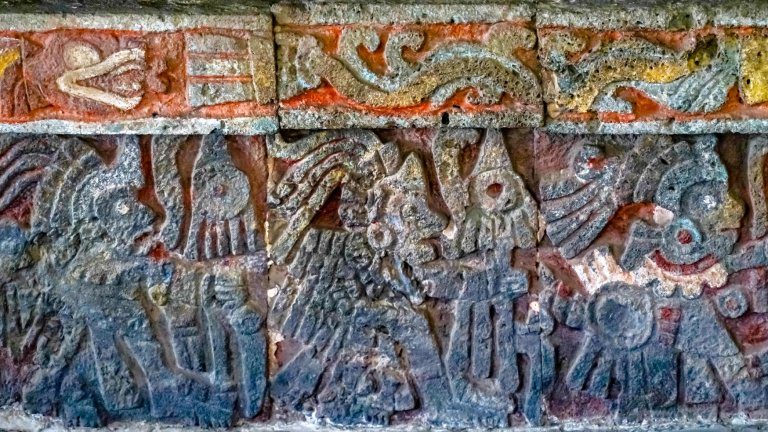
Photo: The Great Temple of the Aztecs in Mexico City (iStock by Getty Images)

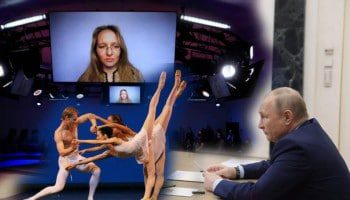
Putin‘s son-in-law is called Zelensky

0

Vladimir Putin has a son-in-law named Zelensky, not Vladimir, but Igor. He is also an artist, but did not bring him to the presidency, like his Ukrainian namesake. That’s according to a joint investigation by Important Stories and Der Spiegel.

According to media reports, Putin’s daughter Katerina Tikhonova (she apparently broke up with her ex-husband, oil tycoon Kiril Shalimov in 2017) has flown to Munich more than 50 times in recent years. Ballet dancer Igor Zelenski has lived and worked in this city since 2016. Tikhonova was preparing to move to Germany at the end of 2019.

Since 2018, Zelensky has been a member of the management board of the National Fund for Cultural Heritage, which is responsible for the construction of cultural and educational complexes in the regions of the Russian Federation. The project was personally initiated by Putin.

According to journalists, Tikhonova and Zelenski have a daughter born in 2017.

Igor Zelenski is a former ballet dancer in Bavaria. He left in April 2022. He was apparently fired for refusing to publicly condemn Russia for its war against Ukraine.

Journalists do not know where Zelensky and Putin’s daughter Katerina Tikhonova have been since. Der Spiegel tries to call Zelenski, but he doesn’t pick up the phone.

In Skopje terrified – their prime minister’s wife is of Bulgarian origin!!!

0

“Bulgarian newspaper revealed that Prime Minister Kovachevski’s wife is hiding a secret from the Macedonian public” – with this headline on its front page “Macedonian Herald” conveys the news about the Bulgarian origin of Elena Kovacheva, which “Trud” reported in today’s issue.

It is widely covered by the news sites in our western neighbor, which reprint the information of “Trud”.

“The Bulgarian daily publishes a document claiming that Elena Kovachevska, the wife of current Macedonian Prime Minister Dimitar Kovachevski, is Bulgarian and has asked for documents to prove her” Bulgarian origin, “the paper said.

“Elena Kovachevska’s father and grandfather – Mitko Stanojkovski and Stanojko Stanojkovski are Bulgarians born in Bosilegrad municipality, today in Serbia. Bosilegrad region has been under Serbian rule since 1919. The whole region in Bulgaria is known as the Western Suburbs and tens of thousands of Bulgarians from this region. moved to Macedonia during the Yugoslav period.

The Bulgarian daily Trud points out that even the fact that Prime Minister Kovachevski hides his wife’s Bulgarian origin and citizenship is the biggest proof that Bulgarians in Macedonia are discriminated against and afraid to express their ethnicity publicly, “Makedonski Vesnik said. “.

The media reminds that during the local elections in the country the ruling SDSM attacked the mayor Daniela Arsovska (VMRO-DPMNE) because of her alleged Bulgarian citizenship. That is why the question arises why Kovachevski did not inform the public about his wife’s ethnicity, Makedonski Vesnik commented.

“The two faces of Rumen Radev” scolded the Bulgarian presidency with “Deutsche Welle”

0

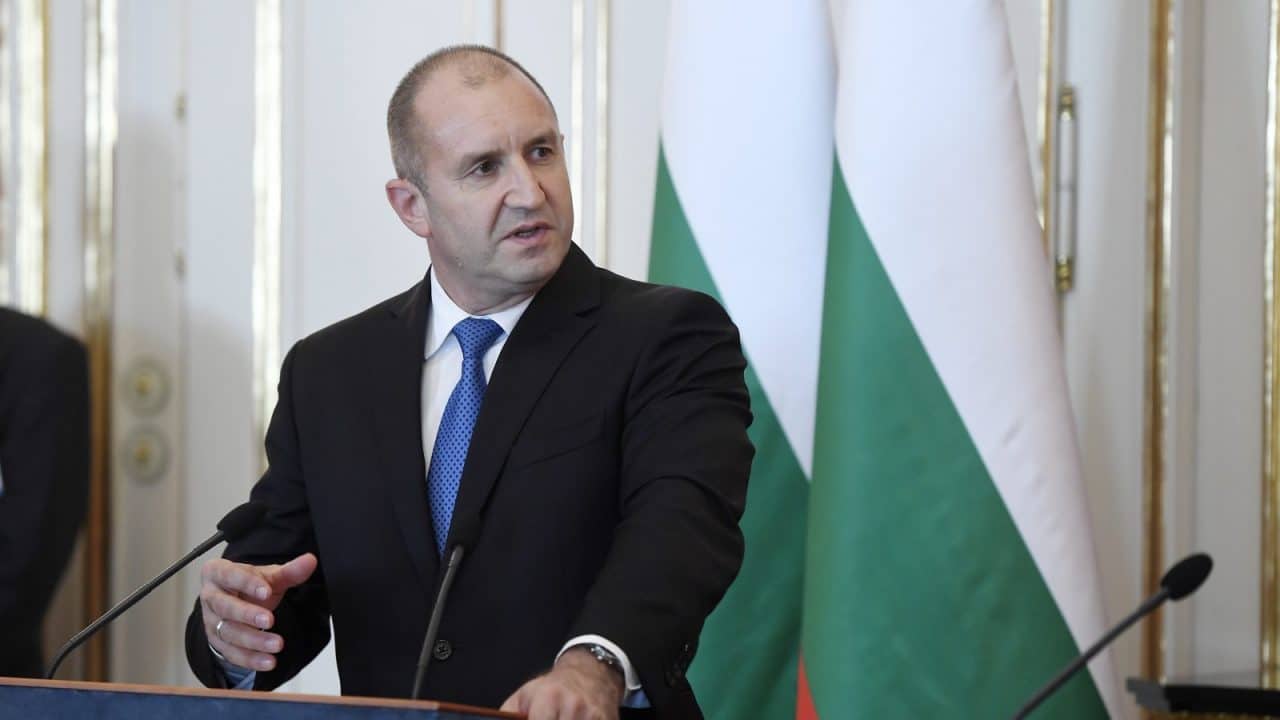
President Rumen Radev has been denied the right to respond by the German-language edition of Deutsche Welle for an article with “a number of allegations that are categorically untrue.” This was reported by Radev’s press service.

On the eve of the visit of the Bulgarian head of state to Germany, the German-language edition of Deutsche Welle published the article “The Two Faces of Rumen Radev.” The material does not meet professional ethics and journalistic standards President Rumen Radev, are definitely not true. Of course, the right of a free media is to interpret public processes, but when this analysis is based on false rumors and interpretations, the question arises about the reliability and integrity of the information provided. continue:

For this reason, on May 16, the press office of the head of state sent the right of reply to Deutsche Welle, and to date there is still no public reaction from the media. in respect of published material against which there is a reasoned objection that it suggests certain unreliable conclusions “.

Here is the full text of the letter sent by the presidency to the German Deutsche Welle:

Dear Mr. Limburg,

Dear Mr. Nering,

I am writing you this letter in connection with the one published on May 13 this year. article “The Two Faces of Rumen Radev” on the Deutsche Welle website.

I believe that informing the German public about topics related to Bulgaria is based on the responsibility of a public media outlet to the citizens of both countries. In this process, the facts should be leading, regardless of the bias and beliefs of analysts. Objective coverage is an important condition for establishing the image of each media as a reliable source of information. This importance grows even more when it comes to the perceptions it creates in the citizens of two friendly and allied countries.

In the article “The Two Faces of Rumen Radev” these principles are not observed and the conclusions made are based mainly on false suggestions and not on real facts.

The public and political opposition between President Rumen Radev and the government of former Prime Minister Boyko Borissov has essentially not faced “pro-Western and pro-Russian” opposites. These notions floated only in the foam of the political debate in Bulgaria, the aim of which was the attempt of the former rulers to cover up the categorical rejection by the head of state of the vicious corruption model of merging state institutions and business. By the way, this model of corruption was rejected by the Bulgarian voters in the last parliamentary elections and this could not have escaped the DW editors.

The suggestion in the article that President Radev draws support for his high political rating from successful ministers in the caretaker government, who now hold leading positions in the current Bulgarian government, is puzzling. DW should be aware that the president appoints ministers and that their work can only take place as a result of his trust and the fulfillment of the president’s priorities: fighting corruption, transparency and the rule of law.

The war in Ukraine and the numerous crises in Europe are generally undermining the credibility of the political class. But there is no logic in the claim that the Bulgarian president’s calls for an immediate cessation of hostilities in Ukraine, a return to dialogue and the prevention of Bulgaria’s direct involvement in the military conflict have led to an outflow of public confidence. All public opinion polls in Bulgaria clearly show that Bulgarian society categorically rejects alternative positions.

I would like to take this opportunity to remind you that President Rumen Radev condemned Russia’s aggression and war against Ukraine not during his visit to Prague on May 10, but on February 24 at his meeting of the institutions in Sofia. And this is not a one-time act by the head of state. The war in Ukraine is a huge threat to international peace and security, and its social and economic consequences are much stronger in Bulgaria than in Western Europe.

And just as it is true that Bulgaria is a “loyal ally”, it is equally true that as a “bearer of peace” in the EU and NATO, it can defend its positions and views. This is the democratic approach on which the allied relations are built and this will be, in the future, Rumen Radev’s constant position as head of state.

It is extremely important to understand that, unlike most European countries, Bulgaria has a huge historical diaspora in Ukraine. Hundreds of thousands of Bulgarians live in war zones today, and President Rumen Radev was the first political leader in Bulgaria to call for protective equipment for the population in those regions.

At the same time, the Bulgarian head of state categorically does not accept Bulgarian ammunition and lethal weapons to be exported, so that they are not used in the areas of fierce fighting, in which a large part of the ethnic Bulgarians in Ukraine are concentrated.

The thesis that President Rumen Radev has expressed a position against the allied support for enhanced protection of the Bulgarian airspace in the conditions of military conflict in the neighborhood is completely untrue. If the article was based on the public statements of the president and the official information published on the website of the presidential institution, and not on manipulative media interpretations, such false statements would not have been made. Moreover, as commander of the Bulgarian Air Force, it was Rumen Radev who organized the first joint mission to protect Bulgaria’s airspace with the allies. However, the question of whether the Bulgarian Air Force will be able to participate in such missions in the near future is on the agenda, and the head of state expects urgent measures from the responsible institutions in Bulgaria to solve this problem.

President Rumen Radev did not start his political career in Moscow, despite selfish suggestions, to “land” there. The re-election of the president in November 2021. is sufficient proof of the assessment that Bulgarian voters give to this helpless propaganda. The responsibility of the head of state Rumen Radev is before the Bulgarians who voted for him. However, as you know, other European politicians have chosen to represent Russian interests and capital, and German politicians are no exception.

Please consider this letter as the right of the Presidential Institution in Bulgaria to respond to the article in Deutsche Welle and to publish it on the media’s website.

With respect,

Kiril Atanasov

Secretary for Media Relations of the President of the Republic of Bulgaria

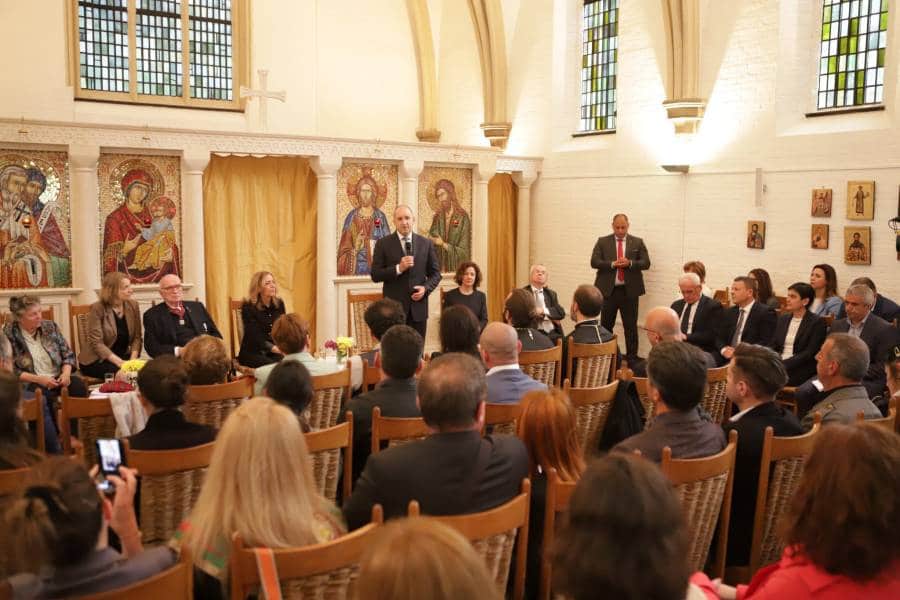
President of Bulgaria visited the Bulgarian church communities in Germany

0

During his three-day visit to the Republic of Germany, the President of the Republic of Bulgaria Rumen Radev also visited the Bulgarian Orthodox church communities in the cities of Berlin and Hamburg, Velina Weber told the Bulgarian Orthodox information site dveri.bg. The visit, at the invitation of German President Frank-Walter Steinmeier, was busy. It began on May 15 with a meeting of the President with representatives of the Bulgarian community at the Embassy of our country in Berlin. There, apart from the hosts, led by Her Excellency Ambassador Mrs. Elena Shekerletova, the President was also welcomed by the members of St. Synod of the BOC, Metropolitans Nicholas of Plovdiv and Anthony of Western and Central Europe, as well as Bishops Velichi Zion, abbot of the Troyan and Bachkovo monasteries, and Smolensk Visarion, vicar of the Metropolitan of Plovdiv.

The visit of the President of the Republic of Bulgaria to Germany ended on May 17 with a meeting with the Bulgarian community in the parish church “St. Cyril and Methodius ”in Hamburg. The day honoring the memory of St. Batak martyrs, whose relics were laid at the temple altar a few weeks ago during the consecration of the church, will be remembered by parishioners as a historic date, according to our church community there. In Hamburg, Rumen Radev was welcomed by the two parish priests – Krastin Apostolov and Yakov (Yavor) Sturm, as dictated by Bulgarian tradition – with bread and salt served by Bulgarian children from one of the Bulgarian dance groups in the town of Zdravets.

The high-level visit to the Orthodox church was opened with the Easter song “Christ is Risen” performed by the church choir, after which President Radev addressed the Bulgarians, who came from other northern German provinces especially for the meeting with the head of state. The President thanked the Bulgarian citizens for their successes in all public spheres, and stressed that their success on foreign soil is a success for Bulgaria as well.

Undoubtedly, one of the most emotional moments was when the Head of State presented the 88-year-old Honorary Consul of the Republic of Bulgaria Prof. Dr. Gerd-Winand Imayer with the President’s Badge of Honor in recognition of his overall contribution to the development of the Bulgarian community. Northern Germany during the last thirty years, during which he, with the support of his wife Petra Imayer, contributed to the strengthening of the Bulgarian diaspora in Northern Germany, as well as to the creation of the most important institutions for our compatriots abroad – school and church. “Dear Gerd, you are one of us,” said the event’s host, Dr. Violeta Karaivanova, a longtime associate at the consulate and embassy in Berlin. Rumen Radev stressed the important role of Prof. Imayer in stimulating the economic, political, cultural and social dialogue between Bulgaria and Germany.

The guest of honor at the event was the daughter of the first Bulgarian consul in Hamburg – Mrs. Raina Gerova de Pereira. The event managed to gather representatives of all Bulgarian organizations in Hamburg: the church community as the host of the meeting, the Bulgarian school, organizers of polling stations in the city, employees of counseling centers for labor and social adaptation for Bulgarian citizens, and organizations that develop cultural and social activities related to Bulgaria, such as the Ars and Humanitas Association, chaired by Dr. Hristo Alexiev and others. All of them briefed the head of state and the members of his delegation on their activities and goals.

The President did not hide his admiration for the Revival spirit of the Bulgarian community, which he found in Hamburg, and said that it gave him faith that despite the thousands of kilometers from his homeland, Bulgarians will not stop thinking and working for its good and future.

The highly emotional meeting ended with the performance of the troparion of St. Cyril and St. Methodius, patrons of the church in Hamburg, as well as a common prayer for peace. After the official part of the evening continued with personal conversations over a glass of wine.

Photo: Milena Apostolova

The Russians broke records in property purchases in Turkey

0
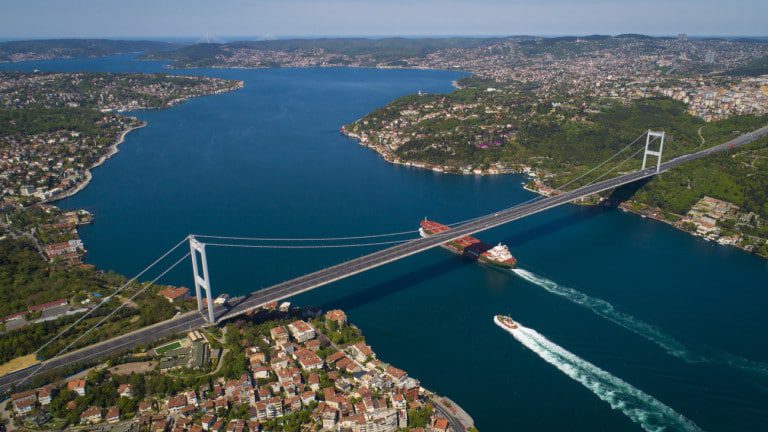
A panoramic view of Istanbul Bosphprus, Turkey on May 09, 2020. Fatih Sultan Mehmet Bridge is almostly empty during a two-day lockdown imposed to prevent the spread of COVID-19

The sales of residential properties in Turkey mark growth with almost 40% on an annual basis in April, according to official data. The current trend continues, despite the high borrowing costs and falling prices.

The road is also caused by the influence of the intepeca of the foreigners, especially the children, who have twice as many people living in the dwelling houses.

Household sales increased by 38.8% in April to 133,058 years, compared to 95,863 a year ago, according to the Statistical Institute of Turkey (ТurkЅtаt).

Annual sales accounted for 113.7%, 25.1% and 20% respectively in December, January and February.

This month, the authorities announced several measures to increase the sales of housing and reduce the falling prices, which are almost 100% higher.

The largest city in Turkey, according to the population of Istanbul, has the highest share of 19.8%, or 26,330 home sales last month. It is followed by the capital Ankara with 12,195 sales and the province of Izmir with 8,459, with shares of 9.2% and 6.4% respectively.

From January to April, sales increased by 26.2% to 453,121 properties, despite high borrowing costs.

For the first time, start in the standings

Foreigners’ sales increased by 58.1% on an annual basis last month to 6,447 units, according to ТurkЅtаt. The first citizens started the list in April for the first time, after which the increase in the number of properties on the property increased by 186.6% on an annual basis to 11.

Wealthy investors are investing in Turkey and the United Arab Emirates (UAE), a financial refuge from Western sanctions, according to many companies.

There are many people living in Turkey. “After the war, the intelligence was not only great, but also great,” said Celman Jozgun, an expert in the field.

Self-presentation lessons: how to present yourself profitably and beautifully

0

Singer Mark Orlov – about 5 key points that you need to know about if you wanted to win people over and lead them with you in front of WomanHit.ru.

The skill of self-presentation is one of the most important for anyone who claims to be successful. This applies not only to your career, but also to your personal and social life. Here are 5 key points that will help win over people and lead them with you.

1. Smile

A sincere smile is one of the most attractive features of a person. It can literally light up the space around you, creating a positive atmosphere and making people feel at ease and at ease in your presence. Even in this age of masks, a smile that reaches the eyes is a key part of the first impression and conveys warmth, kindness, and empathy. Smiling with your eyes as well as with your mouth can help you come across as sincere and trustworthy. To give the other person a smile, think of something that fills you with joy.

2. Eye contact

Establishing eye contact the first time you meet a person or even an audience is key. Wandering eyes are often perceived as unfriendly and give the impression that you are trying to find someone more interesting to talk to. Looking at the floor can make you seem insecure, and moving your gaze up and down the other person’s body can seem evaluative.

Balance is key when it comes to eye contact, and you should avoid staring fixedly at the other person. Use the “triangle technique” when you draw an imaginary inverted triangle around the eyes and mouth of the interlocutor. During a conversation, you can look from one point of the triangle to another every 5-10 seconds. This will make you look interested and involved in the topic under discussion.

3. Appearance

It may seem unfair, but the reality is that we all judge each other by their appearance. Regardless of your size, figure, or age, taking care of your appearance and wearing appropriate clothing will make for a good first impression.

Choosing clothes is a powerful communication tool when meeting new people for the first time. The good news is that even small changes can increase your chances of making a positive impression. These include matching your outfit to the occasion, using colors that suit you, and choosing your accessories carefully.

Personal care and hygiene also play an important role in our overall appearance, so don’t forget to pay attention to your teeth, hair, hands and nails.

4. Body language

Silence can speak volumes. We communicate with more than just words. Our facial expressions, gestures and postures also convey different signals when communicating with other people. Studies show that up to 60-70% of the information of human communication is formed by non-verbal signals. Despite this, many people do not think about their body language and are unaware that they are sending mixed or negative signals.

Paying attention to your body language will help you adjust it and make a great first impression. Whenever you meet someone new, keep this in mind:

– Avoid blocking the space in front of you by crossing your arms or placing your bag on your lap.

– Minimize fussy movements such as biting your nails, drumming with your fingers, or playing with your hair.

– Watch your posture, do not slouch or lean back in your chair.

– Show that you are listening by nodding your head and leaning forward slightly.

5. Punctuality

Punctuality indicates respect and courtesy towards other people. When you’re late for a date, business meeting, or family gathering, it lets others know that your time is more important than theirs.

We all know at least one person who can never be on time. Perhaps you yourself struggle with chronic tardiness. Taking steps to improve your time management will bring huge benefits to your personal and professional life.

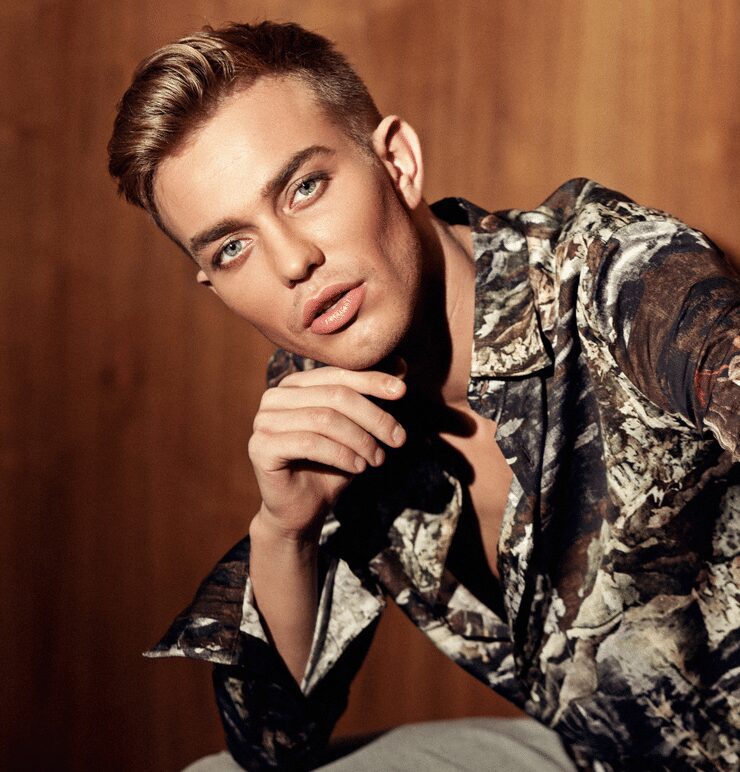
Photo: Mark Orlov

The Northern Lights can be heard even when not in sight

0

Recordings of the sounds of the Northern Lights, showing that this phenomenon is much more common than previously thought, and occurs even when not observed, were made by Unto Kalervo Laine – a former professor at Aalto University in Finland and a specialist in speech technologies. He presented a report at the recent EUROREGIO / BNAM2022 acoustics conference in Denmark. For many years, Laine has been studying the sounds associated with the Northern Lights. In 2016, he published information that the recordings of popping during aurora borealis were related to temperature profiles recorded by the Finnish Meteorological Institute (FMI). These data not only demonstrate that auroras can be associated with sounds, but also confirm Lane’s own theory that these sounds result from electrical discharges in the temperature inversion layer at a height of about 70 meters above the ground. New examples of northern lights were recorded at night near the village of Fiskars. Although the glow itself was not visible at the time, Lane’s recording captured hundreds of “auroral sounds.” When the records were compared with FMI geomagnetic activity measurements, an obvious strong correlation was found. All 60 best candidate sounds were associated with changes in the geomagnetic field. “Using geomagnetic data that has been measured independently, it is possible to predict when aurora borealis sounds will be 90% accurate,” says Laine. His statistical analysis suggests an unambiguous causal relationship between geomagnetic oscillations and auroras.

At the end of March 2022, NASA experts shared plans to launch two rockets at an altitude of over 200 km directly into the northern lights to study in detail the processes of energy exchange between the Earth and outer space. This was reported by the NASA portal. Radiance is born on the border between the electrically neutral atmosphere around the planet and the interplanetary space filled with charged particles from the plasma of the solar wind, interacting with the geomagnetic field. The resulting luminescent glow from below looks like huge canvases of different colors and dancing light waves. But the picture is not limited to the earth’s spectacle – the interactions between the particles excite wider boundary layers of the atmosphere, and it is the impact of charged particles on these upper layers that interests NASA. The agency is preparing for today in Alaska the INCAA mission – Ionic neutral compound during active radiance. There is no clear boundary of the layer where the neutral gas ends and the plasma begins – there is a large boundary zone where the two types of particles mix, which from time to time collide and emit photons of different wavelengths. The color of the “sails” depends on the composition of atmospheric molecules: oxygen gives a pale green or red light, nitrogen – reddish or purple. The first rocket is planned to emit harmless vapor indicators – colored chemicals similar to those used in fireworks – before reaching a maximum altitude of 300 km. The vapor indicators will create visible clouds that researchers can observe from the ground, thus tracking air currents near the glow. The second rocket, which will be launched shortly after the first, reaching a height of about 200 km, will measure the temperature and density of plasma in and around the glow.